What is
visualizing?
Visualizing is…
● A reading strategy
● A way to help you understand what you
read
● An important tool for reading fiction and
nonfiction
● Making a picture in your mind
How do you visualize?
● You use the words in
the text to make a
picture in your mind
● It’s like seeing a
“movie in your mind”
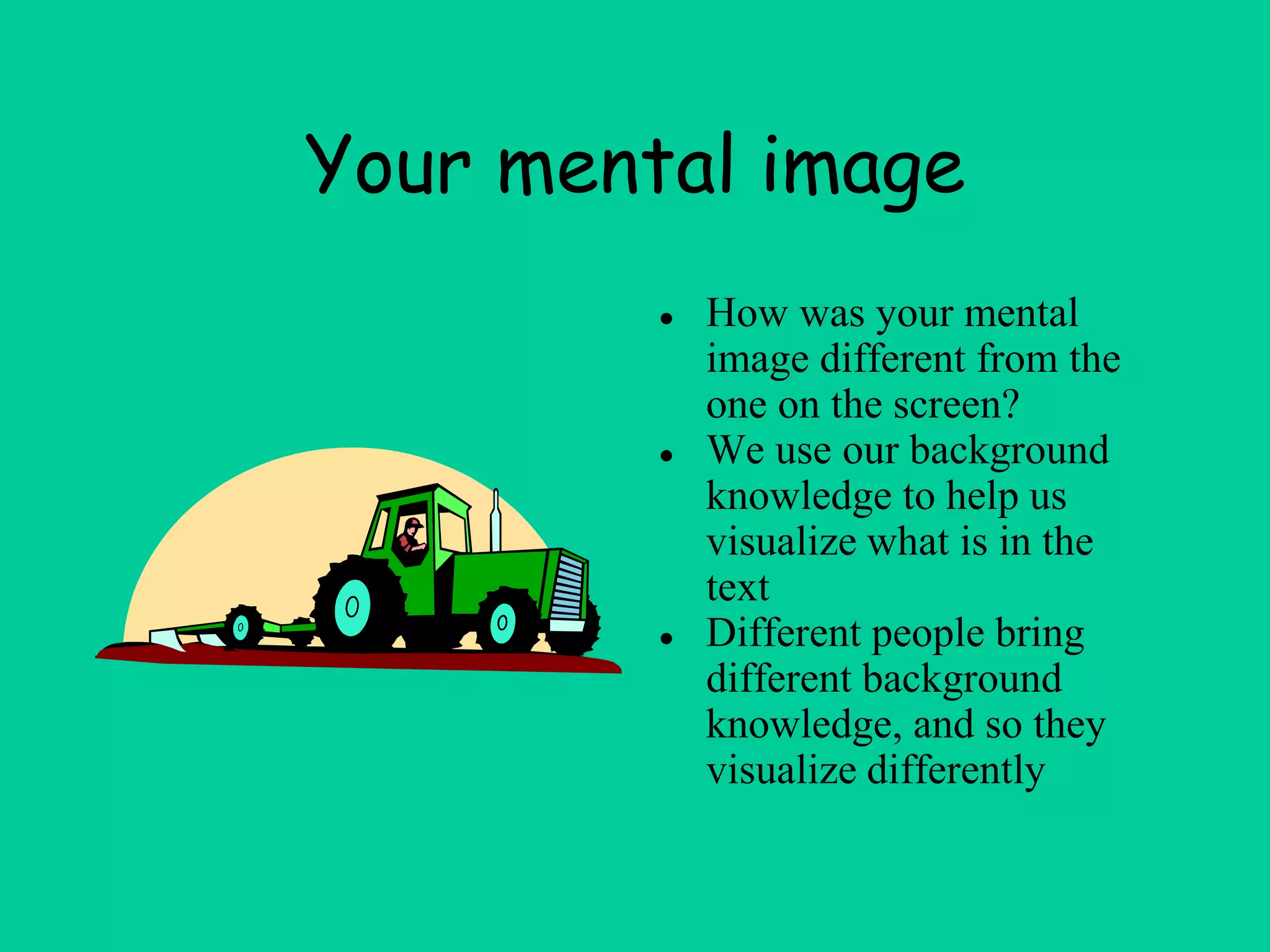
● Visualize this:
A green tractor
Your mental image
● How was your mental
image different from the
one on the screen?
● We use our background
knowledge to help us
visualize what is in the
text
● Different people bring
different background
knowledge, and so they
visualize differently
Try this:
The purple flowers bloomed, lifting their
petals up to the sun. They were surrounded
by the bright green lily pads that covered
the surface of the pond.
Can you picture this scene in your mind?
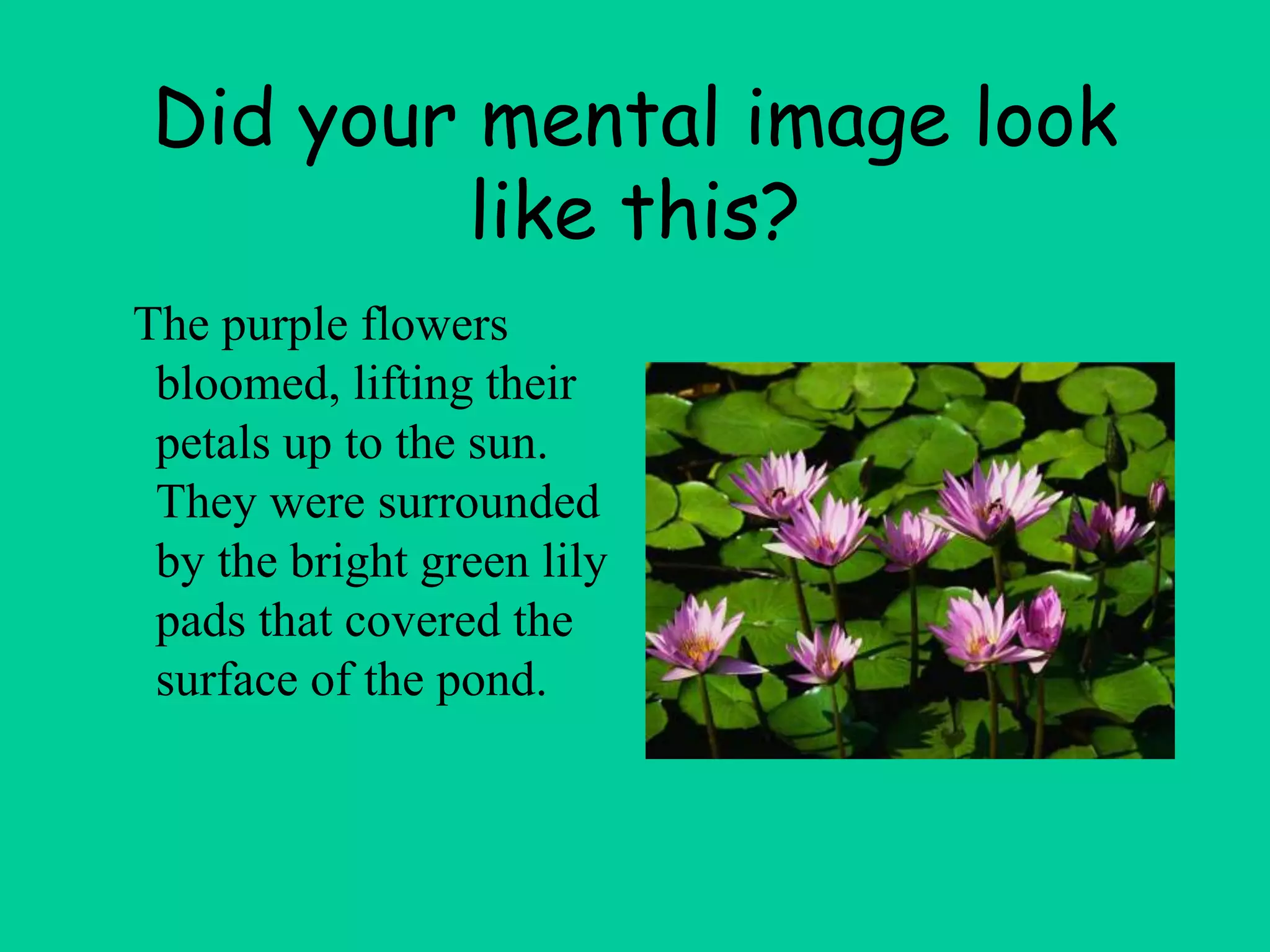
Did your mental image look
like this?
The purple flowers
bloomed, lifting their
petals up to the sun.
They were surrounded
by the bright green lily
pads that covered the
surface of the pond.
More practice!
● Make this picture in your mind:
A grassy path led into a garden of tall grasses,
black-eyed susans, and purple coneflowers .
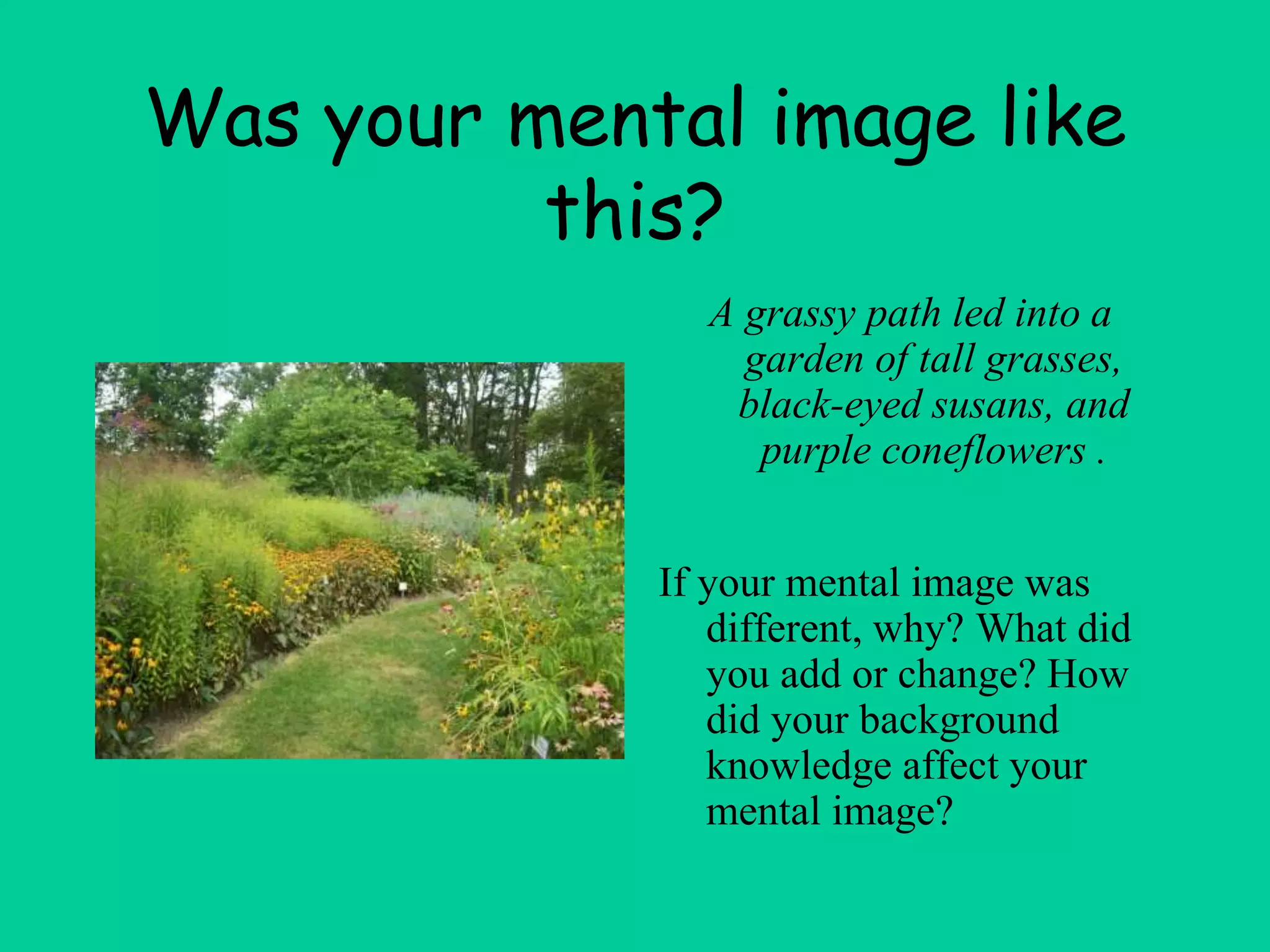
Was your mental image like
this?
A grassy path led into a
garden of tall grasses,
black-eyed susans, and
purple coneflowers .
If your mental image was
different, why? What did
you add or change? How
did your background
knowledge affect your
mental image?
Now try this!
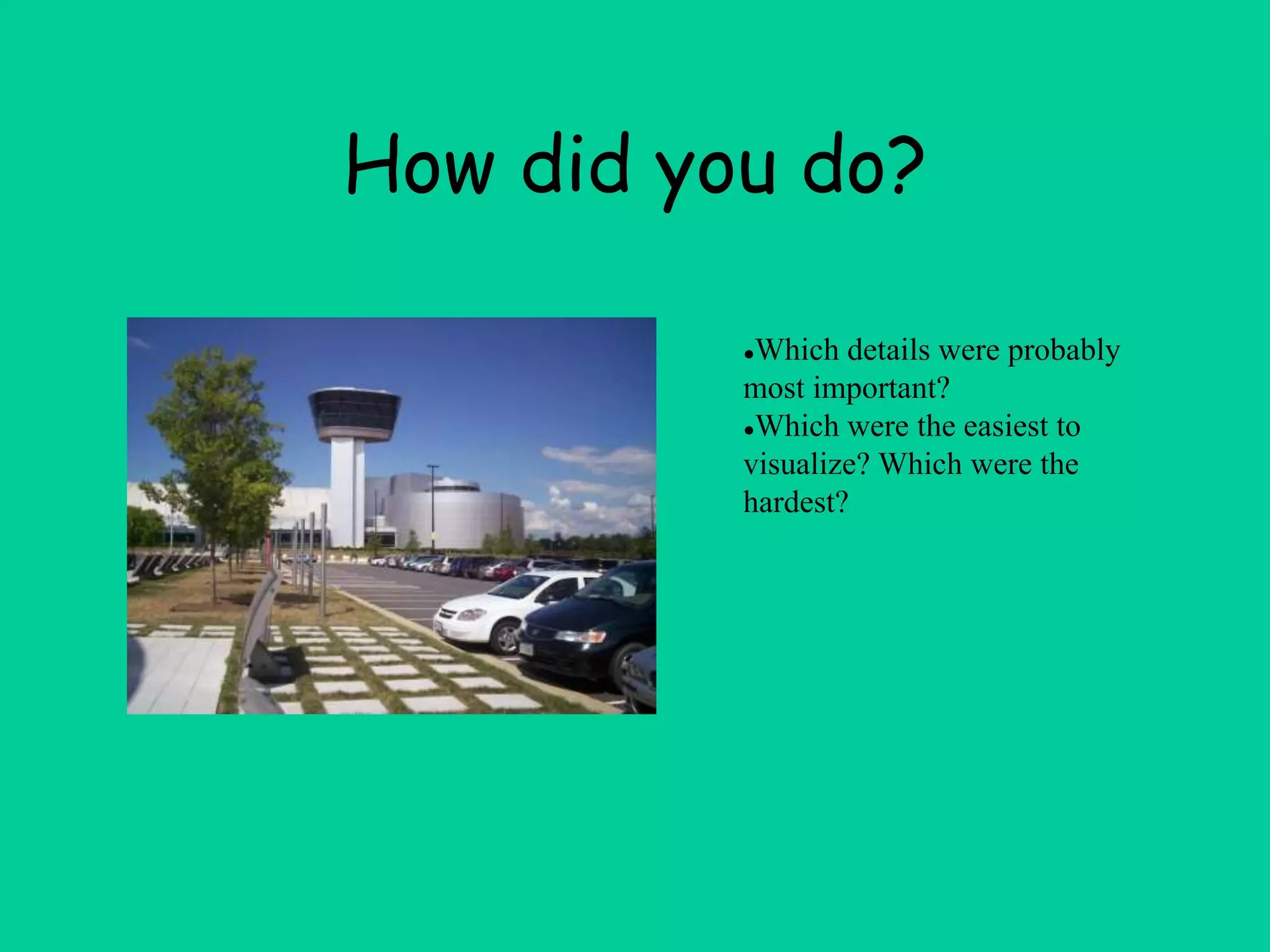
● The sleek, modern museum rose at the end
of the parking lot. A tower that looked just
like an airport control tower glistened in the
center. To the right curved a silver, round
building. A tree was to the left.
How did you do?
●Which details were probably
most important?
●Which were the easiest to
visualize? Which were the
hardest?
The right picture?
● Because each person has unique
background knowledge, everyone will
visualize differently
● However, you need to make sure that you
are using the text clues to visualize
For example…
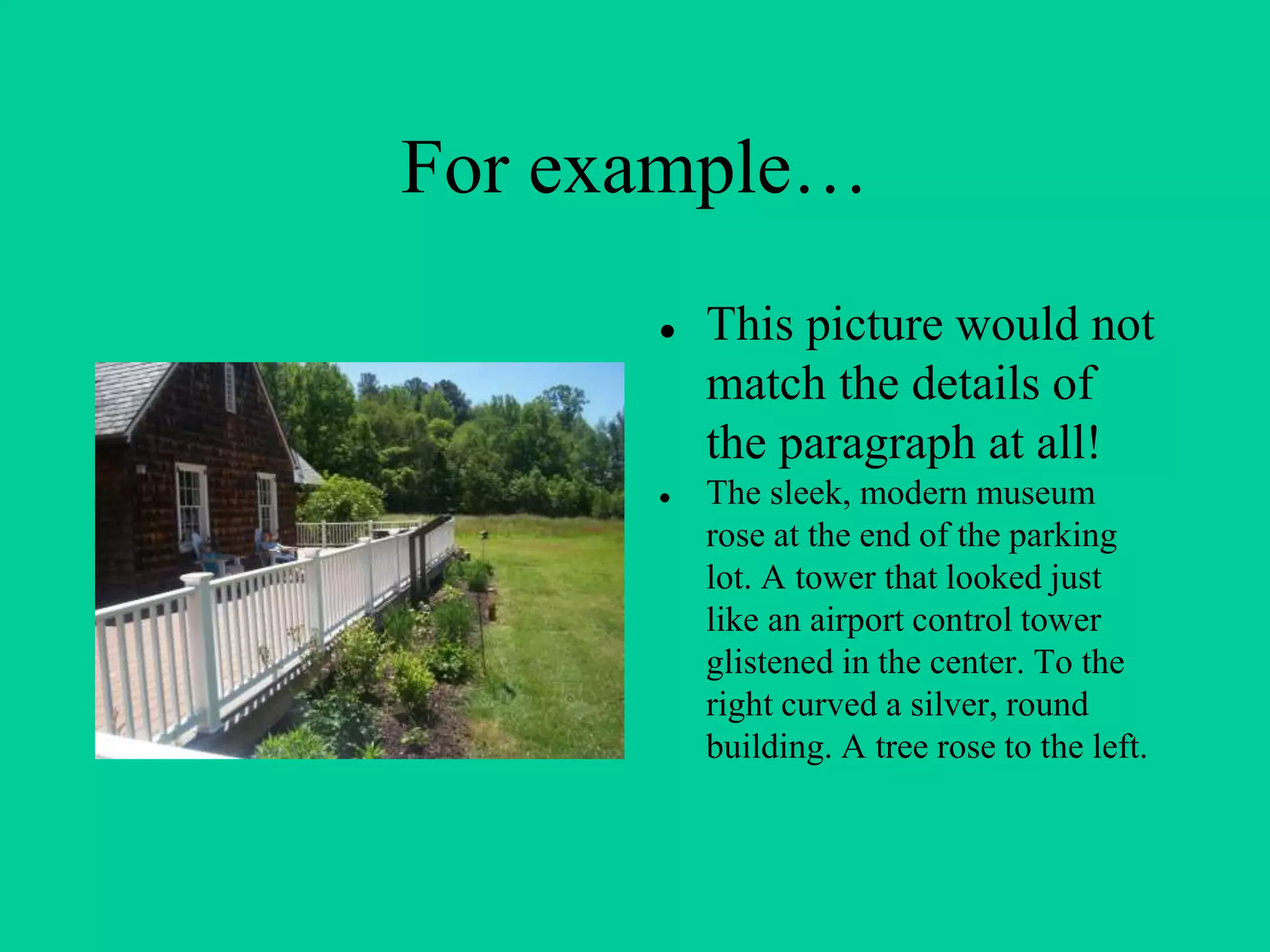
● This picture would not
match the details of
the paragraph at all!
● The sleek, modern museum
rose at the end of the parking
lot. A tower that looked just
like an airport control tower
glistened in the center. To the
right curved a silver, round
building. A tree rose to the left.
This is neat, but why?
● Why visualize?
● Here are three reasons:
● Visualizing helps us to process text more
actively. Because we have to use our prior
knowledge to visualize, we are reading more
carefully
● Visualizing can help you to figure out what is
going on in the story
● Visualizing is fun!
Using prior knowledge to
visualize
● Visualizing is making a picture in your
mind based on the text. But authors
don’t explain every single detail.
Sometimes, you need to fill in with
your background knowledge.
What do you have to fill in with
your background knowledge?
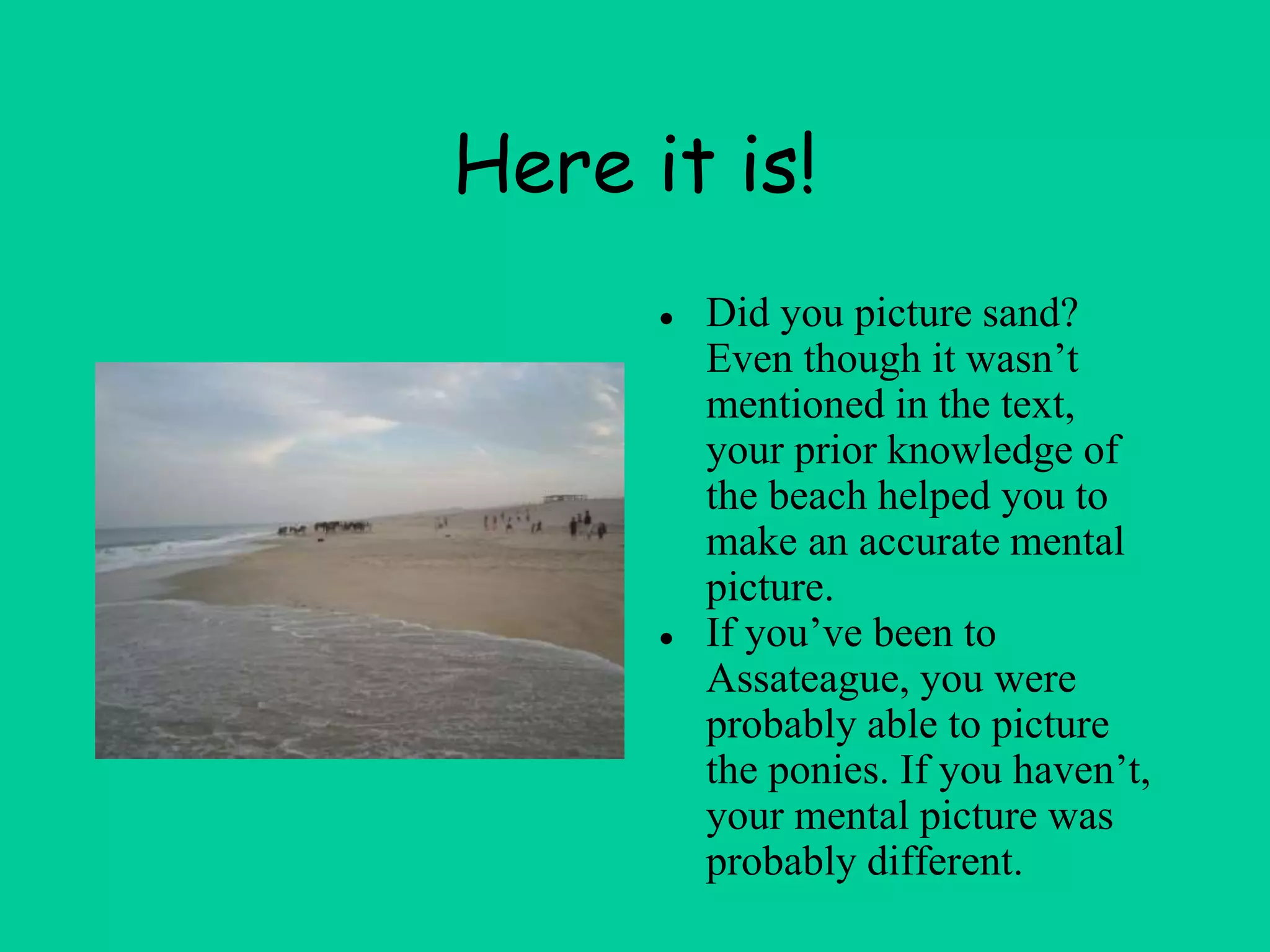
Far in the distance, a group of ponies huddled
in the surf, flicking away the biting insects
with the swishing of their tails. Excited
visitors watched them from the further up
the beach, taking pictures and chatting.
Try visualizing the scene below:
Here it is!
● Did you picture sand?
Even though it wasn’t
mentioned in the text,
your prior knowledge of
the beach helped you to
make an accurate mental
picture.
● If you’ve been to
Assateague, you were
probably able to picture
the ponies. If you haven’t,
your mental picture was
probably different.
Pay attention to an author’s clues!
● Sometimes what we read will not match our
prior knowledge. Read this:
The fences and fields of Shelburne Farms
stretched down the gentle slope toward the
barn.
But…
● The fences and fields of Shelburne Farms
stretched down the gentle slope toward the
barn.
● But this was not a regular barn. Instead, it
looked more like a palace. One round turret
towered over the side wall.
Here is the clue!
● The fences and fields of Shelburne Farms
stretched down the gentle slope toward the
barn.
● But this was not a regular barn. Instead, it
looked more like a palace. One round turret
towered over the side wall.
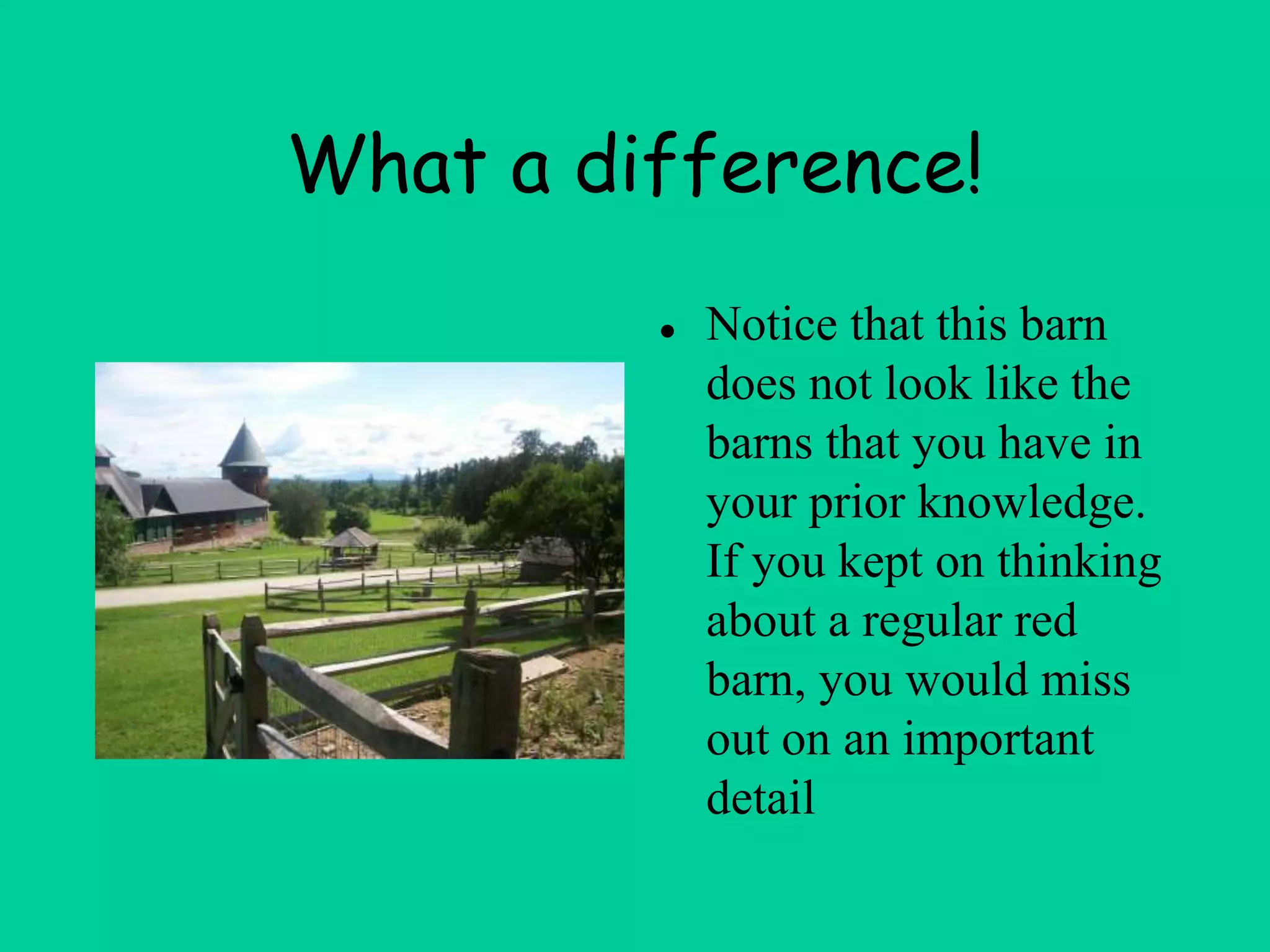
What a difference!
● Notice that this barn
does not look like the
barns that you have in
your prior knowledge.
If you kept on thinking
about a regular red
barn, you would miss
out on an important
detail
You can visualize whenever
you read
● “What a day for a class trip!” Ricky said.
● “I know. I can’t wait to get back in the boats
and go canoeing some more,” Ana replied.
● “I just wish it weren’t so cold,” Ricky
sighed.
Try sketching what you visualize based on the dialogue below.
What are some things that
you drew in your picture?
● Based on your prior knowledge and the
clues in the text, what did you put in your
picture?
● Canoe
● Lake
● Forest
● Students
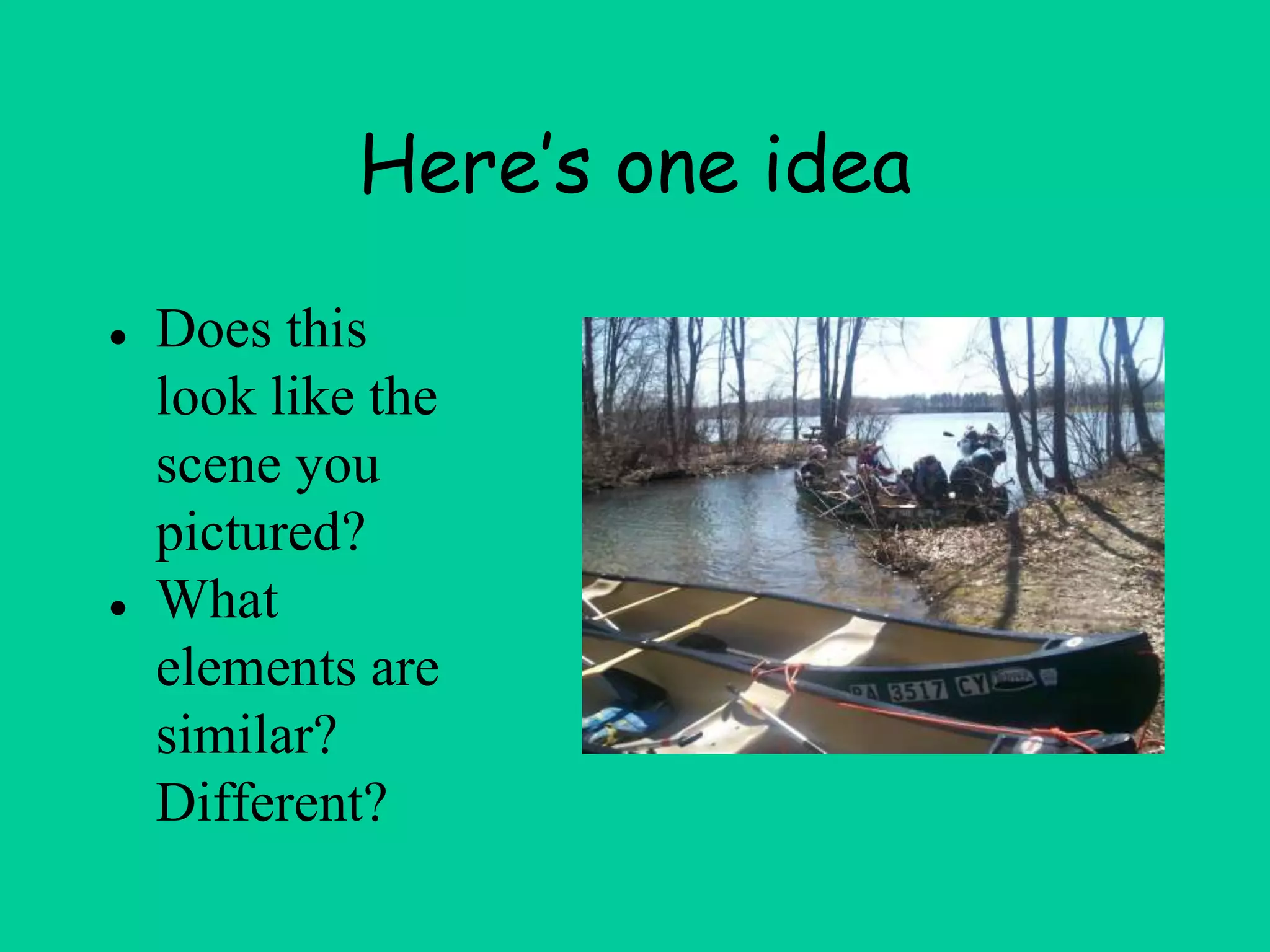
Here’s one idea
● Does this
look like the
scene you
pictured?
● What
elements are
similar?
Different?
What have we learned?
● Visualizing is an important reading strategy
● We need to use the author’s clues and our
own prior knowledge to build a mental
image
● Everyone builds unique mental images
● Authors leave clues to let us know when our
prior knowledge will not be a help

Intro to Visualizing (Reading Strategy) | Alex Noudelman

  • 1.
  • 2.
    Visualizing is… ● Areading strategy ● A way to help you understand what you read ● An important tool for reading fiction and nonfiction ● Making a picture in your mind
  • 3.
    How do youvisualize? ● You use the words in the text to make a picture in your mind ● It’s like seeing a “movie in your mind” ● Visualize this: A green tractor
  • 4.
    Your mental image ●How was your mental image different from the one on the screen? ● We use our background knowledge to help us visualize what is in the text ● Different people bring different background knowledge, and so they visualize differently
  • 5.
    Try this: The purpleflowers bloomed, lifting their petals up to the sun. They were surrounded by the bright green lily pads that covered the surface of the pond. Can you picture this scene in your mind?
  • 6.
    Did your mentalimage look like this? The purple flowers bloomed, lifting their petals up to the sun. They were surrounded by the bright green lily pads that covered the surface of the pond.
  • 7.
    More practice! ● Makethis picture in your mind: A grassy path led into a garden of tall grasses, black-eyed susans, and purple coneflowers .
  • 8.
    Was your mentalimage like this? A grassy path led into a garden of tall grasses, black-eyed susans, and purple coneflowers . If your mental image was different, why? What did you add or change? How did your background knowledge affect your mental image?
  • 9.
    Now try this! ●The sleek, modern museum rose at the end of the parking lot. A tower that looked just like an airport control tower glistened in the center. To the right curved a silver, round building. A tree was to the left.
  • 10.
    How did youdo? ●Which details were probably most important? ●Which were the easiest to visualize? Which were the hardest?
  • 11.
    The right picture? ●Because each person has unique background knowledge, everyone will visualize differently ● However, you need to make sure that you are using the text clues to visualize
  • 12.
    For example… ● Thispicture would not match the details of the paragraph at all! ● The sleek, modern museum rose at the end of the parking lot. A tower that looked just like an airport control tower glistened in the center. To the right curved a silver, round building. A tree rose to the left.
  • 13.
    This is neat,but why? ● Why visualize? ● Here are three reasons: ● Visualizing helps us to process text more actively. Because we have to use our prior knowledge to visualize, we are reading more carefully ● Visualizing can help you to figure out what is going on in the story ● Visualizing is fun!
  • 14.
    Using prior knowledgeto visualize ● Visualizing is making a picture in your mind based on the text. But authors don’t explain every single detail. Sometimes, you need to fill in with your background knowledge.
  • 15.
    What do youhave to fill in with your background knowledge? Far in the distance, a group of ponies huddled in the surf, flicking away the biting insects with the swishing of their tails. Excited visitors watched them from the further up the beach, taking pictures and chatting. Try visualizing the scene below:
  • 16.
    Here it is! ●Did you picture sand? Even though it wasn’t mentioned in the text, your prior knowledge of the beach helped you to make an accurate mental picture. ● If you’ve been to Assateague, you were probably able to picture the ponies. If you haven’t, your mental picture was probably different.
  • 17.
    Pay attention toan author’s clues! ● Sometimes what we read will not match our prior knowledge. Read this: The fences and fields of Shelburne Farms stretched down the gentle slope toward the barn.
  • 18.
    But… ● The fencesand fields of Shelburne Farms stretched down the gentle slope toward the barn. ● But this was not a regular barn. Instead, it looked more like a palace. One round turret towered over the side wall.
  • 19.
    Here is theclue! ● The fences and fields of Shelburne Farms stretched down the gentle slope toward the barn. ● But this was not a regular barn. Instead, it looked more like a palace. One round turret towered over the side wall.
  • 20.
    What a difference! ●Notice that this barn does not look like the barns that you have in your prior knowledge. If you kept on thinking about a regular red barn, you would miss out on an important detail
  • 21.
    You can visualizewhenever you read ● “What a day for a class trip!” Ricky said. ● “I know. I can’t wait to get back in the boats and go canoeing some more,” Ana replied. ● “I just wish it weren’t so cold,” Ricky sighed. Try sketching what you visualize based on the dialogue below.
  • 22.
    What are somethings that you drew in your picture? ● Based on your prior knowledge and the clues in the text, what did you put in your picture? ● Canoe ● Lake ● Forest ● Students
  • 23.
    Here’s one idea ●Does this look like the scene you pictured? ● What elements are similar? Different?
  • 24.
    What have welearned? ● Visualizing is an important reading strategy ● We need to use the author’s clues and our own prior knowledge to build a mental image ● Everyone builds unique mental images ● Authors leave clues to let us know when our prior knowledge will not be a help