PRINCIPLE:-
 In Abrasive Jet Machining (AJM),
abrasive particles are made to
impinge on the work material at a
high velocity. The jet of abrasive
particles is carried by carrier gas or
air.
 The high velocity stream of abrasive
is generated by converting the
pressure energy of the carrier gas or
air to its kinetic energy and hence
high velocity jet.
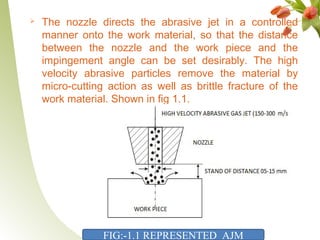
 The nozzle directs the abrasive jet in a controlled
manner onto the work material, so that the distance
between the nozzle and the work piece and the
impingement angle can be set desirably. The high
velocity abrasive particles remove the material by
micro-cutting action as well as brittle fracture of the
work material. Shown in fig 1.1.
FIG:-1.1 REPRESENTED AJM
PRoCEss:-
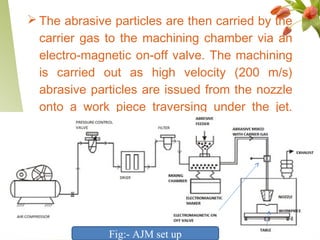
 In AJM, air is compressed in an air compressor and
compressed air at a pressure of around 5 bar is used as the
carrier gas. Gases like CO2, N2 can also use.
 The carrier gas is first passed through a pressure regulator to
obtain the desired working pressure. The gas is then passed
through an air dryer to remove any residual water vapour. To
remove any oil vapour or particulate contaminant the same is
passed through a series of filters. Then the carrier gas enters a
closed chamber known as the mixing chamber. The abrasive
particles enter the chamber from a hopper through a metallic
sieve. The sieve is constantly vibrated by an electromagnetic
shaker.
Abrasives:
Al2O3
Silicon carbide (cutting harder materials)
Glass powder (light polishing,deburring)
Dolomite (light cleaning and etching)
Sodium bicarbonate
 The abrasive particles are then carried by the
carrier gas to the machining chamber via an
electro-magnetic on-off valve. The machining
is carried out as high velocity (200 m/s)
abrasive particles are issued from the nozzle
onto a work piece traversing under the jet.
Fig:- AJM set up
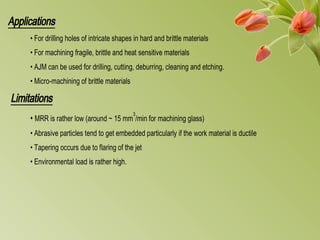
Applications
• For drilling holes of intricate shapes in hard and brittle materials
• For machining fragile, brittle and heat sensitive materials
• AJM can be used for drilling, cutting, deburring, cleaning and etching.
• Micro-machining of brittle materials
Limitations
• MRR is rather low (around ~ 15 mm
3
/min for machining glass)
• Abrasive particles tend to get embedded particularly if the work material is ductile
• Tapering occurs due to flaring of the jet
• Environmental load is rather high.
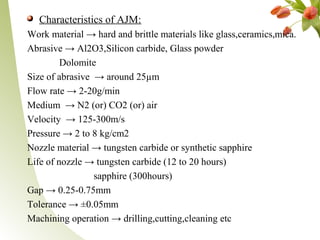
Characteristics of AJM:
Work material → hard and brittle materials like glass,ceramics,mica.
Abrasive → Al2O3,Silicon carbide, Glass powder
Dolomite
Size of abrasive → around 25µm
Flow rate → 2-20g/min
Medium → N2 (or) CO2 (or) air
Velocity → 125-300m/s
Pressure → 2 to 8 kg/cm2
Nozzle material → tungsten carbide or synthetic sapphire
Life of nozzle → tungsten carbide (12 to 20 hours)
sapphire (300hours)
Gap → 0.25-0.75mm
Tolerance → ±0.05mm
Machining operation → drilling,cutting,cleaning etc
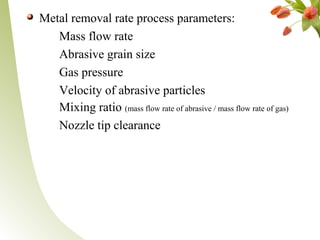
Metal removal rate process parameters:
Mass flow rate
Abrasive grain size
Gas pressure
Velocity of abrasive particles
Mixing ratio (mass flow rate of abrasive / mass flow rate of gas)
Nozzle tip clearance
AdvantagesAdvantages
• Low initial investment
• No direct contact between tool and
workpiece
• Good surface finish
• Used to cut intricate hole shapes in hard and
brittle materials
DisadvantagesDisadvantages
Material removal rate is slow
Soft material cannot be machined
Machining accuracy is poor
Nozzle wear rate is high
Abrasive powder cannot be reused
ApplicationsApplications
Fine drilling and micro welding
Machining of semiconductors
Machining of hard and brittle materials
Cleaning and polishing of plastics ,nylon
components
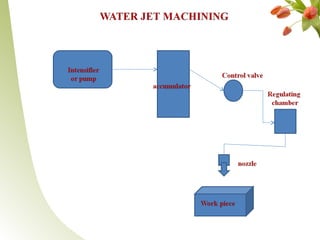
WATER JET MACHININGWATER JET MACHINING
Work material → soft and non metallic materials like paper board, wood,
plastics, rubber
Mass flow rate → 8 lit /min
Pressure of water – 100 to 1000 Mpa
Tool - water or water with additives.
Additives – glycerin, polyethylene oxide.
Nozzle material → tungsten carbide or synthetic sapphire
Power – 45 Kw
Metal removal rate – 0.6 mm3 /s
Feed rate – 1 to 4 mm/s
Stand off distances – 2-50mm
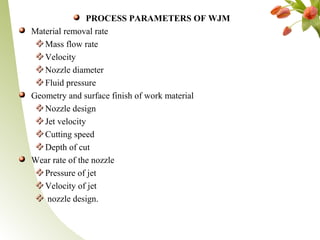
PROCESS PARAMETERS OF WJM
Material removal rate
Mass flow rate
Velocity
Nozzle diameter
Fluid pressure
Geometry and surface finish of work material
Nozzle design
Jet velocity
Cutting speed
Depth of cut
Wear rate of the nozzle
Pressure of jet
Velocity of jet
nozzle design.
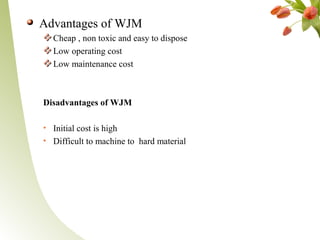
Advantages of WJM
Cheap , non toxic and easy to dispose
Low operating cost
Low maintenance cost
Disadvantages of WJM
• Initial cost is high
• Difficult to machine to hard material

Ajm unit 2

  • 1.
    PRINCIPLE:-  In AbrasiveJet Machining (AJM), abrasive particles are made to impinge on the work material at a high velocity. The jet of abrasive particles is carried by carrier gas or air.  The high velocity stream of abrasive is generated by converting the pressure energy of the carrier gas or air to its kinetic energy and hence high velocity jet.
  • 2.
     The nozzledirects the abrasive jet in a controlled manner onto the work material, so that the distance between the nozzle and the work piece and the impingement angle can be set desirably. The high velocity abrasive particles remove the material by micro-cutting action as well as brittle fracture of the work material. Shown in fig 1.1. FIG:-1.1 REPRESENTED AJM
  • 3.
    PRoCEss:-  In AJM,air is compressed in an air compressor and compressed air at a pressure of around 5 bar is used as the carrier gas. Gases like CO2, N2 can also use.  The carrier gas is first passed through a pressure regulator to obtain the desired working pressure. The gas is then passed through an air dryer to remove any residual water vapour. To remove any oil vapour or particulate contaminant the same is passed through a series of filters. Then the carrier gas enters a closed chamber known as the mixing chamber. The abrasive particles enter the chamber from a hopper through a metallic sieve. The sieve is constantly vibrated by an electromagnetic shaker.
  • 4.
    Abrasives: Al2O3 Silicon carbide (cuttingharder materials) Glass powder (light polishing,deburring) Dolomite (light cleaning and etching) Sodium bicarbonate
  • 5.
     The abrasiveparticles are then carried by the carrier gas to the machining chamber via an electro-magnetic on-off valve. The machining is carried out as high velocity (200 m/s) abrasive particles are issued from the nozzle onto a work piece traversing under the jet. Fig:- AJM set up
  • 6.
    Applications • For drillingholes of intricate shapes in hard and brittle materials • For machining fragile, brittle and heat sensitive materials • AJM can be used for drilling, cutting, deburring, cleaning and etching. • Micro-machining of brittle materials Limitations • MRR is rather low (around ~ 15 mm 3 /min for machining glass) • Abrasive particles tend to get embedded particularly if the work material is ductile • Tapering occurs due to flaring of the jet • Environmental load is rather high.
  • 7.
    Characteristics of AJM: Workmaterial → hard and brittle materials like glass,ceramics,mica. Abrasive → Al2O3,Silicon carbide, Glass powder Dolomite Size of abrasive → around 25µm Flow rate → 2-20g/min Medium → N2 (or) CO2 (or) air Velocity → 125-300m/s Pressure → 2 to 8 kg/cm2 Nozzle material → tungsten carbide or synthetic sapphire Life of nozzle → tungsten carbide (12 to 20 hours) sapphire (300hours) Gap → 0.25-0.75mm Tolerance → ±0.05mm Machining operation → drilling,cutting,cleaning etc
  • 8.
    Metal removal rateprocess parameters: Mass flow rate Abrasive grain size Gas pressure Velocity of abrasive particles Mixing ratio (mass flow rate of abrasive / mass flow rate of gas) Nozzle tip clearance
  • 9.
    AdvantagesAdvantages • Low initialinvestment • No direct contact between tool and workpiece • Good surface finish • Used to cut intricate hole shapes in hard and brittle materials
  • 10.
    DisadvantagesDisadvantages Material removal rateis slow Soft material cannot be machined Machining accuracy is poor Nozzle wear rate is high Abrasive powder cannot be reused
  • 11.
    ApplicationsApplications Fine drilling andmicro welding Machining of semiconductors Machining of hard and brittle materials Cleaning and polishing of plastics ,nylon components
  • 12.
    WATER JET MACHININGWATERJET MACHINING Work material → soft and non metallic materials like paper board, wood, plastics, rubber Mass flow rate → 8 lit /min Pressure of water – 100 to 1000 Mpa Tool - water or water with additives. Additives – glycerin, polyethylene oxide. Nozzle material → tungsten carbide or synthetic sapphire Power – 45 Kw Metal removal rate – 0.6 mm3 /s Feed rate – 1 to 4 mm/s Stand off distances – 2-50mm
  • 14.
    PROCESS PARAMETERS OFWJM Material removal rate Mass flow rate Velocity Nozzle diameter Fluid pressure Geometry and surface finish of work material Nozzle design Jet velocity Cutting speed Depth of cut Wear rate of the nozzle Pressure of jet Velocity of jet nozzle design.
  • 15.
    Advantages of WJM Cheap, non toxic and easy to dispose Low operating cost Low maintenance cost Disadvantages of WJM • Initial cost is high • Difficult to machine to hard material