Chapter 7: Air-Sea Interaction


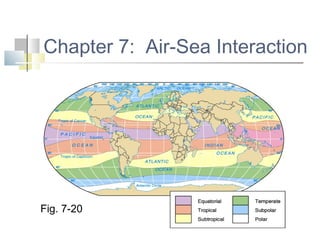
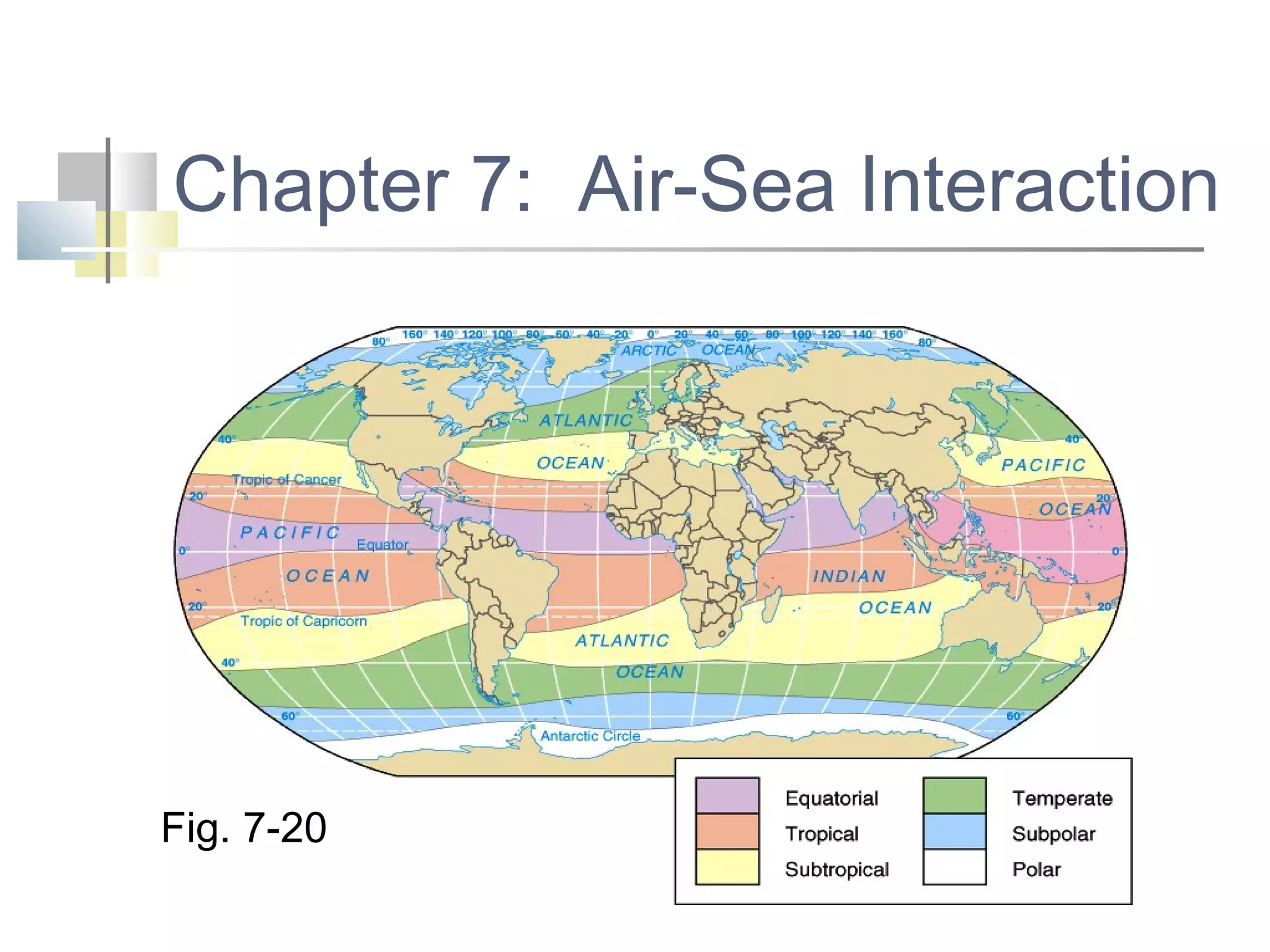
Fig. 7-20
 Atmosphere and ocean one
  interconnected system
 Change in atmosphere affects

  ocean
 Change in ocean affects

  atmosphere
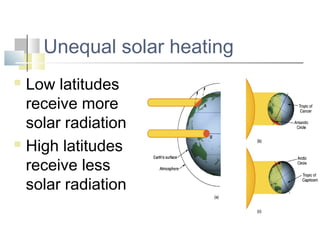
Unequal solar heating
 Low latitudes
  receive more
  solar radiation
 High latitudes

  receive less
  solar radiation
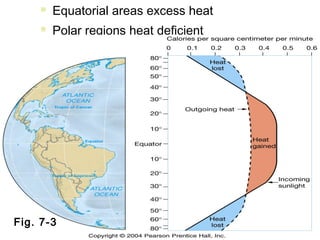
   Equatorial areas excess heat
        Polar regions heat deficient


Fig. 7-3
Insolation factors
 Latitude
 Thickness of atmosphere

 Albedo

 Seasons

 Time of day

 Vegetation, bare rock, etc.
Atmosphere (troposphere)
   N2, O2, Ar
 Temperature decreases with
  increasing altitude
 Warm air is less dense than cool air

 Moist air is less dense than dry air

 Wind flows from high pressure to low

  pressure
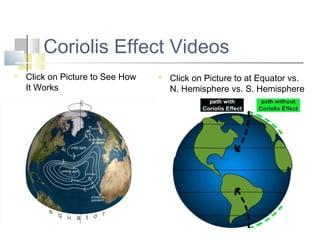
Coriolis Effect
 Deflection in motion of moving
  objects
 Rotation of Earth

 Important for objects that move

  long distances/long times
 Maximum deflection at poles

 Negligible deflection at equator
Coriolis Effect Videos
   Click on Picture to See How      Click on Picture to at Equator vs.
    It Works                          N. Hemisphere vs. S. Hemisphere
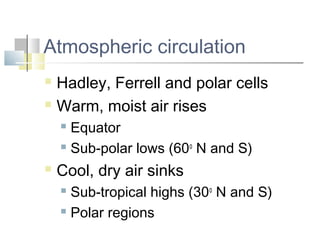
Atmospheric circulation
 Hadley, Ferrell and polar cells
 Warm, moist air rises

     Equator
     Sub-polar lows (60 o N and S)

   Cool, dry air sinks
     Sub-tropical highs (30o N and S)
     Polar regions
Windbelts
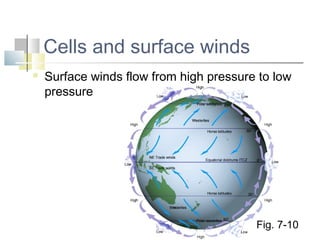
Cells and surface winds
   Surface winds flow from high pressure to low
    pressure


                                         Fig. 7-10
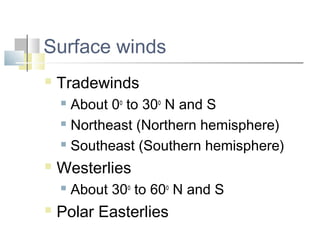
Surface winds
   Tradewinds
     About 0o to 30o N and S
     Northeast (Northern hemisphere)

     Southeast (Southern hemisphere)

   Westerlies
       About 30o to 60o N and S
   Polar Easterlies
Idealized 3-cell model
   Complicated by
     Seasons, tilt
     Differences in heat capacities of land

      and ocean
     Uneven distribution of land and ocean

     Example: monsoon winds in Asia

      and Indian Ocean
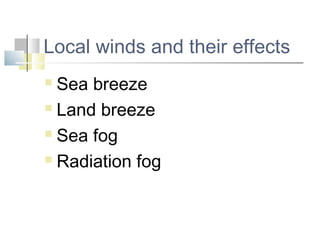
Local winds and their effects
 Sea breeze
 Land breeze

 Sea fog

 Radiation fog
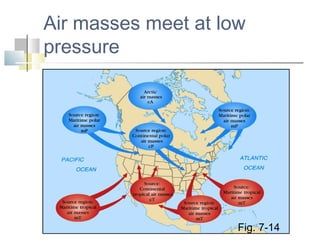
Air masses meet at low
pressure


                     Fig. 7-14
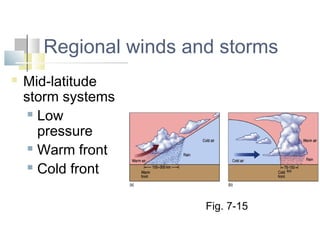
Regional winds and storms
   Mid-latitude
    storm systems
      Low

       pressure
      Warm front

      Cold front


                       Fig. 7-15
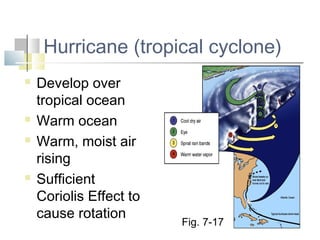
Hurricane (tropical cyclone)
   Develop over
    tropical ocean
   Warm ocean
   Warm, moist air
    rising
   Sufficient
    Coriolis Effect to
    cause rotation
                         Fig. 7-17
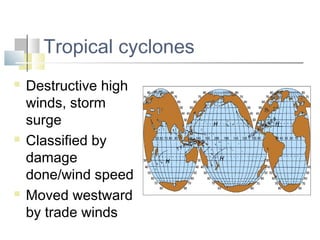
Tropical cyclones
   Destructive high
    winds, storm
    surge
   Classified by
    damage
    done/wind speed
   Moved westward
    by trade winds
Sea ice vs. icebergs
   Sea ice frozen seawater
     Especially important in Arctic
     Pack ice, polar ice, fast ice

   Icebergs broken pieces of glacier
     Float in ocean
     Shelf ice (extremely large plate-like

      icebergs)
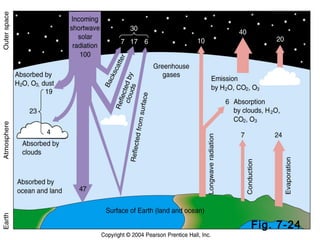
Greenhouse effect

 Energy from Sun shorter wavelengths
 Energy reradiated from Earth longer

  wavelengths
Fig. 7-24
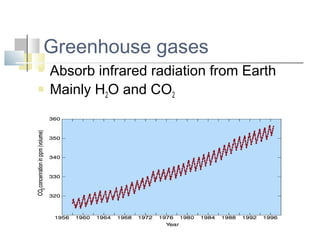
Greenhouse gases
   Absorb infrared radiation from Earth
   Mainly H2O and CO2
Other greenhouse gases
 Minor gases: methane, nitrous
  oxides, ozone, chlorofluorocarbons
 Anthropogenic sources of

  greenhouse gases contribute to
  global warming
     Increase in global temperature
     Some natural

     Most artificial
CO2 in oceans
   CO2 high solubility in seawater
   Excess CO2 in atmosphere locked
    up in oceans
       CaCO3 biogenic sediments
   Stimulate growth of phytoplankton
    to use up CO2 in ocean
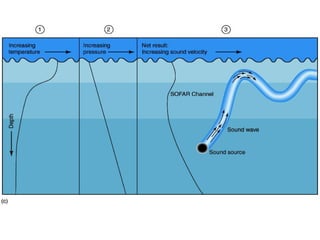
SOFAR Channel
   Sound travels far
     Velocity of sound is temperature-
      dependent
     Use sound to measure

      temperature in much of ocean
        ATOC (Acoustic Thermometry

         of Ocean Climate)
End of Chapter 7: Air-Sea
Interaction

Air-Sea Interaction

  • 1.
    Chapter 7: Air-SeaInteraction Fig. 7-20
  • 2.
     Atmosphere andocean one interconnected system  Change in atmosphere affects ocean  Change in ocean affects atmosphere
  • 3.
    Unequal solar heating Low latitudes receive more solar radiation  High latitudes receive less solar radiation
  • 4.
     Equatorial areas excess heat  Polar regions heat deficient Fig. 7-3
  • 5.
    Insolation factors  Latitude Thickness of atmosphere  Albedo  Seasons  Time of day  Vegetation, bare rock, etc.
  • 6.
    Atmosphere (troposphere)  N2, O2, Ar  Temperature decreases with increasing altitude  Warm air is less dense than cool air  Moist air is less dense than dry air  Wind flows from high pressure to low pressure
  • 7.
    Coriolis Effect  Deflectionin motion of moving objects  Rotation of Earth  Important for objects that move long distances/long times  Maximum deflection at poles  Negligible deflection at equator
  • 8.
    Coriolis Effect Videos  Click on Picture to See How  Click on Picture to at Equator vs. It Works N. Hemisphere vs. S. Hemisphere
  • 9.
    Atmospheric circulation  Hadley,Ferrell and polar cells  Warm, moist air rises  Equator  Sub-polar lows (60 o N and S)  Cool, dry air sinks  Sub-tropical highs (30o N and S)  Polar regions
  • 10.
  • 11.
    Cells and surfacewinds  Surface winds flow from high pressure to low pressure Fig. 7-10
  • 12.
    Surface winds  Tradewinds  About 0o to 30o N and S  Northeast (Northern hemisphere)  Southeast (Southern hemisphere)  Westerlies  About 30o to 60o N and S  Polar Easterlies
  • 13.
    Idealized 3-cell model  Complicated by  Seasons, tilt  Differences in heat capacities of land and ocean  Uneven distribution of land and ocean  Example: monsoon winds in Asia and Indian Ocean
  • 14.
    Local winds andtheir effects  Sea breeze  Land breeze  Sea fog  Radiation fog
  • 15.
    Air masses meetat low pressure Fig. 7-14
  • 16.
    Regional winds andstorms  Mid-latitude storm systems  Low pressure  Warm front  Cold front Fig. 7-15
  • 17.
    Hurricane (tropical cyclone)  Develop over tropical ocean  Warm ocean  Warm, moist air rising  Sufficient Coriolis Effect to cause rotation Fig. 7-17
  • 18.
    Tropical cyclones  Destructive high winds, storm surge  Classified by damage done/wind speed  Moved westward by trade winds
  • 19.
    Sea ice vs.icebergs  Sea ice frozen seawater  Especially important in Arctic  Pack ice, polar ice, fast ice  Icebergs broken pieces of glacier  Float in ocean  Shelf ice (extremely large plate-like icebergs)
  • 20.
    Greenhouse effect  Energyfrom Sun shorter wavelengths  Energy reradiated from Earth longer wavelengths
  • 21.
  • 22.
    Greenhouse gases  Absorb infrared radiation from Earth  Mainly H2O and CO2
  • 23.
    Other greenhouse gases Minor gases: methane, nitrous oxides, ozone, chlorofluorocarbons  Anthropogenic sources of greenhouse gases contribute to global warming  Increase in global temperature  Some natural  Most artificial
  • 24.
    CO2 in oceans  CO2 high solubility in seawater  Excess CO2 in atmosphere locked up in oceans  CaCO3 biogenic sediments  Stimulate growth of phytoplankton to use up CO2 in ocean
  • 25.
    SOFAR Channel  Sound travels far  Velocity of sound is temperature- dependent  Use sound to measure temperature in much of ocean  ATOC (Acoustic Thermometry of Ocean Climate)
  • 27.
    End of Chapter7: Air-Sea Interaction