AIR POLLUTION & CONTROL
MD MOUDUD HASAN
LECTURER
DEPARTMENT OF AGRICULTURAL AND INDUSTRIAL ENGINEERING
FACULTY OF ENGINEERING
HAJEE MOHAMMAD DANESH SCIENCE AND TECHNOLOGY UNIVERSITY
DINAJPUR
1
2
Definition
 Air pollution means any solid, liquid or gaseous substances present
in the atmosphere in such concentrations that may tend to be
injurious to human beings or other living creatures or plants or
property or enjoyment.
 Perkins (1974) defined air pollution as “air pollution means the
presence in the outdoor atmosphere of one or more contaminants
such as dust, fumes, gas, mist, odour, smoke or vapour in
quantities or characteristics and of duration such as to be injurious
to human, plant or animal life or to property or which
unreasonably interferes with the comfortable enjoyment of life and
property.”
3
Sources of Air Pollution
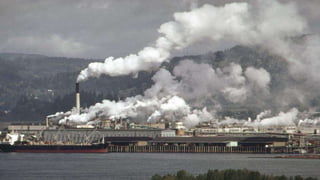
 (a) Point sources: These are the sources which cause direct release
of air pollutants. Example The emission of gases from an industry
through a chimney.
 (b) Non-point sources: These are the sources which release some
substances which are capable of undergoing chemical reactions in
the atmosphere to generate air pollutants. Example Photochemical
smog.
 (c) Man-made or Anthropogenic sources: These are the sources
which generate air pollutants by human activities. Example
Vehicular discharges, burning of fossil fuels, population explosion
etc.
4
5
Sources of Air Pollution
 (i) Vehicular discharges: A mixture of CO, CO2, and NOx are emitted
as exhaust gases from automobiles. They cause air pollution as such.
Moreover, they also react with oxides of nitrogen in the presence of
sunlight to produce highly toxic photochemical smog.
 (ii) Burning of conventional fossil fuels: Burning of coal, lignite,
natural gas and combustion of petrol/diesel/CNG produces gaseous
by-products like CO, SO2 NOx which are toxic. They pollute the air
and make it unfit for breathing.
 (iii) Population explosion: It creates the emission of Greenhouse
gases, global warming, destruction and loss of forest cover and
wildlife etc.
6
The Natural and Man-made (Synthetic) Air
Polutants and Their Consequences
 (i) Carbon monoxide (CO)
 Sources: Forest fires, agricultural burning, incomplete combustion of
fuels, tobacco smoking, automobile exhausts, etc.
 Effects: Toxicity, blood poisoning leading to death, increased
proneness to accidents.
 (ii) Sulphur dioxide (SO2)
 Sources: Combustion of coal and petroleum products, sulphuric acid
plants, power houses.
 Effects: Irritation of throat and eyes, suffocation, aggravation of
asthma and chronic bronchitis.
7
The Natural and Man-made (Synthetic) Air
Pollutants and Their Consequences
 (iii) Oxides of Nitrogen (NOx)
 Sources: Nitric acid plants, automobile exhausts, explosives and fertilizer
industries, power stations.
 Effects: Headache, respiratory irritation, impairment of lung defenses,
corrosion of teeth, loss of appetite.
 (iv) Mercury (Hg)
 Sources: Mining and refining of Hg, industries linked with manufacture of
medicinal products, pesticides which use organic mercurials.
 Effects: Inhalation of Hg vapours cause toxic effects, highly toxic organo-
mercurials may cause irreversible damage to brain and nervous system.
8
The Natural and Man-made (Synthetic) Air
Polutants and Their Consequences
 (v) Lead (Pb)
 Sources: Automobile emissions, electroplating waste, plumbing, lead paint
industry, printing etc.
 Effects: Cause liver and kidney damages, mental retardation in children,
abnormalities in fertility and pregnancy, gastro intestinal damage.
9
HARMFUL EFFECTS OF AIR POLLUTION
ON MATERIALS
 The air pollution affects the materials in following ways:-
 (i) Abrasion (loss of material by wind with coarser particles).
 (ii) Corrosion ( acidic effect of rain water).
 (iii) Deposition and removal (adhering substances and removal of
material by rusting.)
 (iv) Direct chemical attack (effect of gases like SO2).
 (v) Indirect chemical attack (action of acid or its fumes on stones like
marble, corrosion of reinforcement due to diffusion of gases in RCC).
10
The Measures Used for Controlling Air
Pollution
 The most effective method to control air pollution is to prevent the
formation of pollutants or to reduce their emission at the source itself.
 (i) Source correction methods: In case of industrial pollutants, the
designing and development of plants may be so selected so as to have
minimum emission of air pollutants.
 Examples
 (a) By suitable design modification of the tanks, evaporation from
petroleum refineries can be minimized.
 (b) Use of correct grade of raw material like low-sulphur oil and coal is
recommended.
11
The Measures Used for Controlling Air
Pollution
 (ii) Cleaning of gaseous effluents: These techniques control pollution by the removal
of pollutants from the exhaust. These methods are used in combination with source
correction methods.
 (a) For gaseous pollutants: The gaseous pollutants are removed by absorption in a
liquid, or adsorption on a solid. Catalytic converters are also used as they convert
gaseous air pollutants into harmless gases.
 (b) For particulates: Following techniques are generally used for control of particulate
emissions:
 Gravitational settling chambers,
 Cyclone separators,
 Fabric Filters,
 Electrostatic precipitators,
 Wet scrubber etc.
12
13

Air pollution and control

  • 1.
    AIR POLLUTION &CONTROL MD MOUDUD HASAN LECTURER DEPARTMENT OF AGRICULTURAL AND INDUSTRIAL ENGINEERING FACULTY OF ENGINEERING HAJEE MOHAMMAD DANESH SCIENCE AND TECHNOLOGY UNIVERSITY DINAJPUR 1
  • 2.
  • 3.
    Definition  Air pollutionmeans any solid, liquid or gaseous substances present in the atmosphere in such concentrations that may tend to be injurious to human beings or other living creatures or plants or property or enjoyment.  Perkins (1974) defined air pollution as “air pollution means the presence in the outdoor atmosphere of one or more contaminants such as dust, fumes, gas, mist, odour, smoke or vapour in quantities or characteristics and of duration such as to be injurious to human, plant or animal life or to property or which unreasonably interferes with the comfortable enjoyment of life and property.” 3
  • 4.
    Sources of AirPollution  (a) Point sources: These are the sources which cause direct release of air pollutants. Example The emission of gases from an industry through a chimney.  (b) Non-point sources: These are the sources which release some substances which are capable of undergoing chemical reactions in the atmosphere to generate air pollutants. Example Photochemical smog.  (c) Man-made or Anthropogenic sources: These are the sources which generate air pollutants by human activities. Example Vehicular discharges, burning of fossil fuels, population explosion etc. 4
  • 5.
  • 6.
    Sources of AirPollution  (i) Vehicular discharges: A mixture of CO, CO2, and NOx are emitted as exhaust gases from automobiles. They cause air pollution as such. Moreover, they also react with oxides of nitrogen in the presence of sunlight to produce highly toxic photochemical smog.  (ii) Burning of conventional fossil fuels: Burning of coal, lignite, natural gas and combustion of petrol/diesel/CNG produces gaseous by-products like CO, SO2 NOx which are toxic. They pollute the air and make it unfit for breathing.  (iii) Population explosion: It creates the emission of Greenhouse gases, global warming, destruction and loss of forest cover and wildlife etc. 6
  • 7.
    The Natural andMan-made (Synthetic) Air Polutants and Their Consequences  (i) Carbon monoxide (CO)  Sources: Forest fires, agricultural burning, incomplete combustion of fuels, tobacco smoking, automobile exhausts, etc.  Effects: Toxicity, blood poisoning leading to death, increased proneness to accidents.  (ii) Sulphur dioxide (SO2)  Sources: Combustion of coal and petroleum products, sulphuric acid plants, power houses.  Effects: Irritation of throat and eyes, suffocation, aggravation of asthma and chronic bronchitis. 7
  • 8.
    The Natural andMan-made (Synthetic) Air Pollutants and Their Consequences  (iii) Oxides of Nitrogen (NOx)  Sources: Nitric acid plants, automobile exhausts, explosives and fertilizer industries, power stations.  Effects: Headache, respiratory irritation, impairment of lung defenses, corrosion of teeth, loss of appetite.  (iv) Mercury (Hg)  Sources: Mining and refining of Hg, industries linked with manufacture of medicinal products, pesticides which use organic mercurials.  Effects: Inhalation of Hg vapours cause toxic effects, highly toxic organo- mercurials may cause irreversible damage to brain and nervous system. 8
  • 9.
    The Natural andMan-made (Synthetic) Air Polutants and Their Consequences  (v) Lead (Pb)  Sources: Automobile emissions, electroplating waste, plumbing, lead paint industry, printing etc.  Effects: Cause liver and kidney damages, mental retardation in children, abnormalities in fertility and pregnancy, gastro intestinal damage. 9
  • 10.
    HARMFUL EFFECTS OFAIR POLLUTION ON MATERIALS  The air pollution affects the materials in following ways:-  (i) Abrasion (loss of material by wind with coarser particles).  (ii) Corrosion ( acidic effect of rain water).  (iii) Deposition and removal (adhering substances and removal of material by rusting.)  (iv) Direct chemical attack (effect of gases like SO2).  (v) Indirect chemical attack (action of acid or its fumes on stones like marble, corrosion of reinforcement due to diffusion of gases in RCC). 10
  • 11.
    The Measures Usedfor Controlling Air Pollution  The most effective method to control air pollution is to prevent the formation of pollutants or to reduce their emission at the source itself.  (i) Source correction methods: In case of industrial pollutants, the designing and development of plants may be so selected so as to have minimum emission of air pollutants.  Examples  (a) By suitable design modification of the tanks, evaporation from petroleum refineries can be minimized.  (b) Use of correct grade of raw material like low-sulphur oil and coal is recommended. 11
  • 12.
    The Measures Usedfor Controlling Air Pollution  (ii) Cleaning of gaseous effluents: These techniques control pollution by the removal of pollutants from the exhaust. These methods are used in combination with source correction methods.  (a) For gaseous pollutants: The gaseous pollutants are removed by absorption in a liquid, or adsorption on a solid. Catalytic converters are also used as they convert gaseous air pollutants into harmless gases.  (b) For particulates: Following techniques are generally used for control of particulate emissions:  Gravitational settling chambers,  Cyclone separators,  Fabric Filters,  Electrostatic precipitators,  Wet scrubber etc. 12
  • 13.