CHARACTERIZATION OF
CELL LINES AND ITS
APPLICATIONS
BY
AISHWARYA DANDE
M.PHARMACY 1ST YEAR 2ND SEM
G. PULLAREDDY COLLEGE OF PHARMACY
DEPARTMENT: PHARMACEUTICAL ANALYSIS
SUBJECT: MODERN BIO-ANALYTICAL TECHNIQUES
ROLL NO: 170119885001
• INDEX
• 1. Cell lines
• 2. Methods for characterization of cell lines
• 3. Applications
• CELL LINE:
• A cell line is a permanently established cell culture that will proliferate
indefinitely given appropriate fresh medium and space.
• What are cell lines used for?
• Cell lines have revolutionized scientific research and are being used in vaccine
production, testing drug metabolism and cytotoxicity, antibody production, study
of gene function, generation of artificial tissues and synthesis of biological
compounds
• Characterization of a cell line is vital for determining its functionality and in
proving its authenticity as pure cell line. Special attention must be paid to the
possibility that the cell line has become cross-contaminated with an existing
continuous cell line or misidentified because of mislabeling or confusion in
handling DNA profiling. this has now become the major standard procedure for
cell line identification, and a standard procedure with universal application.
• The various important factors for cell line characterization are:
• (1) It leads to authentication or confirmation that the cell line is not cross-
contaminated or misidentified
• (2) It is confirmation of the species of origin
• (3) It is used for correlation with the tissue of origin, which comprises the
following characteristics: a) Identification of the lineage to which the cell
belongs b) Position of the cells within that lineage (i.e., the stem, precursor, or
differentiated status)
• (4) For determination whether the cell line is transformed or not:
• a) Whether the cell line is finite or continuous?
• b) Whether the cell line expresses properties associated with malignancy?
• (5) It indicates whether the cell line is prone to genetic instability and phenotypic
variation
• (6) Identification of specific cell lines within a group from the same origin,
selected cell strains, or hybrid cell lines, all of which require demonstration of
features unique to that cell line or cell strain
• PARAMETERS
• The nature of the technique used for characterization depends on the type of
work being carried out. some of the parameters are:
• 1. In case molecular technology, DNA profiling or analysis of gene expression
are most useful.
• 2. A cytology laboratory may prefer to use chromosome analysis(karyotyping) is
one of the best traditional methods for distinguishing among species.
chromosome banding patterns can be used to distinguish individual
chromosomes.
• Chromosome painting, explicitly using combinations of specific molecular
probes that hybridize to individual chromosomes, adds further resolution and
specificity to this technique. these probes identify individual chromosome pairs
and are species specific. Chromosome painting is a good method for
distinguishing between human and mouse chromosomes in potential cross-
contaminations
• 3. A laboratory with immunological capability may prefer to use MHC (major
histocompatibility complex) analysis coupled with lineage specific markers.
• METHODS FOR CHARACTERIZATION OF CELL LINES
• 1. Markers
• 2. Microscopy methods (By using cell morphology)
• 3. Chromosome content analysis methods
• 4. DNA analysis methods
• 1. MARKERS
• LINEAGE OR TISSUE MARKERS:
• The progression of cells down a particular differentiation pathway towards a
specific differentiated cell type and can be considered as a lineage, and as cells
progress down this path they acquire lineage markers specific to the lineage and
distinct from markers expressed by the stem cells.
• These markers often reflect the embryological origin of the cells from a
particular germ layer.
• Lineage markers are helpful in establishing the relationship of a particular cell
line to its tissue of origin. There are some lineage markers which are described as
follows:
• a) Cell surface antigen:
• These markers are particularly useful in sorting hematopoietic cells and have
also been effective in discriminating epithelium from mesenchymally derived
stroma with antibodies such as anti-EMA and anti-HMFG 1 and, distinguishing
among epithelial lineages, and identifying neuroectodermally derived cells (e.g.,
with anti-A2B5).
• b) Intermediate filament proteins:
• These are among the most widely used lineage or tissue markers. Glial fibrillary
acidic protein (GFAP) for astrocytes and desmin for muscle are the most specific,
whereas cytokeratin marks epithelial cells and mesothelium.
• c) Unique Markers:
• Unique markers include specific chromosomal aberrations (e.g., deletions,
translocations, polysomy), major histocompatibility (MHC) group antigens (e.g.,
HLA in humans), which are highly polymorphic, and DNA fingerprinting or
SLTR DNA profiling.
• Enzymic deficiencies, such as thymidine kinase deficiency (TK−) and drug
resistance such as vinblastine resistance (usually coupled to the expression of the
P-glycoprotein by one of the mdr genes that code for the efflux protein) are not
truly unique, but they may be used to distinguish among cell lines from the same
tissues but different donors.
• d) Differentiated products and functions:
• Haemoglobin for erythroid cells, myosin or tropomyosin for muscle, melanin for
melanocytes, and serum albumin for hepatocytes are examples of specific cell
type markers, but like all differentiation markers, they depend on the complete
expression of the differentiated phenotype.
• 2. MICROSCOPY METHODS
• CELL MORPHOLOGY:
• Study of the size, shape and structure of cell.
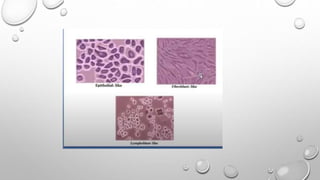
• Most cells in culture can be divided into five basic categories based on their
morphology. They are:
1. Fibroblastic/ Fibroblastoid (Fibroblast-like)
2. Epithelial/ Epithelioid (Epithelial-like)
3. Lymphoblast-like
4. Endothelial
5. Neuronal
• CONFLUENCY
• It is the term commonly used as a measure of the number of the cells in a cell
culture dish or a flask and refers to the coverage of the dish by the flask.
• For example, 100% conflueny means the dish is completely covered by the cells,
and therefore no more space is left for the cells to grow.
• OBSERVATION OF MORPHOLOGY
• Observation of morphology is the simplest and most direct technique used to
identify cells.
• Most of these are related to the plasticity of cellular morphology in response to
different culture conditions.
• For example, epithelial cells growing in the centre of a confluent sheet are
usually regular, polygonal, and with a clearly defined birefringent edge.
• Whereas the same cells growing at the edge of a patch may be more irregular and
distended and
• If transformed, may break away from the patch and become fibroblast-like in
shape.
• Alterations in the substrate and the constitution of the medium can also effect
cellular morphology.
• Comparative observations of cells should always be made at the same stage of
growth and cell density in the same medium, and for growth on the same
substrate.
• The terms “fibroblastic” and “epithelial” are used rather loosely in tissue culture
and often describe the appearance rather than the origin of the cells.
• Thus a bipolar or multipolar migratory cell, whose length is usually more than
the twice its width, would be called fibroblastic.
• A monolayer cell that is polygonal with more regular dimensions and that grows
in a discrete patch along with other cells is usually regarded as epithelial.
• When the identity of the cells has not been confirmed, the terms “fibroblast-like”
and “epithelium-like” should be used.
• “Lymphoblast-like” cells are spherical in shape and usually grown in suspension
without attaching to the surface.
• Endothelial cells are very flat have a central nucleus, are about 1-2 micrometer
thick and some are 10-20 micrometer in diameter.
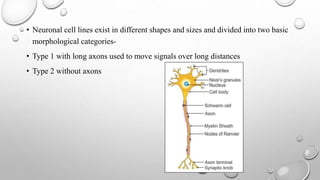
• Neuronal cell lines exist in different shapes and sizes and divided into two basic
morphological categories-
• Type 1 with long axons used to move signals over long distances
• Type 2 without axons
• TECHNIQUES
• 1. Inverted microscope
• 2. Phase contrast microscope
• 3. Photomicrography
• 4. Confocal microscope
• 1. INVERTED MICROSCOPY
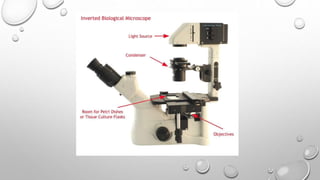
• The inverted microscope is one of the most important tools in the tissue culture
laboratory, but it is often used incorrectly.
• As the thickness of the closed culture vessel makes observation difficult from
above, because of the long working distance, the culture vessel is placed on the
stage, illuminated from above, and observed from below.
• As the thickness of the wall of the culture vessel still limits the working distance,
the maximum objective magnification is usually limited to 40X.
• The use of phase-contrast optics, where an annular light path is masked by a
corresponding dark ring in the objective and only diffracted light is visible,
enables unstained cells to be viewed with higher contrast than is available by
normal illumination.
• Because this means that the intensity of the light is increased, an infrared filter
should be incorporated for prolonged observation of cells.
• It is useful to keep a set of photographs at different cell densities for each cell
line, prepared shortly after acquisition and at intervals thereafter, as a record in
case a morphological change is subsequently suspected.
• Photographs of cell lines in regular use should be displayed above the inverted
microscope.
• Photographic records can be supplemented with photographs of stained
preparations and digital output from DNA profiling and stored with the cell line
record in a database or stored separately and linked to the cell line database.
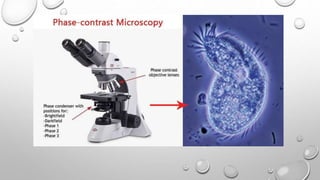
• 2.PHASE CONTRAST MICOSCOPY
• It’s a special adaptation of the light microscopy and helps to obtain a clear
picture of living or unstrained cells.
• The adaptors convert minute difference in phase changes in transmitted light due
to refractive indices of all cell organelles in to perceptible shades of grey.
• This allows organelles of the living cell to become visible with fair contrast in
them.
• Working principle:
• Regions of different composition likely have different Refractive indices.
• Normally such differences cannot be detected by our eyes. However, PCM
converts differences in microns into differences in intensity, which are visible to
our eye.
• PCM converts the invisible small phase changes caused by the cell component in
to visible intensity changes.
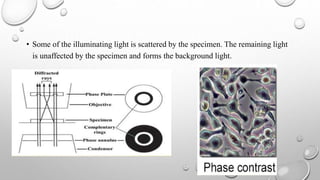
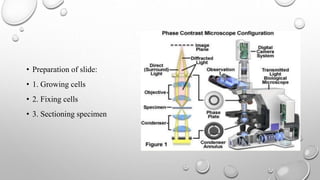
• Phase contrast is obtained with the help of the annular diaphragm by separating
the central and direct ray from the diffracted rays.
• The ring shaped illuminating light that passes the condenser annulus is focused
on the specimen by the condenser.
• Some of the illuminating light is scattered by the specimen. The remaining light
is unaffected by the specimen and forms the background light.
• Preparation of slide:
• 1. Growing cells
• 2. Fixing cells
• 3. Sectioning specimen
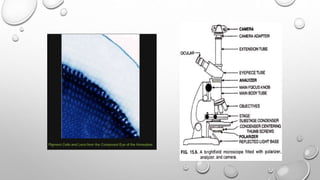
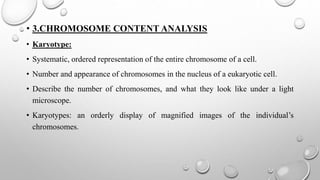
• 3. PHOTOMICROGRAPHY
• The basic principle of photomicrography involves the use of classical
microscopy techniques of bright field and cross polarized illumination, placing a
polarizing element into the light path restricts the passage of light thus reducing
the amount of transmitted light to approximately 30% of the emitted value.
• 3.CHROMOSOME CONTENT ANALYSIS
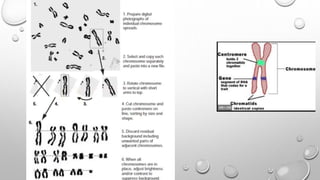
• Karyotype:
• Systematic, ordered representation of the entire chromosome of a cell.
• Number and appearance of chromosomes in the nucleus of a eukaryotic cell.
• Describe the number of chromosomes, and what they look like under a light
microscope.
• Karyotypes: an orderly display of magnified images of the individual’s
chromosomes.
• Karyotypes are presented-
• By arranging chromosomes of somatic complement in a descending order of size
keeping their centromeres in a straight line.
• Longest chromosome- on extreme right
• Shortest chromosome- on extreme left
• Sex chromosomes- allosomes- on extreme right.
• Karyotype analysis is best criteria for species identification.
• Genetic stability of cells are routinely monitored by karyotype analysis.
• Normal and transformed cells are distinguished because the chromosome number
is more stable in normal cells.
• Confirmation or exclusion of suspected cross contamination.
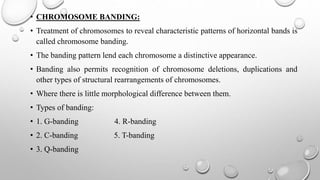
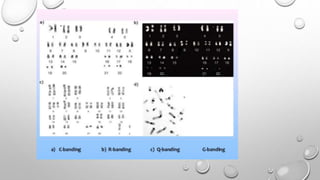
• CHROMOSOME BANDING:
• Treatment of chromosomes to reveal characteristic patterns of horizontal bands is
called chromosome banding.
• The banding pattern lend each chromosome a distinctive appearance.
• Banding also permits recognition of chromosome deletions, duplications and
other types of structural rearrangements of chromosomes.
• Where there is little morphological difference between them.
• Types of banding:
• 1. G-banding 4. R-banding
• 2. C-banding 5. T-banding
• 3. Q-banding
• 1. G-banding:
• Staining a metaphase chromosome with Giemsa stain is called G-banding.
• Preferentially stains the regions that are rich in adenine and thymine and appear
dark.
• 2. C-banding:
• Specifically stain the centromeric regions and other regions containing
constitutive heterochromatin.
• 3. Q-banding:
• Quinacrine mustard (a fluorescent stain), an alkylating agent, was the first
chemical to be used for chromosome banding.
• Quinacrine bright bands were composed primarily of DNA rich in bases adenine
and thymine.
• Used to identify specific chromosomes and structural rearrangements and various
polymorphisms involving satellites and centromeres of specific chromosomes.
• 4. R-banding:
• It is the reverse of G-banding.
• The dark regions are euchromatic (guanine-cytosine rich regions) and the bright
regions are heterochromatic(thymine- adenine rich regions)
• 5. T-banding: visualize telomers
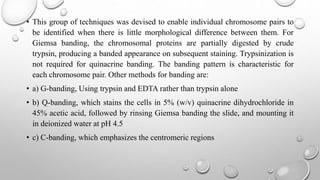
• This group of techniques was devised to enable individual chromosome pairs to
be identified when there is little morphological difference between them. For
Giemsa banding, the chromosomal proteins are partially digested by crude
trypsin, producing a banded appearance on subsequent staining. Trypsinization is
not required for quinacrine banding. The banding pattern is characteristic for
each chromosome pair. Other methods for banding are:
• a) G-banding, Using trypsin and EDTA rather than trypsin alone
• b) Q-banding, which stains the cells in 5% (w/v) quinacrine dihydrochloride in
45% acetic acid, followed by rinsing Giemsa banding the slide, and mounting it
in deionized water at pH 4.5
• c) C-banding, which emphasizes the centromeric regions
• CHROMOSOME PAINTING:
• DNA hybridisation with a pool of many fluorescence-labelled DNA fragments
derived from the full length of a chromosome or segment is called chromosome
painting.
• This technique employs in situ hybridisation technology, also used for extra
chromosomal and cytoplasmic localization of specific nucleic acid sequences like
mRNA species.
• Chromosome paints are available commercially from a number of sources. The
hybridization and detection protocols vary with each commercial source, but a
general scheme is available.
• Karyotypic analysis is carried out classically by chromosome banding, using
dyes that differentially stain the chromosomes. Thus each chromosome is
identified by its banding pattern
• Techniques:
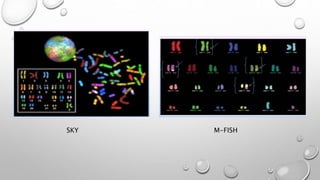
• 1.SKY
• 2. M-FISH
• These techniques allow the simultaneous visualization of all chromosomes in
different colours.
• 1.SKY (SPECTRAL KARYOTYPING):
• It is the powerful, whole- chromosomes painting assay that allows the
simultaneous visualization of each chromosome in different colours.
• Five spectrally distinct dyes are used in combination to create a cocktail of
probes unique to each chromosome.
• The probe mixture is hybridised to metaphase chromosomes on a slide.
• The image is processed by computer software that can distinguish differences in
colour which naked eye cannot, by assigning a numerical value to the RGB.
• SKY can detect-
• Chromosomal material of unknown origin, complex rearrangements,
translocations, large deletions, duplications, aneuploidy.
• Disadvantages-
• Ineffective detection of micro deletions and inversions.
• It can only be performed on dividing cells.
2.M-FISH (MULTICOLOUR- FLUORESCENE IN SITU
HYBRIDISATION):
• Identifies translocations and insertions.
• It is filter-based technology which does not rely on specialized instrumentation
for its implementation as SKY.
SKY M-FISH
• CHROMOSOME ANALYSIS
• The following are methods by which the chromosome complement may be
analysed:
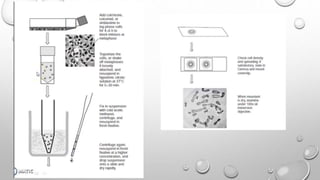
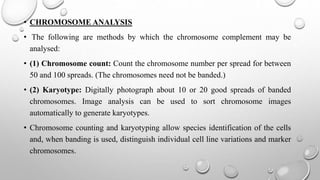
• (1) Chromosome count: Count the chromosome number per spread for between
50 and 100 spreads. (The chromosomes need not be banded.)
• (2) Karyotype: Digitally photograph about 10 or 20 good spreads of banded
chromosomes. Image analysis can be used to sort chromosome images
automatically to generate karyotypes.
• Chromosome counting and karyotyping allow species identification of the cells
and, when banding is used, distinguish individual cell line variations and marker
chromosomes.
• However, karyotyping is time-consuming, and chromosome counting with a
quick check on gross chromosome morphology may be sufficient to confirm or
exclude a suspected cross-contamination.
• 4. DNAANALYSIS:
• Three methods:
• 1. DNA hybridisation
• 2. DNA fingerprinting
• 3. DNA profiling
• DNA CONTENT:
• Can be measured by DNA fluorochromes:
• 1. Propidium iodide
• 2. Hoechst 33258
• 3. DAPI (DiAmino Phenyl Iodole): That binds strongly to A-T rich regions of
DNA.
• 4. Pico green
• Particularly used in the characterization of transformed cells that are often
aneuploid and heteroploid.
1. DNA HYBRIDISATION
• It is the process of establishing a non-covalent, sequence-specific interaction
between two or more complementary strands of nucleic acids into a single
hybrid, which in the case of two strands is referred to as a duplex.
• Can provide information about-
• Species specific regions
• Amplified regions of the DNA
• Altered base sequences that are characteristic to that cell line
• Ex: Over expression of specific oncogene in transformed cell lines.
• It is more common to use the polymerase chain reaction (PCR) with a primer
specific to the sequence of interest, enabling detection in relatively small
numbers of cells.
• Alternatively, specific probes can be used to detect specific DNA sequences by in
situ hybridization having the advantage of displaying topographical differences
and heterogeneity within a cell population.
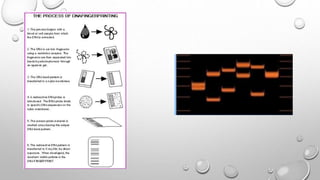
• 2. DNA FINGERPRINTING:
• Technology using VNTR (Variable Number of Tandem Repeats) present in
genome to identity individual cells.
• DNA fingerprints appear to be quite stable in culture, and cell lines from the
same origin, but maintained separately in different laboratories for many years,
still retain the same or very similar DNA fingerprints.
• DNA fingerprinting is a very powerful tool in determining the origin of a cell
line, if the original cell line, or DNA from it or from the donor individual, has
been retained
• This emphasizes the need to retain a blood, tissue, or DNA sample when tissue is
isolated for primary culture.
• Furthermore, if a cross-contamination or misidentification is suspected, this can
be investigated by fingerprinting the cells and all potential contaminant.
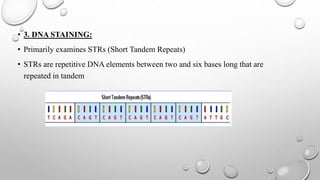
• 3. DNA STAINING:
• Primarily examines STRs (Short Tandem Repeats)
• STRs are repetitive DNA elements between two and six bases long that are
repeated in tandem
• These STR loci are targeted with sequence-specific primers and amplified using
PCR.
• Most extensively used with human cell lines where the primers are most
commonly available and the extension of this to other animal species is still
somewhat limited.
• Speciation can be achieved however using the so called “barcode region” of the
cytochrome oxidase-1 as well as by isoenzyme analysis.
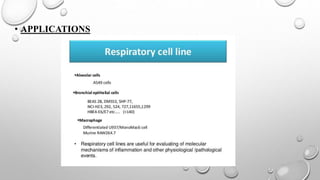
• APPLICATIONS
• REFERENCES:
1. Freshney R.Ian, “Culture of animal cells: A Manual of Basic Technique”(2010)
Page No: 239-260.
CHARACTERISATION OF CELLS LINES

CHARACTERISATION OF CELLS LINES

  • 1.
    CHARACTERIZATION OF CELL LINESAND ITS APPLICATIONS BY AISHWARYA DANDE M.PHARMACY 1ST YEAR 2ND SEM G. PULLAREDDY COLLEGE OF PHARMACY DEPARTMENT: PHARMACEUTICAL ANALYSIS SUBJECT: MODERN BIO-ANALYTICAL TECHNIQUES ROLL NO: 170119885001
  • 2.
    • INDEX • 1.Cell lines • 2. Methods for characterization of cell lines • 3. Applications
  • 3.
    • CELL LINE: •A cell line is a permanently established cell culture that will proliferate indefinitely given appropriate fresh medium and space. • What are cell lines used for? • Cell lines have revolutionized scientific research and are being used in vaccine production, testing drug metabolism and cytotoxicity, antibody production, study of gene function, generation of artificial tissues and synthesis of biological compounds
  • 4.
    • Characterization ofa cell line is vital for determining its functionality and in proving its authenticity as pure cell line. Special attention must be paid to the possibility that the cell line has become cross-contaminated with an existing continuous cell line or misidentified because of mislabeling or confusion in handling DNA profiling. this has now become the major standard procedure for cell line identification, and a standard procedure with universal application. • The various important factors for cell line characterization are: • (1) It leads to authentication or confirmation that the cell line is not cross- contaminated or misidentified • (2) It is confirmation of the species of origin • (3) It is used for correlation with the tissue of origin, which comprises the following characteristics: a) Identification of the lineage to which the cell belongs b) Position of the cells within that lineage (i.e., the stem, precursor, or differentiated status)
  • 5.
    • (4) Fordetermination whether the cell line is transformed or not: • a) Whether the cell line is finite or continuous? • b) Whether the cell line expresses properties associated with malignancy? • (5) It indicates whether the cell line is prone to genetic instability and phenotypic variation • (6) Identification of specific cell lines within a group from the same origin, selected cell strains, or hybrid cell lines, all of which require demonstration of features unique to that cell line or cell strain
  • 6.
    • PARAMETERS • Thenature of the technique used for characterization depends on the type of work being carried out. some of the parameters are: • 1. In case molecular technology, DNA profiling or analysis of gene expression are most useful. • 2. A cytology laboratory may prefer to use chromosome analysis(karyotyping) is one of the best traditional methods for distinguishing among species. chromosome banding patterns can be used to distinguish individual chromosomes.
  • 7.
    • Chromosome painting,explicitly using combinations of specific molecular probes that hybridize to individual chromosomes, adds further resolution and specificity to this technique. these probes identify individual chromosome pairs and are species specific. Chromosome painting is a good method for distinguishing between human and mouse chromosomes in potential cross- contaminations • 3. A laboratory with immunological capability may prefer to use MHC (major histocompatibility complex) analysis coupled with lineage specific markers.
  • 8.
    • METHODS FORCHARACTERIZATION OF CELL LINES • 1. Markers • 2. Microscopy methods (By using cell morphology) • 3. Chromosome content analysis methods • 4. DNA analysis methods
  • 9.
    • 1. MARKERS •LINEAGE OR TISSUE MARKERS: • The progression of cells down a particular differentiation pathway towards a specific differentiated cell type and can be considered as a lineage, and as cells progress down this path they acquire lineage markers specific to the lineage and distinct from markers expressed by the stem cells. • These markers often reflect the embryological origin of the cells from a particular germ layer. • Lineage markers are helpful in establishing the relationship of a particular cell line to its tissue of origin. There are some lineage markers which are described as follows:
  • 10.
    • a) Cellsurface antigen: • These markers are particularly useful in sorting hematopoietic cells and have also been effective in discriminating epithelium from mesenchymally derived stroma with antibodies such as anti-EMA and anti-HMFG 1 and, distinguishing among epithelial lineages, and identifying neuroectodermally derived cells (e.g., with anti-A2B5). • b) Intermediate filament proteins: • These are among the most widely used lineage or tissue markers. Glial fibrillary acidic protein (GFAP) for astrocytes and desmin for muscle are the most specific, whereas cytokeratin marks epithelial cells and mesothelium.
  • 11.
    • c) UniqueMarkers: • Unique markers include specific chromosomal aberrations (e.g., deletions, translocations, polysomy), major histocompatibility (MHC) group antigens (e.g., HLA in humans), which are highly polymorphic, and DNA fingerprinting or SLTR DNA profiling. • Enzymic deficiencies, such as thymidine kinase deficiency (TK−) and drug resistance such as vinblastine resistance (usually coupled to the expression of the P-glycoprotein by one of the mdr genes that code for the efflux protein) are not truly unique, but they may be used to distinguish among cell lines from the same tissues but different donors.
  • 12.
    • d) Differentiatedproducts and functions: • Haemoglobin for erythroid cells, myosin or tropomyosin for muscle, melanin for melanocytes, and serum albumin for hepatocytes are examples of specific cell type markers, but like all differentiation markers, they depend on the complete expression of the differentiated phenotype.
  • 13.
    • 2. MICROSCOPYMETHODS • CELL MORPHOLOGY: • Study of the size, shape and structure of cell. • Most cells in culture can be divided into five basic categories based on their morphology. They are: 1. Fibroblastic/ Fibroblastoid (Fibroblast-like) 2. Epithelial/ Epithelioid (Epithelial-like) 3. Lymphoblast-like 4. Endothelial 5. Neuronal
  • 14.
    • CONFLUENCY • Itis the term commonly used as a measure of the number of the cells in a cell culture dish or a flask and refers to the coverage of the dish by the flask. • For example, 100% conflueny means the dish is completely covered by the cells, and therefore no more space is left for the cells to grow.
  • 15.
    • OBSERVATION OFMORPHOLOGY • Observation of morphology is the simplest and most direct technique used to identify cells. • Most of these are related to the plasticity of cellular morphology in response to different culture conditions. • For example, epithelial cells growing in the centre of a confluent sheet are usually regular, polygonal, and with a clearly defined birefringent edge. • Whereas the same cells growing at the edge of a patch may be more irregular and distended and • If transformed, may break away from the patch and become fibroblast-like in shape.
  • 16.
    • Alterations inthe substrate and the constitution of the medium can also effect cellular morphology. • Comparative observations of cells should always be made at the same stage of growth and cell density in the same medium, and for growth on the same substrate. • The terms “fibroblastic” and “epithelial” are used rather loosely in tissue culture and often describe the appearance rather than the origin of the cells. • Thus a bipolar or multipolar migratory cell, whose length is usually more than the twice its width, would be called fibroblastic.
  • 17.
    • A monolayercell that is polygonal with more regular dimensions and that grows in a discrete patch along with other cells is usually regarded as epithelial. • When the identity of the cells has not been confirmed, the terms “fibroblast-like” and “epithelium-like” should be used. • “Lymphoblast-like” cells are spherical in shape and usually grown in suspension without attaching to the surface. • Endothelial cells are very flat have a central nucleus, are about 1-2 micrometer thick and some are 10-20 micrometer in diameter.
  • 19.
    • Neuronal celllines exist in different shapes and sizes and divided into two basic morphological categories- • Type 1 with long axons used to move signals over long distances • Type 2 without axons
  • 20.
    • TECHNIQUES • 1.Inverted microscope • 2. Phase contrast microscope • 3. Photomicrography • 4. Confocal microscope
  • 21.
    • 1. INVERTEDMICROSCOPY • The inverted microscope is one of the most important tools in the tissue culture laboratory, but it is often used incorrectly. • As the thickness of the closed culture vessel makes observation difficult from above, because of the long working distance, the culture vessel is placed on the stage, illuminated from above, and observed from below. • As the thickness of the wall of the culture vessel still limits the working distance, the maximum objective magnification is usually limited to 40X. • The use of phase-contrast optics, where an annular light path is masked by a corresponding dark ring in the objective and only diffracted light is visible, enables unstained cells to be viewed with higher contrast than is available by normal illumination.
  • 22.
    • Because thismeans that the intensity of the light is increased, an infrared filter should be incorporated for prolonged observation of cells. • It is useful to keep a set of photographs at different cell densities for each cell line, prepared shortly after acquisition and at intervals thereafter, as a record in case a morphological change is subsequently suspected. • Photographs of cell lines in regular use should be displayed above the inverted microscope. • Photographic records can be supplemented with photographs of stained preparations and digital output from DNA profiling and stored with the cell line record in a database or stored separately and linked to the cell line database.
  • 24.
    • 2.PHASE CONTRASTMICOSCOPY • It’s a special adaptation of the light microscopy and helps to obtain a clear picture of living or unstrained cells. • The adaptors convert minute difference in phase changes in transmitted light due to refractive indices of all cell organelles in to perceptible shades of grey. • This allows organelles of the living cell to become visible with fair contrast in them.
  • 25.
    • Working principle: •Regions of different composition likely have different Refractive indices. • Normally such differences cannot be detected by our eyes. However, PCM converts differences in microns into differences in intensity, which are visible to our eye. • PCM converts the invisible small phase changes caused by the cell component in to visible intensity changes. • Phase contrast is obtained with the help of the annular diaphragm by separating the central and direct ray from the diffracted rays. • The ring shaped illuminating light that passes the condenser annulus is focused on the specimen by the condenser.
  • 26.
    • Some ofthe illuminating light is scattered by the specimen. The remaining light is unaffected by the specimen and forms the background light.
  • 28.
    • Preparation ofslide: • 1. Growing cells • 2. Fixing cells • 3. Sectioning specimen
  • 29.
    • 3. PHOTOMICROGRAPHY •The basic principle of photomicrography involves the use of classical microscopy techniques of bright field and cross polarized illumination, placing a polarizing element into the light path restricts the passage of light thus reducing the amount of transmitted light to approximately 30% of the emitted value.
  • 31.
    • 3.CHROMOSOME CONTENTANALYSIS • Karyotype: • Systematic, ordered representation of the entire chromosome of a cell. • Number and appearance of chromosomes in the nucleus of a eukaryotic cell. • Describe the number of chromosomes, and what they look like under a light microscope. • Karyotypes: an orderly display of magnified images of the individual’s chromosomes.
  • 32.
    • Karyotypes arepresented- • By arranging chromosomes of somatic complement in a descending order of size keeping their centromeres in a straight line. • Longest chromosome- on extreme right • Shortest chromosome- on extreme left • Sex chromosomes- allosomes- on extreme right. • Karyotype analysis is best criteria for species identification. • Genetic stability of cells are routinely monitored by karyotype analysis. • Normal and transformed cells are distinguished because the chromosome number is more stable in normal cells. • Confirmation or exclusion of suspected cross contamination.
  • 35.
    • CHROMOSOME BANDING: •Treatment of chromosomes to reveal characteristic patterns of horizontal bands is called chromosome banding. • The banding pattern lend each chromosome a distinctive appearance. • Banding also permits recognition of chromosome deletions, duplications and other types of structural rearrangements of chromosomes. • Where there is little morphological difference between them. • Types of banding: • 1. G-banding 4. R-banding • 2. C-banding 5. T-banding • 3. Q-banding
  • 36.
    • 1. G-banding: •Staining a metaphase chromosome with Giemsa stain is called G-banding. • Preferentially stains the regions that are rich in adenine and thymine and appear dark. • 2. C-banding: • Specifically stain the centromeric regions and other regions containing constitutive heterochromatin. • 3. Q-banding: • Quinacrine mustard (a fluorescent stain), an alkylating agent, was the first chemical to be used for chromosome banding.
  • 37.
    • Quinacrine brightbands were composed primarily of DNA rich in bases adenine and thymine. • Used to identify specific chromosomes and structural rearrangements and various polymorphisms involving satellites and centromeres of specific chromosomes. • 4. R-banding: • It is the reverse of G-banding. • The dark regions are euchromatic (guanine-cytosine rich regions) and the bright regions are heterochromatic(thymine- adenine rich regions) • 5. T-banding: visualize telomers
  • 39.
    • This groupof techniques was devised to enable individual chromosome pairs to be identified when there is little morphological difference between them. For Giemsa banding, the chromosomal proteins are partially digested by crude trypsin, producing a banded appearance on subsequent staining. Trypsinization is not required for quinacrine banding. The banding pattern is characteristic for each chromosome pair. Other methods for banding are: • a) G-banding, Using trypsin and EDTA rather than trypsin alone • b) Q-banding, which stains the cells in 5% (w/v) quinacrine dihydrochloride in 45% acetic acid, followed by rinsing Giemsa banding the slide, and mounting it in deionized water at pH 4.5 • c) C-banding, which emphasizes the centromeric regions
  • 40.
    • CHROMOSOME PAINTING: •DNA hybridisation with a pool of many fluorescence-labelled DNA fragments derived from the full length of a chromosome or segment is called chromosome painting. • This technique employs in situ hybridisation technology, also used for extra chromosomal and cytoplasmic localization of specific nucleic acid sequences like mRNA species. • Chromosome paints are available commercially from a number of sources. The hybridization and detection protocols vary with each commercial source, but a general scheme is available.
  • 41.
    • Karyotypic analysisis carried out classically by chromosome banding, using dyes that differentially stain the chromosomes. Thus each chromosome is identified by its banding pattern • Techniques: • 1.SKY • 2. M-FISH • These techniques allow the simultaneous visualization of all chromosomes in different colours.
  • 42.
    • 1.SKY (SPECTRALKARYOTYPING): • It is the powerful, whole- chromosomes painting assay that allows the simultaneous visualization of each chromosome in different colours. • Five spectrally distinct dyes are used in combination to create a cocktail of probes unique to each chromosome. • The probe mixture is hybridised to metaphase chromosomes on a slide. • The image is processed by computer software that can distinguish differences in colour which naked eye cannot, by assigning a numerical value to the RGB.
  • 43.
    • SKY candetect- • Chromosomal material of unknown origin, complex rearrangements, translocations, large deletions, duplications, aneuploidy. • Disadvantages- • Ineffective detection of micro deletions and inversions. • It can only be performed on dividing cells. 2.M-FISH (MULTICOLOUR- FLUORESCENE IN SITU HYBRIDISATION): • Identifies translocations and insertions. • It is filter-based technology which does not rely on specialized instrumentation for its implementation as SKY.
  • 44.
  • 45.
    • CHROMOSOME ANALYSIS •The following are methods by which the chromosome complement may be analysed: • (1) Chromosome count: Count the chromosome number per spread for between 50 and 100 spreads. (The chromosomes need not be banded.) • (2) Karyotype: Digitally photograph about 10 or 20 good spreads of banded chromosomes. Image analysis can be used to sort chromosome images automatically to generate karyotypes. • Chromosome counting and karyotyping allow species identification of the cells and, when banding is used, distinguish individual cell line variations and marker chromosomes.
  • 46.
    • However, karyotypingis time-consuming, and chromosome counting with a quick check on gross chromosome morphology may be sufficient to confirm or exclude a suspected cross-contamination.
  • 47.
    • 4. DNAANALYSIS: •Three methods: • 1. DNA hybridisation • 2. DNA fingerprinting • 3. DNA profiling
  • 48.
    • DNA CONTENT: •Can be measured by DNA fluorochromes: • 1. Propidium iodide • 2. Hoechst 33258 • 3. DAPI (DiAmino Phenyl Iodole): That binds strongly to A-T rich regions of DNA. • 4. Pico green • Particularly used in the characterization of transformed cells that are often aneuploid and heteroploid.
  • 49.
    1. DNA HYBRIDISATION •It is the process of establishing a non-covalent, sequence-specific interaction between two or more complementary strands of nucleic acids into a single hybrid, which in the case of two strands is referred to as a duplex. • Can provide information about- • Species specific regions • Amplified regions of the DNA • Altered base sequences that are characteristic to that cell line • Ex: Over expression of specific oncogene in transformed cell lines.
  • 50.
    • It ismore common to use the polymerase chain reaction (PCR) with a primer specific to the sequence of interest, enabling detection in relatively small numbers of cells. • Alternatively, specific probes can be used to detect specific DNA sequences by in situ hybridization having the advantage of displaying topographical differences and heterogeneity within a cell population.
  • 51.
    • 2. DNAFINGERPRINTING: • Technology using VNTR (Variable Number of Tandem Repeats) present in genome to identity individual cells. • DNA fingerprints appear to be quite stable in culture, and cell lines from the same origin, but maintained separately in different laboratories for many years, still retain the same or very similar DNA fingerprints. • DNA fingerprinting is a very powerful tool in determining the origin of a cell line, if the original cell line, or DNA from it or from the donor individual, has been retained • This emphasizes the need to retain a blood, tissue, or DNA sample when tissue is isolated for primary culture. • Furthermore, if a cross-contamination or misidentification is suspected, this can be investigated by fingerprinting the cells and all potential contaminant.
  • 53.
    • 3. DNASTAINING: • Primarily examines STRs (Short Tandem Repeats) • STRs are repetitive DNA elements between two and six bases long that are repeated in tandem
  • 54.
    • These STRloci are targeted with sequence-specific primers and amplified using PCR. • Most extensively used with human cell lines where the primers are most commonly available and the extension of this to other animal species is still somewhat limited. • Speciation can be achieved however using the so called “barcode region” of the cytochrome oxidase-1 as well as by isoenzyme analysis.
  • 55.
  • 59.
    • REFERENCES: 1. FreshneyR.Ian, “Culture of animal cells: A Manual of Basic Technique”(2010) Page No: 239-260.