BY: 
Syeda Sakeena Gilani 
Mphil Leading to PhD 
Microbiology
MTT Assay 
 Colorimetric assay 
 Sensitive 
 Quantitative 
 Reliable 
 Purposes: 
 For assessing cell viability 
 To measure cytotoxicity (loss of viable cells) 
 Cytostatic activity (shift from proliferation to 
quiescence)
Principle 
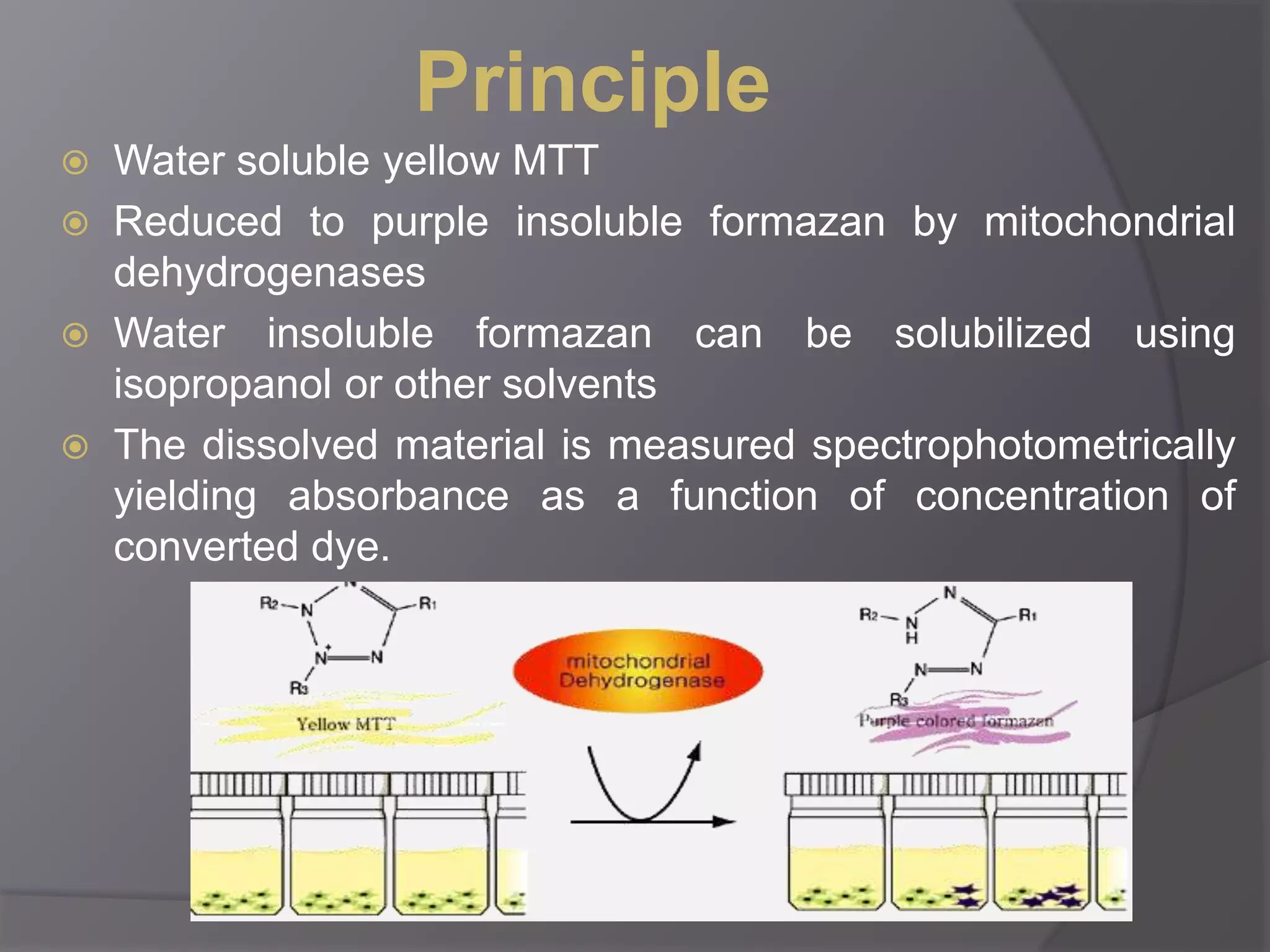
 Water soluble yellow MTT 
 Reduced to purple insoluble formazan by mitochondrial 
dehydrogenases 
 Water insoluble formazan can be solubilized using 
isopropanol or other solvents 
 The dissolved material is measured spectrophotometrically 
yielding absorbance as a function of concentration of 
converted dye.
Contt. 
 Presence of viable cells is detected as active 
mitochondrial dehydrogenase of living cells will 
cause this conversion. 
 Non-viable cells will not produce dehydrogenase. 
Thus, dead cells do not cause this change 
 The amount of formazan produce is directly 
proportional to the number of viable cells in the 
sample
Reagents Preparation 
 MTT solution: 
 5mg/ml MTT in PBS. 
 Solution must be filter sterilized (0.22um filter) after 
adding MTT. 
 For long term storage keep the MTT solution in 
-20°C. 
 MTT solvent: 
 Option1: 400ul HCl 1M, 10ml triton 100%, 90ml 
isopropanol. 
 Option2: DMSO 100% room temperature.
Procedure 
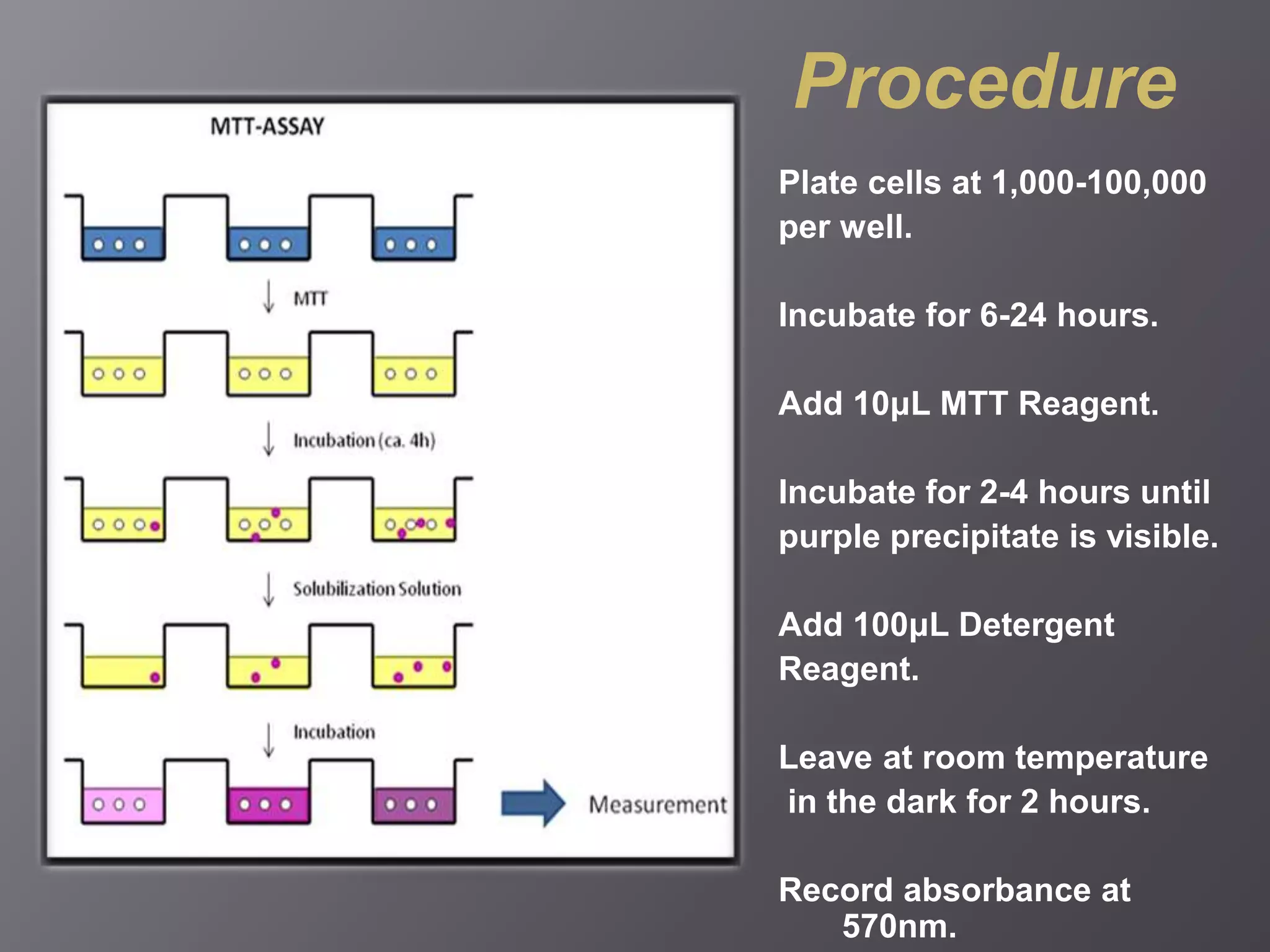
Plate cells at 1,000-100,000 
per well. 
Incubate for 6-24 hours. 
Add 10μL MTT Reagent. 
Incubate for 2-4 hours until 
purple precipitate is visible. 
Add 100μL Detergent 
Reagent. 
Leave at room temperature 
in the dark for 2 hours. 
Record absorbance at 
570nm.
Trouble Shooting 
 Problems 
 MTT Reagent is 
blue-green. 
 Blanks give high 
absorbance 
readings 
 absorbance 
readings too high 
 Remedies 
 Discard it and Store 
solution in the dark 
at 4°C. 
 May be due to 
contamination. Use 
aseptic techniques. 
 Decrease cell 
density at plating.
 Replicates have 
different values. 
 Absorbance readings 
are too low. 
 Increase accuracy of cell 
plating, check accuracy of 
pipette. 
 Increase cell density at 
plating. 
 Increase incubation time with 
MTT reagent or with 
detergent reagent 
 Check that culture conditions 
are appropriate. View cells 
periodically to check 
condition. 
 Increase time in culture after 
plating for cell recovery
Advantages 
 No transfer of the cells; the entire assay is 
performed in a single microplate. 
 MTT is metabolized by all cells; the assay 
can be used with all cell types. 
 Inexpensive
Disadvantages 
 Assay is not linear over a broad logarithmic 
cell proliferation range due to the ELISA plate 
reader. 
 Insoluble reaction product; resolubilization of 
the reaction product required. 
 Cannot take multiple time points in a single 
assay. 
 Cells with low metabolic activity (e.g., 
lymphocytes) must be used in high numbers.
Commercially Available Kits 
 CellTiter 96® Non-Radioactive Cell Proliferation 
Assay. Promega Corporation Cat.# G4000 
 Cell Growth Determination Kit, MTT based. 
Sigma Aldrich Cat.# CGD1-1KT 
 MTT Cell Growth Assay Kit. Millipore Cat.# 
CT02. 
 Thiazolyl Blue Tetrazolium Bromide (MTT 
Powder). Sigma-Aldrich Cat.# M2128.
Mtt Assay for cell viability

Mtt Assay for cell viability

  • 1.
    BY: Syeda SakeenaGilani Mphil Leading to PhD Microbiology
  • 2.
    MTT Assay Colorimetric assay  Sensitive  Quantitative  Reliable  Purposes:  For assessing cell viability  To measure cytotoxicity (loss of viable cells)  Cytostatic activity (shift from proliferation to quiescence)
  • 3.
    Principle  Watersoluble yellow MTT  Reduced to purple insoluble formazan by mitochondrial dehydrogenases  Water insoluble formazan can be solubilized using isopropanol or other solvents  The dissolved material is measured spectrophotometrically yielding absorbance as a function of concentration of converted dye.
  • 4.
    Contt.  Presenceof viable cells is detected as active mitochondrial dehydrogenase of living cells will cause this conversion.  Non-viable cells will not produce dehydrogenase. Thus, dead cells do not cause this change  The amount of formazan produce is directly proportional to the number of viable cells in the sample
  • 6.
    Reagents Preparation MTT solution:  5mg/ml MTT in PBS.  Solution must be filter sterilized (0.22um filter) after adding MTT.  For long term storage keep the MTT solution in -20°C.  MTT solvent:  Option1: 400ul HCl 1M, 10ml triton 100%, 90ml isopropanol.  Option2: DMSO 100% room temperature.
  • 7.
    Procedure Plate cellsat 1,000-100,000 per well. Incubate for 6-24 hours. Add 10μL MTT Reagent. Incubate for 2-4 hours until purple precipitate is visible. Add 100μL Detergent Reagent. Leave at room temperature in the dark for 2 hours. Record absorbance at 570nm.
  • 9.
    Trouble Shooting Problems  MTT Reagent is blue-green.  Blanks give high absorbance readings  absorbance readings too high  Remedies  Discard it and Store solution in the dark at 4°C.  May be due to contamination. Use aseptic techniques.  Decrease cell density at plating.
  • 10.
     Replicates have different values.  Absorbance readings are too low.  Increase accuracy of cell plating, check accuracy of pipette.  Increase cell density at plating.  Increase incubation time with MTT reagent or with detergent reagent  Check that culture conditions are appropriate. View cells periodically to check condition.  Increase time in culture after plating for cell recovery
  • 11.
    Advantages  Notransfer of the cells; the entire assay is performed in a single microplate.  MTT is metabolized by all cells; the assay can be used with all cell types.  Inexpensive
  • 12.
    Disadvantages  Assayis not linear over a broad logarithmic cell proliferation range due to the ELISA plate reader.  Insoluble reaction product; resolubilization of the reaction product required.  Cannot take multiple time points in a single assay.  Cells with low metabolic activity (e.g., lymphocytes) must be used in high numbers.
  • 13.
    Commercially Available Kits  CellTiter 96® Non-Radioactive Cell Proliferation Assay. Promega Corporation Cat.# G4000  Cell Growth Determination Kit, MTT based. Sigma Aldrich Cat.# CGD1-1KT  MTT Cell Growth Assay Kit. Millipore Cat.# CT02.  Thiazolyl Blue Tetrazolium Bromide (MTT Powder). Sigma-Aldrich Cat.# M2128.

Editor's Notes

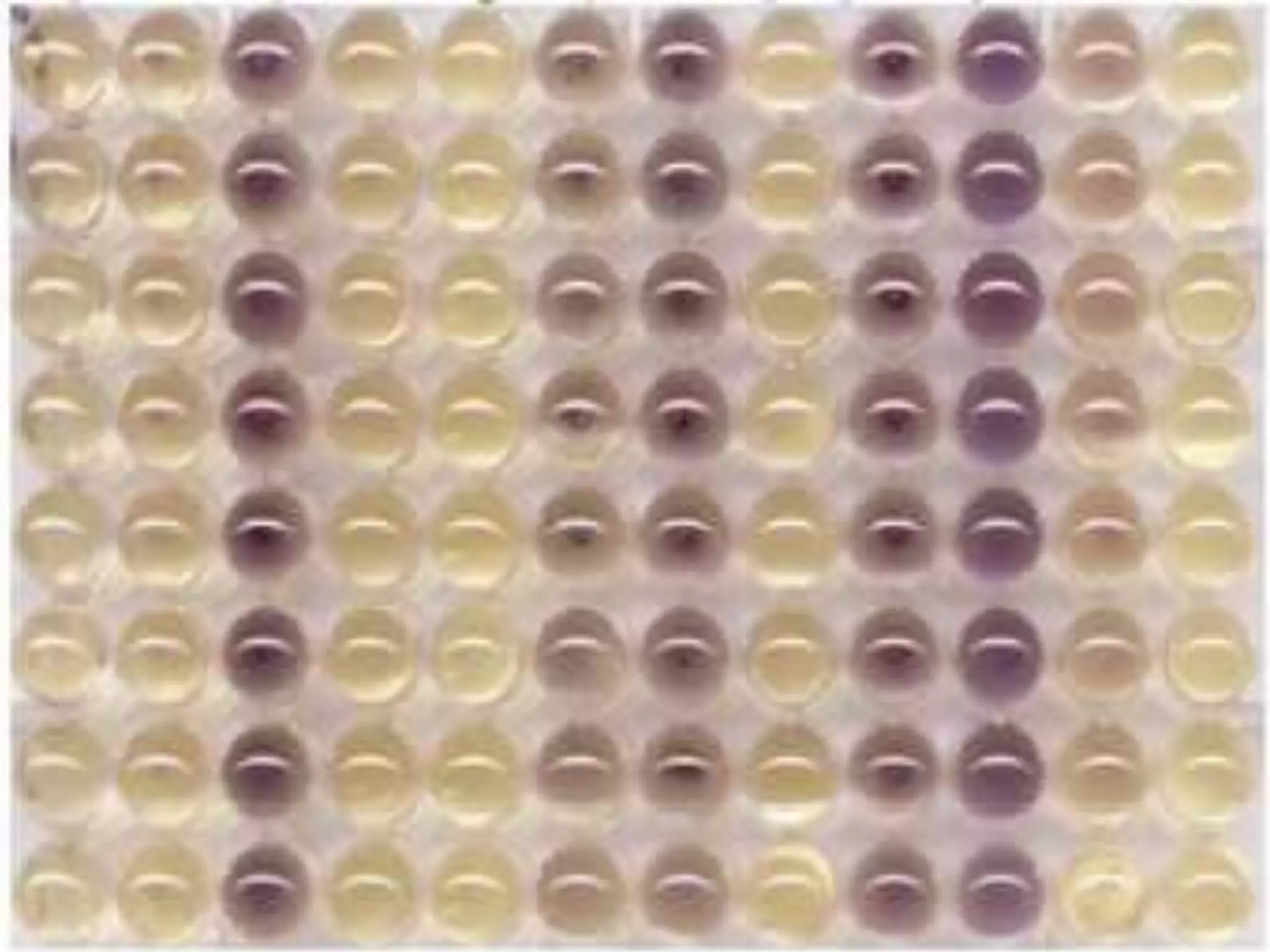
  • #9 Higher the color----more number of cells alive Low or no color----- cells not viable