Motivation for Adult Learners
Learning ObjectivesAt the conclusion of this workshop, you will be able to:Explain the difference between Andragogy and PedagogyIdentify the characteristics of adult learnersDetermine the six factors that serve as a source of motivation for adult learnersDiscuss the three critical learning strategies for effective instructors
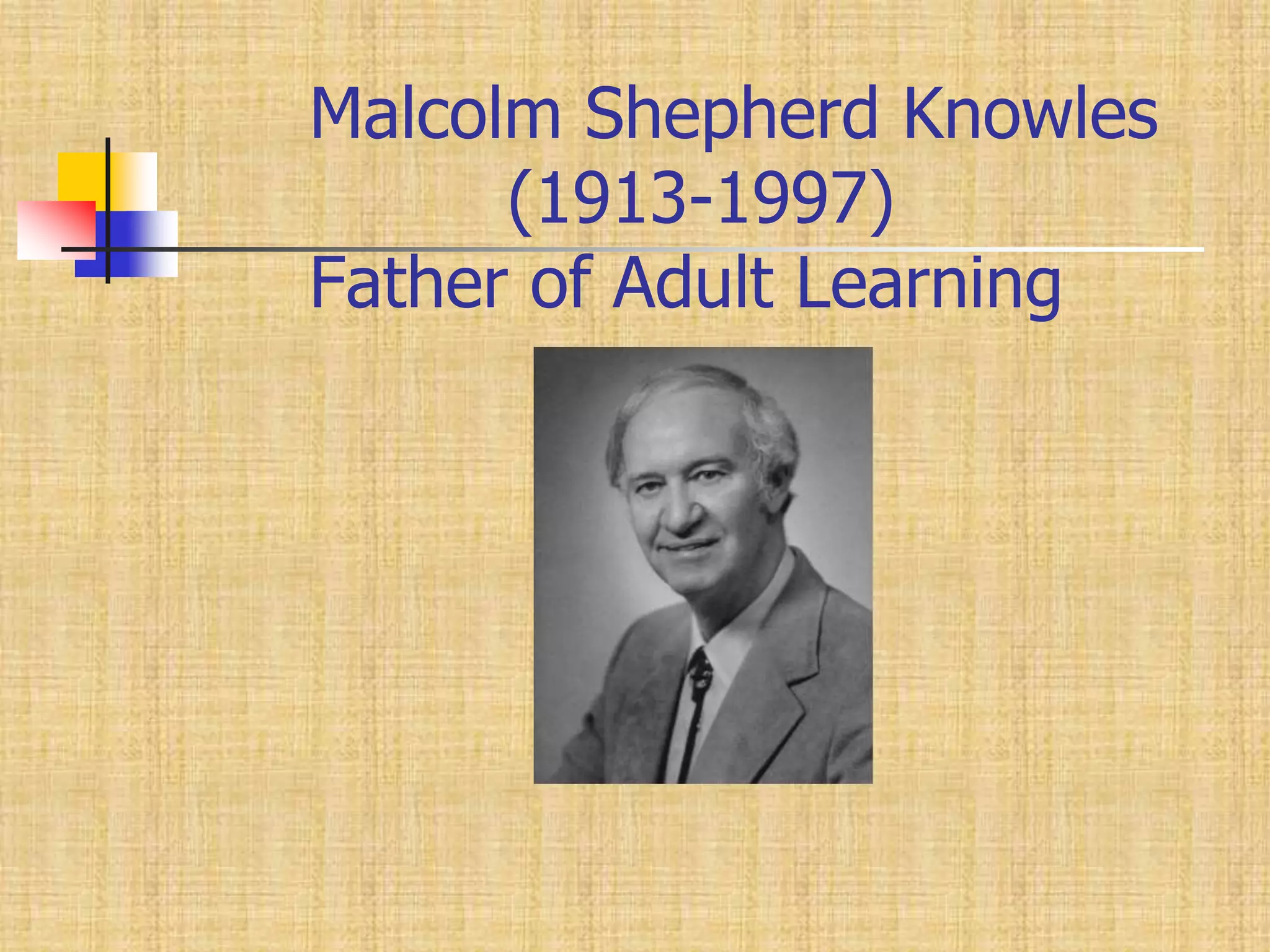
Malcolm Shepherd Knowles                        (1913-1997)Father of Adult Learning
Who is Malcolm Knowles?In 1940, Director of Adult Education at YMCA in Boston which lead to a book entitled Informal Adult Education (1950)In 1960, accepted a position with Boston University – teachings went from an informal environment to formal, academic environmentMet a Visiting Professor from Yugoslav who introduced Knowles to the term “andragogy” (the art of science of how adults learn)In 1970, wrote a book entitled The Modern Practice of Adult Education: Andragogy versus Pedagogy.
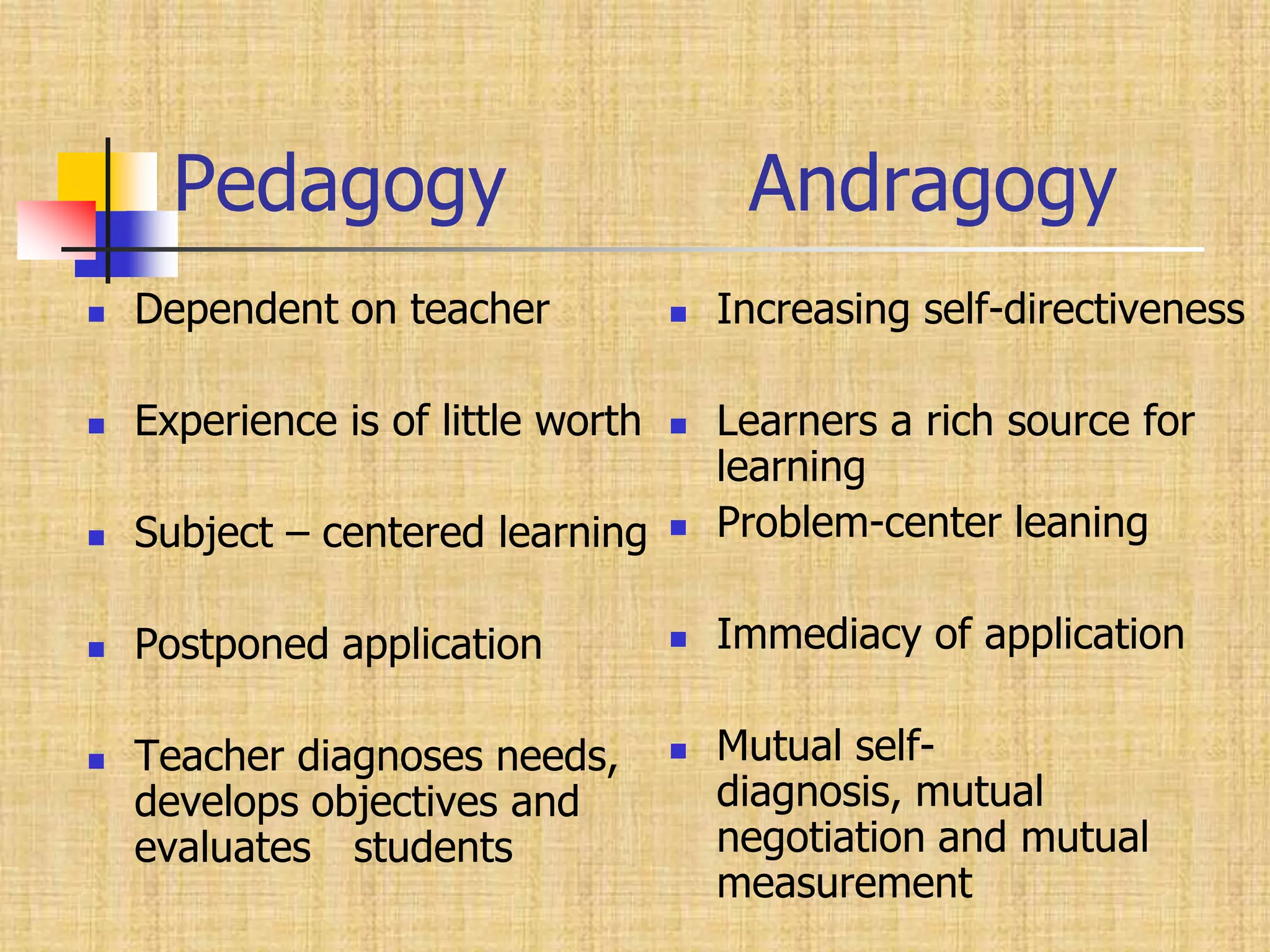
Pedagogy          AndragogyDependent on teacherExperience is of little worthSubject – centered learningPostponed application Teacher diagnoses needs, develops objectives and evaluates	 studentsIncreasing self-directivenessLearners a rich source for learningProblem-center leaningImmediacy of applicationMutual self-diagnosis, mutual negotiation and mutual measurement
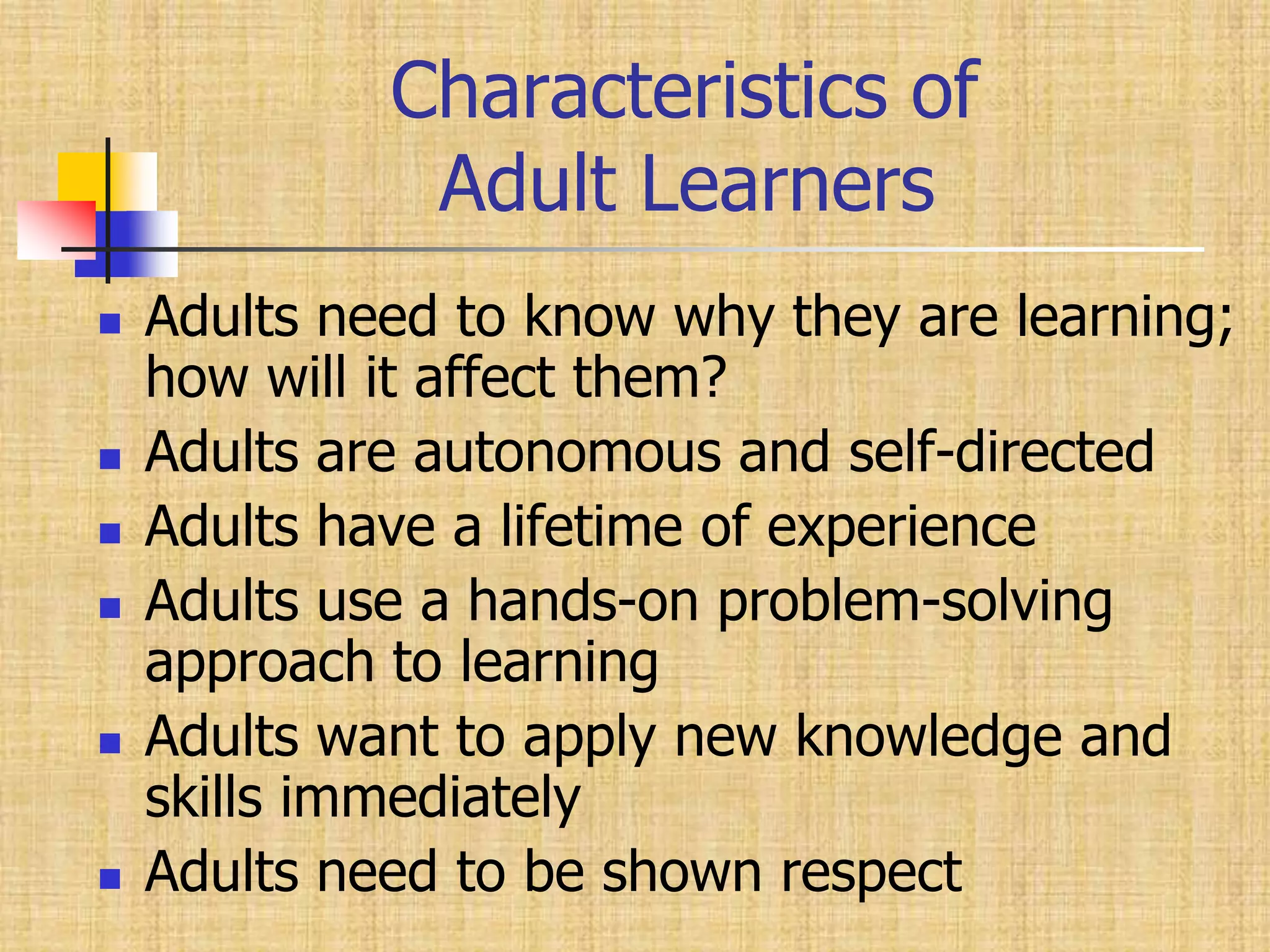
         Characteristics of            Adult LearnersAdults need to know why they are learning; how will it affect them?Adults are autonomous and self-directedAdults have a lifetime of experienceAdults use a hands-on problem-solving approach to learningAdults want to apply new knowledge and skills immediatelyAdults need to be shown respect
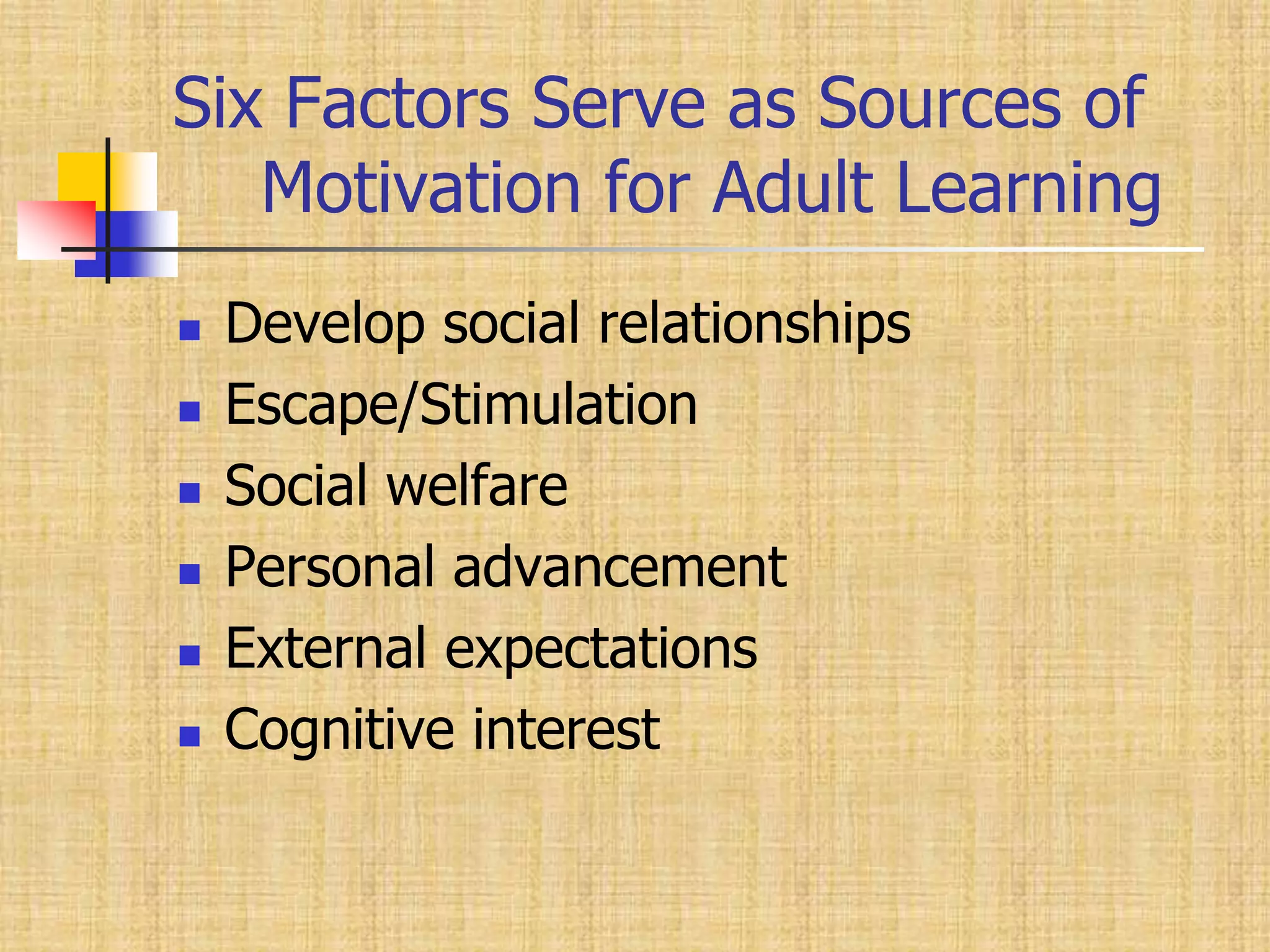
Six Factors Serve as Sources of          Motivation for Adult Learning Develop social relationshipsEscape/StimulationSocial welfarePersonal advancementExternal expectationsCognitive interest
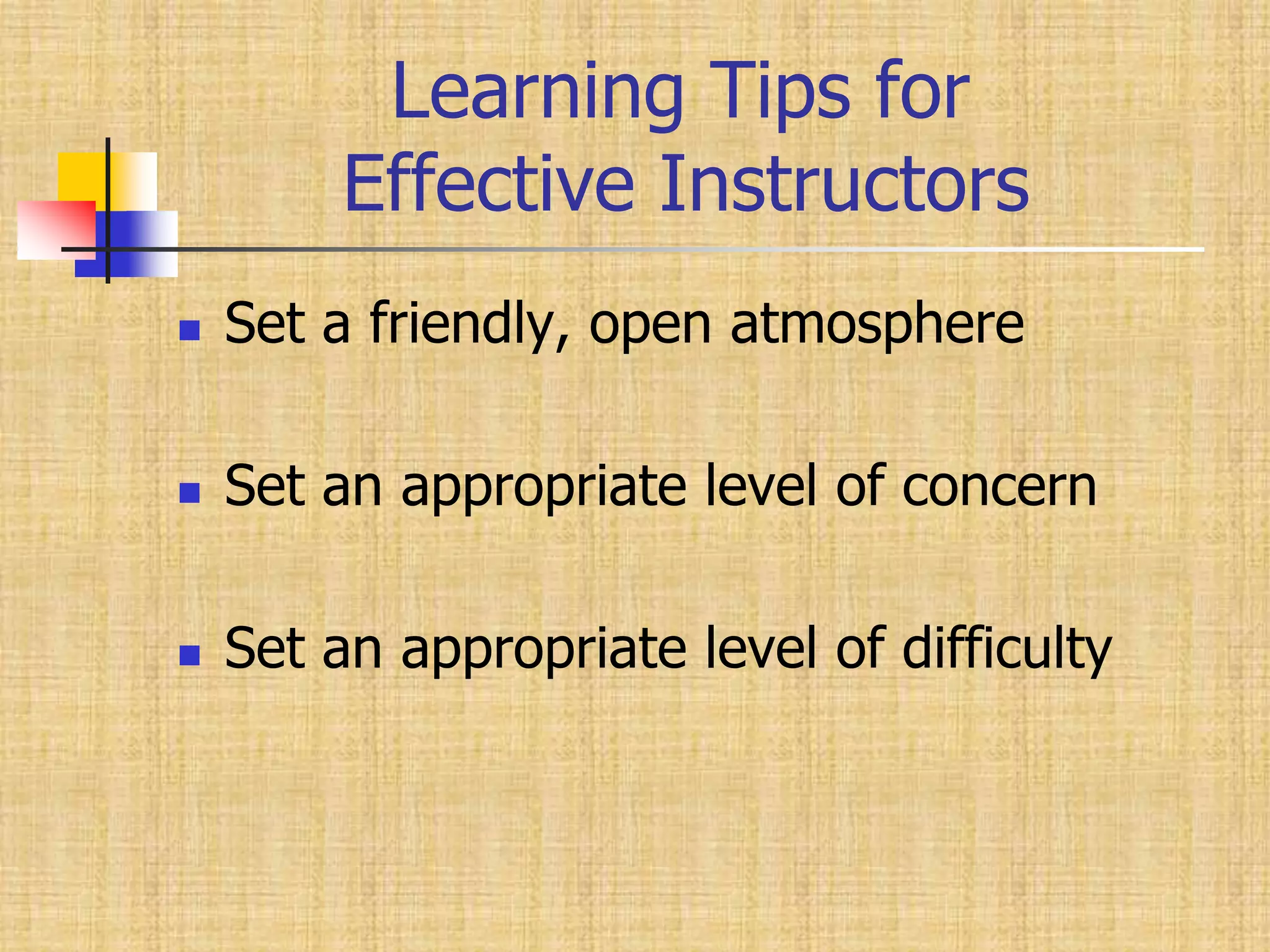
         Learning Tips for       Effective InstructorsSet a friendly, open atmosphereSet an appropriate level of concernSet an appropriate level of difficulty
       Implementing Adult Learning          Principles into Distance EducationMotivating students and eliminate anxiety by:Gaining student attention before the actual start date of the courseAddressing students individually and often (i.e.: when they introduce themselves to the group)Focusing on the desired outcomes at the beginning of each chapter/lesson Assisting learners by organizing material into logical chunks of information Providing learning experiences that promotes short-term to long-term learning (provide activities that promote critically thinking skills)Offering frequent feedback and opportunities for learning reinforcement Incorporating guided distance learning exercises as practice before beginning to grade material
        Final ThoughtTell me and I will forgetShow me and I will rememberInvolve me and I will understandStep back and I will act(Chinese proverb)
		 ReferencesKnowles, M. S. (1968). Andragogy, not pedagogy.  Adult Learning.16(10).  350-352, 386.Knowles, M. S. (1980).  The modern practice of adult education:  From pedagogy to andragogy. (2nd ed.).  New York:  Cambridge Books.Zemke, R. (2002) A pocket guide to useful learning theories.  Training. 39(9).  90-91.

Adult learning 1_m_knowles

  • 1.
  • 2.
    Learning ObjectivesAt theconclusion of this workshop, you will be able to:Explain the difference between Andragogy and PedagogyIdentify the characteristics of adult learnersDetermine the six factors that serve as a source of motivation for adult learnersDiscuss the three critical learning strategies for effective instructors
  • 3.
    Malcolm Shepherd Knowles (1913-1997)Father of Adult Learning
  • 4.
    Who is MalcolmKnowles?In 1940, Director of Adult Education at YMCA in Boston which lead to a book entitled Informal Adult Education (1950)In 1960, accepted a position with Boston University – teachings went from an informal environment to formal, academic environmentMet a Visiting Professor from Yugoslav who introduced Knowles to the term “andragogy” (the art of science of how adults learn)In 1970, wrote a book entitled The Modern Practice of Adult Education: Andragogy versus Pedagogy.
  • 5.
    Pedagogy AndragogyDependent on teacherExperience is of little worthSubject – centered learningPostponed application Teacher diagnoses needs, develops objectives and evaluates studentsIncreasing self-directivenessLearners a rich source for learningProblem-center leaningImmediacy of applicationMutual self-diagnosis, mutual negotiation and mutual measurement
  • 6.
    Characteristics of Adult LearnersAdults need to know why they are learning; how will it affect them?Adults are autonomous and self-directedAdults have a lifetime of experienceAdults use a hands-on problem-solving approach to learningAdults want to apply new knowledge and skills immediatelyAdults need to be shown respect
  • 7.
    Six Factors Serveas Sources of Motivation for Adult Learning Develop social relationshipsEscape/StimulationSocial welfarePersonal advancementExternal expectationsCognitive interest
  • 8.
    Learning Tips for Effective InstructorsSet a friendly, open atmosphereSet an appropriate level of concernSet an appropriate level of difficulty
  • 9.
    Implementing Adult Learning Principles into Distance EducationMotivating students and eliminate anxiety by:Gaining student attention before the actual start date of the courseAddressing students individually and often (i.e.: when they introduce themselves to the group)Focusing on the desired outcomes at the beginning of each chapter/lesson Assisting learners by organizing material into logical chunks of information Providing learning experiences that promotes short-term to long-term learning (provide activities that promote critically thinking skills)Offering frequent feedback and opportunities for learning reinforcement Incorporating guided distance learning exercises as practice before beginning to grade material
  • 10.
    Final ThoughtTell me and I will forgetShow me and I will rememberInvolve me and I will understandStep back and I will act(Chinese proverb)
  • 11.
    ReferencesKnowles, M.S. (1968). Andragogy, not pedagogy. Adult Learning.16(10). 350-352, 386.Knowles, M. S. (1980). The modern practice of adult education: From pedagogy to andragogy. (2nd ed.). New York: Cambridge Books.Zemke, R. (2002) A pocket guide to useful learning theories. Training. 39(9). 90-91.