Adolescence (Part 1)
Definitions Adolescence Developmental stage between childhood & adulthood Puberty The maturation period during which the sexual organs mature Menarche The onset of menstruation Spermarche The first spontaneous ejaculation of sperm-laden fluid, usually around age 13 Primary Sex Characteristics Characteristics associated with the development of the sex & reproductive organs Secondary Sex Characteristics The visible signs of sexual maturity not involving the sex organs directly
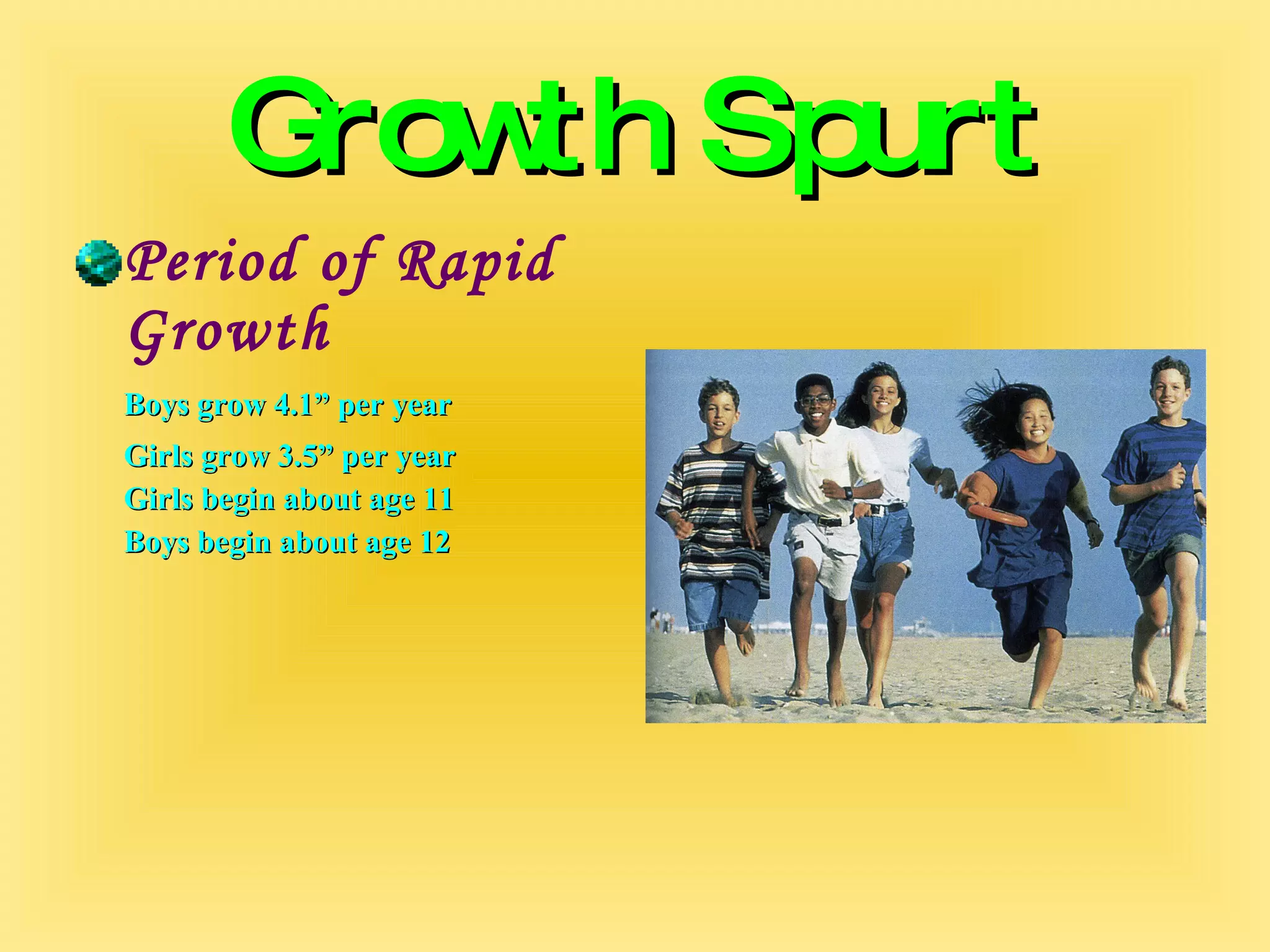
Growth Spurt Period of Rapid Growth Boys grow 4.1” per year Girls grow 3.5” per year Girls begin about age 11 Boys begin about age 12
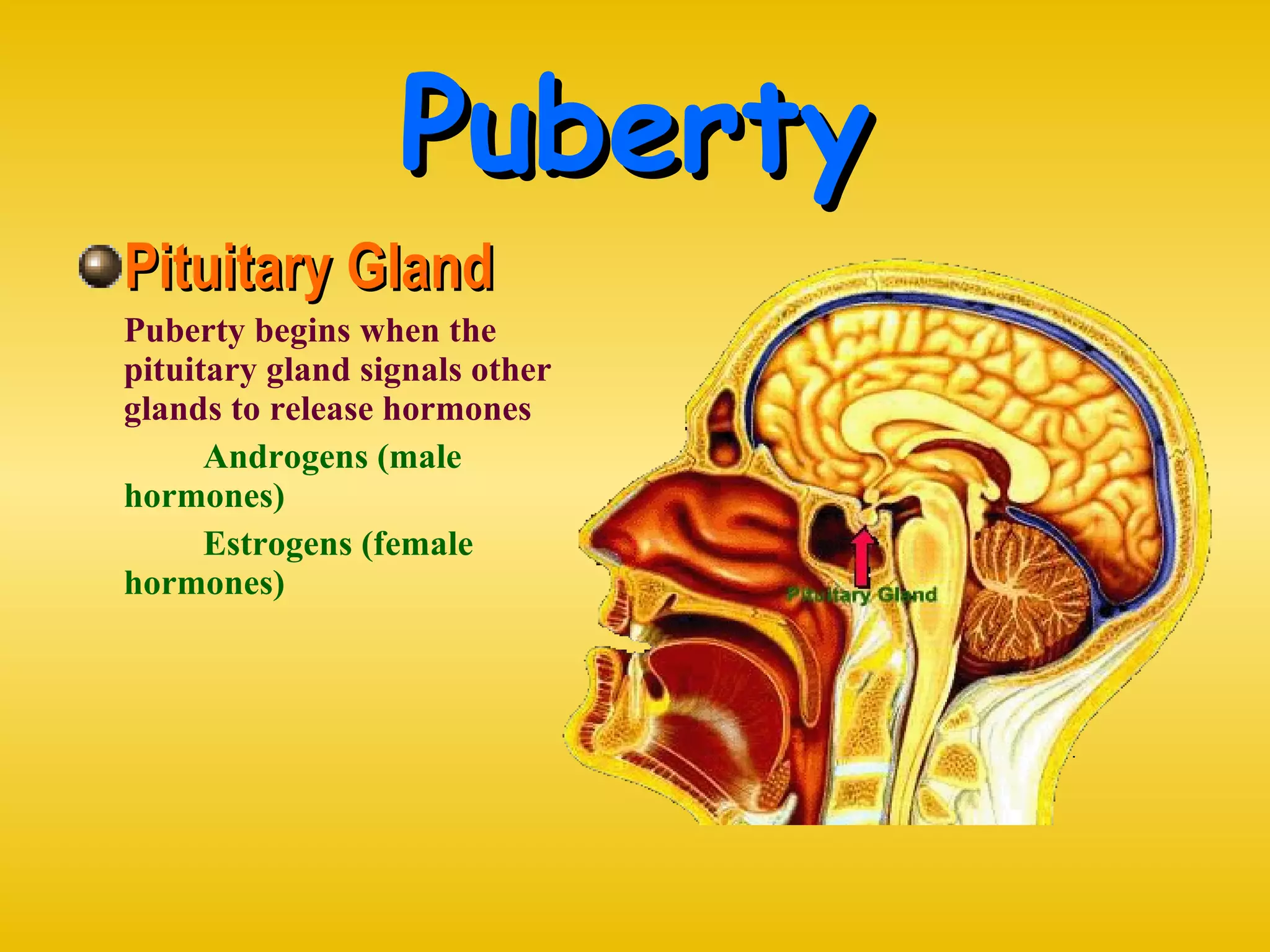
Puberty Pituitary Gland Puberty begins when the pituitary gland signals other glands to release hormones Androgens (male  hormones) Estrogens (female  hormones)
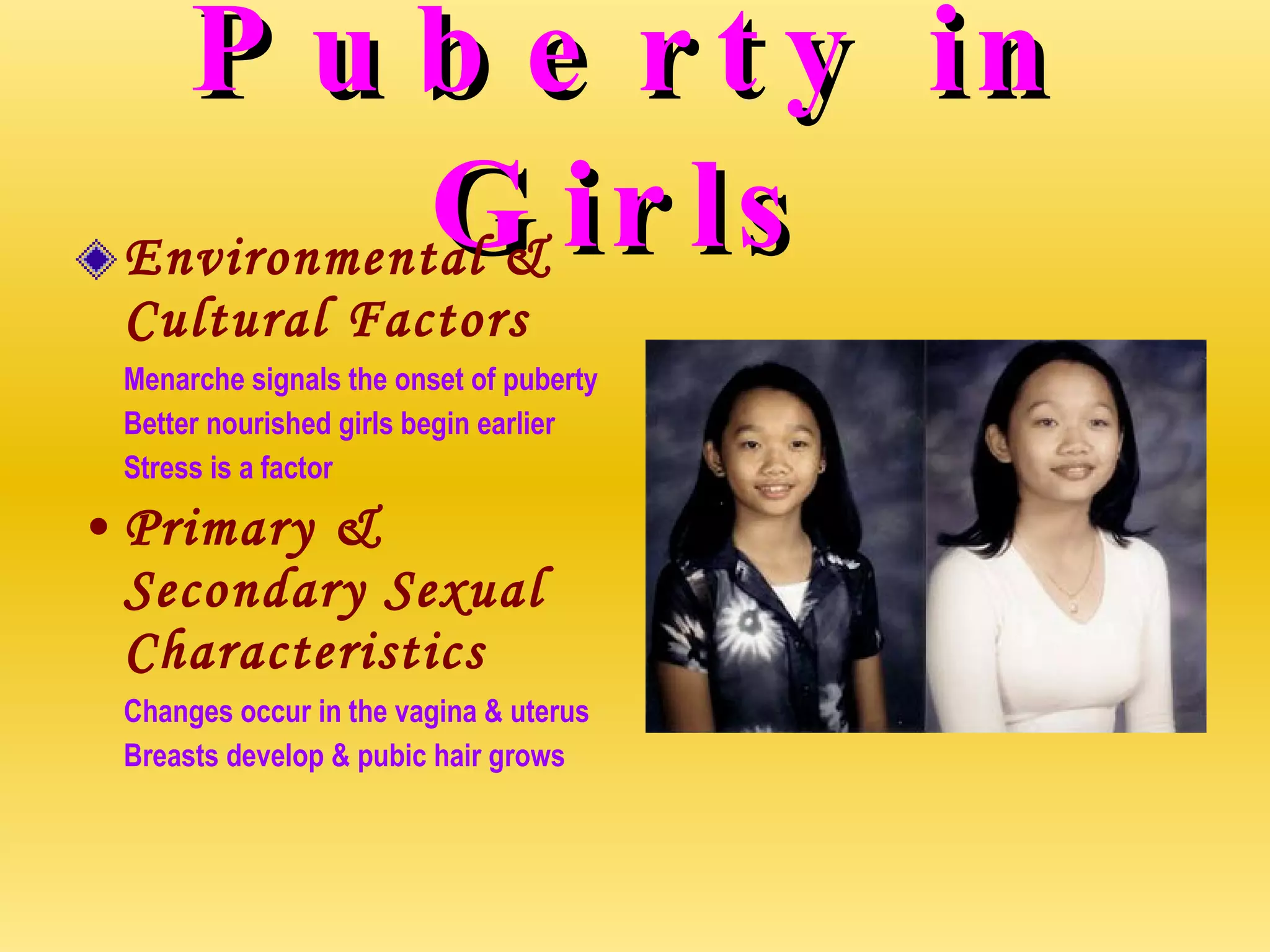
Puberty in Girls Environmental & Cultural Factors Menarche signals the onset of puberty Better nourished girls begin earlier Stress is a factor Primary & Secondary Sexual Characteristics Changes occur in the vagina & uterus Breasts develop & pubic hair grows
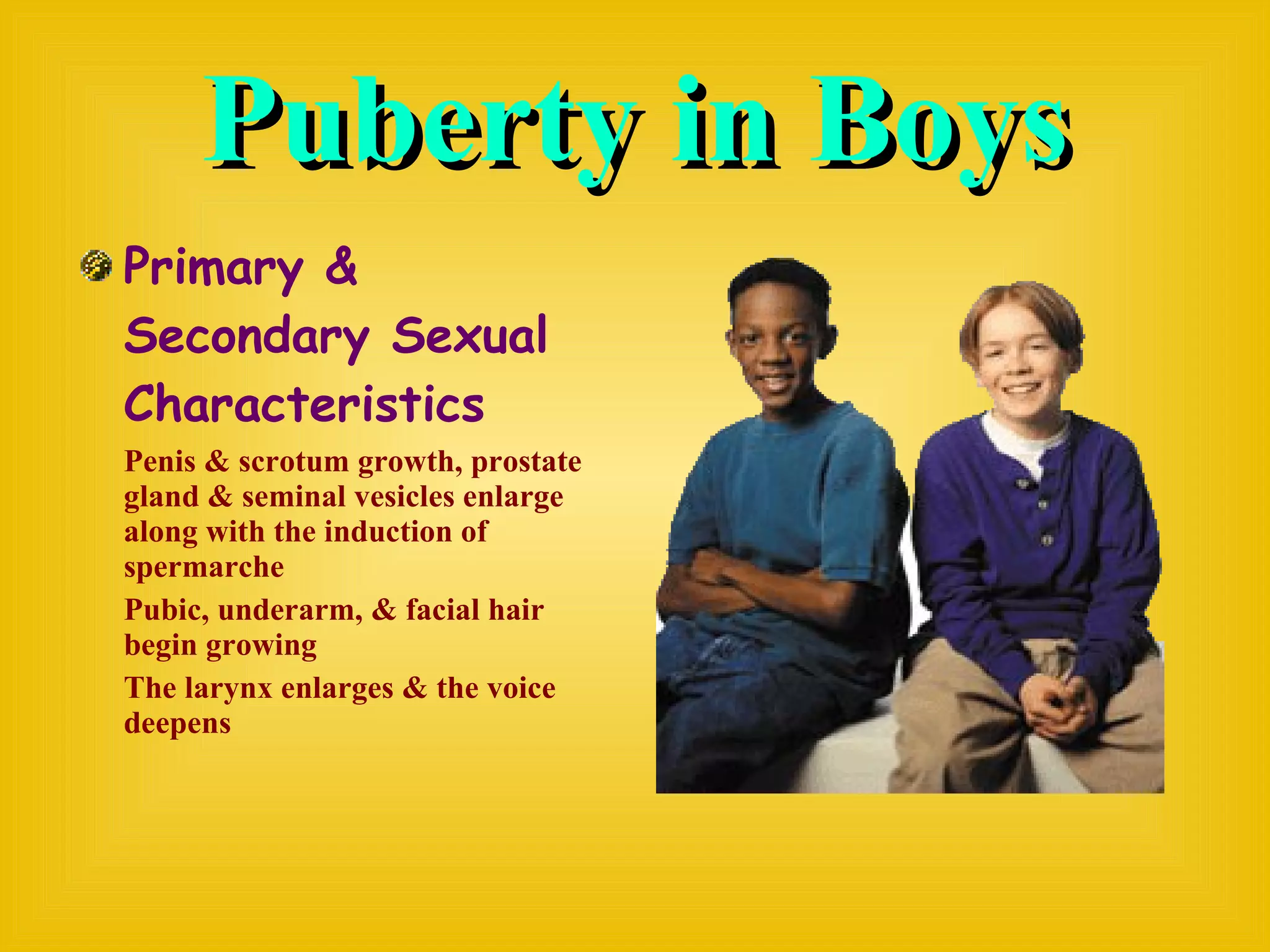
Puberty in Boys Primary & Secondary Sexual Characteristics Penis & scrotum growth, prostate gland & seminal vesicles enlarge along with the induction of spermarche Pubic, underarm, & facial hair begin growing The larynx enlarges & the voice deepens
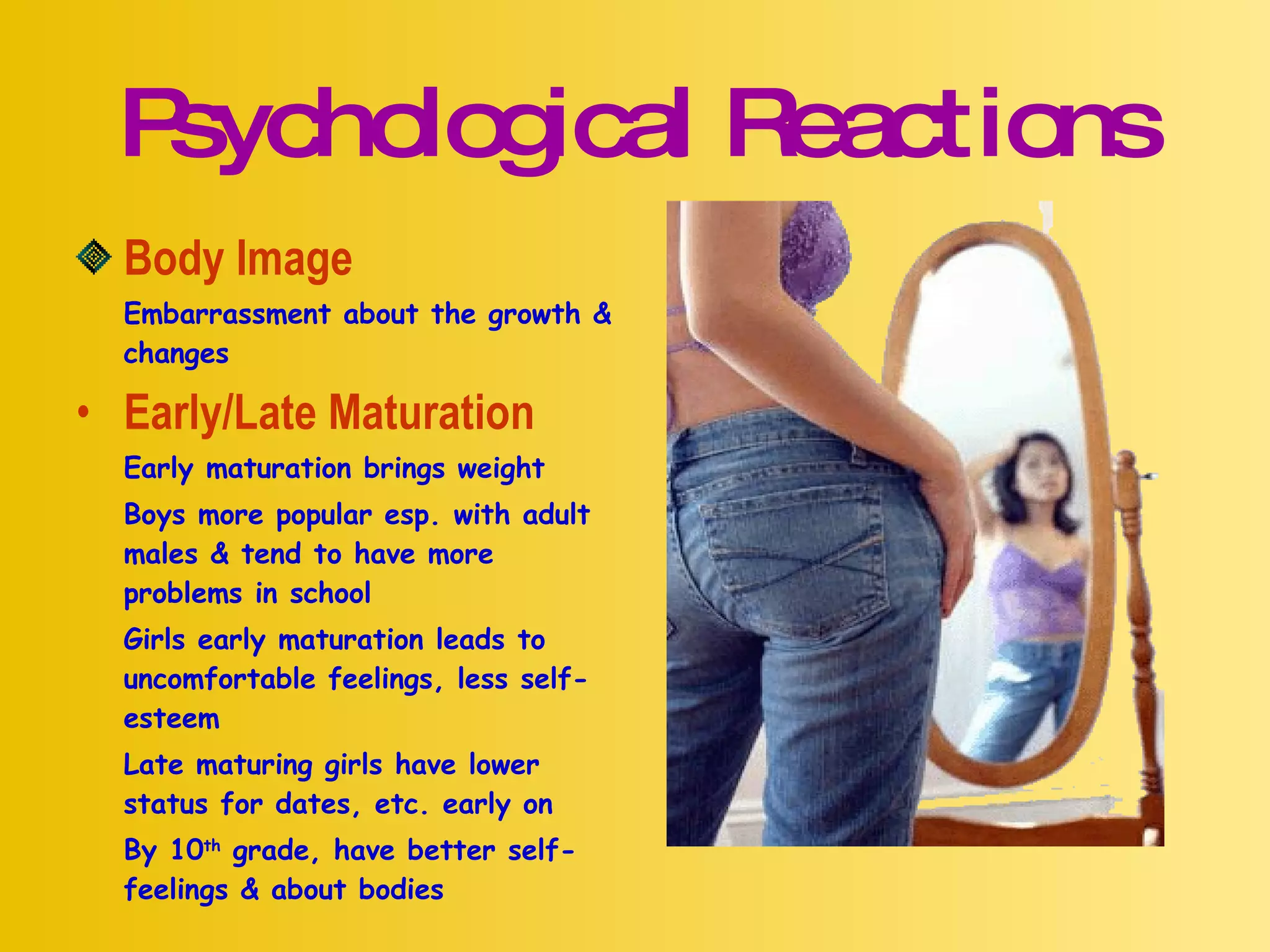
Psychological Reactions Body Image Embarrassment about the growth & changes Early/Late Maturation Early maturation brings weight Boys more popular esp. with adult males & tend to have more problems in school Girls early maturation leads to uncomfortable feelings, less self-esteem Late maturing girls have lower status for dates, etc. early on By 10 th  grade, have better self-feelings & about bodies
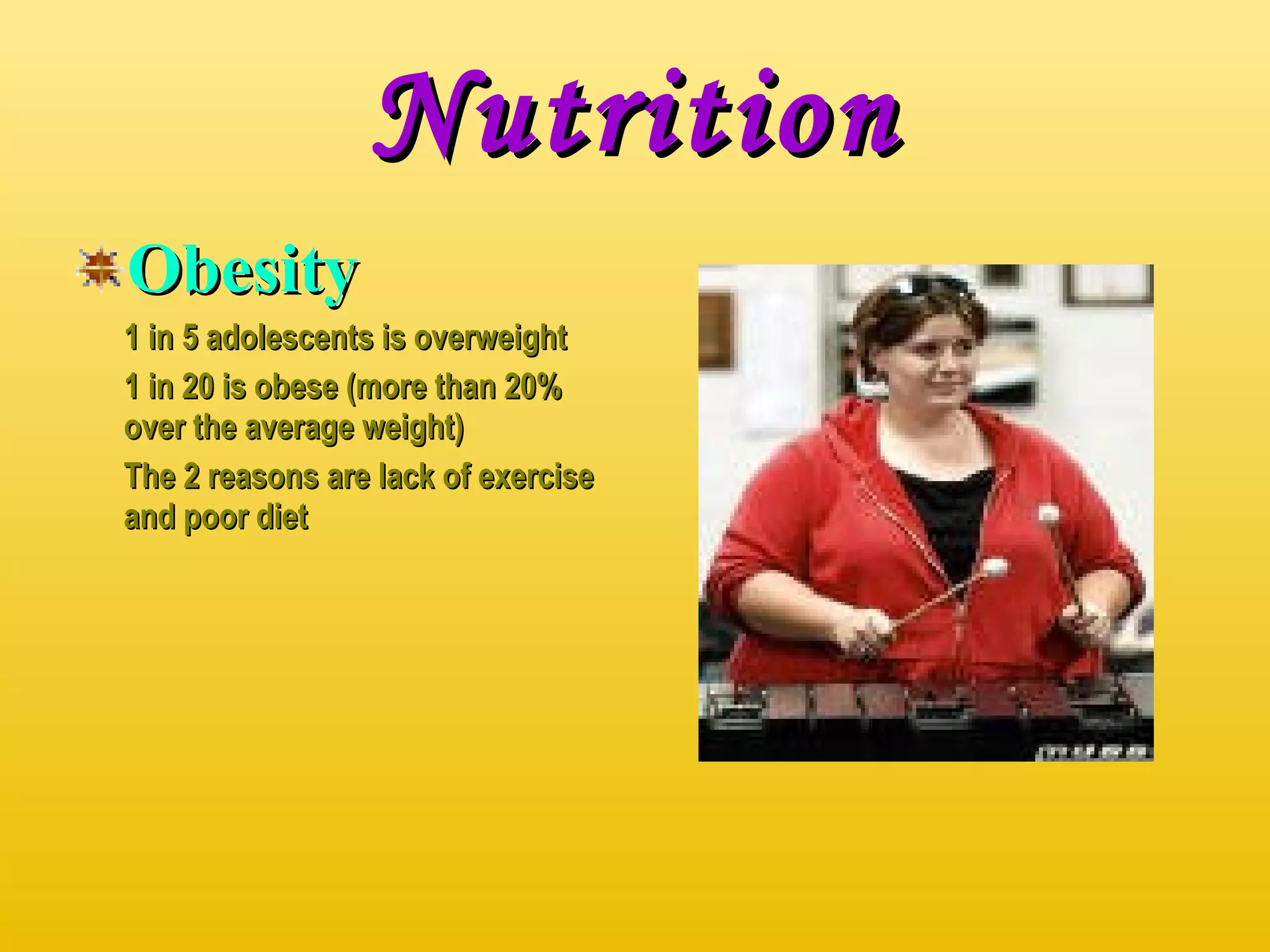
Nutrition Obesity 1 in 5 adolescents is overweight 1 in 20 is obese (more than 20% over the average weight) The 2 reasons are lack of exercise and poor diet
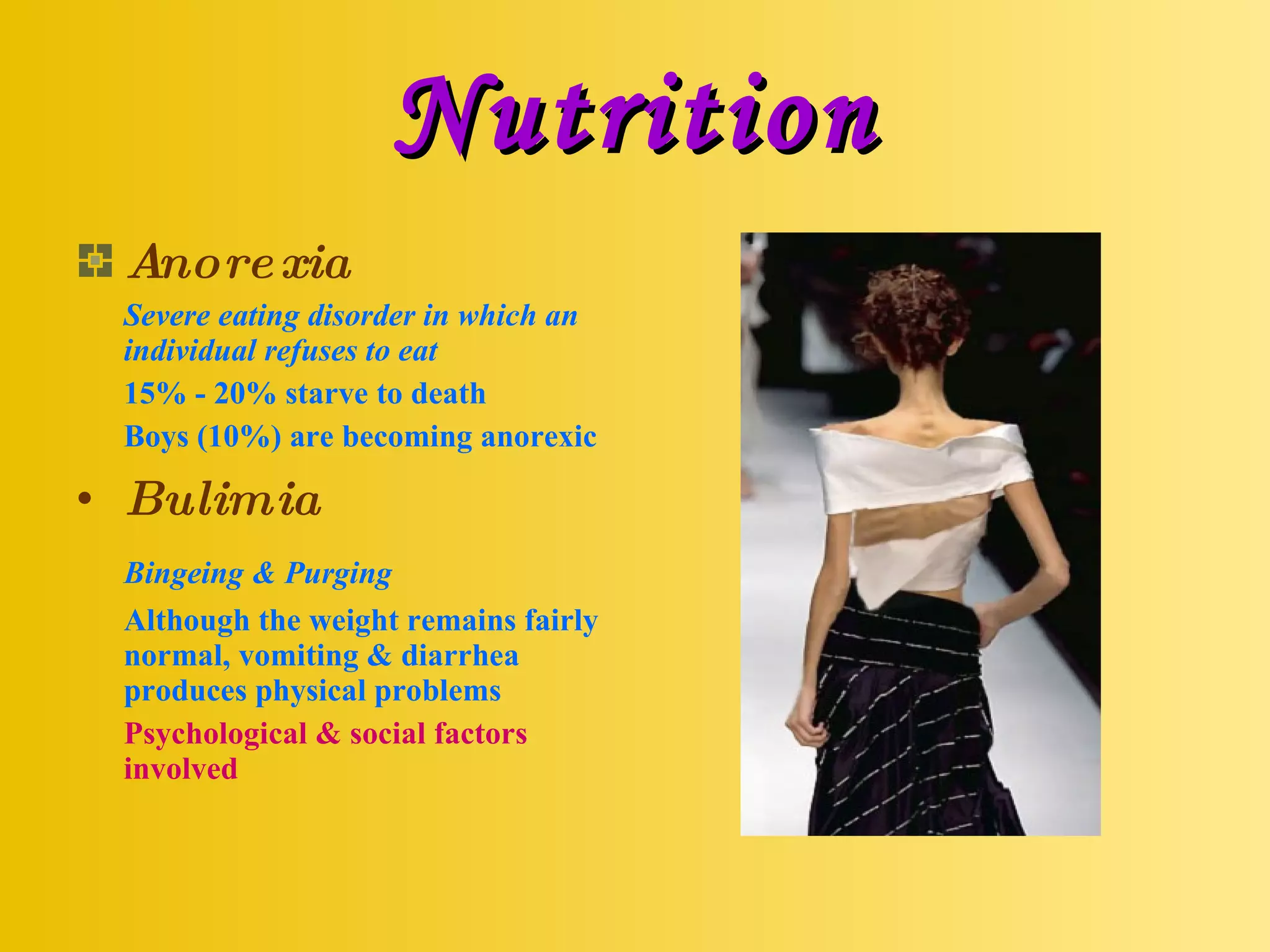
Nutrition Anorexia Severe eating disorder in which an individual refuses to eat 15% - 20% starve to death Boys (10%) are becoming anorexic Bulimia Bingeing & Purging Although the weight remains fairly normal, vomiting & diarrhea produces physical problems Psychological & social factors involved
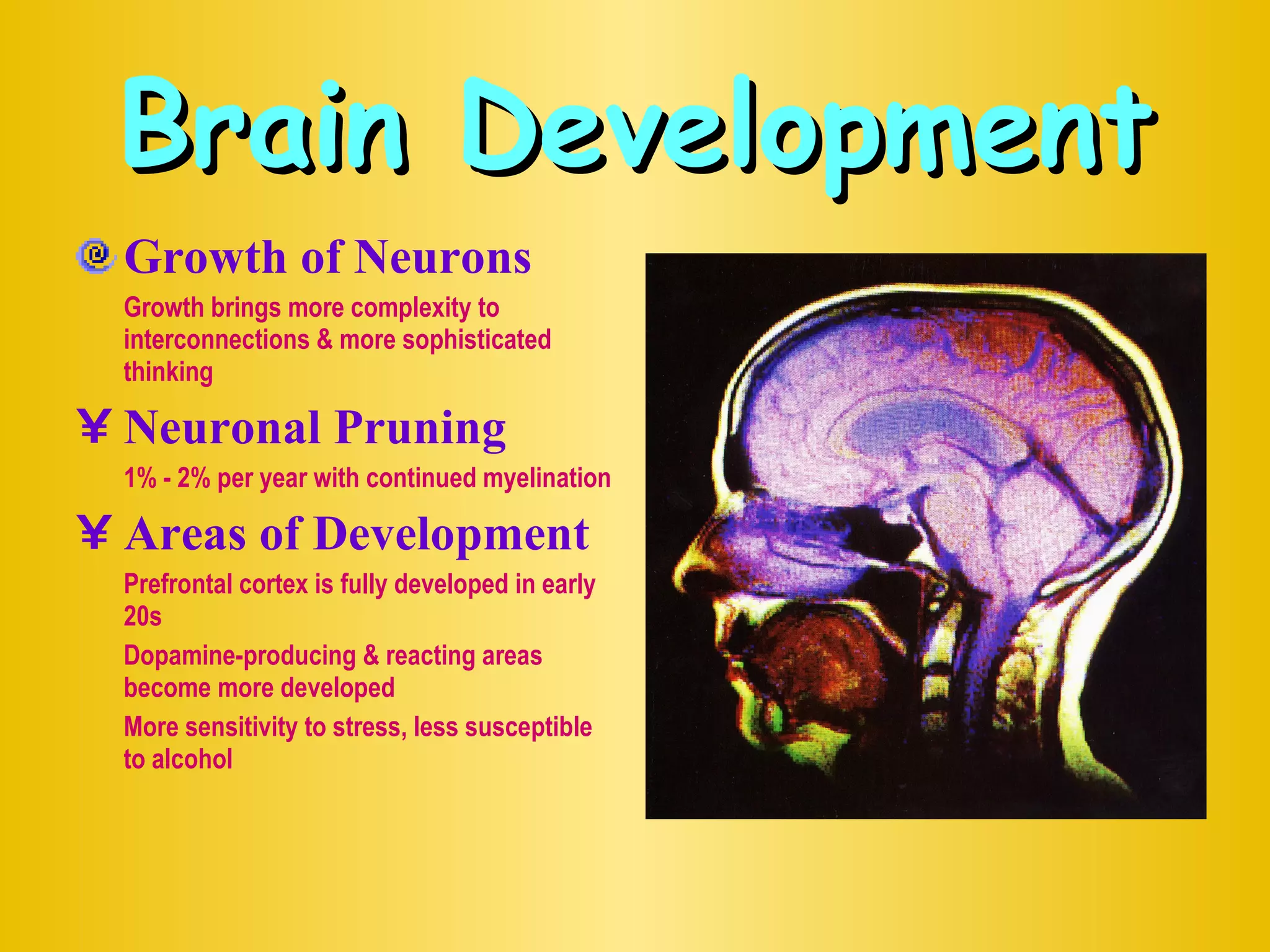
Brain Development Growth of Neurons Growth brings more complexity to interconnections & more sophisticated thinking Neuronal Pruning 1% - 2% per year with continued myelination Areas of Development Prefrontal cortex is fully developed in early 20s Dopamine-producing & reacting areas become more developed More sensitivity to stress, less susceptible to alcohol
Stress Origins of Stress Home, school, relationships, peers, intrapersonal, etc. Number of stressful events can produce major illnesses Can lead to psychosomatic disorders Psychological, emotional,  & physical interaction Ulcers, asthma, arthritis,  hypertension Outcomes of Stress Biological reaction Release of hormones from  the adrenal glands Rise in heart rate, blood  pressure, respiration, &  sweating Long-term outcome Reduction in the body’s  ability to deal with stress  and fight off disease
Coping Problem-focused Coping Attempting to manage stress by directly changing the situation to make it less stressful Emotion-focused Coping Conscious regulation of emotion Social Support Assistance & comfort supplied by others Defensive Coping Unconscious use of strategies that distort or deny the true nature of a situation
Threats to Well-being Illegal Drugs 50% of U.S. high school seniors & 20% of 8 th  graders used marijuana in the past year Reasons for use Pleasurable experiences Everyday pressures Peer pressures Thrill of doing something  illegal Addictive Drugs Drugs producing a biological or psychological dependence leading to cravings Physiological dependence Psychological dependence
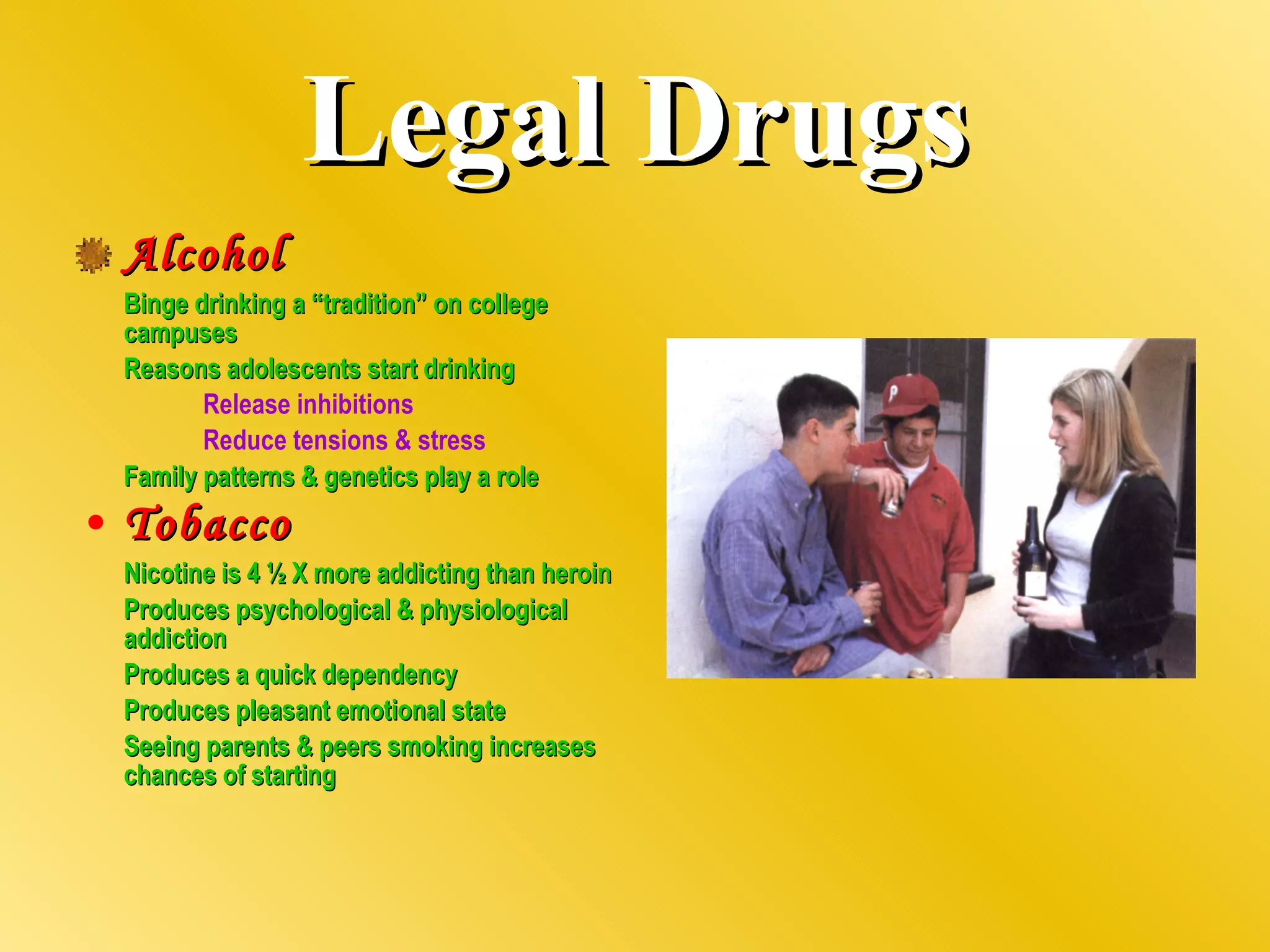
Legal Drugs Alcohol Binge drinking a “tradition” on college campuses Reasons adolescents start drinking Release inhibitions Reduce tensions & stress Family patterns & genetics play a role Tobacco Nicotine is 4 ½ X more addicting than heroin Produces psychological & physiological addiction Produces a quick dependency Produces pleasant emotional state Seeing parents & peers smoking increases chances of starting
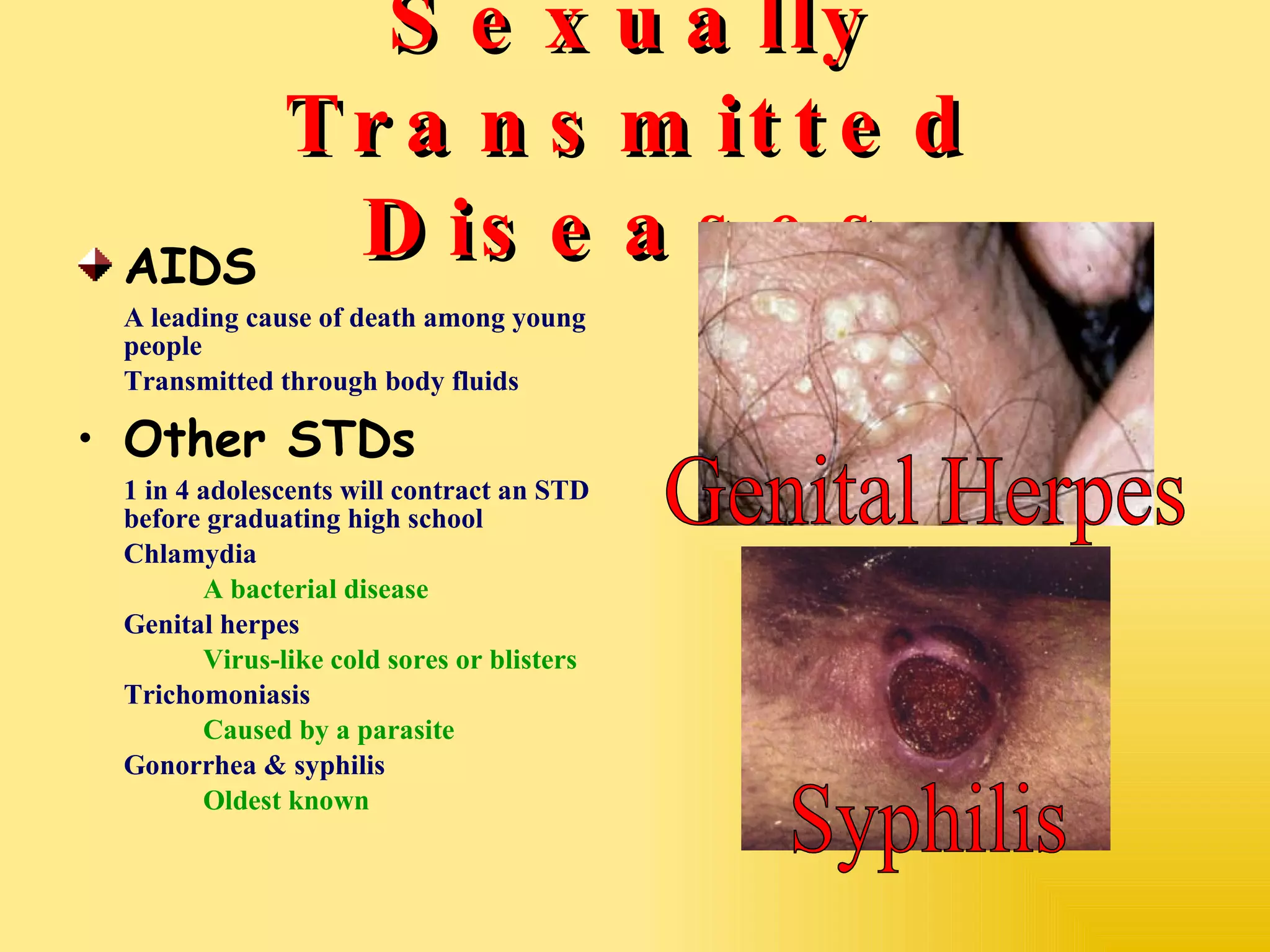
Sexually Transmitted Diseases AIDS A leading cause of death among young people Transmitted through body fluids Other STDs 1 in 4 adolescents will contract an STD before graduating high school Chlamydia A bacterial disease Genital herpes Virus-like cold sores or blisters Trichomoniasis Caused by a parasite Gonorrhea & syphilis Oldest known Genital Herpes Syphilis

Adolescence (Pt 1)

  • 1.
  • 2.
    Definitions Adolescence Developmentalstage between childhood & adulthood Puberty The maturation period during which the sexual organs mature Menarche The onset of menstruation Spermarche The first spontaneous ejaculation of sperm-laden fluid, usually around age 13 Primary Sex Characteristics Characteristics associated with the development of the sex & reproductive organs Secondary Sex Characteristics The visible signs of sexual maturity not involving the sex organs directly
  • 3.
    Growth Spurt Periodof Rapid Growth Boys grow 4.1” per year Girls grow 3.5” per year Girls begin about age 11 Boys begin about age 12
  • 4.
    Puberty Pituitary GlandPuberty begins when the pituitary gland signals other glands to release hormones Androgens (male hormones) Estrogens (female hormones)
  • 5.
    Puberty in GirlsEnvironmental & Cultural Factors Menarche signals the onset of puberty Better nourished girls begin earlier Stress is a factor Primary & Secondary Sexual Characteristics Changes occur in the vagina & uterus Breasts develop & pubic hair grows
  • 6.
    Puberty in BoysPrimary & Secondary Sexual Characteristics Penis & scrotum growth, prostate gland & seminal vesicles enlarge along with the induction of spermarche Pubic, underarm, & facial hair begin growing The larynx enlarges & the voice deepens
  • 7.
    Psychological Reactions BodyImage Embarrassment about the growth & changes Early/Late Maturation Early maturation brings weight Boys more popular esp. with adult males & tend to have more problems in school Girls early maturation leads to uncomfortable feelings, less self-esteem Late maturing girls have lower status for dates, etc. early on By 10 th grade, have better self-feelings & about bodies
  • 8.
    Nutrition Obesity 1in 5 adolescents is overweight 1 in 20 is obese (more than 20% over the average weight) The 2 reasons are lack of exercise and poor diet
  • 9.
    Nutrition Anorexia Severeeating disorder in which an individual refuses to eat 15% - 20% starve to death Boys (10%) are becoming anorexic Bulimia Bingeing & Purging Although the weight remains fairly normal, vomiting & diarrhea produces physical problems Psychological & social factors involved
  • 10.
    Brain Development Growthof Neurons Growth brings more complexity to interconnections & more sophisticated thinking Neuronal Pruning 1% - 2% per year with continued myelination Areas of Development Prefrontal cortex is fully developed in early 20s Dopamine-producing & reacting areas become more developed More sensitivity to stress, less susceptible to alcohol
  • 11.
    Stress Origins ofStress Home, school, relationships, peers, intrapersonal, etc. Number of stressful events can produce major illnesses Can lead to psychosomatic disorders Psychological, emotional, & physical interaction Ulcers, asthma, arthritis, hypertension Outcomes of Stress Biological reaction Release of hormones from the adrenal glands Rise in heart rate, blood pressure, respiration, & sweating Long-term outcome Reduction in the body’s ability to deal with stress and fight off disease
  • 12.
    Coping Problem-focused CopingAttempting to manage stress by directly changing the situation to make it less stressful Emotion-focused Coping Conscious regulation of emotion Social Support Assistance & comfort supplied by others Defensive Coping Unconscious use of strategies that distort or deny the true nature of a situation
  • 13.
    Threats to Well-beingIllegal Drugs 50% of U.S. high school seniors & 20% of 8 th graders used marijuana in the past year Reasons for use Pleasurable experiences Everyday pressures Peer pressures Thrill of doing something illegal Addictive Drugs Drugs producing a biological or psychological dependence leading to cravings Physiological dependence Psychological dependence
  • 14.
    Legal Drugs AlcoholBinge drinking a “tradition” on college campuses Reasons adolescents start drinking Release inhibitions Reduce tensions & stress Family patterns & genetics play a role Tobacco Nicotine is 4 ½ X more addicting than heroin Produces psychological & physiological addiction Produces a quick dependency Produces pleasant emotional state Seeing parents & peers smoking increases chances of starting
  • 15.
    Sexually Transmitted DiseasesAIDS A leading cause of death among young people Transmitted through body fluids Other STDs 1 in 4 adolescents will contract an STD before graduating high school Chlamydia A bacterial disease Genital herpes Virus-like cold sores or blisters Trichomoniasis Caused by a parasite Gonorrhea & syphilis Oldest known Genital Herpes Syphilis