Occupational Therapy
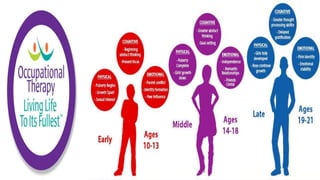
Lifespan development Adolescent
Adolescence is a period of life with specific health and
developmental needs and rights.
- It is also a time to develop knowledge and skills, learn to
manage emotions and relationships, and acquire
attributes and abilities that will be important for
enjoying the adolescent years and assuming adult roles.
- Adolescence is one of the most rapid phases of human
development. Although the order of many of the
changes appears to be universal, their timing and the
speed of change vary among and even within
individuals.
- Both the characteristics of an individual (e.g. sex) and
external factors (e.g. inadequate nutrition, an abusive
environment) influence these changes
Important neuronal developments are also taking place
during the adolescent years.
- These developments are linked to hormonal changes
but are not always dependent on them.
- Developments are taking place in regions of the brain,
such as the limbic system, that are responsible for
pleasure seeking and reward processing, emotional
responses and sleep regulation.
- At the same time, changes are taking place in the pre-
frontal cortex, the area responsible for what are called
executive functions: decision-making, organization,
impulse control and planning for the future.
- The changes in the pre-frontal cortex occur later in
adolescence than the limbic system changes.
Adolescence: psychological and social changes
- Linked to the hormonal and neurodevelopmental
changes that are taking place are psychosocial and
emotional changes and increasing cognitive and
intellectual capacities.
- Over the course of the second decade, adolescents
develop stronger reasoning skills, logical and moral
thinking, and become more capable of abstract
thinking and making rational judgements.
Adolescence: psychological and social changes
- Changes taking place in the adolescent’s environment
both affect and are affected by the internal changes of
adolescence.
- These external influences, which differ among cultures
and societies, include social values and norms and the
changing roles, responsibilities, relationships and
expectations of this period of life.
Implications for health and behavior
- In many ways adolescent development drives the
changes in the disease burden between childhood to
adulthood—for example, the increase with age in
sexual and reproductive health problems, mental illness
and injuries.
- The appearance of certain health problems in
adolescence, including substance use disorders, mental
disorders and injuries, likely reflects both the biological
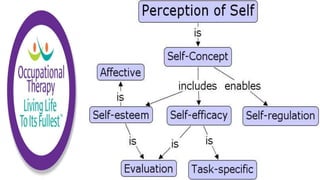
changes of puberty and the social context in which
young people are growing up.
Implications for health and behavior
- Other conditions, such as the increased incidence of
certain infectious diseases, for example, schistosomiasis,
may simply result from the daily activities of adolescents
during this period of their lives.
- Many of the health-related behaviors that arise during
adolescence have implications for both present and
future health and development.
- For example, alcohol use and obesity in early
adolescence not only compromise adolescent
development, but they also predict health-compromising
alcohol use and obesity in later life, with serious
implications for public health.
The changes that take place during adolescence suggest nine
observations with implications for health policies and programmes:
- Adolescents need explicit attention.
- Adolescents are not all the same.
- Some adolescents are particularly vulnerable.
- Adolescent development has implications for adolescent health.
- Adolescent development has health implications throughout life.
- The changes during adolescence affect how adolescents think
and act.
- Adolescents need to understand the processes taking place
during adolescence.
- To contribute positively, adults need to understand the processes
taking place during adolescence.
- Public health and human rights converge around concepts of
adolescent development.
Health and Wellness
Teens under the influence of alcohol are more likely to:
– Smoke cigarettes
– Engage in risky sexual behaviors
– Get into a car where the driver has been drinking
– Get into physical fights
– Experience academic problems
– Engage in illegal behaviors
Sleep
Only 20% of teens get the optimal amount of sleep on school nights
– Decreased motivation
– Depression, irritability and lack of tolerance
– Emotional responses
Obesity
- 1 in 5 adolescents is overweight
- 1 in 20 is classified as obese (body weight more than 20% above
average)
- Reasons for obesity in adolescents the same as younger children,
psychological consequences may be particularly severe during
this phase of life when body image is of particular concern
- Potential health consequences are more problematic for obese
adolescents
- Obesity strains the circulatory system, increasingly likelihood of
high blood pressure and diabetes
Eating Disorders
- Eating disorders are complex conditions that arise from
a variety of factors, including physical, psychological,
interpersonal, and social issues
- Once started, however, they can create a self-
perpetuating cycle of physical and emotional
destruction. All eating disorders require professional
help.
Eating Disorders
- People with eating disorders often use food and the
control of food in an attempt to compensate for feelings
and emotions that may otherwise seem over-whelming.
- For some, dieting, bingeing, and purging may begin as
a way to cope with painful emotions and to feel in
control of one’s life, but ultimately, these behaviors will
damage a person’s physical and emotional health, self-
esteem, and sense of competence and control.
- Anorexia Nervosa is a serious, potentially life-
threatening eating disorder characterized by self-
starvation and excessive weight loss.
Anorexia Nervosa has four primary symptoms:
- Resistance to maintaining body weight at or above a
minimally normal weight for age and height
- Intense fear of weight gain or being “fat” even though
underweight.
- Denial of the seriousness of low body weight.
- Loss of menstrual periods in girls and women post-
puberty.
Health Consequences of Anorexia Nervosa:
- Abnormally slow heart rate and low blood pressure
- Reduction of bone density (osteoporosis), which results in dry,
brittle bones.
- Muscle loss and weakness.
- Severe dehydration, which can result in kidney failure.
- Fainting, fatigue, and overall weakness.
- Dry hair and skin, hair loss is common.
- Growth of a downy layer of hair called lanugo all over the body,
including the face, in an effort to keep the body warm.
Bulimia
- Bulimia is a serious, potentially life-threatening eating disorder
characterized by a cycle of bingeing and compensatory behaviors
such as self-induced vomiting designed to undo or compensate for
the effects of binge eating.
Three primary symptoms:
- Regular intake of large amounts of food accompanied by a sense
of loss of control over eating behavior.
- Regular use of inappropriate compensatory behaviors such as
self-induced vomiting, laxative or diuretic abuse, fasting, and/or
obsessive or compulsive exercise.
- Extreme concern with body weight and shape
Health Consequences of Bulimia:
- Electrolyte imbalances caused by dehydration and loss of
potassium and sodium from the body as a result of purging
behaviors.
- Inflammation and possible rupture of the esophagus from
frequent vomiting.
- Tooth decay and staining from stomach acids released during
vomiting.
- Chronic irregular bowel movements and constipation as a result
of laxative abuse.
- Gastric rupture is an uncommon but possible side effect of binge
eating
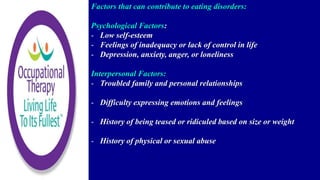
Factors that can contribute to eating disorders:
Psychological Factors:
- Low self-esteem
- Feelings of inadequacy or lack of control in life
- Depression, anxiety, anger, or loneliness
Interpersonal Factors:
- Troubled family and personal relationships
- Difficulty expressing emotions and feelings
- History of being teased or ridiculed based on size or weight
- History of physical or sexual abuse
Factors that can contribute to eating disorders:
Social Factors:
- Cultural pressures that glorify "thinness" and place value on
obtaining the "perfect body" Narrow definitions of beauty that
include only women and men of specific body weights and shapes
- Cultural norms that value people on the basis of physical
appearance and not inner qualities and strengths
- The Media, Body Image, and Eating Disorders - Media images
that help to create cultural definitions of beauty and
attractiveness are often acknowledged as being among those
factors contributing to the rise of eating disorders.
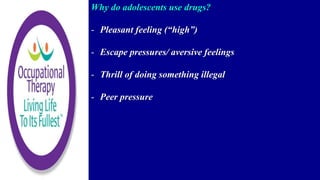
Why do adolescents use drugs?
- Pleasant feeling (“high”)
- Escape pressures/ aversive feelings
- Thrill of doing something illegal
- Peer pressure
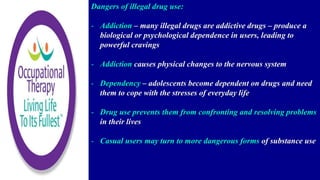
Dangers of illegal drug use:
- Addiction – many illegal drugs are addictive drugs – produce a
biological or psychological dependence in users, leading to
powerful cravings
- Addiction causes physical changes to the nervous system
- Dependency – adolescents become dependent on drugs and need
them to cope with the stresses of everyday life
- Drug use prevents them from confronting and resolving problems
in their lives
- Casual users may turn to more dangerous forms of substance use
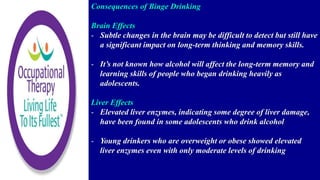
Consequences of Binge Drinking
Brain Effects
- Subtle changes in the brain may be difficult to detect but still have
a significant impact on long-term thinking and memory skills.
- It’s not known how alcohol will affect the long-term memory and
learning skills of people who began drinking heavily as
adolescents.
Liver Effects
- Elevated liver enzymes, indicating some degree of liver damage,
have been found in some adolescents who drink alcohol
- Young drinkers who are overweight or obese showed elevated
liver enzymes even with only moderate levels of drinking
Growth and Endocrine Effects
- In both males and females, puberty is a period associated with
marked hormonal changes, including increases in the sex
hormones, estrogen and testosterone.
- These hormones, in turn, increase production of other hormones
and growth factors, which are vital for normal organ
development.
- Drinking alcohol during this period of rapid growth and
development (i.e., prior to or during puberty) may upset the
critical hormonal balance necessary for normal development of
organs, muscles, and bones.
Cigarette smoking
 Cigarette smoking among adolescents is one of the 10 Leading
Health Indicators that reflect the major health concerns
 Cigarette smoking during childhood and adolescence produces
significant health problems among young people, including:
- Cough and phlegm production
- An increase in the number and severity of respiratory illnesses
- Decreased physical fitness
- An unfavorable lipid profile
- Potential retardation in the rate of lung growth and the level of
maximum lung function.
- Sexually active adolescents and young adults are more
susceptible to Sexual transmitted infections for biological,
behavioral and cultural reason
According to Erikson’s theory, adolescents strive to:
- Discover what makes them unique and distinctive
- Identify their strengths and weaknesses
- Determine the roles they can best play in their future
Identity vs. role confusion (identity confusion)
- Adolescents “try on” different roles
- They seek to make choices about their personal,
occupational, sexual and political commitments
Positive outcome:
- Awareness of self (unique qualities)
- Knowledge of roles
Negative outcome:
- Inability to identify appropriate roles in life
- They may adopt socially unacceptable roles as an
expression of who they do not want to be
Signs and Symptoms of Depression in Adolescents
- Sadness or hopelessness
- Irritability, anger, or hostility
- Tearfulness or frequent crying
- Withdrawal from friends and family
- Loss of interest in activities
- Changes in eating and sleeping habits
- Restlessness and agitation
- Feelings of worthlessness and guilt
- Lack of enthusiasm and motivation
- Fatigue or lack of energy
- Difficulty concentrating
- Thoughts of death or suicide
Untreated Depression can lead to…
Problems at school
- Depression can cause low energy and concentration difficulties.
This may lead to poor attendance, poor grades, or frustration with
schoolwork in a formerly good student.
Running away
- Many depressed teens run away from home or talk about running
away. Such attempts are usually a cry for help.
Substance abuse
- Teens may use alcohol or drugs in an attempt to “self-medicate”
their depression.
Eating disorders
- Anorexia, bulimia, binge eating, and yo-yo dieting are often signs
of depression.
Self-injury
- Cutting, burning, and other kinds of self-mutilation are almost
always associated with depression.
Reckless behavior
- Depressed teens may engage in high-risk behaviors such as
reckless driving, out-of-control drinking, and unsafe sex
Violence
- Some depressed teens become violent. Often violence occurs in
victims of bullying.
Suicide
- Teens who are seriously depressed often think, speak, or make
"attention-getting" attempts at suicide. Suicidal thoughts or
behaviors should always be taken very seriously
Suicide is the third leading cause of death for 15- to 24-year-olds.
- For the overwhelming majority of suicidal teens, depression or
another psychological disorder plays a primary role.
- In depressed teens who also abuse alcohol or drugs, the risk of
suicide is even greater.
- Teenagers who are depressed should be watched closely for any
signs of suicidal thoughts or behavior.
The suicidal warning signs could include:
- Talking or joking about committing suicide.
- Saying things like, “I’d be better off dead,” “I wish I could
disappear forever”
- Speaking positively about death or romanticizing dying (“If I
died, people might love me more”).
- Writing stories and poems about death, dying, or suicide.
- Engaging in reckless behavior or having a lot of accidents
resulting in injury.
- Giving away prized possessions.
- Saying goodbye to friends and family as if for good.
- Seeking out weapons, pills, or other ways to kill themselves.
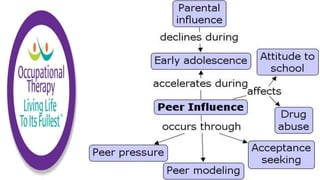
Peer Pressure
- During adolescence, peers play a large part in a young person's
life and typically replace family as the center of a teen's social
and leisure activities.
- Teenagers have various peer relationships, and they interact with
many peer groups.
- Some kids give in to peer pressure because they want to be liked,
to fit in, or because they worry that other kids may make fun of
them if they don't go along with the group.
- Others may go along because they are curious to try something
new that others are doing.
- The idea that "everyone's doing it" may influence some kids to
leave their better judgment, or their common sense, behind.
Two levels of Peer Pressure
- The first is the large group (ex: school, youth group, or sports
team). This is the setting that gets the most attention.
- The large group exerts a general pressure on its members. It
directs the trends in clothing, music, entertainment, and "political
correctness".
- The second is in the close relationship with one or several best
friends - This is the setting that is sometimes overlooked.
- The pressure which takes place among close friends is not so easy
to escape. What your best friend approves of or disapproves of
exerts great pressure on you. This pressure is personal and
forceful
Sexual Orientation
- One important aspect of adolescence is forming one's sexual
identity.
- All teens explore and experiment sexually as part of normal
development.
- This sexual behavior may be with members of the same or
opposite sex.
- For many adolescents, thinking about and/or experimenting with
people of the same sex may cause concerns and anxiety regarding
their sexual orientation.
- For others, even thoughts or fantasies may cause anxiety. These
feelings and behavior do not necessarily mean an individual is
homosexual or bisexual.
- Homosexuality is the persistent sexual and emotional attraction
to someone of the same sex. It is part of the range of sexual
expression.
- Many gay, lesbian and bisexual individuals first become aware of
and experience their sexual thoughts and feelings during
childhood and adolescence.
- Recent changes in society's attitude toward sexuality have helped
gay, lesbian, and bisexual teens feel more comfortable with their
sexual orientation
Concerns about homosexual or bisexual feelings
Despite increased knowledge and information, gay, lesbian and
bisexual teens still have many concerns. These include:
- Feeling different from peers
- Feeling guilty about their sexual orientation
- Worrying about the response from their families and loved ones
- Being teased and ridiculed by their peers
- Worrying about AIDS, HIV infection, and other sexually
transmitted diseases
- Fearing discrimination when joining clubs, sports, seeking
admission to college, and finding employment
- Being rejected and harassed by others
- Gay, lesbian, and bisexual teens can become socially isolated,
withdraw from activities and friends, have trouble concentrating,
and develop low self-esteem.
- Some may develop depression and think about suicide or attempt
it.
- Erikson’s proposal by suggesting adolescent stage consists
neither of identity resolution nor identity confusion as Erikson
claimed
- His theory states that there are two distinct parts that form
adolescent identity: a crisis and a commitment.
- He defined a crisis as a time of upheaval where old values or
choices are being reexamined.
- The outcome of a crisis leads to commitment to a certain value or
role
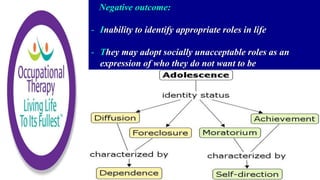
Marcia proposed four stages of psychological identity development:
- Identity Diffusion – the status of individuals who have not yet
experienced a crisis or made any commitments. They show little
interest in such matters.
- Identity Foreclosure - the status of individuals who have made a
commitment but not experienced a crisis. This occurs most often
when parents hand down commitments to their adolescents,
usually in an authoritarian way, before adolescents have had a
chance to explore their own approaches.
- Identity Moratorium - the status of individuals who are in the
midst of a crisis but whose commitments are either absent or only
vaguely defined.
- Identity Achievement - the status of individuals who have
undergone a crisis and made a commitment
Three main changes in Adolescents
- More intense emotions
- Risk and novelty becomes more compelling
- We seek attachment in peers
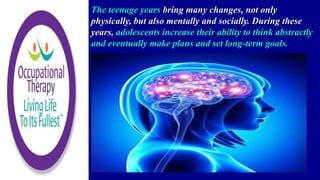
The teenage years bring many changes, not only
physically, but also mentally and socially. During these
years, adolescents increase their ability to think abstractly
and eventually make plans and set long-term goals.
Each child may progress at a different rate and may have
a different view of the world. In general, the following are
some of the abilities that may be evident in your
adolescent:
- Develops the ability to think abstractly
- Is concerned with philosophy, politics, and social issues
- Thinks long-term
- Sets goals
- Compares one's self to one's peers
Abstract thinking is the ability to deal with concepts.
Abstract thinking characterized by
- To assume mental set voluntarily
- To shift voluntarily from one aspect of a situation to
another.
- To keep in mind simultaneously various aspect of
situation.
- To group the essentials of a whole and to break a
whole into parts.
- To abstract common properties.
- To plan ahead.
- To assume make believe attitude and took think or act
symbolically.
As the adolescent begins to struggle for independence and
control, many changes may happen. The following are
some of the issues that may be involved with your
adolescent during these years:
- Wants independence from parents
- Peer influence and acceptance becomes very important
- Romantic and sexual relationships become important
- May be in love
- Has long-term commitment in relationship
Consider the following as ways to foster your adolescent's
social abilities:
- Encourage the adolescent to take on new challenges.
- Talk with the adolescent about not losing sight of one's
self in group relations.
- Encourage the adolescent to talk to a trusted adult
about problems or concerns, even if it is not you he or
she chooses to talk with.
- Discuss ways to manage and handle stress.
- Provide consistent, loving discipline with limits,
restrictions, and rewards.
- Find ways to spend time together.
Two contrasting theories of how brain changes during
adolescence might relate to risky behavior:
Brain’s reward system hypo-responsive to rewards
- Teens need more stimulation to achieve the same level
of satisfaction
Brain’s reward system hyper-responsive
- Adolescent brain has greater need for reward, which
leads to more reward-seeking behaviors
Two contrasting theories of how brain changes during
adolescence might relate to risky behavior:
Adolescents Desire to be part of a peer group
- Desire to be normal
- Desire to fit in
- Desire acceptance of their condition
Illness During Adolescence
- Significant impact on psychosocial and social
development
- Greater demand for closer social relations
- Interferes with development and maintenance of peer
relationships
Resilience Theory
- Focuses on strengths rather than deficits
Resilience is a process:
- Overcoming the negative effects of risk exposure
- Coping successfully with traumatic experiences
- Avoiding negative trajectories associated with risk
- Requires the presence of promotive factors
Use peer relationships as promotive factors to encourage
resilience during a very difficult time
Peers provide:
- Empathy
- Support
- Promote/model positive behavior
- Increased psychological well-being
- Increased feelings of self worth & esteem
- Family members cannot always provide this
Development of self understanding
- Changes in self esteem and self concept due to Social
Comparisons
- Social Comparisons: judging one’s appearance,
abilities, and behavior in relation to those of others.
- Use of social comparisons, comparing themselves to
the abilities, expertise, and opinions of others
Adolescence Self Concept
- Adolescents mention attitudes, personality traits,
religious/political beliefs, variation with context, and
an orientation to the future.
- Adolescents use hypothetical reasoning to experiment
with different selves
- Adolescence is characterized by self-absorption,
imaginary audience, personal fable, and illusion of
invulnerability.
In adolescence, the self is defined by abstract
characteristics, social competence, and social acceptance
- Adolescents can conceive of themselves in terms of a
variety of selves, depending on the context
- With friends, siblings, parents, etc…
- Adolescents create a variety of selves in their search
for identity
Erikson’s Identity vs. Identity Confusion
- The period during which teenagers seek to determine
what is unique and distinctive about themselves
- Adolescents increasingly rely on their friends and
peers as sources of information about their identity.
Self Esteem
- Self Esteem is used to describe a persons overall sense
of self- worth or personal value. It may involve a
variety of beliefs about the self, such as the appraisal
of ones own appearance, beliefs, emotions and
behaviors.
- Positive links between healthy self-esteem including:
happiness, humility, resilience and optimism.
- Low self-esteem is related to stress, depression anxiety
and eating disorders
Changes is seen in Self-Esteem
- Some children experience a decline into middle and
high school
- Multiple stressors likely to contribute to declines
- Overall stability is lowest in childhood and early
adolescence
- Relatively stable in late adolescence and early
adulthood
Parental and Peer Influence
- The family is seen as the first medium of socialization.
- Most common negative impacts on self esteem are the
verbal abuse children receive.
- Parental modelling is an important as any words that
can be spoken.
- Positive modelling behaviors and positive self-talk.
- Children adapt the behaviors attitudes, precepts and
self talk we instill in them.
- “Many experienced parents have noted, children won’t
always do as you say but usually do as you do
Characteristics of a adolescent with a high Self Esteem
- They tend to act independently.
- They are always ready to assume responsibility.
- They always take pride in their accomplishments.
- They are willing to attempt new tasks and challenges.
- They can handle positive and negative emotions.
- They are always willing to help others.
Characteristics of a adolescent with a low Self Esteem
- They tend to avoid new experiences.
- They tend to feel unwanted and unloved.
- They usually blame others for their shortcomings i.e.
their failures.
- They tend to feel or pretend to feel, emotionally
indifferent to the activities happening around them.
- They cant handle normal levels of frustration.
- They tend to under value themselves by looking down
on their talents and abilities.
- They are easily influenced.
Ways to improve your Self Esteem
- Find out things you enjoy doing and do them.
- Never compare yourself with others, the only time you
are allowed to do so is with your last performance.
- Don’t compare yourself with others
- Learn to do things for yourself mostly because it
makes you happy and not because it would make
others notice or like you.
- Help others, nothing beats the joy helping brings.
- Always give yourself a treat and plan your time well.
- Accept your strengths and weaknesses and understand
that they are there to compliment each other, hence,
you.
Occupational Therapy Lifespan Development Adolescents

Occupational Therapy Lifespan Development Adolescents

  • 1.
  • 3.
    Adolescence is aperiod of life with specific health and developmental needs and rights. - It is also a time to develop knowledge and skills, learn to manage emotions and relationships, and acquire attributes and abilities that will be important for enjoying the adolescent years and assuming adult roles.
  • 4.
    - Adolescence isone of the most rapid phases of human development. Although the order of many of the changes appears to be universal, their timing and the speed of change vary among and even within individuals. - Both the characteristics of an individual (e.g. sex) and external factors (e.g. inadequate nutrition, an abusive environment) influence these changes
  • 5.
    Important neuronal developmentsare also taking place during the adolescent years. - These developments are linked to hormonal changes but are not always dependent on them. - Developments are taking place in regions of the brain, such as the limbic system, that are responsible for pleasure seeking and reward processing, emotional responses and sleep regulation.
  • 6.
    - At thesame time, changes are taking place in the pre- frontal cortex, the area responsible for what are called executive functions: decision-making, organization, impulse control and planning for the future. - The changes in the pre-frontal cortex occur later in adolescence than the limbic system changes.
  • 7.
    Adolescence: psychological andsocial changes - Linked to the hormonal and neurodevelopmental changes that are taking place are psychosocial and emotional changes and increasing cognitive and intellectual capacities. - Over the course of the second decade, adolescents develop stronger reasoning skills, logical and moral thinking, and become more capable of abstract thinking and making rational judgements.
  • 8.
    Adolescence: psychological andsocial changes - Changes taking place in the adolescent’s environment both affect and are affected by the internal changes of adolescence. - These external influences, which differ among cultures and societies, include social values and norms and the changing roles, responsibilities, relationships and expectations of this period of life.
  • 9.
    Implications for healthand behavior - In many ways adolescent development drives the changes in the disease burden between childhood to adulthood—for example, the increase with age in sexual and reproductive health problems, mental illness and injuries. - The appearance of certain health problems in adolescence, including substance use disorders, mental disorders and injuries, likely reflects both the biological changes of puberty and the social context in which young people are growing up.
  • 10.
    Implications for healthand behavior - Other conditions, such as the increased incidence of certain infectious diseases, for example, schistosomiasis, may simply result from the daily activities of adolescents during this period of their lives. - Many of the health-related behaviors that arise during adolescence have implications for both present and future health and development. - For example, alcohol use and obesity in early adolescence not only compromise adolescent development, but they also predict health-compromising alcohol use and obesity in later life, with serious implications for public health.
  • 11.
    The changes thattake place during adolescence suggest nine observations with implications for health policies and programmes: - Adolescents need explicit attention. - Adolescents are not all the same. - Some adolescents are particularly vulnerable. - Adolescent development has implications for adolescent health. - Adolescent development has health implications throughout life. - The changes during adolescence affect how adolescents think and act. - Adolescents need to understand the processes taking place during adolescence. - To contribute positively, adults need to understand the processes taking place during adolescence. - Public health and human rights converge around concepts of adolescent development.
  • 12.
    Health and Wellness Teensunder the influence of alcohol are more likely to: – Smoke cigarettes – Engage in risky sexual behaviors – Get into a car where the driver has been drinking – Get into physical fights – Experience academic problems – Engage in illegal behaviors Sleep Only 20% of teens get the optimal amount of sleep on school nights – Decreased motivation – Depression, irritability and lack of tolerance – Emotional responses
  • 13.
    Obesity - 1 in5 adolescents is overweight - 1 in 20 is classified as obese (body weight more than 20% above average) - Reasons for obesity in adolescents the same as younger children, psychological consequences may be particularly severe during this phase of life when body image is of particular concern - Potential health consequences are more problematic for obese adolescents - Obesity strains the circulatory system, increasingly likelihood of high blood pressure and diabetes
  • 14.
    Eating Disorders - Eatingdisorders are complex conditions that arise from a variety of factors, including physical, psychological, interpersonal, and social issues - Once started, however, they can create a self- perpetuating cycle of physical and emotional destruction. All eating disorders require professional help.
  • 15.
    Eating Disorders - Peoplewith eating disorders often use food and the control of food in an attempt to compensate for feelings and emotions that may otherwise seem over-whelming. - For some, dieting, bingeing, and purging may begin as a way to cope with painful emotions and to feel in control of one’s life, but ultimately, these behaviors will damage a person’s physical and emotional health, self- esteem, and sense of competence and control.
  • 16.
    - Anorexia Nervosais a serious, potentially life- threatening eating disorder characterized by self- starvation and excessive weight loss. Anorexia Nervosa has four primary symptoms: - Resistance to maintaining body weight at or above a minimally normal weight for age and height - Intense fear of weight gain or being “fat” even though underweight. - Denial of the seriousness of low body weight. - Loss of menstrual periods in girls and women post- puberty.
  • 17.
    Health Consequences ofAnorexia Nervosa: - Abnormally slow heart rate and low blood pressure - Reduction of bone density (osteoporosis), which results in dry, brittle bones. - Muscle loss and weakness. - Severe dehydration, which can result in kidney failure. - Fainting, fatigue, and overall weakness. - Dry hair and skin, hair loss is common. - Growth of a downy layer of hair called lanugo all over the body, including the face, in an effort to keep the body warm.
  • 18.
    Bulimia - Bulimia isa serious, potentially life-threatening eating disorder characterized by a cycle of bingeing and compensatory behaviors such as self-induced vomiting designed to undo or compensate for the effects of binge eating. Three primary symptoms: - Regular intake of large amounts of food accompanied by a sense of loss of control over eating behavior. - Regular use of inappropriate compensatory behaviors such as self-induced vomiting, laxative or diuretic abuse, fasting, and/or obsessive or compulsive exercise. - Extreme concern with body weight and shape
  • 19.
    Health Consequences ofBulimia: - Electrolyte imbalances caused by dehydration and loss of potassium and sodium from the body as a result of purging behaviors. - Inflammation and possible rupture of the esophagus from frequent vomiting. - Tooth decay and staining from stomach acids released during vomiting. - Chronic irregular bowel movements and constipation as a result of laxative abuse. - Gastric rupture is an uncommon but possible side effect of binge eating
  • 20.
    Factors that cancontribute to eating disorders: Psychological Factors: - Low self-esteem - Feelings of inadequacy or lack of control in life - Depression, anxiety, anger, or loneliness Interpersonal Factors: - Troubled family and personal relationships - Difficulty expressing emotions and feelings - History of being teased or ridiculed based on size or weight - History of physical or sexual abuse
  • 21.
    Factors that cancontribute to eating disorders: Social Factors: - Cultural pressures that glorify "thinness" and place value on obtaining the "perfect body" Narrow definitions of beauty that include only women and men of specific body weights and shapes - Cultural norms that value people on the basis of physical appearance and not inner qualities and strengths - The Media, Body Image, and Eating Disorders - Media images that help to create cultural definitions of beauty and attractiveness are often acknowledged as being among those factors contributing to the rise of eating disorders.
  • 22.
    Why do adolescentsuse drugs? - Pleasant feeling (“high”) - Escape pressures/ aversive feelings - Thrill of doing something illegal - Peer pressure
  • 23.
    Dangers of illegaldrug use: - Addiction – many illegal drugs are addictive drugs – produce a biological or psychological dependence in users, leading to powerful cravings - Addiction causes physical changes to the nervous system - Dependency – adolescents become dependent on drugs and need them to cope with the stresses of everyday life - Drug use prevents them from confronting and resolving problems in their lives - Casual users may turn to more dangerous forms of substance use
  • 24.
    Consequences of BingeDrinking Brain Effects - Subtle changes in the brain may be difficult to detect but still have a significant impact on long-term thinking and memory skills. - It’s not known how alcohol will affect the long-term memory and learning skills of people who began drinking heavily as adolescents. Liver Effects - Elevated liver enzymes, indicating some degree of liver damage, have been found in some adolescents who drink alcohol - Young drinkers who are overweight or obese showed elevated liver enzymes even with only moderate levels of drinking
  • 25.
    Growth and EndocrineEffects - In both males and females, puberty is a period associated with marked hormonal changes, including increases in the sex hormones, estrogen and testosterone. - These hormones, in turn, increase production of other hormones and growth factors, which are vital for normal organ development. - Drinking alcohol during this period of rapid growth and development (i.e., prior to or during puberty) may upset the critical hormonal balance necessary for normal development of organs, muscles, and bones.
  • 26.
    Cigarette smoking  Cigarettesmoking among adolescents is one of the 10 Leading Health Indicators that reflect the major health concerns  Cigarette smoking during childhood and adolescence produces significant health problems among young people, including: - Cough and phlegm production - An increase in the number and severity of respiratory illnesses - Decreased physical fitness - An unfavorable lipid profile - Potential retardation in the rate of lung growth and the level of maximum lung function.
  • 27.
    - Sexually activeadolescents and young adults are more susceptible to Sexual transmitted infections for biological, behavioral and cultural reason
  • 28.
    According to Erikson’stheory, adolescents strive to: - Discover what makes them unique and distinctive - Identify their strengths and weaknesses - Determine the roles they can best play in their future
  • 29.
    Identity vs. roleconfusion (identity confusion) - Adolescents “try on” different roles - They seek to make choices about their personal, occupational, sexual and political commitments Positive outcome: - Awareness of self (unique qualities) - Knowledge of roles
  • 30.
    Negative outcome: - Inabilityto identify appropriate roles in life - They may adopt socially unacceptable roles as an expression of who they do not want to be
  • 33.
    Signs and Symptomsof Depression in Adolescents - Sadness or hopelessness - Irritability, anger, or hostility - Tearfulness or frequent crying - Withdrawal from friends and family - Loss of interest in activities - Changes in eating and sleeping habits - Restlessness and agitation - Feelings of worthlessness and guilt - Lack of enthusiasm and motivation - Fatigue or lack of energy - Difficulty concentrating - Thoughts of death or suicide
  • 34.
    Untreated Depression canlead to… Problems at school - Depression can cause low energy and concentration difficulties. This may lead to poor attendance, poor grades, or frustration with schoolwork in a formerly good student. Running away - Many depressed teens run away from home or talk about running away. Such attempts are usually a cry for help. Substance abuse - Teens may use alcohol or drugs in an attempt to “self-medicate” their depression. Eating disorders - Anorexia, bulimia, binge eating, and yo-yo dieting are often signs of depression.
  • 35.
    Self-injury - Cutting, burning,and other kinds of self-mutilation are almost always associated with depression. Reckless behavior - Depressed teens may engage in high-risk behaviors such as reckless driving, out-of-control drinking, and unsafe sex Violence - Some depressed teens become violent. Often violence occurs in victims of bullying. Suicide - Teens who are seriously depressed often think, speak, or make "attention-getting" attempts at suicide. Suicidal thoughts or behaviors should always be taken very seriously
  • 36.
    Suicide is thethird leading cause of death for 15- to 24-year-olds. - For the overwhelming majority of suicidal teens, depression or another psychological disorder plays a primary role. - In depressed teens who also abuse alcohol or drugs, the risk of suicide is even greater. - Teenagers who are depressed should be watched closely for any signs of suicidal thoughts or behavior.
  • 37.
    The suicidal warningsigns could include: - Talking or joking about committing suicide. - Saying things like, “I’d be better off dead,” “I wish I could disappear forever” - Speaking positively about death or romanticizing dying (“If I died, people might love me more”). - Writing stories and poems about death, dying, or suicide. - Engaging in reckless behavior or having a lot of accidents resulting in injury. - Giving away prized possessions. - Saying goodbye to friends and family as if for good. - Seeking out weapons, pills, or other ways to kill themselves.
  • 38.
    Peer Pressure - Duringadolescence, peers play a large part in a young person's life and typically replace family as the center of a teen's social and leisure activities. - Teenagers have various peer relationships, and they interact with many peer groups. - Some kids give in to peer pressure because they want to be liked, to fit in, or because they worry that other kids may make fun of them if they don't go along with the group. - Others may go along because they are curious to try something new that others are doing. - The idea that "everyone's doing it" may influence some kids to leave their better judgment, or their common sense, behind.
  • 39.
    Two levels ofPeer Pressure - The first is the large group (ex: school, youth group, or sports team). This is the setting that gets the most attention. - The large group exerts a general pressure on its members. It directs the trends in clothing, music, entertainment, and "political correctness". - The second is in the close relationship with one or several best friends - This is the setting that is sometimes overlooked. - The pressure which takes place among close friends is not so easy to escape. What your best friend approves of or disapproves of exerts great pressure on you. This pressure is personal and forceful
  • 40.
    Sexual Orientation - Oneimportant aspect of adolescence is forming one's sexual identity. - All teens explore and experiment sexually as part of normal development. - This sexual behavior may be with members of the same or opposite sex. - For many adolescents, thinking about and/or experimenting with people of the same sex may cause concerns and anxiety regarding their sexual orientation. - For others, even thoughts or fantasies may cause anxiety. These feelings and behavior do not necessarily mean an individual is homosexual or bisexual.
  • 41.
    - Homosexuality isthe persistent sexual and emotional attraction to someone of the same sex. It is part of the range of sexual expression. - Many gay, lesbian and bisexual individuals first become aware of and experience their sexual thoughts and feelings during childhood and adolescence. - Recent changes in society's attitude toward sexuality have helped gay, lesbian, and bisexual teens feel more comfortable with their sexual orientation
  • 42.
    Concerns about homosexualor bisexual feelings Despite increased knowledge and information, gay, lesbian and bisexual teens still have many concerns. These include: - Feeling different from peers - Feeling guilty about their sexual orientation - Worrying about the response from their families and loved ones - Being teased and ridiculed by their peers - Worrying about AIDS, HIV infection, and other sexually transmitted diseases - Fearing discrimination when joining clubs, sports, seeking admission to college, and finding employment - Being rejected and harassed by others - Gay, lesbian, and bisexual teens can become socially isolated, withdraw from activities and friends, have trouble concentrating, and develop low self-esteem. - Some may develop depression and think about suicide or attempt it.
  • 43.
    - Erikson’s proposalby suggesting adolescent stage consists neither of identity resolution nor identity confusion as Erikson claimed - His theory states that there are two distinct parts that form adolescent identity: a crisis and a commitment. - He defined a crisis as a time of upheaval where old values or choices are being reexamined. - The outcome of a crisis leads to commitment to a certain value or role
  • 44.
    Marcia proposed fourstages of psychological identity development: - Identity Diffusion – the status of individuals who have not yet experienced a crisis or made any commitments. They show little interest in such matters. - Identity Foreclosure - the status of individuals who have made a commitment but not experienced a crisis. This occurs most often when parents hand down commitments to their adolescents, usually in an authoritarian way, before adolescents have had a chance to explore their own approaches. - Identity Moratorium - the status of individuals who are in the midst of a crisis but whose commitments are either absent or only vaguely defined. - Identity Achievement - the status of individuals who have undergone a crisis and made a commitment
  • 45.
    Three main changesin Adolescents - More intense emotions - Risk and novelty becomes more compelling - We seek attachment in peers
  • 46.
    The teenage yearsbring many changes, not only physically, but also mentally and socially. During these years, adolescents increase their ability to think abstractly and eventually make plans and set long-term goals.
  • 47.
    Each child mayprogress at a different rate and may have a different view of the world. In general, the following are some of the abilities that may be evident in your adolescent: - Develops the ability to think abstractly - Is concerned with philosophy, politics, and social issues - Thinks long-term - Sets goals - Compares one's self to one's peers
  • 48.
    Abstract thinking isthe ability to deal with concepts. Abstract thinking characterized by - To assume mental set voluntarily - To shift voluntarily from one aspect of a situation to another. - To keep in mind simultaneously various aspect of situation. - To group the essentials of a whole and to break a whole into parts. - To abstract common properties. - To plan ahead. - To assume make believe attitude and took think or act symbolically.
  • 49.
    As the adolescentbegins to struggle for independence and control, many changes may happen. The following are some of the issues that may be involved with your adolescent during these years: - Wants independence from parents - Peer influence and acceptance becomes very important - Romantic and sexual relationships become important - May be in love - Has long-term commitment in relationship
  • 50.
    Consider the followingas ways to foster your adolescent's social abilities: - Encourage the adolescent to take on new challenges. - Talk with the adolescent about not losing sight of one's self in group relations. - Encourage the adolescent to talk to a trusted adult about problems or concerns, even if it is not you he or she chooses to talk with. - Discuss ways to manage and handle stress. - Provide consistent, loving discipline with limits, restrictions, and rewards. - Find ways to spend time together.
  • 51.
    Two contrasting theoriesof how brain changes during adolescence might relate to risky behavior: Brain’s reward system hypo-responsive to rewards - Teens need more stimulation to achieve the same level of satisfaction Brain’s reward system hyper-responsive - Adolescent brain has greater need for reward, which leads to more reward-seeking behaviors
  • 52.
    Two contrasting theoriesof how brain changes during adolescence might relate to risky behavior:
  • 53.
    Adolescents Desire tobe part of a peer group - Desire to be normal - Desire to fit in - Desire acceptance of their condition Illness During Adolescence - Significant impact on psychosocial and social development - Greater demand for closer social relations - Interferes with development and maintenance of peer relationships
  • 54.
    Resilience Theory - Focuseson strengths rather than deficits Resilience is a process: - Overcoming the negative effects of risk exposure - Coping successfully with traumatic experiences - Avoiding negative trajectories associated with risk - Requires the presence of promotive factors Use peer relationships as promotive factors to encourage resilience during a very difficult time
  • 55.
    Peers provide: - Empathy -Support - Promote/model positive behavior - Increased psychological well-being - Increased feelings of self worth & esteem - Family members cannot always provide this
  • 56.
    Development of selfunderstanding - Changes in self esteem and self concept due to Social Comparisons - Social Comparisons: judging one’s appearance, abilities, and behavior in relation to those of others. - Use of social comparisons, comparing themselves to the abilities, expertise, and opinions of others
  • 57.
    Adolescence Self Concept -Adolescents mention attitudes, personality traits, religious/political beliefs, variation with context, and an orientation to the future. - Adolescents use hypothetical reasoning to experiment with different selves - Adolescence is characterized by self-absorption, imaginary audience, personal fable, and illusion of invulnerability.
  • 58.
    In adolescence, theself is defined by abstract characteristics, social competence, and social acceptance - Adolescents can conceive of themselves in terms of a variety of selves, depending on the context - With friends, siblings, parents, etc… - Adolescents create a variety of selves in their search for identity
  • 59.
    Erikson’s Identity vs.Identity Confusion - The period during which teenagers seek to determine what is unique and distinctive about themselves - Adolescents increasingly rely on their friends and peers as sources of information about their identity.
  • 60.
    Self Esteem - SelfEsteem is used to describe a persons overall sense of self- worth or personal value. It may involve a variety of beliefs about the self, such as the appraisal of ones own appearance, beliefs, emotions and behaviors. - Positive links between healthy self-esteem including: happiness, humility, resilience and optimism. - Low self-esteem is related to stress, depression anxiety and eating disorders
  • 61.
    Changes is seenin Self-Esteem - Some children experience a decline into middle and high school - Multiple stressors likely to contribute to declines - Overall stability is lowest in childhood and early adolescence - Relatively stable in late adolescence and early adulthood
  • 62.
    Parental and PeerInfluence - The family is seen as the first medium of socialization. - Most common negative impacts on self esteem are the verbal abuse children receive. - Parental modelling is an important as any words that can be spoken. - Positive modelling behaviors and positive self-talk. - Children adapt the behaviors attitudes, precepts and self talk we instill in them. - “Many experienced parents have noted, children won’t always do as you say but usually do as you do
  • 63.
    Characteristics of aadolescent with a high Self Esteem - They tend to act independently. - They are always ready to assume responsibility. - They always take pride in their accomplishments. - They are willing to attempt new tasks and challenges. - They can handle positive and negative emotions. - They are always willing to help others.
  • 64.
    Characteristics of aadolescent with a low Self Esteem - They tend to avoid new experiences. - They tend to feel unwanted and unloved. - They usually blame others for their shortcomings i.e. their failures. - They tend to feel or pretend to feel, emotionally indifferent to the activities happening around them. - They cant handle normal levels of frustration. - They tend to under value themselves by looking down on their talents and abilities. - They are easily influenced.

  • 65.
    Ways to improveyour Self Esteem - Find out things you enjoy doing and do them. - Never compare yourself with others, the only time you are allowed to do so is with your last performance. - Don’t compare yourself with others - Learn to do things for yourself mostly because it makes you happy and not because it would make others notice or like you. - Help others, nothing beats the joy helping brings. - Always give yourself a treat and plan your time well. - Accept your strengths and weaknesses and understand that they are there to compliment each other, hence, you.