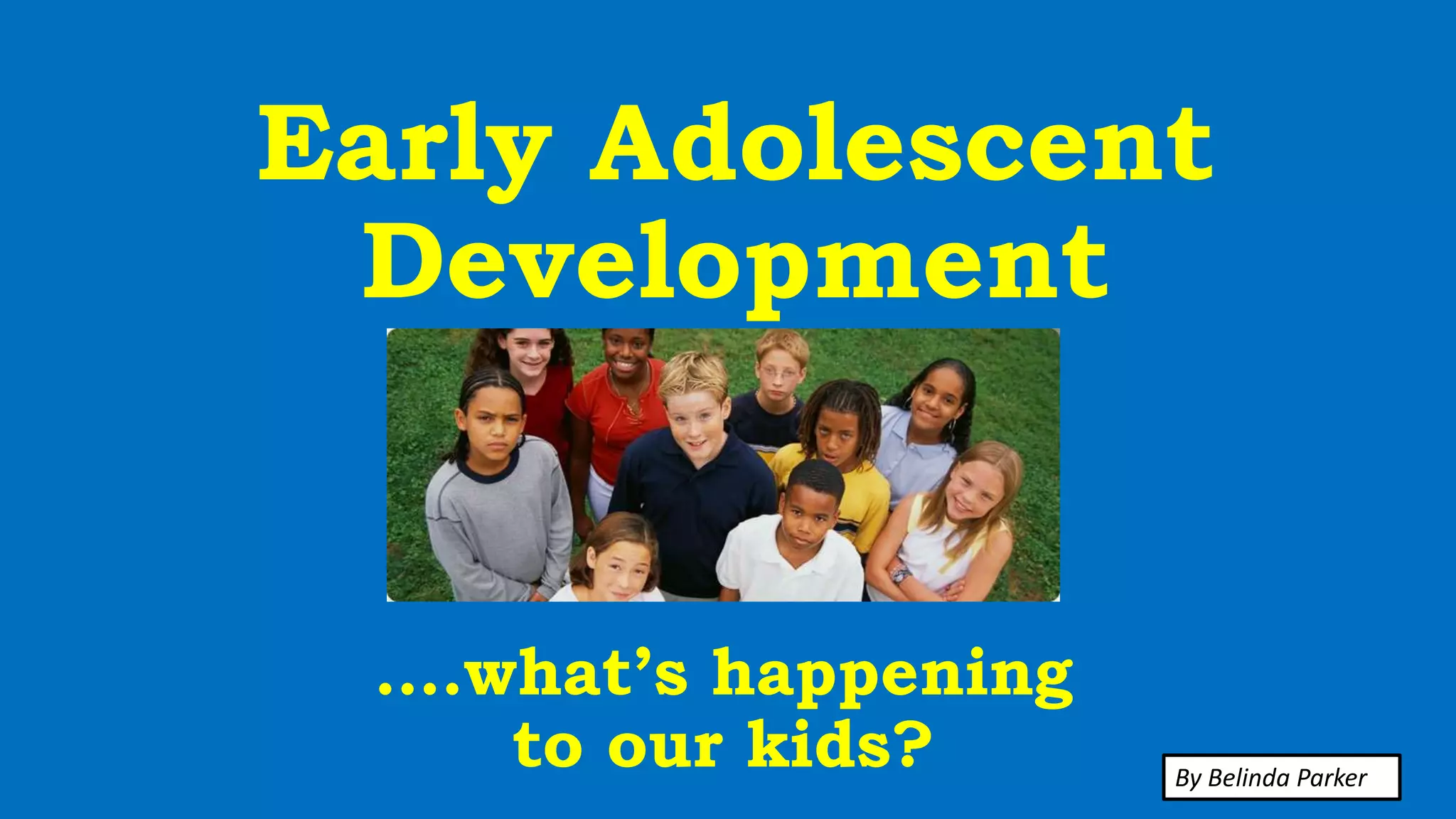
Early Adolescent
Development
….what’s happening
to our kids? By Belinda Parker
• Undergo more rapid and personal changes than any
other time in their lives1
• More than 27% of 8th graders have consumed alcohol
and 20% have used illegal drugs2
• USA teenage birth rate highest in developed world3
• Sexting becoming a problem with Middle School kids4
• Only 50% of 12 year olds have high self esteem. Drops
to 5% in 15 year olds!5
Facts about Adolescents
By Belinda Parker
Understanding and
responding to adolescent
development is vital in
Middle Years Education.
Any later and we miss the
opportunity!
By Belinda Parker
Content
• Physical Development
• Sexual Development
• Intellectual Development
• Moral Development
• Social Development
• Advise for Parents
• Advise for Adolescents
By Belinda Parker
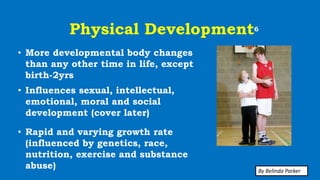
Physical Development6
• More developmental body changes
than any other time in life, except
birth-2yrs
• Influences sexual, intellectual,
emotional, moral and social
development (cover later)
• Rapid and varying growth rate
(influenced by genetics, race,
nutrition, exercise and substance
abuse) By Belinda Parker
Physical Development6
• Bones, muscles, internal organs, sex organs, brain – all
growing/developing
• Good nutrition essential for health and self image
(eating disorders)
• Substance abuse can slow growth of body and brain
• Brain growth influences intellectual development and
sex hormone production
By Belinda Parker
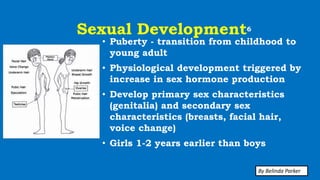
Sexual Development6
• Puberty - transition from childhood to
young adult
• Physiological development triggered by
increase in sex hormone production
• Develop primary sex characteristics
(genitalia) and secondary sex
characteristics (breasts, facial hair,
voice change)
• Girls 1-2 years earlier than boys
By Belinda Parker
• Other changes – increase sweat and oil
production (odor, greasy hair, acne)
• Simultaneous development of emotions
and interest in sexual relations
• May be a time when they discover they
are attracted to the same sex
• Emotional part of brain (limbic) and sex
organs develop ahead of decision-making
part of brain (prefrontal lobe). May result
in risky sexual experimentation
Sexual Development6
By Belinda Parker
Intellectual Development6
• Adolescents move from child-like (concrete) thinking
to adult-like (abstract/creative) thinking but at
different rates to each other
• Have a natural curiosity and need to link learning to
life/real world and look at “big picture”
• May well question adults thoughts and actions.
Becoming inquisitive and “finding themselves”
By Belinda Parker
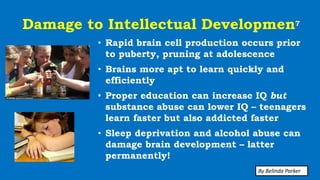
Damage to Intellectual Developmen7
• Rapid brain cell production occurs prior
to puberty, pruning at adolescence
• Brains more apt to learn quickly and
efficiently
• Proper education can increase IQ but
substance abuse can lower IQ – teenagers
learn faster but also addicted faster
• Sleep deprivation and alcohol abuse can
damage brain development – latter
permanently!
By Belinda Parker
Moral Development6
• Knowing and doing right from wrong, fairness
• Young children: rules fixed – learn by
consequences
• Adolescents: question rules, judge fairness
• Develop knowledge of society rules with maturity
• Influences: parents, educators, peers, media
• Can make poor decision based on need for peer
acceptance
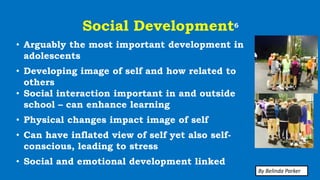
Social Development6
• Arguably the most important development in
adolescents
• Developing image of self and how related to
others
• Social interaction important in and outside
school – can enhance learning
• Physical changes impact image of self
• Can have inflated view of self yet also self-
conscious, leading to stress
• Social and emotional development linked
By Belinda Parker
Advise for Parents
• Be aware of inevitable changes – they will happen!
• Stay calm, listen & be a good role model
• Encourage heathy lifestyle (nutrition, exercise, sleep)
• Allow them some slack but be vigilant (look for signs of
substance abuse, depression/anxiety, sexting etc.)
• Be open to discuss any aspect of adolescent development
• If concerned, talk with teacher or professional health
worker
By Belinda Parker
Advise for Adolescents
• Your body is changing as you move towards adulthood
• All the changes are normal but occur at different rates
in different kids, both boys and girls
• Be responsible. Think before you act! Alcohol is illegal
in USA until age 21. Drugs are illegal. Sex is illegal until
age 16. If you have sex, use protection
• Be kind to others – you may hurt their feelings
• Discuss any concerns with parents, teachers or health
workers
By Belinda Parker
References
1. This we Believe – Keys to Educating Young Adolescents, p.5, AMLE, taken from
http://www.amle.org/AboutAMLE/ThisWeBelieve.aspx
2. National Institute of Drug Abuse, 2014, taken from
http://www.drugabuse.gov/trends-statistics/monitoring-future/monitoring-future-
study-trends-in-prevalence-various-drugs
3. United Nations Statistics Division. (2015). Demographic Yearbook 2013. New York,
NY: United Nations. Retrieved January 23, 2015 from
http:unstats.un.org/unsd/demographic/products/dyb/dyb2013
4. http://www.cbsnews.com/news/in-middle-school-sexting-linked-to-riskier-behavior/
5. 12 Secrets to High Self Esteem, (CD), SkillPath Publications, presented by Linda
Larson
6. Introduction to Middle Level Education, 3rd ed. Sarah Davis Powell, Published by
Pearson, 2015
7. Growing Up: Neuroscientist Jensen explains new findings about adolescents’ minds,
zziJuly 2015, http://chqdaily.com/2015/07/09/growing-up-neuroscientist-jensen-
iiiiexplains-new-findings-about-adolescents-minds/
By Belinda Parker

Early Adolescent Development

  • 1.
  • 2.
    • Undergo morerapid and personal changes than any other time in their lives1 • More than 27% of 8th graders have consumed alcohol and 20% have used illegal drugs2 • USA teenage birth rate highest in developed world3 • Sexting becoming a problem with Middle School kids4 • Only 50% of 12 year olds have high self esteem. Drops to 5% in 15 year olds!5 Facts about Adolescents By Belinda Parker
  • 3.
    Understanding and responding toadolescent development is vital in Middle Years Education. Any later and we miss the opportunity! By Belinda Parker
  • 4.
    Content • Physical Development •Sexual Development • Intellectual Development • Moral Development • Social Development • Advise for Parents • Advise for Adolescents By Belinda Parker
  • 5.
    Physical Development6 • Moredevelopmental body changes than any other time in life, except birth-2yrs • Influences sexual, intellectual, emotional, moral and social development (cover later) • Rapid and varying growth rate (influenced by genetics, race, nutrition, exercise and substance abuse) By Belinda Parker
  • 6.
    Physical Development6 • Bones,muscles, internal organs, sex organs, brain – all growing/developing • Good nutrition essential for health and self image (eating disorders) • Substance abuse can slow growth of body and brain • Brain growth influences intellectual development and sex hormone production By Belinda Parker
  • 7.
    Sexual Development6 • Puberty- transition from childhood to young adult • Physiological development triggered by increase in sex hormone production • Develop primary sex characteristics (genitalia) and secondary sex characteristics (breasts, facial hair, voice change) • Girls 1-2 years earlier than boys By Belinda Parker
  • 8.
    • Other changes– increase sweat and oil production (odor, greasy hair, acne) • Simultaneous development of emotions and interest in sexual relations • May be a time when they discover they are attracted to the same sex • Emotional part of brain (limbic) and sex organs develop ahead of decision-making part of brain (prefrontal lobe). May result in risky sexual experimentation Sexual Development6 By Belinda Parker
  • 9.
    Intellectual Development6 • Adolescentsmove from child-like (concrete) thinking to adult-like (abstract/creative) thinking but at different rates to each other • Have a natural curiosity and need to link learning to life/real world and look at “big picture” • May well question adults thoughts and actions. Becoming inquisitive and “finding themselves” By Belinda Parker
  • 10.
    Damage to IntellectualDevelopmen7 • Rapid brain cell production occurs prior to puberty, pruning at adolescence • Brains more apt to learn quickly and efficiently • Proper education can increase IQ but substance abuse can lower IQ – teenagers learn faster but also addicted faster • Sleep deprivation and alcohol abuse can damage brain development – latter permanently! By Belinda Parker
  • 11.
    Moral Development6 • Knowingand doing right from wrong, fairness • Young children: rules fixed – learn by consequences • Adolescents: question rules, judge fairness • Develop knowledge of society rules with maturity • Influences: parents, educators, peers, media • Can make poor decision based on need for peer acceptance
  • 12.
    Social Development6 • Arguablythe most important development in adolescents • Developing image of self and how related to others • Social interaction important in and outside school – can enhance learning • Physical changes impact image of self • Can have inflated view of self yet also self- conscious, leading to stress • Social and emotional development linked By Belinda Parker
  • 13.
    Advise for Parents •Be aware of inevitable changes – they will happen! • Stay calm, listen & be a good role model • Encourage heathy lifestyle (nutrition, exercise, sleep) • Allow them some slack but be vigilant (look for signs of substance abuse, depression/anxiety, sexting etc.) • Be open to discuss any aspect of adolescent development • If concerned, talk with teacher or professional health worker By Belinda Parker
  • 14.
    Advise for Adolescents •Your body is changing as you move towards adulthood • All the changes are normal but occur at different rates in different kids, both boys and girls • Be responsible. Think before you act! Alcohol is illegal in USA until age 21. Drugs are illegal. Sex is illegal until age 16. If you have sex, use protection • Be kind to others – you may hurt their feelings • Discuss any concerns with parents, teachers or health workers By Belinda Parker
  • 15.
    References 1. This weBelieve – Keys to Educating Young Adolescents, p.5, AMLE, taken from http://www.amle.org/AboutAMLE/ThisWeBelieve.aspx 2. National Institute of Drug Abuse, 2014, taken from http://www.drugabuse.gov/trends-statistics/monitoring-future/monitoring-future- study-trends-in-prevalence-various-drugs 3. United Nations Statistics Division. (2015). Demographic Yearbook 2013. New York, NY: United Nations. Retrieved January 23, 2015 from http:unstats.un.org/unsd/demographic/products/dyb/dyb2013 4. http://www.cbsnews.com/news/in-middle-school-sexting-linked-to-riskier-behavior/ 5. 12 Secrets to High Self Esteem, (CD), SkillPath Publications, presented by Linda Larson 6. Introduction to Middle Level Education, 3rd ed. Sarah Davis Powell, Published by Pearson, 2015 7. Growing Up: Neuroscientist Jensen explains new findings about adolescents’ minds, zziJuly 2015, http://chqdaily.com/2015/07/09/growing-up-neuroscientist-jensen- iiiiexplains-new-findings-about-adolescents-minds/ By Belinda Parker