ADAPTATION
•Adaptation is defined
as the process of
adjustment of an
organism with its
environment.
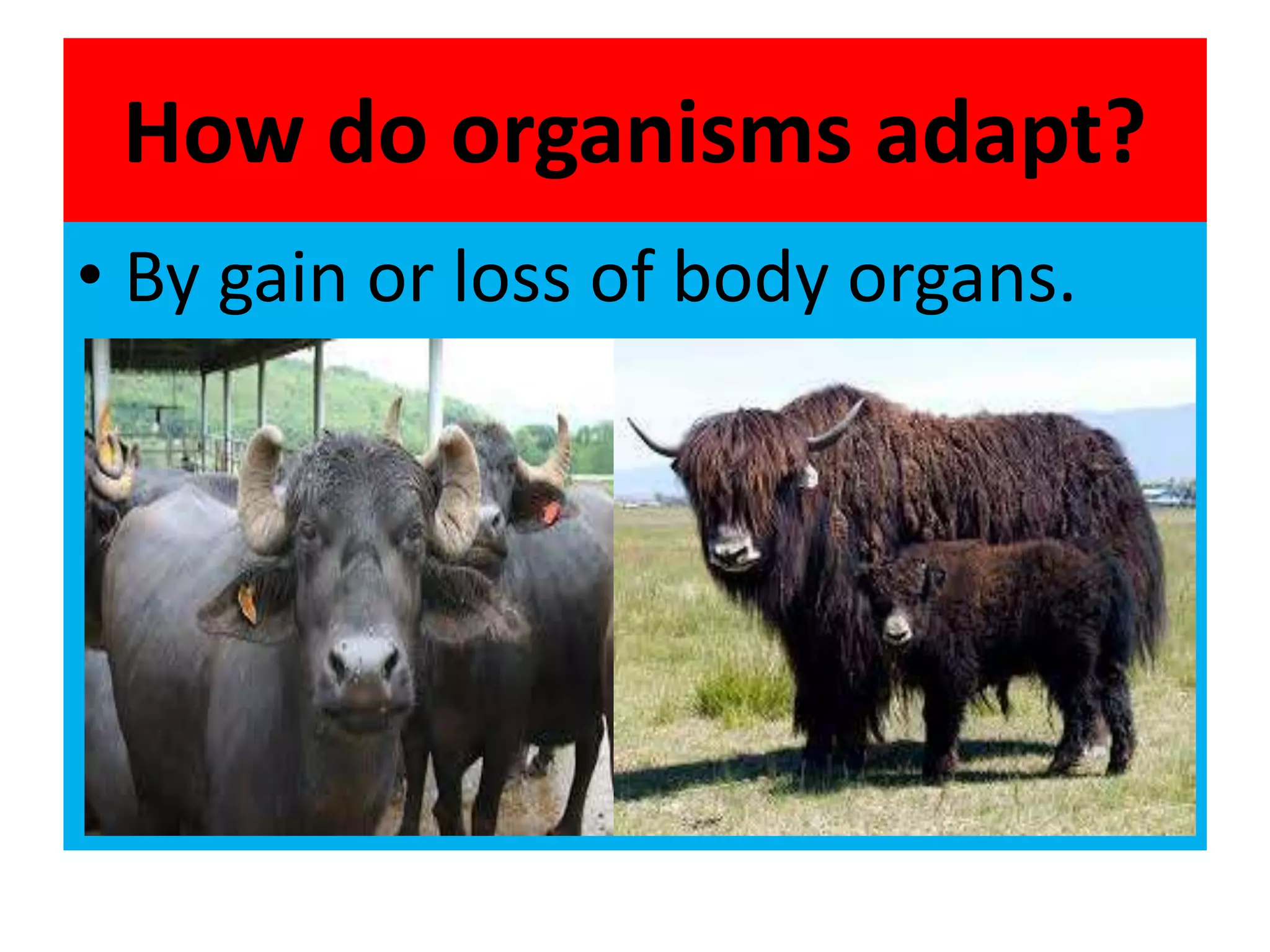
How do organisms adapt?
• By gain or loss of body organs.
•By changing the colour.
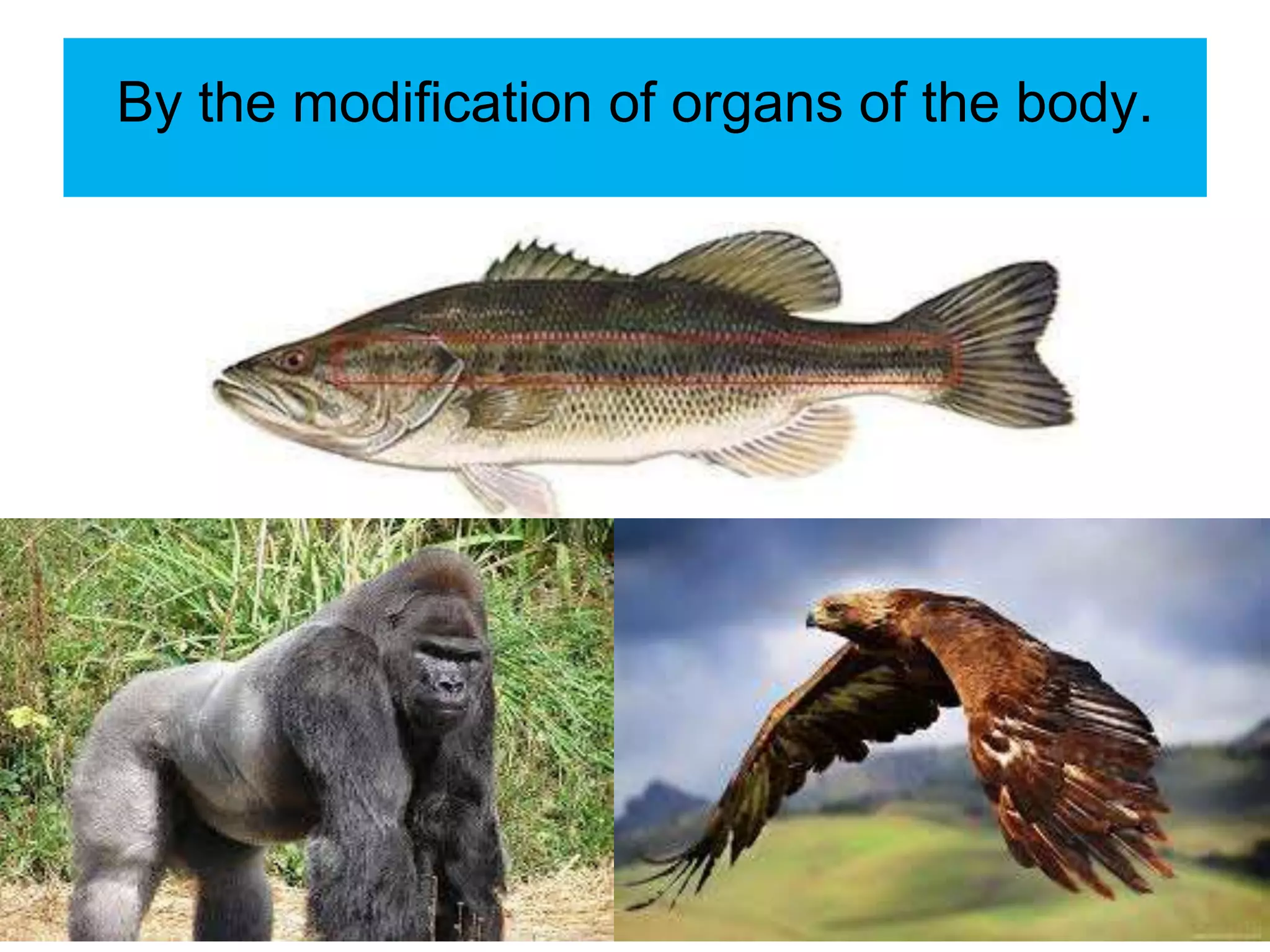
By the modification of organs of the body.
Aquatic Adaptation
Aquatic plants (Hydrophytes) and their
adaptational characteristics
• The root system of aquatic plants is not properly
developed.
• Hydrophytes have a waterproof and protective
waxy coat on its surface which prevents them
from decaying.
• Hydrophytes have air cavities in their tissues
which help them to float.
• Conducting tissues (xylem and phloem) are less
developed in them.
Aquatic animals and their
adaptational characteristics
Adaptational characteristics of aquatic animals:
• Body of aquatic animals is streamlined i.e.
trapped at both ends. Head is blunt and tail
is long.
• Body is provided with air sacs or air bladder,
so that they do not sink when they stop
swimming.
• They have paired and unpaired fins, flippers
and paddles and webbed legs for swimming.
• They have gills as respiratory organ.
• Body is provided with lateral line as sense
organ.
Mesophytes and their adaptational
characteristics:
• They have well developed root and
shoot system.
• Vascular system is well developed.
• They have no any water
conservation mechanisms.
• They can remove excess of water
from their body during transpiration.
Xerophytes and their adaptational
characteristics:
• The root of xerophytes system fixes the plant
very deeply in the soil.
• These plants are bushy, very much branched
and are covered with thick bark.
• They have small leaves to reduce
transpiration. In some cases leaves are
modified into thorns and spines.
• The stem is flattened, fleshy, thick and green.
It helps to store water.
• They have deep seated stomata; it also avoids
the loss of water.
Terrestrial Animals and Their
Adaptational Characteristics
• The animals, which live on
land and do their biological
activities on land, are
called terrestrial animals.
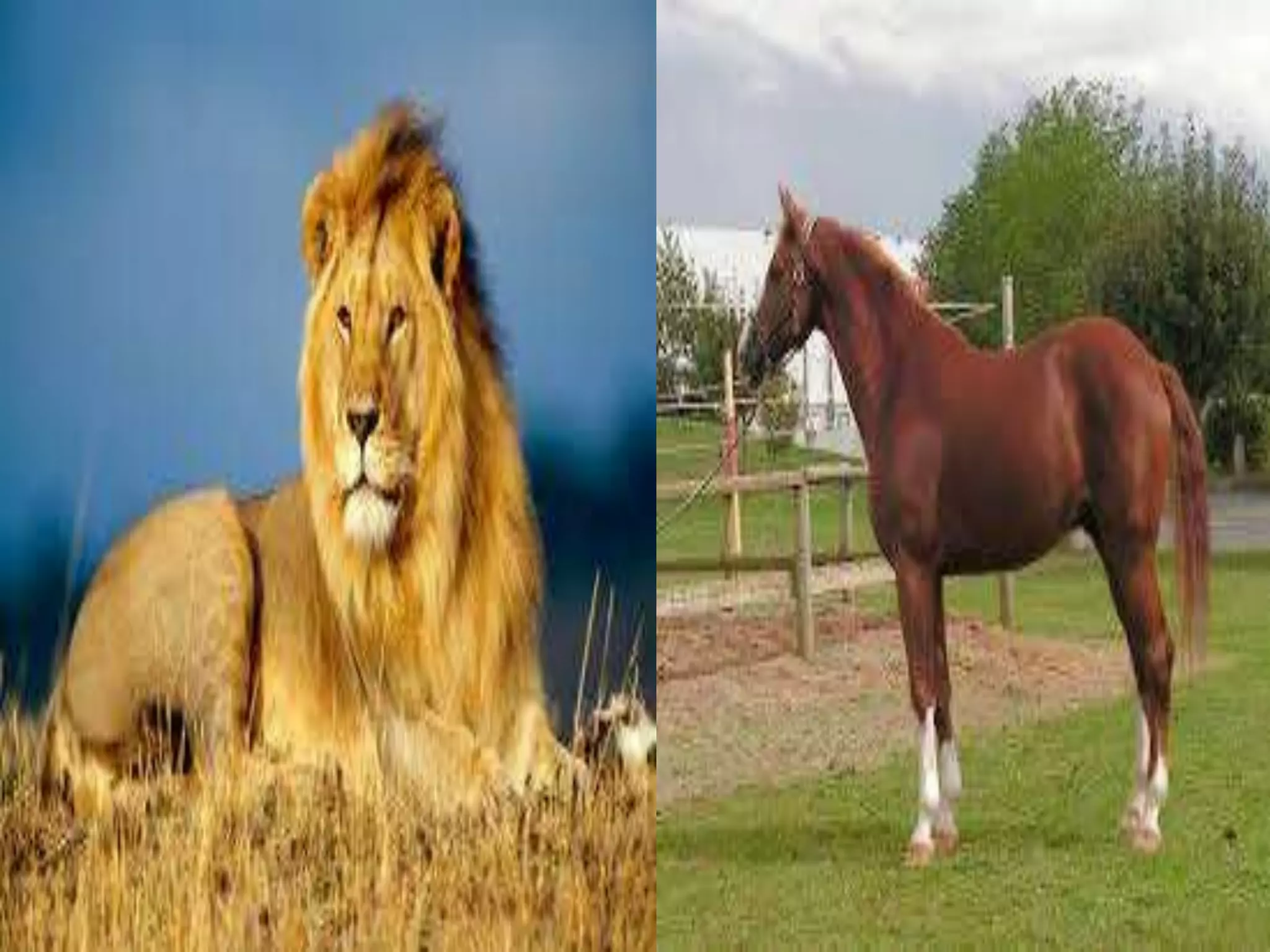
Cursorial Animals
Cursorial animals are those animals which live
in open places and are adapted to run on hard
ground e.g. lion, deer, horse etc.
Adaptational characters of them are as follows:
• The body is streamlined which helps them for
swift movement.
• The limbs are long and strong.
• Locomotion is digitigrade.
Fossorial Animals
Fossorial animals are those animals which are
adapted for burrowing mode of life e.g. rabbit, rat,
etc.
The adaptational characters of them are as follows:
• The head is small and tapers anteriorly to form
snout for digging.
• The forelimbs are short with powerful claws.
• The eyes and the ears are small.
Arboreal Animals
Arboreal animals are those animals which are
adapted for climbing e.g. squirrel, chameleon, etc.
The adaptational characters of these animals are as
follows:
• The body is stout. Ribs are very much curved, thus
thorax becomes semi-circular.
• Locomotion is plantigrade.
• The legs of lizard are provided with adhesive pads
that help to hold the wall or other surfaces.
• The muscles of chest are very strong.
Aerial Animals
The animals that are adapted for aerial mode
of life are called aerial animals.
The adaptational characters of aerial animals are
as follows:
• Body is streamlined, which reduces the air
resistance during flying.
• Forelimbs are modified into wings.
• The bones are hollow and spongy.
• The eyes are very sharp and well developed.
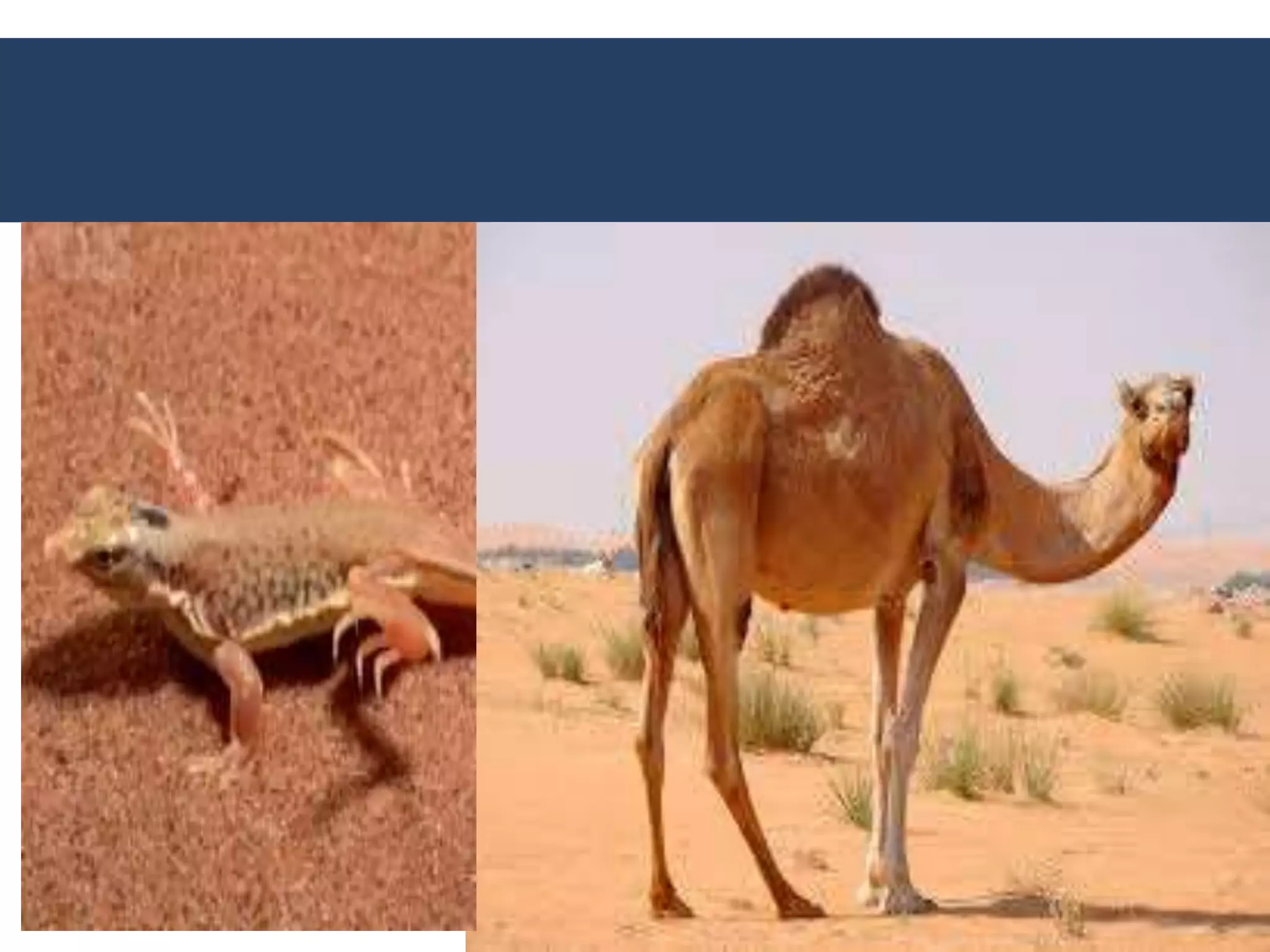
Desert Animals
Desert animals are adapted for dry land and
hot habitat e.g. camel, lizard, rodents etc.
The adaptational characteristics of desert
animals are as follows:
• They are provided with keen senses of sight,
smell and hearing.
• They conserve water in water pouches.
• They have thick skin to avoid loss of water.
• Most of them have dull color which blends
them with the surrounding environment.
Thank you

Adaptation

  • 1.
  • 2.
    •Adaptation is defined asthe process of adjustment of an organism with its environment.
  • 3.
    How do organismsadapt? • By gain or loss of body organs.
  • 4.
  • 5.
    By the modificationof organs of the body.
  • 6.
    Aquatic Adaptation Aquatic plants(Hydrophytes) and their adaptational characteristics • The root system of aquatic plants is not properly developed. • Hydrophytes have a waterproof and protective waxy coat on its surface which prevents them from decaying. • Hydrophytes have air cavities in their tissues which help them to float. • Conducting tissues (xylem and phloem) are less developed in them.
  • 8.
    Aquatic animals andtheir adaptational characteristics
  • 9.
    Adaptational characteristics ofaquatic animals: • Body of aquatic animals is streamlined i.e. trapped at both ends. Head is blunt and tail is long. • Body is provided with air sacs or air bladder, so that they do not sink when they stop swimming. • They have paired and unpaired fins, flippers and paddles and webbed legs for swimming. • They have gills as respiratory organ. • Body is provided with lateral line as sense organ.
  • 10.
    Mesophytes and theiradaptational characteristics:
  • 11.
    • They havewell developed root and shoot system. • Vascular system is well developed. • They have no any water conservation mechanisms. • They can remove excess of water from their body during transpiration.
  • 12.
    Xerophytes and theiradaptational characteristics:
  • 13.
    • The rootof xerophytes system fixes the plant very deeply in the soil. • These plants are bushy, very much branched and are covered with thick bark. • They have small leaves to reduce transpiration. In some cases leaves are modified into thorns and spines. • The stem is flattened, fleshy, thick and green. It helps to store water. • They have deep seated stomata; it also avoids the loss of water.
  • 14.
    Terrestrial Animals andTheir Adaptational Characteristics • The animals, which live on land and do their biological activities on land, are called terrestrial animals.
  • 15.
    Cursorial Animals Cursorial animalsare those animals which live in open places and are adapted to run on hard ground e.g. lion, deer, horse etc. Adaptational characters of them are as follows: • The body is streamlined which helps them for swift movement. • The limbs are long and strong. • Locomotion is digitigrade.
  • 17.
    Fossorial Animals Fossorial animalsare those animals which are adapted for burrowing mode of life e.g. rabbit, rat, etc. The adaptational characters of them are as follows: • The head is small and tapers anteriorly to form snout for digging. • The forelimbs are short with powerful claws. • The eyes and the ears are small.
  • 19.
    Arboreal Animals Arboreal animalsare those animals which are adapted for climbing e.g. squirrel, chameleon, etc. The adaptational characters of these animals are as follows: • The body is stout. Ribs are very much curved, thus thorax becomes semi-circular. • Locomotion is plantigrade. • The legs of lizard are provided with adhesive pads that help to hold the wall or other surfaces. • The muscles of chest are very strong.
  • 21.
    Aerial Animals The animalsthat are adapted for aerial mode of life are called aerial animals. The adaptational characters of aerial animals are as follows: • Body is streamlined, which reduces the air resistance during flying. • Forelimbs are modified into wings. • The bones are hollow and spongy. • The eyes are very sharp and well developed.
  • 23.
    Desert Animals Desert animalsare adapted for dry land and hot habitat e.g. camel, lizard, rodents etc. The adaptational characteristics of desert animals are as follows: • They are provided with keen senses of sight, smell and hearing. • They conserve water in water pouches. • They have thick skin to avoid loss of water. • Most of them have dull color which blends them with the surrounding environment.
  • 25.