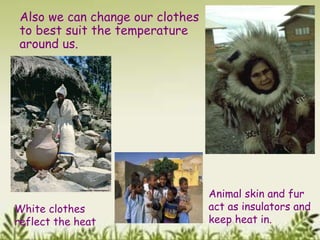
Also we can change our clothes
to best suit the temperature
around us.
White clothes
reflect the heat
Animal skin and fur
act as insulators and
keep heat in.
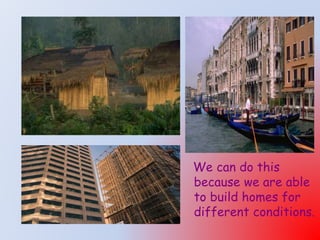
We can do this
because we are able
to build homes for
different conditions.
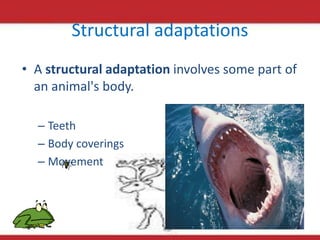
Structural adaptations
• A structural adaptation involves some part of
an animal's body.
– Teeth
– Body coverings
– Movement
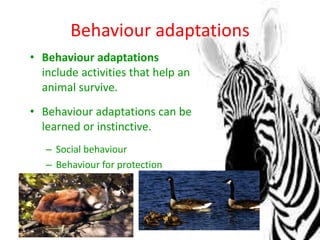
Behaviour adaptations
• Behaviour adaptations
include activities that help an
animal survive.
• Behaviour adaptations can be
learned or instinctive.
– Social behaviour
– Behaviour for protection
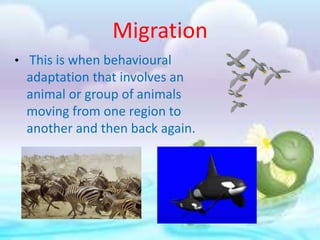
Migration
• This is when behavioural
adaptation that involves an
animal or group of animals
moving from one region to
another and then back again.
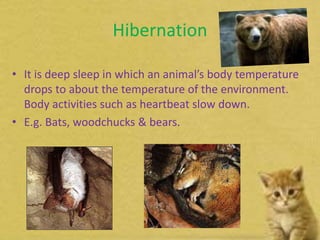
Hibernation
• It is deep sleep in which an animal’s body temperature
drops to about the temperature of the environment.
Body activities such as heartbeat slow down.
• E.g. Bats, woodchucks & bears.
Animals and plants
• Most plants and animals are specially adapted
to survive in a particular habitat.
• They have developed special features to suit
the demands of their environment.
• This is called adaption.
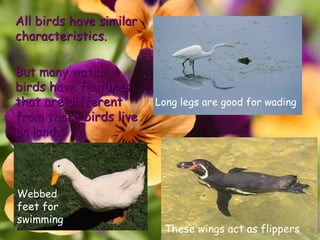
All birds have similar
characteristics.
But many water
birds have features
that are different
from those birds live
on land.
Long legs are good for wading
These wings act as flippers
Webbed
feet for
swimming
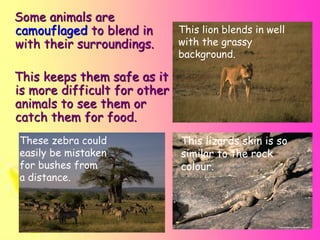
Some animals are
camouflaged to blend in
with their surroundings.
This keeps them safe as it
is more difficult for other
animals to see them or
catch them for food.
This lizards skin is so
similar to the rock
colour.
These zebra could
easily be mistaken
for bushes from
a distance.
This lion blends in well
with the grassy
background.
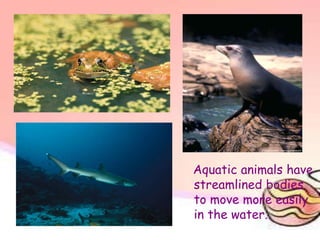
Aquatic animals have
streamlined bodies
to move more easily
in the water.
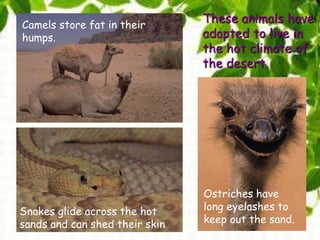
These animals have
adapted to live in
the hot climate of
the desert.
Camels store fat in their
humps.
Ostriches have
long eyelashes to
keep out the sand.
Snakes glide across the hot
sands and can shed their skin
These animals have
adapted to be more
suited to cold
temperatures.
Layers of fat keep the
seals body warm, and small
ears stop heat loss.
Polar bears are kept warm by
their body fat.
Deer have a
warm layer
of fur.
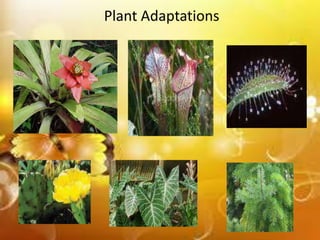
Plant Adaptations
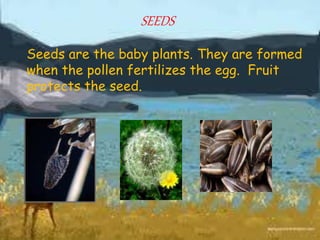
SEEDS
Seeds are the baby plants. They are formed
when the pollen fertilizes the egg. Fruit
protects the seed.
PLANT BEHAVIORS
Plants not only have structural adaptations;
they have behaviors that help them to
survive in their environment.
Tropism: movement of a plant toward or
away from a stimulus. Toward is called
positive, away is called negative.
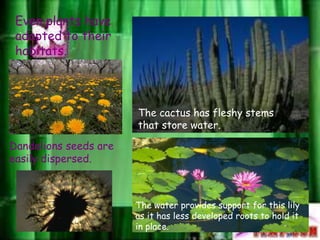
Even plants have
adapted to their
habitats.

The cactus has fleshy stems
that store water.
The water provides support for this lily
as it has less developed roots to hold it
in place.
Dandelions seeds are
easily dispersed.
By –
Chirag Sharma
Deepanshu
Gajender
Harleen
Harsh Kumar

Adaptations in animals and plants

  • 3.
    Also we canchange our clothes to best suit the temperature around us. White clothes reflect the heat Animal skin and fur act as insulators and keep heat in.
  • 4.
    We can dothis because we are able to build homes for different conditions.
  • 5.
    Structural adaptations • Astructural adaptation involves some part of an animal's body. – Teeth – Body coverings – Movement
  • 6.
    Behaviour adaptations • Behaviouradaptations include activities that help an animal survive. • Behaviour adaptations can be learned or instinctive. – Social behaviour – Behaviour for protection
  • 7.
    Migration • This iswhen behavioural adaptation that involves an animal or group of animals moving from one region to another and then back again.
  • 8.
    Hibernation • It isdeep sleep in which an animal’s body temperature drops to about the temperature of the environment. Body activities such as heartbeat slow down. • E.g. Bats, woodchucks & bears.
  • 10.
    Animals and plants •Most plants and animals are specially adapted to survive in a particular habitat. • They have developed special features to suit the demands of their environment. • This is called adaption.
  • 11.
    All birds havesimilar characteristics. But many water birds have features that are different from those birds live on land. Long legs are good for wading These wings act as flippers Webbed feet for swimming
  • 12.
    Some animals are camouflagedto blend in with their surroundings. This keeps them safe as it is more difficult for other animals to see them or catch them for food. This lizards skin is so similar to the rock colour. These zebra could easily be mistaken for bushes from a distance. This lion blends in well with the grassy background.
  • 13.
    Aquatic animals have streamlinedbodies to move more easily in the water.
  • 14.
    These animals have adaptedto live in the hot climate of the desert. Camels store fat in their humps. Ostriches have long eyelashes to keep out the sand. Snakes glide across the hot sands and can shed their skin
  • 15.
    These animals have adaptedto be more suited to cold temperatures. Layers of fat keep the seals body warm, and small ears stop heat loss. Polar bears are kept warm by their body fat. Deer have a warm layer of fur.
  • 18.
  • 19.
    SEEDS Seeds are thebaby plants. They are formed when the pollen fertilizes the egg. Fruit protects the seed.
  • 20.
    PLANT BEHAVIORS Plants notonly have structural adaptations; they have behaviors that help them to survive in their environment. Tropism: movement of a plant toward or away from a stimulus. Toward is called positive, away is called negative.
  • 22.
    Even plants have adaptedto their habitats. The cactus has fleshy stems that store water. The water provides support for this lily as it has less developed roots to hold it in place. Dandelions seeds are easily dispersed.
  • 24.