ECOLOGICAL ADAPTATIONS IN
PLANTS
Dr. CHANCHAL CHATURVEDI
ASSTT. PROFESSOR (BOTANY)
Dr. R.B. GOVT. NAVIN GIRLS P.G. COLLEGE ,
RAIPUR (C.G.)
ADAPTAION
The adjustment or changes in behavior, physiology and structure of an organism
to become more suited to an environment is called adaptation.
• Ecological Adaptations in Plants
• Plants have adaptations to help them live and grow in different environments.
• Plants can survive in many extreme environments.
• On the basis of their water availability the plants have been classified as follows:
• 1. Xerophytes- Plants adapted to survive under the condition of very poor water
supply of available water in the habitats
• 2. Hydrophytes- Plants growing in or near water.
• 3. Mesophytes- Plants growing in an environment which is neither very dry or nor
very wet.
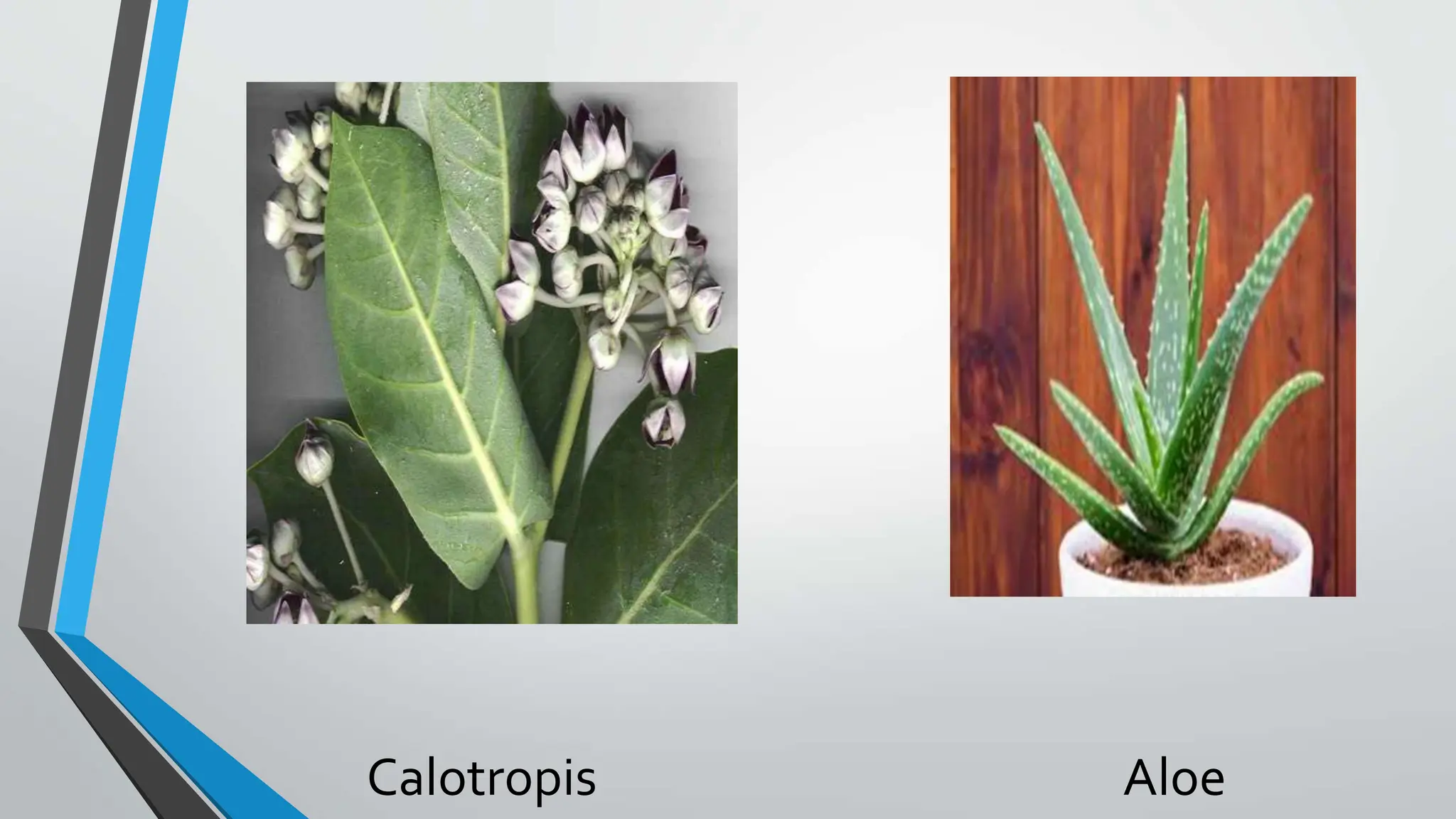
Xerophytes characteristics
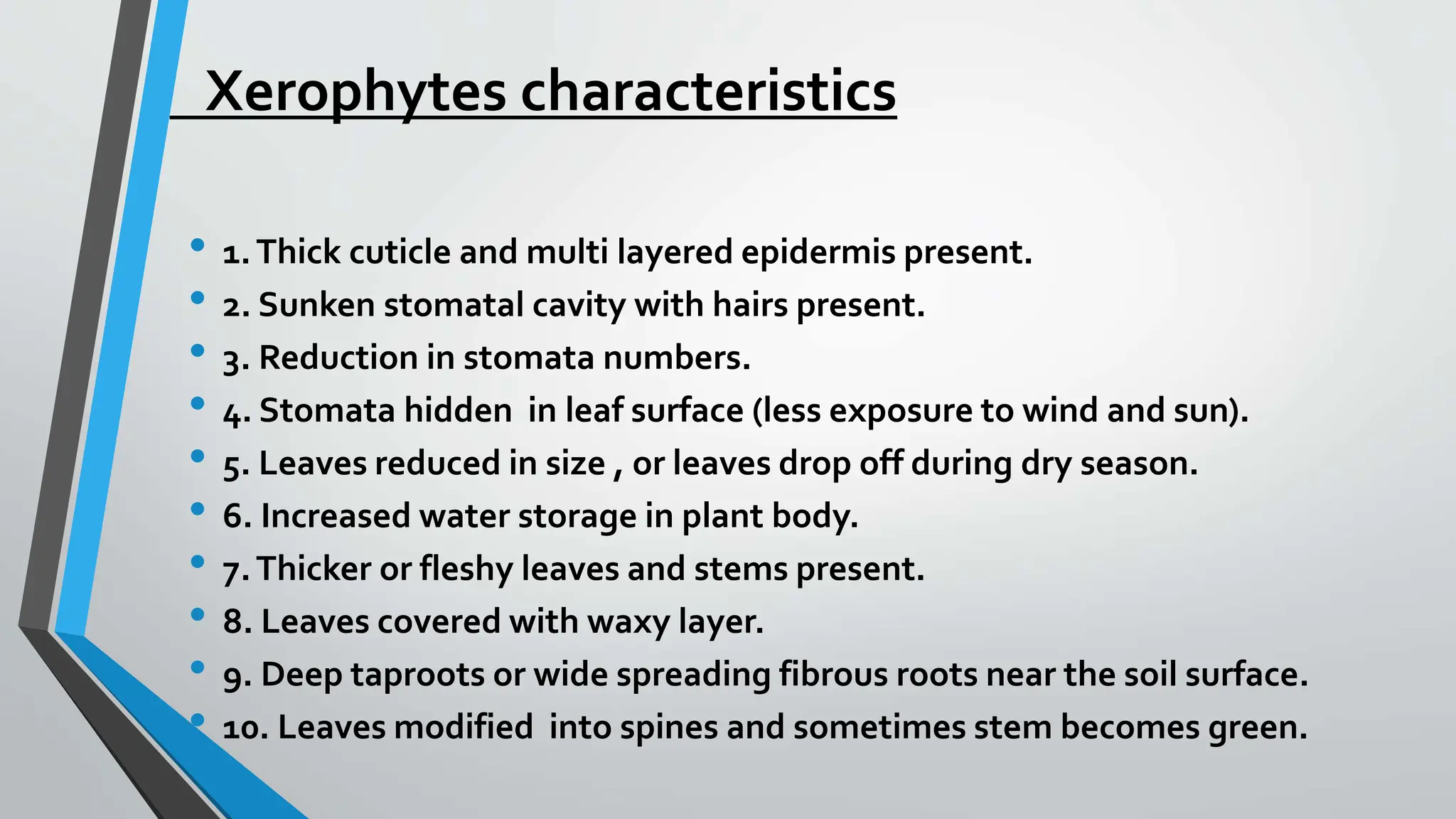
• 1.Thick cuticle and multi layered epidermis present.
• 2. Sunken stomatal cavity with hairs present.
• 3. Reduction in stomata numbers.
• 4. Stomata hidden in leaf surface (less exposure to wind and sun).
• 5. Leaves reduced in size , or leaves drop off during dry season.
• 6. Increased water storage in plant body.
• 7.Thicker or fleshy leaves and stems present.
• 8. Leaves covered with waxy layer.
• 9. Deep taproots or wide spreading fibrous roots near the soil surface.
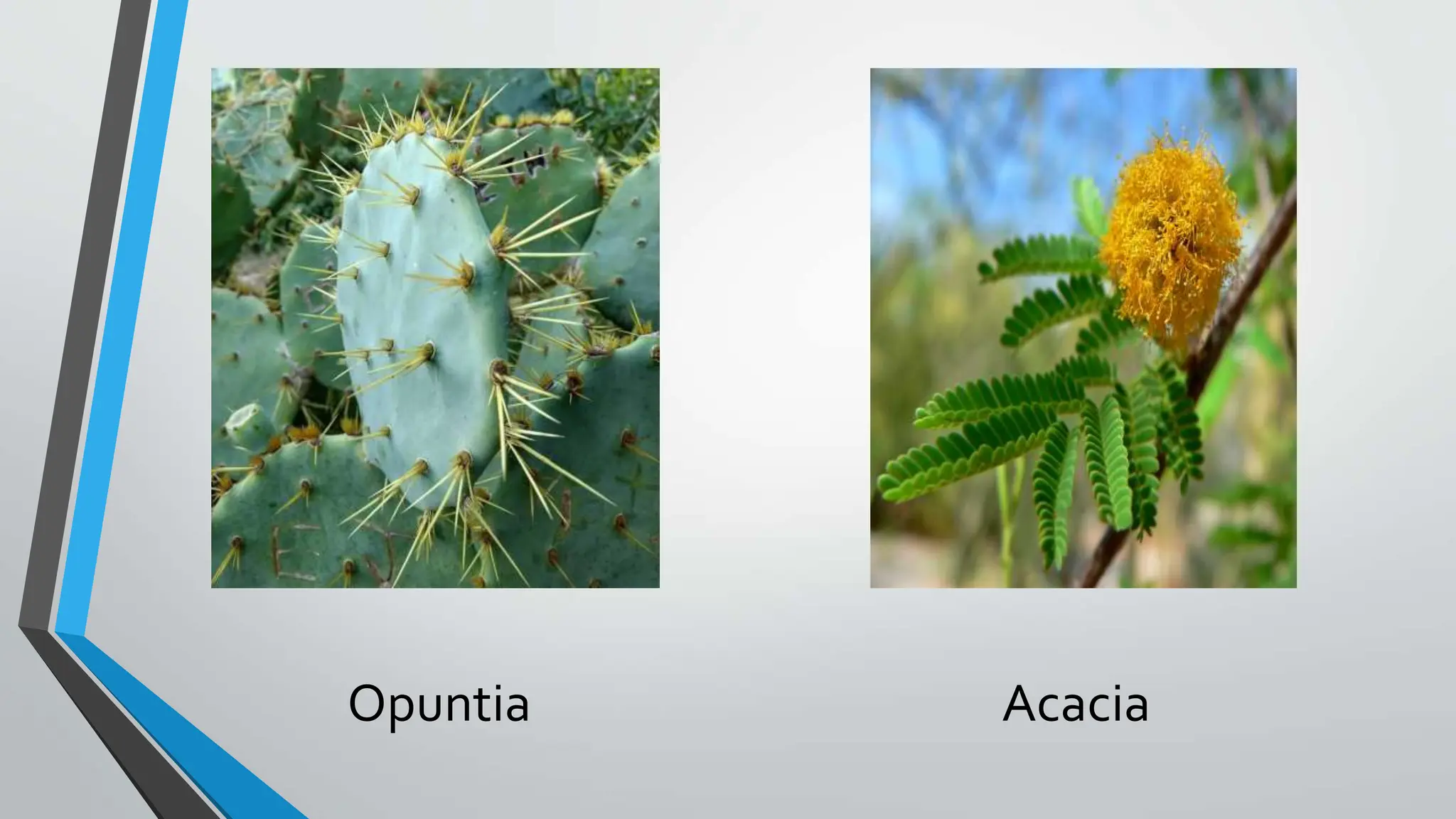
• 10. Leaves modified into spines and sometimes stem becomes green.
Opuntia Acacia
Calotropis Aloe
Nerium
Pinus
Hydrophytes characteristics
• 1.Thin cuticle layer present.
• 2. Stomata open most of time or absent.
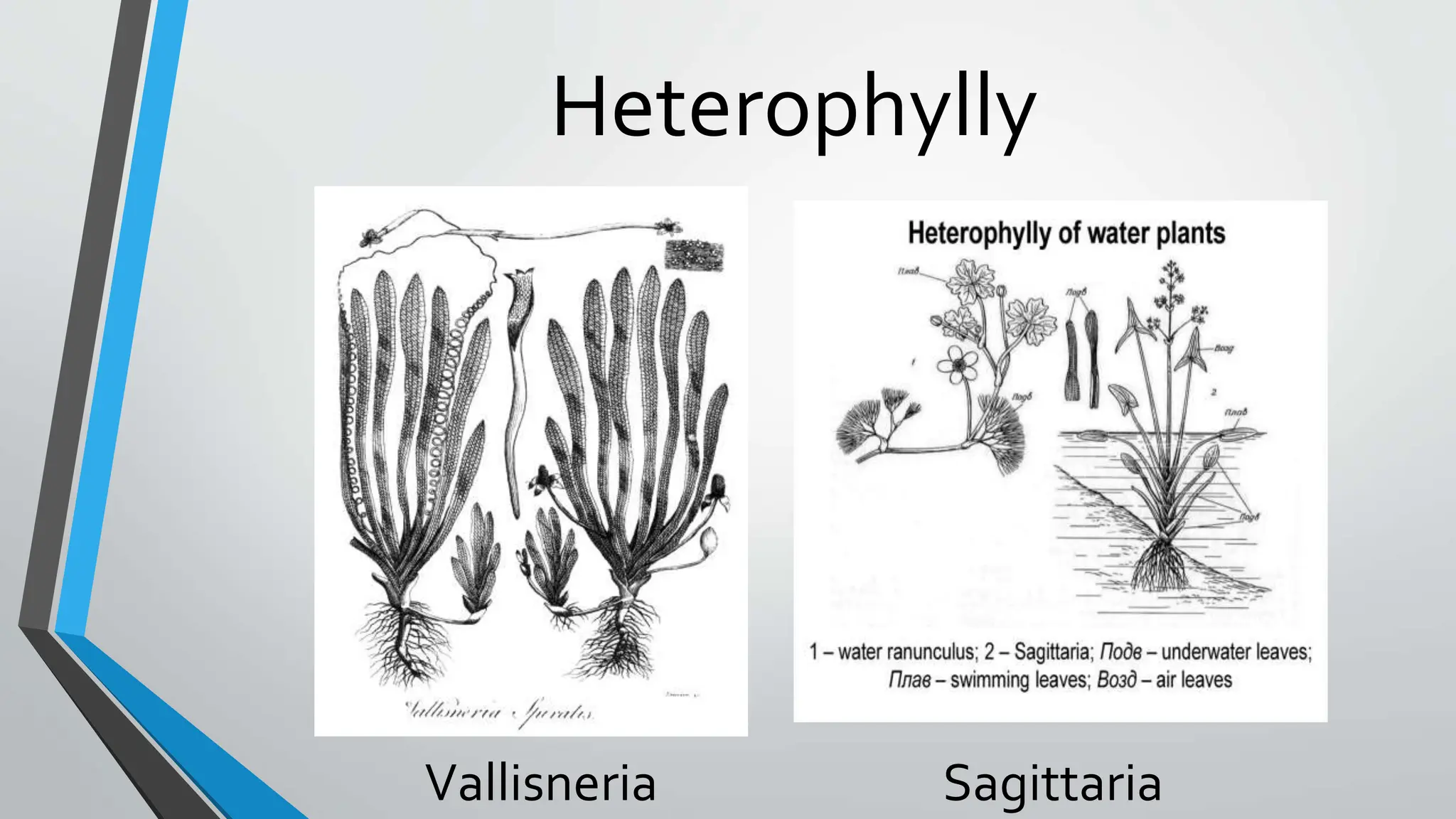
• 3. Heterophylly present in plants.
• 4. Large flat leaves on surface plants for flotation.
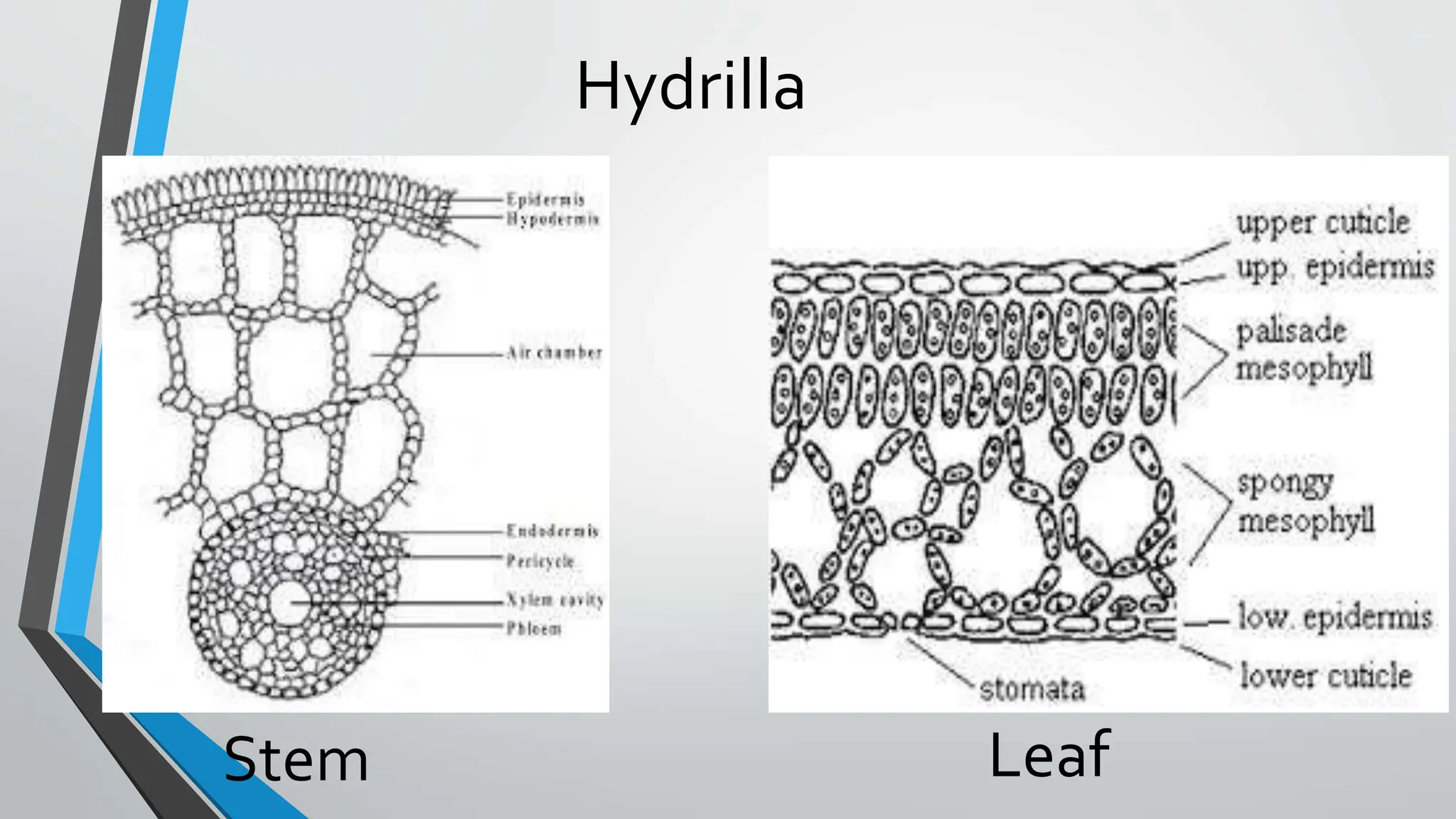
• 5. Air chambers present for flotation.
• 6. Reduction in roots (water can diffuse directly into leaves).
• 7. Roots are feathery to hold up plant.
•
Hydrilla
Stem Leaf
Heterophylly
Vallisneria Sagittaria
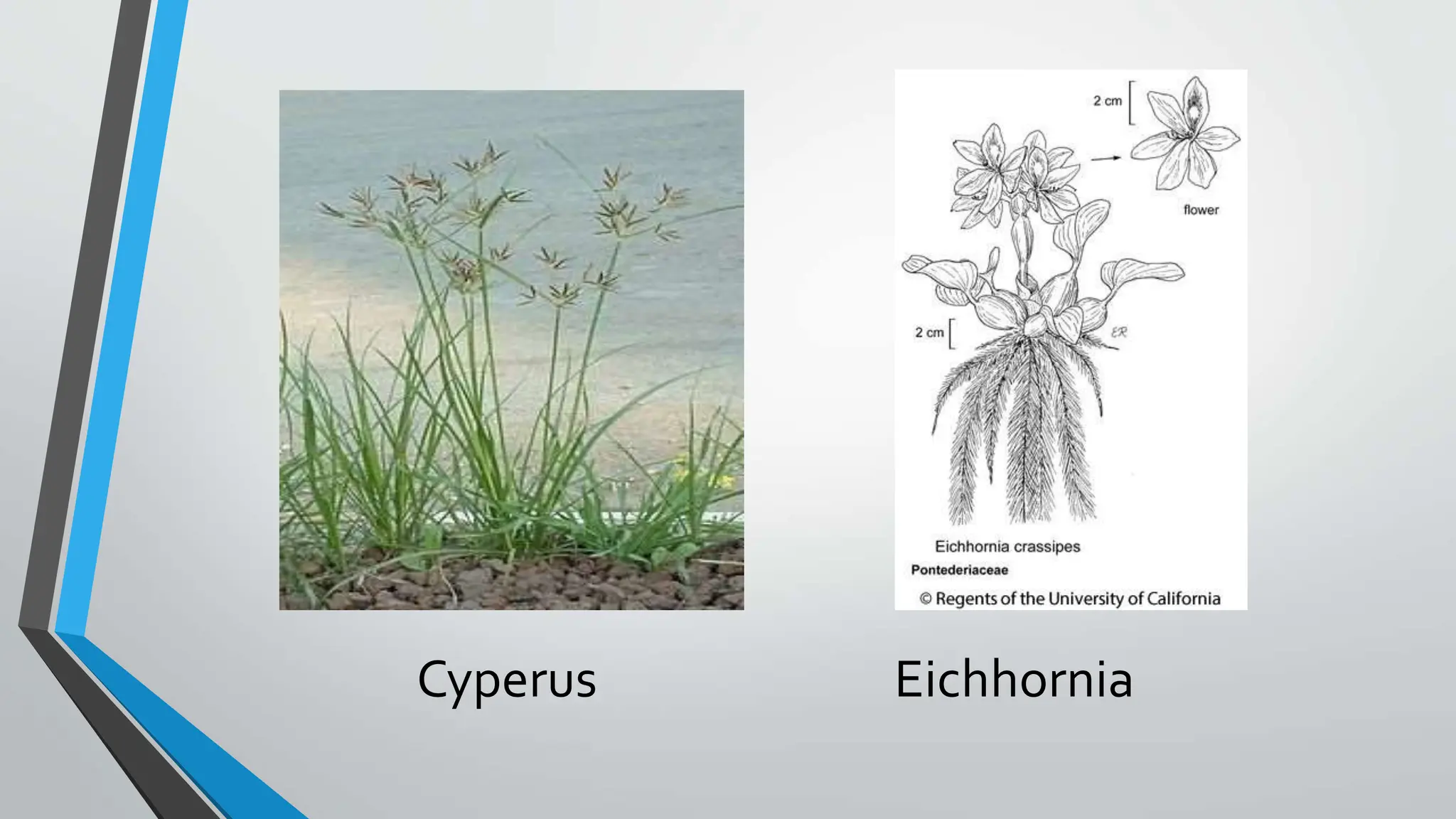
Cyperus Eichhornia
• Thus adaptations help the organism to exist under the prevailing
ecological habitat.
• This explains why certain plants are found in one area, but not in
another.
THANK YOU

ECOLOGICAL ADAPTATION IN PLANTS.pptx ggg

  • 1.
    ECOLOGICAL ADAPTATIONS IN PLANTS Dr.CHANCHAL CHATURVEDI ASSTT. PROFESSOR (BOTANY) Dr. R.B. GOVT. NAVIN GIRLS P.G. COLLEGE , RAIPUR (C.G.)
  • 2.
    ADAPTAION The adjustment orchanges in behavior, physiology and structure of an organism to become more suited to an environment is called adaptation. • Ecological Adaptations in Plants • Plants have adaptations to help them live and grow in different environments. • Plants can survive in many extreme environments. • On the basis of their water availability the plants have been classified as follows: • 1. Xerophytes- Plants adapted to survive under the condition of very poor water supply of available water in the habitats • 2. Hydrophytes- Plants growing in or near water. • 3. Mesophytes- Plants growing in an environment which is neither very dry or nor very wet.
  • 3.
    Xerophytes characteristics • 1.Thickcuticle and multi layered epidermis present. • 2. Sunken stomatal cavity with hairs present. • 3. Reduction in stomata numbers. • 4. Stomata hidden in leaf surface (less exposure to wind and sun). • 5. Leaves reduced in size , or leaves drop off during dry season. • 6. Increased water storage in plant body. • 7.Thicker or fleshy leaves and stems present. • 8. Leaves covered with waxy layer. • 9. Deep taproots or wide spreading fibrous roots near the soil surface. • 10. Leaves modified into spines and sometimes stem becomes green.
  • 4.
  • 5.
  • 6.
  • 7.
    Hydrophytes characteristics • 1.Thincuticle layer present. • 2. Stomata open most of time or absent. • 3. Heterophylly present in plants. • 4. Large flat leaves on surface plants for flotation. • 5. Air chambers present for flotation. • 6. Reduction in roots (water can diffuse directly into leaves). • 7. Roots are feathery to hold up plant. •
  • 8.
  • 9.
  • 10.
  • 11.
    • Thus adaptationshelp the organism to exist under the prevailing ecological habitat. • This explains why certain plants are found in one area, but not in another.
  • 12.