Animal Adaptations
Objectives
• 3.4 The student will investigate and
  understand that behavioral and physical
  adaptations allow animals to respond to life
  needs. Key concepts include:
  – hibernation, migration, camouflage, mimicry,
    instinct, and learned behavior.
What is adaptation?
• Special features that help an animal to survive
  in its environment.
• Physical adaptation: Bodily structures that
  help with survival.
• Behavioral adaptation: Something that an
  animal does to survive.
Physical adaptations
•   Type of body covering: fur, feathers, scales
•   Color: patterns, match surroundings
•   Body part: beak, antlers, ears, claws
•   Defenses: venom, spray, quills
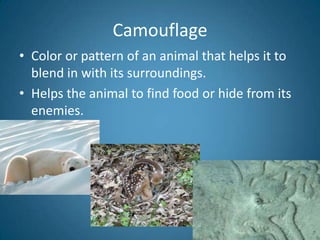
Camouflage
• Color or pattern of an animal that helps it to
  blend in with its surroundings.
• Helps the animal to find food or hide from its
  enemies.
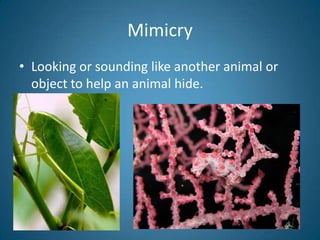
Mimicry
• Looking or sounding like another animal or
  object to help an animal hide.
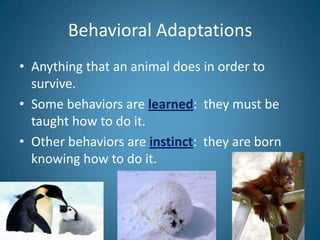
Behavioral Adaptations
• Anything that an animal does in order to
  survive.
• Some behaviors are learned: they must be
  taught how to do it.
• Other behaviors are instinct: they are born
  knowing how to do it.
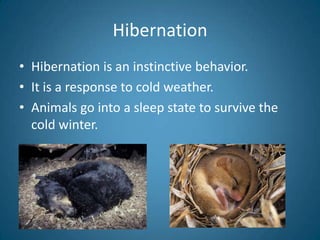
Hibernation
• Hibernation is an instinctive behavior.
• It is a response to cold weather.
• Animals go into a sleep state to survive the
  cold winter.
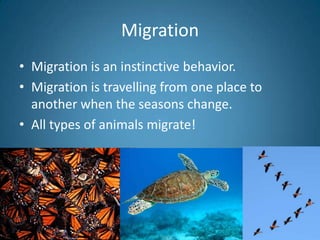
Migration
• Migration is an instinctive behavior.
• Migration is travelling from one place to
  another when the seasons change.
• All types of animals migrate!
Time to Find a Buddy!
• Grab a partner!
• Grab a Venn Diagram
• Work together and let me know what you’ve
  learned today about animal adaptations.

Animal adaptations introduction

  • 1.
  • 2.
    Objectives • 3.4 Thestudent will investigate and understand that behavioral and physical adaptations allow animals to respond to life needs. Key concepts include: – hibernation, migration, camouflage, mimicry, instinct, and learned behavior.
  • 3.
    What is adaptation? •Special features that help an animal to survive in its environment. • Physical adaptation: Bodily structures that help with survival. • Behavioral adaptation: Something that an animal does to survive.
  • 4.
    Physical adaptations • Type of body covering: fur, feathers, scales • Color: patterns, match surroundings • Body part: beak, antlers, ears, claws • Defenses: venom, spray, quills
  • 5.
    Camouflage • Color orpattern of an animal that helps it to blend in with its surroundings. • Helps the animal to find food or hide from its enemies.
  • 6.
    Mimicry • Looking orsounding like another animal or object to help an animal hide.
  • 7.
    Behavioral Adaptations • Anythingthat an animal does in order to survive. • Some behaviors are learned: they must be taught how to do it. • Other behaviors are instinct: they are born knowing how to do it.
  • 8.
    Hibernation • Hibernation isan instinctive behavior. • It is a response to cold weather. • Animals go into a sleep state to survive the cold winter.
  • 9.
    Migration • Migration isan instinctive behavior. • Migration is travelling from one place to another when the seasons change. • All types of animals migrate!
  • 10.
    Time to Finda Buddy! • Grab a partner! • Grab a Venn Diagram • Work together and let me know what you’ve learned today about animal adaptations.

Editor's Notes

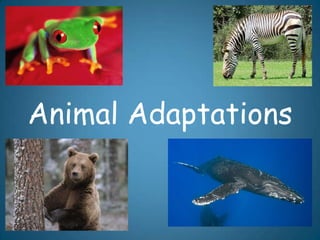
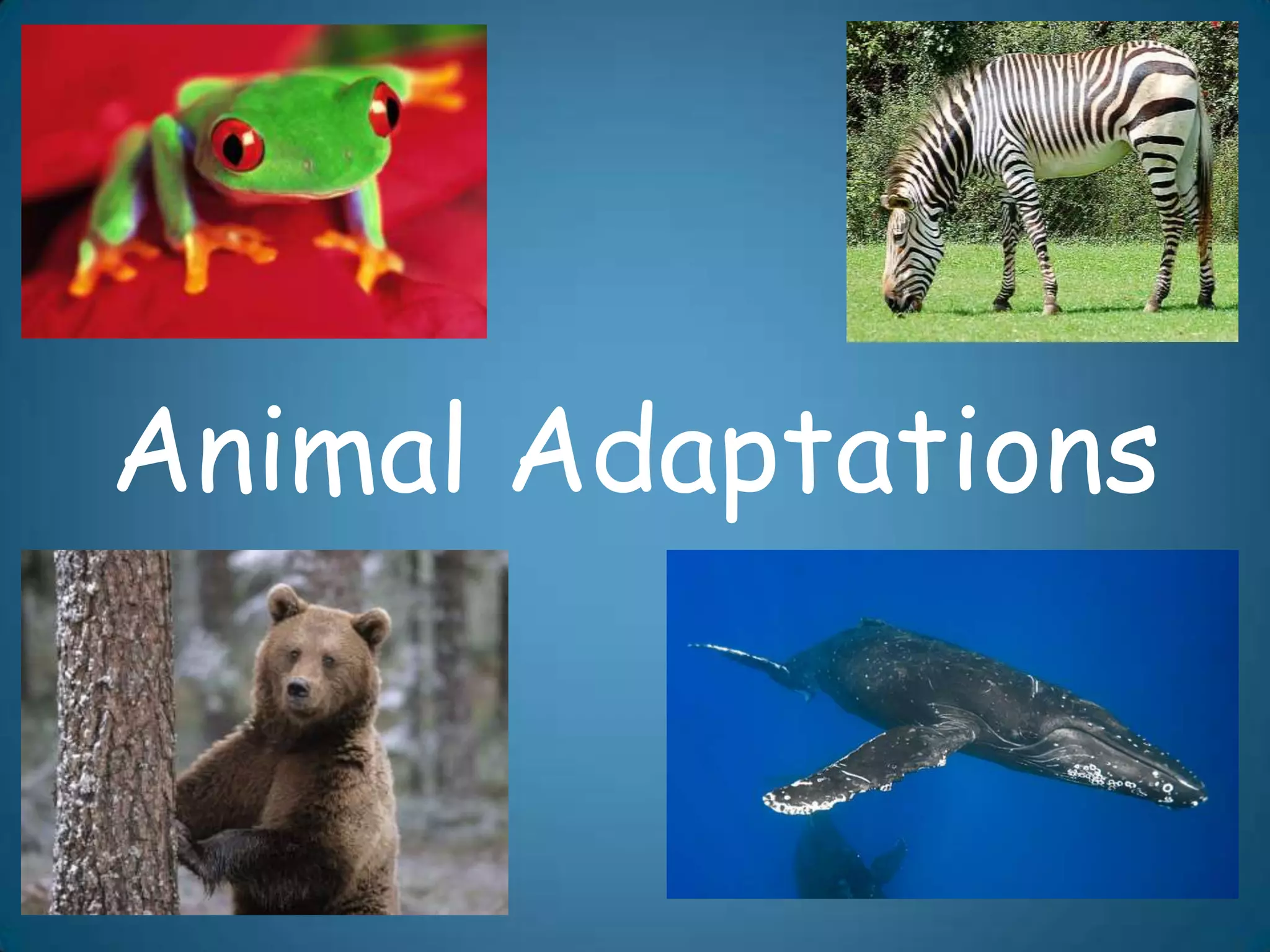
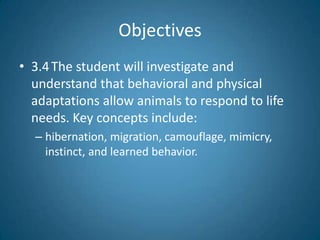
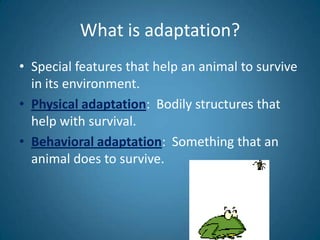
  • #2 Notes: Red-eye tree frog, Zebra, Brown Bear aka Grizzly Bear, and Humpback Whale
  • #5 Elephant: large ears, tusks, trunk, rough skinGiraffe: Long neck, long legs, patterned colorSkunk: sprays, distinctive coloring
  • #6 Polar bear, fawn, octopus
  • #7 Katydid (looks like a leaf), Bumpy seahorse (looks like coral)
  • #10 Monarch Butterflies,