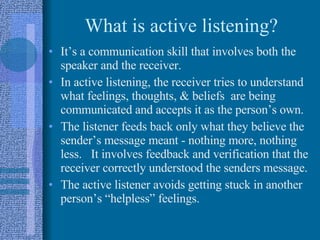
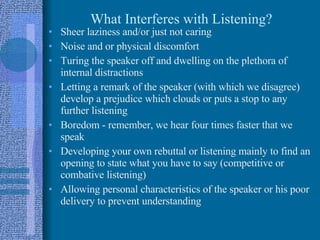
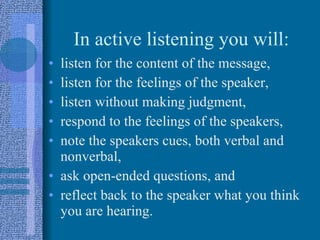
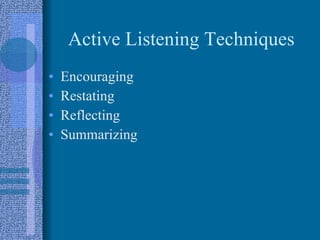
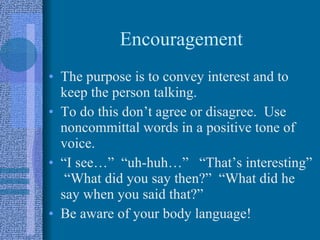
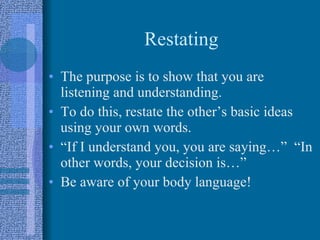
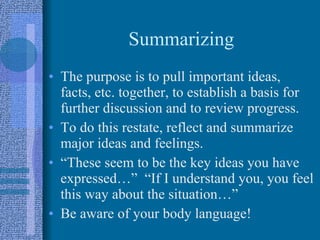
The document discusses the importance of active listening. Active listening involves understanding the feelings, thoughts, and beliefs being communicated by the speaker and feeding back only what the listener believes the speaker intended to convey. It requires feedback and verification that the message was understood correctly without adding or subtracting anything. Active listening techniques include encouraging the speaker, restating what they said, reflecting their feelings, and summarizing the key ideas to establish a basis for further discussion. Distractions that interfere with listening include laziness, noise, developing rebuttals, and allowing characteristics of the speaker to cloud understanding.




![Presentation [Full] Effective Communication Skills](https://cdn.slidesharecdn.com/ss_thumbnails/presentation-effectivecommunicationskills-131227024631-phpapp02-thumbnail.jpg?width=640&height=640&fit=bounds)


