ACQUIRED
IMMUNITY
DR.SUNDARESAN
PATHOLOGY
LOYOLA COLLEGE
Specific Learning Objectives
 Types of acquired immunity.
 List the functions of natural killer cells.
 Describe the role of T and B lymphocytes
in acquired immunity
 List the types of T cells and their role in
acquired immunity
 Describe T cell and B cell interaction
 Compare and contrast innate and
acquired immunity
Immunity - Classification
 Innate Immunity
 Acquired Immunity
Acquired Immunity
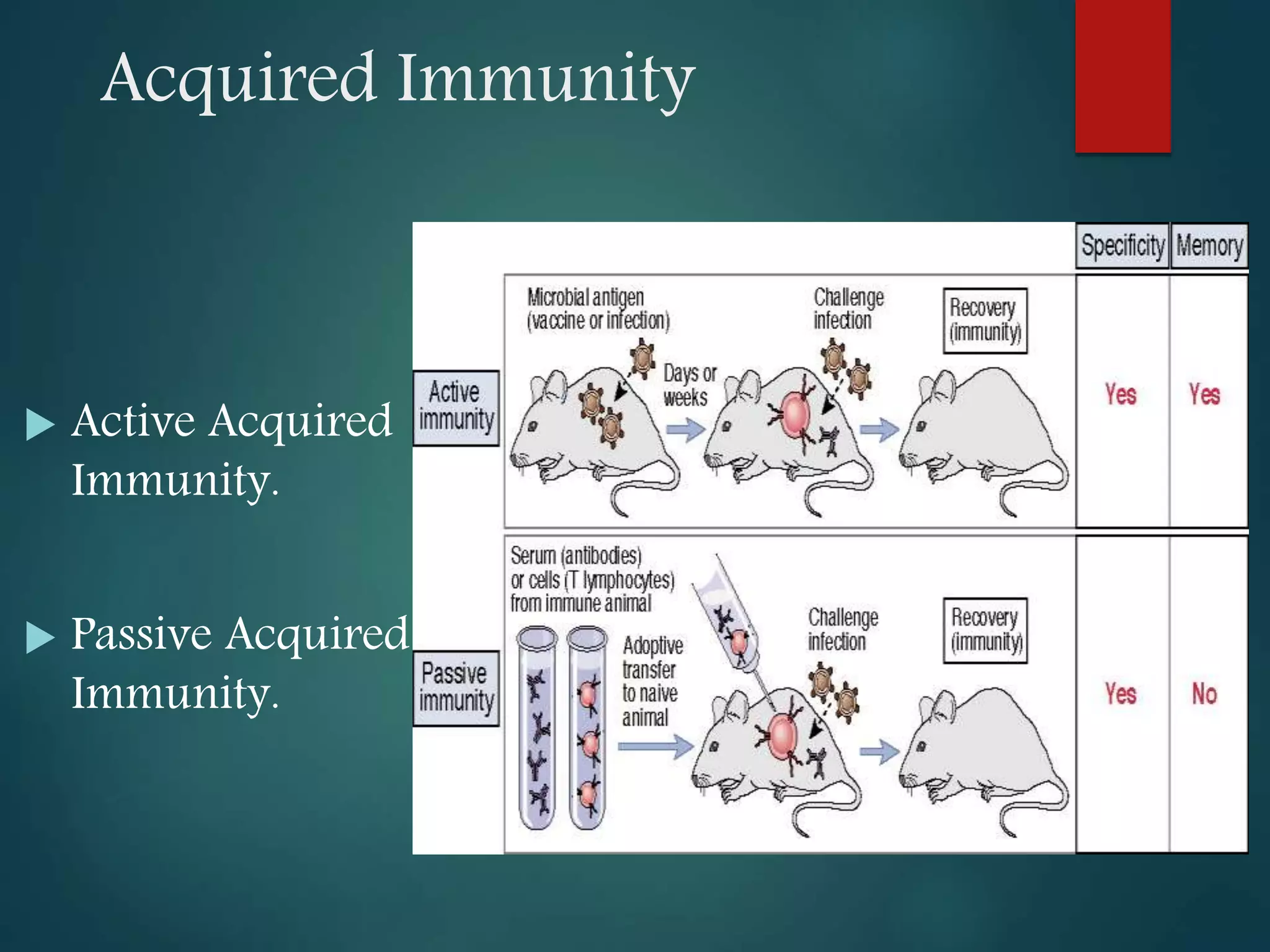
 Active Acquired
Immunity.
 Passive Acquired
Immunity.
Immunity - Overview
Acquired Immunity - Types
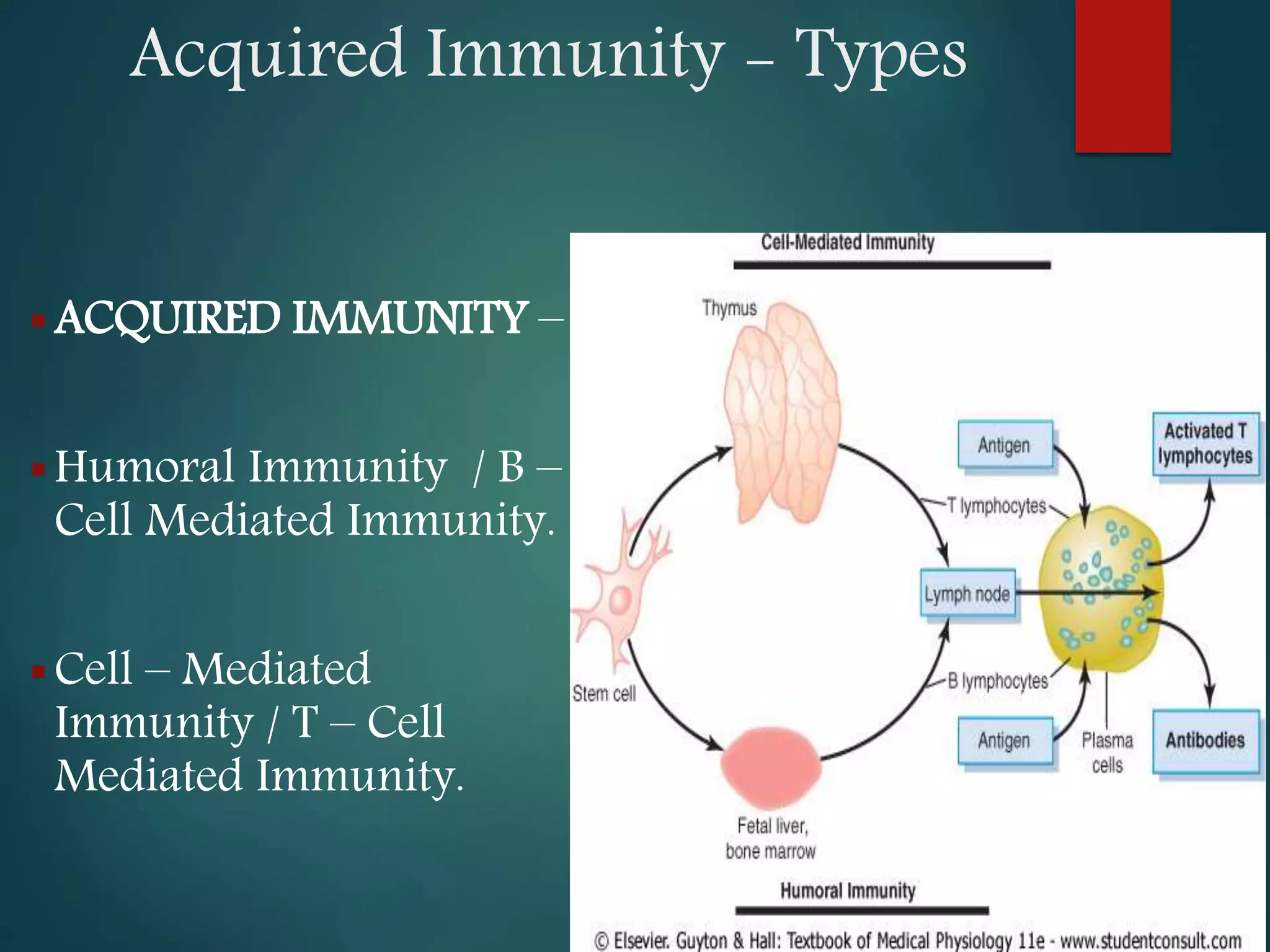
ACQUIRED IMMUNITY –
Humoral Immunity / B –
Cell Mediated Immunity.
Cell – Mediated
Immunity / T – Cell
Mediated Immunity.
Humoral Immunity
 Mediated by antibodies
 Antibody mediated immunity/ B cell mediated immunity.
 Defense against extracellular bacterial pathogens and viruses.
 Immediate hypersensitivity reactions & Autoimmune
conditions.
 Primary humoral response – first response to a specific antigen.
 Secondary humoral response – subsequent response to the
same antigen.
Humoral Immunity
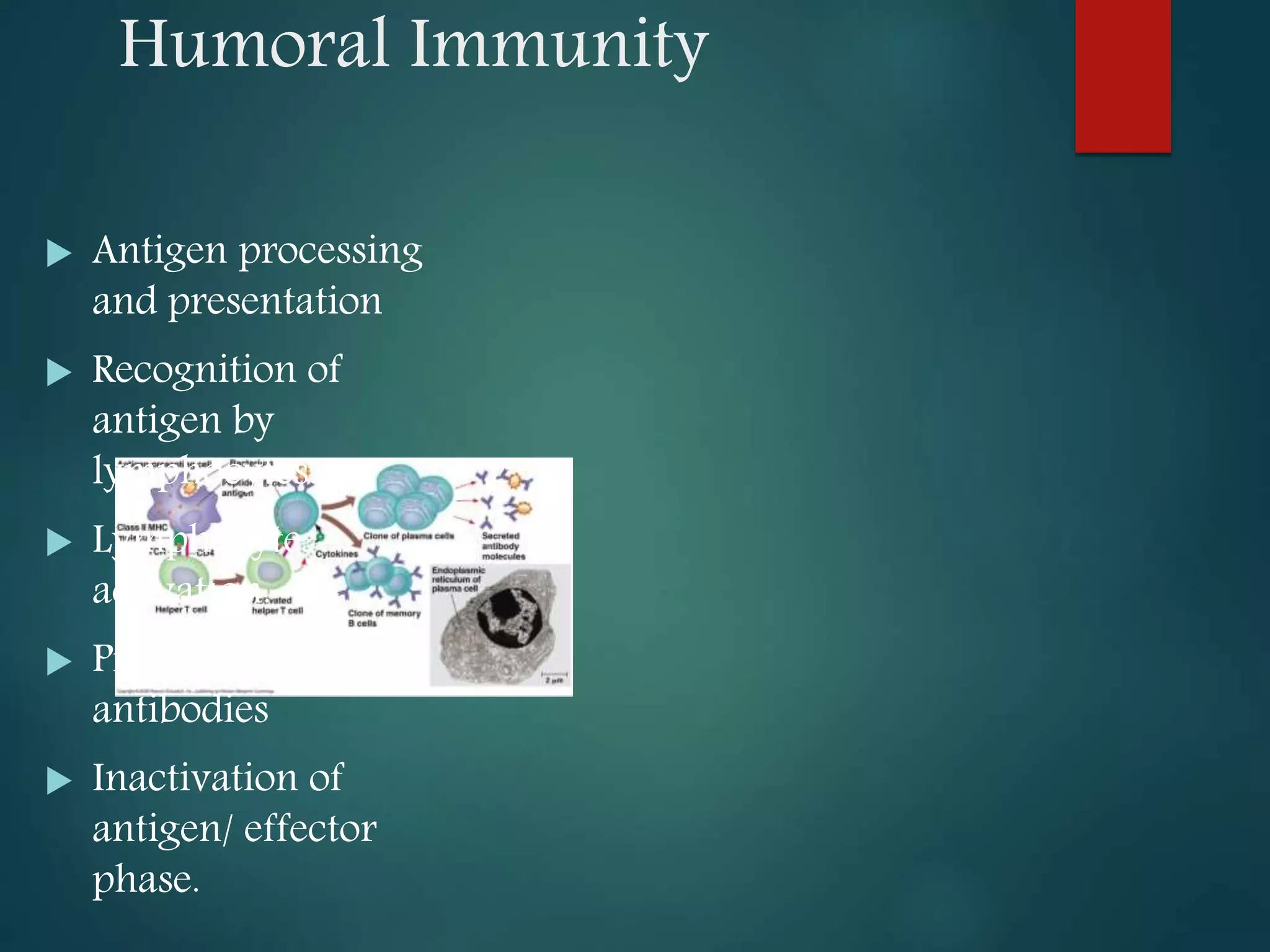
 Antigen processing
and presentation
 Recognition of
antigen by
lymphocytes.
 Lymphocyte
activation.
 Production of
antibodies
 Inactivation of
antigen/ effector
phase.
IgM
•1st response to antigen
•Effective in agglutination
•Can’t cross placenta
IgG
•Most common form
•Crosses blood vessels
•Crosses placenta (passive
immunity to fetus)
IgA
•Secreted from mucus membranes
•Prevents attachment of bacteria to
epithelial surface
•In colostrum
IgD
•B cell activation
•Can’t cross placenta
IgE
•Histamine
reactions and
allergies
Immunoglobulin Classes
Humoral Immunity –
Effector Phase
 Direct attack on
invading agents
 Agglutination
 Precipitation
 Neutralization
 Cytolysis
 Attack on the antigen
through complement
system.
Humoral
Immunity –
Complement
System Opsonisation
 Lysis
 Agglutination
 Neutralization
 Chemotaxis
 Activation of mast
cells and basophils
 Inflammatory effects.
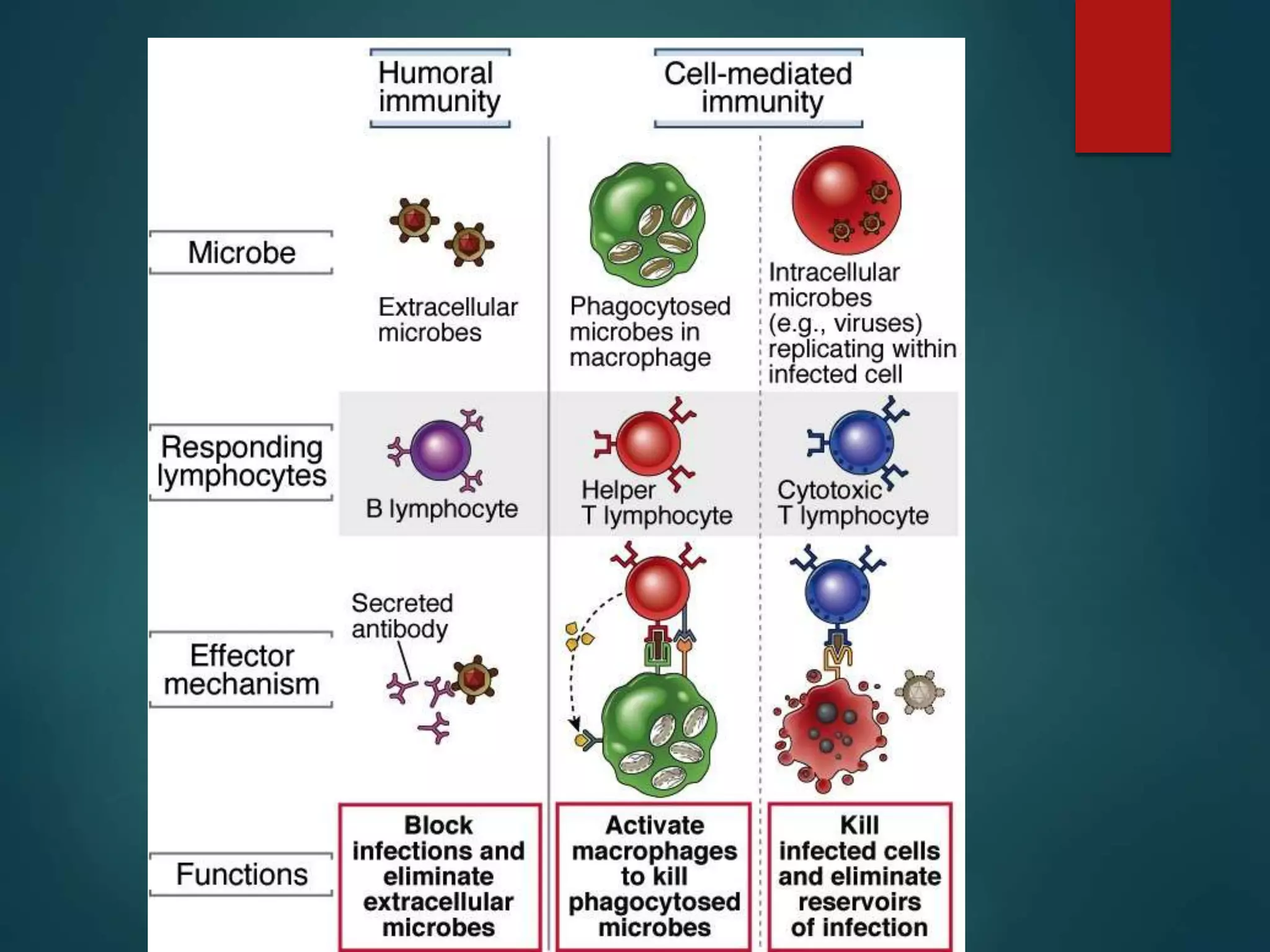
Cell – Mediated Immunity
 Specific acquired immunity.
 Mediated by T lymphocytes & macrophages – T cell mediated
immunity.
 Protects against fungi, most viruses and intracellular bacteria.
 Graft versus host reaction, Delayed hypersensitivity reactions,
Autoimmune diseases and cancer.
 Primary cellular response – first response
 Secondary cellular response – subsequent response.
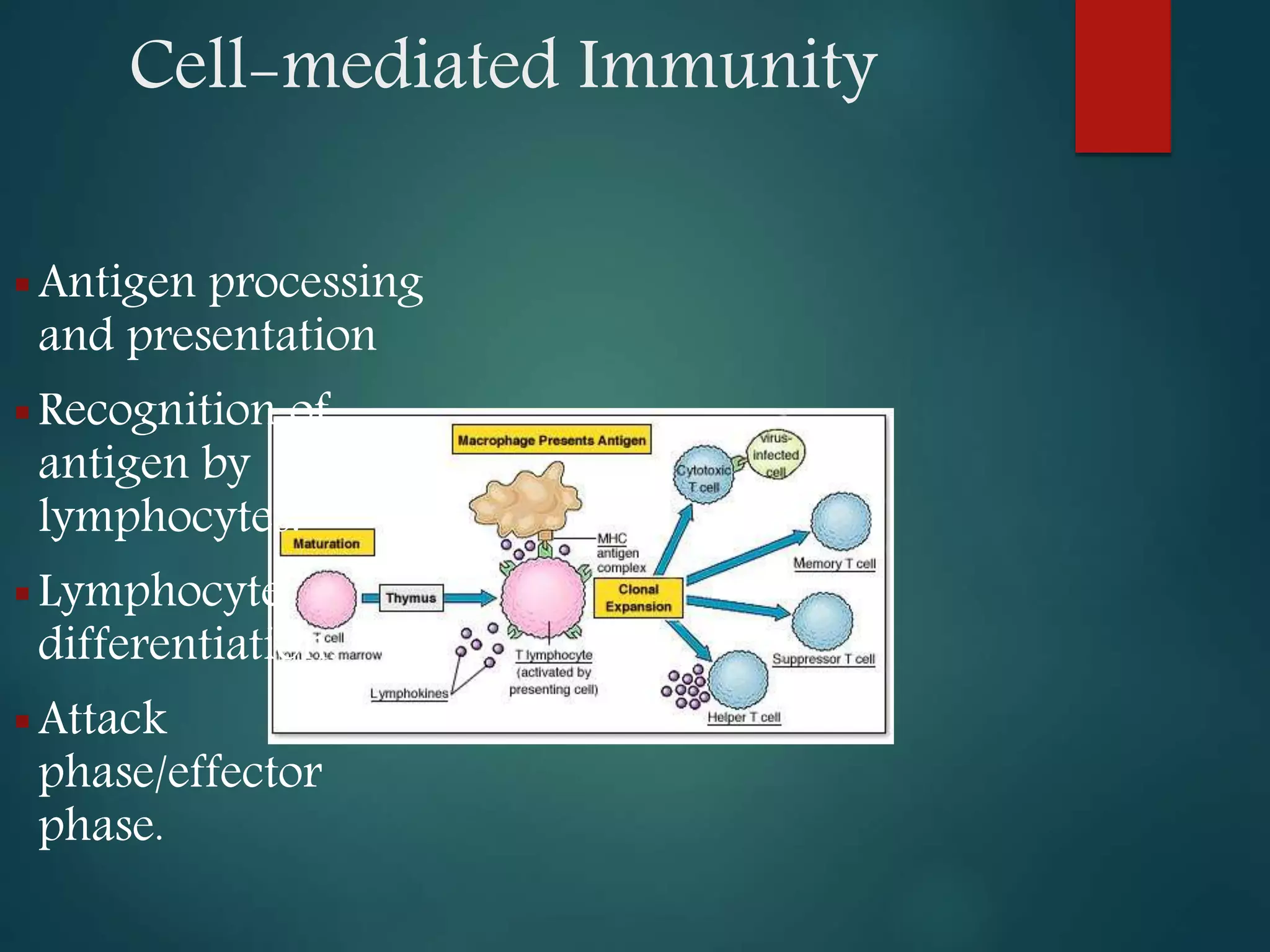
Cell-mediated Immunity
Antigen processing
and presentation
Recognition of
antigen by
lymphocytes.
Lymphocyte
differentiation.
Attack
phase/effector
phase.
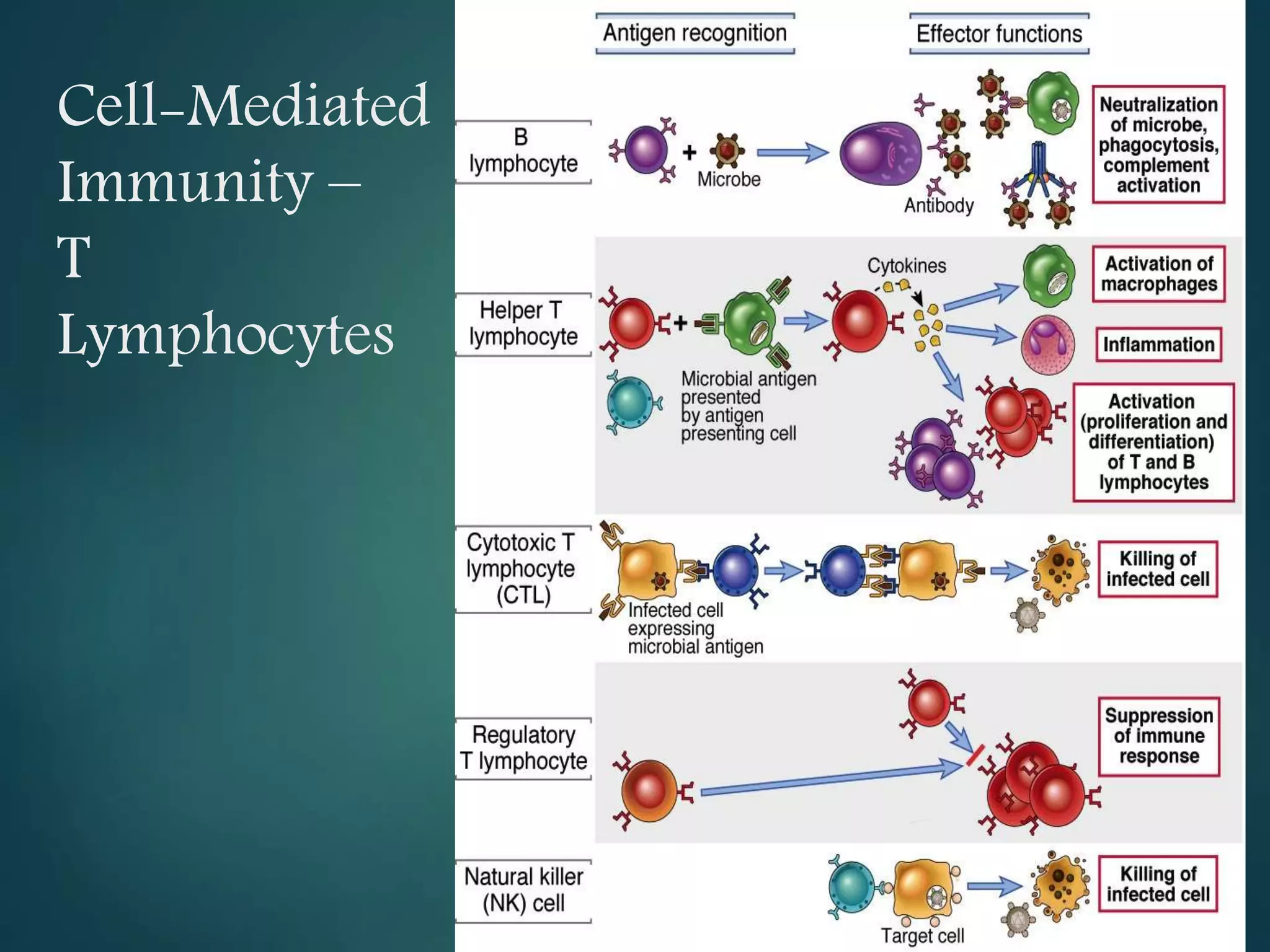
Cell-Mediated
Immunity –
T
Lymphocytes
Regulation Of Immune
Response
 CYTOKINES – protein molecules
 Interleukins 1-13, TNF ,IF, TGF, CSF
 Autocrine & paracrine function
 Mediates inflammation
 Synthesis of prostaglandins
 Increase the number of neutrophils, CSF ,
non-specific resistance/immunity.
Applied Aspects
 Immunization
 Immunosuppression
 Autoimmune diseases
 Organ transplants
 Hypersensitivity reactions
 Immunodeficiency diseases.
Acquired immunity

Acquired immunity

  • 1.
  • 2.
    Specific Learning Objectives Types of acquired immunity.  List the functions of natural killer cells.  Describe the role of T and B lymphocytes in acquired immunity  List the types of T cells and their role in acquired immunity  Describe T cell and B cell interaction  Compare and contrast innate and acquired immunity
  • 3.
    Immunity - Classification Innate Immunity  Acquired Immunity
  • 4.
    Acquired Immunity  ActiveAcquired Immunity.  Passive Acquired Immunity.
  • 5.
  • 6.
    Acquired Immunity -Types ACQUIRED IMMUNITY – Humoral Immunity / B – Cell Mediated Immunity. Cell – Mediated Immunity / T – Cell Mediated Immunity.
  • 7.
    Humoral Immunity  Mediatedby antibodies  Antibody mediated immunity/ B cell mediated immunity.  Defense against extracellular bacterial pathogens and viruses.  Immediate hypersensitivity reactions & Autoimmune conditions.  Primary humoral response – first response to a specific antigen.  Secondary humoral response – subsequent response to the same antigen.
  • 8.
    Humoral Immunity  Antigenprocessing and presentation  Recognition of antigen by lymphocytes.  Lymphocyte activation.  Production of antibodies  Inactivation of antigen/ effector phase.
  • 9.
    IgM •1st response toantigen •Effective in agglutination •Can’t cross placenta IgG •Most common form •Crosses blood vessels •Crosses placenta (passive immunity to fetus) IgA •Secreted from mucus membranes •Prevents attachment of bacteria to epithelial surface •In colostrum IgD •B cell activation •Can’t cross placenta IgE •Histamine reactions and allergies Immunoglobulin Classes
  • 10.
    Humoral Immunity – EffectorPhase  Direct attack on invading agents  Agglutination  Precipitation  Neutralization  Cytolysis  Attack on the antigen through complement system.
  • 11.
    Humoral Immunity – Complement System Opsonisation Lysis  Agglutination  Neutralization  Chemotaxis  Activation of mast cells and basophils  Inflammatory effects.
  • 12.
    Cell – MediatedImmunity  Specific acquired immunity.  Mediated by T lymphocytes & macrophages – T cell mediated immunity.  Protects against fungi, most viruses and intracellular bacteria.  Graft versus host reaction, Delayed hypersensitivity reactions, Autoimmune diseases and cancer.  Primary cellular response – first response  Secondary cellular response – subsequent response.
  • 13.
    Cell-mediated Immunity Antigen processing andpresentation Recognition of antigen by lymphocytes. Lymphocyte differentiation. Attack phase/effector phase.
  • 14.
  • 16.
    Regulation Of Immune Response CYTOKINES – protein molecules  Interleukins 1-13, TNF ,IF, TGF, CSF  Autocrine & paracrine function  Mediates inflammation  Synthesis of prostaglandins  Increase the number of neutrophils, CSF , non-specific resistance/immunity.
  • 17.
    Applied Aspects  Immunization Immunosuppression  Autoimmune diseases  Organ transplants  Hypersensitivity reactions  Immunodeficiency diseases.