BASIC
ACCOUNTING
PRINCIPLES
General details
 Pupil teacher name: Pooja jain & Vandana sharma
 Subjects: Accountancy
 Class: XI
 Topic: Accounting principles
General objectives
Students will familiarize themselves about different
accounting principles .
Student will be able to develop skills of recording
transactions.
Students will be able to get admission in the higher
classes.
SPECIFIC OBJECTIVES
Students will be able to
 State different accounting principles.
 Explain different accounting principles.
 Enumerate different accounting principles in about 200 words
within 20 minutes.
 Appreciate that how different accounting principles affect the
recording of business transactions.
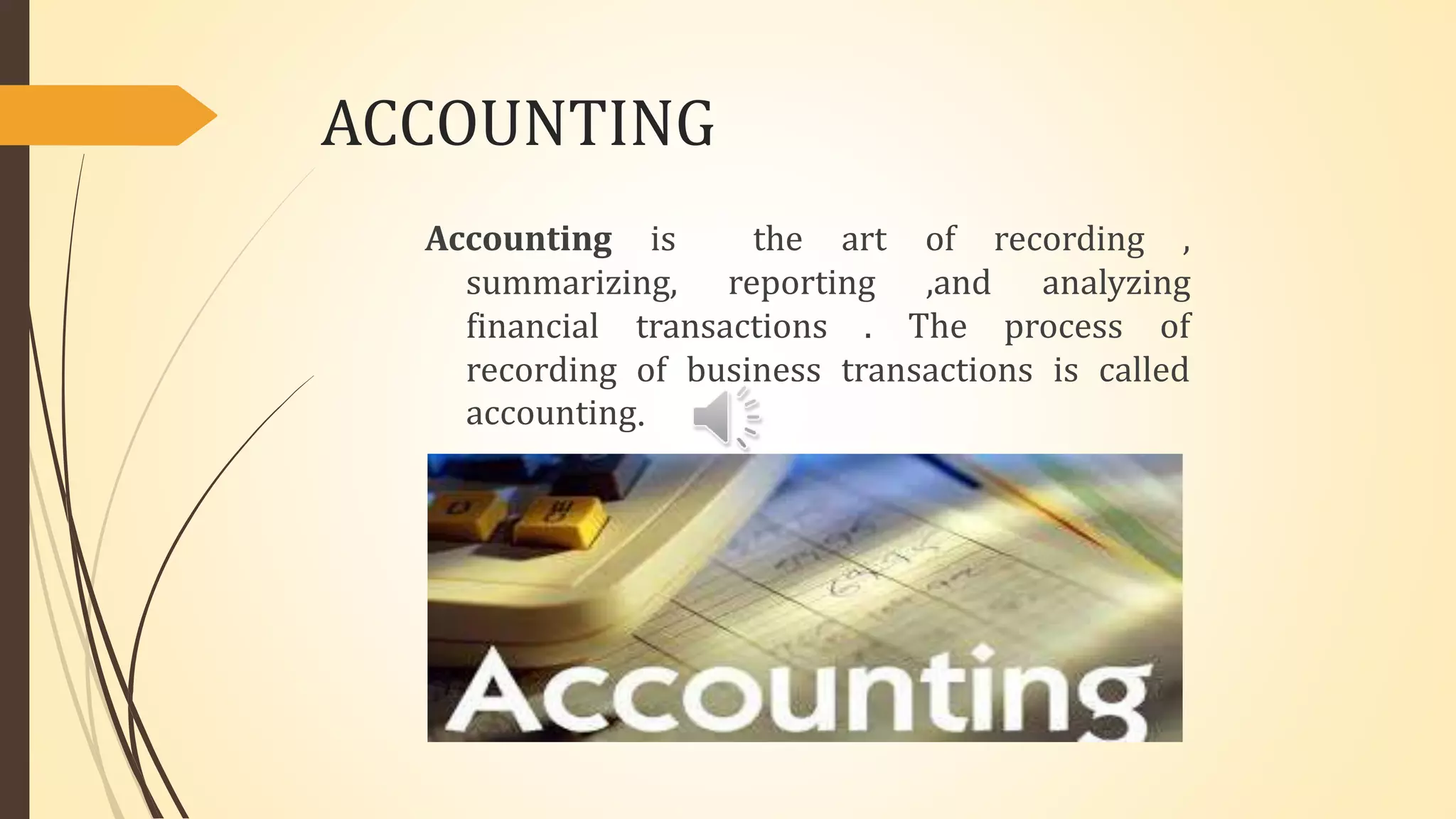
ACCOUNTING
Accounting is the art of recording ,
summarizing, reporting ,and analyzing
financial transactions . The process of
recording of business transactions is called
accounting.
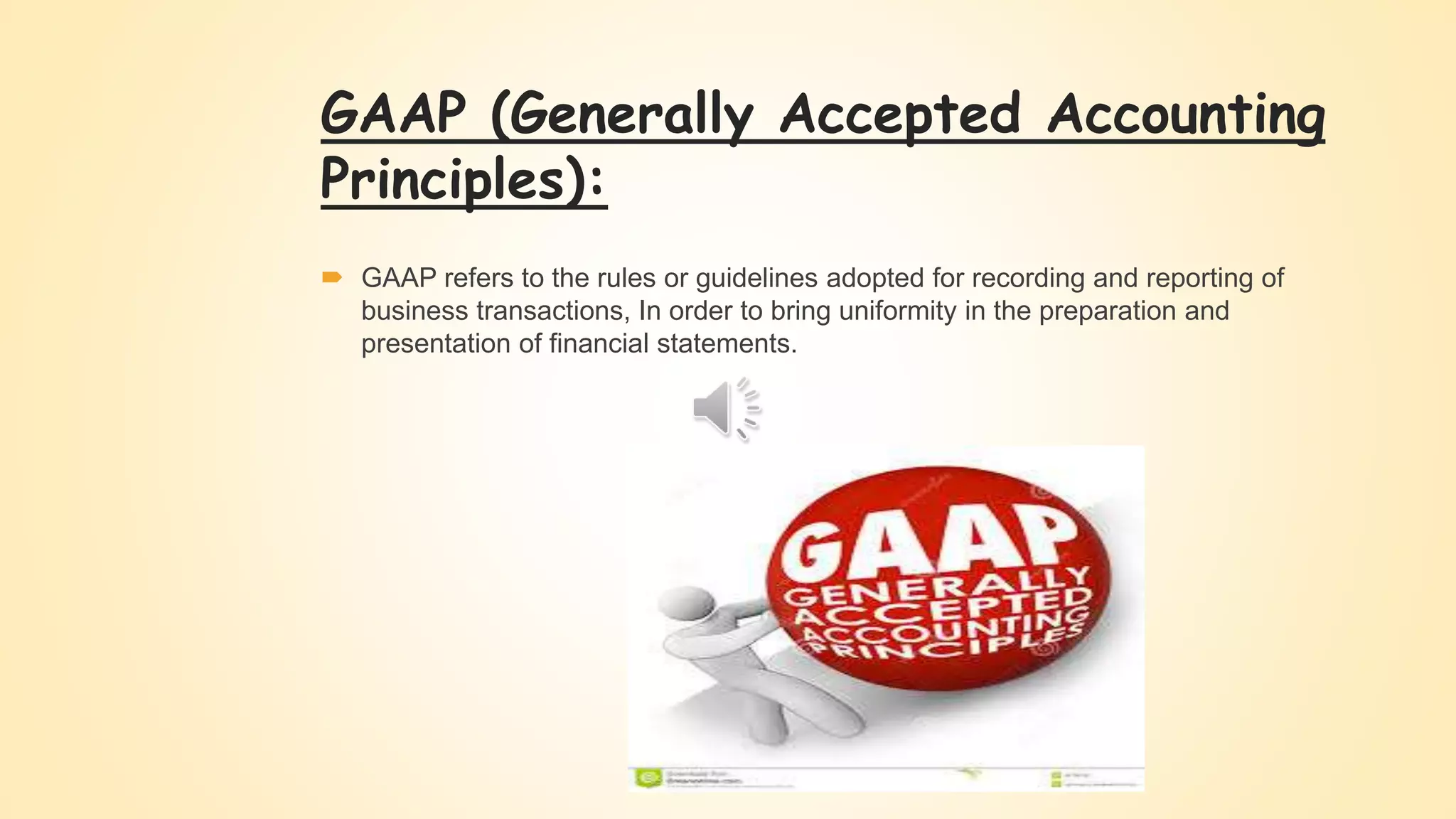
GAAP (Generally Accepted Accounting
Principles):
 GAAP refers to the rules or guidelines adopted for recording and reporting of
business transactions, In order to bring uniformity in the preparation and
presentation of financial statements.
GAAP Principles:
The GAAP principles are divided into two categories:
1. Accounting Concepts: Accounting Concepts are basic assumptions or conditions upon
which science of accounting is based.
2. Accounting Conventions: Accounting Conventions include those customs and traditions
which are followed up by an accountant while preparing a financial statement.
GAAP PRINCIPLES
 Business Entity concept
 Money measurement
 Going concern
 Accounting period
 Cost concept
 Dual aspect
 Revenue recognition
 Matching concept
 Accrual
 Full disclosure
 Consistency
 Conservatism
 Materiality
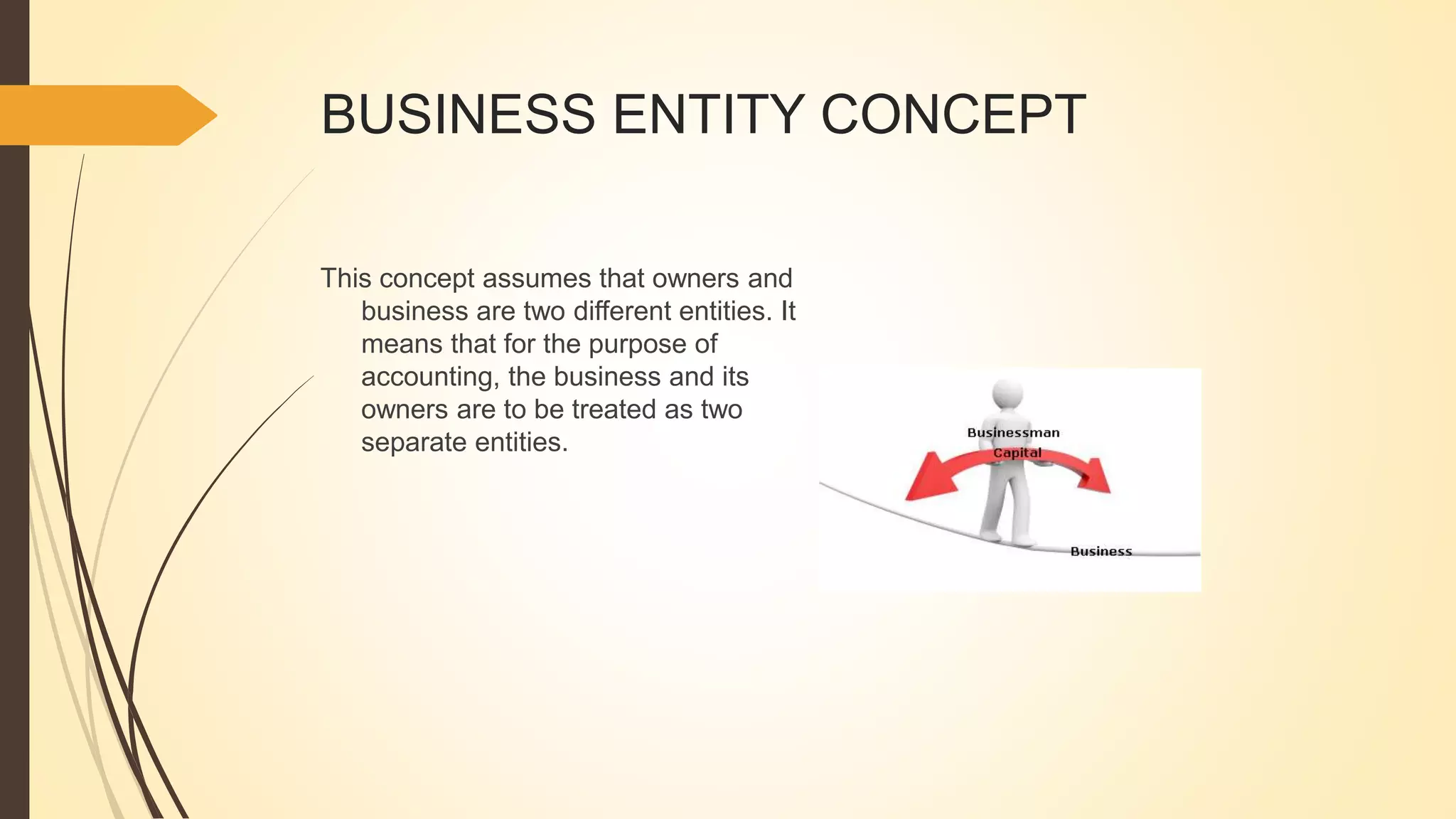
BUSINESS ENTITY CONCEPT
This concept assumes that owners and
business are two different entities. It
means that for the purpose of
accounting, the business and its
owners are to be treated as two
separate entities.
MONEY MEASUREMENT CONCEPT
states that only those transactions and happenings in an organization which can be
expressed in terms of money such as sale of goods or payment of expenses or
receipt of income, etc. are to be recorded in the book of accounts
Going Concern Concept
 assumes that a business firm would
continue to carry out its operations
indefinitely, i.e. for a fairly long period
of time and would not be liquidated in
the foreseeable future. This is an
important assumption of accounting
as it provides the very basis for
showing the value of assets in the
balance sheet.
Accounting Period Concept
 Accounting period refers to the span
of time at the end of which the
financial statements of an enterprise
are prepared, to know whether it has
earned profits or incurred losses
during that period and what exactly
is the position of its assets and
liabilities at the end of that period.
Cost Concept
 The cost concept requires that all assets are recorded in the book of accounts at
their purchase price, which includes cost of acquisition, transportation, installation
and making the asset ready to use.
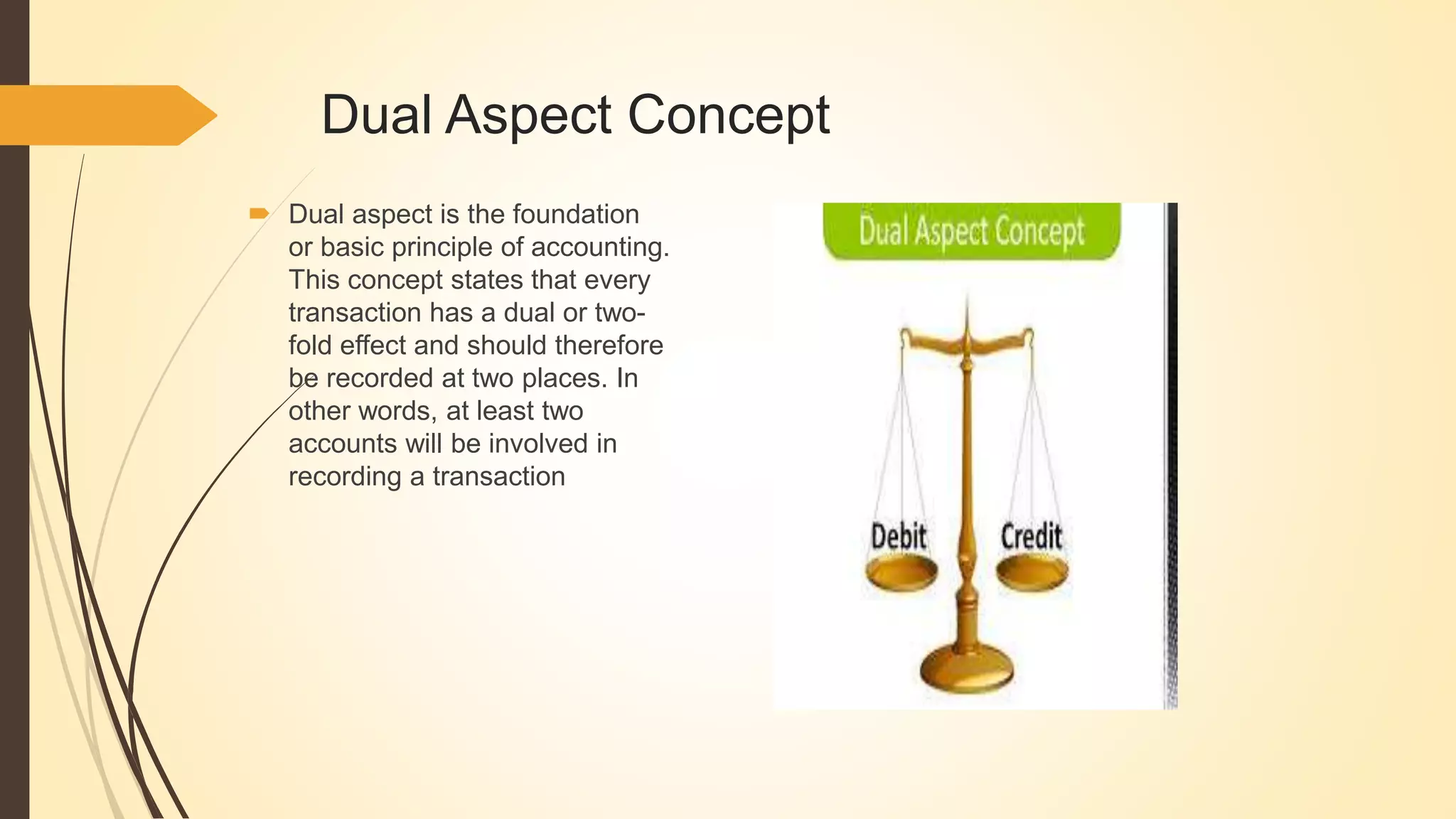
Dual Aspect Concept
 Dual aspect is the foundation
or basic principle of accounting.
This concept states that every
transaction has a dual or two-
fold effect and should therefore
be recorded at two places. In
other words, at least two
accounts will be involved in
recording a transaction
Revenue Recognition (Realization)
Concept
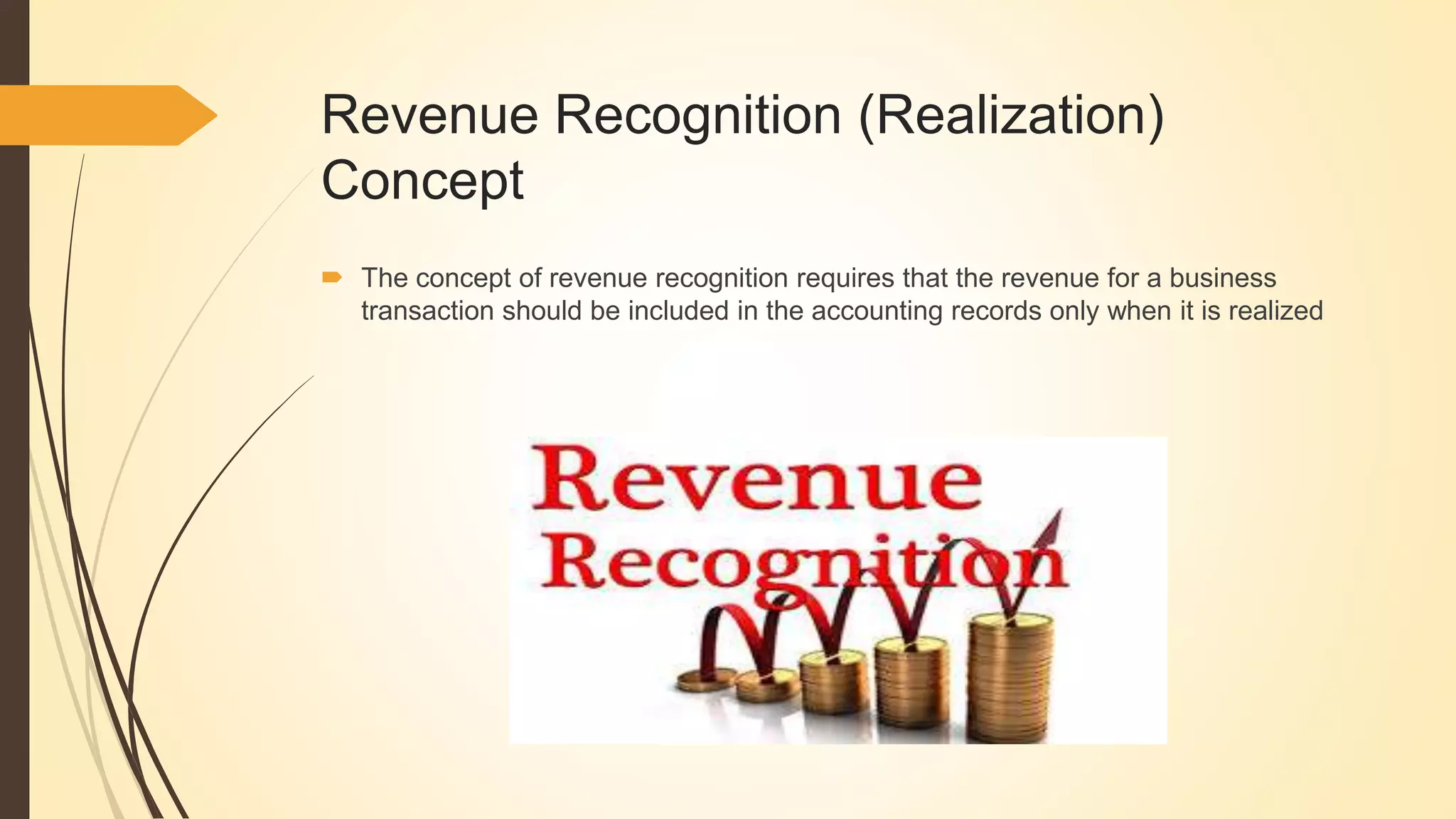
 The concept of revenue recognition requires that the revenue for a business
transaction should be included in the accounting records only when it is realized
Matching Concept
 The process of ascertaining the amount of profit earned or the loss incurred
during a particular period involves deduction of related expenses from the
revenue earned during that period.
Full Disclosure Concept
The principle of full disclosure requires
that all material and relevant facts
concerning financial performance of
an enterprise must be fully and
completely disclosed in the financial
statements and their accompanying
footnotes.
Consistency Concept
 This principle states that accounting policies and practices followed by
enterprises are uniform and are consistent over the period of time.
Conservatism Concept
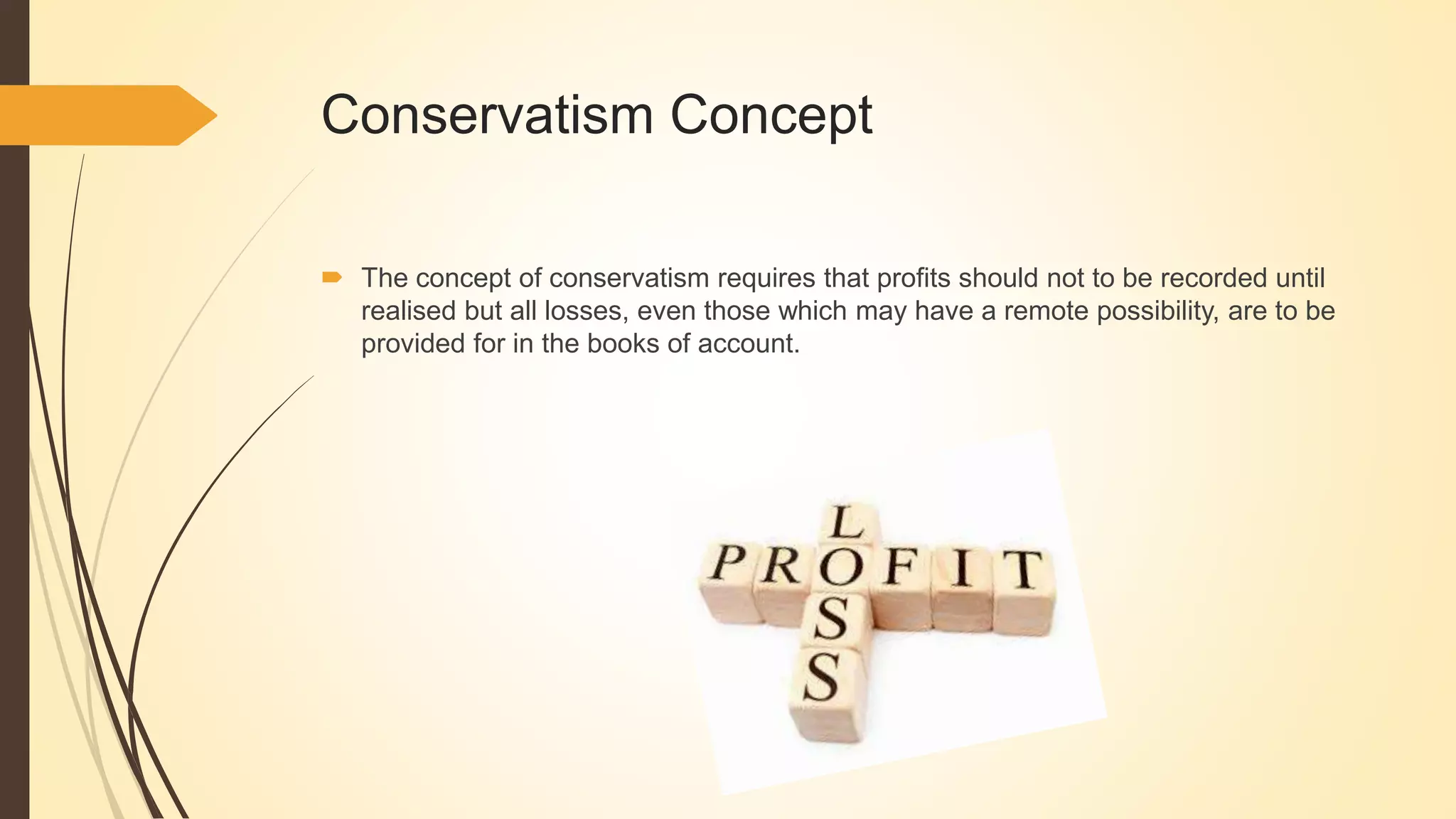
 The concept of conservatism requires that profits should not to be recorded until
realised but all losses, even those which may have a remote possibility, are to be
provided for in the books of account.
Materiality Concept
 The concept of materiality requires that accounting should focus on material
facts. The materiality of a fact depends on its nature and the amount involved.
Objectivity Concept
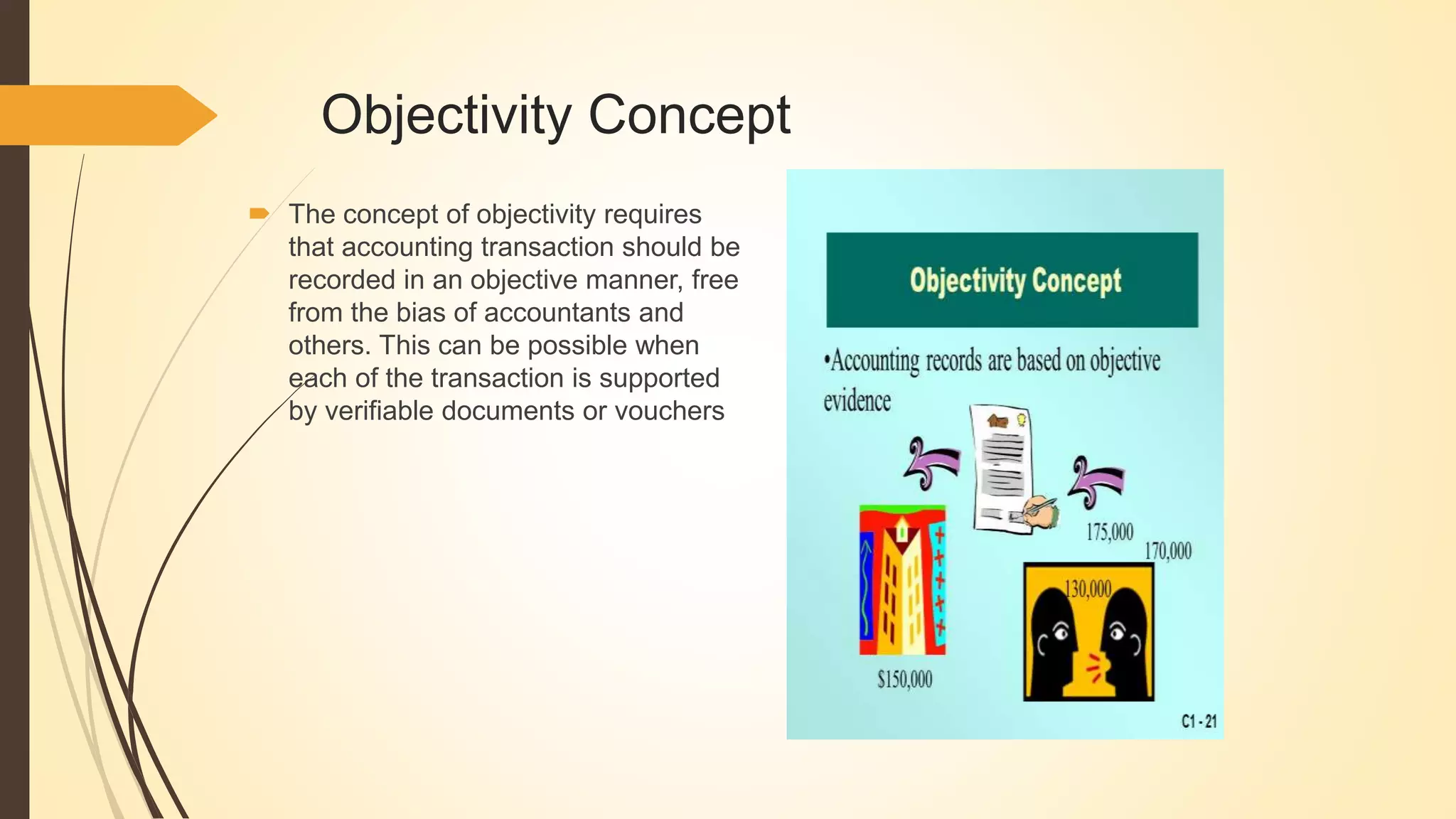
 The concept of objectivity requires
that accounting transaction should be
recorded in an objective manner, free
from the bias of accountants and
others. This can be possible when
each of the transaction is supported
by verifiable documents or vouchers
THANK YOU
 PRESENTED BY:
 NAME – POOJA JAIN
 ENROLLMENT NUMBER – 04612802115
 NAME - VANDANA SHARMA
 ENROLLMENT NUMBER - 08412802115
Accounting principles

Accounting principles

  • 1.
  • 2.
    General details  Pupilteacher name: Pooja jain & Vandana sharma  Subjects: Accountancy  Class: XI  Topic: Accounting principles
  • 3.
    General objectives Students willfamiliarize themselves about different accounting principles . Student will be able to develop skills of recording transactions. Students will be able to get admission in the higher classes.
  • 4.
    SPECIFIC OBJECTIVES Students willbe able to  State different accounting principles.  Explain different accounting principles.  Enumerate different accounting principles in about 200 words within 20 minutes.  Appreciate that how different accounting principles affect the recording of business transactions.
  • 5.
    ACCOUNTING Accounting is theart of recording , summarizing, reporting ,and analyzing financial transactions . The process of recording of business transactions is called accounting.
  • 6.
    GAAP (Generally AcceptedAccounting Principles):  GAAP refers to the rules or guidelines adopted for recording and reporting of business transactions, In order to bring uniformity in the preparation and presentation of financial statements.
  • 8.
    GAAP Principles: The GAAPprinciples are divided into two categories: 1. Accounting Concepts: Accounting Concepts are basic assumptions or conditions upon which science of accounting is based. 2. Accounting Conventions: Accounting Conventions include those customs and traditions which are followed up by an accountant while preparing a financial statement.
  • 9.
    GAAP PRINCIPLES  BusinessEntity concept  Money measurement  Going concern  Accounting period  Cost concept  Dual aspect  Revenue recognition  Matching concept  Accrual  Full disclosure  Consistency  Conservatism  Materiality
  • 10.
    BUSINESS ENTITY CONCEPT Thisconcept assumes that owners and business are two different entities. It means that for the purpose of accounting, the business and its owners are to be treated as two separate entities.
  • 11.
    MONEY MEASUREMENT CONCEPT statesthat only those transactions and happenings in an organization which can be expressed in terms of money such as sale of goods or payment of expenses or receipt of income, etc. are to be recorded in the book of accounts
  • 12.
    Going Concern Concept assumes that a business firm would continue to carry out its operations indefinitely, i.e. for a fairly long period of time and would not be liquidated in the foreseeable future. This is an important assumption of accounting as it provides the very basis for showing the value of assets in the balance sheet.
  • 13.
    Accounting Period Concept Accounting period refers to the span of time at the end of which the financial statements of an enterprise are prepared, to know whether it has earned profits or incurred losses during that period and what exactly is the position of its assets and liabilities at the end of that period.
  • 14.
    Cost Concept  Thecost concept requires that all assets are recorded in the book of accounts at their purchase price, which includes cost of acquisition, transportation, installation and making the asset ready to use.
  • 15.
    Dual Aspect Concept Dual aspect is the foundation or basic principle of accounting. This concept states that every transaction has a dual or two- fold effect and should therefore be recorded at two places. In other words, at least two accounts will be involved in recording a transaction
  • 16.
    Revenue Recognition (Realization) Concept The concept of revenue recognition requires that the revenue for a business transaction should be included in the accounting records only when it is realized
  • 17.
    Matching Concept  Theprocess of ascertaining the amount of profit earned or the loss incurred during a particular period involves deduction of related expenses from the revenue earned during that period.
  • 18.
    Full Disclosure Concept Theprinciple of full disclosure requires that all material and relevant facts concerning financial performance of an enterprise must be fully and completely disclosed in the financial statements and their accompanying footnotes.
  • 19.
    Consistency Concept  Thisprinciple states that accounting policies and practices followed by enterprises are uniform and are consistent over the period of time.
  • 20.
    Conservatism Concept  Theconcept of conservatism requires that profits should not to be recorded until realised but all losses, even those which may have a remote possibility, are to be provided for in the books of account.
  • 21.
    Materiality Concept  Theconcept of materiality requires that accounting should focus on material facts. The materiality of a fact depends on its nature and the amount involved.
  • 22.
    Objectivity Concept  Theconcept of objectivity requires that accounting transaction should be recorded in an objective manner, free from the bias of accountants and others. This can be possible when each of the transaction is supported by verifiable documents or vouchers
  • 23.
    THANK YOU  PRESENTEDBY:  NAME – POOJA JAIN  ENROLLMENT NUMBER – 04612802115  NAME - VANDANA SHARMA  ENROLLMENT NUMBER - 08412802115