ACCOUNTING CONCEPTS
1.Business entity concept.
2.Money measurement concept.
3.Periodicity concept.
4.Accrual concept.
5.Matching concept.
6.Going concern concept.
7.Cost concept.
8.Realisation concept.
9.Dual aspect concept.
1.BUSINESS ENTITY CONCEPT
The business entity concept states that
business enterprise is a separate identity
apart from its owner. Accountants should
treat a business as distinct from its owner.
Business transactions are recorded in the
business books of accounts and owners in his
personal books of accounts.
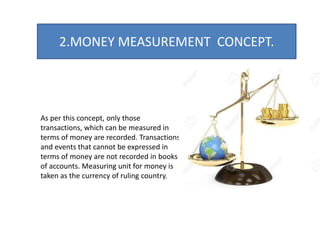
As per this concept, only those
transactions, which can be measured in
terms of money are recorded. Transactions
and events that cannot be expressed in
terms of money are not recorded in books
of accounts. Measuring unit for money is
taken as the currency of ruling country.
2.MONEY MEASUREMENT CONCEPT.
PERIODICITY CONCEPT
Accounting information should be
separated into regular periods such as
months, quarters and years.
Information collected in time period
allows comparisons that help us to track
financial progress.
This concept allow the users to obtain
timely information to serve as basis on
making decisions about future activities.
ACCRUAL CONCEPT
• Accrual is something that becomes due especially an amount
of money that is yet to be paid or received at the end of
accounting period.
• Revenues are recognized when the become receivable though
cash is received or not received.
• Expenses are recognized when they become payable though
cash is paid or not paid.
MATCHING CONCEPT
The matching concept is an accounting
practice whereby firm recognize firms
revenues and their related expenses in the
same accounting period. The firms report
revenues , that is, along with the expenses
that bought them. The purpose of matching
concept is to avoid misstating earnings for
period.
GOING CONCERN CONCEPT
The concept states that a business firm will continue to carry on
its activities of indefinite period of time.
Simply stated, it means that every business entity has
continuity of life. Thus it will not be dissolved in the near
future. This is an important assumption of accounting, as it
provide a basis showing value asset in the balance sheet.
COST CONCEPT
It is also known as historical cost.
It state that all assets are recorded in books of accounts at their
purchase price, which includes cost of acquisition,
transportation and installation and not at its market price.
Ex; if a firm knows that a land purchased for 200000 will fetch
the double the amount in the near future or worth more than
the actual cost, the transaction is recorded only at actual cost.
REALISATION CONCEPT
Realization principle is the concept that revenue can only be
recognized once underlying goods or services associated with
revenue has been delivered or rendered respectively. thus
revenue can only be recognized after it has been earned.
This concept records that revenue when its earned and
expenses when they are paid.
DUAL ASPECT CONCEPT
Every transaction will result in receiving some benefits and
giving some benefits.
It means that every transaction recorded in books affects at
least two accounts.
This system of recording known as DOUBLE ENTRY SYSTEM.
EX; An enterpriser makes sale of rs.50000 and receives
payment by cheque. Now there are two things happening
simultaneously. First machinery moved out of the firm.
Second the bank balance as increased.

Presentation1

  • 1.
    ACCOUNTING CONCEPTS 1.Business entityconcept. 2.Money measurement concept. 3.Periodicity concept. 4.Accrual concept. 5.Matching concept. 6.Going concern concept. 7.Cost concept. 8.Realisation concept. 9.Dual aspect concept.
  • 2.
    1.BUSINESS ENTITY CONCEPT Thebusiness entity concept states that business enterprise is a separate identity apart from its owner. Accountants should treat a business as distinct from its owner. Business transactions are recorded in the business books of accounts and owners in his personal books of accounts.
  • 3.
    As per thisconcept, only those transactions, which can be measured in terms of money are recorded. Transactions and events that cannot be expressed in terms of money are not recorded in books of accounts. Measuring unit for money is taken as the currency of ruling country. 2.MONEY MEASUREMENT CONCEPT.
  • 4.
    PERIODICITY CONCEPT Accounting informationshould be separated into regular periods such as months, quarters and years. Information collected in time period allows comparisons that help us to track financial progress. This concept allow the users to obtain timely information to serve as basis on making decisions about future activities.
  • 5.
    ACCRUAL CONCEPT • Accrualis something that becomes due especially an amount of money that is yet to be paid or received at the end of accounting period. • Revenues are recognized when the become receivable though cash is received or not received. • Expenses are recognized when they become payable though cash is paid or not paid.
  • 6.
    MATCHING CONCEPT The matchingconcept is an accounting practice whereby firm recognize firms revenues and their related expenses in the same accounting period. The firms report revenues , that is, along with the expenses that bought them. The purpose of matching concept is to avoid misstating earnings for period.
  • 7.
    GOING CONCERN CONCEPT Theconcept states that a business firm will continue to carry on its activities of indefinite period of time. Simply stated, it means that every business entity has continuity of life. Thus it will not be dissolved in the near future. This is an important assumption of accounting, as it provide a basis showing value asset in the balance sheet.
  • 8.
    COST CONCEPT It isalso known as historical cost. It state that all assets are recorded in books of accounts at their purchase price, which includes cost of acquisition, transportation and installation and not at its market price. Ex; if a firm knows that a land purchased for 200000 will fetch the double the amount in the near future or worth more than the actual cost, the transaction is recorded only at actual cost.
  • 9.
    REALISATION CONCEPT Realization principleis the concept that revenue can only be recognized once underlying goods or services associated with revenue has been delivered or rendered respectively. thus revenue can only be recognized after it has been earned. This concept records that revenue when its earned and expenses when they are paid.
  • 10.
    DUAL ASPECT CONCEPT Everytransaction will result in receiving some benefits and giving some benefits. It means that every transaction recorded in books affects at least two accounts. This system of recording known as DOUBLE ENTRY SYSTEM. EX; An enterpriser makes sale of rs.50000 and receives payment by cheque. Now there are two things happening simultaneously. First machinery moved out of the firm. Second the bank balance as increased.