ABOUT PHYSICSPREPARED BY:RANEL  DIOLAIV-SHAKESPEARE
BRANCHES OF PHYSICS
Physics(from Ancient Greek: φύσις physis "nature") is a natural science that involves the study of matter[1] and its motion through spacetime, as well as all related concepts, including energy and force.[2] More broadly, it is the general analysis of nature, conducted in order to understand how the universe behaves.[3][4][5]Physics is one of the oldest academic disciplines, perhaps the oldest through its inclusion of astronomy.[6] Over the last two millenia, physics was a part of natural philosophy along with chemistry, certain branches of mathematics, and biology, but during the Scientific Revolution in the 16th century, the natural sciences emerged as unique research programs in their own right.[7] Certain research areas are interdisciplinary, such as mathematical physics and quantum chemistry, which means that the boundaries of physics are not rigidly defined. In the nineteenth and twentieth centuries physicalism emerged as a major unifying feature of the philosophy of science as physics provides fundamental explanations for every observed natural phenomenon. New ideas in physics often explain the fundamental mechanisms of other sciences, while opening to new research areas in mathematics and philosophy.Physics is also significant and influential through advances in its understanding that have translated into new technologies. For example, advances in the understanding of electromagnetism or nuclear physics led directly to the development of new products which have dramatically transformed modern-day society, such as television, computers, domestic appliances, and nuclear weapons; advances in thermodynamics led to the development of industrialization; and advances in mechanics inspired the development of calculus.
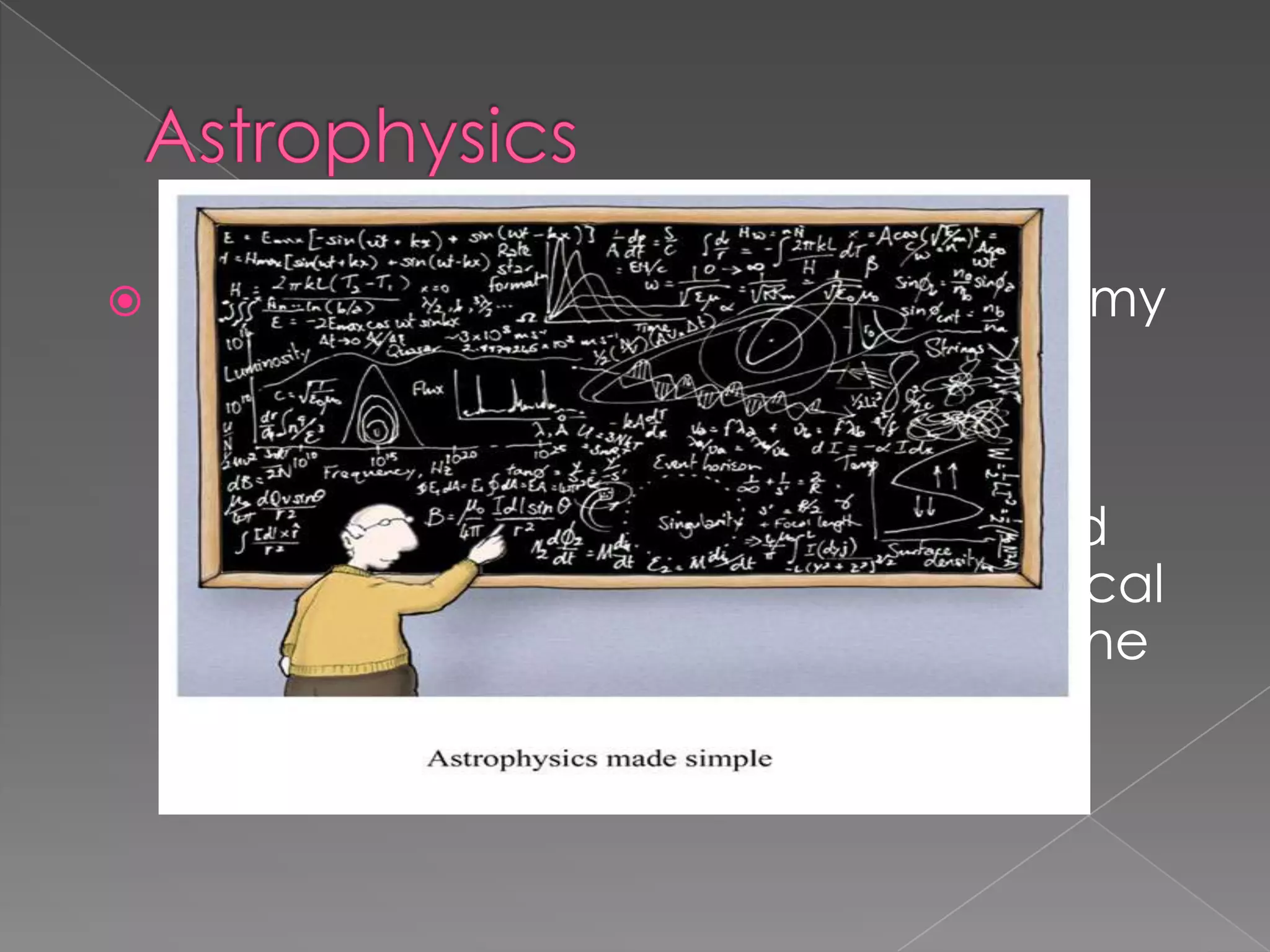
AstrophysicsAstrophysics is the branch of astronomy that deals with the physics of the universe, including the physical properties (luminosity, density, temperature and chemical composition) of astronomical objects such as stars, galaxies, and the interstellar medium, as well as their interactions.
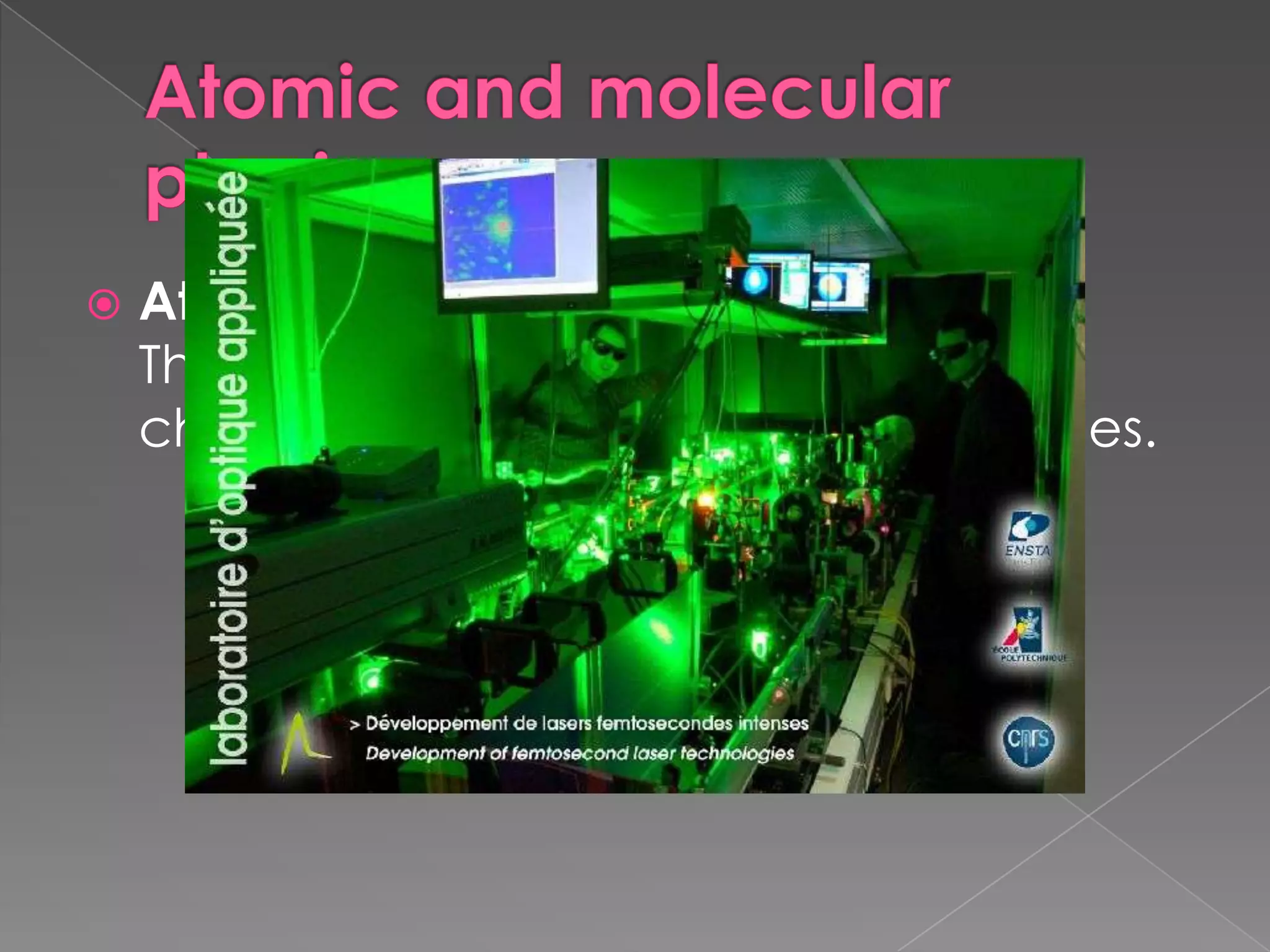
Atomic and molecular physicsAtomic and molecular physicsThe study of the structure and characteristics of atoms and molecules.
BiophysicsBiophysicsThe science of the application of the laws of physics to life processes.
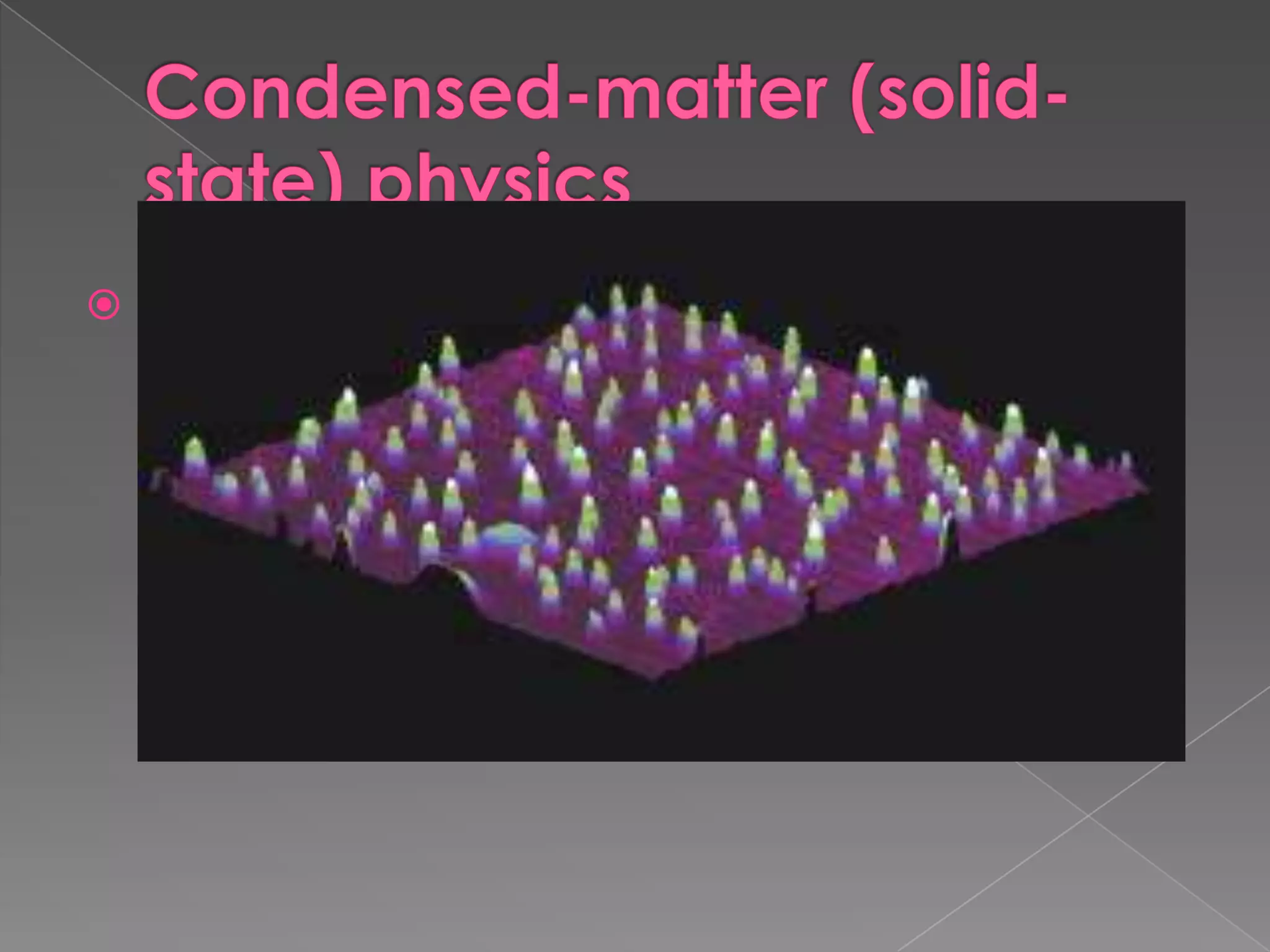
Condensed-matter (solid-state) physicsCondensed-matter (solid-state) physicsThe study of the physical properties of solids, such as electrical, dielectric, elastic, and thermal properties, and their understanding in terms of fundamental physical laws.
CosmologyCosmology The study of the universe as a whole, of the contents, structure, and evolution of the universe from the beginning of time to the future.
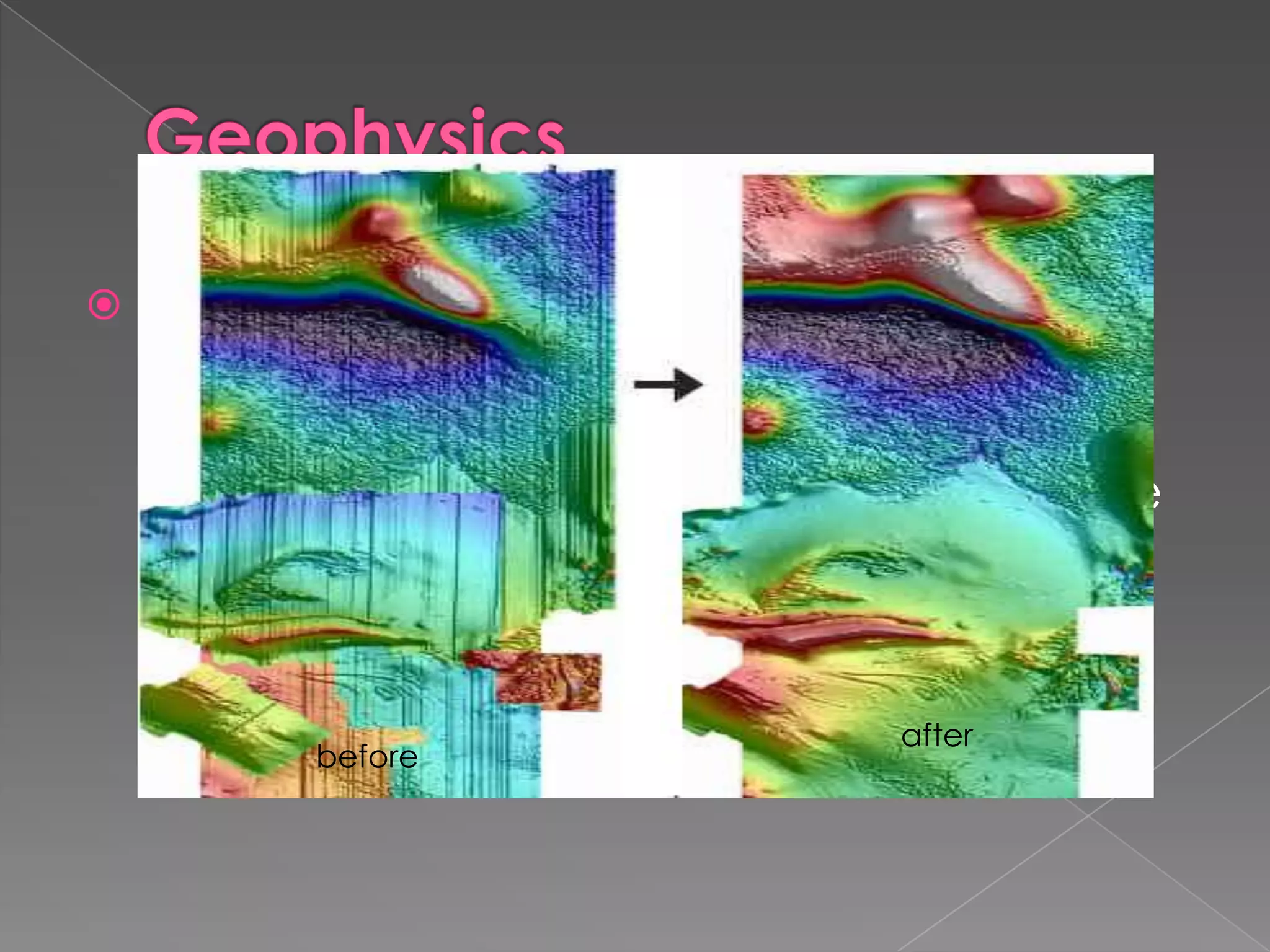
GeophysicsGeophysicsthe study of the physical characteristics and properties of the earth; including geodesy, seismology, meteorology, oceanography, atmospheric electricity, terrestrial magnetism, and tidal phenomena.afterbefore
MechanicsMechanicsthe branch of physics concerned with the motion of bodies in a frame of reference.
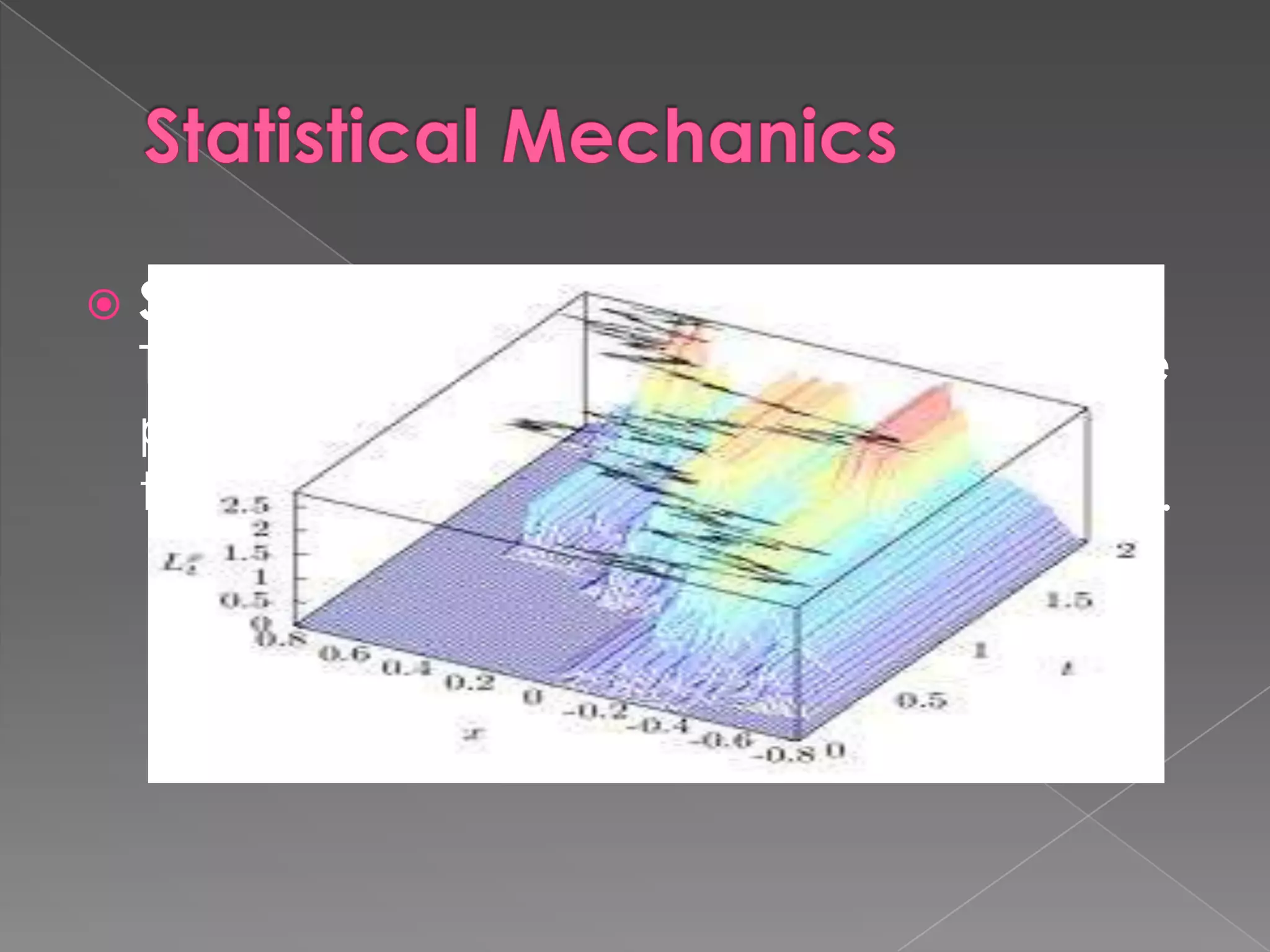
Statistical MechanicsStatistical MechanicsThe discipline that attempts to relate the properties of macroscopic systems to their atomic and molecular constituents.
Theoretical physicsTheoretical physicsTheoretical physics attempts to understand the world by making a model of reality, used for rationalizing, explaining, and predicting physical phenomena through a “physical theory”.
ThermodynamicsThermodynamicsThe study of the effects of changes in temperature, pressure, and volume on physical systems at the macroscopic scale by analyzing the collective motion of their particles using statistics.
THE ENDTHE ENDTHE ENDPREPARE  BY:RANEL DIOLAIV-SHAKESPEARE

Branches of Physics

  • 1.
    ABOUT PHYSICSPREPARED BY:RANEL DIOLAIV-SHAKESPEARE
  • 2.
  • 3.
    Physics(from Ancient Greek: φύσις physis "nature")is a natural science that involves the study of matter[1] and its motion through spacetime, as well as all related concepts, including energy and force.[2] More broadly, it is the general analysis of nature, conducted in order to understand how the universe behaves.[3][4][5]Physics is one of the oldest academic disciplines, perhaps the oldest through its inclusion of astronomy.[6] Over the last two millenia, physics was a part of natural philosophy along with chemistry, certain branches of mathematics, and biology, but during the Scientific Revolution in the 16th century, the natural sciences emerged as unique research programs in their own right.[7] Certain research areas are interdisciplinary, such as mathematical physics and quantum chemistry, which means that the boundaries of physics are not rigidly defined. In the nineteenth and twentieth centuries physicalism emerged as a major unifying feature of the philosophy of science as physics provides fundamental explanations for every observed natural phenomenon. New ideas in physics often explain the fundamental mechanisms of other sciences, while opening to new research areas in mathematics and philosophy.Physics is also significant and influential through advances in its understanding that have translated into new technologies. For example, advances in the understanding of electromagnetism or nuclear physics led directly to the development of new products which have dramatically transformed modern-day society, such as television, computers, domestic appliances, and nuclear weapons; advances in thermodynamics led to the development of industrialization; and advances in mechanics inspired the development of calculus.
  • 4.
    AstrophysicsAstrophysics is thebranch of astronomy that deals with the physics of the universe, including the physical properties (luminosity, density, temperature and chemical composition) of astronomical objects such as stars, galaxies, and the interstellar medium, as well as their interactions.
  • 5.
    Atomic and molecularphysicsAtomic and molecular physicsThe study of the structure and characteristics of atoms and molecules.
  • 6.
    BiophysicsBiophysicsThe science ofthe application of the laws of physics to life processes.
  • 7.
    Condensed-matter (solid-state) physicsCondensed-matter(solid-state) physicsThe study of the physical properties of solids, such as electrical, dielectric, elastic, and thermal properties, and their understanding in terms of fundamental physical laws.
  • 8.
    CosmologyCosmology The studyof the universe as a whole, of the contents, structure, and evolution of the universe from the beginning of time to the future.
  • 9.
    GeophysicsGeophysicsthe study ofthe physical characteristics and properties of the earth; including geodesy, seismology, meteorology, oceanography, atmospheric electricity, terrestrial magnetism, and tidal phenomena.afterbefore
  • 10.
    MechanicsMechanicsthe branch ofphysics concerned with the motion of bodies in a frame of reference.
  • 11.
    Statistical MechanicsStatistical MechanicsThediscipline that attempts to relate the properties of macroscopic systems to their atomic and molecular constituents.
  • 12.
    Theoretical physicsTheoretical physicsTheoreticalphysics attempts to understand the world by making a model of reality, used for rationalizing, explaining, and predicting physical phenomena through a “physical theory”.
  • 13.
    ThermodynamicsThermodynamicsThe study ofthe effects of changes in temperature, pressure, and volume on physical systems at the macroscopic scale by analyzing the collective motion of their particles using statistics.
  • 14.
    THE ENDTHE ENDTHEENDPREPARE BY:RANEL DIOLAIV-SHAKESPEARE