LIGHT HOW IT WORKS LIGHT how it works
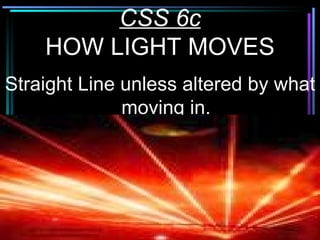
CSS 6c HOW LIGHT MOVES Straight Line unless altered by what moving in.
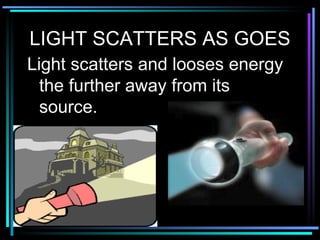
LIGHT SCATTERS AS GOES Light scatters and looses energy the further away from its source.
SCATTERING Light released and spreads in all directions.  Why room is even with light. Sky blue: shortest wavelengths, spread more.
 
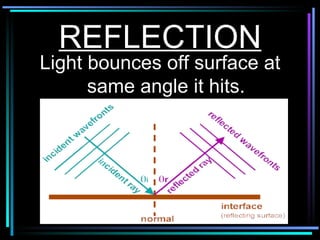
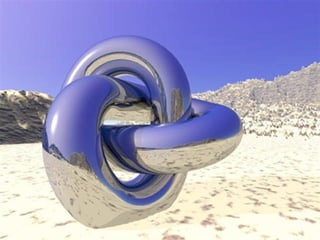
REFLECTION Light bounces off surface at same angle it hits.
 
ABSORPTION LIGHT IS TAKEN IN BY AN OBJECT (MATTER) AND HOLDS IT. ENERGY TRANSFERRED FROM LIGHT TO HEAT. AIR PARTICLES DIMINISH LIGHT.
SCIENCE LIGHTS UP MY LIFE
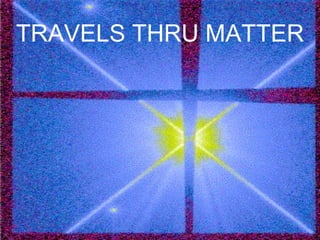
TRAVELS THRU MATTER
CSS6f INTERACTS WITH MATTER TRANSMISSION Light goes straight unless changes what it travels through. Travels through matter: gases (air), liquids (water) and solid (glass).
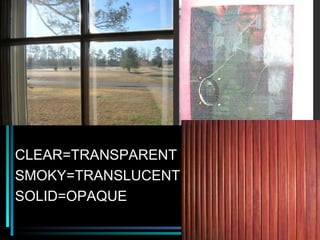
TRANSMISSION:  Terms for mediums Transparent - allows all light through. Translucent - allows some light through. Opaque - allows no light through.
CLEAR=TRANSPARENT SMOKY=TRANSLUCENT SOLID=OPAQUE
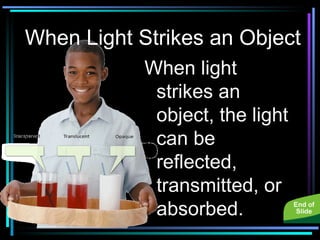
When Light Strikes an Object When light strikes an object, the light can be reflected, transmitted, or absorbed.
REFRACTION The change in direction and speed. Moving from water to air, light changes angles and speed of travel.
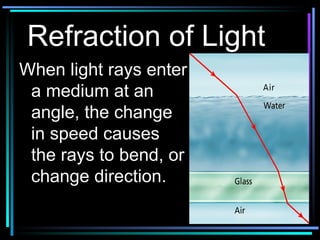
Refraction of Light When light rays enter a medium at an angle, the change in speed causes the rays to bend, or change direction.
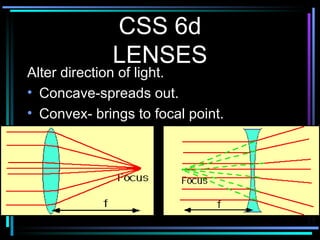
CSS 6d LENSES Alter direction of light. Concave-spreads out. Convex- brings to focal point.
LENSES con’t CONVEX -brings image to focal point. Image is larger and upside down. ie: eye, microscope, magnifying glass. CONCAVE - spreads image out. -image is smaller and upright. ie: corrective glasses.
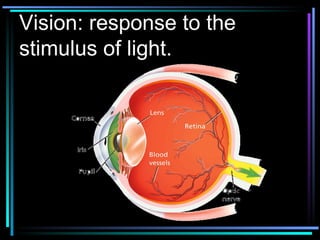
Vision: response to the stimulus of light.
 
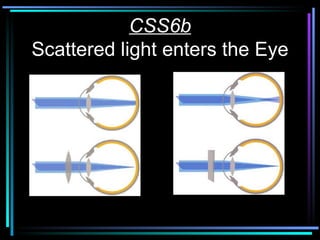
CSS6b Scattered light enters the Eye
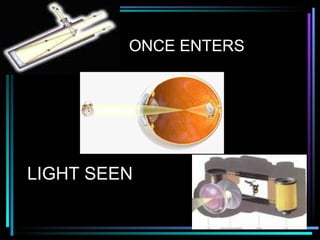
ONCE ENTERS LIGHT SEEN
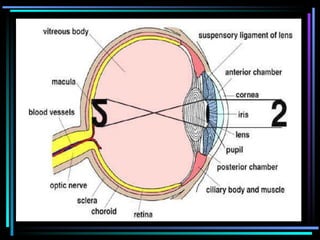
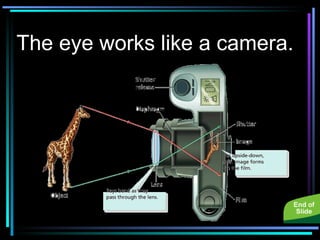
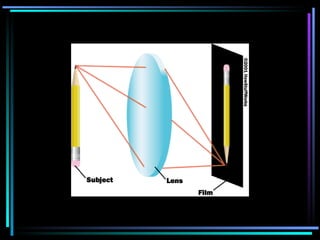
The eye works like a camera. reorder slides
REVIEW Light with Matter TRANSMISSION - light going  through REFRACTION -light bending. ABSORBTION - light absorbed. REFLECTION - light bouncing  off.
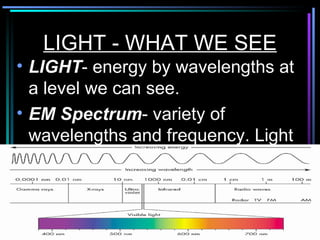
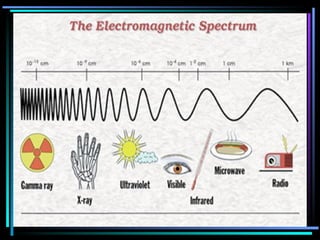
LIGHT - WHAT WE SEE LIGHT - energy by wavelengths at a level we can see. EM Spectrum - variety of wavelengths and frequency. Light is small band within.
 
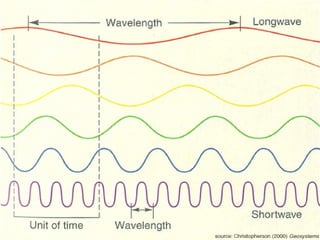
Terms to help understand: WAVELENGTH Anything that causes a disturbance and transmits energy through matter. (ie: ripple on pond) FREQUENCY Number of waves in set time. Decides energy level.
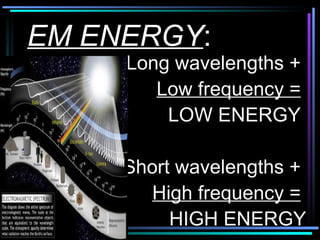
EM ENERGY : Long wavelengths +  Low frequency =   LOW ENERGY  Short wavelengths +  High frequency =   HIGH ENERGY
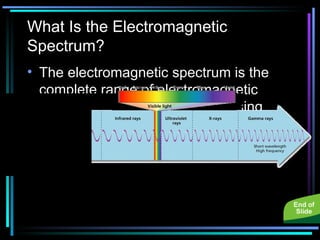
What Is the Electromagnetic Spectrum? The electromagnetic spectrum is the complete range of electromagnetic waves placed in order of increasing frequency.
 
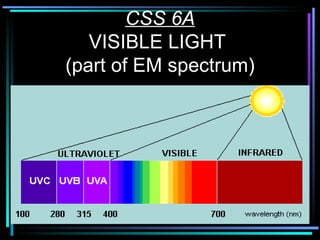
CSS 6A VISIBLE LIGHT  (part of EM spectrum)
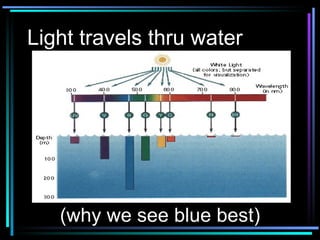
Light travels thru water (why we see blue best)
TO SEE COLOR Different colors represent different wavelengths. Blue- smaller wavelengths Red- larger wavelengths Color Order: ROY G BIV red, orange, yellow, green, blue, indigo, violet
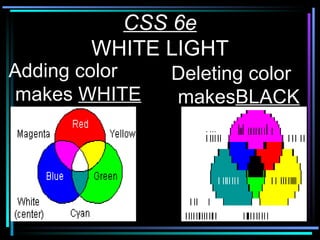
CSS 6e WHITE LIGHT Adding color makes  WHITE Deleting color makes BLACK
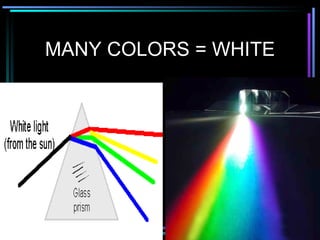
MANY COLORS = WHITE
WHITE LIGHT Mixture of many color/wavelengths All colors reflected. Enters the eye’s retina 3 cones:red, blue & green Rods-shades
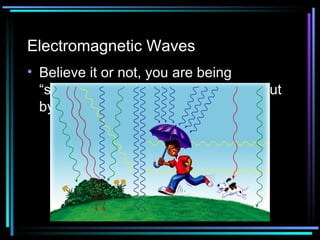
Electromagnetic Waves Believe it or not, you are being “showered” all the time, not by rain but by waves.
COLOR -decided by what absorbed. If object absorbs then hides color. All color absorbed = black If object reflects color then see. All color reflected = white


Light.ppt

  • 1.
    LIGHT HOW ITWORKS LIGHT how it works
  • 2.
    CSS 6c HOWLIGHT MOVES Straight Line unless altered by what moving in.
  • 3.
    LIGHT SCATTERS ASGOES Light scatters and looses energy the further away from its source.
  • 4.
    SCATTERING Light releasedand spreads in all directions. Why room is even with light. Sky blue: shortest wavelengths, spread more.
  • 5.
  • 6.
    REFLECTION Light bouncesoff surface at same angle it hits.
  • 7.
  • 8.
    ABSORPTION LIGHT ISTAKEN IN BY AN OBJECT (MATTER) AND HOLDS IT. ENERGY TRANSFERRED FROM LIGHT TO HEAT. AIR PARTICLES DIMINISH LIGHT.
  • 9.
  • 10.
  • 11.
    CSS6f INTERACTS WITHMATTER TRANSMISSION Light goes straight unless changes what it travels through. Travels through matter: gases (air), liquids (water) and solid (glass).
  • 12.
    TRANSMISSION: Termsfor mediums Transparent - allows all light through. Translucent - allows some light through. Opaque - allows no light through.
  • 13.
  • 14.
    When Light Strikesan Object When light strikes an object, the light can be reflected, transmitted, or absorbed.
  • 15.
    REFRACTION The changein direction and speed. Moving from water to air, light changes angles and speed of travel.
  • 16.
    Refraction of LightWhen light rays enter a medium at an angle, the change in speed causes the rays to bend, or change direction.
  • 17.
    CSS 6d LENSESAlter direction of light. Concave-spreads out. Convex- brings to focal point.
  • 18.
    LENSES con’t CONVEX-brings image to focal point. Image is larger and upside down. ie: eye, microscope, magnifying glass. CONCAVE - spreads image out. -image is smaller and upright. ie: corrective glasses.
  • 19.
    Vision: response tothe stimulus of light.
  • 20.
  • 21.
    CSS6b Scattered lightenters the Eye
  • 22.
  • 23.
    The eye workslike a camera. reorder slides
  • 24.
    REVIEW Light withMatter TRANSMISSION - light going through REFRACTION -light bending. ABSORBTION - light absorbed. REFLECTION - light bouncing off.
  • 25.
    LIGHT - WHATWE SEE LIGHT - energy by wavelengths at a level we can see. EM Spectrum - variety of wavelengths and frequency. Light is small band within.
  • 26.
  • 27.
    Terms to helpunderstand: WAVELENGTH Anything that causes a disturbance and transmits energy through matter. (ie: ripple on pond) FREQUENCY Number of waves in set time. Decides energy level.
  • 28.
    EM ENERGY :Long wavelengths + Low frequency = LOW ENERGY Short wavelengths + High frequency = HIGH ENERGY
  • 29.
    What Is theElectromagnetic Spectrum? The electromagnetic spectrum is the complete range of electromagnetic waves placed in order of increasing frequency.
  • 30.
  • 31.
    CSS 6A VISIBLELIGHT (part of EM spectrum)
  • 32.
    Light travels thruwater (why we see blue best)
  • 33.
    TO SEE COLORDifferent colors represent different wavelengths. Blue- smaller wavelengths Red- larger wavelengths Color Order: ROY G BIV red, orange, yellow, green, blue, indigo, violet
  • 34.
    CSS 6e WHITELIGHT Adding color makes WHITE Deleting color makes BLACK
  • 35.
  • 36.
    WHITE LIGHT Mixtureof many color/wavelengths All colors reflected. Enters the eye’s retina 3 cones:red, blue & green Rods-shades
  • 37.
    Electromagnetic Waves Believeit or not, you are being “showered” all the time, not by rain but by waves.
  • 38.
    COLOR -decided bywhat absorbed. If object absorbs then hides color. All color absorbed = black If object reflects color then see. All color reflected = white
  • 39.
  • 40.