

LESSON 2:
PROPERTIES OF
ELECTROMAGNETIC
WAVE
Objectives:
At the end of the lesson, you will
be able to
• Describe the main components of
the electromagnetic spectrum.
• State the properties of ALL EM
waves.
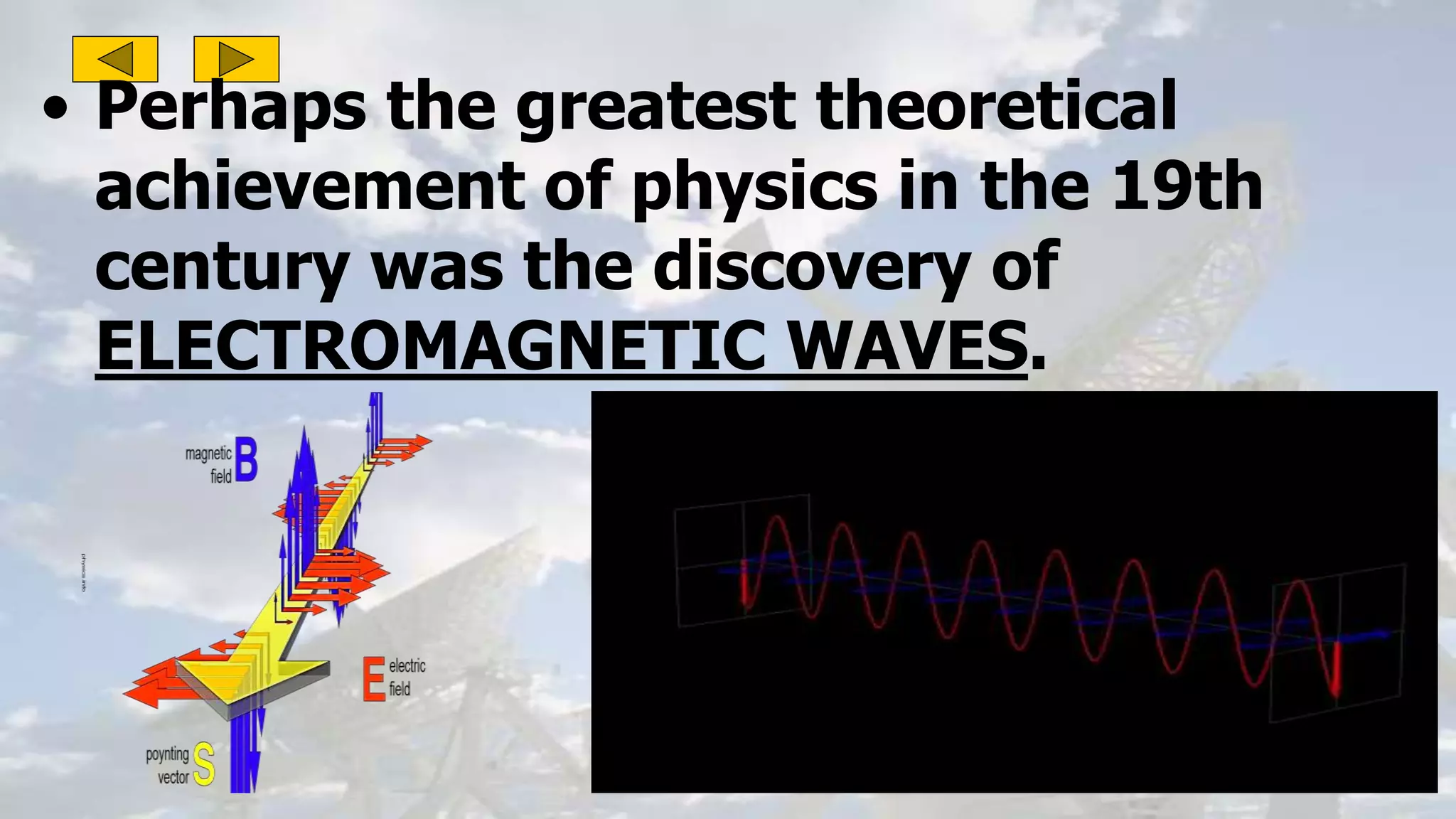
• Perhaps the greatest theoretical
achievement of physics in the 19th
century was the discovery of
ELECTROMAGNETIC WAVES.
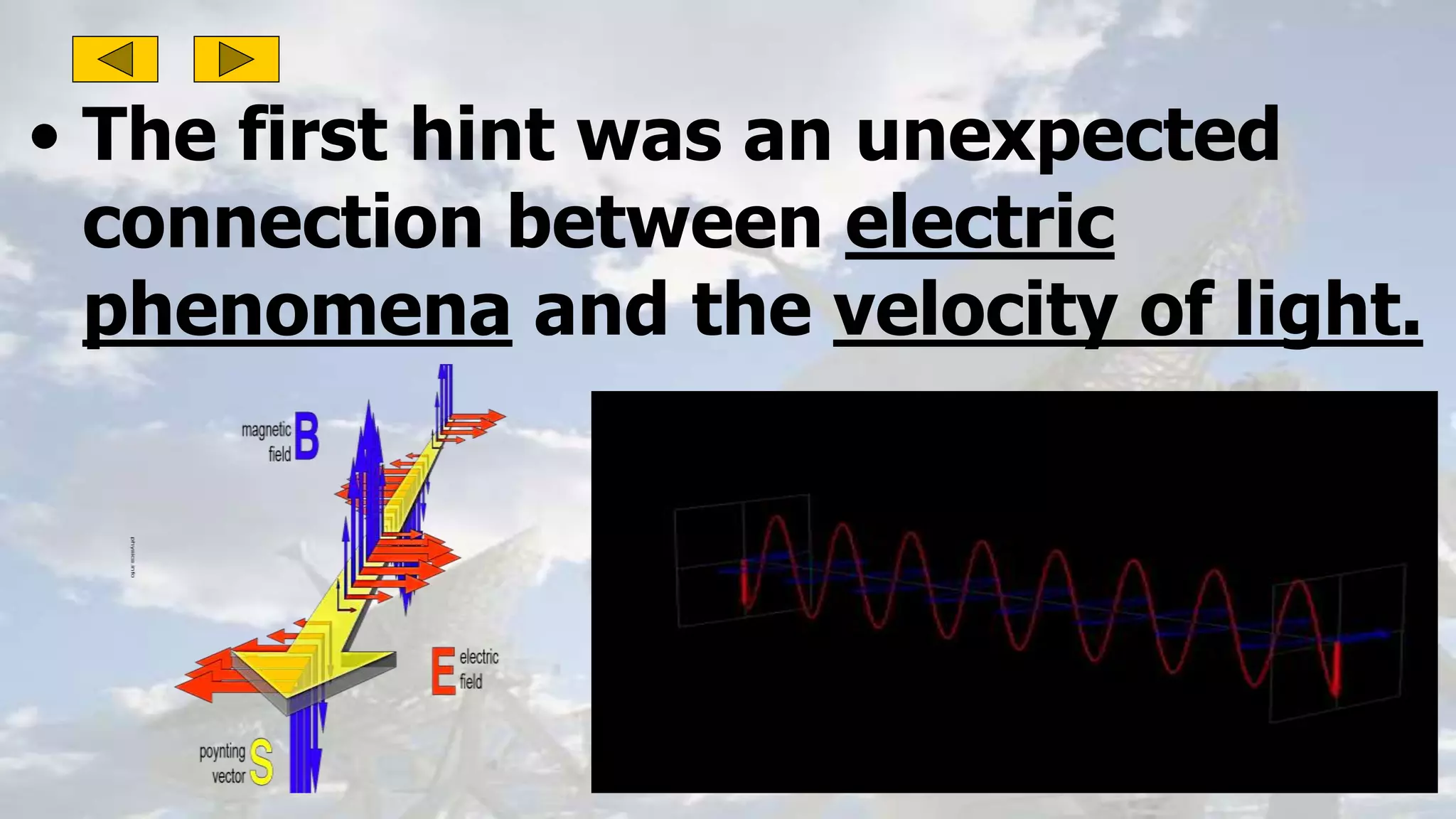
• The first hint was an unexpected
connection between electric
phenomena and the velocity of light.
WHO CAME UP WITH THE IDEA OF SPEED
OF LIGHT?
•Galileo attempted to record the
time between lantern signals but
was unsuccessful because the
distance involved was too small
and light simply moved too fast
to be measured this way.
WHO CAME UP WITH THE IDEA OF SPEED
OF LIGHT?
•Around 1676, Danish
astronomer Ole Roemer
became the first person to
prove that light travels at
a finite speed.
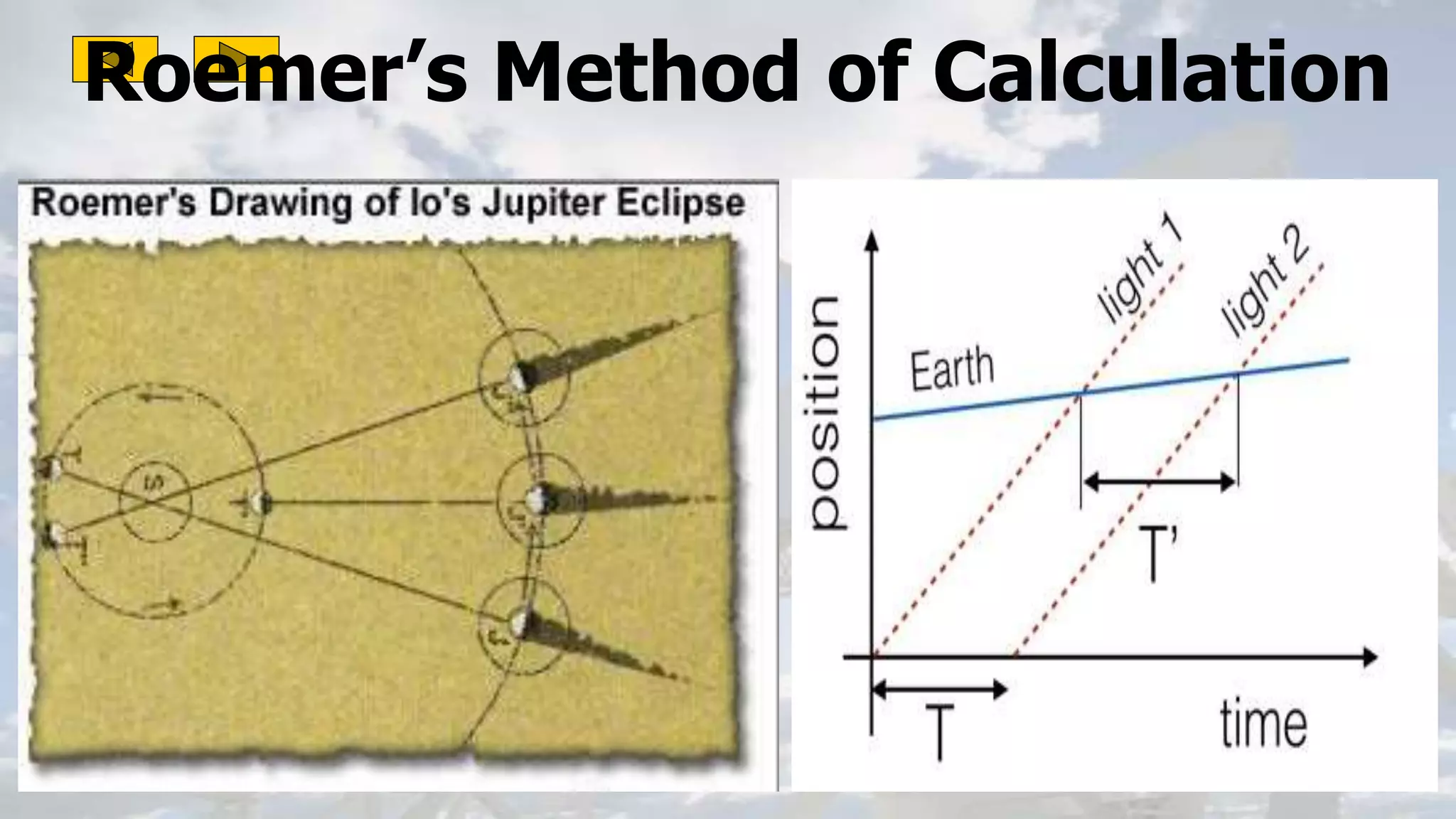
Roemer’s Method of Calculation
What are Electromagnetic Waves ?
•If you have ever tuned in to listen
to a radio, spoken on a handphone,
turned on a light, had an X-ray
taken, felt the warmth of sun on
your skin.
•You have experienced
electromagnetic wave
Electromagnetic waves
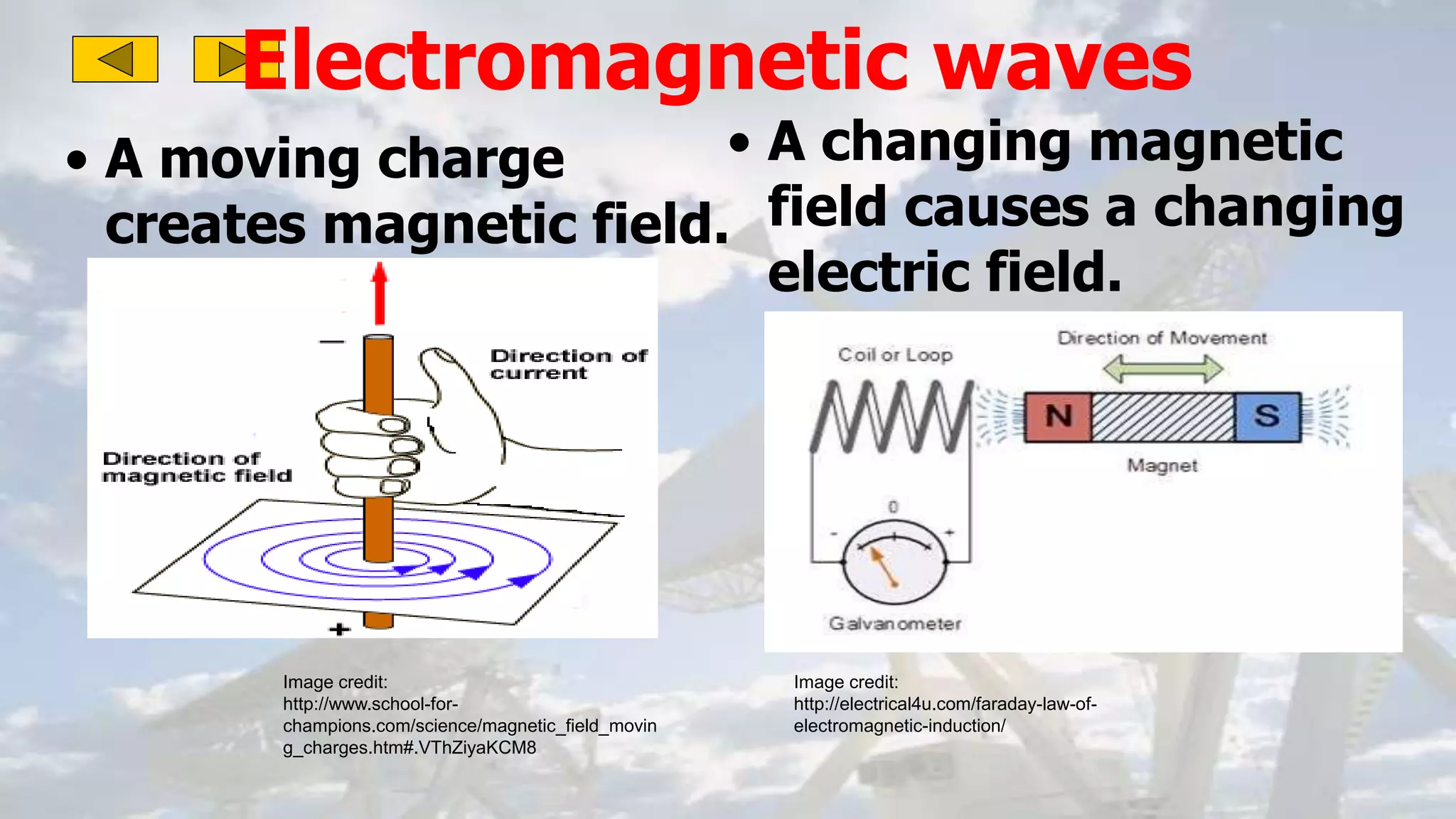
• A moving charge
creates magnetic field.
• A changing magnetic
field causes a changing
electric field.
Image credit:
http://www.school-for-
champions.com/science/magnetic_field_movin
g_charges.htm#.VThZiyaKCM8
Image credit:
http://electrical4u.com/faraday-law-of-
electromagnetic-induction/
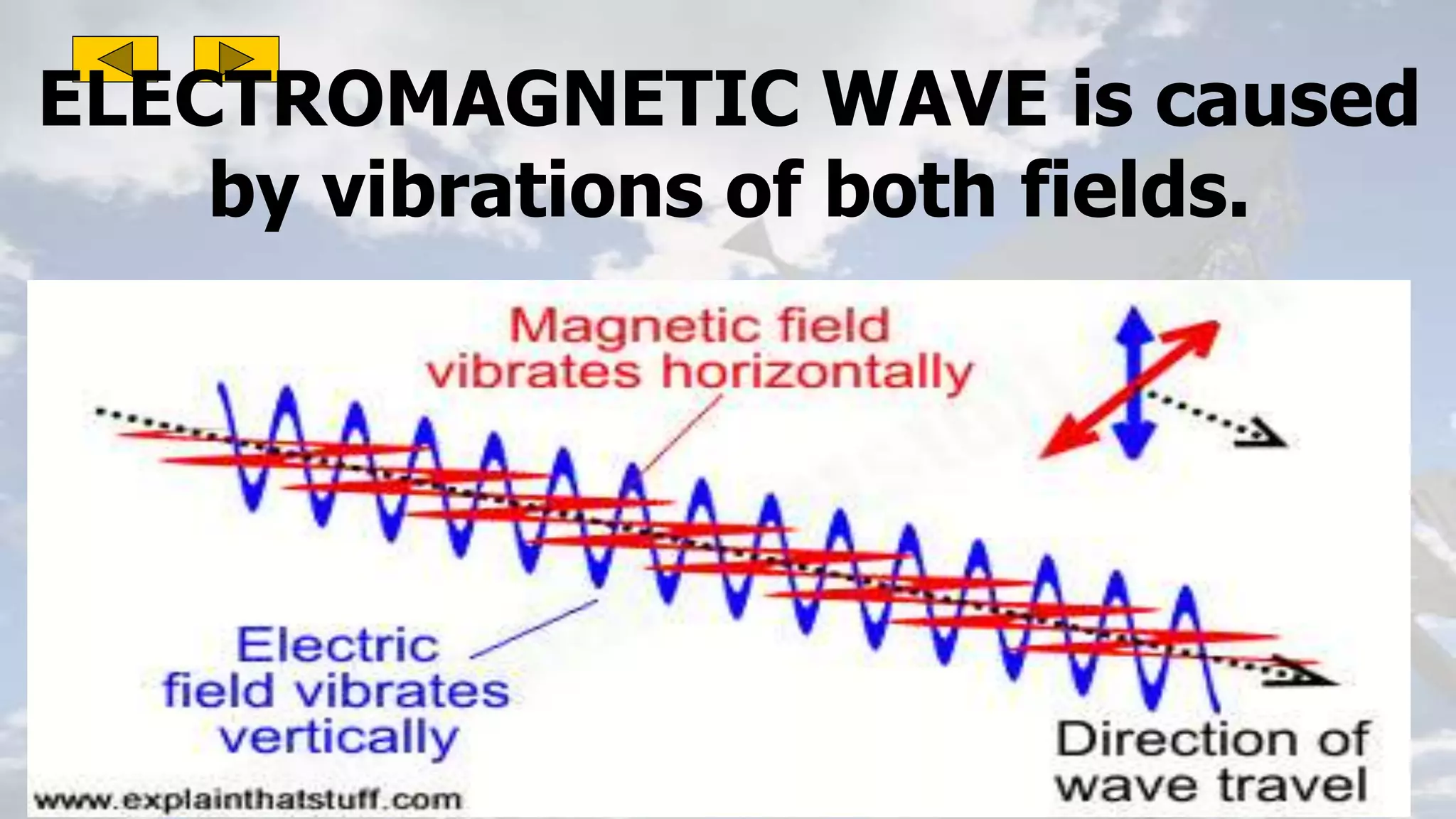
ELECTROMAGNETIC WAVE is caused
by vibrations of both fields.
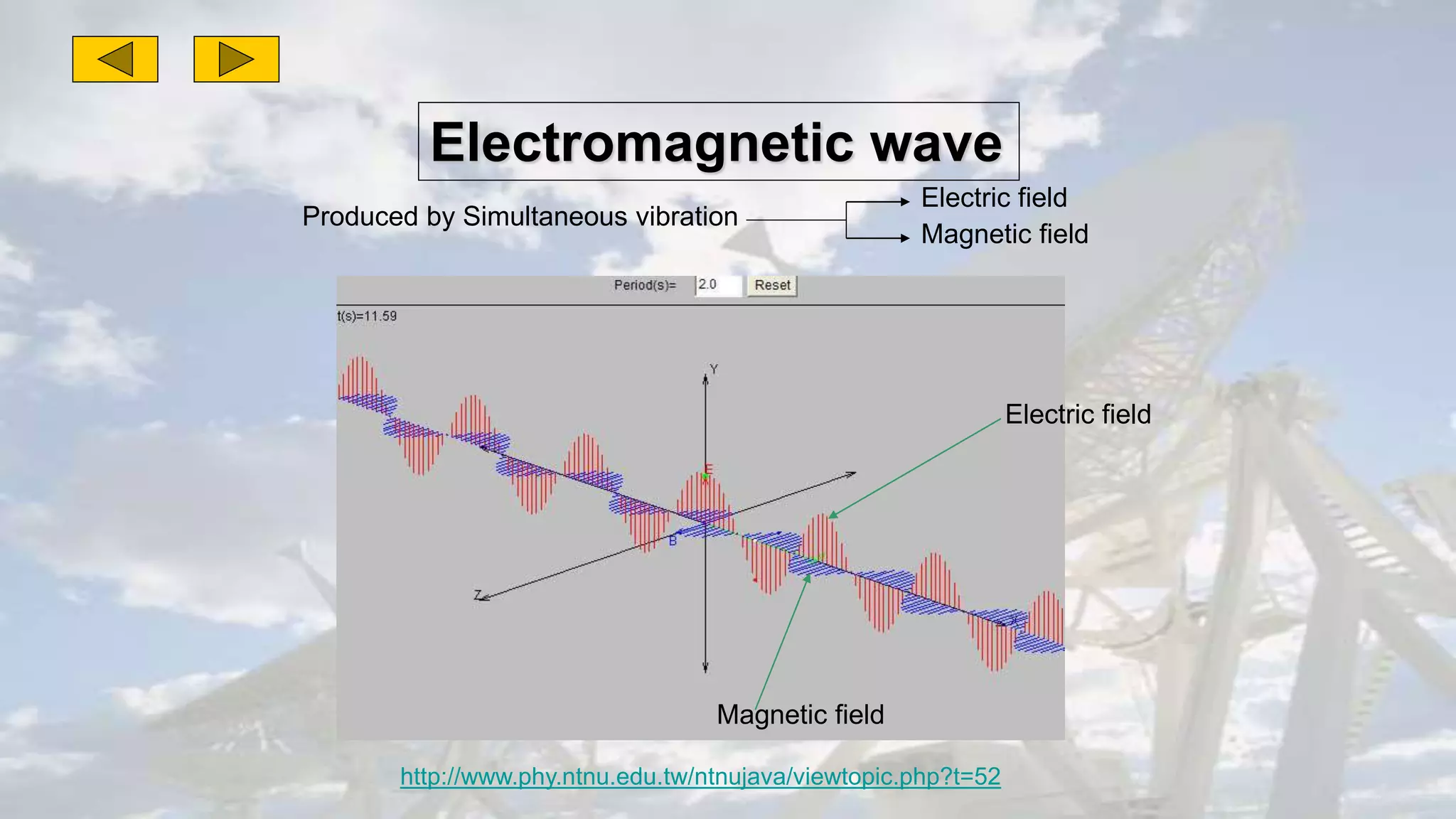
Electromagnetic wave
Produced by Simultaneous vibration
Electric field
Magnetic field
Electric field
Magnetic field
http://www.phy.ntnu.edu.tw/ntnujava/viewtopic.php?t=52
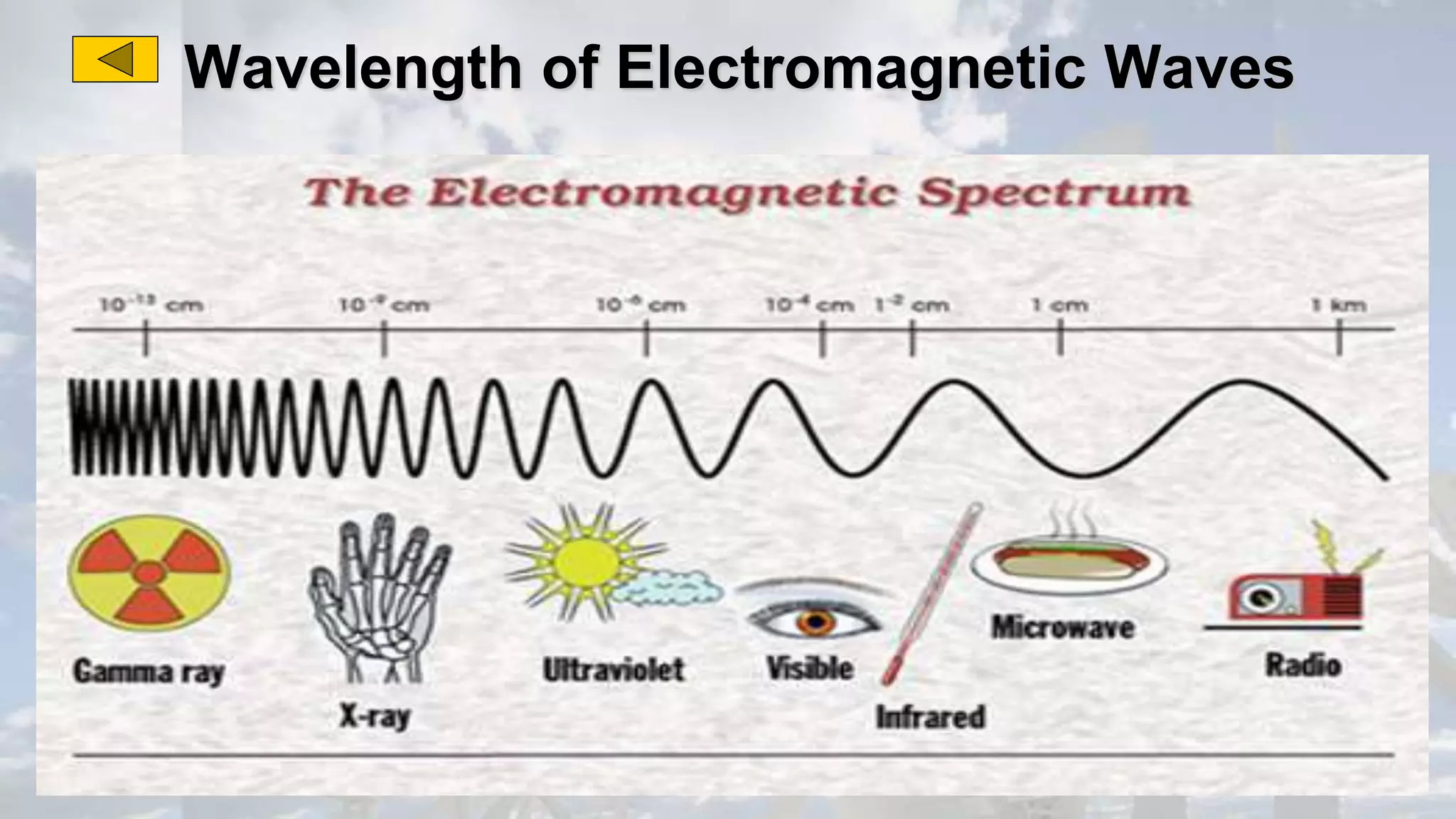
Wavelength of Electromagnetic Waves
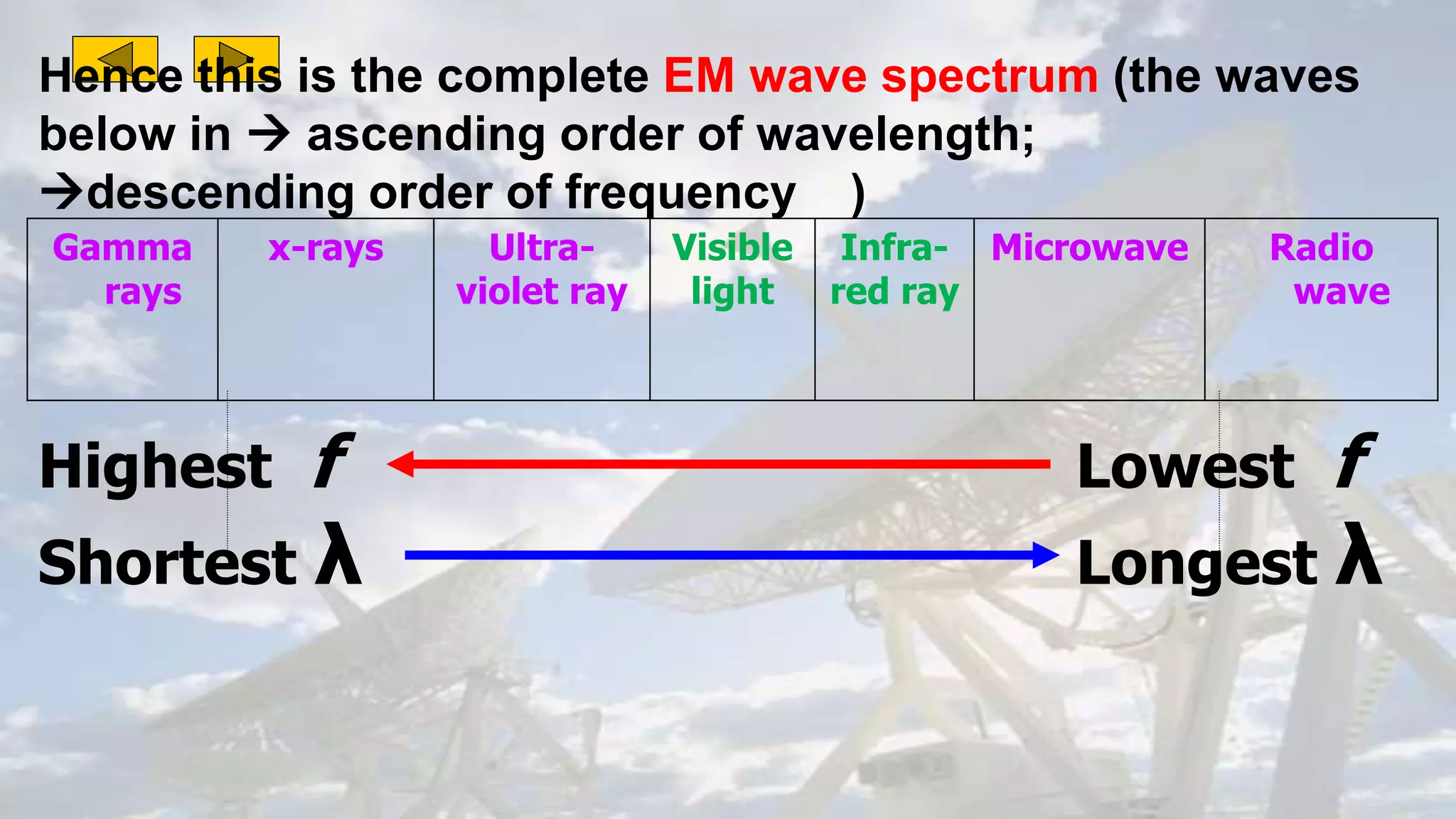
Hence this is the complete EM wave spectrum (the waves
below in  ascending order of wavelength;
descending order of frequency )
Gamma
rays
x-rays Ultra-
violet ray
Visible
light
Infra-
red ray
Microwave Radio
wave
Highest f
Shortest λ
Lowest f
Longest λ
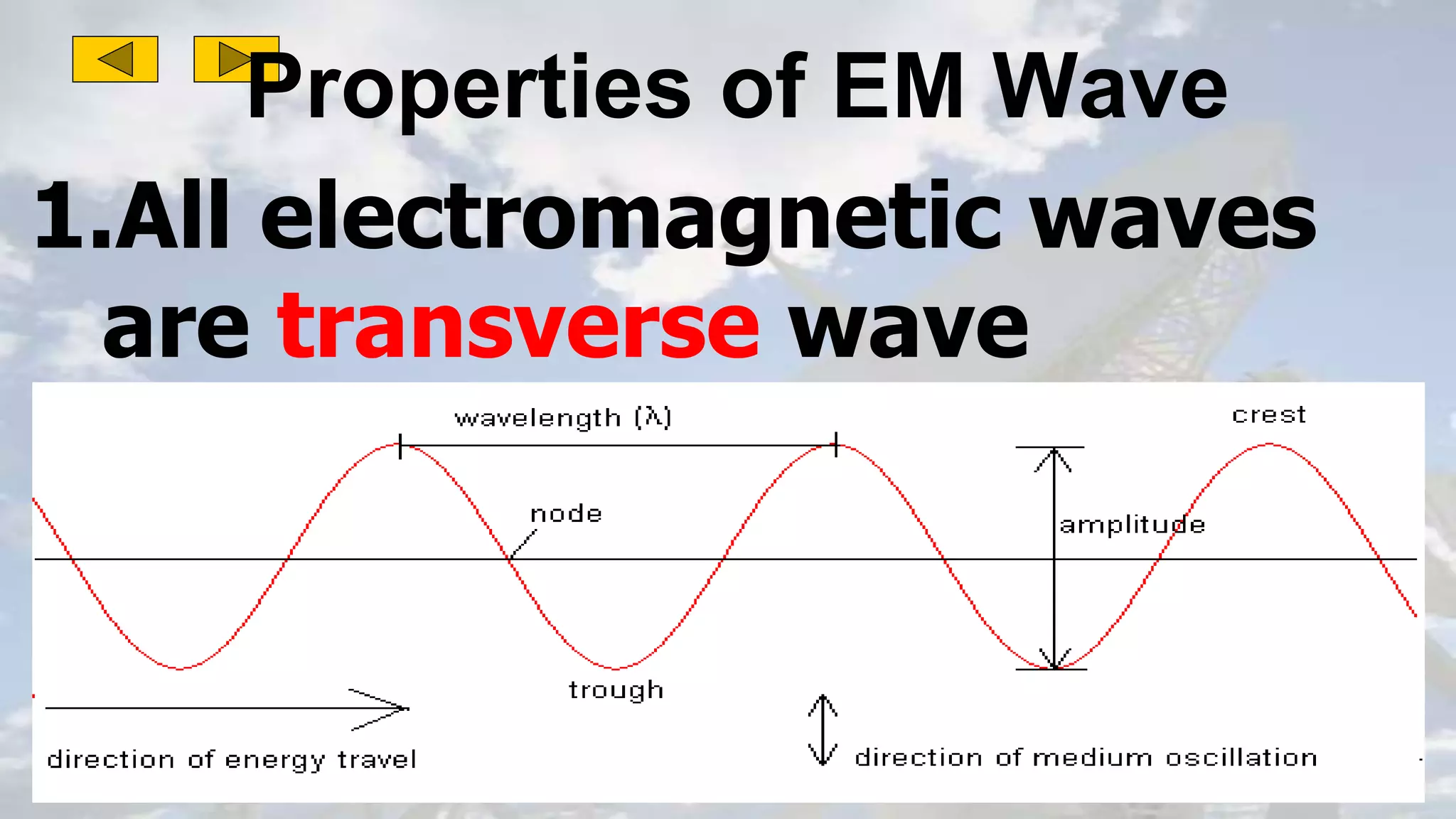
Properties of EM Wave
1.All electromagnetic waves
are transverse wave
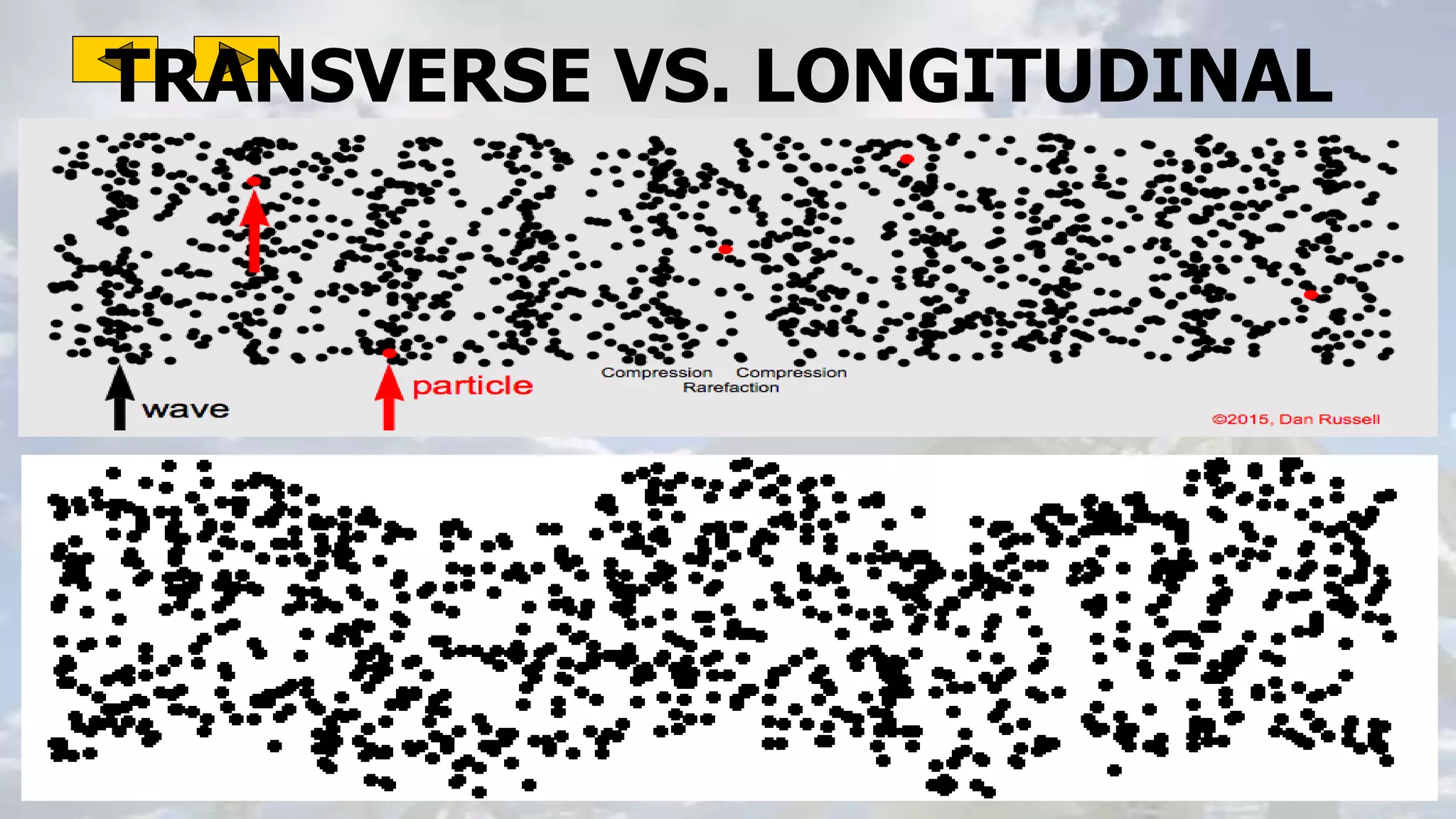
TRANSVERSE VS. LONGITUDINAL
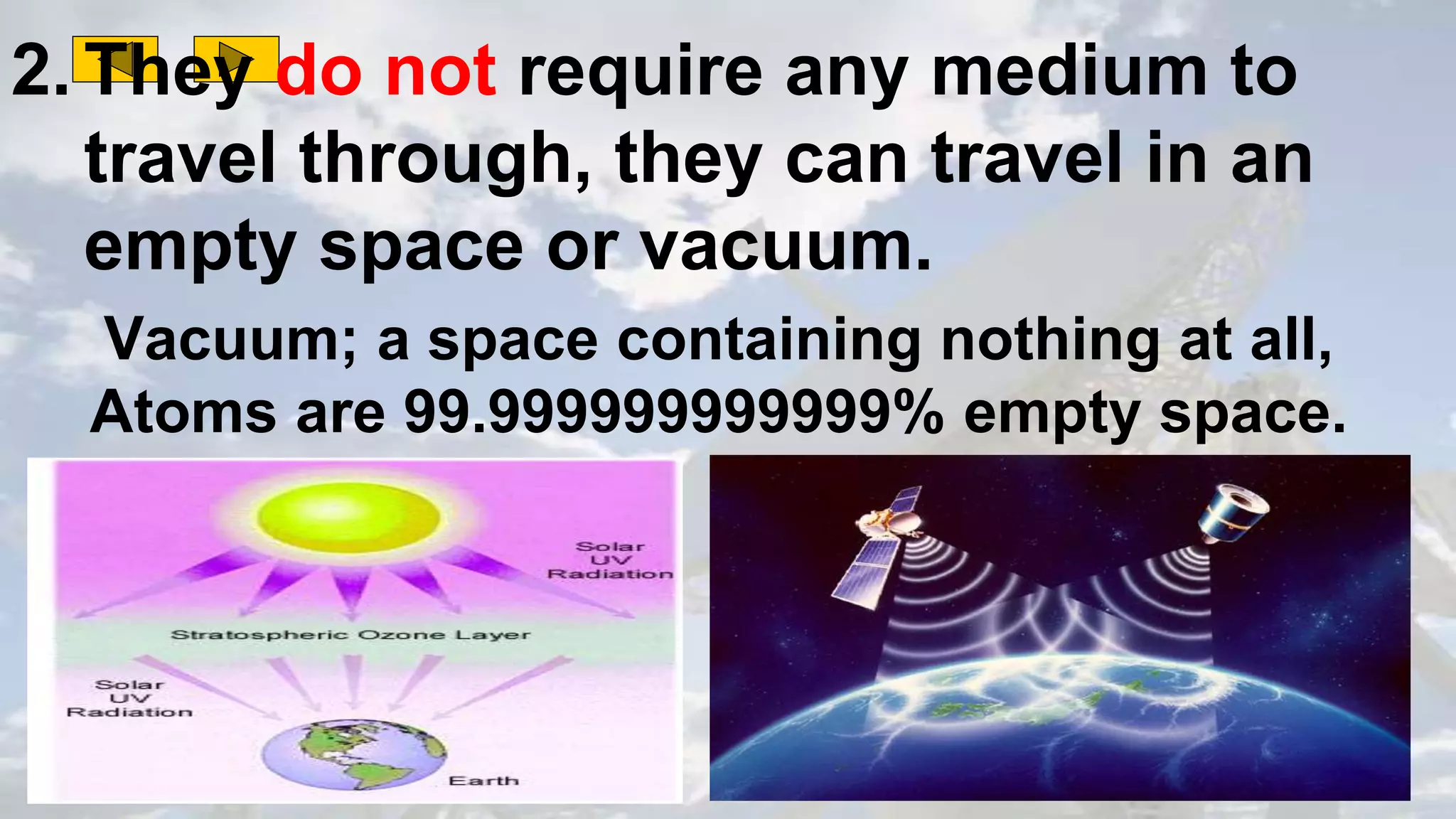
2. They do not require any medium to
travel through, they can travel in an
empty space or vacuum.
Vacuum; a space containing nothing at all,
Atoms are 99.999999999999% empty space.
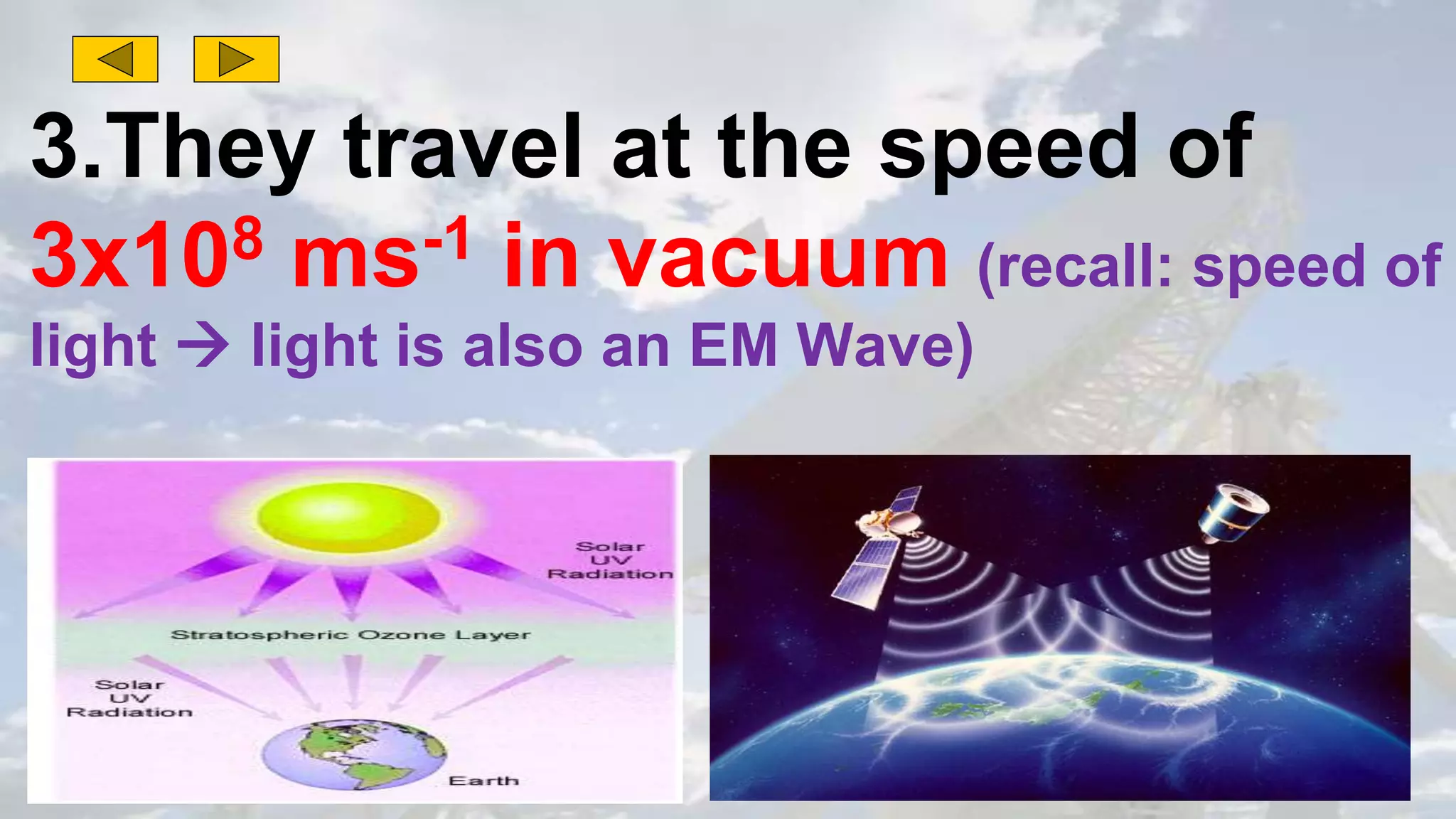
3.They travel at the speed of
3x10⁸ ms-1 in vacuum (recall: speed of
light  light is also an EM Wave)
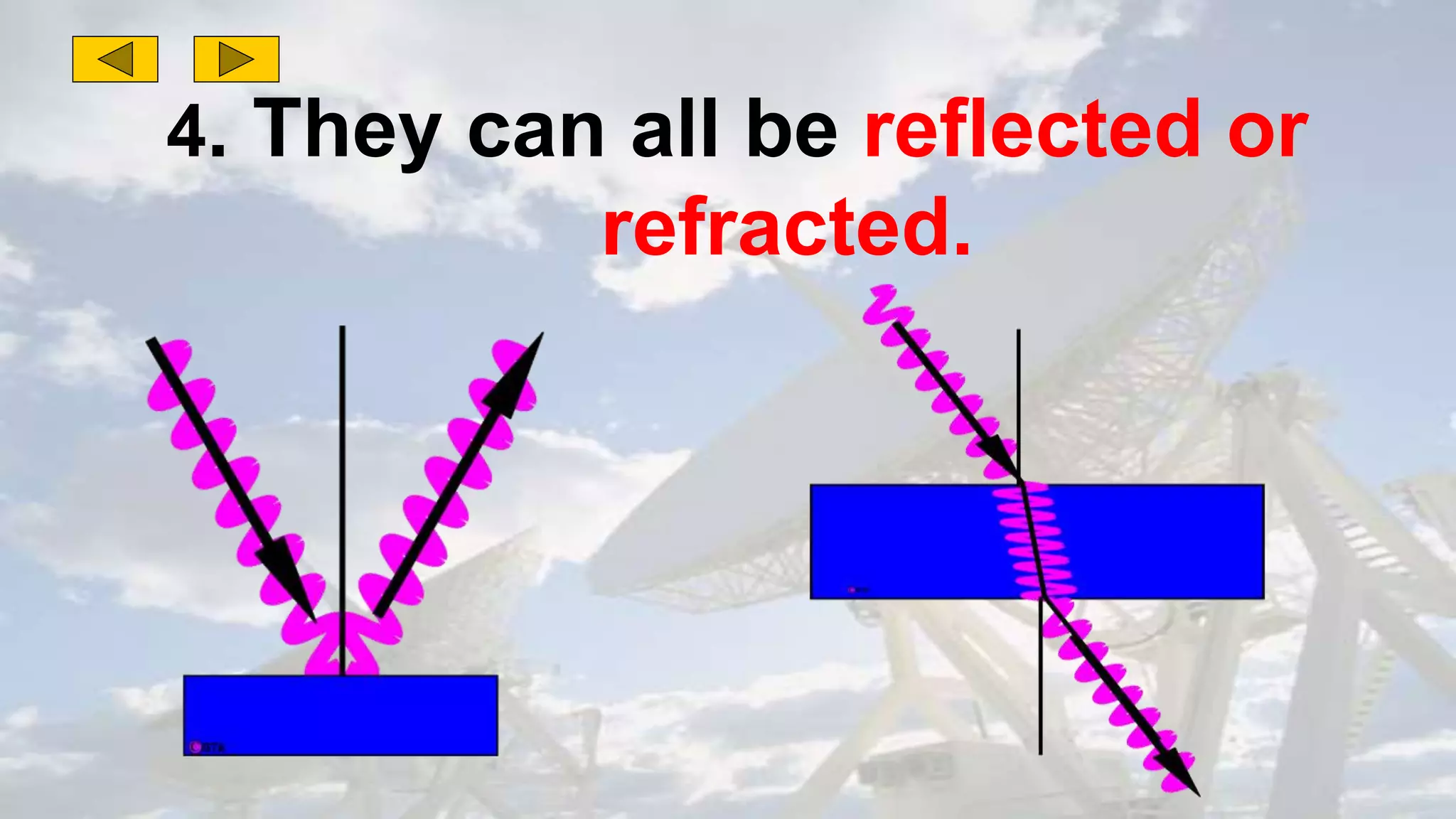
4. They can all be reflected or
refracted.
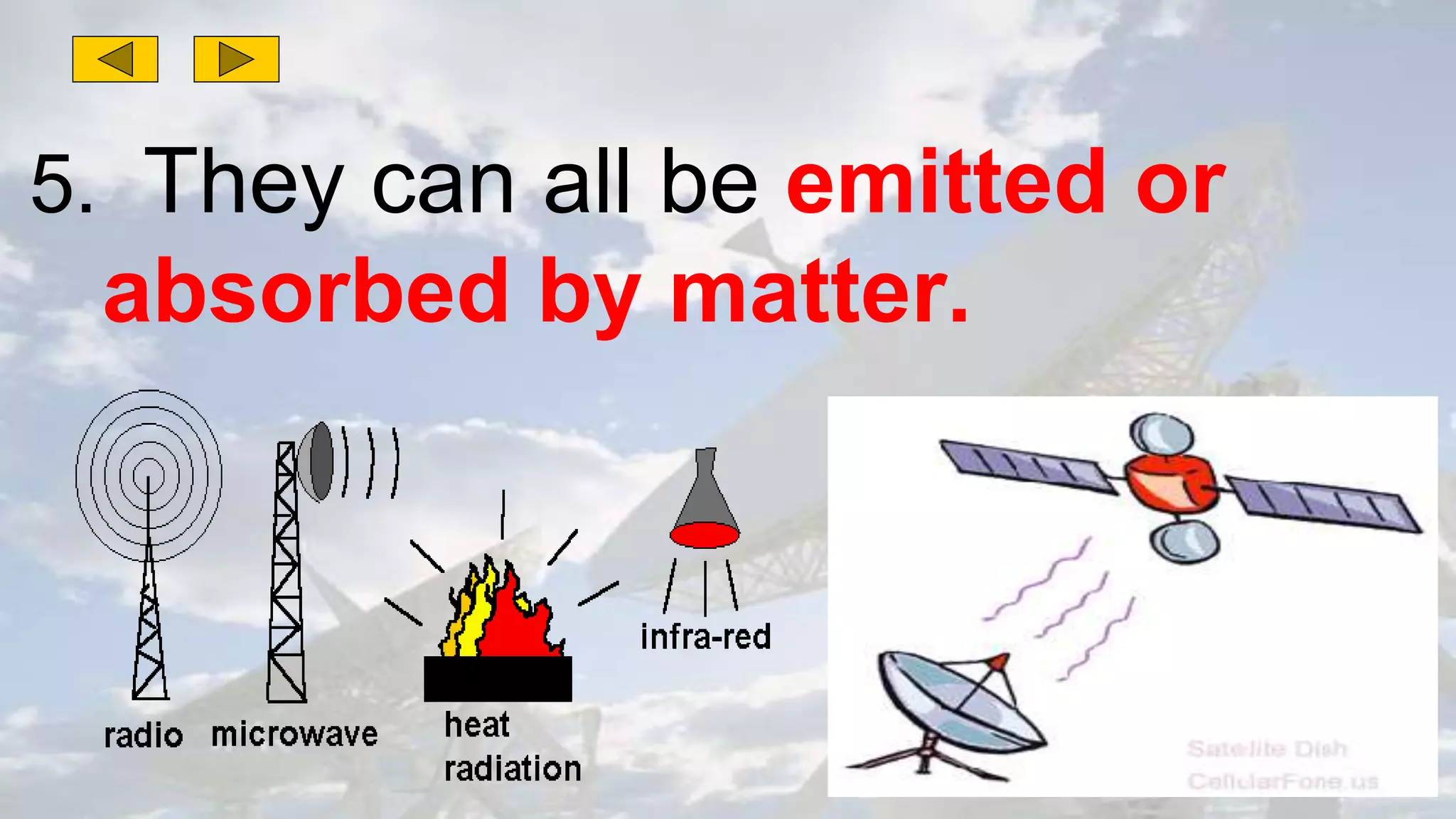
5. They can all be emitted or
absorbed by matter.
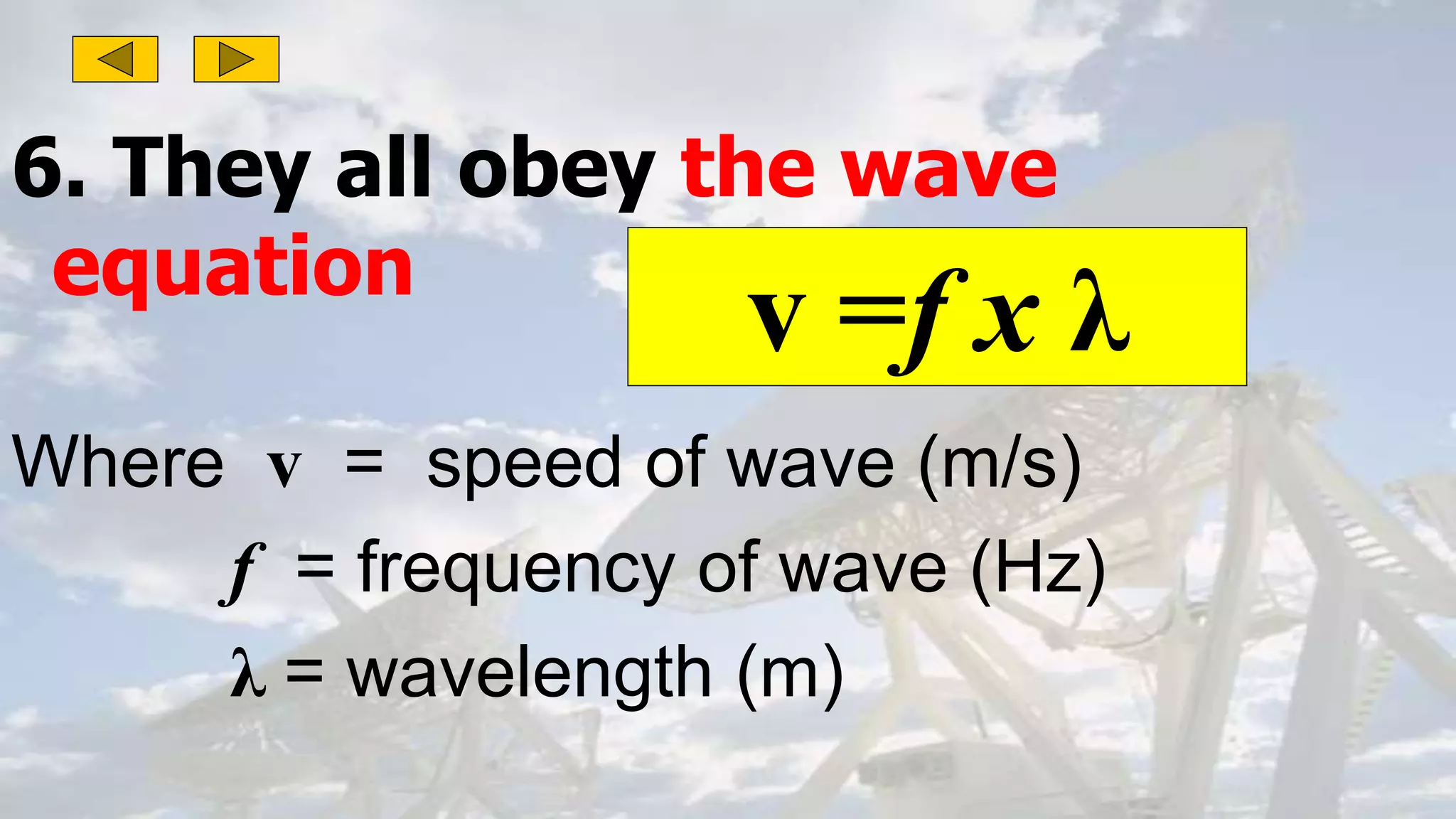
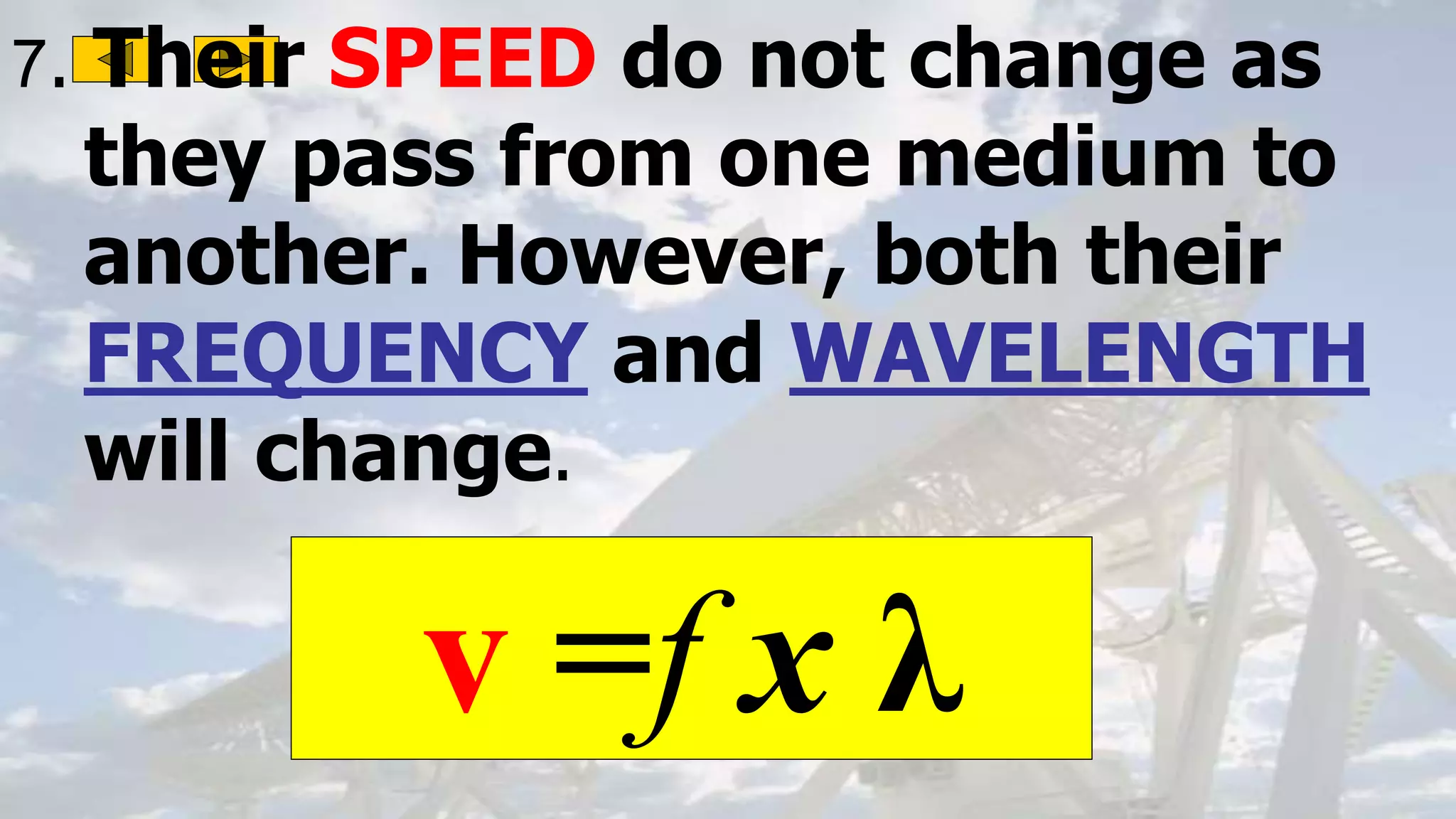
6. They all obey the wave
equation
Where v = speed of wave (m/s)
f = frequency of wave (Hz)
λ = wavelength (m)
v =f x λ
7. Their SPEED do not change as
they pass from one medium to
another. However, both their
FREQUENCY and WAVELENGTH
will change.
v =f x λ
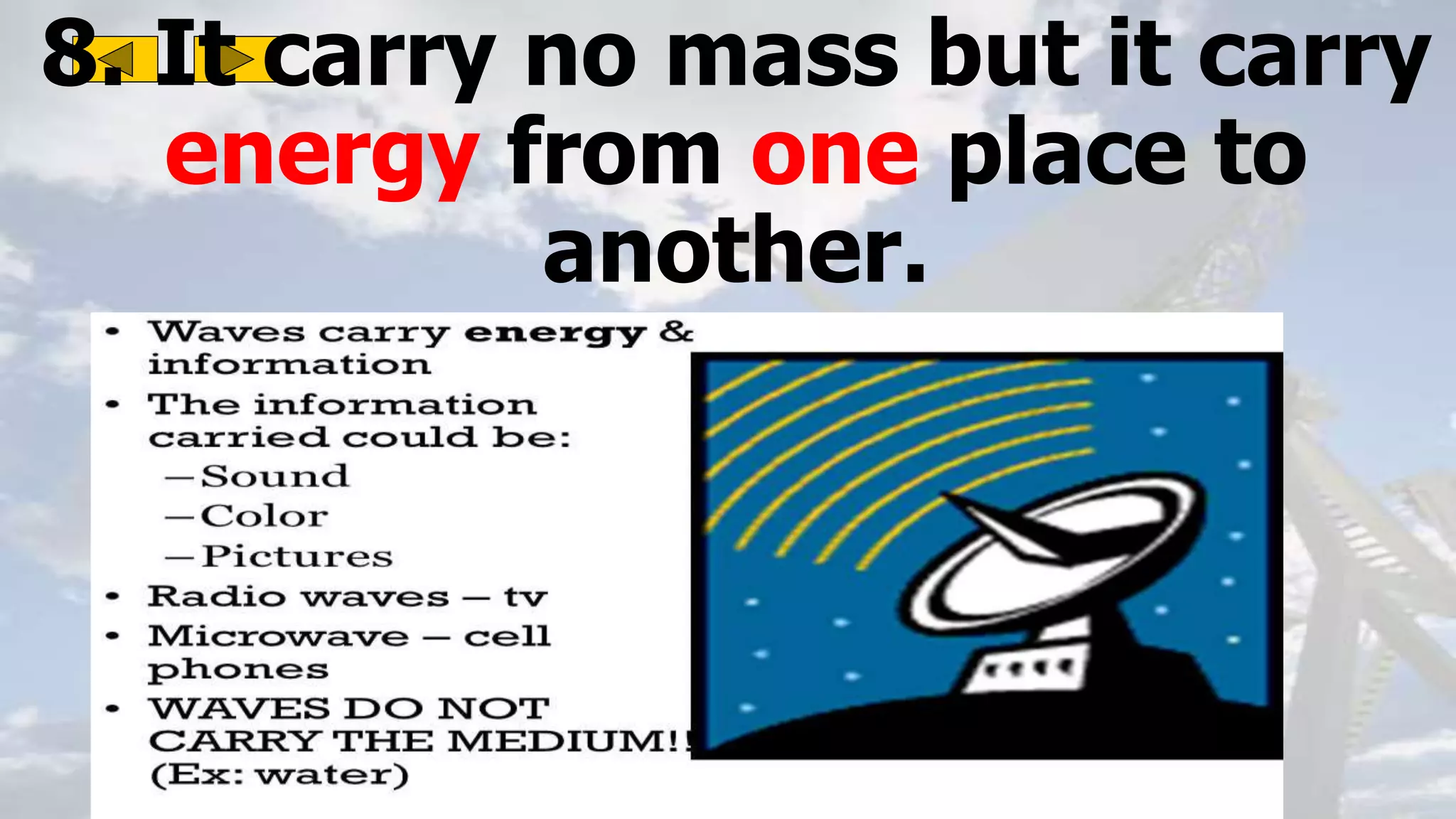
8. It carry no mass but it carry
energy from one place to
another.
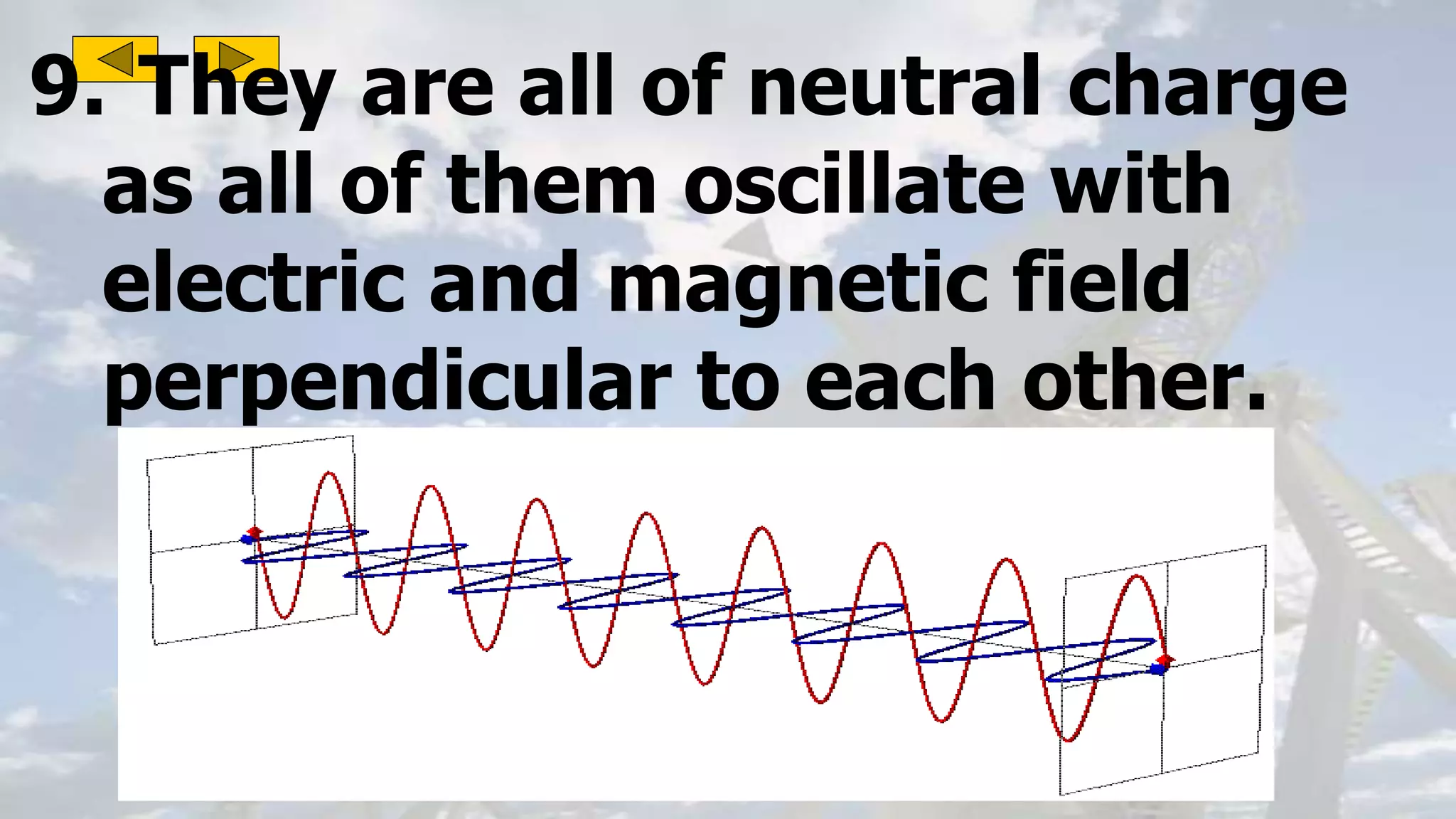
9. They are all of neutral charge
as all of them oscillate with
electric and magnetic field
perpendicular to each other.
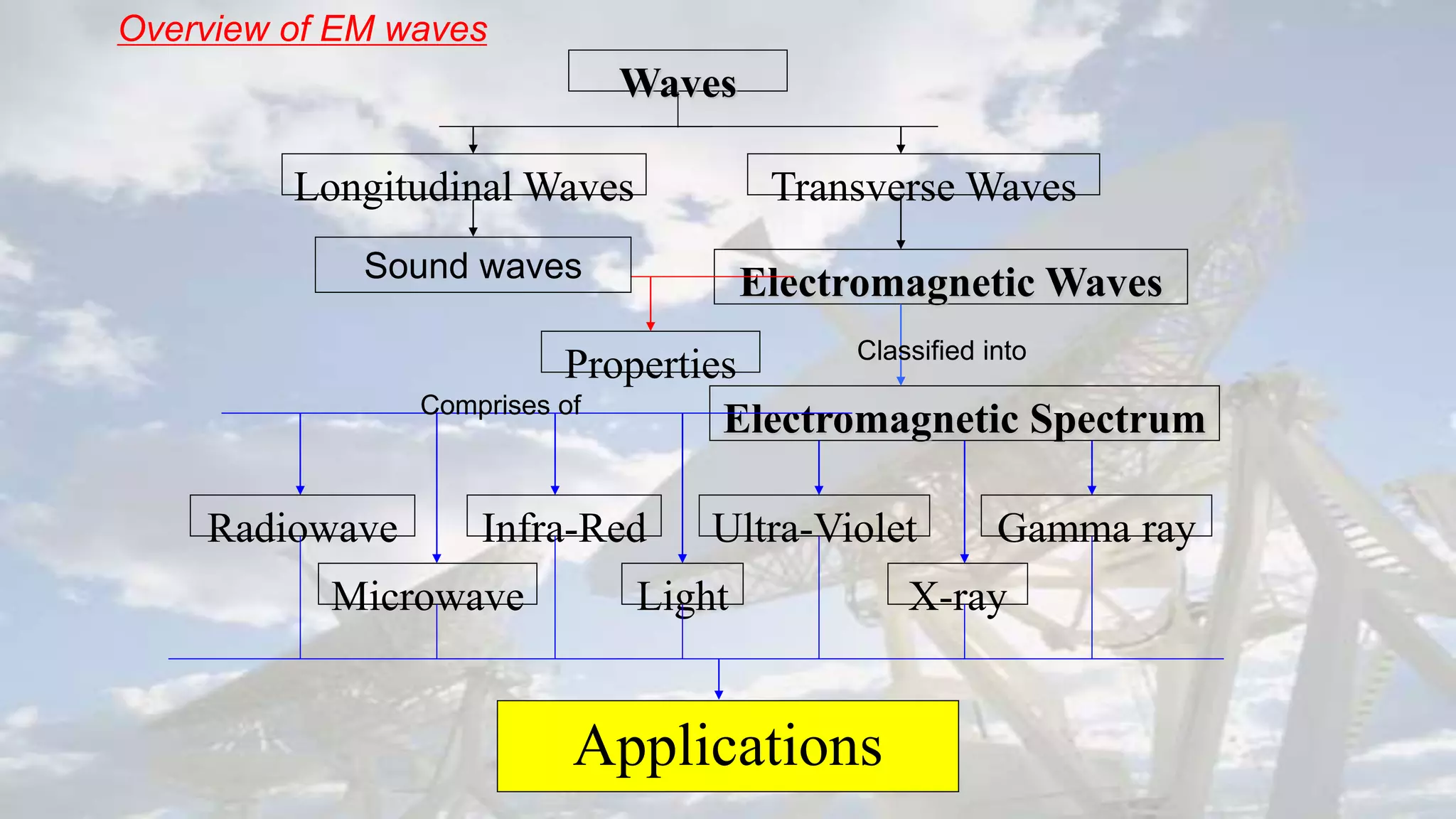
Waves
Longitudinal Waves Transverse Waves
Electromagnetic Waves
Properties
Electromagnetic Spectrum
Radiowave
Microwave
Infra-Red
Light
Ultra-Violet
X-ray
Gamma ray
Applications
Sound waves
Classified into
Comprises of
Overview of EM waves
TRUE OR FALSE:
1.Electromagnetic waves carry energy.
2.An electromagnetic wave is a
longitudinal wave.
3.Electromagnetic waves can travel in an
empty space.
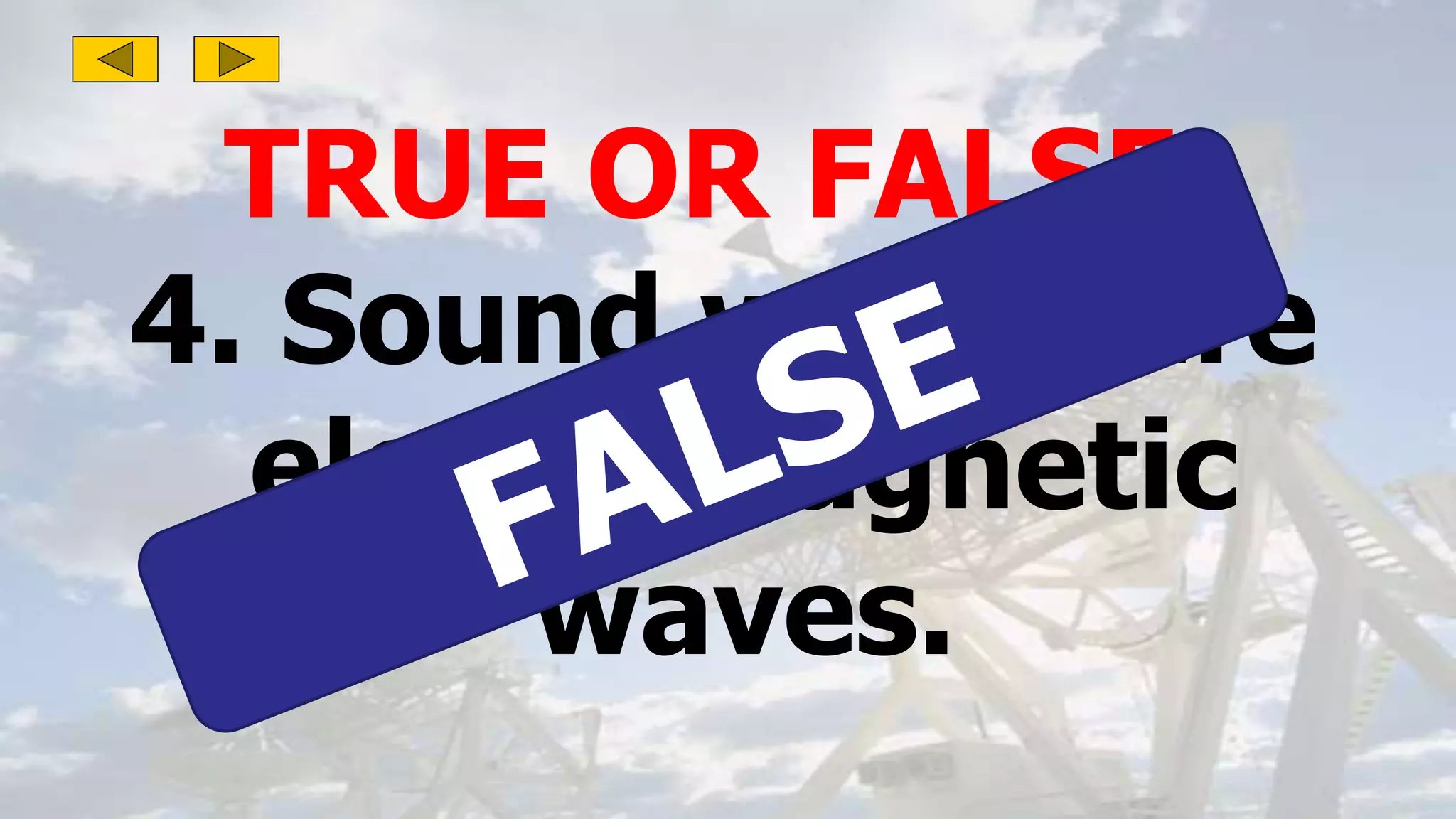
4. Sound waves are electromagnetic
waves.
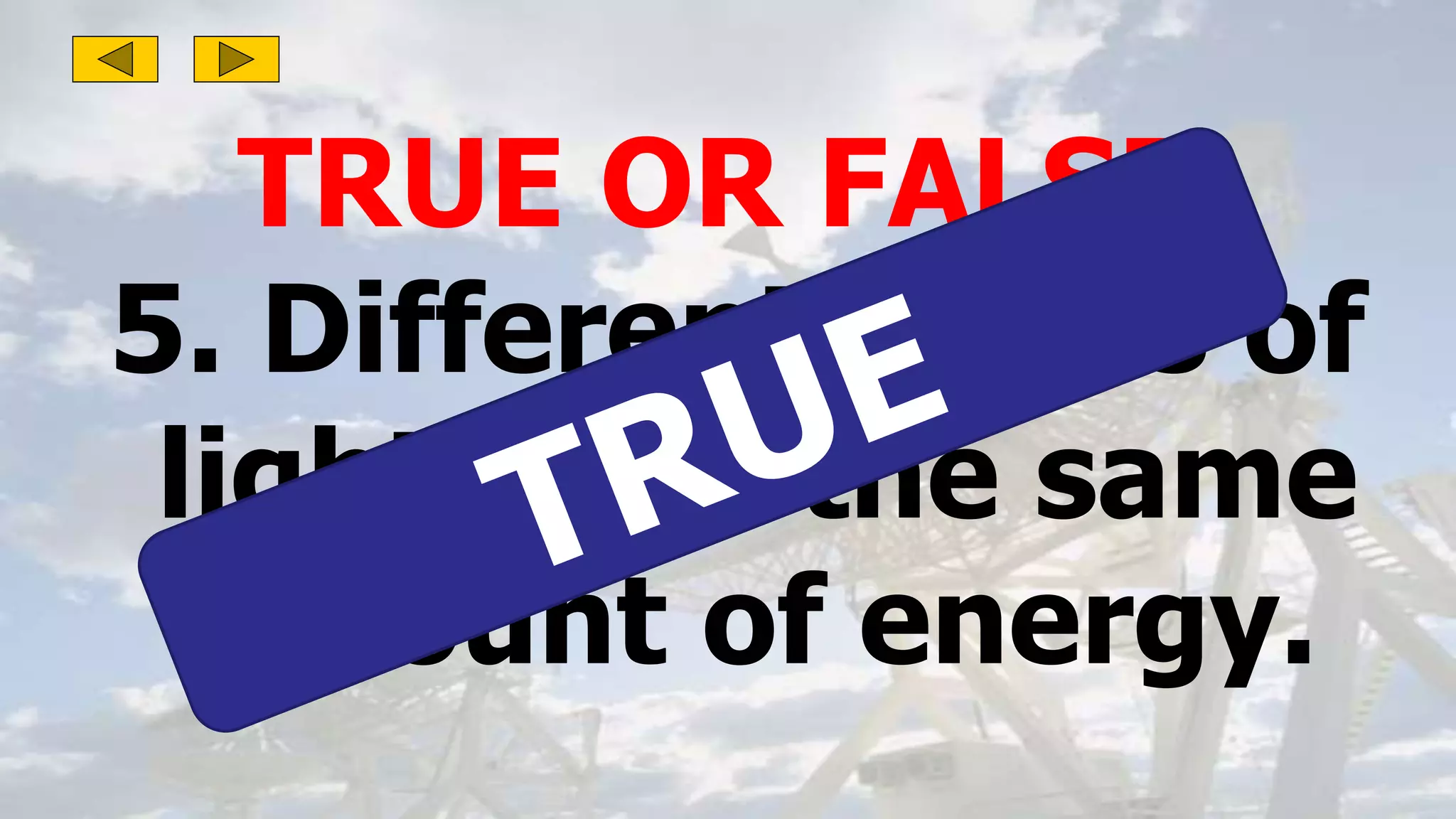
5. Different colors of light have the same
amount of energy.
LET’S CHECK!
1.Electromagnetic
waves carry energy.
TRUE OR FALSE:
TRUE OR FALSE:
2. An electromagnetic
wave is a longitudinal
wave.
TRUE OR FALSE:
3.Electromagnetic waves
can travel in an empty
space.
TRUE OR FALSE:
4. Sound waves are
electromagnetic
waves.
TRUE OR FALSE:
5. Different colors of
light have the same
amount of energy.

Lecture 2 Properties of em waves

  • 1.
  • 3.
    Objectives: At the endof the lesson, you will be able to • Describe the main components of the electromagnetic spectrum. • State the properties of ALL EM waves.
  • 4.
    • Perhaps thegreatest theoretical achievement of physics in the 19th century was the discovery of ELECTROMAGNETIC WAVES.
  • 5.
    • The firsthint was an unexpected connection between electric phenomena and the velocity of light.
  • 6.
    WHO CAME UPWITH THE IDEA OF SPEED OF LIGHT? •Galileo attempted to record the time between lantern signals but was unsuccessful because the distance involved was too small and light simply moved too fast to be measured this way.
  • 7.
    WHO CAME UPWITH THE IDEA OF SPEED OF LIGHT? •Around 1676, Danish astronomer Ole Roemer became the first person to prove that light travels at a finite speed.
  • 8.
  • 9.
    What are ElectromagneticWaves ? •If you have ever tuned in to listen to a radio, spoken on a handphone, turned on a light, had an X-ray taken, felt the warmth of sun on your skin. •You have experienced electromagnetic wave
  • 10.
    Electromagnetic waves • Amoving charge creates magnetic field. • A changing magnetic field causes a changing electric field. Image credit: http://www.school-for- champions.com/science/magnetic_field_movin g_charges.htm#.VThZiyaKCM8 Image credit: http://electrical4u.com/faraday-law-of- electromagnetic-induction/
  • 11.
    ELECTROMAGNETIC WAVE iscaused by vibrations of both fields.
  • 12.
    Electromagnetic wave Produced bySimultaneous vibration Electric field Magnetic field Electric field Magnetic field http://www.phy.ntnu.edu.tw/ntnujava/viewtopic.php?t=52
  • 13.
  • 14.
    Hence this isthe complete EM wave spectrum (the waves below in  ascending order of wavelength; descending order of frequency ) Gamma rays x-rays Ultra- violet ray Visible light Infra- red ray Microwave Radio wave Highest f Shortest λ Lowest f Longest λ
  • 15.
    Properties of EMWave 1.All electromagnetic waves are transverse wave
  • 16.
  • 17.
    2. They donot require any medium to travel through, they can travel in an empty space or vacuum. Vacuum; a space containing nothing at all, Atoms are 99.999999999999% empty space.
  • 18.
    3.They travel atthe speed of 3x10⁸ ms-1 in vacuum (recall: speed of light  light is also an EM Wave)
  • 19.
    4. They canall be reflected or refracted.
  • 20.
    5. They canall be emitted or absorbed by matter.
  • 21.
    6. They allobey the wave equation Where v = speed of wave (m/s) f = frequency of wave (Hz) λ = wavelength (m) v =f x λ
  • 22.
    7. Their SPEEDdo not change as they pass from one medium to another. However, both their FREQUENCY and WAVELENGTH will change. v =f x λ
  • 23.
    8. It carryno mass but it carry energy from one place to another.
  • 24.
    9. They areall of neutral charge as all of them oscillate with electric and magnetic field perpendicular to each other.
  • 25.
    Waves Longitudinal Waves TransverseWaves Electromagnetic Waves Properties Electromagnetic Spectrum Radiowave Microwave Infra-Red Light Ultra-Violet X-ray Gamma ray Applications Sound waves Classified into Comprises of Overview of EM waves
  • 26.
    TRUE OR FALSE: 1.Electromagneticwaves carry energy. 2.An electromagnetic wave is a longitudinal wave. 3.Electromagnetic waves can travel in an empty space. 4. Sound waves are electromagnetic waves. 5. Different colors of light have the same amount of energy.
  • 27.
  • 28.
  • 29.
    TRUE OR FALSE: 2.An electromagnetic wave is a longitudinal wave.
  • 30.
    TRUE OR FALSE: 3.Electromagneticwaves can travel in an empty space.
  • 31.
    TRUE OR FALSE: 4.Sound waves are electromagnetic waves.
  • 32.
    TRUE OR FALSE: 5.Different colors of light have the same amount of energy.