What is the state of « Employee Loyalty »? Organisation Behaviour Tami LAIB Esther TAN Chui Yuk CHAN Vincent BOGAERS Xavier VANDERCHMITT
« Employee Loyalty », Definition "Loyalty, as a general term, signifies a person's devotion or sentiment of attachment to a particular object, which may be another person or group of persons, an ideal, a duty, or a work place.”     (Encyclopedia Britannica, 1998).
Content History and Trend How to obtain Employee Loyalty? How to keep Employee Loyalty? Limitations Pros and Cons  Professional experiences  Japanese firm  US firm Scenario: Loyalty vs. Opportunity Conclusion
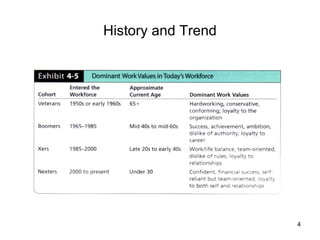
History and Trend
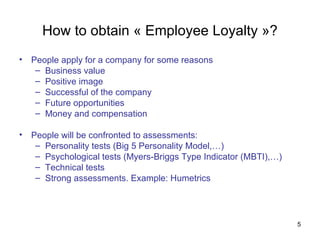
How to obtain « Employee Loyalty »? People apply for a company for some reasons Business value Positive image Successful of the company Future opportunities Money and compensation People will be confronted to assessments: Personality tests (Big 5 Personality Model,…) Psychological tests (Myers-Briggs Type Indicator (MBTI),…) Technical tests Strong assessments. Example: Humetrics
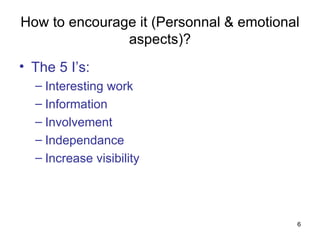
How to encourage it (Personnal & emotional aspects)? The 5 I’s: Interesting work Information  Involvement Independance Increase visibility
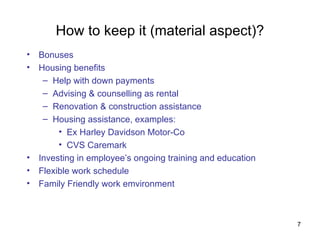
How to keep it (material aspect)? Bonuses Housing benefits Help with down payments Advising & counselling as rental Renovation & construction assistance Housing assistance, examples: Ex Harley Davidson Motor-Co CVS Caremark Investing in employee’s ongoing training and education Flexible work schedule Family Friendly work emvironment
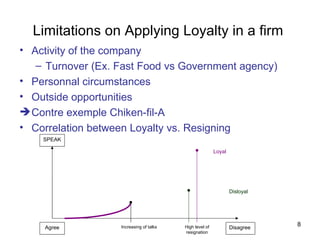
Limitations on Applying Loyalty in a firm  Activity of the company Turnover (Ex. Fast Food vs Government agency)  Personnal circumstances  Outside opportunities Contre exemple Chiken-fil-A Correlation between Loyalty vs. Resigning SPEAK Disagree Agree Loyal Disloyal High level of resignation Increasing of talks
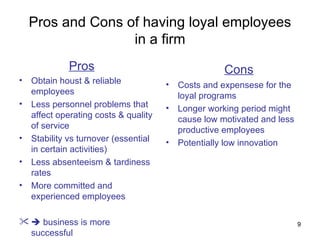
Pros and Cons of having loyal employees in a firm Pros Obtain houst & reliable employees Less personnel problems that affect operating costs & quality of service Stability vs turnover (essential in certain activities) Less absenteeism & tardiness rates More committed and experienced employees    business is more successful   Cons Costs and expensese for the loyal programs Longer working period might cause low motivated and less productive employees Potentially low innovation
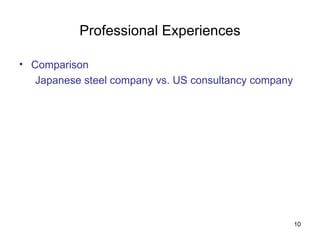
Professional Experiences Comparison Japanese steel company vs. US consultancy company
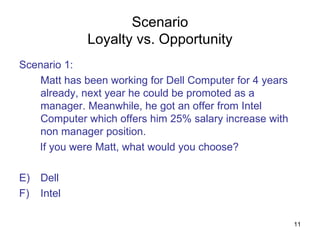
Scenario Loyalty vs. Opportunity Scenario 1: Matt has been working for Dell Computer for 4 years already, next year he could be promoted as a manager. Meanwhile, he got an offer from Intel Computer which offers him 25% salary increase with non manager position. If you were Matt, what would you choose? Dell Intel
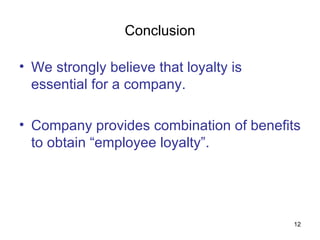
Conclusion We strongly believe that loyalty is essential for a company.  Company provides combination of benefits to obtain “employee loyalty”.

Loyalty

  • 1.
    What is thestate of « Employee Loyalty »? Organisation Behaviour Tami LAIB Esther TAN Chui Yuk CHAN Vincent BOGAERS Xavier VANDERCHMITT
  • 2.
    « Employee Loyalty », Definition"Loyalty, as a general term, signifies a person's devotion or sentiment of attachment to a particular object, which may be another person or group of persons, an ideal, a duty, or a work place.” (Encyclopedia Britannica, 1998).
  • 3.
    Content History andTrend How to obtain Employee Loyalty? How to keep Employee Loyalty? Limitations Pros and Cons Professional experiences Japanese firm US firm Scenario: Loyalty vs. Opportunity Conclusion
  • 4.
  • 5.
    How to obtain« Employee Loyalty »? People apply for a company for some reasons Business value Positive image Successful of the company Future opportunities Money and compensation People will be confronted to assessments: Personality tests (Big 5 Personality Model,…) Psychological tests (Myers-Briggs Type Indicator (MBTI),…) Technical tests Strong assessments. Example: Humetrics
  • 6.
    How to encourageit (Personnal & emotional aspects)? The 5 I’s: Interesting work Information Involvement Independance Increase visibility
  • 7.
    How to keepit (material aspect)? Bonuses Housing benefits Help with down payments Advising & counselling as rental Renovation & construction assistance Housing assistance, examples: Ex Harley Davidson Motor-Co CVS Caremark Investing in employee’s ongoing training and education Flexible work schedule Family Friendly work emvironment
  • 8.
    Limitations on ApplyingLoyalty in a firm Activity of the company Turnover (Ex. Fast Food vs Government agency) Personnal circumstances Outside opportunities Contre exemple Chiken-fil-A Correlation between Loyalty vs. Resigning SPEAK Disagree Agree Loyal Disloyal High level of resignation Increasing of talks
  • 9.
    Pros and Consof having loyal employees in a firm Pros Obtain houst & reliable employees Less personnel problems that affect operating costs & quality of service Stability vs turnover (essential in certain activities) Less absenteeism & tardiness rates More committed and experienced employees  business is more successful Cons Costs and expensese for the loyal programs Longer working period might cause low motivated and less productive employees Potentially low innovation
  • 10.
    Professional Experiences ComparisonJapanese steel company vs. US consultancy company
  • 11.
    Scenario Loyalty vs.Opportunity Scenario 1: Matt has been working for Dell Computer for 4 years already, next year he could be promoted as a manager. Meanwhile, he got an offer from Intel Computer which offers him 25% salary increase with non manager position. If you were Matt, what would you choose? Dell Intel
  • 12.
    Conclusion We stronglybelieve that loyalty is essential for a company. Company provides combination of benefits to obtain “employee loyalty”.