Employee Recognition Done Right
Objectives For Today
2
• Participants will be able to:
1. Understand the evolution of employee
rewards and recognition
2. Understand what employees really want
out of work and be able to apply this
understanding to implement a process
to design recognition and reward
systems
3. Know how why effective reward and
recognition systems are important
through their contribution to the business
bottom-line
EVOLUTION OF REWARDS
AND RECOGNITION
5
Work/Life Balance or Integration
ALL OF THESE THINGS CAN
WORK….
10
AND NONE OF THESE
THINGS CAN WORK….
11
DO THEY MAKE PEOPLE FEEL
VALUED??
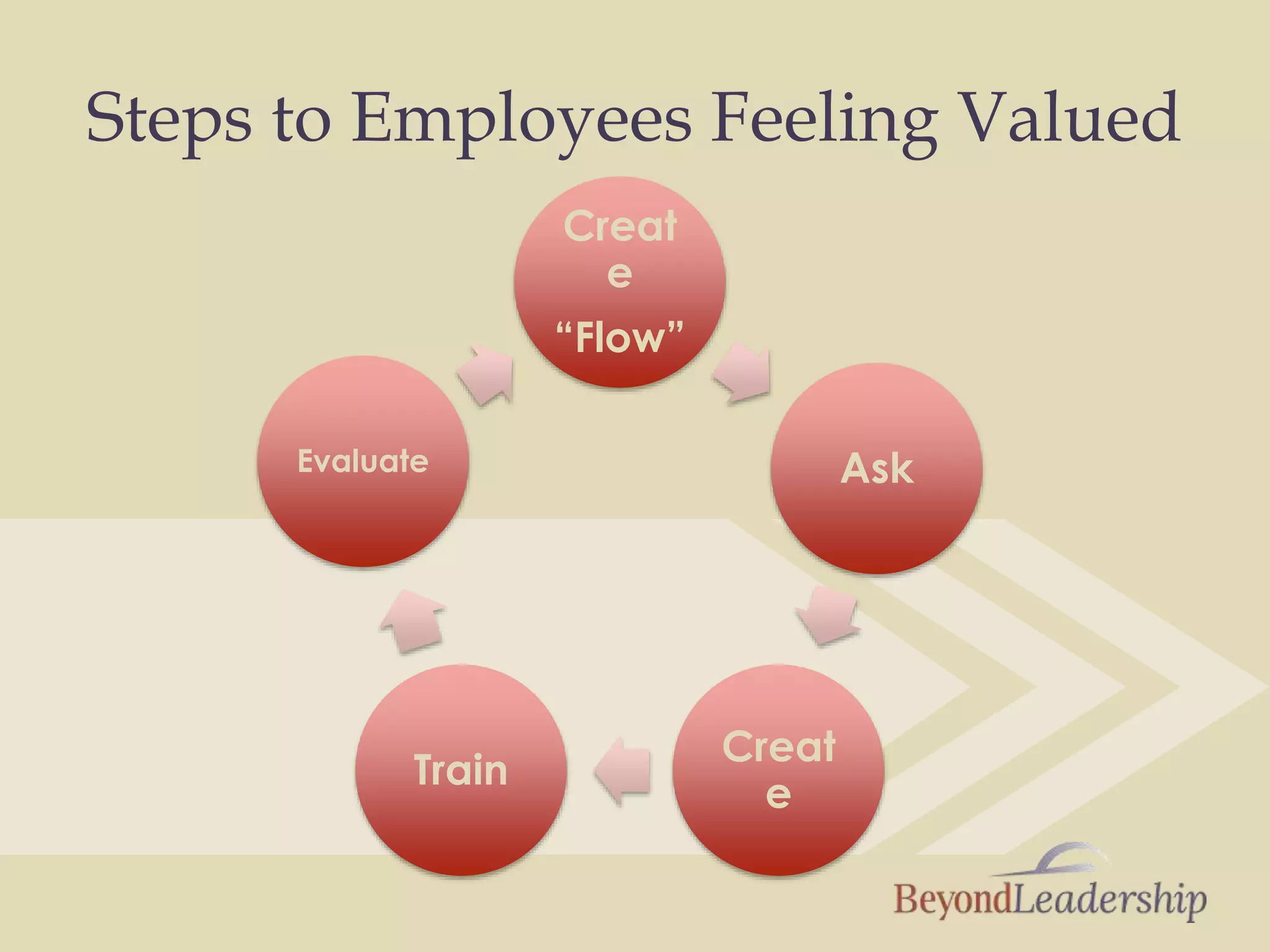
Steps to Employees Feeling Valued
Creat
e
“Flow”
Ask
Creat
e
Train
Evaluate
15
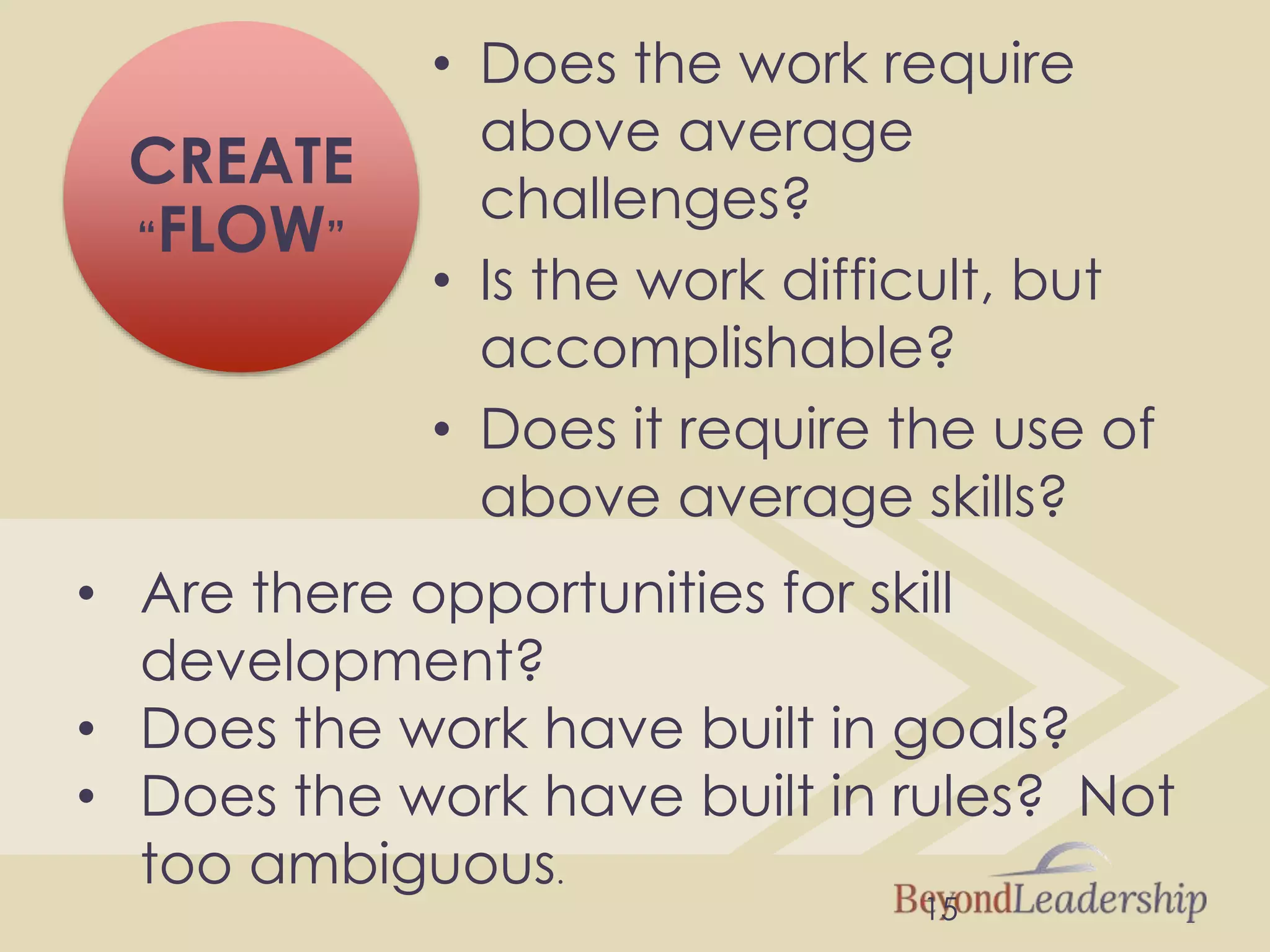
• Does the work require
above average
challenges?
• Is the work difficult, but
accomplishable?
• Does it require the use of
above average skills?
CREATE
“FLOW”
• Are there opportunities for skill
development?
• Does the work have built in goals?
• Does the work have built in rules? Not
too ambiguous.
16
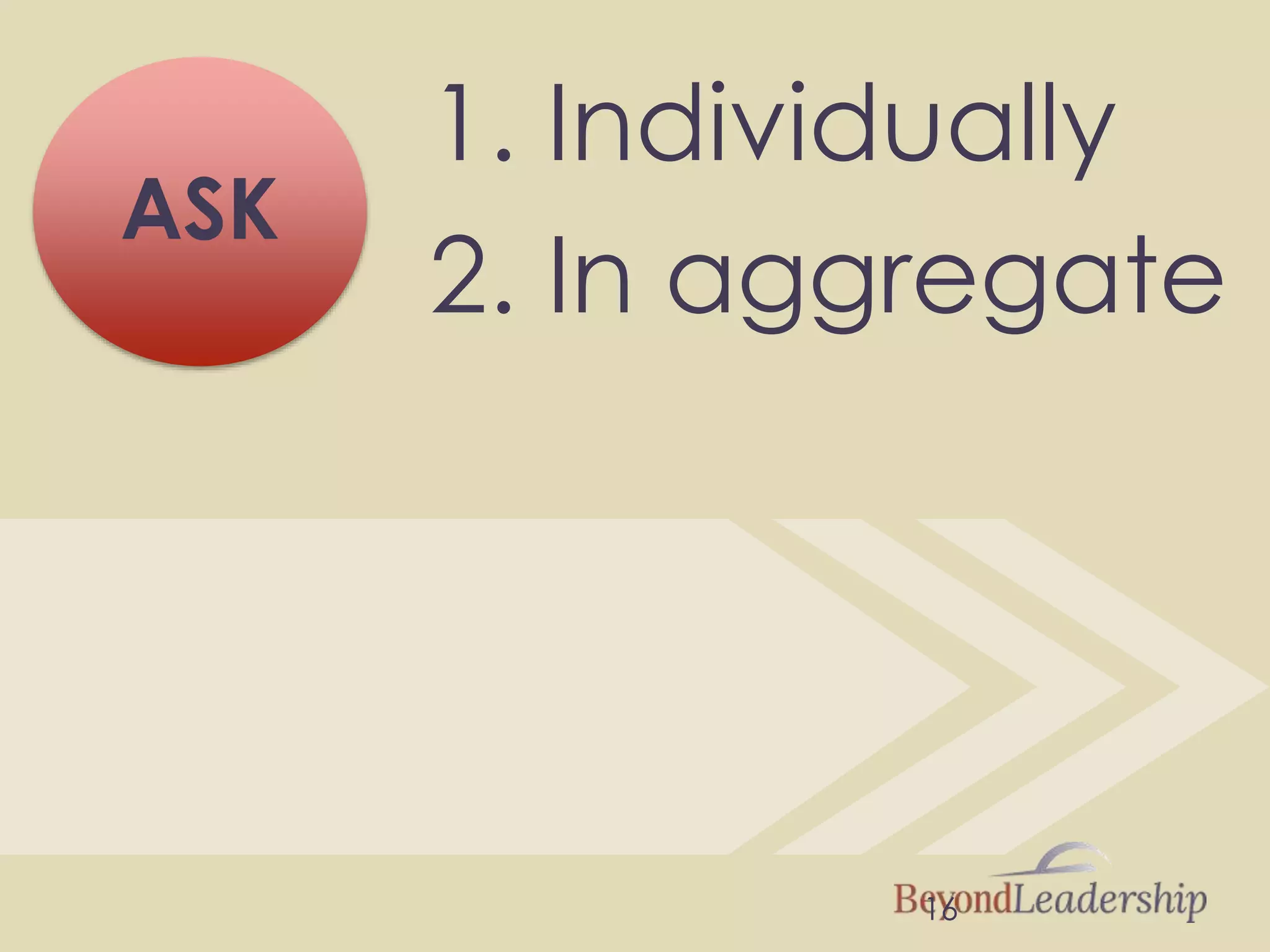
1. Individually
2. In aggregate
ASK
Personalization
ASK
18
CREATE
“Rather than a standard package of health,
wealth and paid time off, companies can
provide employees with a budget and a widely
diverse set of options. These can range from
sponsoring paid community service time
overseas, allowing for credits to buy a hybrid car
or even financially supporting an increased
personal skill, such as learning a new language.
The options are endless.” from The 2020 Workplace
WHAT IS THE #1
REASON PEOPLE LEAVE
A JOB?
19
TRAIN
20
EVALUATE
EMPLOYEE ENGAGEMENT 
BOTTOM LINE
21
EVALUATE
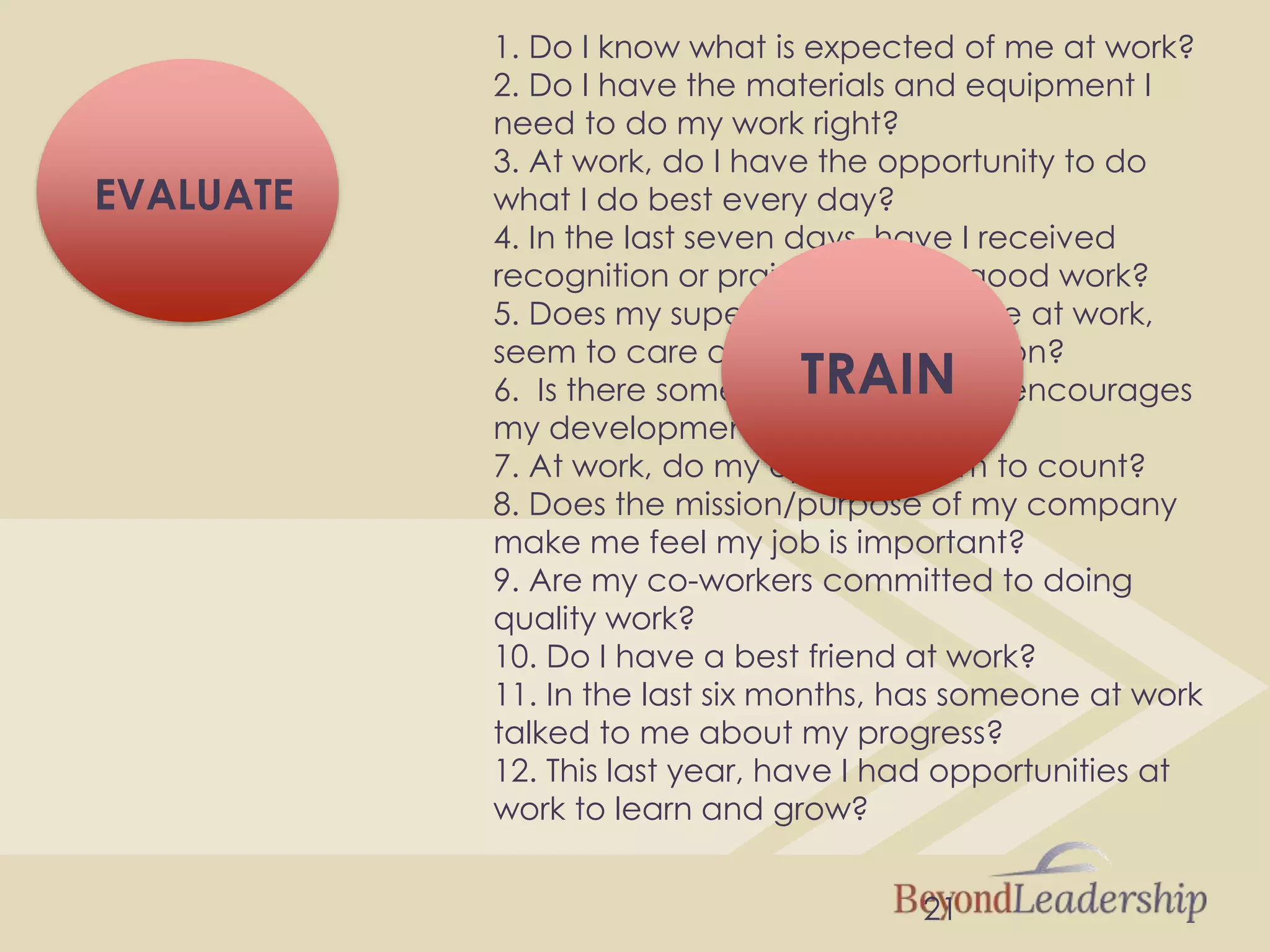
1. Do I know what is expected of me at work?
2. Do I have the materials and equipment I
need to do my work right?
3. At work, do I have the opportunity to do
what I do best every day?
4. In the last seven days, have I received
recognition or praise for doing good work?
5. Does my supervisor, or someone at work,
seem to care about me as a person?
6. Is there someone at work who encourages
my development?
7. At work, do my opinions seem to count?
8. Does the mission/purpose of my company
make me feel my job is important?
9. Are my co-workers committed to doing
quality work?
10. Do I have a best friend at work?
11. In the last six months, has someone at work
talked to me about my progress?
12. This last year, have I had opportunities at
work to learn and grow?
TRAIN
22
EVALUATE
EMPLOYEE ENGAGEMENT 
BOTTOM LINE
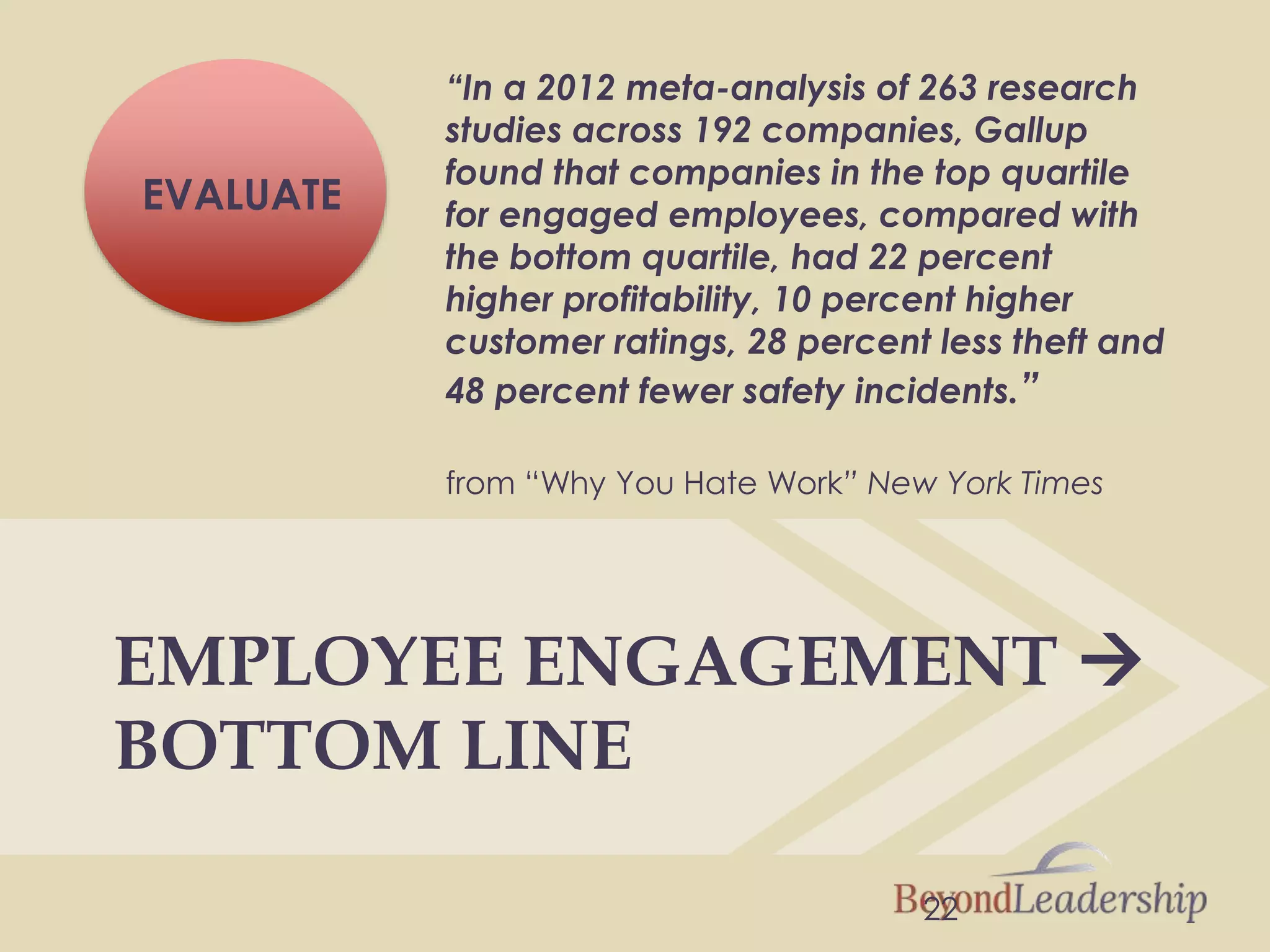
“In a 2012 meta-analysis of 263 research
studies across 192 companies, Gallup
found that companies in the top quartile
for engaged employees, compared with
the bottom quartile, had 22 percent
higher profitability, 10 percent higher
customer ratings, 28 percent less theft and
48 percent fewer safety incidents.”
from “Why You Hate Work” New York Times
A COUPLE OF DISCLAIMERS….
Performance Management
24
Rewards
Giving Feedback
• See presentation on recruitment and
retention
256.227.9075
P.O. Box 1014 Decatur, AL 35602
Mary Ila Ward,
SPHR/ SHRM-SCP, GCDF
miw@horizonpointconsulting.com
Visit
www.horizonpointconsulting.com
And click on “For Companies” for more information and
tools

Employee Rewards and Recognition

  • 1.
  • 2.
    Objectives For Today 2 •Participants will be able to: 1. Understand the evolution of employee rewards and recognition 2. Understand what employees really want out of work and be able to apply this understanding to implement a process to design recognition and reward systems 3. Know how why effective reward and recognition systems are important through their contribution to the business bottom-line
  • 3.
  • 5.
  • 9.
  • 10.
    ALL OF THESETHINGS CAN WORK…. 10
  • 11.
    AND NONE OFTHESE THINGS CAN WORK…. 11
  • 13.
    DO THEY MAKEPEOPLE FEEL VALUED??
  • 14.
    Steps to EmployeesFeeling Valued Creat e “Flow” Ask Creat e Train Evaluate
  • 15.
    15 • Does thework require above average challenges? • Is the work difficult, but accomplishable? • Does it require the use of above average skills? CREATE “FLOW” • Are there opportunities for skill development? • Does the work have built in goals? • Does the work have built in rules? Not too ambiguous.
  • 16.
  • 17.
  • 18.
    18 CREATE “Rather than astandard package of health, wealth and paid time off, companies can provide employees with a budget and a widely diverse set of options. These can range from sponsoring paid community service time overseas, allowing for credits to buy a hybrid car or even financially supporting an increased personal skill, such as learning a new language. The options are endless.” from The 2020 Workplace
  • 19.
    WHAT IS THE#1 REASON PEOPLE LEAVE A JOB? 19 TRAIN
  • 20.
  • 21.
    21 EVALUATE 1. Do Iknow what is expected of me at work? 2. Do I have the materials and equipment I need to do my work right? 3. At work, do I have the opportunity to do what I do best every day? 4. In the last seven days, have I received recognition or praise for doing good work? 5. Does my supervisor, or someone at work, seem to care about me as a person? 6. Is there someone at work who encourages my development? 7. At work, do my opinions seem to count? 8. Does the mission/purpose of my company make me feel my job is important? 9. Are my co-workers committed to doing quality work? 10. Do I have a best friend at work? 11. In the last six months, has someone at work talked to me about my progress? 12. This last year, have I had opportunities at work to learn and grow? TRAIN
  • 22.
    22 EVALUATE EMPLOYEE ENGAGEMENT  BOTTOMLINE “In a 2012 meta-analysis of 263 research studies across 192 companies, Gallup found that companies in the top quartile for engaged employees, compared with the bottom quartile, had 22 percent higher profitability, 10 percent higher customer ratings, 28 percent less theft and 48 percent fewer safety incidents.” from “Why You Hate Work” New York Times
  • 23.
    A COUPLE OFDISCLAIMERS….
  • 24.
  • 25.
    Giving Feedback • Seepresentation on recruitment and retention
  • 27.
    256.227.9075 P.O. Box 1014Decatur, AL 35602 Mary Ila Ward, SPHR/ SHRM-SCP, GCDF miw@horizonpointconsulting.com Visit www.horizonpointconsulting.com And click on “For Companies” for more information and tools

Editor's Notes

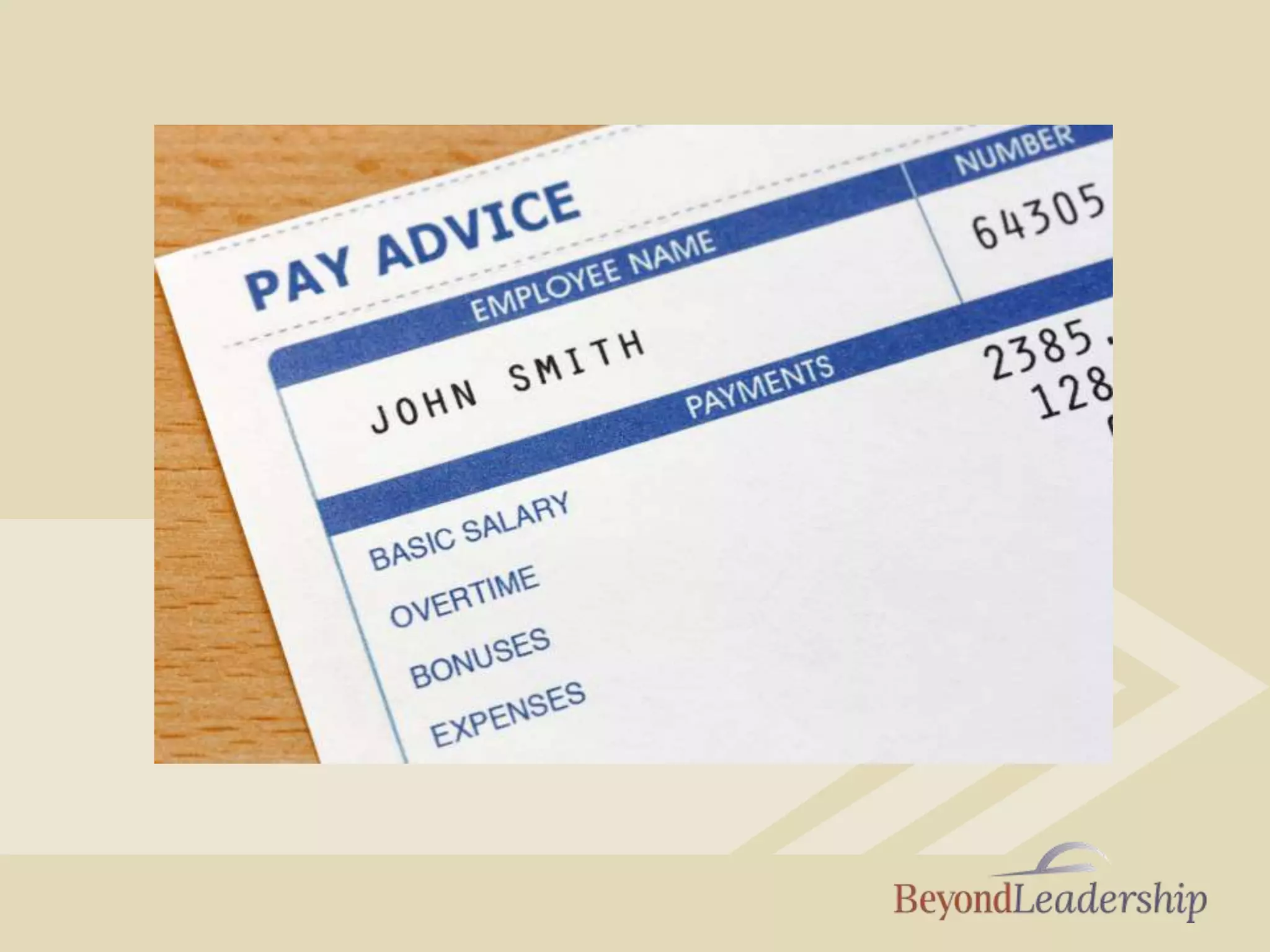
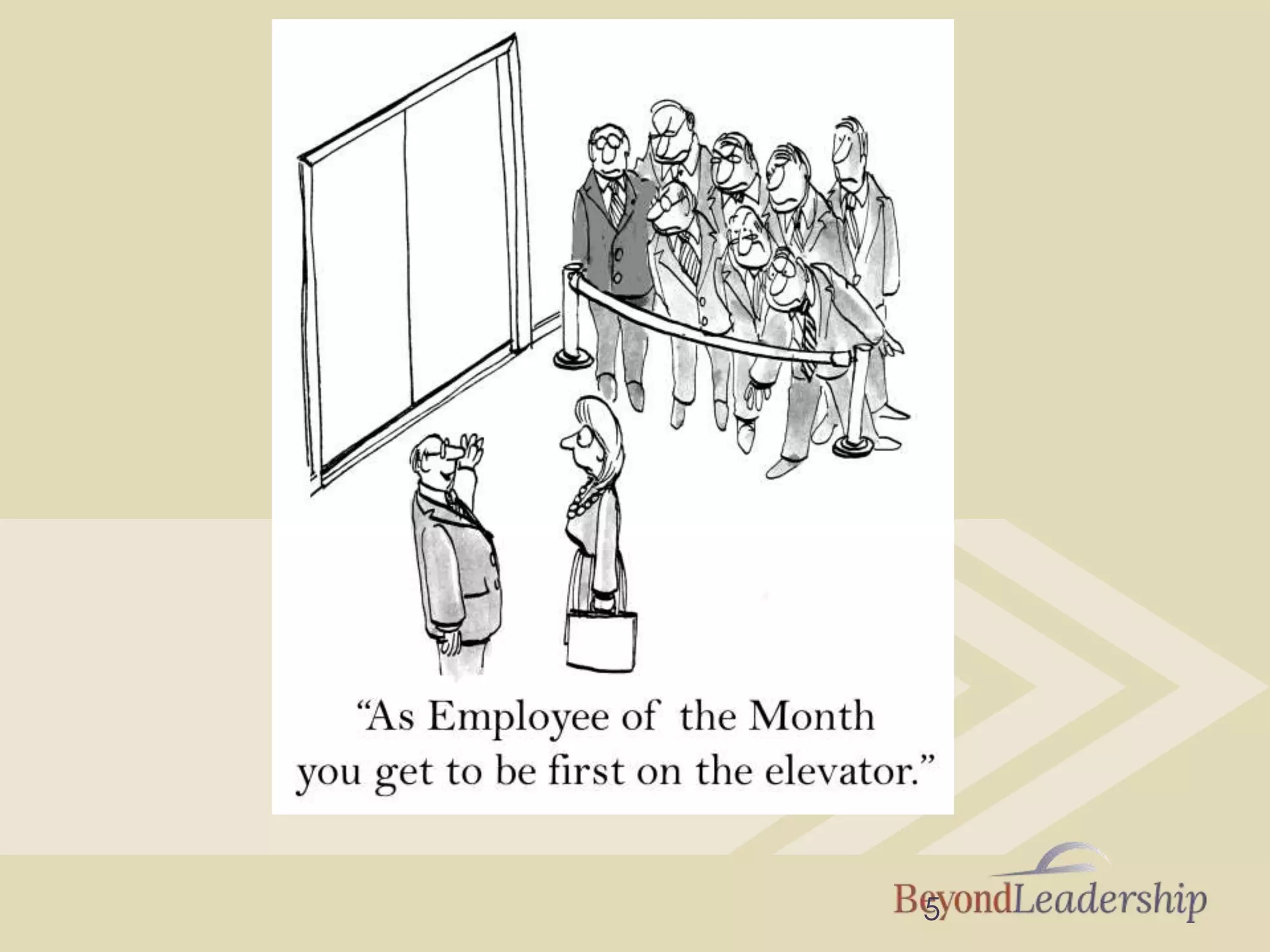
  • #5 You get a check. We pay you. That is reward and recognition enough. Now do you job.
  • #6 You get a gold star. Starting down the road of making people feel valued- employee of the month awards But it usually didn’t amount to anything, and then it got to the point where your high performers got it, but you give one every month, so you have to extend it down to your middle performers, then the award means nothing
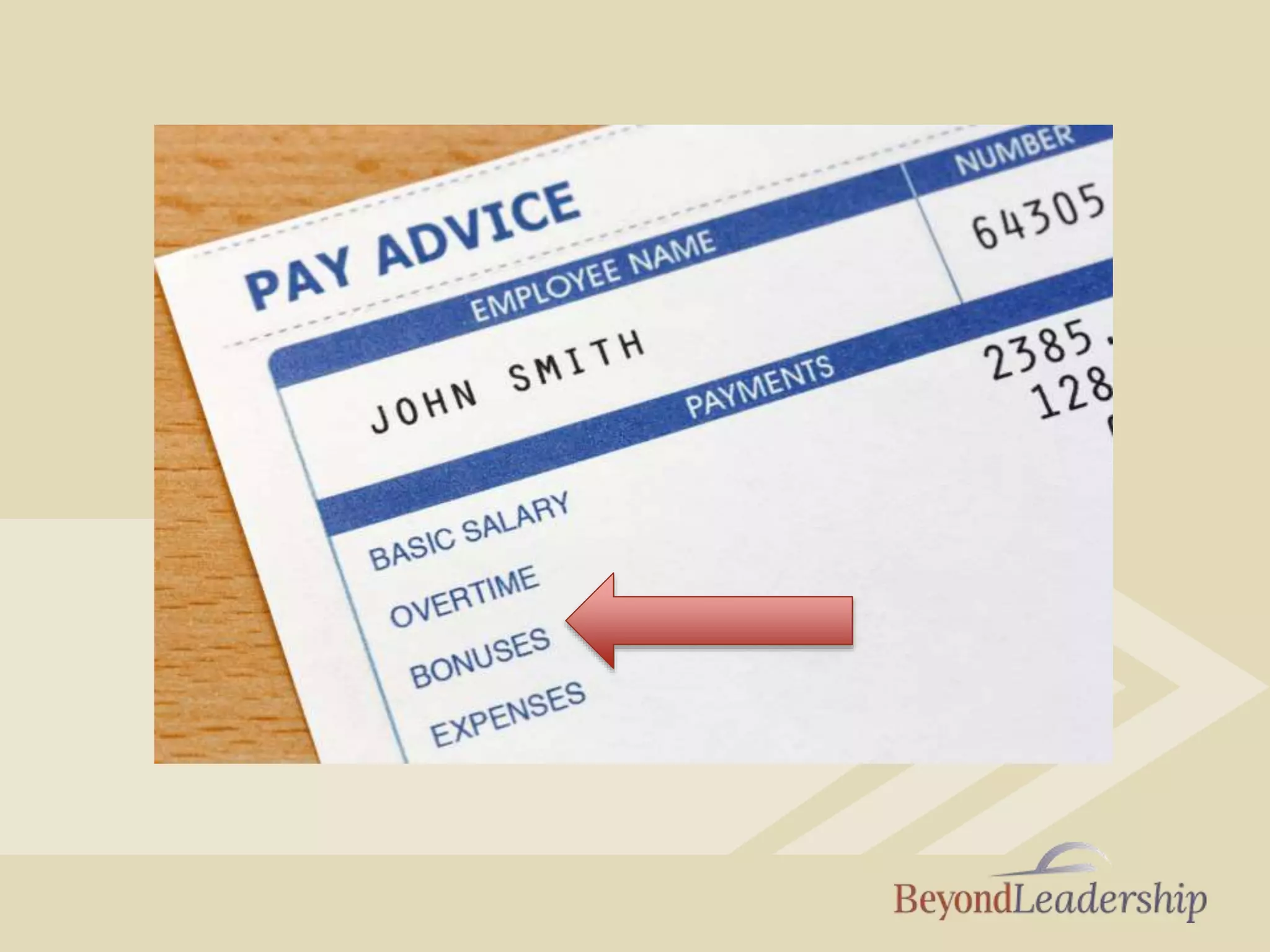
  • #7 Then Bonuses- discretionary money
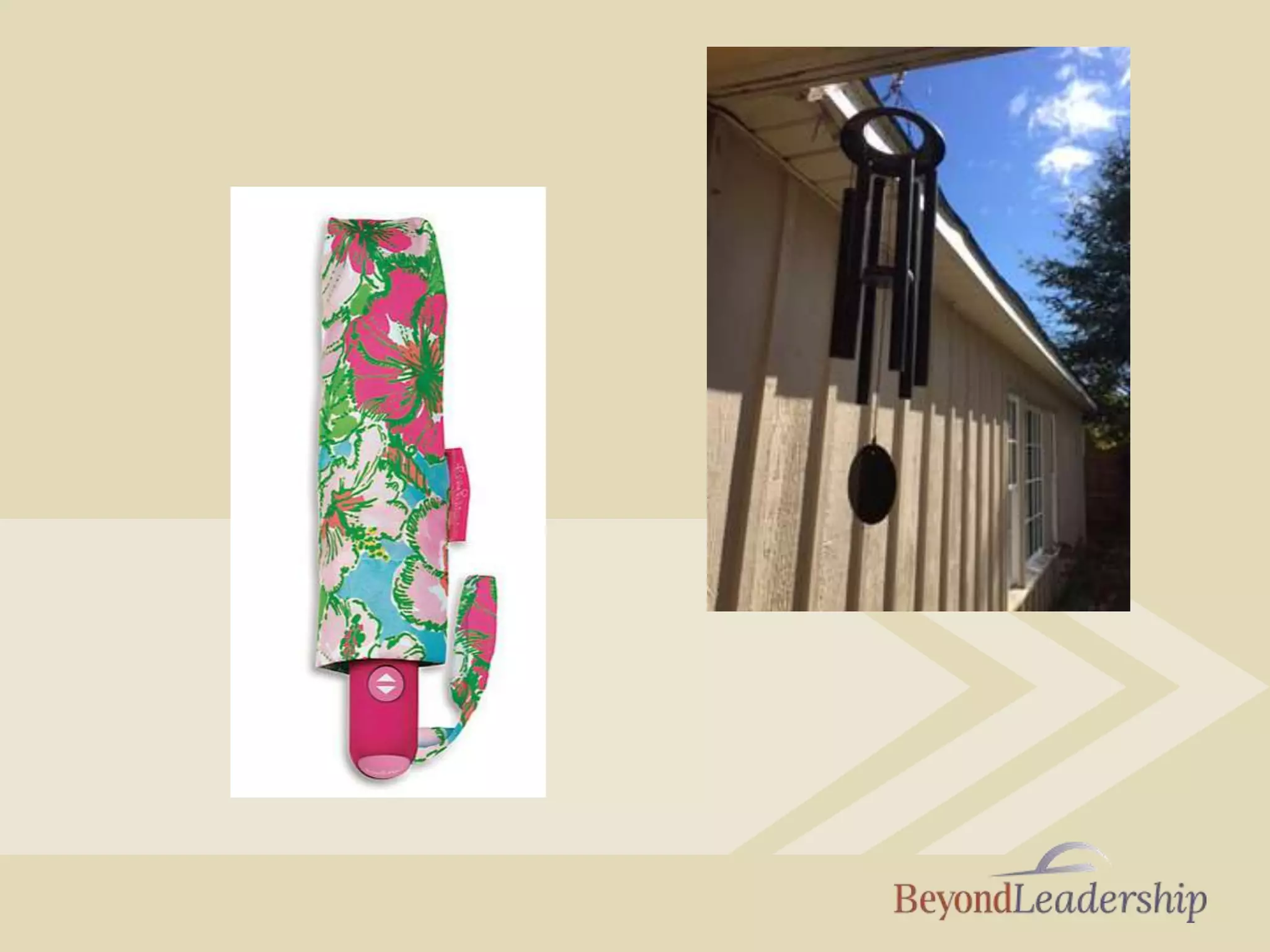
  • #8 Then stuff- explain personal examples here
  • #9 The corporate Hooray stuff- show party picture, blue cross event These work if they are around company values
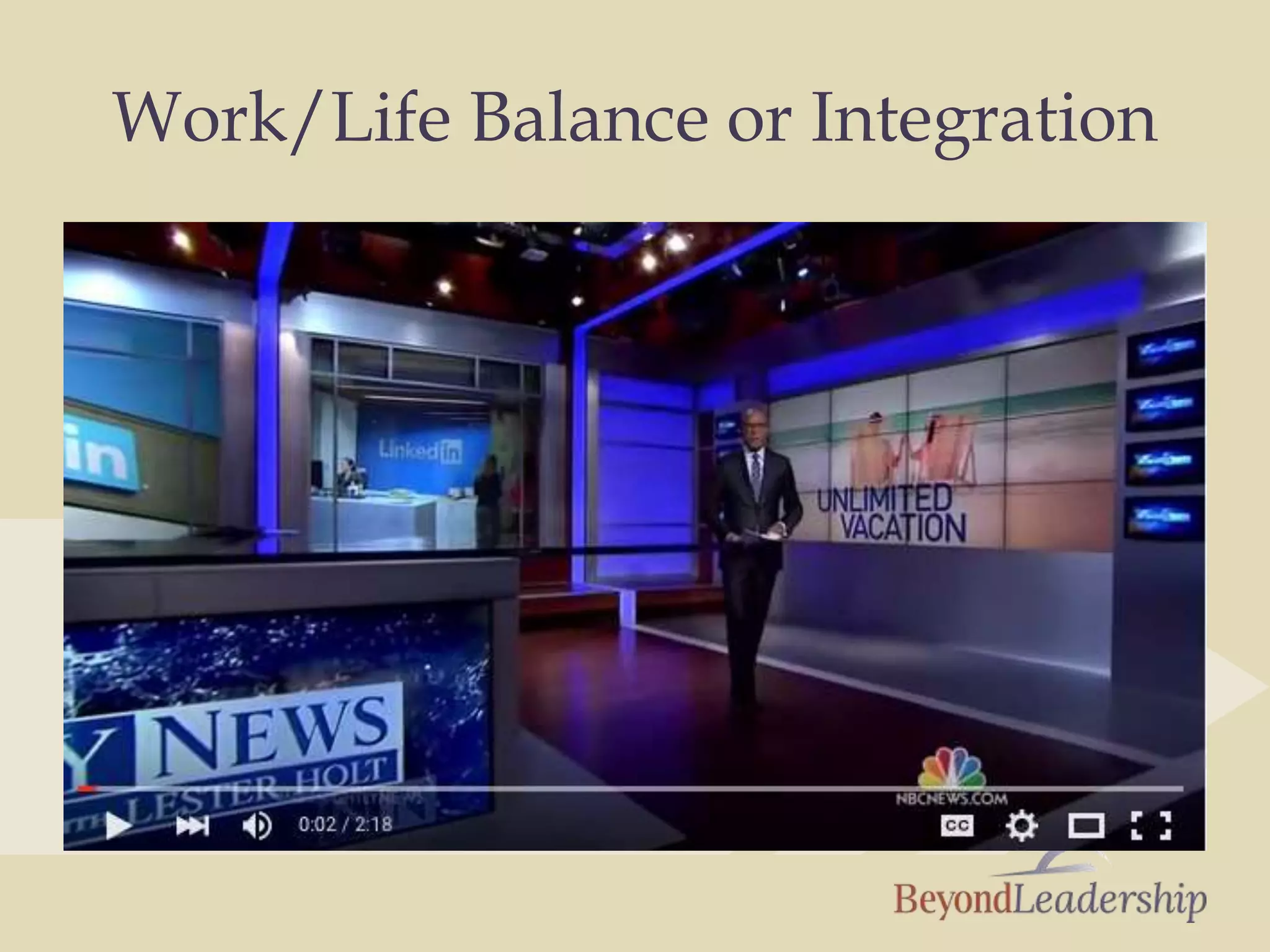
  • #10 https://www.youtube.com/watch?v=25rCZXPY1v0 Wellness programs- gyms at work and healthy food options, etc. Then work life balance integration, flexibility Work from home 9/80 work schedules Job sharing Video of unlimited vacation time
  • #11 What matters is does the employee feel valued with them
  • #12 What matters is does the employee feel valued with them
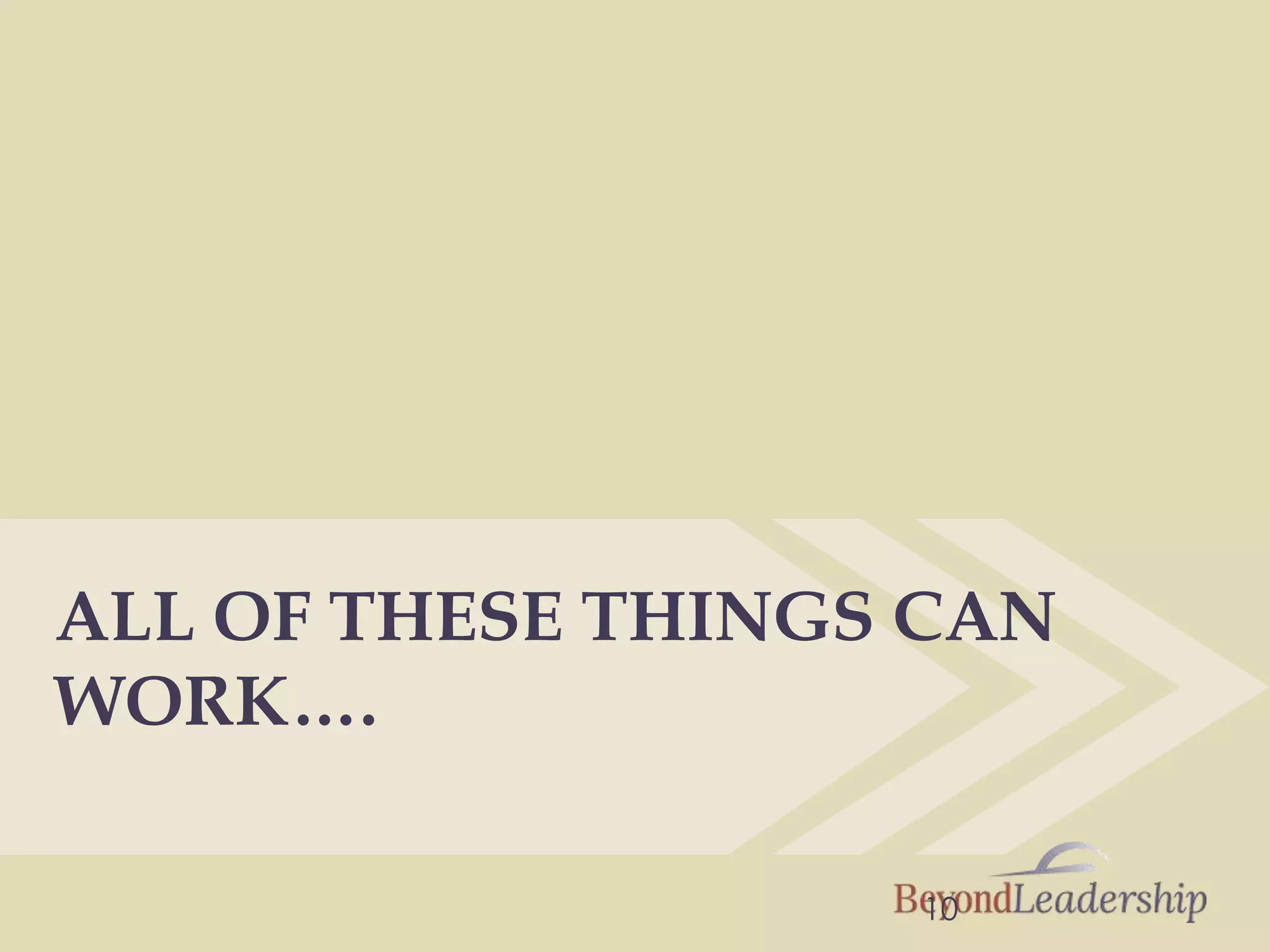
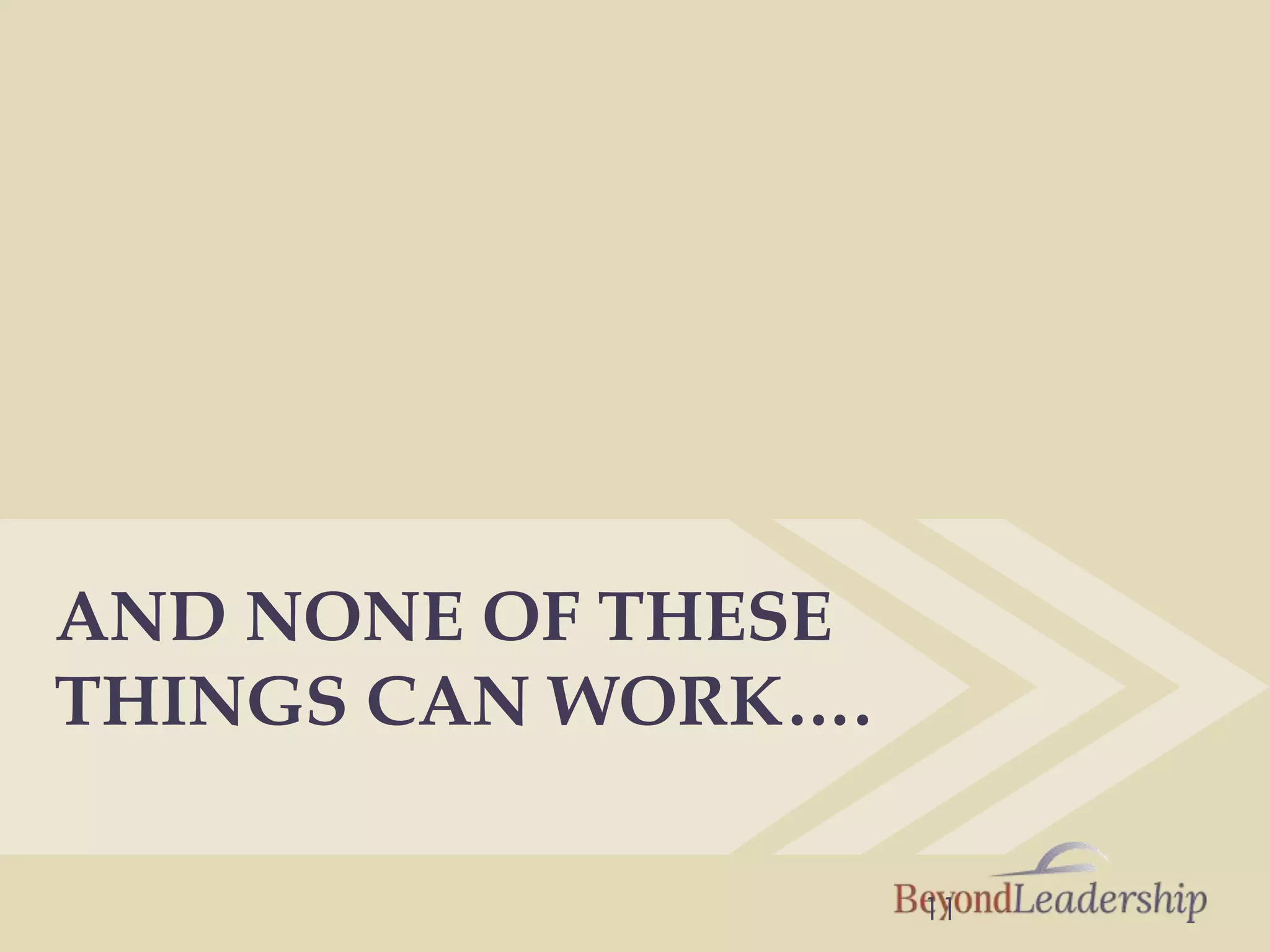
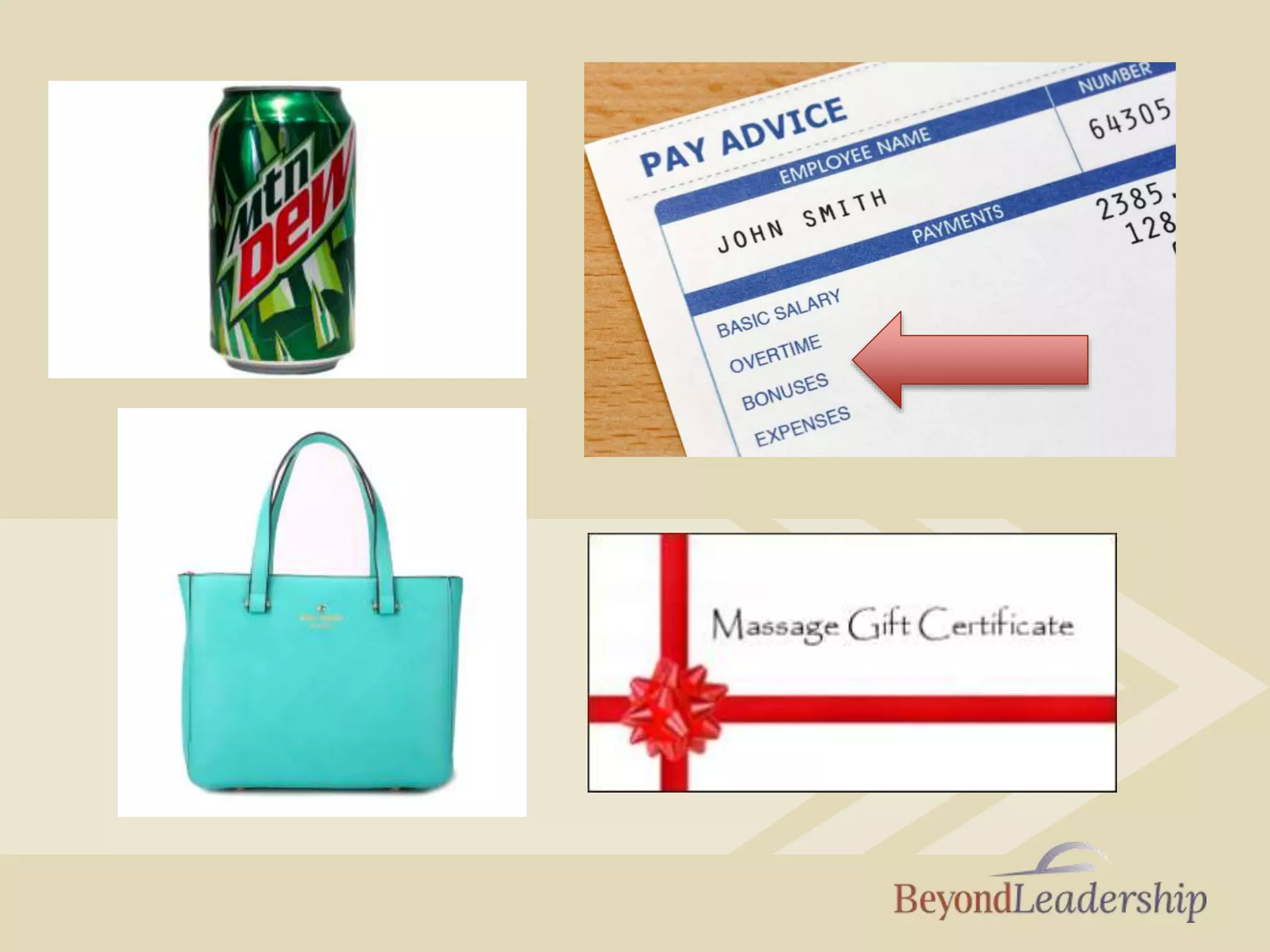
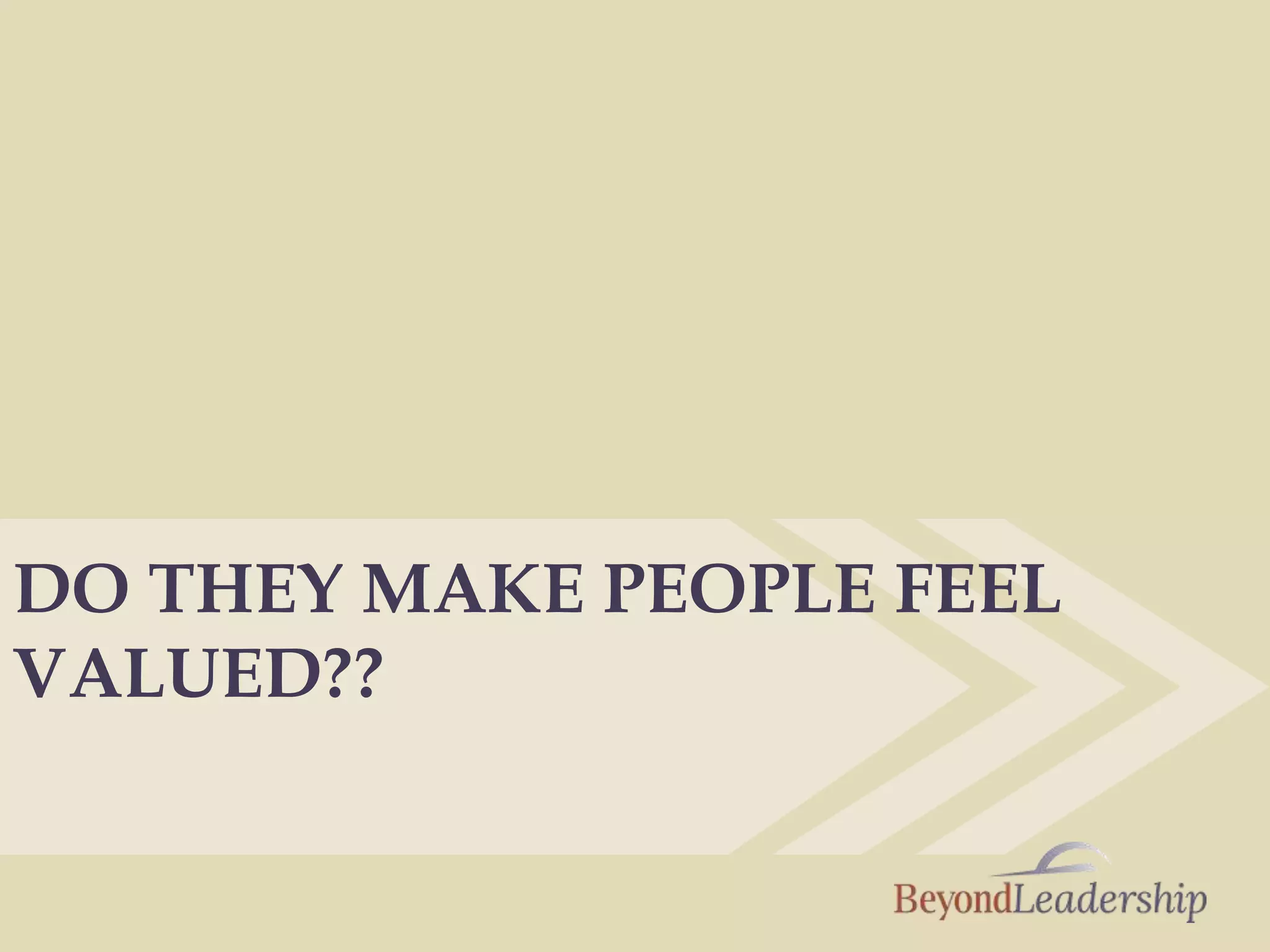
  • #13  What you say? These are all very similar to the stuff you showed us earlier, I don’t get it? In the bonus example, 2 of the 3 people that gave it to me didn’t know my name and everyone in the department got it whether they worked hard on the project or not -coffee is something most people like in the mornings, give me mt. dew and if you really know me, you’ll give it to me in a can, not a bottle -love fun handbags and clothes, shoes etc -like to be pampered- If you handed out massage gift cards to everyone in your department would they all like it? My husband wouldn’t. He would think you don’t know me at all!
  • #14 How do you make people feel valued? Give example of doctor’s office working with nurse on maternity leave time off
  • #16 Bottom line, if you done these things then you need to get out of people’s way and let them do their job
  • #17 Hand out motivation check list and show display that different people are motivated by different things You need to train managers on how to do this and why it is important and to help managers identify motivators without even asking. Give example of R+ time, gift card to finish out registry, Scott and his Kohl’s gift card for bosses’ day In aggregate leads to good information about how to design a system based on personalization- helps you define those choices that are within the scope of what you should offer- leads to the next step in the cycle- Create
  • #18  Why ask? Because asking individually and in aggregate can lead to personalization and personalization leads to people feeling valued
  • #20 You can have the best programs in the world, but if your front-line managers don’t get it or don’t implement it and understand the need to make people feel valued, then you might as well have not done it
  • #22  Gallup’s Q12- can do it through Gallup- they have some great tools to break it down by manager, etc. But the questions are public domain, so you can also create the survey on your own. The size and support structure in your organization is probably going to dictate what works best. Draw their attention to how much the questions relate to creating flow and making people feel valued. Give example of how this can be a training tool in and of itself for managers and an adjustment tool at the organizational level- example of Drew – his lowest area and the organization’s was #12. First time he got it back, his number #5 was higher than the average, but lower than he liked. Has made more of a genuine effort to show people he cares. Example: Laura’s baby
  • #23 Also discuss it is just a recruitment imperative now with the challenges in recruiting and retaining skilled labor
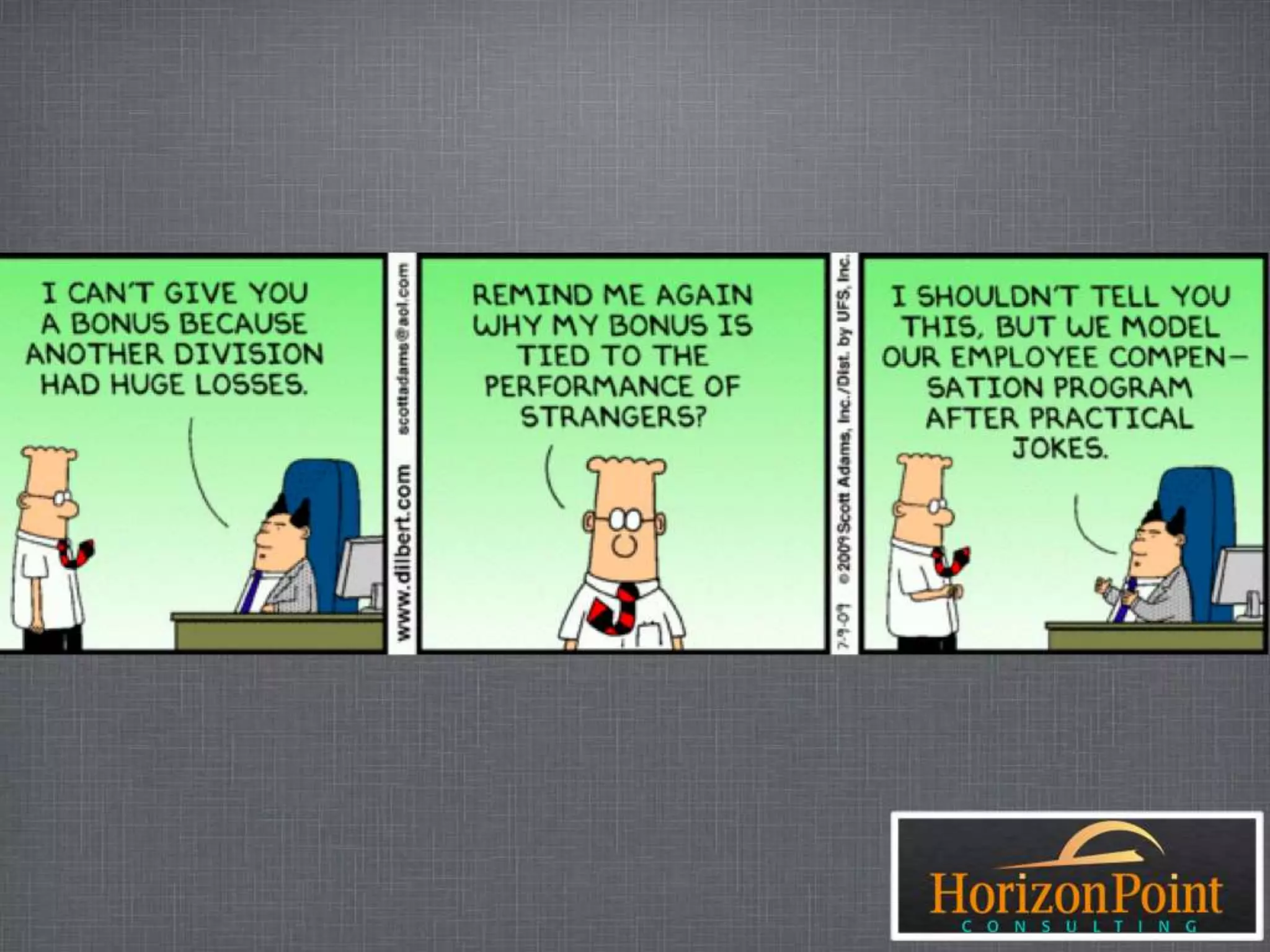
  • #25 Rewards have to be tied to individual behavior- this goes back to personalization, but also goes beyond that b/c of feelings of fairness and reward for effort put forth. It is demotivating: When people put the effort forth and get the results and they aren’t rewarded b/c it is something outside of their control When people look across the hall or down the cubicle and see what the person who is doing less than them and producing less results is getting the same reward. Remember the umbrella, bonus check, windchime and corporate party. Everyone got it, yes even the bonus check, regardless of their contribution, and so the mindset was why work hard? Messing up with two things will lead to your efforts not impacting your business bottom-line.
  • #26 And pay does matter…. Almost all of what we have been talking about today is a motivational factor- rewards and recognition to drive performance. But you do have to consider those hygiene factors that keep dissatisfaction away. And pay is one of these main things. If people can look across the hall, as we said in the last slide and see that they are being paid fairly compared to their peers or if they can look across the street and see that they could be paid more to do the same thing across the street, all the reward systems in the world may not keep them with you. (Now I might argue a great boss may), so you need to make sure your compensation structure- base pay- Internally equitable Externally competitive Can share with you how to do this afterwards if you’d like to come and discuss- or the email that will go out with you if you put your card in the drawing will send you a link to a blog post on how to do this. http://horizonpointconsulting.com/blog3/item/what-you-pay-does-matter
  • #27 Finally, are you giving people something to run towards? That is what is ultimately rewarding
  • #28 Give away book from business card collections