
POWER Organizational Behaviour Tami LAIB Esther TAN Enrique VILLAJOS Vincent BOGAERS Xavier VANDERCHMITT
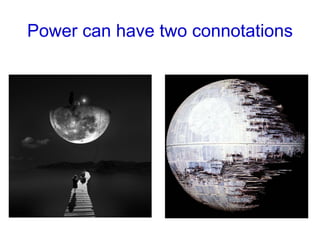
Power can have two connotations
What is power? Power is the ability to  … Get someone to do something you want done. Make things happen in the way you want. In workplaces: To have power : to be able to do something To use power : to use the resources the workplace gave you to do your job To “over-use” power : to use resources not given by the workplace or not related to the purpose of the job.
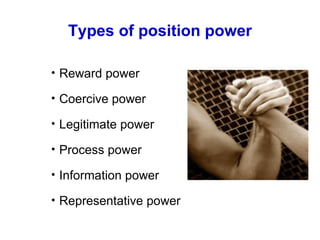
Types of position power Reward power Coercive power Legitimate power Process power Information power Representative power
The dark side   of Power “ Coffee, Tea, or Me?”  Sexual Harassment in the Workplace
Over-use of Power Psychological pressure Religious  harassment Racial harassment And sexual harassment
Definition Sexual harassment is unwelcome attention of a sexual nature and is a form of legal and social harassment.  It includes a range of behavior from seemingly mild transgressions and annoyances to actual sexual abuse or sexual assault.  Sexual harassment is considered a form of illegal discrimination in many countries, and is a form of abuse (sexual and psychological) and bullying.
Some Statistics in Canada One in four  women and  one in ten  men have experienced some form of sexual harassment in the workplace.  87%  of Canadian women report experiencing sexual harassment. 43%  of all Canadian women have been sexually harassed at work. 8%  of those who are harassed at work report the harassment. 8 out of 10  female students said they had been sexually harassed at school.
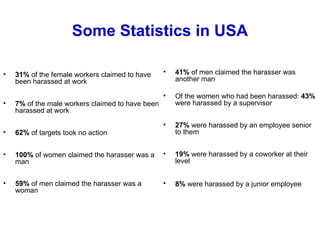
Some Statistics in USA 31%  of the female workers claimed to have been harassed at work  7%  of the male workers claimed to have been harassed at work  62%  of targets took no action  100%  of women claimed the harasser was a man  59%  of men claimed the harasser was a woman   41%  of men claimed the harasser was another man  Of the women who had been harassed:  43%  were harassed by a supervisor  27%  were harassed by an employee senior to them  19%  were harassed by a coworker at their level  8%  were harassed by a junior employee
 
Consequences Higher absenteeism Financial and legal costs Higher turnover Lower productivity Poor morale
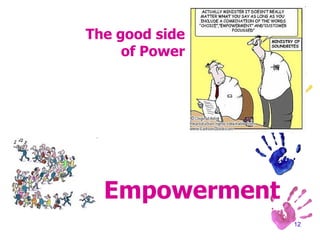
The good side  of Power Empowerment
What is empowerment? The process by which managers help others to acquire and use the power needed to make decisions affecting themselves and their work. Considers power to be something that can be shared by everyone working in flatter and more collegial organizations. Provides the foundation for self-managing work teams and other employee involvement group Empowerment changes the dynamics between supervisors and subordinates
The power keys to empowerment Traditional view Power is relational in terms of individuals. Empowerment view Emphasis is on the ability to make things happen. Power is relational in terms of problems and opportunities, not individuals.
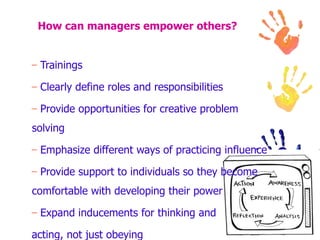
How can managers empower others? Trainings Clearly define roles and responsibilities Provide opportunities for creative problem solving Emphasize different ways of practicing influence Provide support to individuals so they become comfortable with developing their power Expand inducements for thinking and  acting, not just obeying
Benefits Higher job satisfaction Higher productivity Higher loyalty Higher innovation Lower turnover Lower absenteism
In conclusion
References   Saskatchewan Women’s Secretariat. Statistics Canada: Violence Against Women Survey, November, 1993. The Way Forward: Rethinking the Problem of Workplace Sexual Harassment, 2002, Sexual Assault Centre London. “ The Joke’s Over – Student to Student Sexual Harassment in Secondary Schools”, published by The Ontario Women’s Directorate, The Ontario Secondary School Teachers Federation and the Ministry of Education,  Statistics Canada, The Daily. (Ottawa: Canadian Centre for Justice Statistics, November 18, 1993.) http://www.sacha.ca

Power

  • 1.
    POWER Organizational BehaviourTami LAIB Esther TAN Enrique VILLAJOS Vincent BOGAERS Xavier VANDERCHMITT
  • 2.
    Power can havetwo connotations
  • 3.
    What is power?Power is the ability to … Get someone to do something you want done. Make things happen in the way you want. In workplaces: To have power : to be able to do something To use power : to use the resources the workplace gave you to do your job To “over-use” power : to use resources not given by the workplace or not related to the purpose of the job.
  • 4.
    Types of positionpower Reward power Coercive power Legitimate power Process power Information power Representative power
  • 5.
    The dark side of Power “ Coffee, Tea, or Me?” Sexual Harassment in the Workplace
  • 6.
    Over-use of PowerPsychological pressure Religious harassment Racial harassment And sexual harassment
  • 7.
    Definition Sexual harassmentis unwelcome attention of a sexual nature and is a form of legal and social harassment. It includes a range of behavior from seemingly mild transgressions and annoyances to actual sexual abuse or sexual assault. Sexual harassment is considered a form of illegal discrimination in many countries, and is a form of abuse (sexual and psychological) and bullying.
  • 8.
    Some Statistics inCanada One in four women and one in ten men have experienced some form of sexual harassment in the workplace. 87% of Canadian women report experiencing sexual harassment. 43% of all Canadian women have been sexually harassed at work. 8% of those who are harassed at work report the harassment. 8 out of 10 female students said they had been sexually harassed at school.
  • 9.
    Some Statistics inUSA 31% of the female workers claimed to have been harassed at work 7% of the male workers claimed to have been harassed at work 62% of targets took no action 100% of women claimed the harasser was a man 59% of men claimed the harasser was a woman 41% of men claimed the harasser was another man Of the women who had been harassed: 43% were harassed by a supervisor 27% were harassed by an employee senior to them 19% were harassed by a coworker at their level 8% were harassed by a junior employee
  • 10.
  • 11.
    Consequences Higher absenteeismFinancial and legal costs Higher turnover Lower productivity Poor morale
  • 12.
    The good side of Power Empowerment
  • 13.
    What is empowerment?The process by which managers help others to acquire and use the power needed to make decisions affecting themselves and their work. Considers power to be something that can be shared by everyone working in flatter and more collegial organizations. Provides the foundation for self-managing work teams and other employee involvement group Empowerment changes the dynamics between supervisors and subordinates
  • 14.
    The power keysto empowerment Traditional view Power is relational in terms of individuals. Empowerment view Emphasis is on the ability to make things happen. Power is relational in terms of problems and opportunities, not individuals.
  • 15.
    How can managersempower others? Trainings Clearly define roles and responsibilities Provide opportunities for creative problem solving Emphasize different ways of practicing influence Provide support to individuals so they become comfortable with developing their power Expand inducements for thinking and acting, not just obeying
  • 16.
    Benefits Higher jobsatisfaction Higher productivity Higher loyalty Higher innovation Lower turnover Lower absenteism
  • 17.
  • 18.
    References Saskatchewan Women’s Secretariat. Statistics Canada: Violence Against Women Survey, November, 1993. The Way Forward: Rethinking the Problem of Workplace Sexual Harassment, 2002, Sexual Assault Centre London. “ The Joke’s Over – Student to Student Sexual Harassment in Secondary Schools”, published by The Ontario Women’s Directorate, The Ontario Secondary School Teachers Federation and the Ministry of Education, Statistics Canada, The Daily. (Ottawa: Canadian Centre for Justice Statistics, November 18, 1993.) http://www.sacha.ca