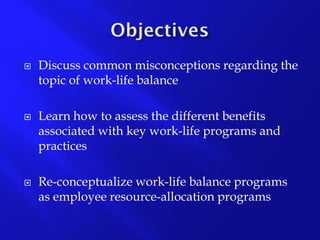
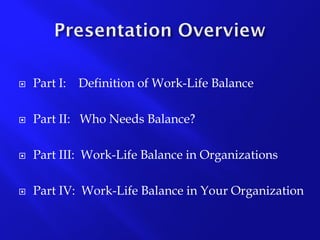
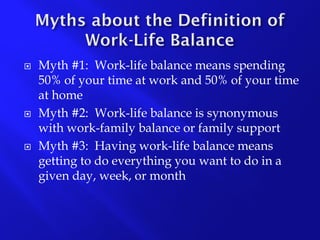
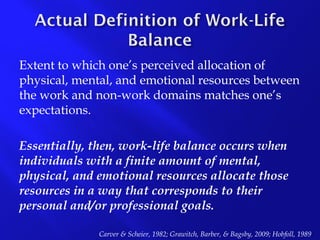
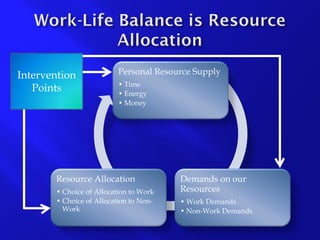
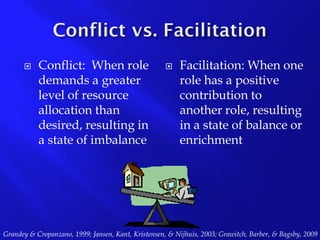
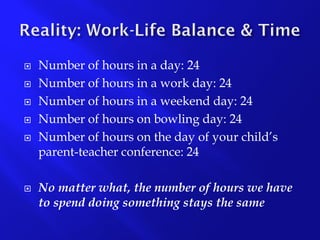
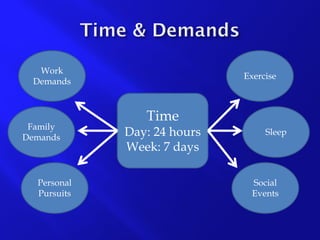
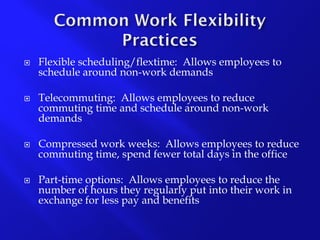
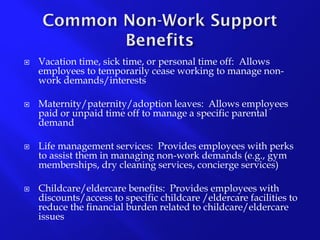
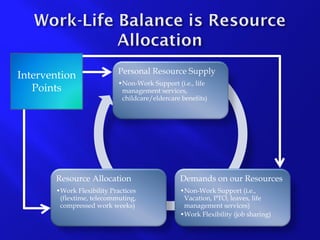

This document discusses common myths about work-life balance and provides guidance on effective work-life balance programs. It addresses 10 common myths, such as the myths that work-life balance means an even 50/50 split of time between work and home, or that all employees benefit equally from work-life balance programs. The document emphasizes that effective programs consider employee and organizational needs, optimize flexibility and support, and are tailored to the unique context rather than just copying other companies. It warns that propagating the myths could lead organizations to implement misguided work-life balance programs.


![CTEV [ clubfoot] DR ARUN LAL ,DR MOHAMED ASHRAF travancore medical college k...](https://cdn.slidesharecdn.com/ss_thumbnails/ctevclubfootdrarunlaldrmohamedashraftravancoremedicalcollegekollamkeralaindia-260208063247-18fc466c-thumbnail.jpg?width=640&height=640&fit=bounds)


