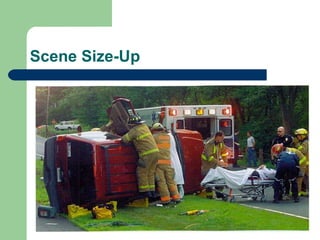
Scene Size-Up
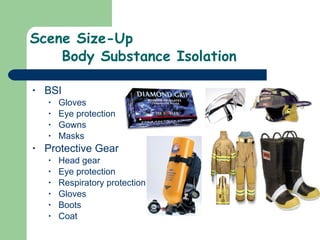
Scene Size-Up Body Substance Isolation BSI Gloves Eye protection Gowns Masks Protective Gear Head gear  Eye protection Respiratory protection Gloves Boots Coat
Scene Size-Up “ An assessment of the scene and its surroundings”  Constant reassessment  Includes: Personal protection “ Is it safe to approach the scene” Crash/rescue scenes Toxic substances Crime scenes – Potential Violence  Unstable surfaces- Slopes, Ice, Water, etc.  Safety of the scene Nature of illness – Medical Mechanism of injury- Trauma  # of pts Need for additional help Need for spinal immobilization  Protection of the pt and bystanders
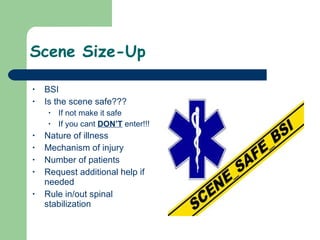
Scene Size-Up BSI Is the scene safe??? If not make it safe If you cant  DON’T  enter!!! Nature of illness Mechanism of injury  Number of patients Request additional help if needed Rule in/out spinal stabilization
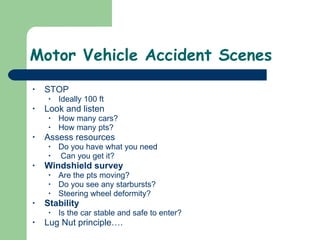
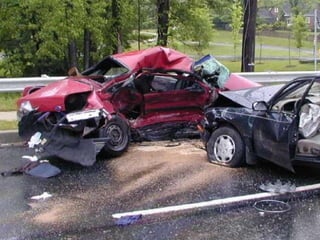
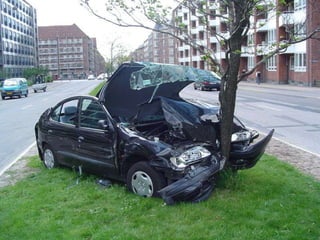
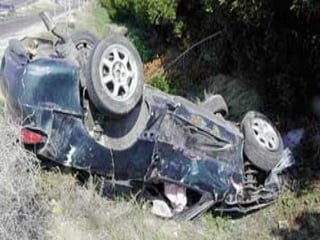
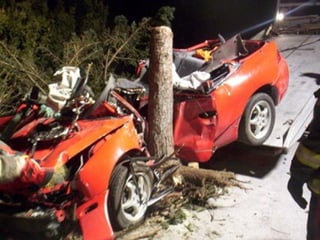
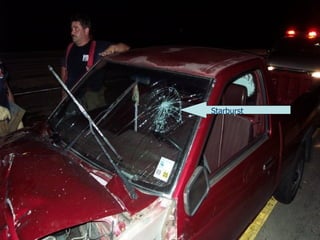
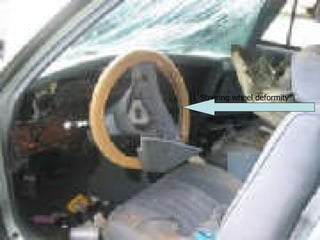
Motor Vehicle Accident Scenes  STOP Ideally 100 ft  Look and listen How many cars? How many pts? Assess resources Do you have what you need Can you get it? Windshield survey Are the pts moving? Do you see any starbursts? Steering wheel deformity?  Stability   Is the car stable and safe to enter? Lug Nut principle….


Starburst
Steering wheel deformity
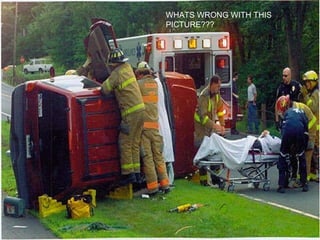
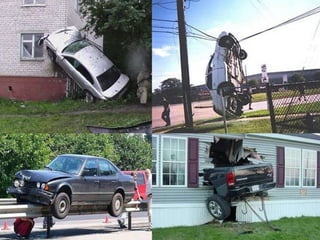
WHATS WRONG WITH THIS PICTURE???
 
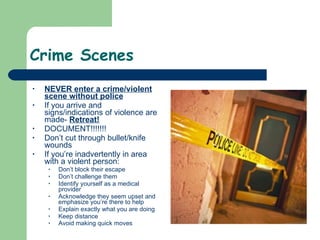
Crime Scenes  NEVER enter a crime/violent scene without police   If you arrive and signs/indications of violence are made-  Retreat!   DOCUMENT!!!!!!!  Don’t cut through bullet/knife wounds  If you’re inadvertently in area with a violent person: Don’t block their escape Don’t challenge them Identify yourself as a medical provider Acknowledge they seem upset and emphasize you’re there to help Explain exactly what you are doing Keep distance  Avoid making quick moves
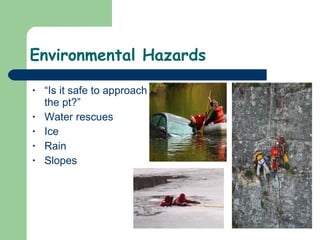
Environmental Hazards “ Is it safe to approach the pt?” Water rescues Ice Rain Slopes
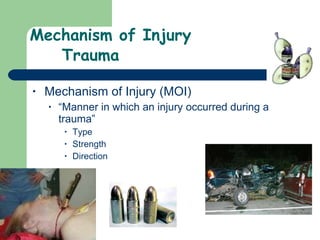
Mechanism of Injury Trauma Mechanism of Injury (MOI) “Manner in which an injury occurred during a trauma” Type Strength Direction
Mechanism of Injury Trauma Patients MOI Pt, family, bystanders, inspection of scene Allows you to anticipate injuries Fall with landing on feet Unrestrained driver Side collision passenger  Stab wound/location/depth  Did medical event precede trauma? If more pt than units on scene can  handle initiate MCI Obtain help prior to pt contact Less likely to call during care  Begin triage
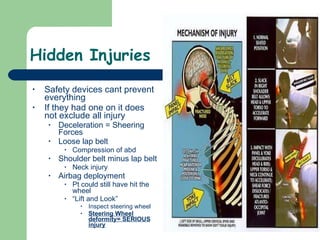
Hidden Injuries Safety devices cant prevent everything If they had one on it does not exclude all injury Deceleration = Sheering Forces Loose lap belt Compression of abd  Shoulder belt minus lap belt Neck injury Airbag deployment Pt could still have hit the wheel “ Lift and Look” Inspect steering wheel Steering Wheel deformity= SERIOUS injury
Nature of Illness Medical patients “ Why EMS was activated” Determine from pt, family, bystanders Obtain # of pt Call for assistance if need be (ALS, fire, etc) Begin triage
Remember… Scene safety FIRST!!

9)Scene Size Up

  • 1.
  • 2.
    Scene Size-Up BodySubstance Isolation BSI Gloves Eye protection Gowns Masks Protective Gear Head gear Eye protection Respiratory protection Gloves Boots Coat
  • 3.
    Scene Size-Up “An assessment of the scene and its surroundings” Constant reassessment Includes: Personal protection “ Is it safe to approach the scene” Crash/rescue scenes Toxic substances Crime scenes – Potential Violence Unstable surfaces- Slopes, Ice, Water, etc. Safety of the scene Nature of illness – Medical Mechanism of injury- Trauma # of pts Need for additional help Need for spinal immobilization Protection of the pt and bystanders
  • 4.
    Scene Size-Up BSIIs the scene safe??? If not make it safe If you cant DON’T enter!!! Nature of illness Mechanism of injury Number of patients Request additional help if needed Rule in/out spinal stabilization
  • 5.
    Motor Vehicle AccidentScenes STOP Ideally 100 ft Look and listen How many cars? How many pts? Assess resources Do you have what you need Can you get it? Windshield survey Are the pts moving? Do you see any starbursts? Steering wheel deformity? Stability Is the car stable and safe to enter? Lug Nut principle….
  • 6.
  • 7.
  • 8.
  • 9.
  • 10.
  • 11.
  • 12.
    WHATS WRONG WITHTHIS PICTURE???
  • 13.
  • 14.
    Crime Scenes NEVER enter a crime/violent scene without police If you arrive and signs/indications of violence are made- Retreat! DOCUMENT!!!!!!! Don’t cut through bullet/knife wounds If you’re inadvertently in area with a violent person: Don’t block their escape Don’t challenge them Identify yourself as a medical provider Acknowledge they seem upset and emphasize you’re there to help Explain exactly what you are doing Keep distance Avoid making quick moves
  • 15.
    Environmental Hazards “Is it safe to approach the pt?” Water rescues Ice Rain Slopes
  • 16.
    Mechanism of InjuryTrauma Mechanism of Injury (MOI) “Manner in which an injury occurred during a trauma” Type Strength Direction
  • 17.
    Mechanism of InjuryTrauma Patients MOI Pt, family, bystanders, inspection of scene Allows you to anticipate injuries Fall with landing on feet Unrestrained driver Side collision passenger Stab wound/location/depth Did medical event precede trauma? If more pt than units on scene can handle initiate MCI Obtain help prior to pt contact Less likely to call during care Begin triage
  • 18.
    Hidden Injuries Safetydevices cant prevent everything If they had one on it does not exclude all injury Deceleration = Sheering Forces Loose lap belt Compression of abd Shoulder belt minus lap belt Neck injury Airbag deployment Pt could still have hit the wheel “ Lift and Look” Inspect steering wheel Steering Wheel deformity= SERIOUS injury
  • 19.
    Nature of IllnessMedical patients “ Why EMS was activated” Determine from pt, family, bystanders Obtain # of pt Call for assistance if need be (ALS, fire, etc) Begin triage
  • 20.