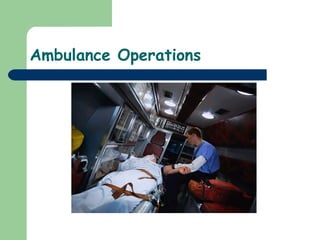
Ambulance Operations
Phases of a Call Preparation  Dispatch En route Arrival at Scene Pt contact Movement of pt to unit En route to hospital Arrive at hospital Transfer of pt care Clear/Return to service
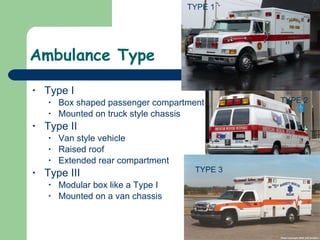
Ambulance Type Type I Box shaped passenger compartment Mounted on truck style chassis  Type II Van style vehicle Raised roof  Extended rear compartment Type III Modular box like a Type I Mounted on a van chassis  TYPE 1 TYPE 2 TYPE 3
Equipment Basic Medical Supplies Pt transfer equipment Airways Suction equipment Artificial Ventilation devices Oxygen inhalation devices Cardiac compression equipment Basic wound care supplies Splinting supplies Childbirth supplies Medications AED Non-medical  Personal Safety Equipment Street maps, etc
Daily Truck Inspection Fuel Oil Engine Cooling System Battery Brakes Wheels/tires Headlights Stoplights Turn signals Emergency lights Wipers Horn Siren Doors closing/latching Communication systems AC/Heat Ventilation system Seat belts Equipment Checked/maintained Restocked/repaired Batteries for –AED –Suction – O2, etc
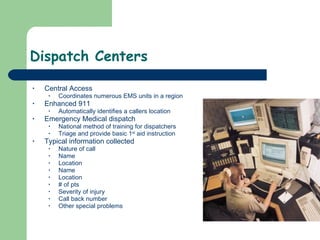
Dispatch Centers Central Access Coordinates numerous EMS units in a region  Enhanced 911 Automatically identifies a callers location  Emergency Medical dispatch National method of training for dispatchers Triage and provide basic 1 st  aid instruction  Typical information collected Nature of call Name Location Name Location # of pts Severity of injury  Call back number Other special problems
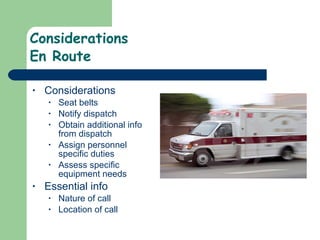
Considerations En Route Considerations Seat belts Notify dispatch Obtain additional info from dispatch Assign personnel specific duties Assess specific equipment needs Essential info Nature of call Location of call
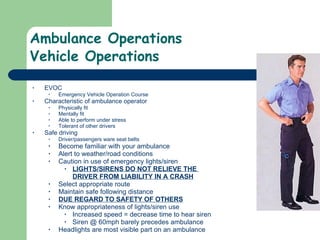
Ambulance Operations Vehicle Operations EVOC Emergency Vehicle Operation Course  Characteristic of ambulance operator Physically fit Mentally fit Able to perform under stress Tolerant of other drivers Safe driving Driver/passengers ware seat belts Become familiar with your ambulance Alert to weather/road conditions Caution in use of emergency lights/siren LIGHTS/SIRENS DO NOT RELIEVE THE  DRIVER FROM LIABILITY IN A CRASH Select appropriate route Maintain safe following distance DUE REGARD TO SAFETY OF OTHERS Know appropriateness of lights/siren use Increased speed = decrease time to hear siren Siren @ 60mph barely precedes ambulance Headlights are most visible part on an ambulance
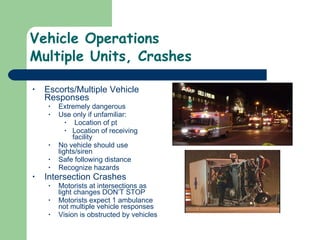
Vehicle Operations Multiple Units, Crashes Escorts/Multiple Vehicle Responses Extremely dangerous Use only if unfamiliar: Location of pt Location of receiving facility No vehicle should use lights/siren Safe following distance Recognize hazards Intersection Crashes Motorists at intersections as light changes DON’T STOP Motorists expect 1 ambulance not multiple vehicle responses  Vision is obstructed by vehicles
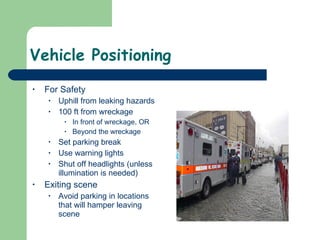
Vehicle Positioning  For Safety Uphill from leaking hazards 100 ft from wreckage In front of wreckage, OR Beyond the wreckage  Set parking break Use warning lights Shut off headlights (unless illumination is needed) Exiting scene Avoid parking in locations that will hamper leaving scene
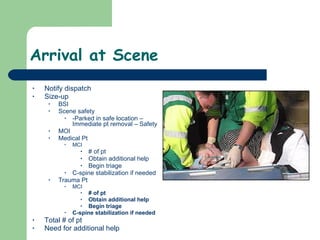
Arrival at Scene Notify dispatch Size-up BSI Scene safety -Parked in safe location – Immediate pt removal – Safety  MOI Medical Pt MCI # of pt Obtain additional help Begin triage C-spine stabilization if needed Trauma Pt MCI # of pt Obtain additional help Begin triage C-spine stabilization if needed Total # of pt Need for additional help
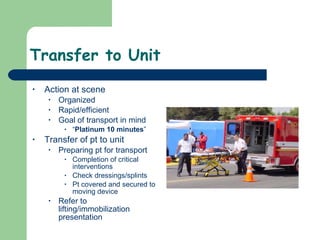
Transfer to Unit Action at scene Organized Rapid/efficient Goal of transport in mind “ Platinum 10 minutes ” Transfer of pt to unit Preparing pt for transport Completion of critical interventions Check dressings/splints Pt covered and secured to moving device Refer to lifting/immobilization presentation
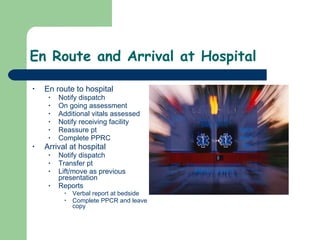
En Route and Arrival at Hospital En route to hospital Notify dispatch On going assessment Additional vitals assessed Notify receiving facility Reassure pt Complete PPRC Arrival at hospital Notify dispatch Transfer pt  Lift/move as previous presentation Reports Verbal report at bedside Complete PPCR and leave copy
Clear/Return to Service En route to station Notify dispatch Prepare for next call Clean/disinfect unit Clean/disinfect equipment Restock disposable items Post Run Refuel unit File reports Complete cleaning/disinfecting 1:100 bleach:water solution if commercial cleaner is not available
Air Medical Considerations Landing Zone (LZ) At least 100ft X 100 ft Relatively flat ground No greater than 10 degrees Clear of debris Trash Rocks Sand No major vertical structures Trees Buildings Telephone poles Towers  As close as possible to scene of call Approach Assume crouching position NEVER approach from behind Pilot blind spot
 

30)Ambulance Operations

  • 1.
  • 2.
    Phases of aCall Preparation Dispatch En route Arrival at Scene Pt contact Movement of pt to unit En route to hospital Arrive at hospital Transfer of pt care Clear/Return to service
  • 3.
    Ambulance Type TypeI Box shaped passenger compartment Mounted on truck style chassis Type II Van style vehicle Raised roof Extended rear compartment Type III Modular box like a Type I Mounted on a van chassis TYPE 1 TYPE 2 TYPE 3
  • 4.
    Equipment Basic MedicalSupplies Pt transfer equipment Airways Suction equipment Artificial Ventilation devices Oxygen inhalation devices Cardiac compression equipment Basic wound care supplies Splinting supplies Childbirth supplies Medications AED Non-medical Personal Safety Equipment Street maps, etc
  • 5.
    Daily Truck InspectionFuel Oil Engine Cooling System Battery Brakes Wheels/tires Headlights Stoplights Turn signals Emergency lights Wipers Horn Siren Doors closing/latching Communication systems AC/Heat Ventilation system Seat belts Equipment Checked/maintained Restocked/repaired Batteries for –AED –Suction – O2, etc
  • 6.
    Dispatch Centers CentralAccess Coordinates numerous EMS units in a region Enhanced 911 Automatically identifies a callers location Emergency Medical dispatch National method of training for dispatchers Triage and provide basic 1 st aid instruction Typical information collected Nature of call Name Location Name Location # of pts Severity of injury Call back number Other special problems
  • 7.
    Considerations En RouteConsiderations Seat belts Notify dispatch Obtain additional info from dispatch Assign personnel specific duties Assess specific equipment needs Essential info Nature of call Location of call
  • 8.
    Ambulance Operations VehicleOperations EVOC Emergency Vehicle Operation Course Characteristic of ambulance operator Physically fit Mentally fit Able to perform under stress Tolerant of other drivers Safe driving Driver/passengers ware seat belts Become familiar with your ambulance Alert to weather/road conditions Caution in use of emergency lights/siren LIGHTS/SIRENS DO NOT RELIEVE THE DRIVER FROM LIABILITY IN A CRASH Select appropriate route Maintain safe following distance DUE REGARD TO SAFETY OF OTHERS Know appropriateness of lights/siren use Increased speed = decrease time to hear siren Siren @ 60mph barely precedes ambulance Headlights are most visible part on an ambulance
  • 9.
    Vehicle Operations MultipleUnits, Crashes Escorts/Multiple Vehicle Responses Extremely dangerous Use only if unfamiliar: Location of pt Location of receiving facility No vehicle should use lights/siren Safe following distance Recognize hazards Intersection Crashes Motorists at intersections as light changes DON’T STOP Motorists expect 1 ambulance not multiple vehicle responses Vision is obstructed by vehicles
  • 10.
    Vehicle Positioning For Safety Uphill from leaking hazards 100 ft from wreckage In front of wreckage, OR Beyond the wreckage Set parking break Use warning lights Shut off headlights (unless illumination is needed) Exiting scene Avoid parking in locations that will hamper leaving scene
  • 11.
    Arrival at SceneNotify dispatch Size-up BSI Scene safety -Parked in safe location – Immediate pt removal – Safety MOI Medical Pt MCI # of pt Obtain additional help Begin triage C-spine stabilization if needed Trauma Pt MCI # of pt Obtain additional help Begin triage C-spine stabilization if needed Total # of pt Need for additional help
  • 12.
    Transfer to UnitAction at scene Organized Rapid/efficient Goal of transport in mind “ Platinum 10 minutes ” Transfer of pt to unit Preparing pt for transport Completion of critical interventions Check dressings/splints Pt covered and secured to moving device Refer to lifting/immobilization presentation
  • 13.
    En Route andArrival at Hospital En route to hospital Notify dispatch On going assessment Additional vitals assessed Notify receiving facility Reassure pt Complete PPRC Arrival at hospital Notify dispatch Transfer pt Lift/move as previous presentation Reports Verbal report at bedside Complete PPCR and leave copy
  • 14.
    Clear/Return to ServiceEn route to station Notify dispatch Prepare for next call Clean/disinfect unit Clean/disinfect equipment Restock disposable items Post Run Refuel unit File reports Complete cleaning/disinfecting 1:100 bleach:water solution if commercial cleaner is not available
  • 15.
    Air Medical ConsiderationsLanding Zone (LZ) At least 100ft X 100 ft Relatively flat ground No greater than 10 degrees Clear of debris Trash Rocks Sand No major vertical structures Trees Buildings Telephone poles Towers As close as possible to scene of call Approach Assume crouching position NEVER approach from behind Pilot blind spot
  • 16.