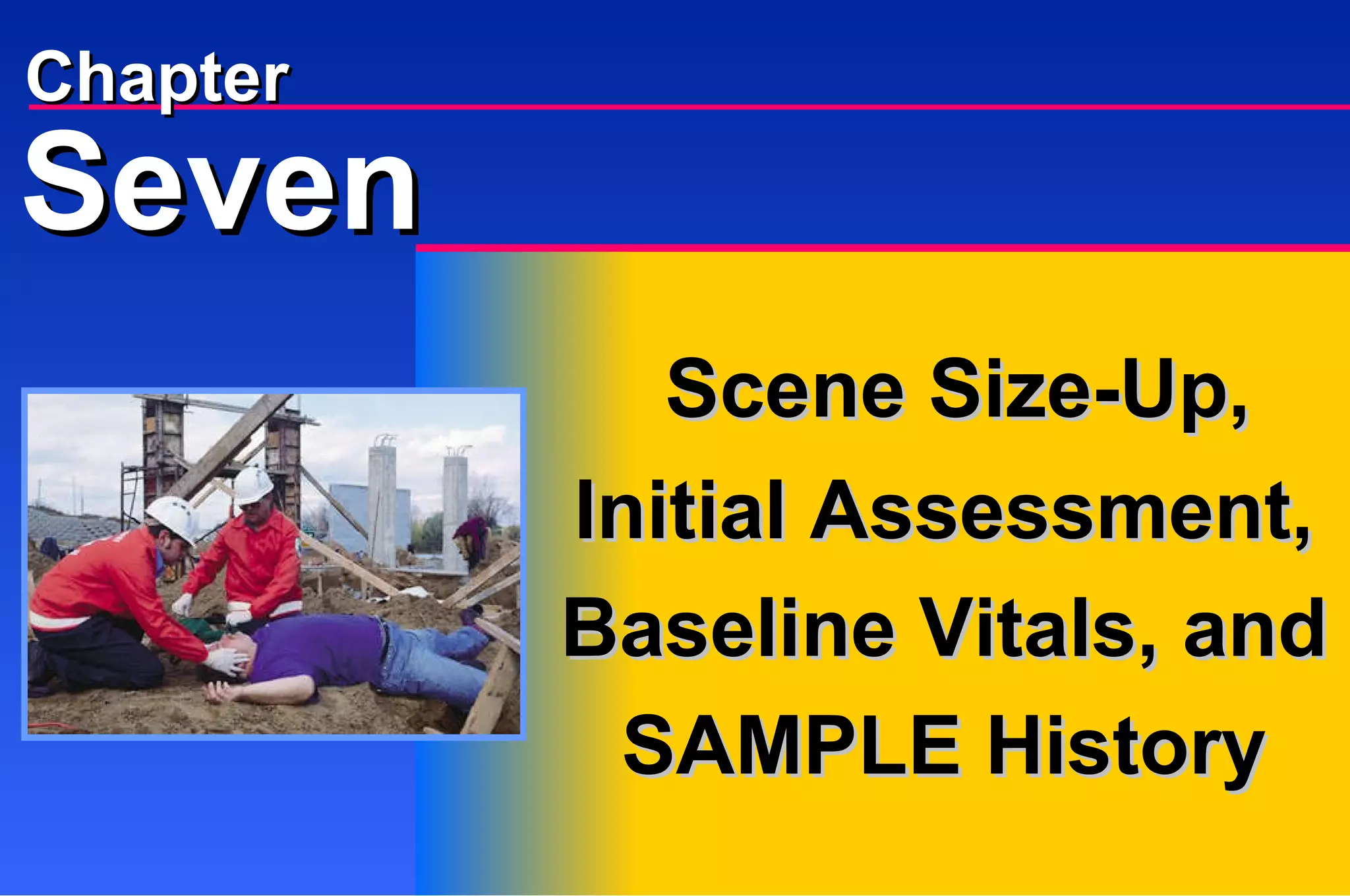
Seven Chapter Scene Size-Up, Initial Assessment, Baseline Vitals, and SAMPLE History
Components of the scene size-up and   how they relate to your personal safety   as well as to other parts of the call Initial assessment, including   identification and correction of life   threats and priority determination SAMPLE history and vital signs Seven Chapter CORE CONCEPTS
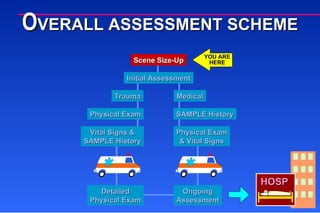
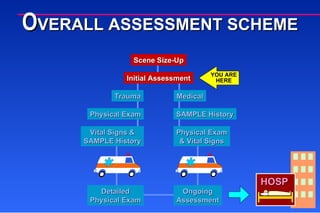
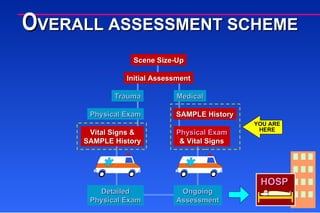
O VERALL ASSESSMENT SCHEME Scene Size-Up Initial Assessment Trauma Medical Physical Exam Vital Signs & SAMPLE History SAMPLE History Physical Exam & Vital Signs Detailed Physical Exam Ongoing Assessment HOSP
Scene Size-up An assessment to ensure the well-being of the EMT-Basic K EY TERM
Scene Safety Protect bystanders (prevent them from becoming patients) . Never enter an unsafe scene. Make scene safe or call for someone who can. (Continued)
S CENE SAFETY TECHNIQUES
Scene Safety Techniques: Observation Fighting or loud voices Intoxicants or illegal drugs Weapons Crime scenes Pets
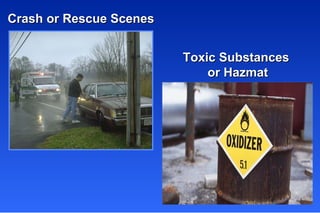
Crash or Rescue Scenes Toxic Substances  or Hazmat
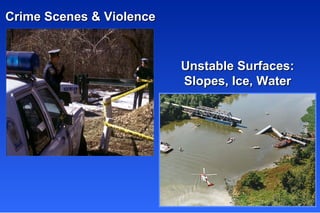
Crime Scenes & Violence Unstable Surfaces: Slopes, Ice, Water
Scene Safety Techniques: Responses to Danger Use cover and concealment. Retreat. Use distractions if necessary. Carry a portable radio.
Scene Safety Techniques: Planning for Safety Work together. Make your equipment work for you. Dress for safety. Use body armor, if necessary.
Body Substance Isolation Anticipate the need for BSI. Always have BSI equipment  available. Use appropriate equipment  to prevent exposure. (Continued)
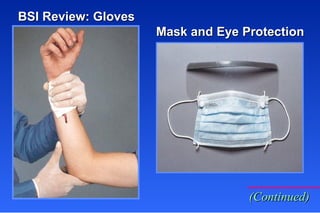
BSI Review: Gloves Mask and Eye Protection (Continued)
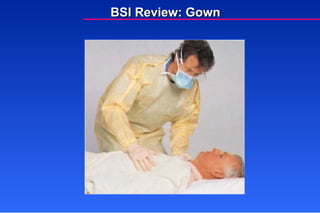
BSI Review: Gown
Mechanism of Injury The physical event that caused an injury (fall, motor vehicle accident, etc.) K EY TERM
Mechanism of Injury:  Trauma Determined from Patient Family Bystander Observation of the scene
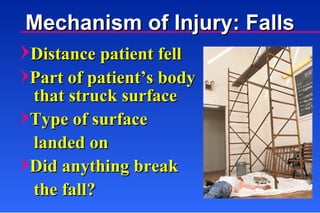
Distance patient fell Part of patient’s body that struck surface Type of surface  landed on Did anything break  the fall?  Mechanism of Injury: Falls
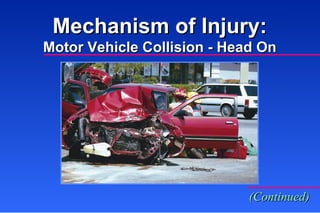
Mechanism of Injury: Motor Vehicle Collision - Head On (Continued)
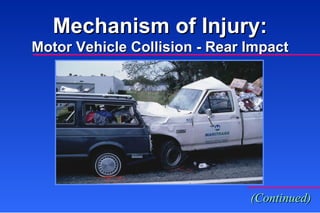
Mechanism of Injury: Motor Vehicle Collision - Rear Impact (Continued)
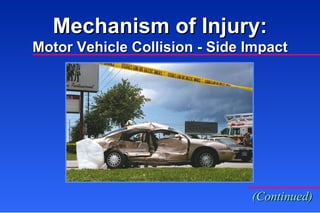
Mechanism of Injury: Motor Vehicle Collision - Side Impact (Continued)
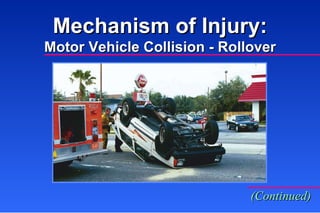
Mechanism of Injury: Motor Vehicle Collision - Rollover (Continued)
Mechanism of Injury: Motor Vehicle Collision  Rotational Multiple injury patterns. (Continued)
Mechanism of Injury: Motor Vehicle Collision Ejection Deformed windshield, steering  wheel, etc. Amount of vehicle deformity Seat belt use
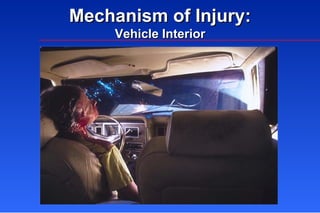
Mechanism of Injury: Vehicle Interior
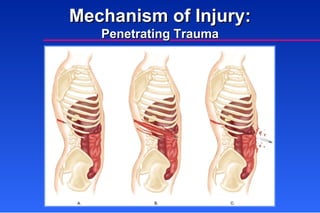
Velocity Body region penetrated Exit wounds (Continued) Mechanism of Injury:  Penetrating Trauma
Mechanism of Injury: Penetrating Trauma
Nature of Illness:  Medical Patient Sources of Information Scene Patient Family and bystanders
Adequacy of Resources Number of patients? Hazardous materials? Fire or rescue? Unusual situations? (Continued)
Call for assistance  before beginning care. Use triage procedures if necessary. Adequacy of Resources
Scene Size-Up Initial Assessment Trauma Medical Physical Exam Vital Signs & SAMPLE History SAMPLE History Physical Exam & Vital Signs Detailed Physical Exam Ongoing Assessment HOSP O VERALL ASSESSMENT SCHEME
Form a General Impression Environment  Age Sex Apparent threats to life
Assess Mental Status A lert V erbal stimulus P ainful stimulus U nresponsive
P RECEPTOR  P EARL Many EMT-Bs, especially at the beginning of their careers, are reluctant to apply a painful stimulus. Out of shyness or a reluctance to harm the patient, they apply only a mild stimulus that is not sufficient to rouse the patient. The EMT then notifies the ED that the patient is unresponsive to verbal and painful stimuli. But on arrival at the ED, the staff is easily able to elicit a response with a brisk sternal rub or a pinch of the trapezius. Watch for this tendency with new or inexperienced EMT-Bs, and give them the benefit of your experience.
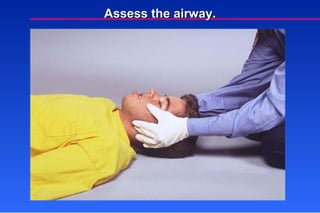
Assess the airway.
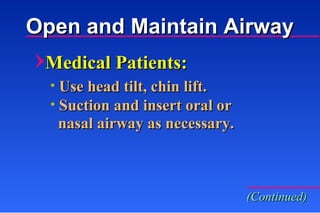
Open and Maintain Airway Medical Patients: Use head tilt, chin lift. Suction and insert oral or nasal airway as necessary. (Continued)
Trauma Patients: Immobilize the head manually. Use jaw thrust as necessary. Suction and insert oral or nasal airway. Open and Maintain Airway
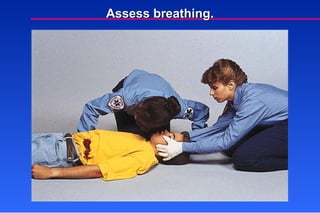
Assess breathing.
Breathing If breathing is inadequate, ventilate with 100% oxygen. If respirations are adequate   but faster than 24/minute, give high-concentration oxygen.
P RECEPTOR  P EARL New EMT-Bs, in their desire to explain to the patient everything that is going on, may say something like, “I’m going to count your breaths right now, so just relax.” Of course, the patient who knows someone is counting his or her breathing rate will think about it and probably breathe either faster or slower as a result.  If you hear new EMT-Bs using this approach, remind them that counting a respiratory rate should be done without bringing the patient’s attention to it.
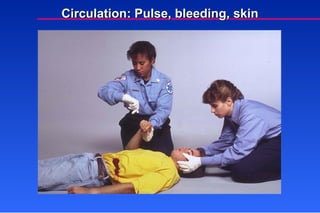
Circulation: Pulse, bleeding, skin
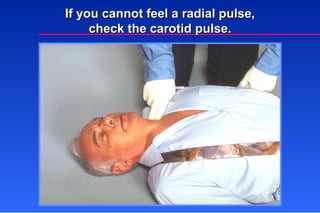
In adults and children, check radial pulse first. If no radial pulse, check carotid pulse. Pulse If no carotid pulse, start CPR and use AED as appropriate.
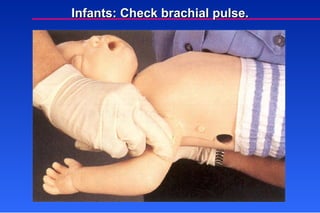
Infants: Check brachial pulse.
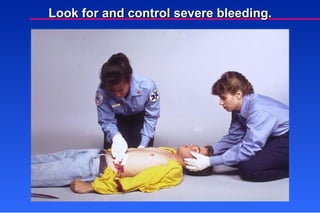
Look for and control severe bleeding.
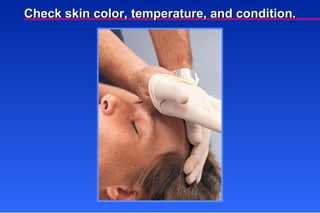
Skin Color Temperature Condition
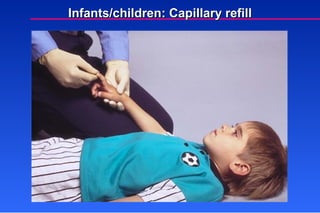
Infants/children: Capillary refill
Identify Priority Patients Poor general impression Unresponsive Responsive but not following  (Continued) commands Difficulty breathing Shock (hypoperfusion)
Uncontrolled bleeding Severe pain anywhere Complicated childbirth Identify Priority Patients Chest pain with systolic blood pressure < 100
Focused history and physical exam (medical) or Focused history and physical exam (trauma) Determine Next Assessment Step
Scene Size-Up Initial Assessment Trauma Medical Physical Exam Vital Signs & SAMPLE History SAMPLE History Physical Exam & Vital Signs Detailed Physical Exam Ongoing Assessment HOSP O VERALL ASSESSMENT SCHEME
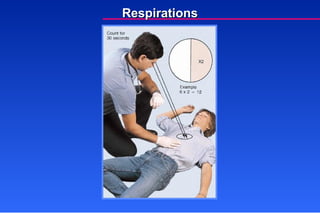
Baseline Vital Signs Respirations Pulse Skin Pupils Blood pressure
Respirations
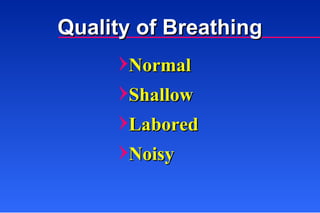
Normal Shallow Labored Noisy Quality of Breathing
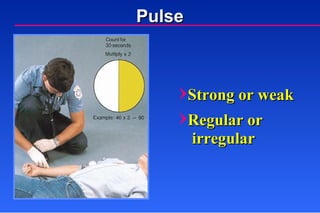
Pulse Strong or weak Regular or irregular
If you cannot feel a radial pulse, check the carotid pulse.
Check skin color, temperature, and condition.
Pale Cyanotic Flushed Jaundiced Abnormal Skin Colors
Abnormal Skin Temperatures Hot Cool Cold
Abnormal Skin Conditions Wet Very dry
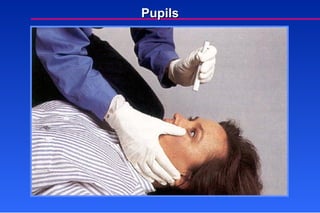
Pupils
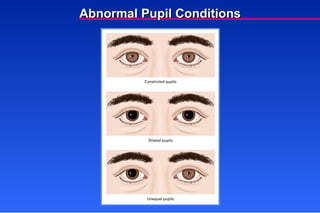
Abnormal Pupil Conditions
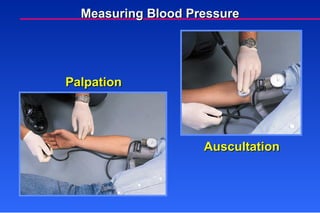
Palpation Auscultation Measuring Blood Pressure
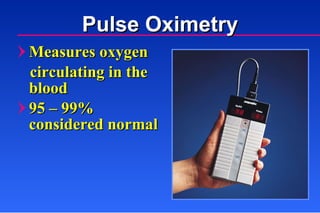
Pulse Oximetry Measures oxygen  circulating in the  blood 95  –  99% considered normal
Pulse Oximetry Precautions Not accurate in shock or hypothermia False readings in carbon monoxide poisoning Movement and nail polish can cause inaccurate readings NOTE: Do not withhold oxygen from  a patient who may need it because the oximeter reads “normal.”
Reassessment of Vital Signs Stable patient:  every 15 minutes Unstable patient:  every 5 minutes
Sample History S igns and symptoms A llergies M edications P ast medical history L ast oral intake E vents leading to the injury  or illness
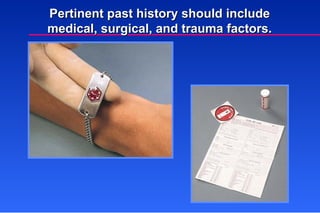
Pertinent past history should include medical, surgical, and trauma factors.
1. What are the components of a scene size-up? 2. List the steps in the initial assessment of a   patient. 3. Give examples of patients who should be   handled as a “high priority.” 4. What does the acronym SAMPLE stand   for? 5. What is the range of normal vital signs? R EVIEW QUESTIONS

Ch07 eec3

  • 1.
    Seven Chapter SceneSize-Up, Initial Assessment, Baseline Vitals, and SAMPLE History
  • 2.
    Components of thescene size-up and how they relate to your personal safety as well as to other parts of the call Initial assessment, including identification and correction of life threats and priority determination SAMPLE history and vital signs Seven Chapter CORE CONCEPTS
  • 3.
    O VERALL ASSESSMENTSCHEME Scene Size-Up Initial Assessment Trauma Medical Physical Exam Vital Signs & SAMPLE History SAMPLE History Physical Exam & Vital Signs Detailed Physical Exam Ongoing Assessment HOSP
  • 4.
    Scene Size-up Anassessment to ensure the well-being of the EMT-Basic K EY TERM
  • 5.
    Scene Safety Protectbystanders (prevent them from becoming patients) . Never enter an unsafe scene. Make scene safe or call for someone who can. (Continued)
  • 6.
    S CENE SAFETYTECHNIQUES
  • 7.
    Scene Safety Techniques:Observation Fighting or loud voices Intoxicants or illegal drugs Weapons Crime scenes Pets
  • 8.
    Crash or RescueScenes Toxic Substances or Hazmat
  • 9.
    Crime Scenes &Violence Unstable Surfaces: Slopes, Ice, Water
  • 10.
    Scene Safety Techniques:Responses to Danger Use cover and concealment. Retreat. Use distractions if necessary. Carry a portable radio.
  • 11.
    Scene Safety Techniques:Planning for Safety Work together. Make your equipment work for you. Dress for safety. Use body armor, if necessary.
  • 12.
    Body Substance IsolationAnticipate the need for BSI. Always have BSI equipment available. Use appropriate equipment to prevent exposure. (Continued)
  • 13.
    BSI Review: GlovesMask and Eye Protection (Continued)
  • 14.
  • 15.
    Mechanism of InjuryThe physical event that caused an injury (fall, motor vehicle accident, etc.) K EY TERM
  • 16.
    Mechanism of Injury: Trauma Determined from Patient Family Bystander Observation of the scene
  • 17.
    Distance patient fellPart of patient’s body that struck surface Type of surface landed on Did anything break the fall? Mechanism of Injury: Falls
  • 18.
    Mechanism of Injury:Motor Vehicle Collision - Head On (Continued)
  • 19.
    Mechanism of Injury:Motor Vehicle Collision - Rear Impact (Continued)
  • 20.
    Mechanism of Injury:Motor Vehicle Collision - Side Impact (Continued)
  • 21.
    Mechanism of Injury:Motor Vehicle Collision - Rollover (Continued)
  • 22.
    Mechanism of Injury:Motor Vehicle Collision Rotational Multiple injury patterns. (Continued)
  • 23.
    Mechanism of Injury:Motor Vehicle Collision Ejection Deformed windshield, steering wheel, etc. Amount of vehicle deformity Seat belt use
  • 24.
    Mechanism of Injury:Vehicle Interior
  • 25.
    Velocity Body regionpenetrated Exit wounds (Continued) Mechanism of Injury: Penetrating Trauma
  • 26.
    Mechanism of Injury:Penetrating Trauma
  • 27.
    Nature of Illness: Medical Patient Sources of Information Scene Patient Family and bystanders
  • 28.
    Adequacy of ResourcesNumber of patients? Hazardous materials? Fire or rescue? Unusual situations? (Continued)
  • 29.
    Call for assistance before beginning care. Use triage procedures if necessary. Adequacy of Resources
  • 30.
    Scene Size-Up InitialAssessment Trauma Medical Physical Exam Vital Signs & SAMPLE History SAMPLE History Physical Exam & Vital Signs Detailed Physical Exam Ongoing Assessment HOSP O VERALL ASSESSMENT SCHEME
  • 31.
    Form a GeneralImpression Environment Age Sex Apparent threats to life
  • 32.
    Assess Mental StatusA lert V erbal stimulus P ainful stimulus U nresponsive
  • 33.
    P RECEPTOR P EARL Many EMT-Bs, especially at the beginning of their careers, are reluctant to apply a painful stimulus. Out of shyness or a reluctance to harm the patient, they apply only a mild stimulus that is not sufficient to rouse the patient. The EMT then notifies the ED that the patient is unresponsive to verbal and painful stimuli. But on arrival at the ED, the staff is easily able to elicit a response with a brisk sternal rub or a pinch of the trapezius. Watch for this tendency with new or inexperienced EMT-Bs, and give them the benefit of your experience.
  • 34.
  • 35.
    Open and MaintainAirway Medical Patients: Use head tilt, chin lift. Suction and insert oral or nasal airway as necessary. (Continued)
  • 36.
    Trauma Patients: Immobilizethe head manually. Use jaw thrust as necessary. Suction and insert oral or nasal airway. Open and Maintain Airway
  • 37.
  • 38.
    Breathing If breathingis inadequate, ventilate with 100% oxygen. If respirations are adequate but faster than 24/minute, give high-concentration oxygen.
  • 39.
    P RECEPTOR P EARL New EMT-Bs, in their desire to explain to the patient everything that is going on, may say something like, “I’m going to count your breaths right now, so just relax.” Of course, the patient who knows someone is counting his or her breathing rate will think about it and probably breathe either faster or slower as a result. If you hear new EMT-Bs using this approach, remind them that counting a respiratory rate should be done without bringing the patient’s attention to it.
  • 40.
  • 41.
    In adults andchildren, check radial pulse first. If no radial pulse, check carotid pulse. Pulse If no carotid pulse, start CPR and use AED as appropriate.
  • 42.
  • 43.
    Look for andcontrol severe bleeding.
  • 44.
  • 45.
  • 46.
    Identify Priority PatientsPoor general impression Unresponsive Responsive but not following (Continued) commands Difficulty breathing Shock (hypoperfusion)
  • 47.
    Uncontrolled bleeding Severepain anywhere Complicated childbirth Identify Priority Patients Chest pain with systolic blood pressure < 100
  • 48.
    Focused history andphysical exam (medical) or Focused history and physical exam (trauma) Determine Next Assessment Step
  • 49.
    Scene Size-Up InitialAssessment Trauma Medical Physical Exam Vital Signs & SAMPLE History SAMPLE History Physical Exam & Vital Signs Detailed Physical Exam Ongoing Assessment HOSP O VERALL ASSESSMENT SCHEME
  • 50.
    Baseline Vital SignsRespirations Pulse Skin Pupils Blood pressure
  • 51.
  • 52.
    Normal Shallow LaboredNoisy Quality of Breathing
  • 53.
    Pulse Strong orweak Regular or irregular
  • 54.
    If you cannotfeel a radial pulse, check the carotid pulse.
  • 55.
    Check skin color,temperature, and condition.
  • 56.
    Pale Cyanotic FlushedJaundiced Abnormal Skin Colors
  • 57.
  • 58.
  • 59.
  • 60.
  • 61.
  • 62.
    Pulse Oximetry Measuresoxygen circulating in the blood 95 – 99% considered normal
  • 63.
    Pulse Oximetry PrecautionsNot accurate in shock or hypothermia False readings in carbon monoxide poisoning Movement and nail polish can cause inaccurate readings NOTE: Do not withhold oxygen from a patient who may need it because the oximeter reads “normal.”
  • 64.
    Reassessment of VitalSigns Stable patient: every 15 minutes Unstable patient: every 5 minutes
  • 65.
    Sample History Signs and symptoms A llergies M edications P ast medical history L ast oral intake E vents leading to the injury or illness
  • 66.
    Pertinent past historyshould include medical, surgical, and trauma factors.
  • 67.
    1. What arethe components of a scene size-up? 2. List the steps in the initial assessment of a patient. 3. Give examples of patients who should be handled as a “high priority.” 4. What does the acronym SAMPLE stand for? 5. What is the range of normal vital signs? R EVIEW QUESTIONS