Behavioral Emergencies
Behavioral Emergencies Behavior Manner in which a person acts Physical and mental actions Behavioral emergency Situation in which the pt exhibits abnormal behavior that is unacceptable to pt, family, community.  Extremes of emotion leading to violence Psychological or physical conditions that lead to violence
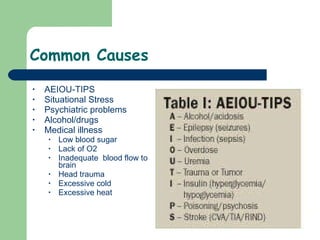
Common Causes  AEIOU-TIPS Situational Stress Psychiatric problems Alcohol/drugs Medical illness Low blood sugar Lack of O2 Inadequate  blood flow to brain Head trauma Excessive cold Excessive heat
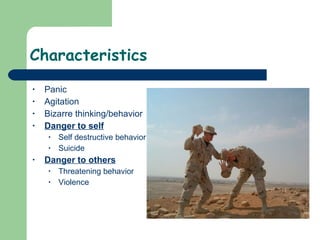
Characteristics  Panic Agitation Bizarre thinking/behavior  Danger to self Self destructive behavior Suicide Danger to others Threatening behavior Violence
Assessment for suicide risk Depression Sad, tearful  Thoughts of death, taking ones life Suicidal gestures Individuals over 40, single, widowed, divorced, alcoholic, depressed Defined lethal plan of action that is verbalized Unusual gathering of articles that can cause death Previous Hx of self destructive behavior Recent diagnosis of serious illness Recent loss of loved one Arrest, imprisonment, loss of job
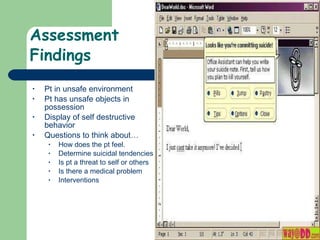
Assessment  Findings  Pt in unsafe environment Pt has unsafe objects in possession Display of self destructive behavior Questions to think about… How does the pt feel. Determine suicidal tendencies Is pt a threat to self or others Is there a medical problem Interventions
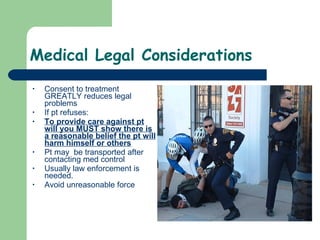
Medical Legal Considerations Consent to treatment GREATLY reduces legal problems If pt refuses: To provide care against pt will you MUST show there is a reasonable belief the pt will harm himself or others Pt may  be transported after contacting med control Usually law enforcement is needed.  Avoid unreasonable force
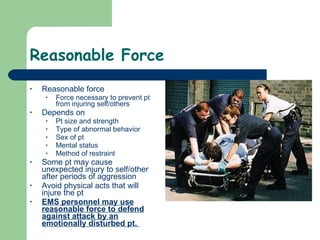
Reasonable Force Reasonable force Force necessary to prevent pt from injuring self/others Depends on Pt size and strength Type of abnormal behavior Sex of pt Mental status Method of restraint Some pt may cause unexpected injury to self/other after periods of aggression Avoid physical acts that will injure the pt EMS personnel may use reasonable force to defend against attack by an emotionally disturbed pt.
Protection from False Charges Consult medical direction Ask for police assistance DOCUMENT abnormal pt behavior Have witnesses in attendance esp in transport Have help Same sex EMTs as pt Witnesses Accusing EMTs of sexual misconduct is common by emotionally disturbed pts
Principles of Assessment Identify yourself Let them know youre there to help Inform them of what youre doing Ask questions in a calm/reassuring voice Allow pt to tell what happened  Don’t be judgmental Rephrase or repeat part of what you said to show you are listening Acknowledge the pt feelings Assess LOC Appearance Activity Speech Orientation to time, person, place
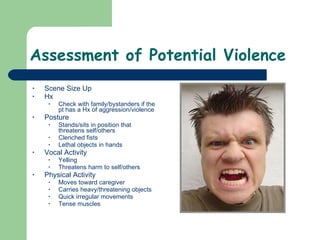
Assessment of Potential Violence Scene Size Up Hx Check with family/bystanders if the pt has a Hx of aggression/violence Posture Stands/sits in position that threatens self/others Clenched fists Lethal objects in hands Vocal Activity Yelling Threatens harm to self/others Physical Activity Moves toward caregiver Carries heavy/threatening objects Quick irregular movements Tense muscles
Methods to Calm Pt Acknowledge they seem upset Restate you are there to help Inform them of what you are doing Ask questions in calm reassuring voice Maintain a comfortable distance Encourage pt to state what is troubling Do not make quick moves Respond honestly to questions Do not threaten, challenge, argue with pt Do not “play along” with visual/auditory disturbances of the pt Involve trusted family members or friends Be prepared to remain on scene for a long time Do not leave pt alone Avoid unnecessary contact Use good eye contact
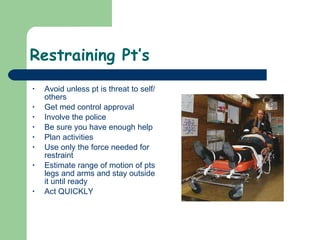
Restraining Pt’s Avoid unless pt is threat to self/others Get med control approval Involve the police Be sure you have enough help Plan activities Use only the force needed for restraint Estimate range of motion of pts legs and arms and stay outside it until ready Act QUICKLY
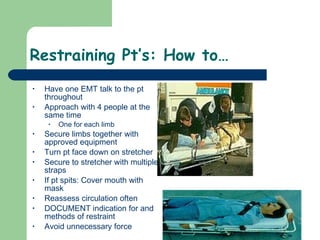
Restraining Pt’s: How to… Have one EMT talk to the pt throughout Approach with 4 people at the same time One for each limb Secure limbs together with approved equipment Turn pt face down on stretcher Secure to stretcher with multiple straps If pt spits: Cover mouth with mask Reassess circulation often DOCUMENT indication for and methods of restraint Avoid unnecessary force
And don’t forget….
 

23)Behavioral Emergencies

  • 1.
  • 2.
    Behavioral Emergencies BehaviorManner in which a person acts Physical and mental actions Behavioral emergency Situation in which the pt exhibits abnormal behavior that is unacceptable to pt, family, community. Extremes of emotion leading to violence Psychological or physical conditions that lead to violence
  • 3.
    Common Causes AEIOU-TIPS Situational Stress Psychiatric problems Alcohol/drugs Medical illness Low blood sugar Lack of O2 Inadequate blood flow to brain Head trauma Excessive cold Excessive heat
  • 4.
    Characteristics PanicAgitation Bizarre thinking/behavior Danger to self Self destructive behavior Suicide Danger to others Threatening behavior Violence
  • 5.
    Assessment for suiciderisk Depression Sad, tearful Thoughts of death, taking ones life Suicidal gestures Individuals over 40, single, widowed, divorced, alcoholic, depressed Defined lethal plan of action that is verbalized Unusual gathering of articles that can cause death Previous Hx of self destructive behavior Recent diagnosis of serious illness Recent loss of loved one Arrest, imprisonment, loss of job
  • 6.
    Assessment Findings Pt in unsafe environment Pt has unsafe objects in possession Display of self destructive behavior Questions to think about… How does the pt feel. Determine suicidal tendencies Is pt a threat to self or others Is there a medical problem Interventions
  • 7.
    Medical Legal ConsiderationsConsent to treatment GREATLY reduces legal problems If pt refuses: To provide care against pt will you MUST show there is a reasonable belief the pt will harm himself or others Pt may be transported after contacting med control Usually law enforcement is needed. Avoid unreasonable force
  • 8.
    Reasonable Force Reasonableforce Force necessary to prevent pt from injuring self/others Depends on Pt size and strength Type of abnormal behavior Sex of pt Mental status Method of restraint Some pt may cause unexpected injury to self/other after periods of aggression Avoid physical acts that will injure the pt EMS personnel may use reasonable force to defend against attack by an emotionally disturbed pt.
  • 9.
    Protection from FalseCharges Consult medical direction Ask for police assistance DOCUMENT abnormal pt behavior Have witnesses in attendance esp in transport Have help Same sex EMTs as pt Witnesses Accusing EMTs of sexual misconduct is common by emotionally disturbed pts
  • 10.
    Principles of AssessmentIdentify yourself Let them know youre there to help Inform them of what youre doing Ask questions in a calm/reassuring voice Allow pt to tell what happened Don’t be judgmental Rephrase or repeat part of what you said to show you are listening Acknowledge the pt feelings Assess LOC Appearance Activity Speech Orientation to time, person, place
  • 11.
    Assessment of PotentialViolence Scene Size Up Hx Check with family/bystanders if the pt has a Hx of aggression/violence Posture Stands/sits in position that threatens self/others Clenched fists Lethal objects in hands Vocal Activity Yelling Threatens harm to self/others Physical Activity Moves toward caregiver Carries heavy/threatening objects Quick irregular movements Tense muscles
  • 12.
    Methods to CalmPt Acknowledge they seem upset Restate you are there to help Inform them of what you are doing Ask questions in calm reassuring voice Maintain a comfortable distance Encourage pt to state what is troubling Do not make quick moves Respond honestly to questions Do not threaten, challenge, argue with pt Do not “play along” with visual/auditory disturbances of the pt Involve trusted family members or friends Be prepared to remain on scene for a long time Do not leave pt alone Avoid unnecessary contact Use good eye contact
  • 13.
    Restraining Pt’s Avoidunless pt is threat to self/others Get med control approval Involve the police Be sure you have enough help Plan activities Use only the force needed for restraint Estimate range of motion of pts legs and arms and stay outside it until ready Act QUICKLY
  • 14.
    Restraining Pt’s: Howto… Have one EMT talk to the pt throughout Approach with 4 people at the same time One for each limb Secure limbs together with approved equipment Turn pt face down on stretcher Secure to stretcher with multiple straps If pt spits: Cover mouth with mask Reassess circulation often DOCUMENT indication for and methods of restraint Avoid unnecessary force
  • 15.
  • 16.