Asthma Zhiwen Zhu   Pulmonary & Critical Care Medicine  1st Affiliated Hospital of Sun Yat-Sen University
Beethoven Ludwig van He was a patient with asthma, and died in 1827.
Teresa Deng She was also a patient with asthma, and died in 1995.
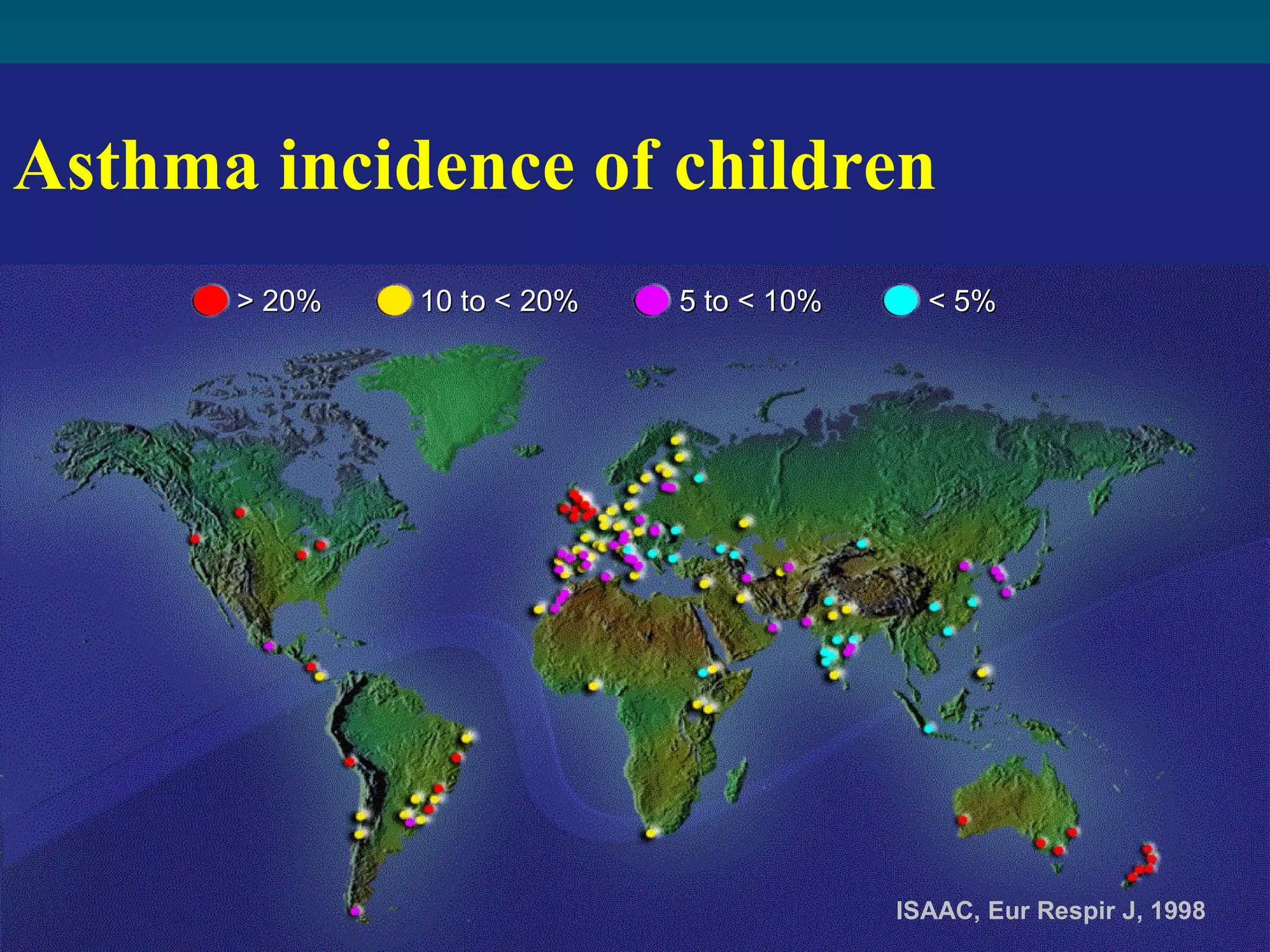
Asthma incidence of children
G   IN A lobal  itiative for  sthma
Asthma (GINA Workshop)  Topics: Definition Epidemiology Risk Factors Pathogenesis & Mechanisms Diagnosis and Classification Six Part Asthma Management Plan
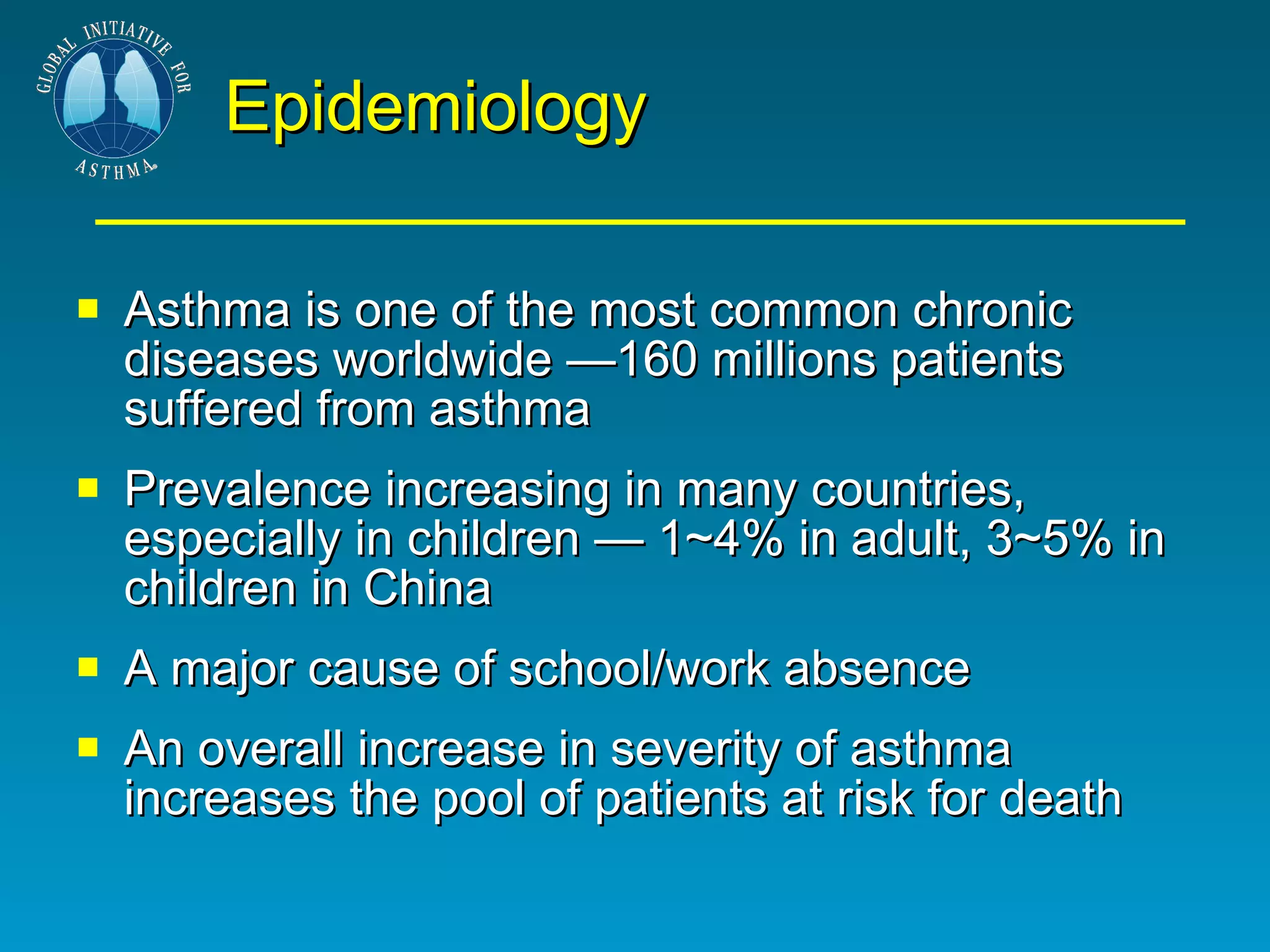
Definition of Asthma Asthma is  a chronic inflammatory disorder  of the airways in which many cells and cellular elements play a role  Chronic inflammation causes an associated increase in  airway hyperresponsiveness  that leads to recurrent episodes of wheezing, breathlessness, chest tightness, and coughing, particularly at night or in the early morning  These episodes are usually associated with widespread but variable  airflow obstruction  that is often  reversible  either spontaneously or with treatment
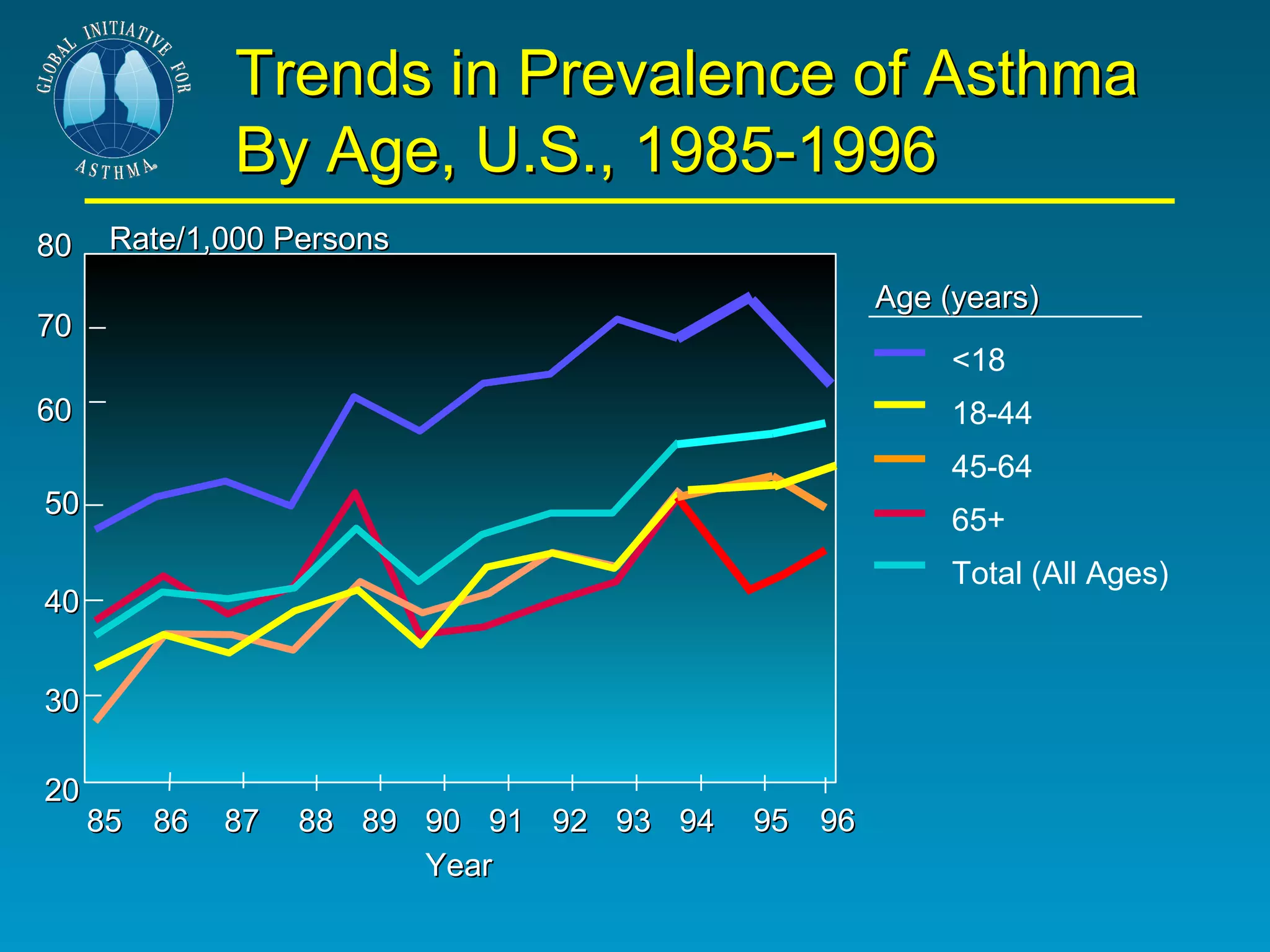
Epidemiology Asthma is one of the most common chronic diseases worldwide —160 millions patients suffered from asthma Prevalence increasing in many countries, especially in children — 1~4% in adult, 3~5% in children in China A major cause of school/work absence An overall increase in severity of asthma increases the pool of patients at risk for death
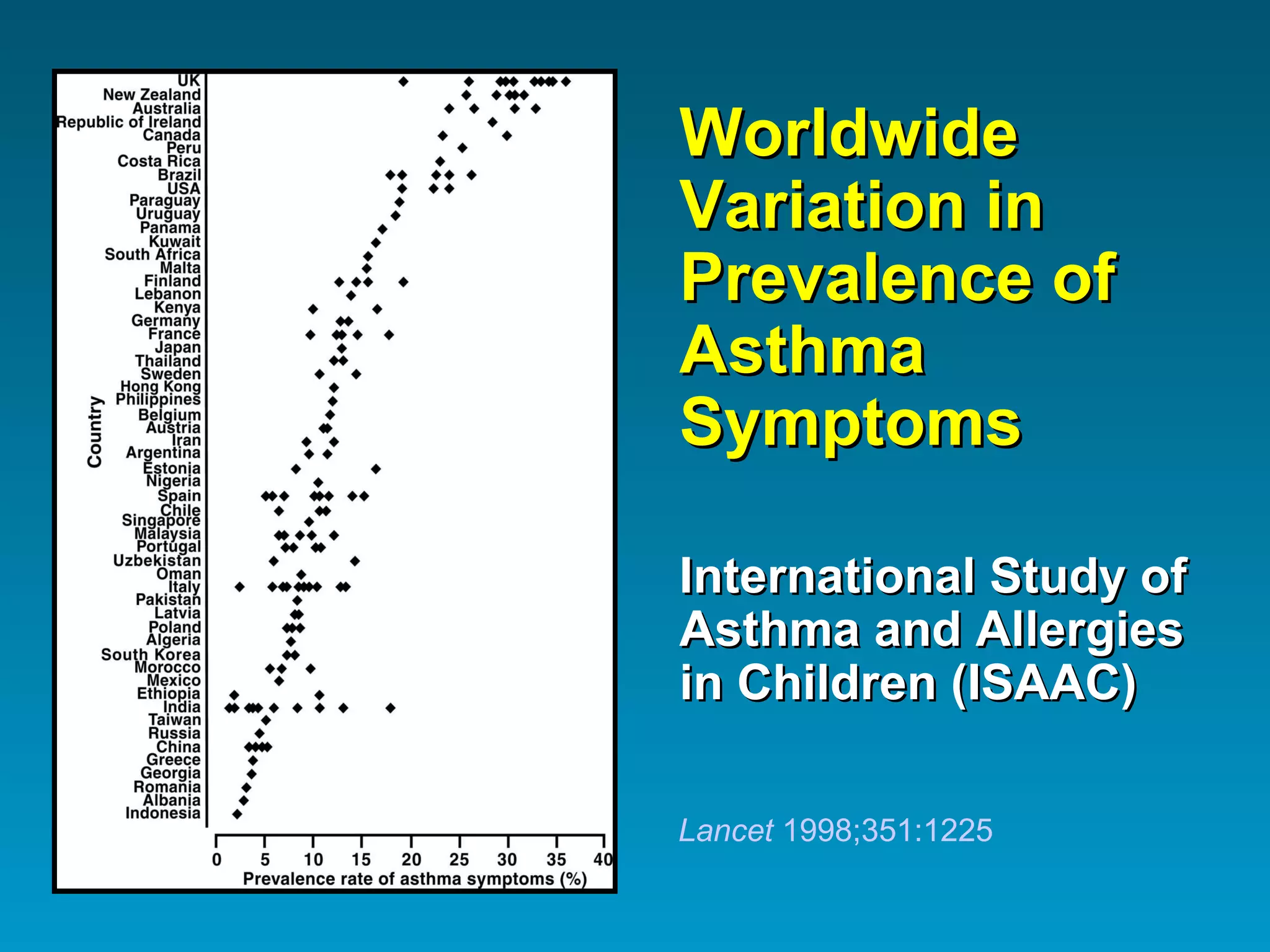
Worldwide Variation in Prevalence of Asthma Symptoms International Study of Asthma and Allergies in Children (ISAAC) Lancet  1998;351:1225
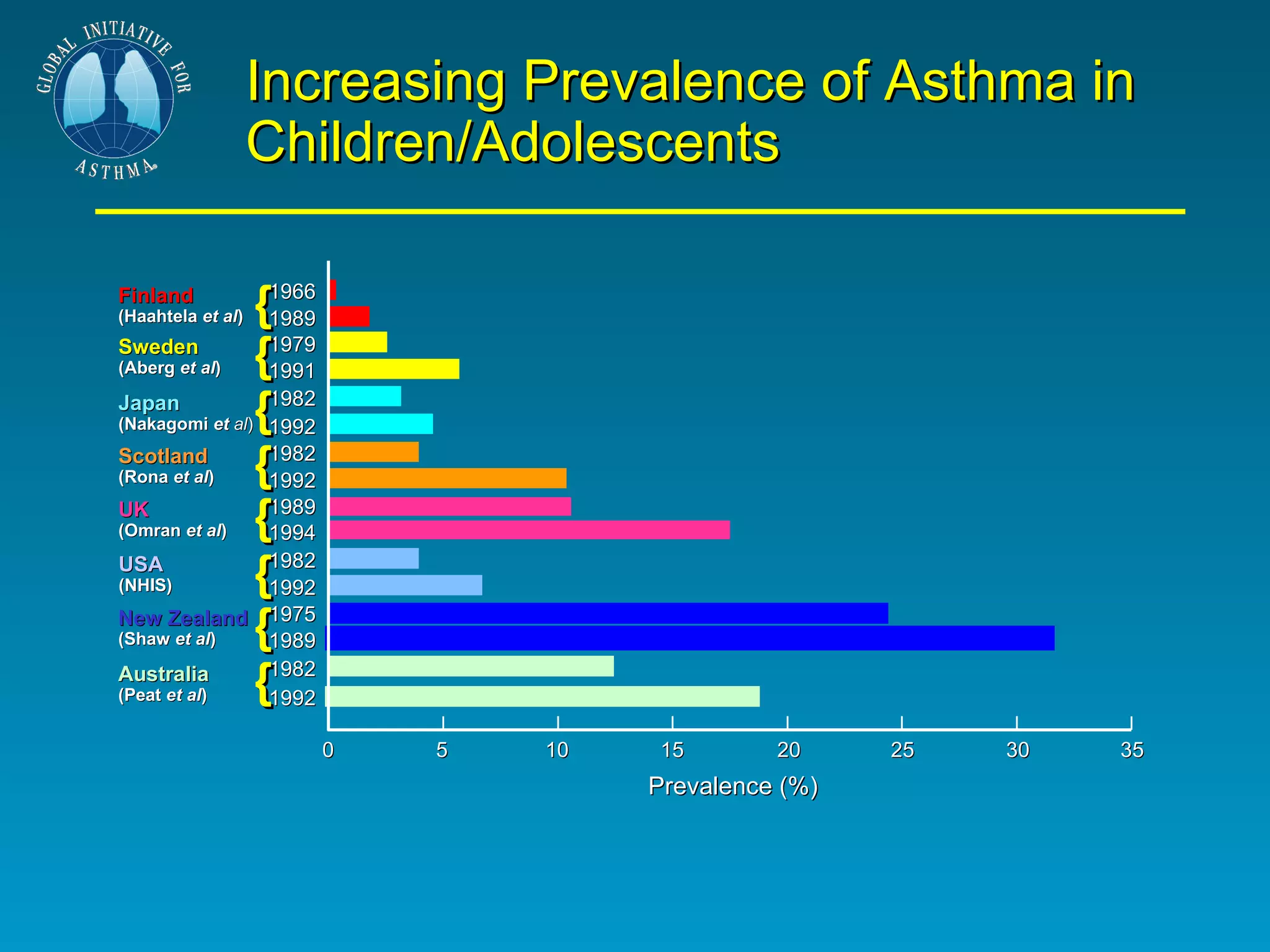
Increasing Prevalence of Asthma in Children/Adolescents 0 5 10 15 20 25 30 35 1992 1982 1989 1975 1992 1982 1994 1989 1992 1982 1992 1982 1991 1979 1989 1966 Finland (Haahtela  et al ) Sweden (Aberg  et al ) Japan (Nakagomi  et  al ) Scotland (Rona  et al ) UK (Omran  et al ) USA (NHIS) New Zealand (Shaw  et al ) Australia (Peat  et al ) { Prevalence (%) { { { { { { {
70 60 50 40 30 20 85 86 87 88 89 90 91 92 93 94 Rate/1,000 Persons Year <18 18-44 45-64 65+ Total (All Ages) Age (years) Trends in Prevalence of Asthma   By Age, U.S., 1985-1996 95 96 80
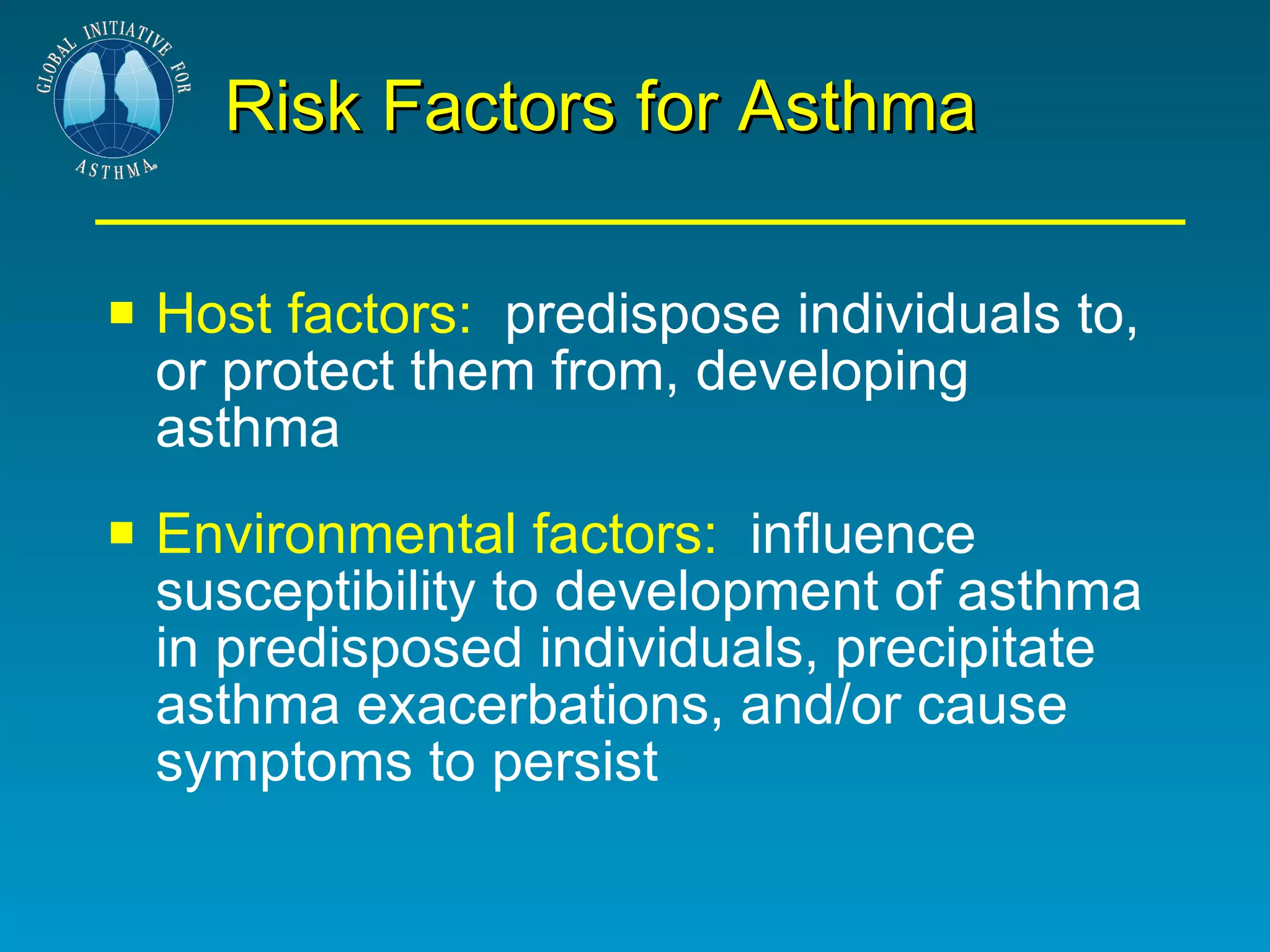
Risk Factors for Asthma Host factors:   predispose individuals to, or protect them from, developing asthma Environmental factors:   influence susceptibility to development of asthma in predisposed individuals, precipitate asthma exacerbations, and/or cause symptoms to persist
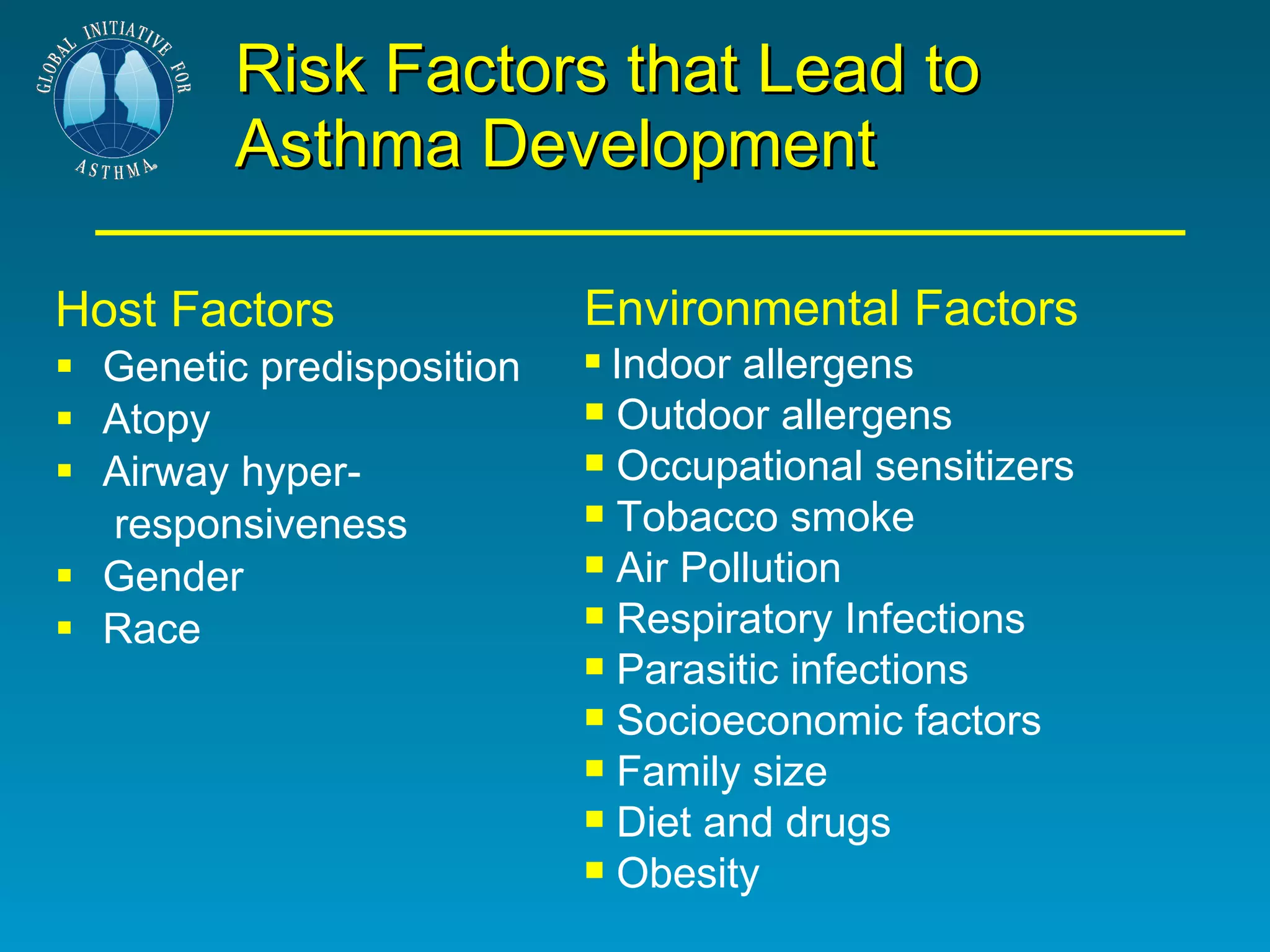
Risk Factors that Lead to  Asthma Development Host Factors Genetic predisposition Atopy Airway hyper- responsiveness Gender Race Environmental Factors Indoor allergens Outdoor allergens Occupational sensitizers Tobacco smoke Air Pollution Respiratory Infections Parasitic infections Socioeconomic factors Family size Diet and drugs Obesity
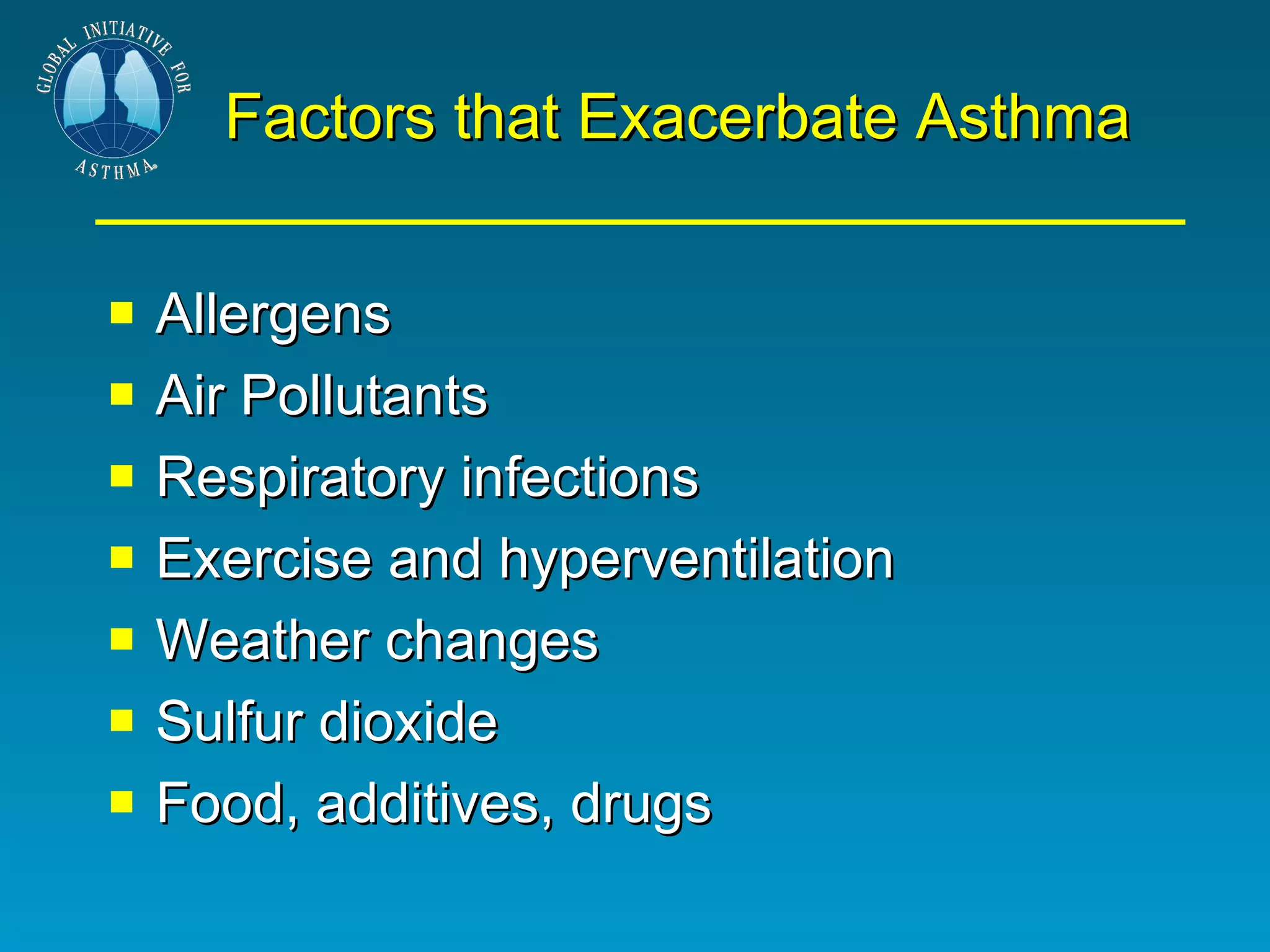
Factors that Exacerbate Asthma Allergens Air Pollutants Respiratory infections Exercise and hyperventilation Weather changes Sulfur dioxide Food, additives, drugs
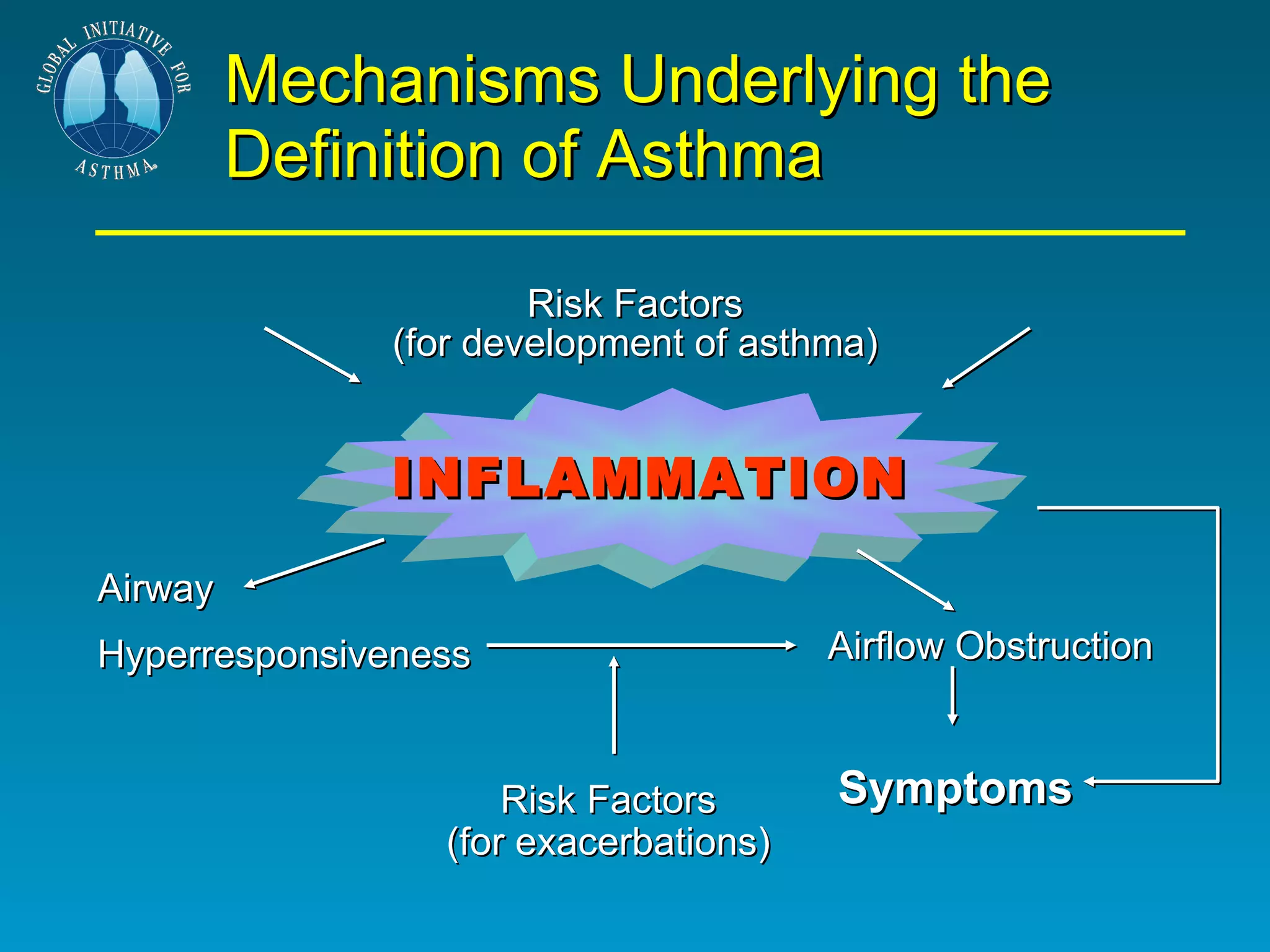
Mechanisms Underlying the Definition of Asthma Risk Factors (for development of asthma) INFLAMMATION Airway Hyperresponsiveness Airflow Obstruction Risk Factors (for exacerbations) Symptoms
 
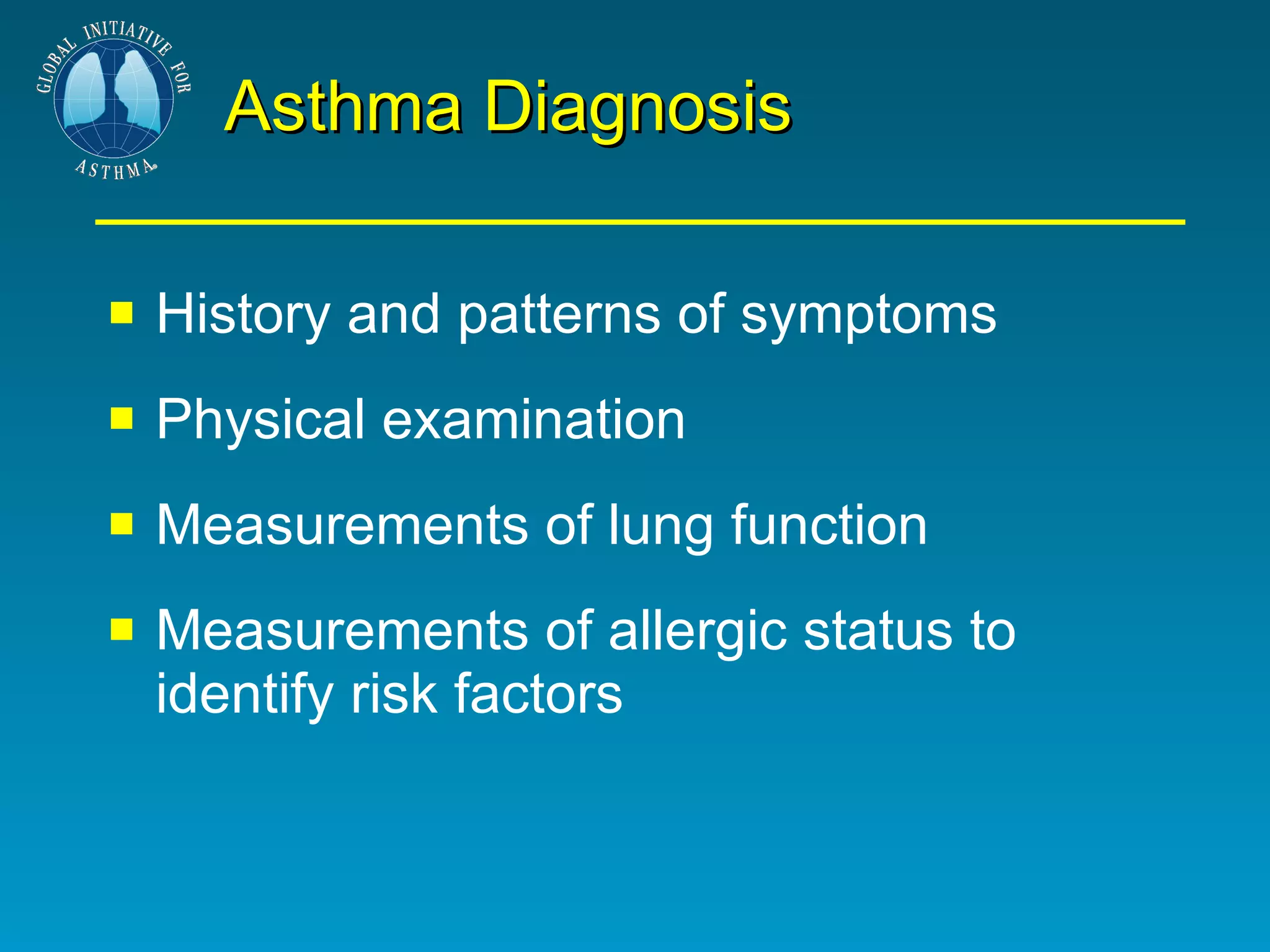
Asthma Diagnosis History and patterns of symptoms Physical examination Measurements of lung function Measurements of allergic status to identify risk factors
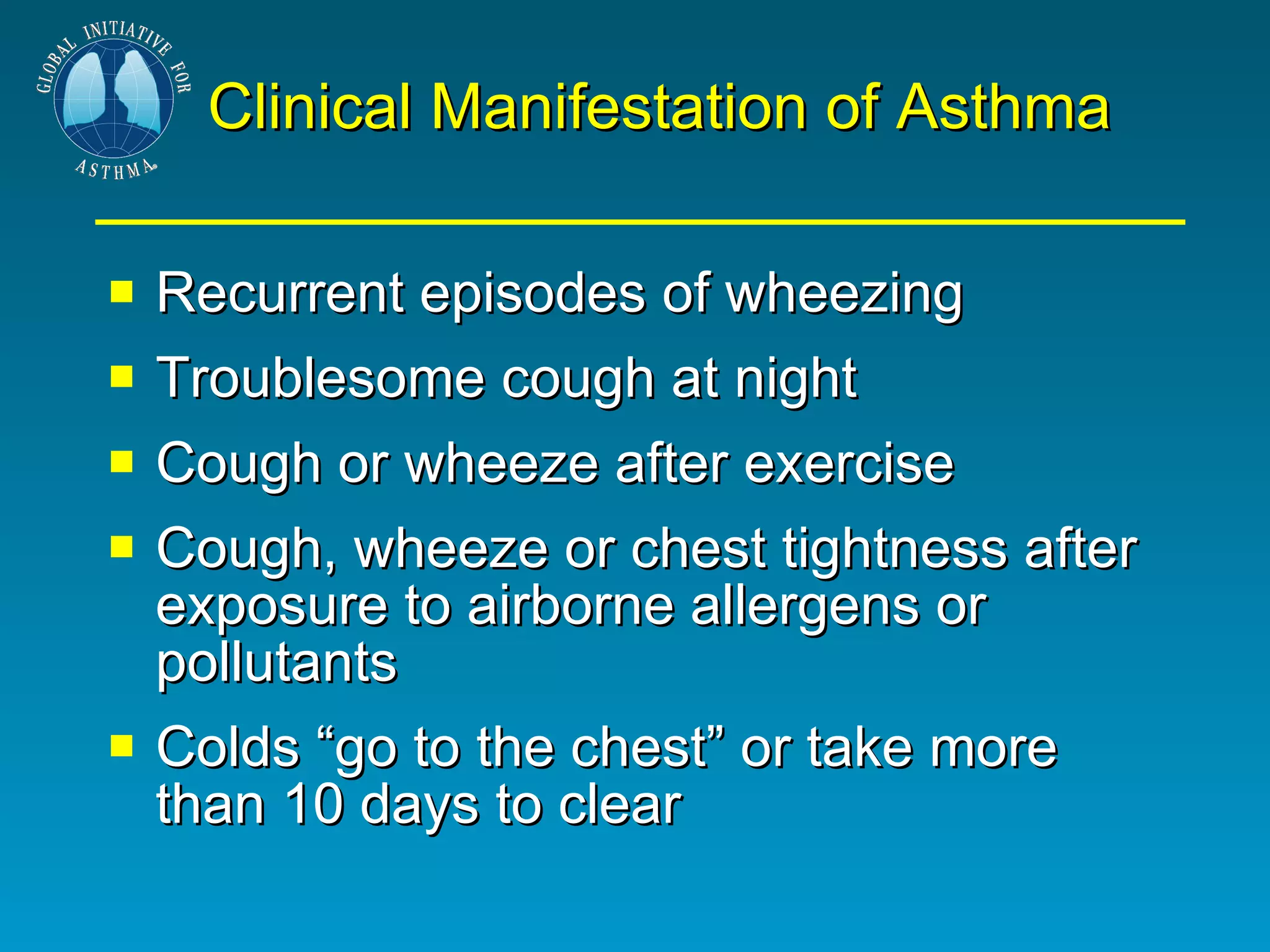
Clinical Manifestation of Asthma Recurrent episodes of wheezing Troublesome cough at night Cough or wheeze after exercise Cough, wheeze or chest tightness after exposure to airborne allergens or pollutants Colds “go to the chest” or take more than 10 days to clear
Physical Examination Because of variable symptoms, the physical examination of the respiratory system may be normal.  Dyspnea, airflow limitation (wheeze), and hyperinflation are likely to be present if patients are examined during symptomatic periods. Silent chest, cyanosis, drowsiness, difficult speaking, tachycardia and use of accessory muscles in severe asthma.
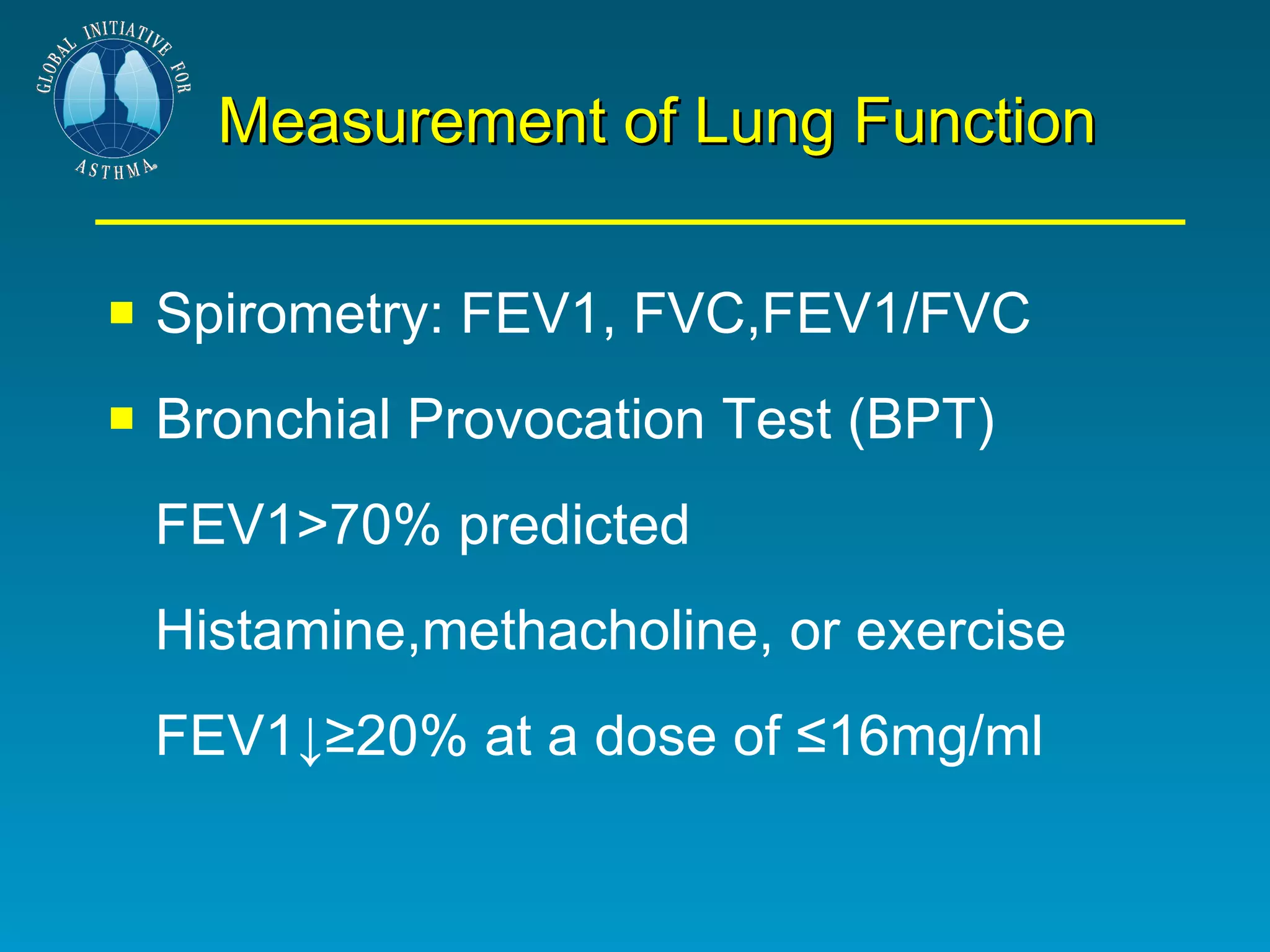
Measurement of Lung Function Spirometry: FEV1, FVC,FEV1/FVC Bronchial Provocation Test (BPT) FEV1>70% predicted Histamine,methacholine, or exercise  FEV1↓≥20% at a dose of ≤16mg/ml
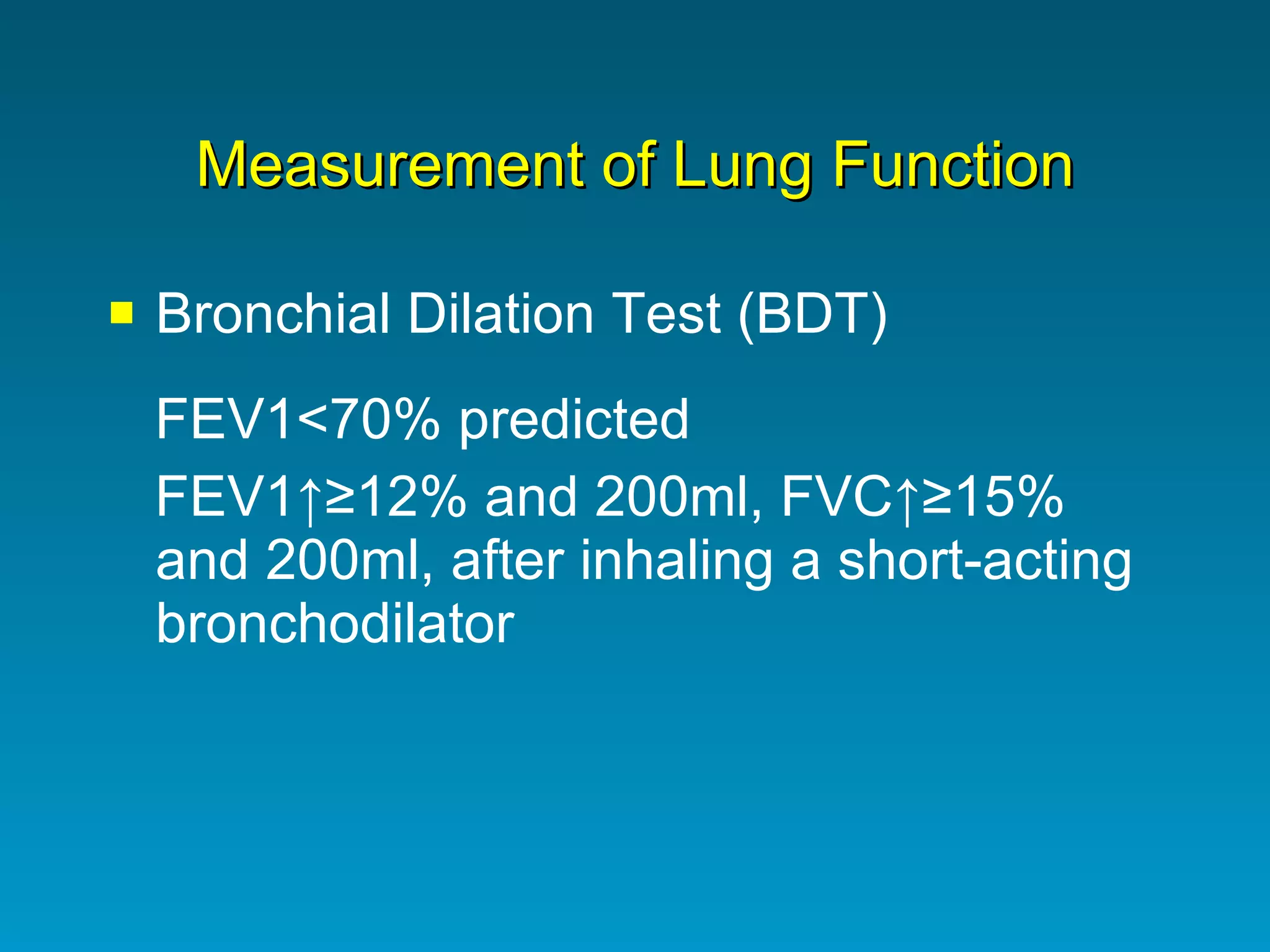
Measurement of Lung Function Bronchial Dilation Test (BDT) FEV1<70% predicted FEV1↑≥12% and 200ml, FVC↑≥15% and 200ml, after inhaling a short-acting bronchodilator
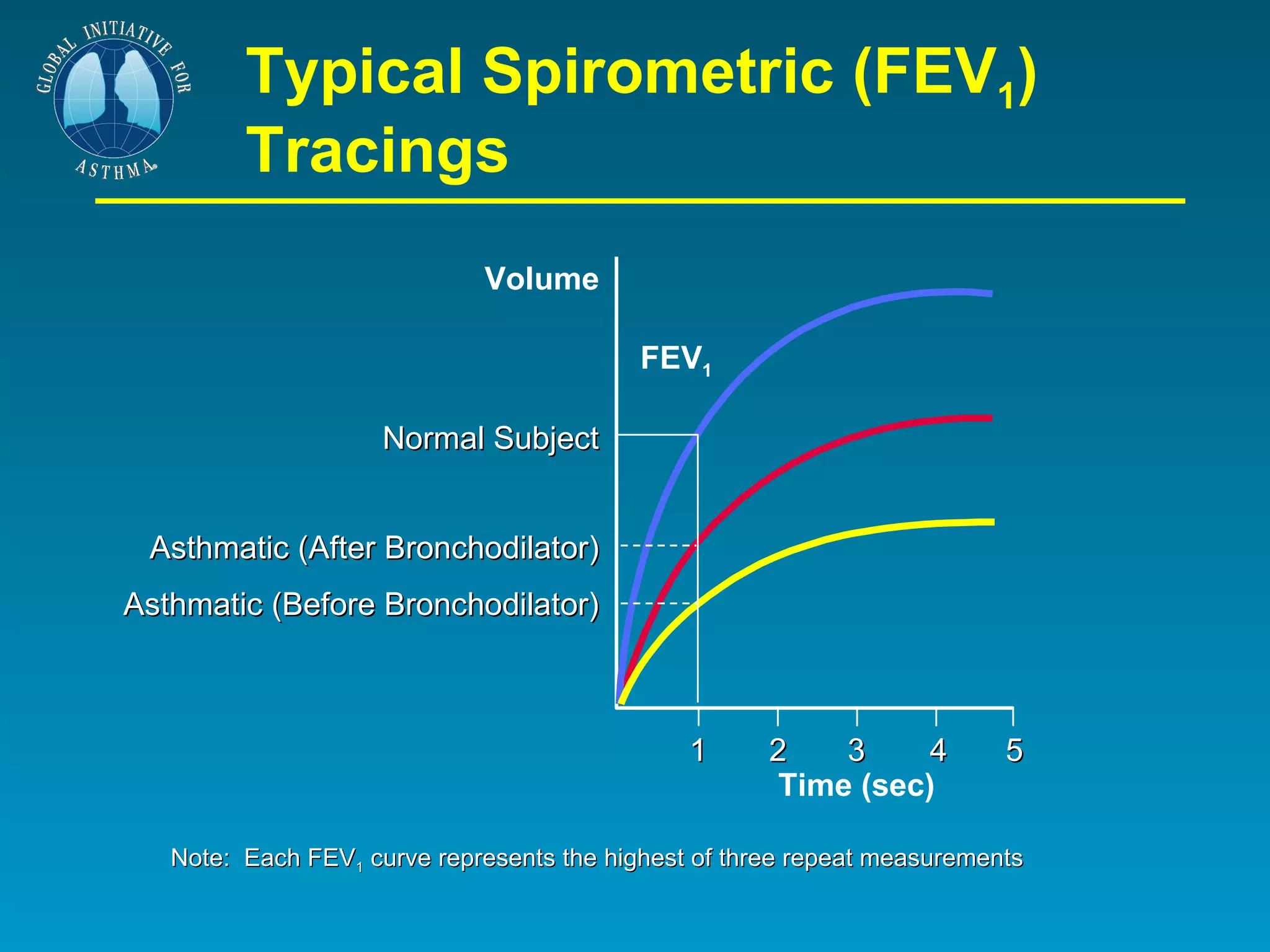
Typical Spirometric (FEV 1 ) Tracings 1 Time (sec) 2 3 4 5 FEV 1 Volume Normal Subject Asthmatic (After Bronchodilator) Asthmatic (Before Bronchodilator) Note:  Each FEV 1  curve represents the highest of three repeat measurements
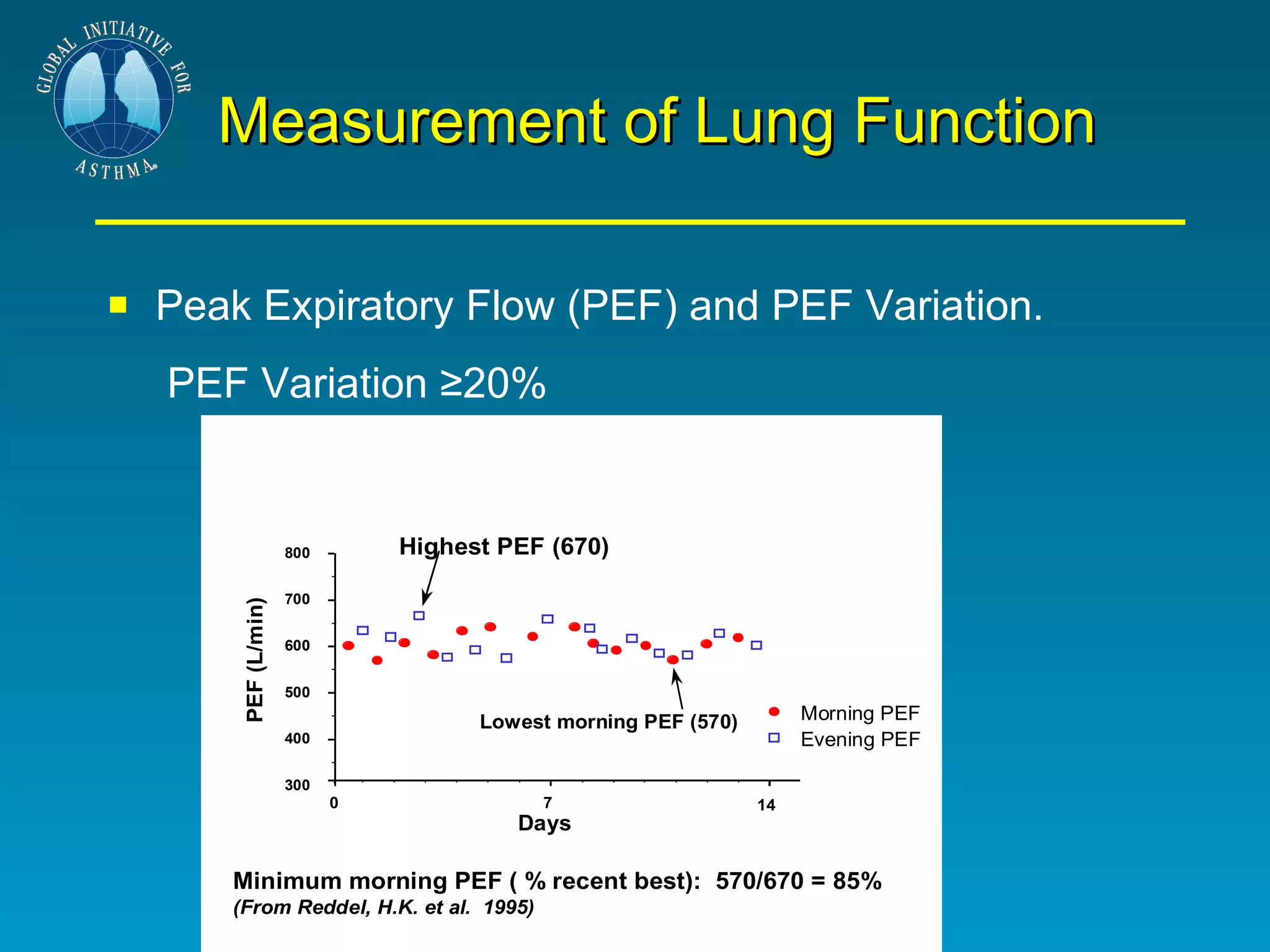
Measurement of Lung Function Peak Expiratory Flow (PEF) and PEF Variation. PEF Variation ≥20%
Arterial blood gas Respiratory alkalosis, during a mile asthma  exacerbation Respiratory acidosis and hypoxemia, during a severe asthma exacerbation
Measurement of Allergic Status Skin test Measurement of specific IgE in serum
Standards of Diagnosis Recurrent episodes of wheezing, breathlessness, chest tightness, and coughing, particularly at night or in the early morning  Dyspnea, airflow limitation (wheeze), and hyperinflation are likely to be present if patients are examined during symptomatic periods These episodes and symptoms are often reversible either spontaneously or with treatment Exclude other diseases that manifested with similar symptoms At least one or more of the following three:  Bronchial Provocation Test (BPT) Bronchial Dilation Test (BDT)  Peak Expiratory Flow (PEF) Variation
Differential Diagnosis Congestive Heart Failure Pseudoasthma caused by vocal cord dysfunction Chronic bronchitis & COPD Lung cancer
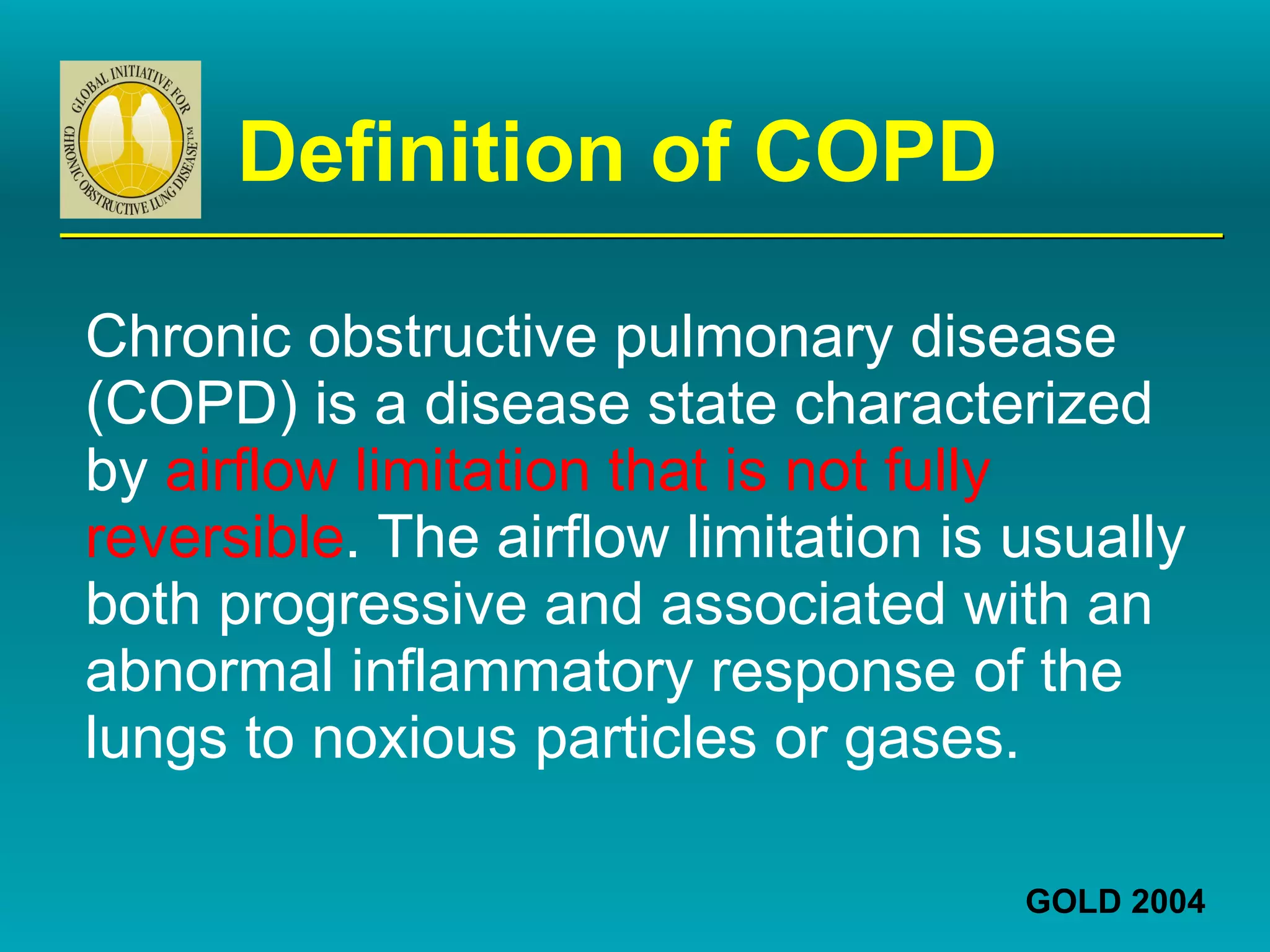
Definition of COPD Chronic obstructive pulmonary disease (COPD) is a disease state characterized by  airflow limitation that is not fully reversible . The airflow limitation is usually both progressive and associated with an abnormal inflammatory response of the lungs to noxious particles or gases. GOLD 2004
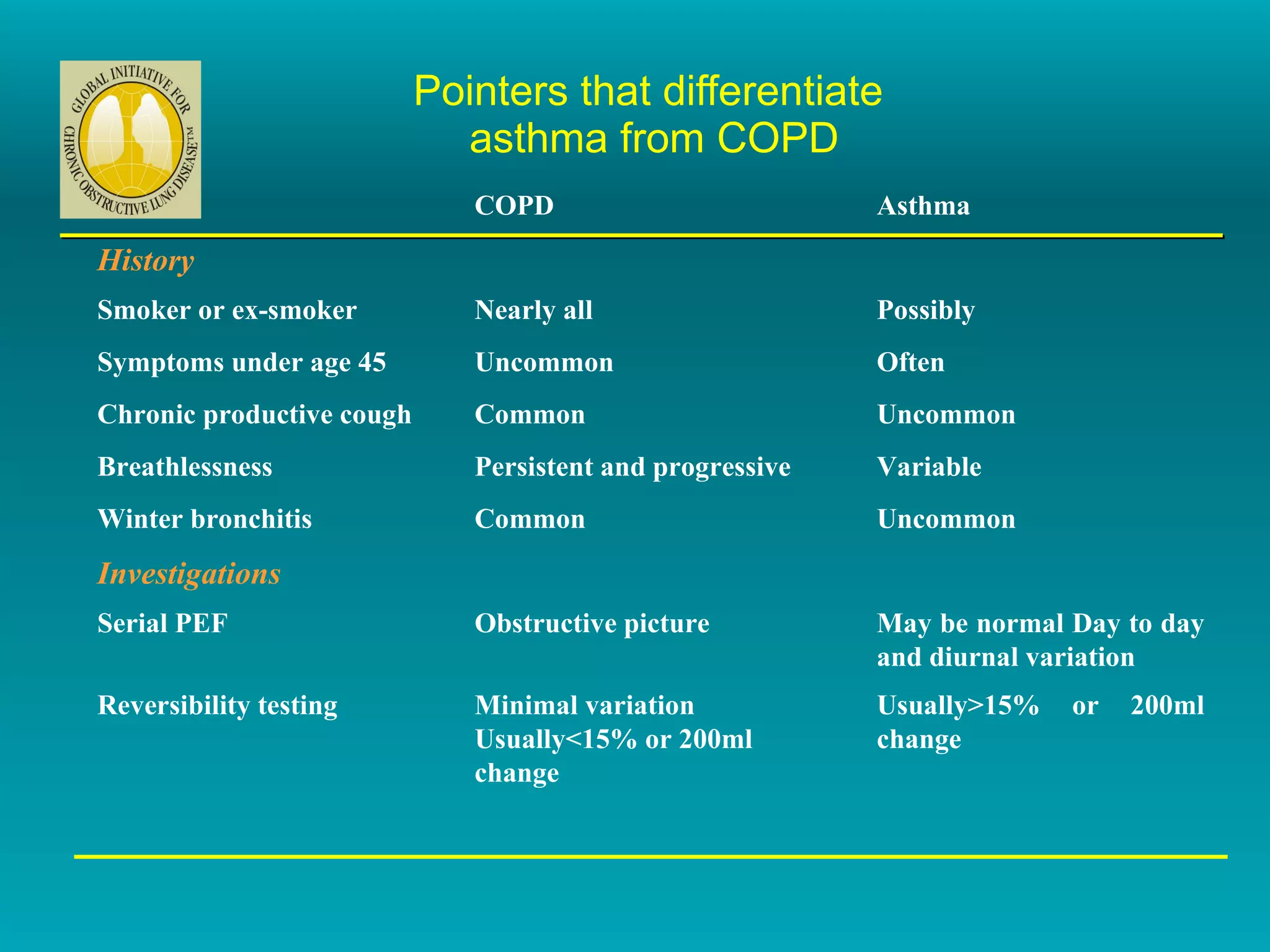
Pointers that differentiate  asthma from COPD   COPD Asthma History     Smoker or ex-smoker Nearly all Possibly Symptoms under age 45 Uncommon Often Chronic productive cough Common Uncommon Breathlessness Persistent and progressive Variable Winter bronchitis Common Uncommon Investigations     Serial PEF Obstructive picture May be normal Day to day and diurnal variation Reversibility testing Minimal variation Usually<15% or 200ml change  Usually>15% or 200ml change
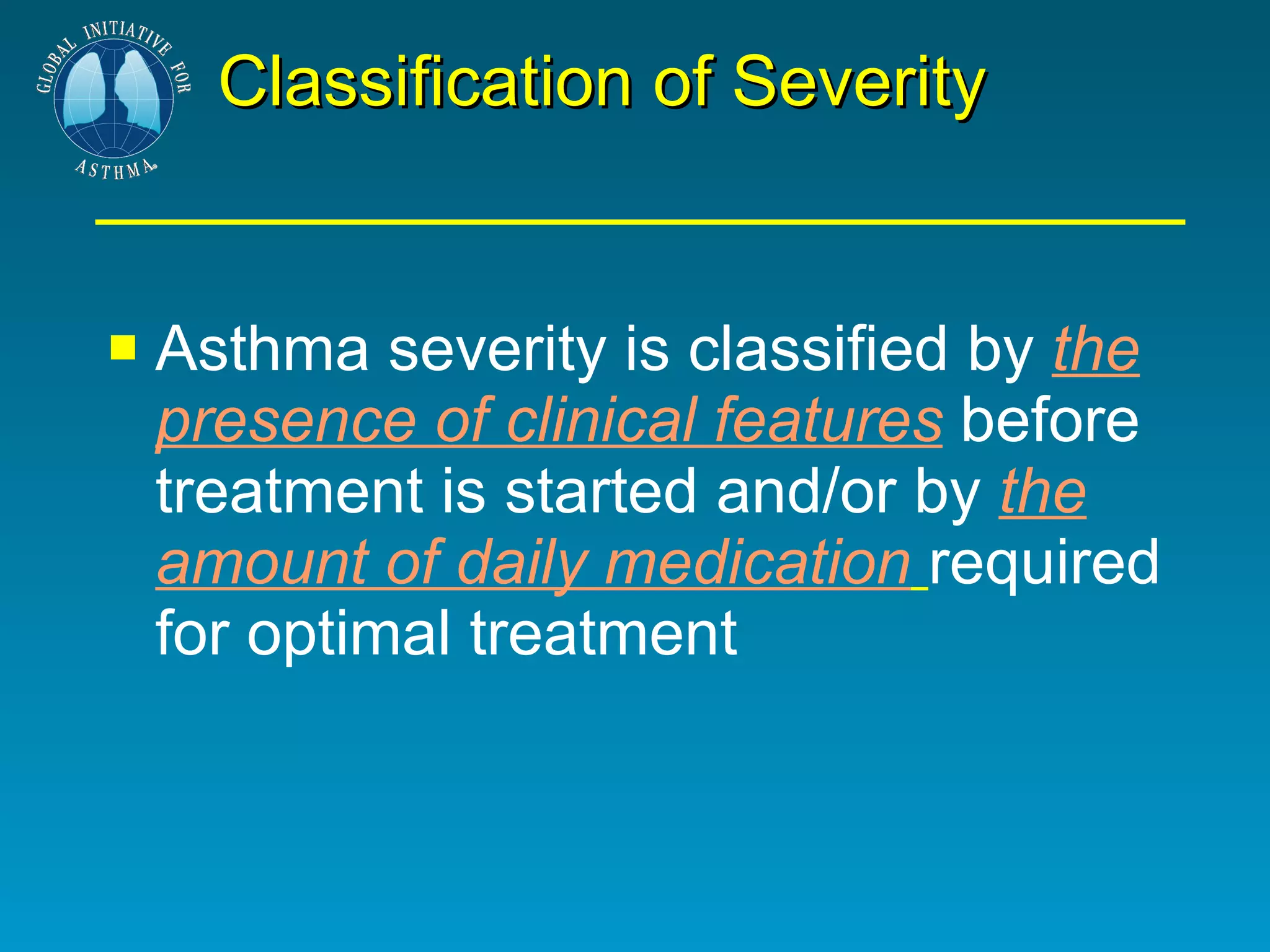
Classification of Severity Asthma severity is classified by  the presence of clinical features  before treatment is started and/or by  the amount of daily medication   required for optimal treatment
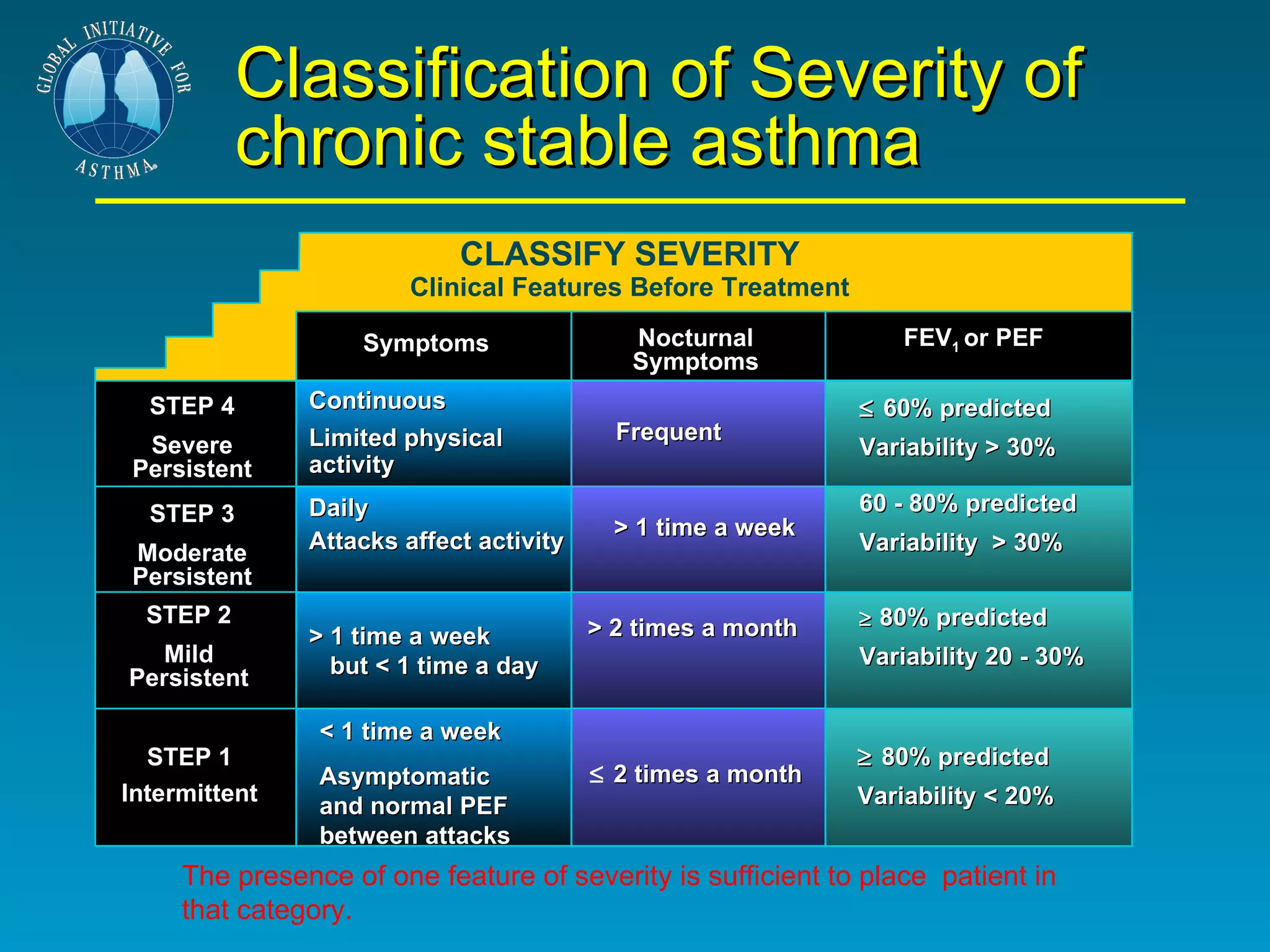
Classification of Severity of chronic stable asthma CLASSIFY SEVERITY Clinical Features Before Treatment Symptoms Nocturnal Symptoms FEV 1  or PEF STEP 4 Severe Persistent STEP 3 Moderate Persistent STEP 2 Mild Persistent STEP 1 Intermittent Continuous Limited physical activity Daily Attacks affect activity > 1 time a week  but < 1 time a day < 1 time a week Asymptomatic and normal PEF between attacks Frequent > 1 time a week > 2 times a month  2 times a month  60% predicted Variability > 30% 60 - 80% predicted  Variability  > 30%  80% predicted Variability 20 - 30%  80% predicted Variability < 20% The presence of one feature of severity is sufficient to place  patient in that category.
Classification of Severity
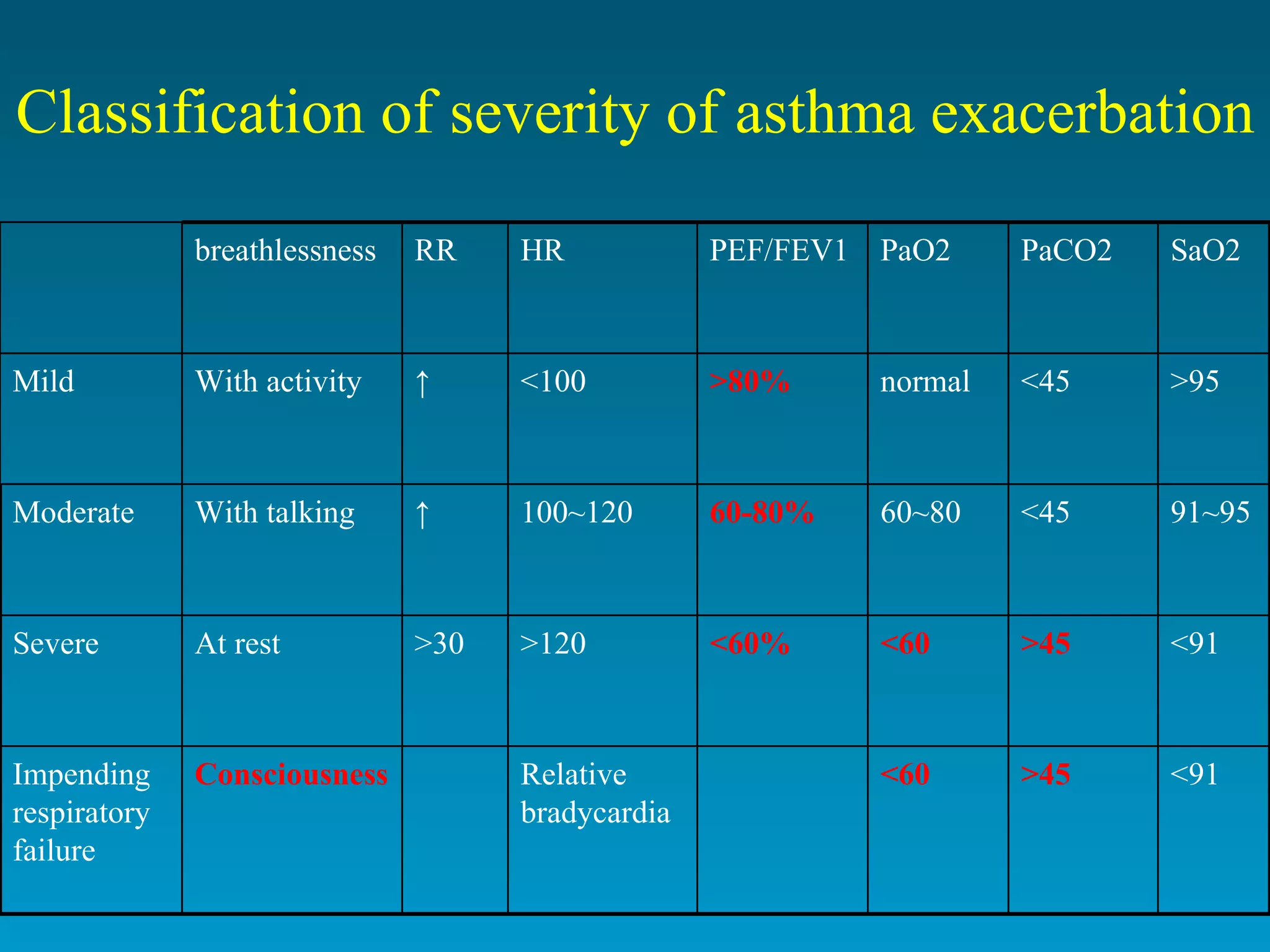
Classification of severity of asthma exacerbation <91 >45 <60 Relative bradycardia Consciousness Impending respiratory failure <91 >45 <60 <60% >120 >30 At rest Severe 91~95 <45 60~80 60-80% 100~120 ↑ With talking Moderate >95 <45 normal >80% <100 ↑ With activity Mild SaO2 PaCO2 PaO2 PEF/FEV1 HR RR breathlessness
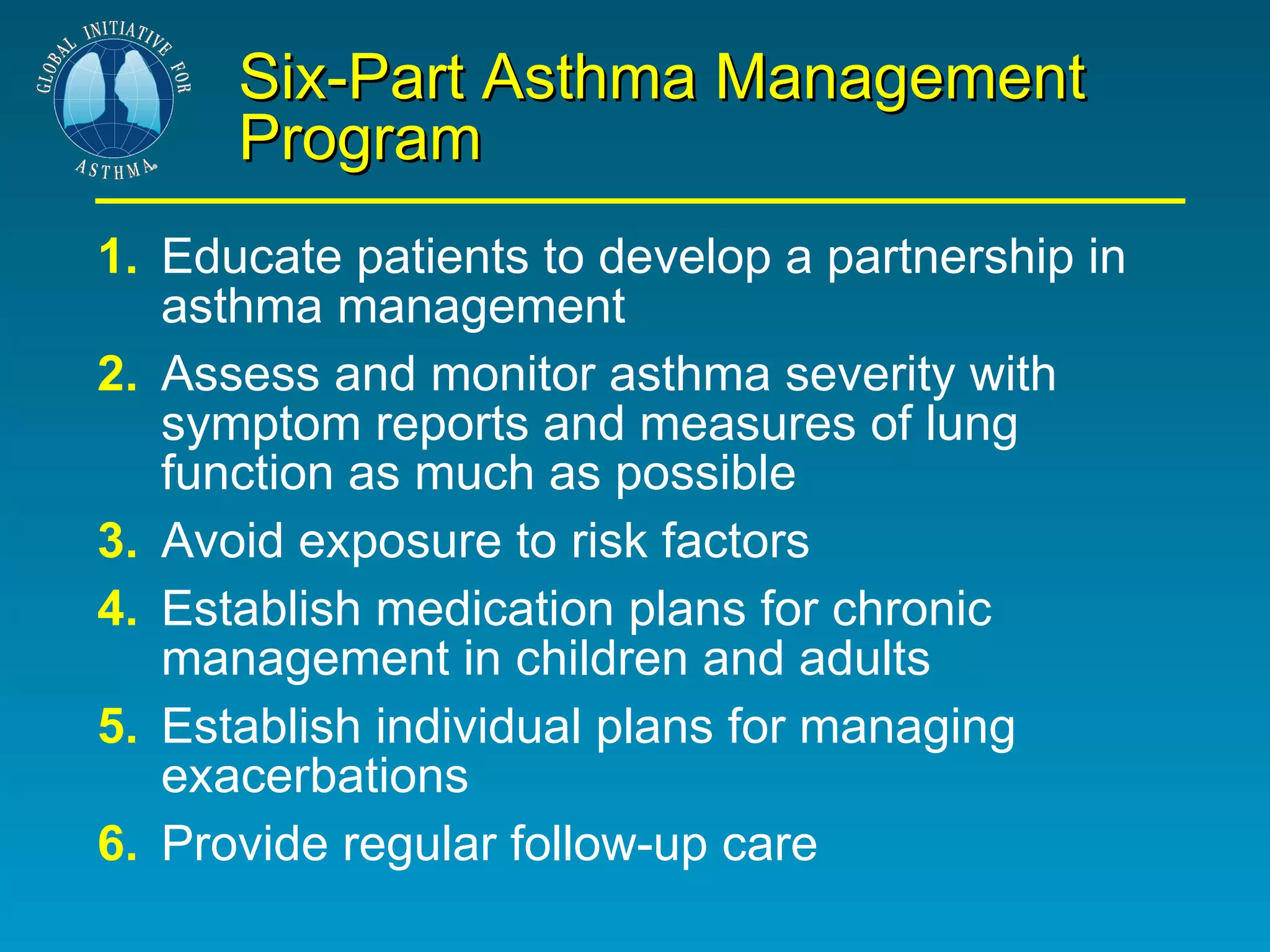
Six-Part Asthma Management Program 1. Educate patients to develop a partnership in asthma management 2. Assess and monitor asthma severity with symptom reports and measures of lung function as much as possible 3. Avoid exposure to risk factors 4. Establish medication plans for chronic management in children and adults 5. Establish individual plans for managing exacerbations 6. Provide regular follow-up care
Six-part Asthma Management Program Goals of Long-term Management Achieve and maintain control of symptoms Prevent asthma episodes or attacks Maintain pulmonary function as close to normal levels as possible Maintain normal activity levels, including exercise Avoid adverse effects from asthma medications Prevent development of irreversible airflow limitation Prevent asthma mortality
Six-part Asthma Management Program Control of Asthma Minimal (ideally no) chronic symptoms Minimal (infrequent) exacerbations No emergency visits Minimal (ideally no) need for “as needed” use of  β 2 -agonist  No limitations on activities, including exercise PEF circadian variation of less than 20% (Near) normal PEF Minimal (or no) adverse effects from medicine
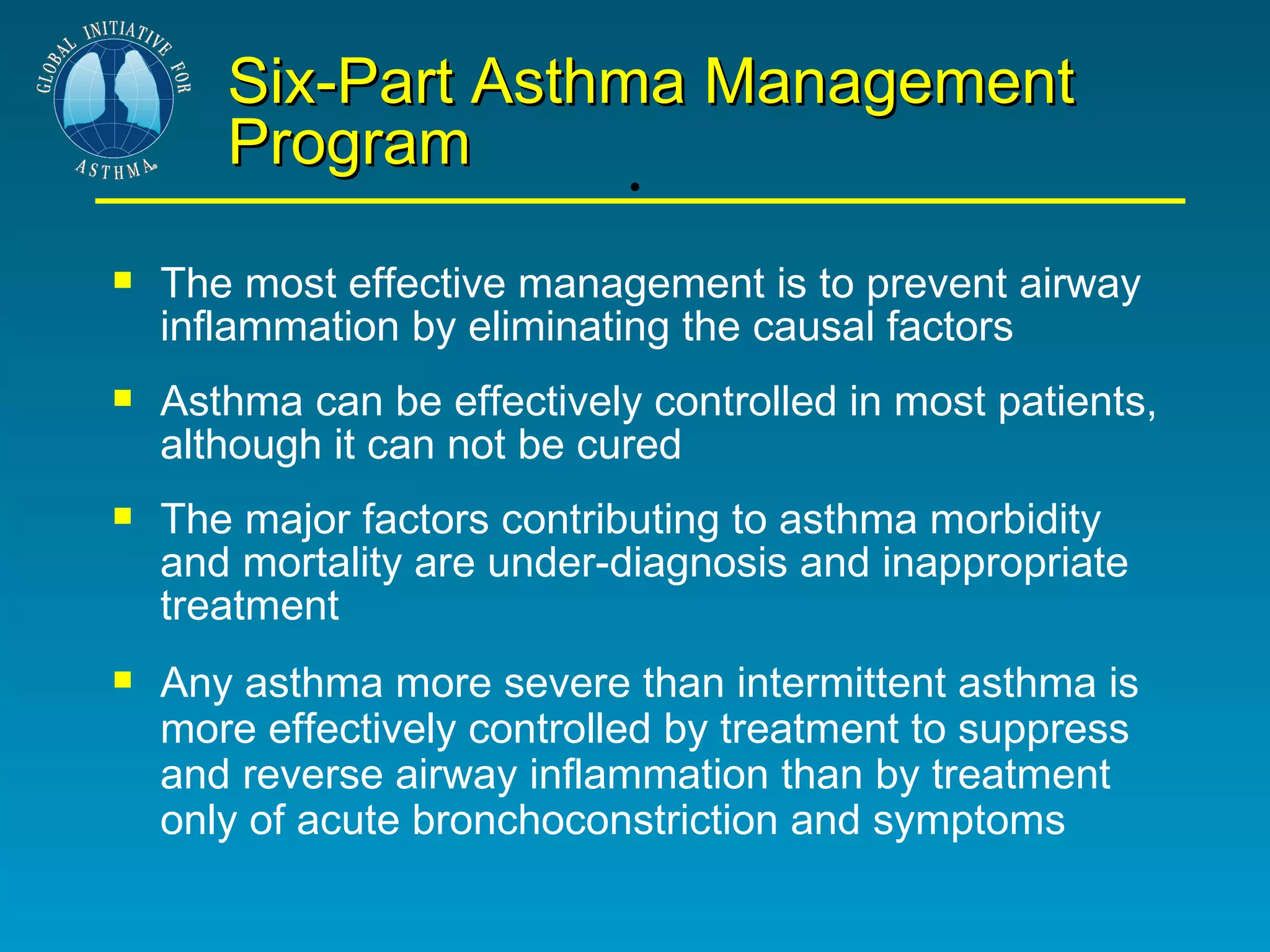
. Six-Part Asthma Management Program The most effective management is to prevent airway inflammation by eliminating the causal factors Asthma can be effectively controlled in most patients, although it can not be cured The major factors contributing to asthma morbidity and mortality are under-diagnosis and inappropriate treatment Any asthma more severe than intermittent asthma is more effectively controlled by treatment to suppress and reverse airway inflammation than by treatment only of acute bronchoconstriction and symptoms
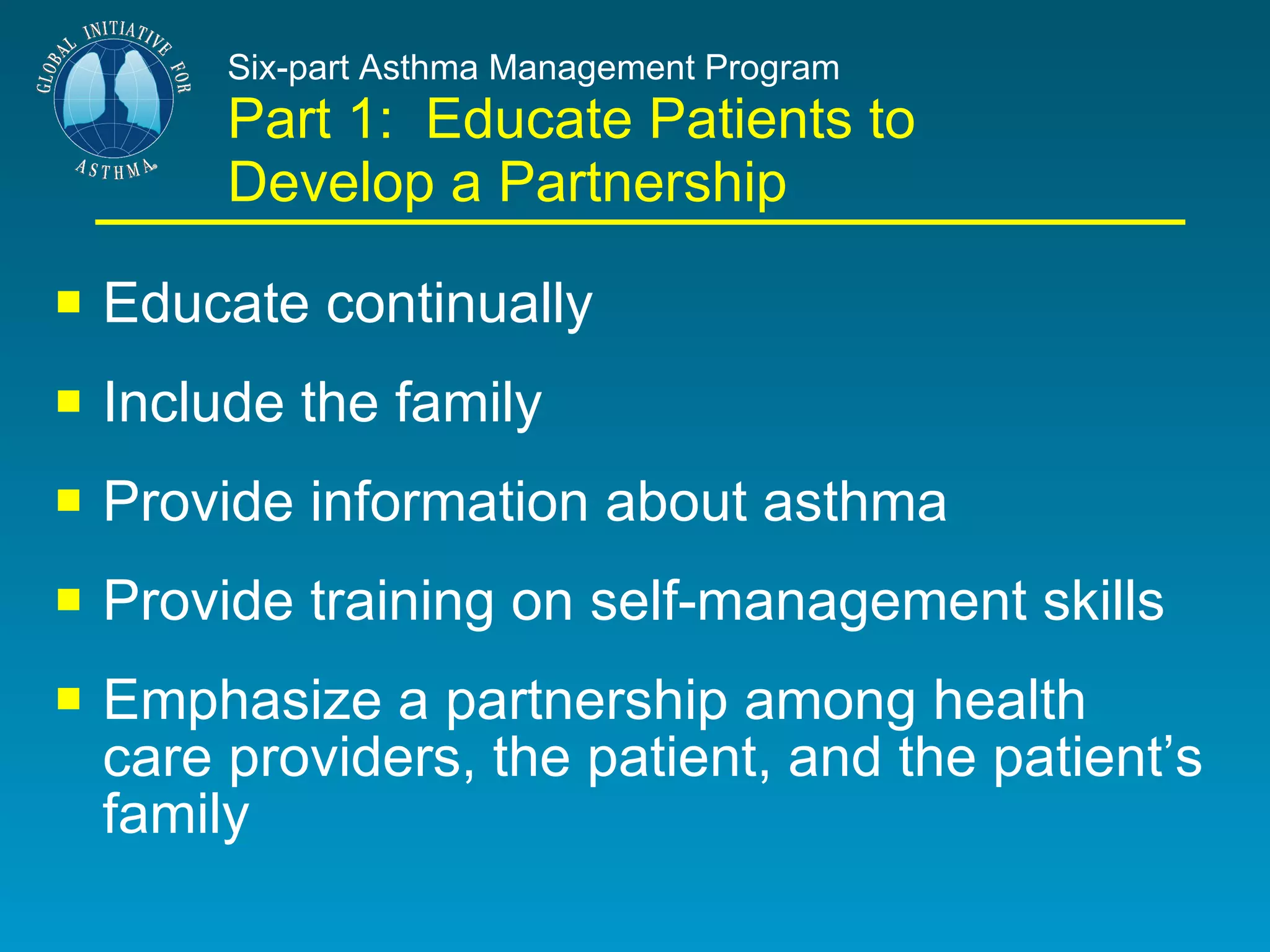
Six-part Asthma Management Program Part 1:  Educate Patients to Develop a Partnership   Educate continually Include the family Provide information about asthma Provide training on self-management skills Emphasize a partnership among health care providers, the patient, and the patient’s family
Six-part Asthma Management Program Part 2:  Assess and Monitor Asthma Severity with Symptom Reports and Measures of Lung Function Symptom reports Use of reliever medication Nighttime symptoms Activity limitations Spirometry for initial assessment.  Peak Expiratory Flow for  follow-up: Assess severity Assess response to therapy PEF monitoring at home Important for those with poor perception of symptoms Daily measurement recorded in a diary Assesses the severity and predicts worsening Guides the use of a zone system for asthma self-management Arterial blood gas for severe exacerbations
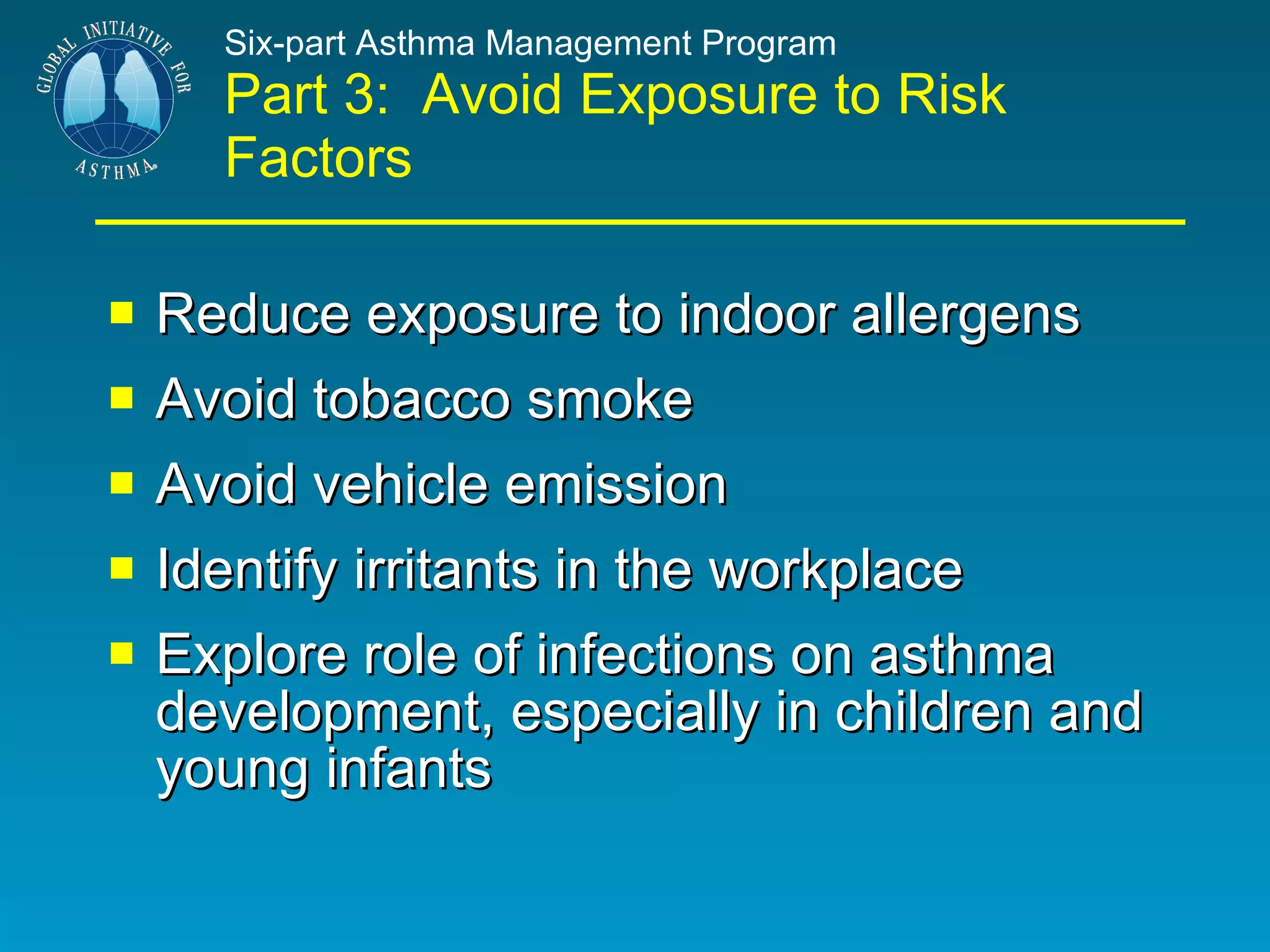
Six-part Asthma Management Program Part 3:  Avoid Exposure to Risk Factors Reduce exposure to indoor allergens Avoid tobacco smoke Avoid vehicle emission Identify irritants in the workplace Explore role of infections on asthma development, especially in children and young infants
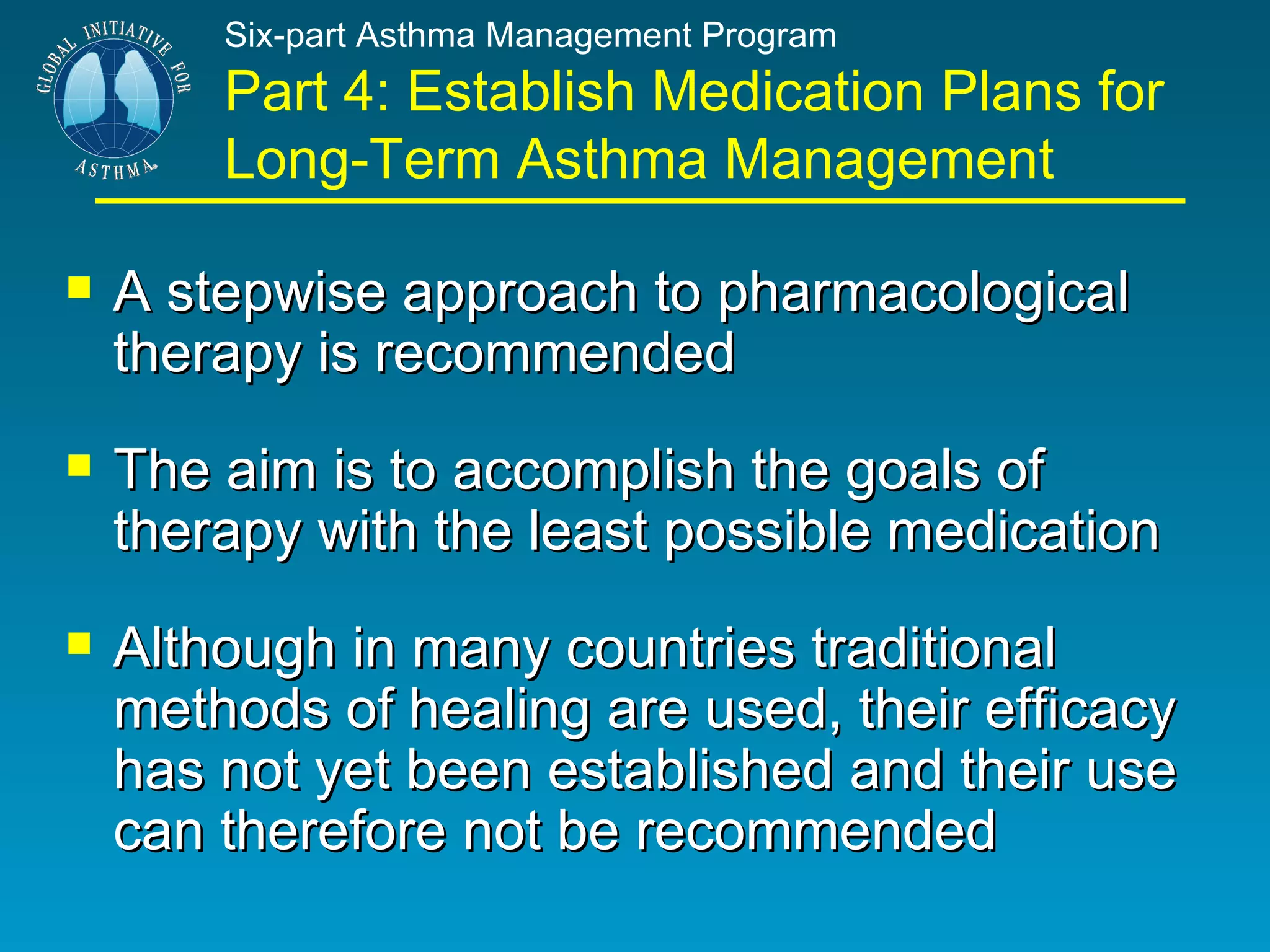
Six-part Asthma Management Program Part 4: Establish Medication Plans for Long-Term Asthma Management A stepwise approach to pharmacological therapy is recommended  The aim is to accomplish the goals of therapy with the least possible medication Although in many countries traditional methods of healing are used, their efficacy has not yet been established and their use can therefore not be recommended
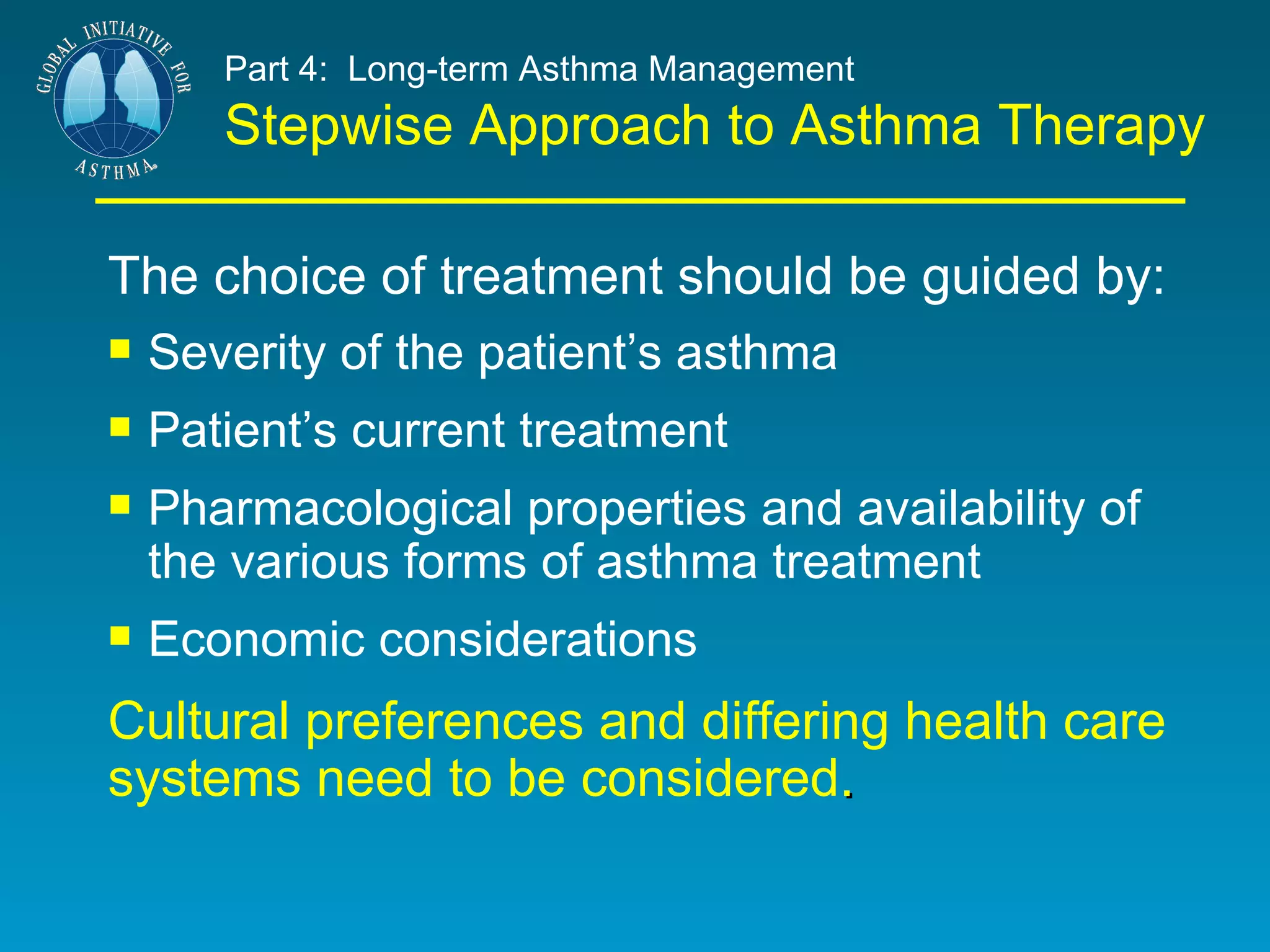
Part 4:  Long-term Asthma Management Stepwise Approach to Asthma Therapy The choice of treatment should be guided by:   Severity of the patient’s asthma Patient’s current treatment Pharmacological properties and availability of the various forms of asthma treatment Economic considerations Cultural preferences and differing health care systems need to be considered .
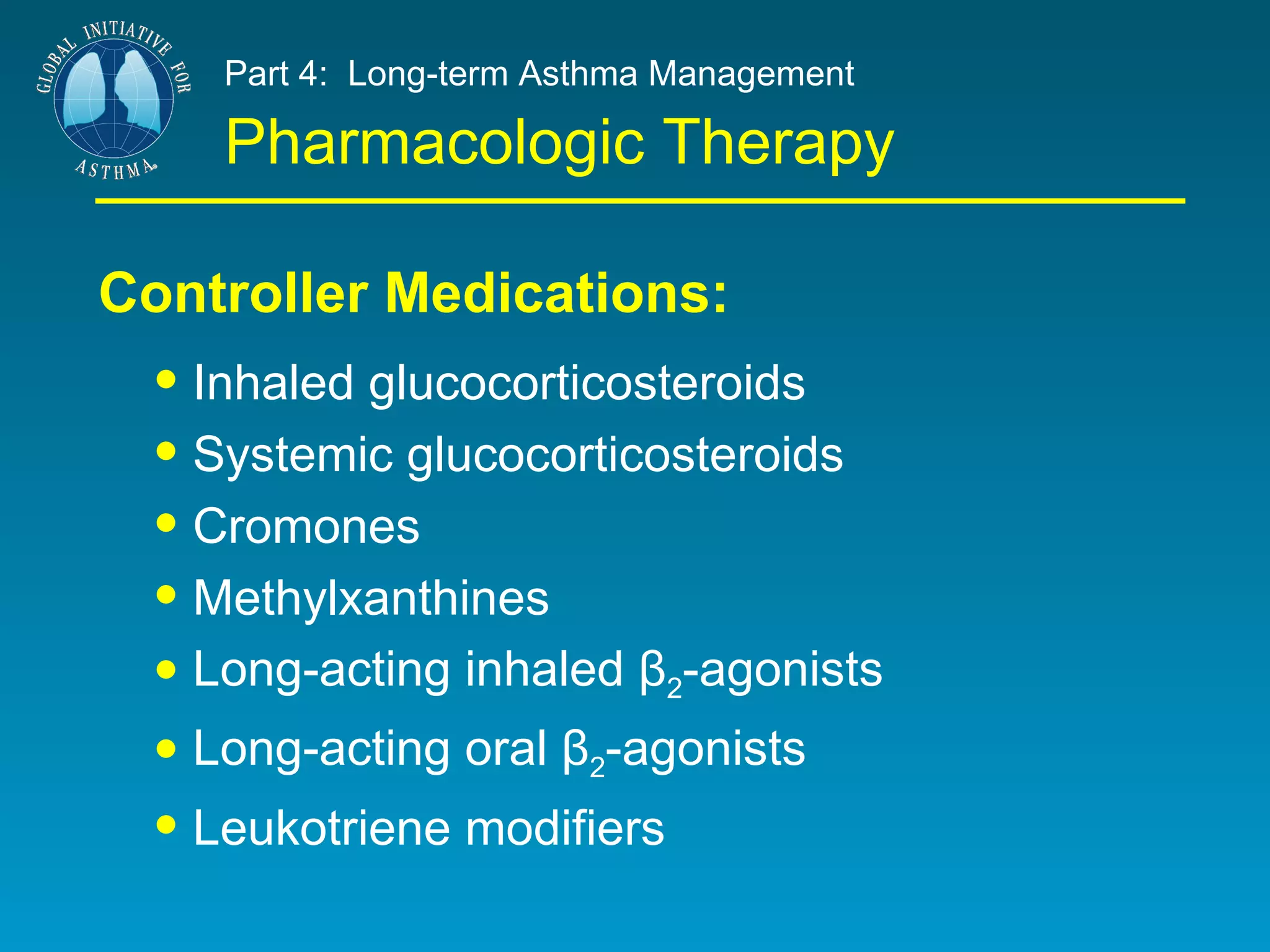
Part 4:  Long-term Asthma Management Pharmacologic Therapy Controller Medications: Inhaled glucocorticosteroids Systemic glucocorticosteroids Cromones  Methylxanthines Long-acting inhaled β 2 -agonists Long-acting oral β 2 -agonists Leukotriene modifiers
Part 4:  Long-term Asthma Management   Pharmacologic Therapy Reliever Medications: Rapid-acting inhaled β 2 -agonists Systemic glucocorticosteroids Anticholinergics Methylxanthines Short-acting oral β 2 -agonists
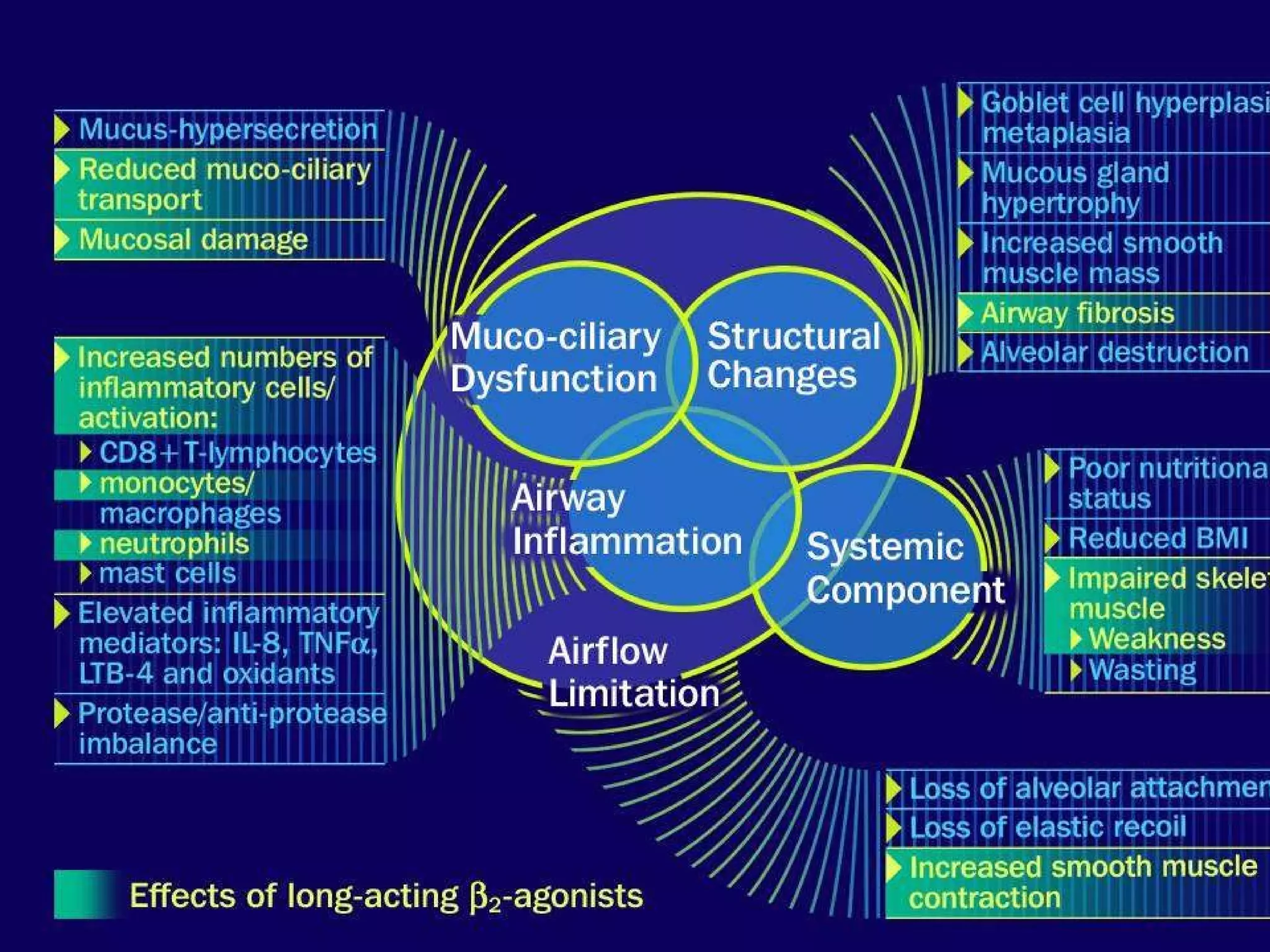
© GSK 2002
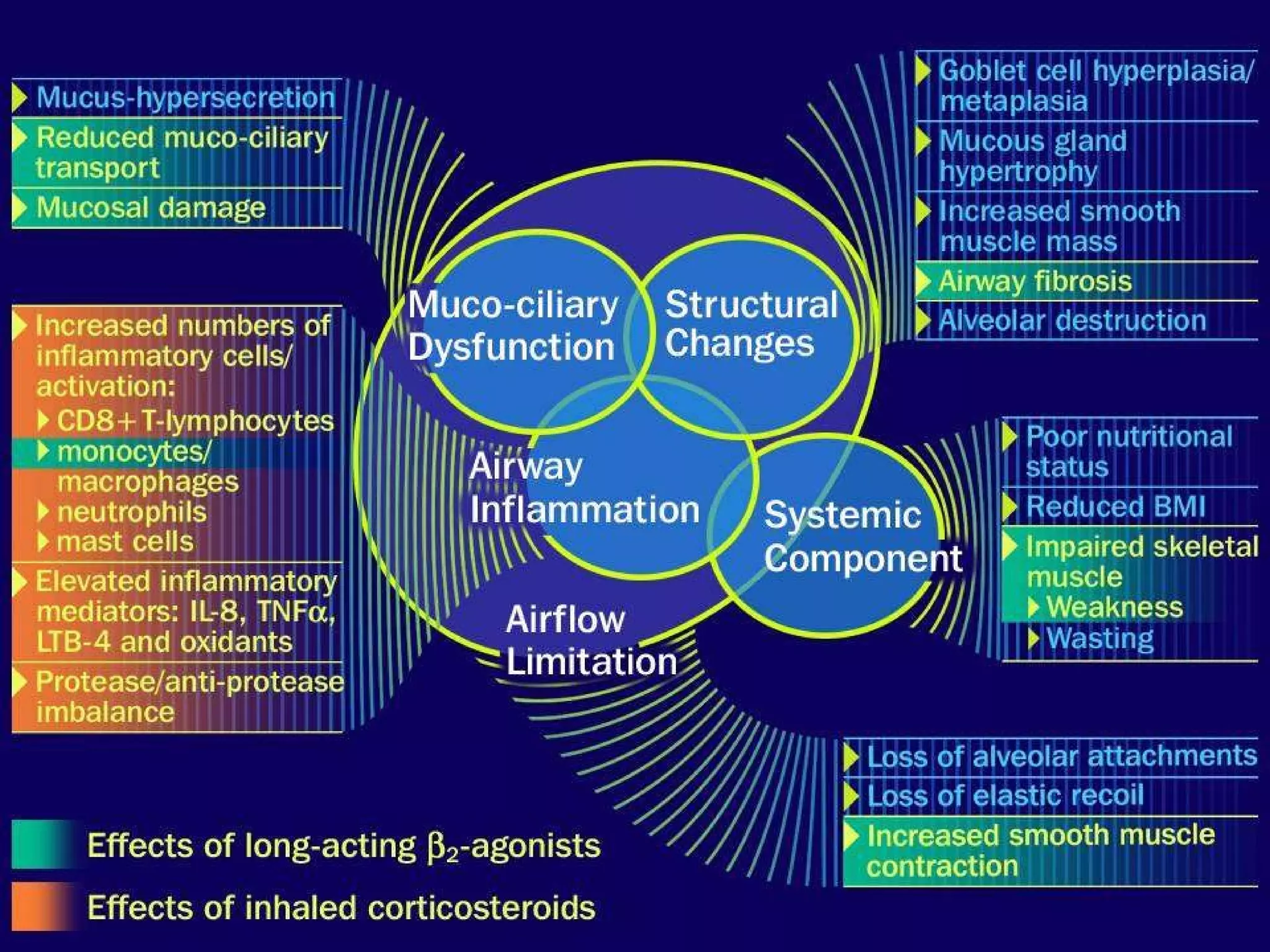
© GSK 2002
© GSK 2002
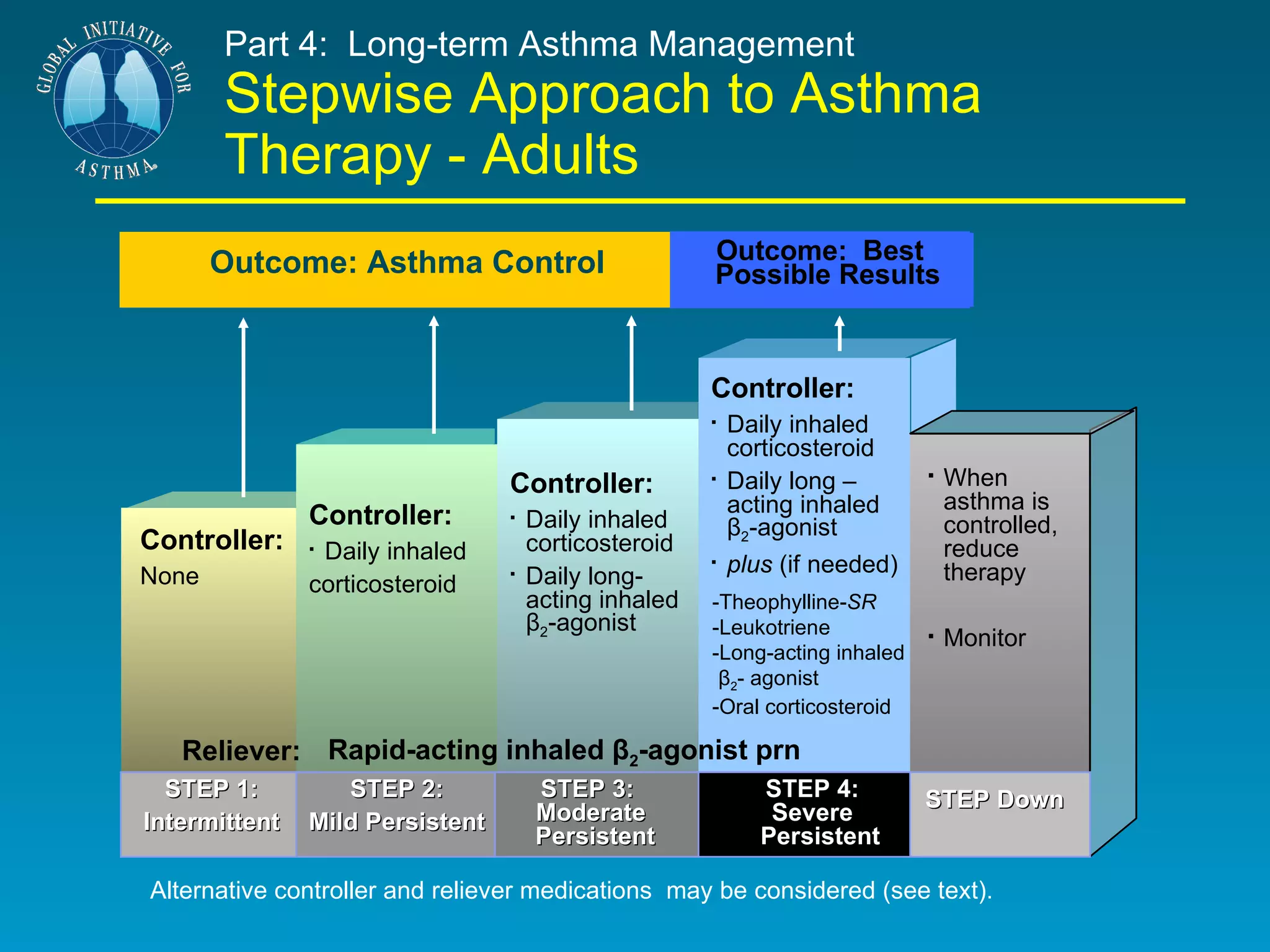
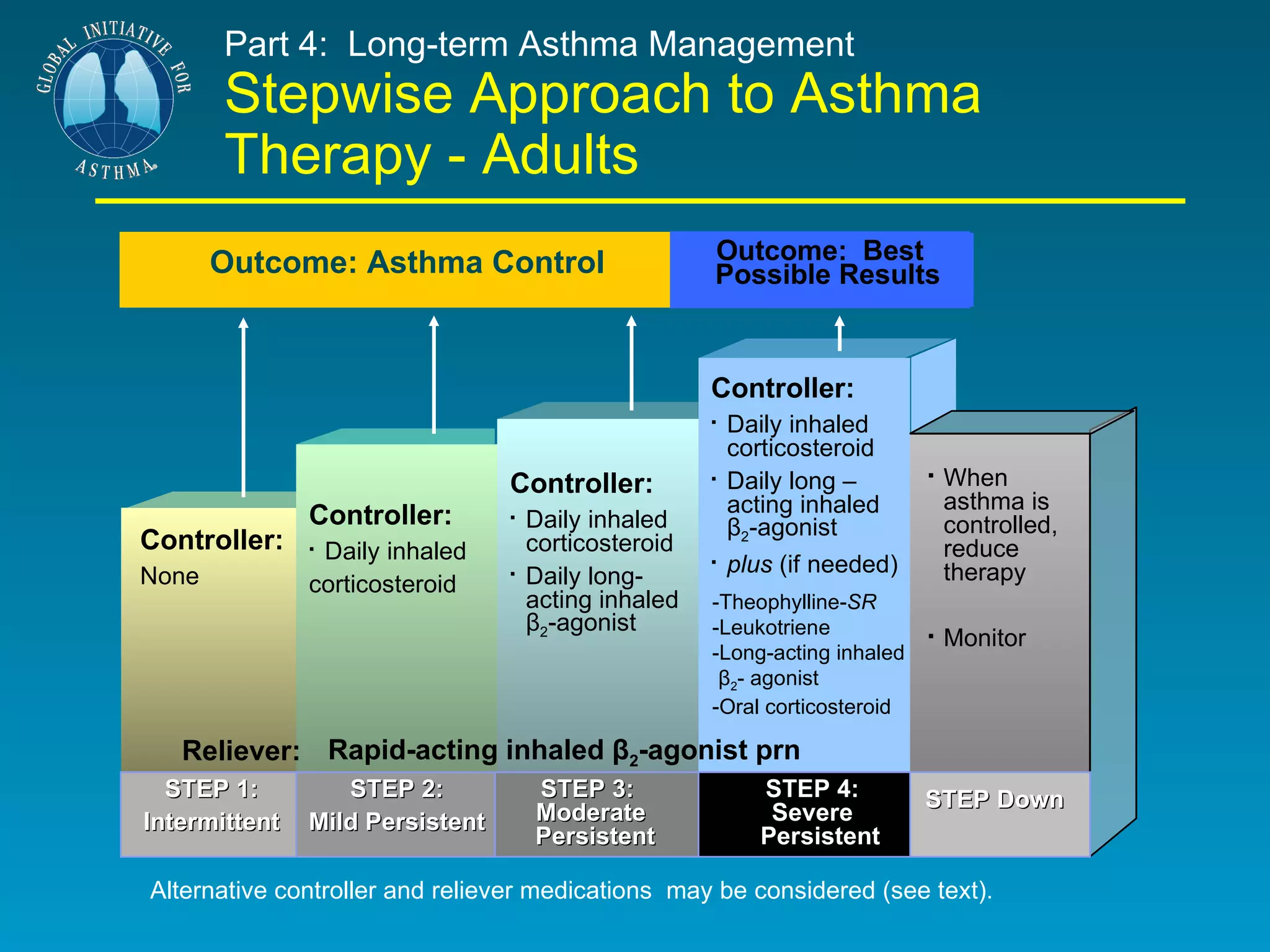
Part 4:  Long-term Asthma Management Stepwise Approach to Asthma Therapy - Adults Reliever: Rapid-acting inhaled β 2 -agonist prn Controller: Daily inhaled corticosteroid  Controller: Daily inhaled corticosteroid  Daily long-acting inhaled β 2 -agonist Controller: Daily inhaled corticosteroid  Daily long –acting inhaled β 2 -agonist plus  (if needed)  When asthma is controlled, reduce therapy Monitor STEP 1: Intermittent STEP 2: Mild Persistent STEP 3: Moderate Persistent STEP 4: Severe Persistent STEP Down Outcome: Asthma Control Outcome:  Best   Possible Results Alternative controller and reliever medications  may be considered (see text).  Controller: None -Theophylline- SR -Leukotriene  -Long-acting inhaled β 2 - agonist -Oral corticosteroid
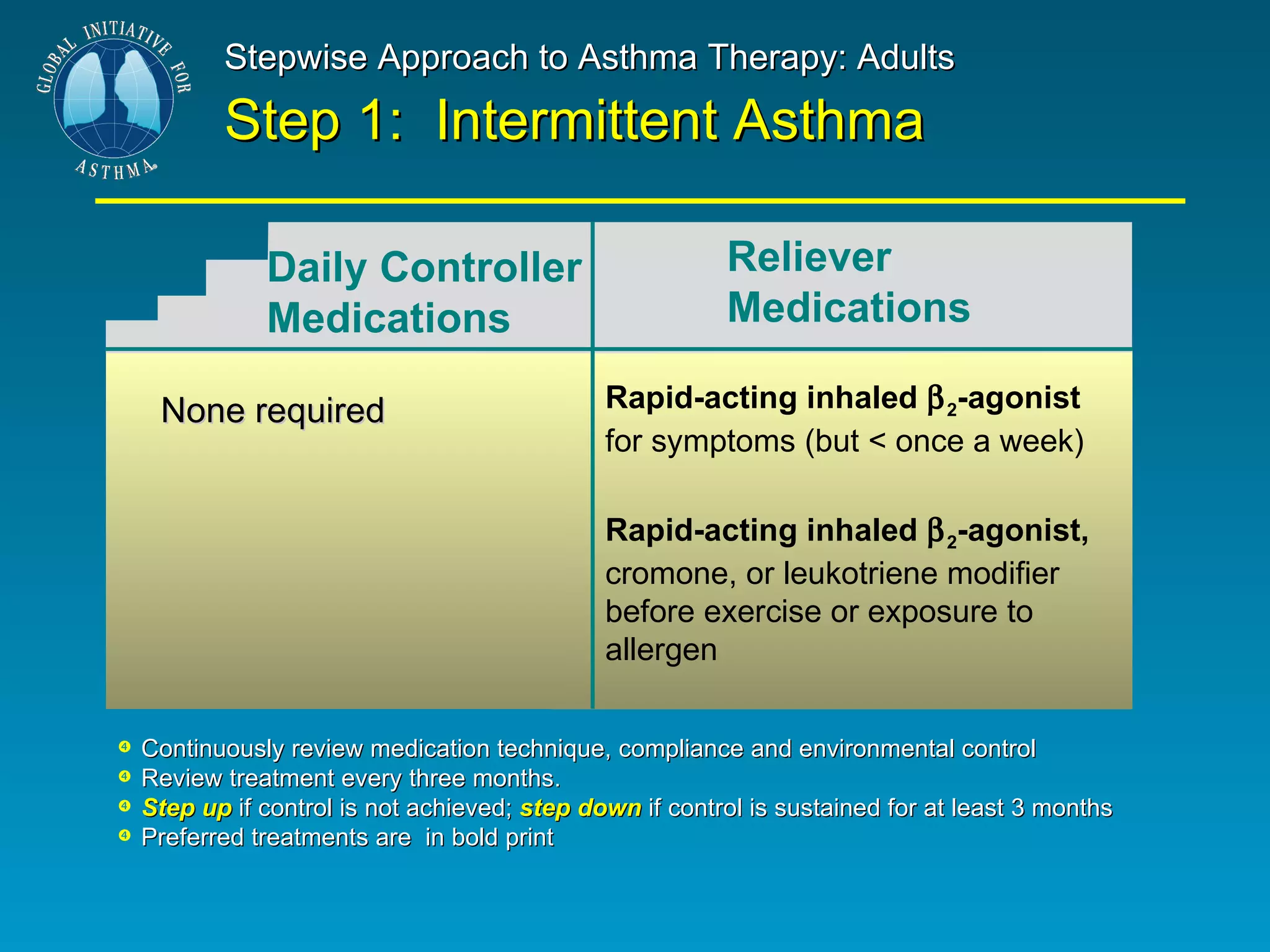
Stepwise Approach to Asthma Therapy: Adults   Step 1:  Intermittent Asthma  None required Rapid-acting   inhaled   2 -agonist for symptoms (but < once a week) Rapid-acting   inhaled   2 -agonist, cromone, or leukotriene modifier  before exercise or exposure to allergen Continuously review medication technique, compliance and environmental control Review treatment every three months. Step up  if control is not achieved;  step down  if control is sustained for at least 3 months Preferred treatments are  in bold print Daily Controller Medications Reliever  Medications
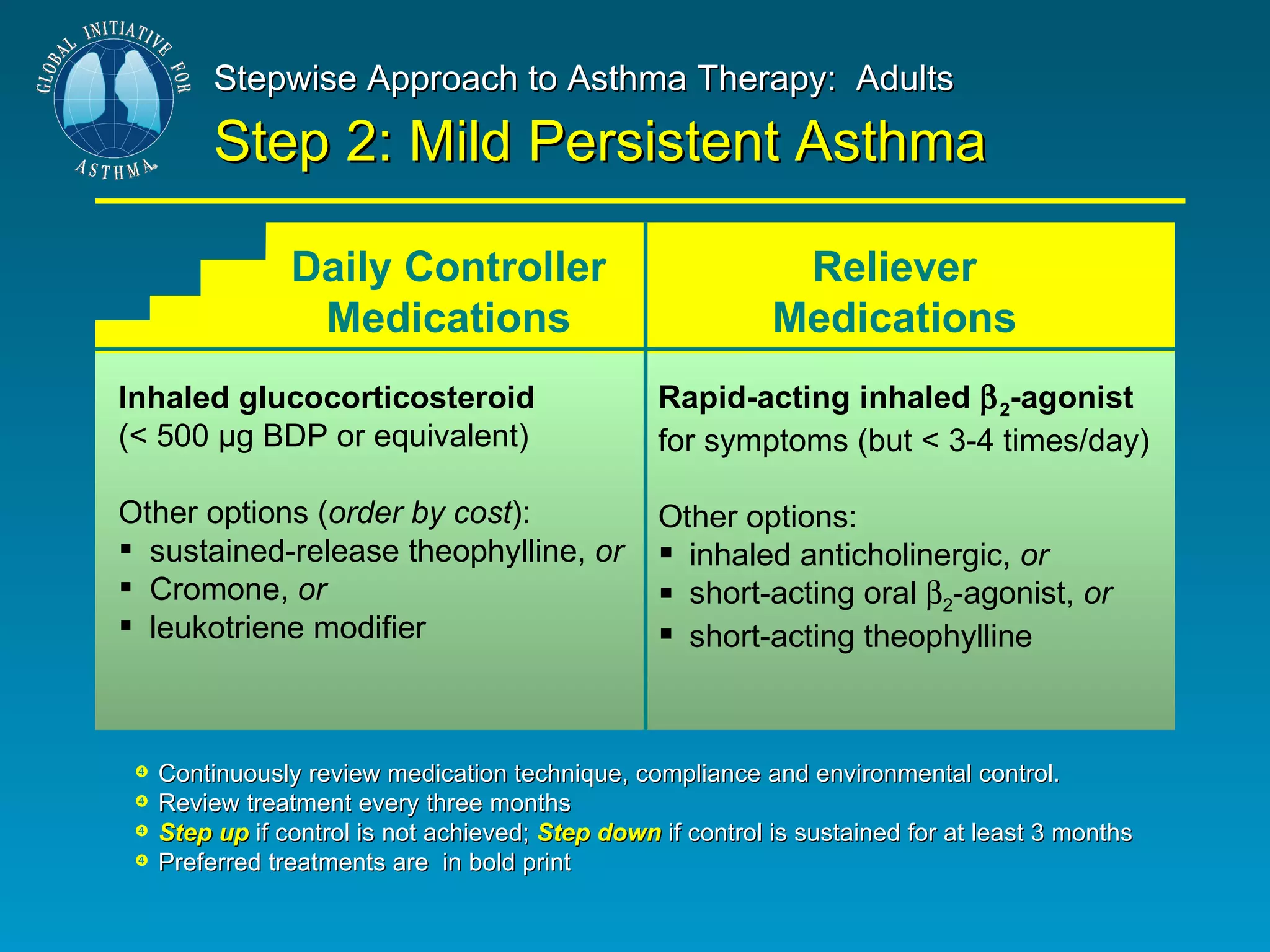
Inhaled glucocorticosteroid   (< 500 μg BDP or equivalent) Other options ( order by cost ): sustained-release theophylline,  or Cromone,  or  leukotriene modifier Rapid-acting   inhaled   2 -agonist for symptoms (but < 3-4 times/day) Other options:  inhaled anticholinergic,  or short-acting oral   2 -agonist,  or short-acting theophylline Continuously review medication technique, compliance and environmental control. Review treatment every three months Step up  if control is not achieved;  Step down  if control is sustained for at least 3 months Preferred treatments are  in bold print Stepwise Approach to Asthma Therapy:  Adults Step 2: Mild Persistent Asthma Daily Controller Medications Reliever Medications
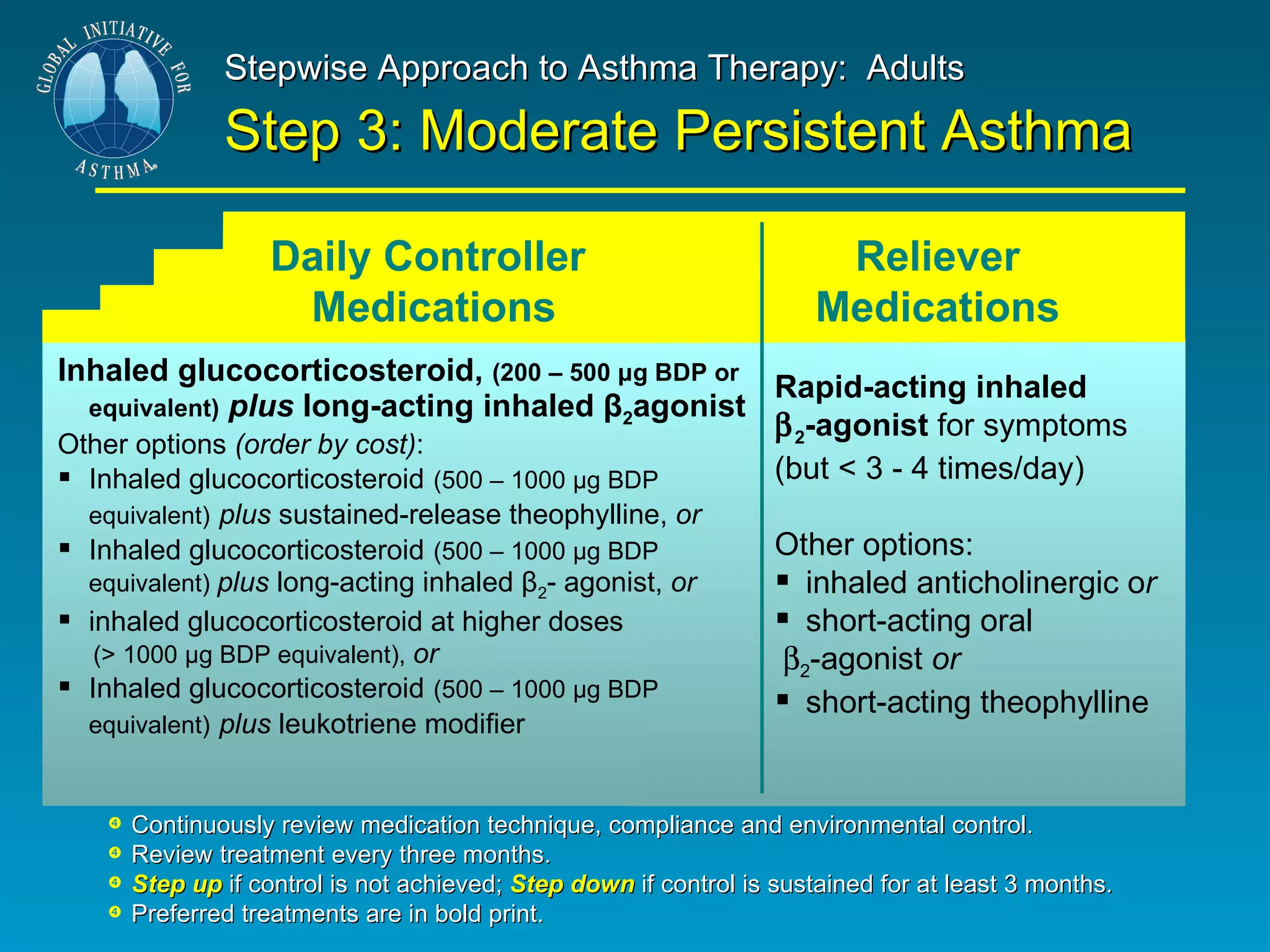
Inhaled glucocorticosteroid,  (200 – 500 μg BDP or equivalent)   plus  long-acting inhaled β 2 agonist Other options  (order by cost) : Inhaled glucocorticosteroid   (500 – 1000 μg BDP equivalent)   plus  sustained-release theophylline,  or Inhaled glucocorticosteroid   (500 – 1000 μg BDP  equivalent)  plus  long-acting inhaled β 2 - agonist,  or inhaled glucocorticosteroid at higher doses   (> 1000 μg BDP equivalent),  or Inhaled glucocorticosteroid   (500 – 1000 μg BDP  equivalent)   plus  leukotriene modifier Rapid-acting   inhaled   2 -agonist  for symptoms  (but < 3 - 4 times/day) Other options:  inhaled anticholinergic o r short-acting oral   2 -agonist  or short-acting theophylline  Continuously review medication technique, compliance and environmental control. Review treatment every three months. Step up  if control is not achieved;  Step down  if control is sustained for at least 3 months. Preferred treatments are in bold print. Stepwise Approach to Asthma Therapy:  Adults Step 3: Moderate Persistent Asthma Daily Controller  Medications Reliever Medications
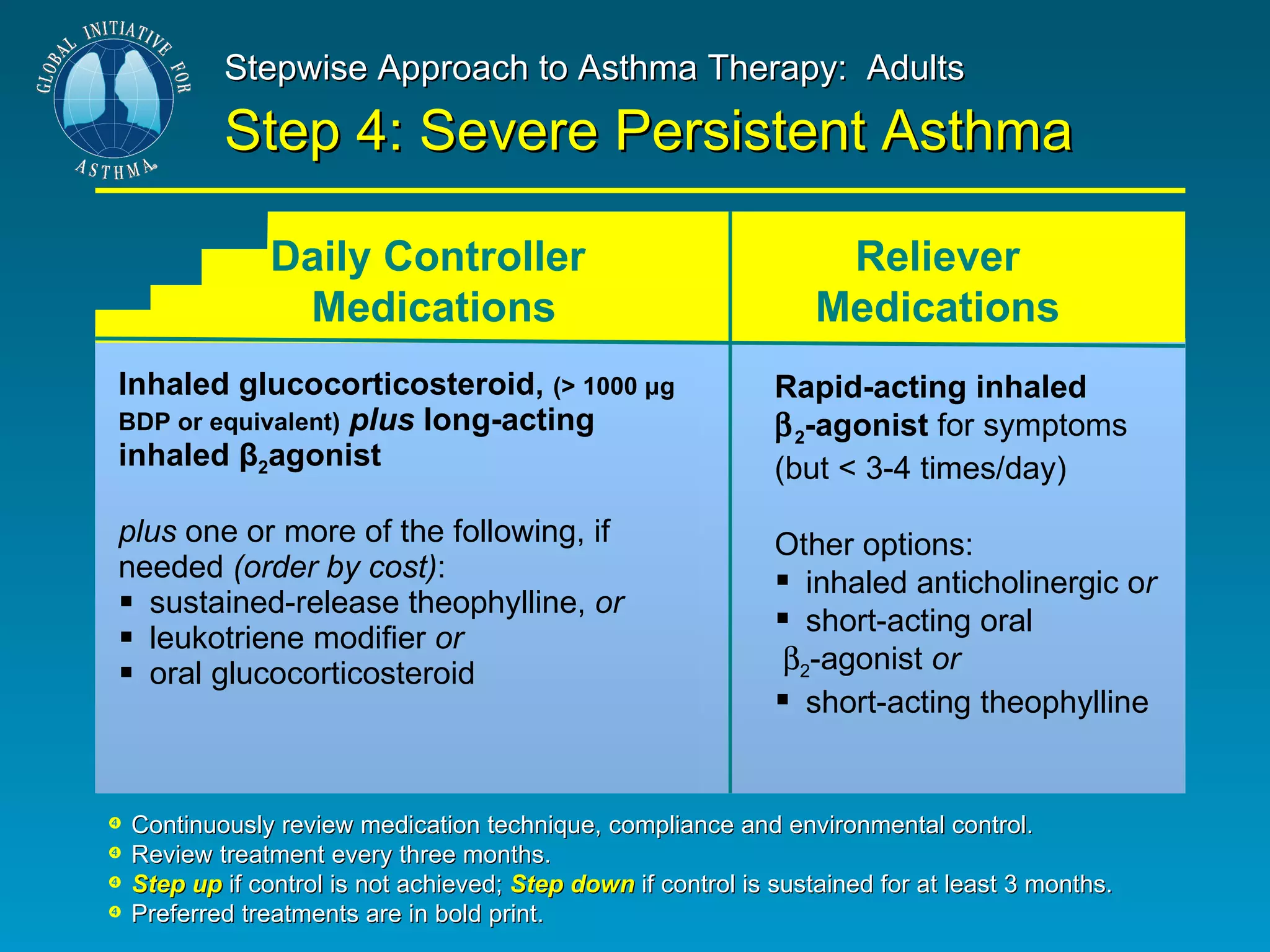
Inhaled glucocorticosteroid,  (> 1000 μg BDP or equivalent)   plus  long-acting inhaled β 2 agonist  plus  one or more of the following, if needed  (order by cost) : sustained-release theophylline,  or leukotriene modifier  or oral glucocorticosteroid Rapid-acting   inhaled   2 -agonist  for symptoms  (but < 3-4 times/day) Other options:  inhaled anticholinergic o r short-acting oral   2 -agonist  or short-acting theophylline Continuously review medication technique, compliance and environmental control. Review treatment every three months. Step up  if control is not achieved;  Step down  if control is sustained for at least 3 months. Preferred treatments are in bold print. Stepwise Approach to Asthma Therapy:  Adults Step 4: Severe Persistent Asthma Daily Controller  Medications Reliever Medications
Part 4:  Long-term Asthma Management Stepwise Approach to Asthma Therapy - Adults Reliever: Rapid-acting inhaled β 2 -agonist prn Controller: Daily inhaled corticosteroid  Controller: Daily inhaled corticosteroid  Daily long-acting inhaled β 2 -agonist Controller: Daily inhaled corticosteroid  Daily long –acting inhaled β 2 -agonist plus  (if needed)  When asthma is controlled, reduce therapy Monitor STEP 1: Intermittent STEP 2: Mild Persistent STEP 3: Moderate Persistent STEP 4: Severe Persistent STEP Down Outcome: Asthma Control Outcome:  Best   Possible Results Alternative controller and reliever medications  may be considered (see text).  Controller: None -Theophylline- SR -Leukotriene  -Long-acting inhaled β 2 - agonist -Oral corticosteroid
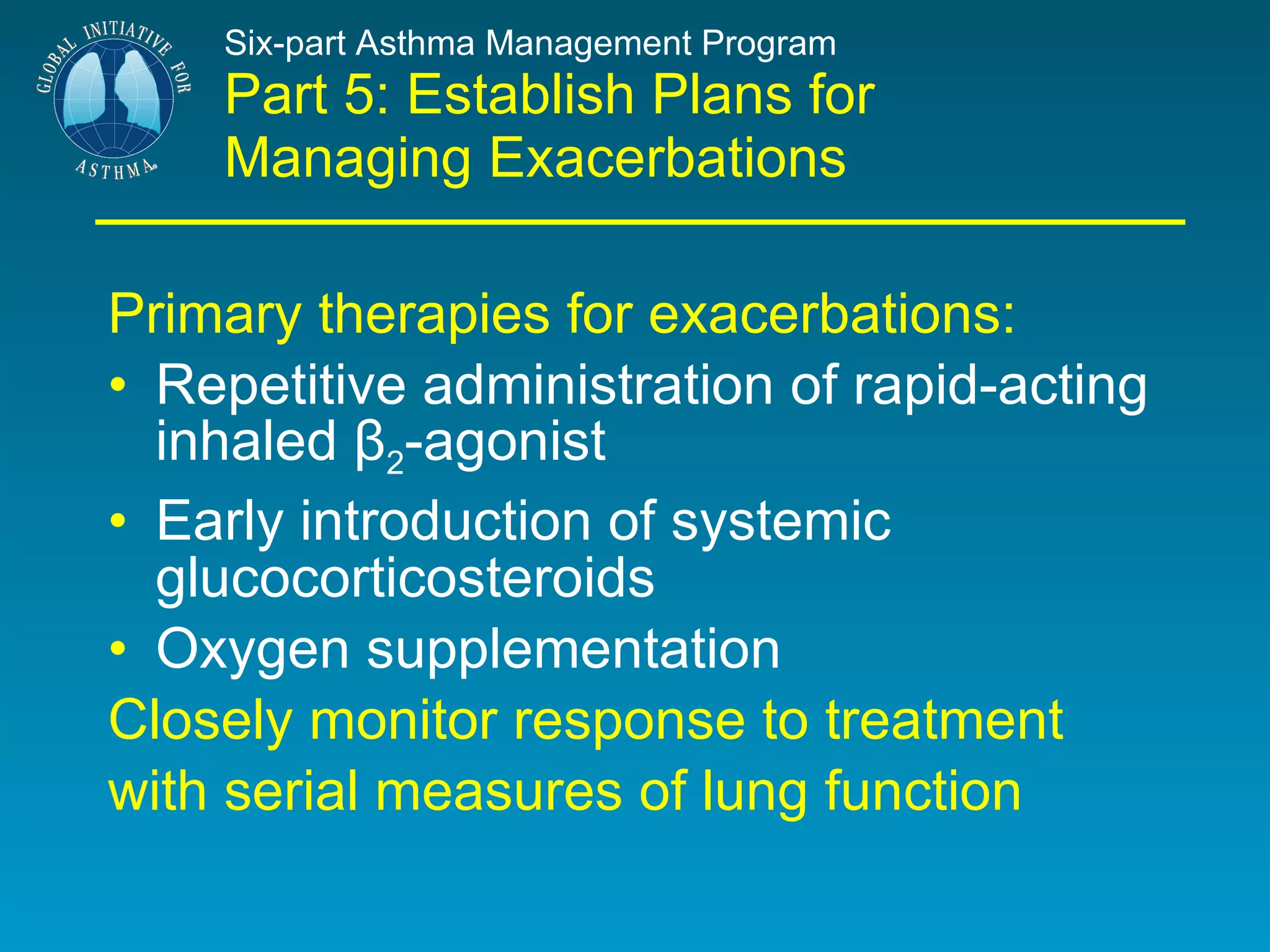
Six-part Asthma Management Program Part 5: Establish Plans for Managing Exacerbations Primary therapies for exacerbations: Repetitive administration of rapid-acting inhaled β 2 -agonist Early introduction of systemic glucocorticosteroids Oxygen supplementation Closely monitor response to treatment with serial measures of lung function
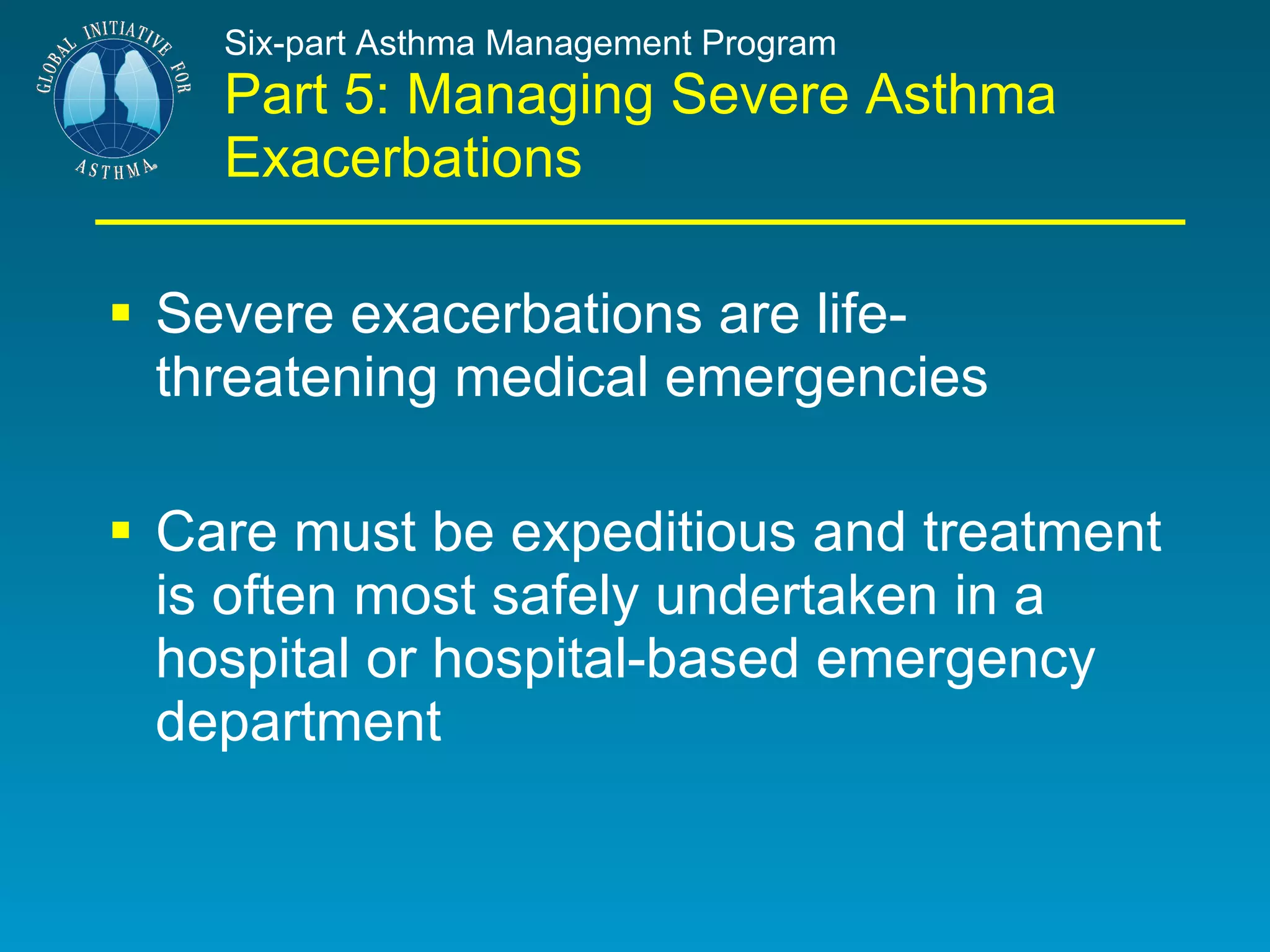
Six-part Asthma Management Program Part 5: Managing Severe Asthma Exacerbations Severe exacerbations are life-threatening medical emergencies  Care must be expeditious and treatment is often most safely undertaken in a hospital or hospital-based emergency department
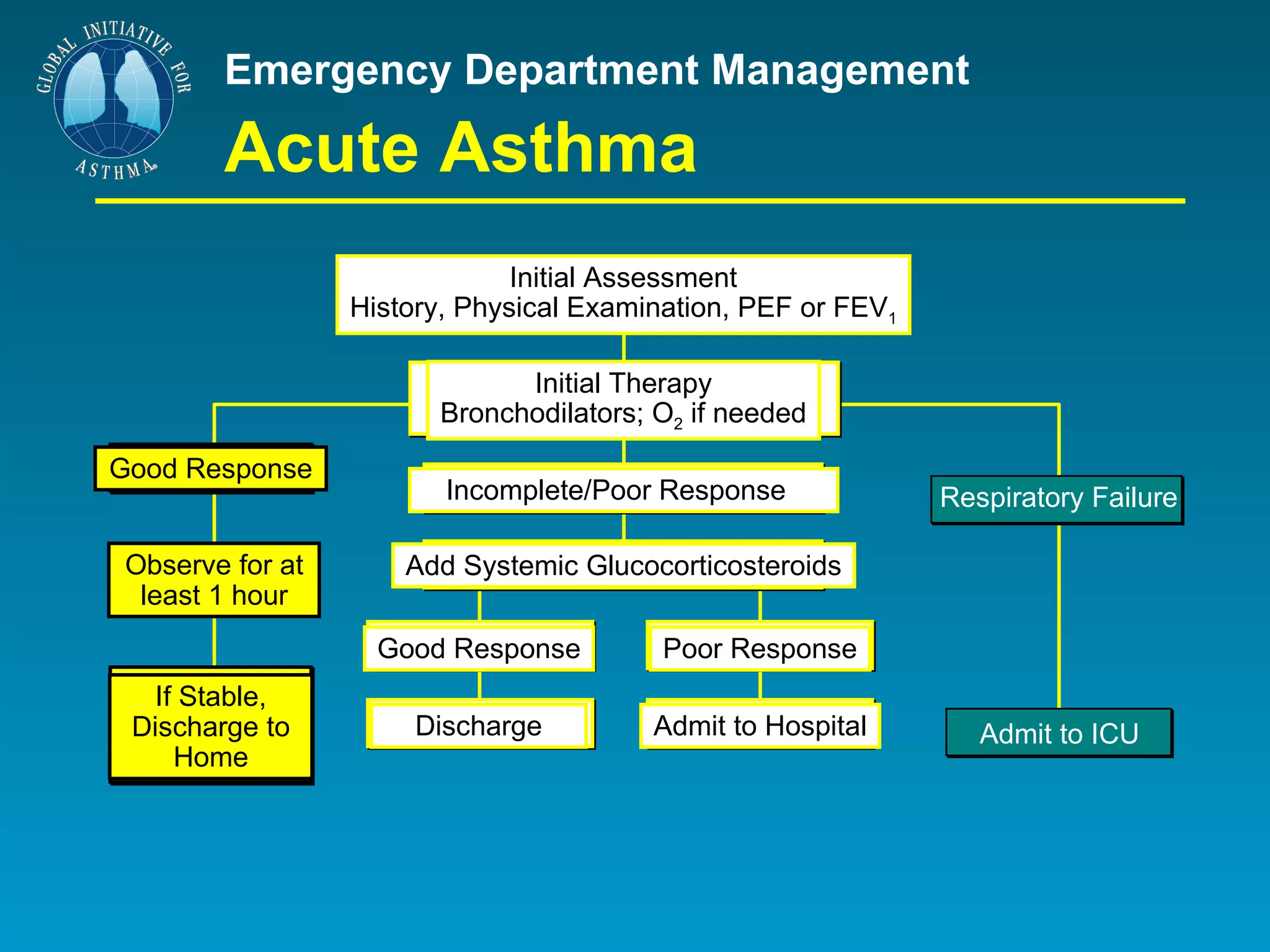
Emergency Department Management Acute Asthma Respiratory Failure Admit to ICU Good Response Observe for at least 1 hour If Stable, Discharge to Home Initial Assessment History, Physical Examination, PEF or FEV 1 Initial Therapy Bronchodilators; O 2  if needed Incomplete/Poor Response  Add Systemic Glucocorticosteroids Good Response Discharge  Poor Response Admit to Hospital
Six-part Asthma Management Program Part 6: Provide Regular Follow-up Care Continual monitoring is essential to assure that therapeutic goals are met. Frequent follow-up visits are necessary to review: Home PEF and symptom records Techniques in use of medications Risk factors and their control Once asthma control is established, follow-up visits should be scheduled (at 1 to 6 month intervals as appropriate)
Six-part Asthma Management Program:   Summary Asthma can be effectively controlled, although it cannot be cured Effective asthma management programs include education, objective measures of lung function, environmental control, and pharmacologic therapy A stepwise approach to pharmacologic therapy is recommended.  The aim is to accomplish the goals of therapy with the least possible medication
Six-part Asthma Management Program:   Summary  (continued) Anything more than mild, occasional asthma is more effectively controlled by suppressing inflammation than by only treating acute bronchospasm The availability of varying forms of treatment, cultural preferences, and differing health care systems need to be considered
Thank you !!

9 asthma

  • 1.
    Asthma Zhiwen Zhu Pulmonary & Critical Care Medicine 1st Affiliated Hospital of Sun Yat-Sen University
  • 2.
    Beethoven Ludwig vanHe was a patient with asthma, and died in 1827.
  • 3.
    Teresa Deng Shewas also a patient with asthma, and died in 1995.
  • 4.
  • 5.
    G IN A lobal itiative for sthma
  • 6.
    Asthma (GINA Workshop) Topics: Definition Epidemiology Risk Factors Pathogenesis & Mechanisms Diagnosis and Classification Six Part Asthma Management Plan
  • 7.
    Definition of AsthmaAsthma is a chronic inflammatory disorder of the airways in which many cells and cellular elements play a role Chronic inflammation causes an associated increase in airway hyperresponsiveness that leads to recurrent episodes of wheezing, breathlessness, chest tightness, and coughing, particularly at night or in the early morning These episodes are usually associated with widespread but variable airflow obstruction that is often reversible either spontaneously or with treatment
  • 8.
    Epidemiology Asthma isone of the most common chronic diseases worldwide —160 millions patients suffered from asthma Prevalence increasing in many countries, especially in children — 1~4% in adult, 3~5% in children in China A major cause of school/work absence An overall increase in severity of asthma increases the pool of patients at risk for death
  • 9.
    Worldwide Variation inPrevalence of Asthma Symptoms International Study of Asthma and Allergies in Children (ISAAC) Lancet 1998;351:1225
  • 10.
    Increasing Prevalence ofAsthma in Children/Adolescents 0 5 10 15 20 25 30 35 1992 1982 1989 1975 1992 1982 1994 1989 1992 1982 1992 1982 1991 1979 1989 1966 Finland (Haahtela et al ) Sweden (Aberg et al ) Japan (Nakagomi et al ) Scotland (Rona et al ) UK (Omran et al ) USA (NHIS) New Zealand (Shaw et al ) Australia (Peat et al ) { Prevalence (%) { { { { { { {
  • 11.
    70 60 5040 30 20 85 86 87 88 89 90 91 92 93 94 Rate/1,000 Persons Year <18 18-44 45-64 65+ Total (All Ages) Age (years) Trends in Prevalence of Asthma By Age, U.S., 1985-1996 95 96 80
  • 12.
    Risk Factors forAsthma Host factors: predispose individuals to, or protect them from, developing asthma Environmental factors: influence susceptibility to development of asthma in predisposed individuals, precipitate asthma exacerbations, and/or cause symptoms to persist
  • 13.
    Risk Factors thatLead to Asthma Development Host Factors Genetic predisposition Atopy Airway hyper- responsiveness Gender Race Environmental Factors Indoor allergens Outdoor allergens Occupational sensitizers Tobacco smoke Air Pollution Respiratory Infections Parasitic infections Socioeconomic factors Family size Diet and drugs Obesity
  • 14.
    Factors that ExacerbateAsthma Allergens Air Pollutants Respiratory infections Exercise and hyperventilation Weather changes Sulfur dioxide Food, additives, drugs
  • 15.
    Mechanisms Underlying theDefinition of Asthma Risk Factors (for development of asthma) INFLAMMATION Airway Hyperresponsiveness Airflow Obstruction Risk Factors (for exacerbations) Symptoms
  • 16.
  • 17.
    Asthma Diagnosis Historyand patterns of symptoms Physical examination Measurements of lung function Measurements of allergic status to identify risk factors
  • 18.
    Clinical Manifestation ofAsthma Recurrent episodes of wheezing Troublesome cough at night Cough or wheeze after exercise Cough, wheeze or chest tightness after exposure to airborne allergens or pollutants Colds “go to the chest” or take more than 10 days to clear
  • 19.
    Physical Examination Becauseof variable symptoms, the physical examination of the respiratory system may be normal. Dyspnea, airflow limitation (wheeze), and hyperinflation are likely to be present if patients are examined during symptomatic periods. Silent chest, cyanosis, drowsiness, difficult speaking, tachycardia and use of accessory muscles in severe asthma.
  • 20.
    Measurement of LungFunction Spirometry: FEV1, FVC,FEV1/FVC Bronchial Provocation Test (BPT) FEV1>70% predicted Histamine,methacholine, or exercise FEV1↓≥20% at a dose of ≤16mg/ml
  • 21.
    Measurement of LungFunction Bronchial Dilation Test (BDT) FEV1<70% predicted FEV1↑≥12% and 200ml, FVC↑≥15% and 200ml, after inhaling a short-acting bronchodilator
  • 22.
    Typical Spirometric (FEV1 ) Tracings 1 Time (sec) 2 3 4 5 FEV 1 Volume Normal Subject Asthmatic (After Bronchodilator) Asthmatic (Before Bronchodilator) Note: Each FEV 1 curve represents the highest of three repeat measurements
  • 23.
    Measurement of LungFunction Peak Expiratory Flow (PEF) and PEF Variation. PEF Variation ≥20%
  • 24.
    Arterial blood gasRespiratory alkalosis, during a mile asthma exacerbation Respiratory acidosis and hypoxemia, during a severe asthma exacerbation
  • 25.
    Measurement of AllergicStatus Skin test Measurement of specific IgE in serum
  • 26.
    Standards of DiagnosisRecurrent episodes of wheezing, breathlessness, chest tightness, and coughing, particularly at night or in the early morning Dyspnea, airflow limitation (wheeze), and hyperinflation are likely to be present if patients are examined during symptomatic periods These episodes and symptoms are often reversible either spontaneously or with treatment Exclude other diseases that manifested with similar symptoms At least one or more of the following three: Bronchial Provocation Test (BPT) Bronchial Dilation Test (BDT) Peak Expiratory Flow (PEF) Variation
  • 27.
    Differential Diagnosis CongestiveHeart Failure Pseudoasthma caused by vocal cord dysfunction Chronic bronchitis & COPD Lung cancer
  • 28.
    Definition of COPDChronic obstructive pulmonary disease (COPD) is a disease state characterized by airflow limitation that is not fully reversible . The airflow limitation is usually both progressive and associated with an abnormal inflammatory response of the lungs to noxious particles or gases. GOLD 2004
  • 29.
    Pointers that differentiate asthma from COPD   COPD Asthma History     Smoker or ex-smoker Nearly all Possibly Symptoms under age 45 Uncommon Often Chronic productive cough Common Uncommon Breathlessness Persistent and progressive Variable Winter bronchitis Common Uncommon Investigations     Serial PEF Obstructive picture May be normal Day to day and diurnal variation Reversibility testing Minimal variation Usually<15% or 200ml change Usually>15% or 200ml change
  • 30.
    Classification of SeverityAsthma severity is classified by the presence of clinical features before treatment is started and/or by the amount of daily medication required for optimal treatment
  • 31.
    Classification of Severityof chronic stable asthma CLASSIFY SEVERITY Clinical Features Before Treatment Symptoms Nocturnal Symptoms FEV 1 or PEF STEP 4 Severe Persistent STEP 3 Moderate Persistent STEP 2 Mild Persistent STEP 1 Intermittent Continuous Limited physical activity Daily Attacks affect activity > 1 time a week but < 1 time a day < 1 time a week Asymptomatic and normal PEF between attacks Frequent > 1 time a week > 2 times a month  2 times a month  60% predicted Variability > 30% 60 - 80% predicted Variability > 30%  80% predicted Variability 20 - 30%  80% predicted Variability < 20% The presence of one feature of severity is sufficient to place patient in that category.
  • 32.
  • 33.
    Classification of severityof asthma exacerbation <91 >45 <60 Relative bradycardia Consciousness Impending respiratory failure <91 >45 <60 <60% >120 >30 At rest Severe 91~95 <45 60~80 60-80% 100~120 ↑ With talking Moderate >95 <45 normal >80% <100 ↑ With activity Mild SaO2 PaCO2 PaO2 PEF/FEV1 HR RR breathlessness
  • 34.
    Six-Part Asthma ManagementProgram 1. Educate patients to develop a partnership in asthma management 2. Assess and monitor asthma severity with symptom reports and measures of lung function as much as possible 3. Avoid exposure to risk factors 4. Establish medication plans for chronic management in children and adults 5. Establish individual plans for managing exacerbations 6. Provide regular follow-up care
  • 35.
    Six-part Asthma ManagementProgram Goals of Long-term Management Achieve and maintain control of symptoms Prevent asthma episodes or attacks Maintain pulmonary function as close to normal levels as possible Maintain normal activity levels, including exercise Avoid adverse effects from asthma medications Prevent development of irreversible airflow limitation Prevent asthma mortality
  • 36.
    Six-part Asthma ManagementProgram Control of Asthma Minimal (ideally no) chronic symptoms Minimal (infrequent) exacerbations No emergency visits Minimal (ideally no) need for “as needed” use of β 2 -agonist No limitations on activities, including exercise PEF circadian variation of less than 20% (Near) normal PEF Minimal (or no) adverse effects from medicine
  • 37.
    . Six-Part AsthmaManagement Program The most effective management is to prevent airway inflammation by eliminating the causal factors Asthma can be effectively controlled in most patients, although it can not be cured The major factors contributing to asthma morbidity and mortality are under-diagnosis and inappropriate treatment Any asthma more severe than intermittent asthma is more effectively controlled by treatment to suppress and reverse airway inflammation than by treatment only of acute bronchoconstriction and symptoms
  • 38.
    Six-part Asthma ManagementProgram Part 1: Educate Patients to Develop a Partnership Educate continually Include the family Provide information about asthma Provide training on self-management skills Emphasize a partnership among health care providers, the patient, and the patient’s family
  • 39.
    Six-part Asthma ManagementProgram Part 2: Assess and Monitor Asthma Severity with Symptom Reports and Measures of Lung Function Symptom reports Use of reliever medication Nighttime symptoms Activity limitations Spirometry for initial assessment. Peak Expiratory Flow for follow-up: Assess severity Assess response to therapy PEF monitoring at home Important for those with poor perception of symptoms Daily measurement recorded in a diary Assesses the severity and predicts worsening Guides the use of a zone system for asthma self-management Arterial blood gas for severe exacerbations
  • 40.
    Six-part Asthma ManagementProgram Part 3: Avoid Exposure to Risk Factors Reduce exposure to indoor allergens Avoid tobacco smoke Avoid vehicle emission Identify irritants in the workplace Explore role of infections on asthma development, especially in children and young infants
  • 41.
    Six-part Asthma ManagementProgram Part 4: Establish Medication Plans for Long-Term Asthma Management A stepwise approach to pharmacological therapy is recommended The aim is to accomplish the goals of therapy with the least possible medication Although in many countries traditional methods of healing are used, their efficacy has not yet been established and their use can therefore not be recommended
  • 42.
    Part 4: Long-term Asthma Management Stepwise Approach to Asthma Therapy The choice of treatment should be guided by: Severity of the patient’s asthma Patient’s current treatment Pharmacological properties and availability of the various forms of asthma treatment Economic considerations Cultural preferences and differing health care systems need to be considered .
  • 43.
    Part 4: Long-term Asthma Management Pharmacologic Therapy Controller Medications: Inhaled glucocorticosteroids Systemic glucocorticosteroids Cromones Methylxanthines Long-acting inhaled β 2 -agonists Long-acting oral β 2 -agonists Leukotriene modifiers
  • 44.
    Part 4: Long-term Asthma Management Pharmacologic Therapy Reliever Medications: Rapid-acting inhaled β 2 -agonists Systemic glucocorticosteroids Anticholinergics Methylxanthines Short-acting oral β 2 -agonists
  • 45.
  • 46.
  • 47.
  • 48.
    Part 4: Long-term Asthma Management Stepwise Approach to Asthma Therapy - Adults Reliever: Rapid-acting inhaled β 2 -agonist prn Controller: Daily inhaled corticosteroid Controller: Daily inhaled corticosteroid Daily long-acting inhaled β 2 -agonist Controller: Daily inhaled corticosteroid Daily long –acting inhaled β 2 -agonist plus (if needed) When asthma is controlled, reduce therapy Monitor STEP 1: Intermittent STEP 2: Mild Persistent STEP 3: Moderate Persistent STEP 4: Severe Persistent STEP Down Outcome: Asthma Control Outcome: Best Possible Results Alternative controller and reliever medications may be considered (see text). Controller: None -Theophylline- SR -Leukotriene -Long-acting inhaled β 2 - agonist -Oral corticosteroid
  • 49.
    Stepwise Approach toAsthma Therapy: Adults Step 1: Intermittent Asthma None required Rapid-acting inhaled  2 -agonist for symptoms (but < once a week) Rapid-acting inhaled  2 -agonist, cromone, or leukotriene modifier before exercise or exposure to allergen Continuously review medication technique, compliance and environmental control Review treatment every three months. Step up if control is not achieved; step down if control is sustained for at least 3 months Preferred treatments are in bold print Daily Controller Medications Reliever Medications
  • 50.
    Inhaled glucocorticosteroid (< 500 μg BDP or equivalent) Other options ( order by cost ): sustained-release theophylline, or Cromone, or leukotriene modifier Rapid-acting inhaled  2 -agonist for symptoms (but < 3-4 times/day) Other options: inhaled anticholinergic, or short-acting oral  2 -agonist, or short-acting theophylline Continuously review medication technique, compliance and environmental control. Review treatment every three months Step up if control is not achieved; Step down if control is sustained for at least 3 months Preferred treatments are in bold print Stepwise Approach to Asthma Therapy: Adults Step 2: Mild Persistent Asthma Daily Controller Medications Reliever Medications
  • 51.
    Inhaled glucocorticosteroid, (200 – 500 μg BDP or equivalent) plus long-acting inhaled β 2 agonist Other options (order by cost) : Inhaled glucocorticosteroid (500 – 1000 μg BDP equivalent) plus sustained-release theophylline, or Inhaled glucocorticosteroid (500 – 1000 μg BDP equivalent) plus long-acting inhaled β 2 - agonist, or inhaled glucocorticosteroid at higher doses (> 1000 μg BDP equivalent), or Inhaled glucocorticosteroid (500 – 1000 μg BDP equivalent) plus leukotriene modifier Rapid-acting inhaled  2 -agonist for symptoms (but < 3 - 4 times/day) Other options: inhaled anticholinergic o r short-acting oral  2 -agonist or short-acting theophylline Continuously review medication technique, compliance and environmental control. Review treatment every three months. Step up if control is not achieved; Step down if control is sustained for at least 3 months. Preferred treatments are in bold print. Stepwise Approach to Asthma Therapy: Adults Step 3: Moderate Persistent Asthma Daily Controller Medications Reliever Medications
  • 52.
    Inhaled glucocorticosteroid, (> 1000 μg BDP or equivalent) plus long-acting inhaled β 2 agonist plus one or more of the following, if needed (order by cost) : sustained-release theophylline, or leukotriene modifier or oral glucocorticosteroid Rapid-acting inhaled  2 -agonist for symptoms (but < 3-4 times/day) Other options: inhaled anticholinergic o r short-acting oral  2 -agonist or short-acting theophylline Continuously review medication technique, compliance and environmental control. Review treatment every three months. Step up if control is not achieved; Step down if control is sustained for at least 3 months. Preferred treatments are in bold print. Stepwise Approach to Asthma Therapy: Adults Step 4: Severe Persistent Asthma Daily Controller Medications Reliever Medications
  • 53.
    Part 4: Long-term Asthma Management Stepwise Approach to Asthma Therapy - Adults Reliever: Rapid-acting inhaled β 2 -agonist prn Controller: Daily inhaled corticosteroid Controller: Daily inhaled corticosteroid Daily long-acting inhaled β 2 -agonist Controller: Daily inhaled corticosteroid Daily long –acting inhaled β 2 -agonist plus (if needed) When asthma is controlled, reduce therapy Monitor STEP 1: Intermittent STEP 2: Mild Persistent STEP 3: Moderate Persistent STEP 4: Severe Persistent STEP Down Outcome: Asthma Control Outcome: Best Possible Results Alternative controller and reliever medications may be considered (see text). Controller: None -Theophylline- SR -Leukotriene -Long-acting inhaled β 2 - agonist -Oral corticosteroid
  • 54.
    Six-part Asthma ManagementProgram Part 5: Establish Plans for Managing Exacerbations Primary therapies for exacerbations: Repetitive administration of rapid-acting inhaled β 2 -agonist Early introduction of systemic glucocorticosteroids Oxygen supplementation Closely monitor response to treatment with serial measures of lung function
  • 55.
    Six-part Asthma ManagementProgram Part 5: Managing Severe Asthma Exacerbations Severe exacerbations are life-threatening medical emergencies Care must be expeditious and treatment is often most safely undertaken in a hospital or hospital-based emergency department
  • 56.
    Emergency Department ManagementAcute Asthma Respiratory Failure Admit to ICU Good Response Observe for at least 1 hour If Stable, Discharge to Home Initial Assessment History, Physical Examination, PEF or FEV 1 Initial Therapy Bronchodilators; O 2 if needed Incomplete/Poor Response Add Systemic Glucocorticosteroids Good Response Discharge Poor Response Admit to Hospital
  • 57.
    Six-part Asthma ManagementProgram Part 6: Provide Regular Follow-up Care Continual monitoring is essential to assure that therapeutic goals are met. Frequent follow-up visits are necessary to review: Home PEF and symptom records Techniques in use of medications Risk factors and their control Once asthma control is established, follow-up visits should be scheduled (at 1 to 6 month intervals as appropriate)
  • 58.
    Six-part Asthma ManagementProgram: Summary Asthma can be effectively controlled, although it cannot be cured Effective asthma management programs include education, objective measures of lung function, environmental control, and pharmacologic therapy A stepwise approach to pharmacologic therapy is recommended. The aim is to accomplish the goals of therapy with the least possible medication
  • 59.
    Six-part Asthma ManagementProgram: Summary (continued) Anything more than mild, occasional asthma is more effectively controlled by suppressing inflammation than by only treating acute bronchospasm The availability of varying forms of treatment, cultural preferences, and differing health care systems need to be considered
  • 60.

Editor's Notes

  • #46 © GlaxoSmithKline 2002
  • #47 © GlaxoSmithKline 2002
  • #48 © GlaxoSmithKline 2002