Urinary Tract Infection Department of Nephrology,the First Affiliated Hospital , Sun Yat-sun University   Qiongqiong Yang [email_address]
Growth of >10 5  organisms per milliliter from a properly collected midstream “clean-catch ” urine sample Definitions Dysuria  frequency  urgency
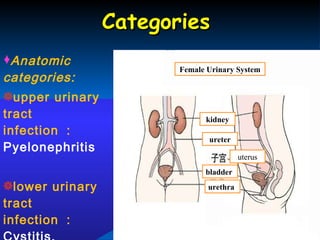
Anatomic categories: upper urinary tract infection : Pyelonephritis lower urinary tract infection : Cystitis, urethritis  Categories urethra Female Urinary System bladder ureter kidney uterus
Epidemiological categories: Catheter-associated  Community-acquired Symptomatic or not (Dysuria,  frequency , urgency ) Symptomatic  Asymptomatic  Categories
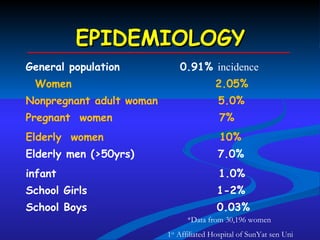
EPIDEMIOLOGY General population  0.91%  incidence   Women  2.05% Nonpregnant adult woman  5.0% Pregnant  women  7% Elderly  women  10% Elderly men (>50yrs)  7.0% infant  1.0% School Girls  1-2% School Boys  0.03%  *Data from 30,196 women 1 st  Affiliated Hospital of SunYat sen Uni
EPIDEMIOLOGY USA:  Episodes of acute cystitis in female : 11%  per  year Approximately 50%-60%  of adult women report that they have had a UTI at some time during their life. Acute cystitis : 36 million pts per year (18-75y); cost 16 hundred million $.
Etiology Microorgnisma: Bacteria, fungi, virus, Chlamydia trachomatis, Mycoplasma The most common agents: the gram-negative bacilli.  Escherichia coli : 70% of acute uncomplicated UTI Staphylococcus saprophyticus :5%-15% in young women Proteus mirabilis, Klebsiella species, enterococci or other uropathogens
Pathogenesis Sources of infection Predisposing factor Local and systemic host defense mechanisms Pathogenicity of the stain Ascending  infection  Hematogenous infection Lymphathic way
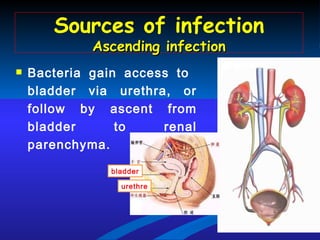
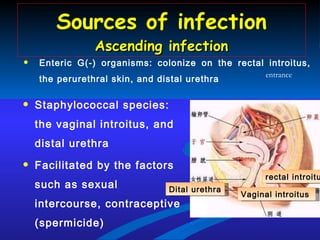
Bacteria gain access to  bladder via urethra, or follow by ascent from bladder to renal parenchyma.  Sources of infection Ascending infection bladder urethre
Sources of infection Ascending infection Staphylococcal species: the vaginal introitus, and distal urethra Facilitated by the factors such as sexual intercourse, contraceptive (spermicide) entrance Enteric G(-) organisms: colonize on the rectal introitus, the perurethral skin, and distal urethra rectal introitus Vaginal introitus  Dital urethra
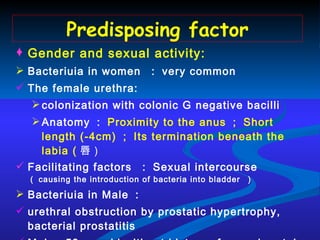
Gender and sexual activity: Bacteriuia in women  : very common The female urethra:  colonization with colonic G negative bacilli Anatomy : Proximity to the anus ; Short length (-4cm) ; Its termination beneath the labia ( 唇) Facilitating factors  : Sexual intercourse  ( causing the introduction of bacteria into bladder  ) Bacteriuia in Male : urethral obstruction by prostatic hypertrophy, bacterial prostatitis Male <50 yrs old without history of sexual rectal intercourse :  uncommon Predisposing factor
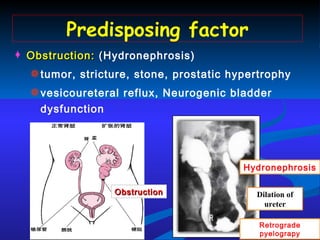
Obstruction:  ( Hydronephrosis) tumor, stricture, stone, prostatic hypertrophy vesicoureteral reflux, Neurogenic bladder dysfunction Predisposing factor Hydronephrosis Dilation of ureter Obstruction Retrograde pyelograpy
Use of instruments : cystoscopy , urethral catheterization  or  indwelling urethral catheter   Malformation  and  structural abnormalities  :   posterior urethral valve dysfunction Urethra or periurethral infection  :   genital infection , bacterial prostatitis Renal parenchyma lesion : DN , Polycystic KD Poor immunity :   use of immunosuppressive agents , kidney transplantation Defect of local mucous membrane of urethra defense ability Predisposing factor
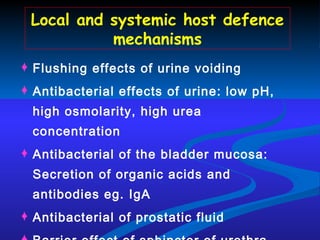
Flushing effects of urine voiding Antibacterial effects of urine: low pH, high osmolarity, high urea concentration Antibacterial of the bladder mucosa: Secretion of organic acids and antibodies eg. IgA Antibacterial of prostatic fluid Barrier effect of sphincter of urethra  Local and systemic host defence mechanisms
Bacterial virulence factors   E coli: specific O,K, and H serogroups
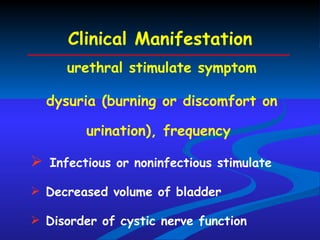
urethral stimulate symptom dysuria (burning or discomfort on urination), frequency  Infectious or noninfectious stimulate Decreased volume of bladder Disorder of cystic nerve function  Clinical Manifestation
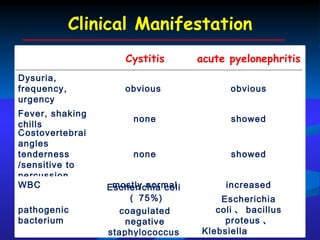
Clinical Manifestation Cystitis acute pyelonephritis Dysuria, frequency, urgency  obvious  obvious Fever, shaking chills none showed Costovertebral  angles tenderness /sensitive to percussion  none showed WBC mostly normal increased pathogenic bacterium  Escherichia coli ( 75%) coagulated negative staphylococcus ( 15% )  Escherichia coli 、 bacillus proteus 、 Klebsiella
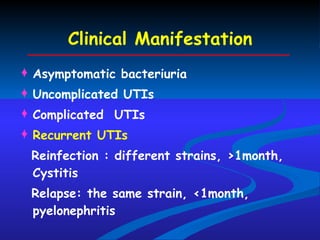
Clinical Manifestation Asymptomatic bacteriuria Uncomplicated UTIs Complicated  UTIs Recurrent UTIs Reinfection : different strains, >1month, Cystitis Relapse: the same strain, <1month, pyelonephritis
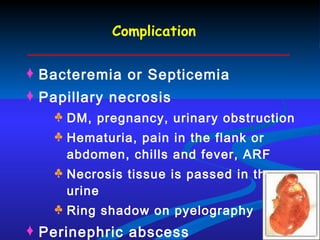
Complication Bacteremia or Septicemia Papillary necrosis DM, pregnancy, urinary obstruction Hematuria, pain in the flank or abdomen, chills and fever, ARF Necrosis tissue is passed in the urine Ring shadow on pyelography Perinephric abscess
Laboratory test Pyuria Bacteriuria Other : WBC (leukocytosis)  ,  Erythrocyte sedimentation rate (ESR) ,  intravenous pyelography(IVP)  ,  C-reactive protein.
Pyuria Urinary sediment of cleaning urine specimen :   ≥5 wbc/HFP ,   ≥ 0.4  ×  10 6  /hr; ≥  1.0  ×  10 6  /12hr , WBC esterase test  ( + ) WBC casts -Pyelonephritis High sensitivity , but lower specificity  ( 70% ) Leukorrhea contamination  sterile pyuira :  unusual infection such as tuberculosis, fungi, chlamydia/mycoplasma infection interstitial nephritis
 
Bacteriuria Suprapubic bladder aspirates : bacteria growth  on the culture dish  ( qualitative culture , Golden standard ) Voided midstream “clean-catch” urine sample  Qualitative culture Colony counts ( Quantitative  culture ) ≥ 10 5  CFU [colony forming unit]  /ml G+   ≥10 3  CFU /ml 10 4 -10 5  CFU /ml  suspicious , need reexamination  10 4  CFU /ml  contaminative significant
Unspun, clean-catch urine specimen  Gram’s stain  Bacteria can be seen /HFP   10 5 /ml(95%) Both sensitivity and specificity are 92% Midstream “clean-catch” urine sediment   20 bacteria /HP  Bacteriuria
Chemical examination Nitrites test (Griess Test): nitric acid  nitrous acid ( G  ( - ) bacilli  ) sensitivity : 70.4%, specificity : 99.5% E nteribacillus :  + Enterococcus , staphylococci , streptococcus faecalis  : - Urine dipsticks  : leukocyte esterase ,  Griess Test  Screening test
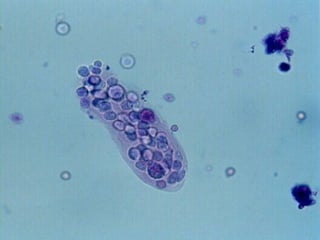
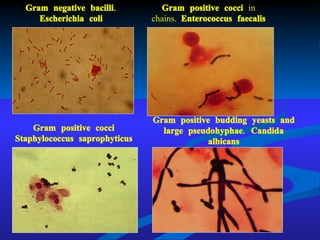
Gram negative bacilli. Escherichia coli Gram positive cocci  in chains.  Enterococcus faecalis Gram positive cocci   Staphylococcus saprophyticus Gram positive budding yeasts and large pseudohyphae. Candida albicans
False bacteriuria should be excluded Urine samples were contaminated by leucorrhea, etc.  Urine sample was put at room temperature for more than 1 hr before inoculated.  Technical errors .
False negative in Urine culture Use of antibiotics 7 days before culture. Frequency: Urine stayed in the bladder for less than 6 hours; Water diuresis or recent voiding Disinfectant contaminating into urine sample Anaerobe , chlamydia , fungi or other microorganism infection.
Other examination WBC (leukocytosis)  Intravenous pyelography(IVP)   Recurrent  UTIs , complicated UTIs (  stone ), Recurrent pyelonephritis , unusual  bacteria infections , a history of  UTI in pregnancy , a history of childhood infections , Male with UTI , Painless hematuria Ultrasonic examination Renal tubule function Vesicoureteral reflux  test  during voiding forbid to   perform at acute phase!
Diagnosis Patient with bacteriuria : diagnosed as UTI.  Colony counts  ≥10 5  CFU / ml ( midstream “clean-catch” urine cultures ) . For  asymptomatic pts,  urine cultures should be done twice, Each time colony counts  ≥10 5  CFU / ml with same  bacteria. G+   colony counts ≥ 10 3  CFU /ml Bacteriuria
Diagnosis UTI   upper UTI  acute pyelonephritis lower UTI Symptoms and signs, pathogenic bacteria, tubule function and leukocyte cast cystitis Systemic toxic symptoms :  T >38℃ , WBC  , costovertebral angle tenderness/sensitive to percussion leukocyte cast Recurrent within 4 weeks after ending the treatment Complicated with obstruction or malformation, etc Unusual bacteria: Bacillus proteus Renal dysfunction IVP showing abnormal image . Pyelonephritis
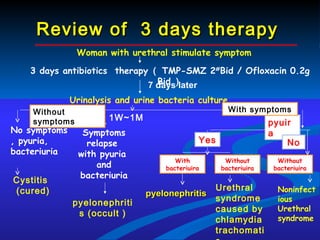
Review of  3 days therapy No symptoms , pyuria, bacteriuria Noninfectious Urethral syndrome Without bacteriuira With symptoms Without symptoms Yes No Without bacteriuira With bacteriuira Woman with  urethral stimulate symptom 3 days antibiotics  therapy ( TMP-SMZ 2 # Bid / Ofloxacin 0.2g Bid ) Urinalysis and urine bacteria culture Cystitis  (cured) Symptoms relapse  with pyuria  and bacteriuria pyelonephritis (occult ) pyuira pyelonephritis Urethral syndrome caused by chlamydia trachomatis 7 days later 1W~1M
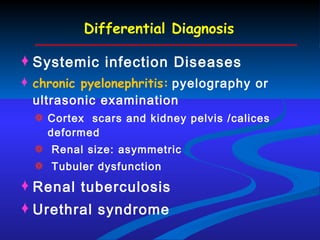
Differential Diagnosis Systemic infection Diseases chronic pyelonephritis:   pyelography or  ultrasonic examination Cortex  scars and kidney pelvis /calices deformed Renal size: asymmetric Tubuler dysfunction Renal tuberculosis Urethral syndrome
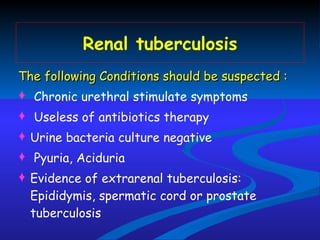
Renal tuberculosis The following Conditions should be suspected : Chronic urethral stimulate symptoms Useless of antibiotics therapy Urine bacteria culture negative Pyuria, Aciduria Evidence of extrarenal tuberculosis: Epididymis, spermatic cord or prostate tuberculosis
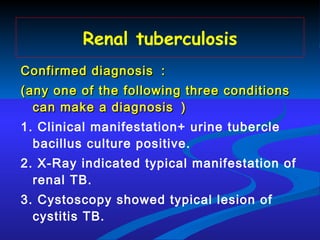
Renal tuberculosis Confirmed diagnosis : (any one of the following three conditions can make a diagnosis ) 1. Clinical manifestation+ urine tubercle bacillus culture positive. 2. X-Ray indicated typical manifestation of renal TB. 3. Cystoscopy showed typical lesion of cystitis TB.
Urethral syndrome Infectious Urethral syndrome: Acute urethritis mycoplasma  or chlamydia Azithromycin(1g in a single oral dose) , Doxycycline(100mg twice a day), Ofloxacin Noninfectious Urethral syndrome: without pyuria and bacteriuria No antimicrobial treatment May related to dryness of the urethral and vaginal mucosa in postmenopausal, estrogen-deficient women, psychological status such as  anxiety
Treatment Principles  Treatment for different types of UTIs
Principle(1) Urine culture:  Who: Except  in acute uncomplicated cystitis in women When: before empirical treatment is begun.  How to use the culture results: antimicrobial sensitivity testing should be used to further direct therapy.
Principle(2) Factors predisposing to infection should be identified and corrected if possible. obstruction and calculi In general, uncomplicated lower UTIs respond to short courses of therapy(3 days), while upper UTIs require longer treatment(14 days).
Principle(3) Antibiotics selection: First chose antibiotics should be effective to G- bacilli TMP and Fluoroquinolone can be used empirically as first line drug. The presence of antibiotic-resistant strains  should be suspected: in pts with repeated infections, instrumentation, or recent hospitalization, and antimicrobial sensitivity testing should be used .
Principle(4) Therapeutic judgments: Relief of clinical symptoms does not always indicated bacteriologic cure. pt should be follow up at 2w and 6w after cessation of treatment.   A cure : resolution of symptoms and elimination of bacteriuria. A  failure: Presence of bacteriuria with or without symptoms .
Principle(5) Therapeutic judgments: Recurrent infections should be classified as  Relapse: the same-strain occurring within 2 weeks of the end of therapy.  ( an unresolved upper tract focus of infection ; persistent vaginal colonization) Reinfection: recurrences > 2 weeks  after the cessation of therapy with a new strain.
Treatment for different  types of UTIs Acute uncomplicated Cystitis in women Acute uncomplicated pyelonephritis Recurrent  UTIs UTIs in Pregnancy UTIs in Male Catheter-associated UTIs Asymptomatic bacteriuria UTIs in Children
Acute uncomplicated Cystitis in women Common organisms:  E coli or Staphylococus saprophyticus single-dose therapy:  Take the antibiotics for only one time with a relatively large dose(SMZ ( SMX400g , TMP80mg ) 6 pills draught / Ofloxacin 0.6g draught). more frequently  relapse 3-days therapy: Eradicate vaginal and rectal flora colonization with E coli TMP-SMZ  2 #  Bid /  Ofloxacin 0.2 Bid The best choice is 3 days therapy !
Acute uncomplicated Cystitis in women The short-term therapy should not be used  Diabetes  pts with the immunosuppressive therapy  previous infections due to antibiotic-resistant organisms UTI symptoms for >7 d UTI in pregnancy  age>65yrs  males with UTI ( urologic abnormalities or prostatic involvement) Use of diaphragm 7- to 14 day regimen
CASE I   32 year-old woman History:  dysuria , frequency and pain  on urination for  2 days gross hematuira  for 1 day Physical:  (-) Urinalysis: WBC+++ , RBC ++/HPF Lab Data: Isomorphic RBC
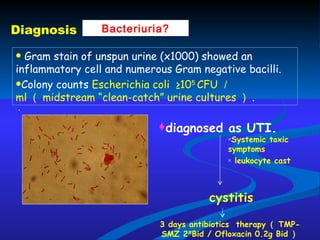
.  Diagnosis Bacteriuria? Gram stain of unspun urine (x1000) showed an inflammatory cell and numerous Gram negative bacilli.  Colony counts  Escherichia coli  ≥10 5  CFU / ml ( midstream “clean-catch” urine cultures ) . diagnosed as UTI. Systemic toxic symptoms leukocyte cast cystitis 3 days antibiotics  therapy ( TMP-SMZ 2 # Bid / Ofloxacin 0.2g Bid )
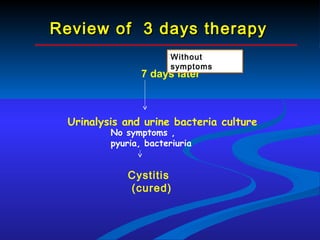
Review of  3 days therapy No symptoms , pyuria, bacteriuria Without symptoms Urinalysis and urine bacteria culture Cystitis  (cured) 7 days later
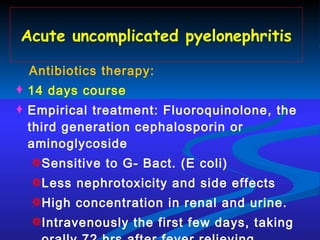
Acute uncomplicated pyelonephritis Antibiotics therapy: 14 days course  Empirical treatment: Fluoroquinolone, the third generation cephalosporin or aminoglycoside Sensitive to G- Bact. (E coli) Less nephrotoxicity  and side effects High concentration in renal and urine. Intravenously the first few days, taking orally  72 hrs after fever relieving .
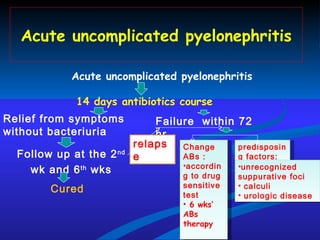
Acute uncomplicated pyelonephritis 14 days antibiotics course  Acute uncomplicated pyelonephritis Follow up at the 2 nd  wk and 6 th  wks Failure  within 72 hr relapse Relief from symptoms without bacteriuria Cured Change ABs : according to drug sensitive test 6 wks’ ABs therapy predisposing factors: unrecognized suppurative foci calculi urologic disease
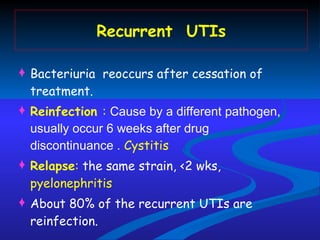
Recurrent  UTIs Bacteriuria  reoccurs after cessation of treatment. Reinfection  :  Cause by a different pathogen, usually occur 6 weeks after drug discontinuance .   Cystitis Relapse :  the same strain, <2 wks,  pyelonephritis About 80% of the recurrent UTIs are reinfection.
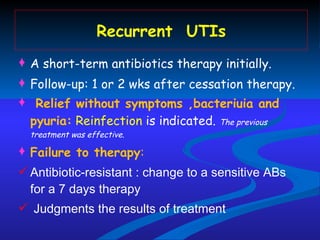
Recurrent  UTIs A short-term antibiotics therapy initially. Follow-up: 1 or 2 wks after cessation therapy. Relief without symptoms ,bacteriuia and pyuria:   Reinfection  is indicated.  The previous treatment was effective. Failure to therapy : Antibiotic-resistant : change to a sensitive ABs for a 7 days therapy Judgments the results of treatment
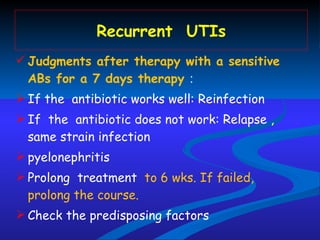
Recurrent  UTIs Judgments after therapy with a sensitive ABs for a 7 days therapy  :  If the  antibiotic works well: Reinfection  If  the  antibiotic does not work: Relapse , same strain infection pyelonephritis Prolong  treatment  to 6 wks. If failed, prolong the course. Check the predisposing factors
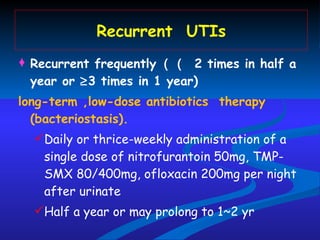
Recurrent  UTIs Recurrent frequently (    2 times in half a year or   3 times in 1 year)  long-term ,low-dose antibiotics  therapy (bacteriostasis). Daily or thrice-weekly administration of a single dose of nitrofurantoin   50mg, TMP-SMX 80/400mg, ofloxacin 200mg per night after urinate  Half a year or may prolong to 1~2 yr
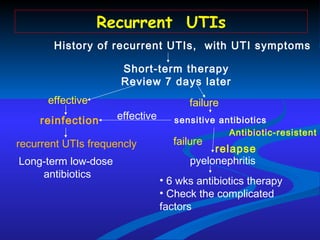
History of recurrent UTIs,  with UTI symptoms Short-term therapy Review 7 days later effective reinfection sensitive antibiotics Long-term low-dose  antibiotics failure effective failure pyelonephritis 6 wks antibiotics   therapy Check the complicated factors relapse recurrent UTIs frequencly Antibiotic-resistent Recurrent  UTIs
Complicated UTIs Presence of  the predisposing factors:  catheterization, instrumentation, urologic anatomic or functional abnormalities, stone, obsrtuction, immunosuppression, renal disease, or diabetes. Hospital-acquired bacteria:  E coli, klebsiella, Proteus, Serratia, pseudomonas, enterococci, and staphylococci. Antibiotic-resistent
Complicated UTIs Empirical antibiotic therapy: Broad-specturm  Imipenem A penicillin or cephalosporin PLUS an aminoglycoside, or ceftriaxone or ceftazidime Selected on the antimicrobial sensitivity pattern. 10-21 days Follow-up cultures 2-6 wks after cessation of therapy.
Removal of catheter Short course of antibiotcs If the catheter cannot be removed: Asymptomatic bacteriuia should be ignored. The pt develops symptoms or in high risk of developing bacteremia: Replacement of the catheter Systemic antibiotic Changing the drainage way if necessary  (suprapubic cystotomy). Catheter-Associated UTIs
UTIs in Pregnancy Asymptomatic bacteriuria /Acute cystitis  All pregnacy women should be screened for asymptomatic bacteriuria during first trimester (4%-7%).  7 days of antibiotics therapy The incidence rate of premature delivery 、 low birth weight will increase if without treatment. Antibiotics:  low toxicity such as cephalosporin, Ampicillin ,  Amoxicillin.
UTIs in Pregnancy Acute pyelonephritis Parenteral  antibiotic therapy  cephalosporin,  or extended-spectrum penicillin. Urine culture should be performed to ensure cure, and repeated monthly until delivery. UTIs in Pregnancy Recurrent  infection : continuous low-dose prophylaxis with nitrofurantoin.
Asymptomatic bacteriuria Antimicrobial therapy is  unnecessary   in the  Elderly pts. Antimicrobial therapy is  necessary: High-risk pts with neutropenia, renal transplants, obstruction, or other complicating conditions  Preschool children 7 days of oral antibiotics therapy  initially longer-term therapy(4-6 wks) in high-risk pts persistent asympomatic bacteriura Monitoring without further treatment
Prognosis Uncomplicated UTIs :  Complete resolution of symptom (>90%) rarely progress to renal function impairment and chronic renal disease. Complicated UTIs:  develop to chronic pyelonephritis  difficult to cure unless correcting the predisposing factors.
Prevention Drink more water Personal hygiene: pudendum cleaning for female pts,  redundant prepuce cleaning for male pts. Avoiding using instruments as possible, and strictly following aseptic manipulation if necessary.  Vesicoureteral reflux: To establish a habit that void once again.
Prevention Women with frequent symptomatic UTIs (  3 per yr): Long term administration of low-dose Abs Avoid spermicidal use  void soon after intercourse recurrent UTIs related to intercourse:  The single dose of Abs can be used after sexual  intercourse.
Take Home Messages Bacteruia and diagnosis of UTI Predisposing factors Complication of UTI Principles of therapy ,cystitis , and acute pyelonephritis
Thanks !

Uti english ppts

  • 1.
    Urinary Tract InfectionDepartment of Nephrology,the First Affiliated Hospital , Sun Yat-sun University Qiongqiong Yang [email_address]
  • 2.
    Growth of >105 organisms per milliliter from a properly collected midstream “clean-catch ” urine sample Definitions Dysuria frequency urgency
  • 3.
    Anatomic categories: upperurinary tract infection : Pyelonephritis lower urinary tract infection : Cystitis, urethritis Categories urethra Female Urinary System bladder ureter kidney uterus
  • 4.
    Epidemiological categories: Catheter-associated Community-acquired Symptomatic or not (Dysuria, frequency , urgency ) Symptomatic Asymptomatic Categories
  • 5.
    EPIDEMIOLOGY General population 0.91% incidence Women 2.05% Nonpregnant adult woman 5.0% Pregnant women 7% Elderly women 10% Elderly men (>50yrs) 7.0% infant 1.0% School Girls 1-2% School Boys 0.03% *Data from 30,196 women 1 st Affiliated Hospital of SunYat sen Uni
  • 6.
    EPIDEMIOLOGY USA: Episodes of acute cystitis in female : 11% per year Approximately 50%-60% of adult women report that they have had a UTI at some time during their life. Acute cystitis : 36 million pts per year (18-75y); cost 16 hundred million $.
  • 7.
    Etiology Microorgnisma: Bacteria,fungi, virus, Chlamydia trachomatis, Mycoplasma The most common agents: the gram-negative bacilli. Escherichia coli : 70% of acute uncomplicated UTI Staphylococcus saprophyticus :5%-15% in young women Proteus mirabilis, Klebsiella species, enterococci or other uropathogens
  • 8.
    Pathogenesis Sources ofinfection Predisposing factor Local and systemic host defense mechanisms Pathogenicity of the stain Ascending infection Hematogenous infection Lymphathic way
  • 9.
    Bacteria gain accessto bladder via urethra, or follow by ascent from bladder to renal parenchyma. Sources of infection Ascending infection bladder urethre
  • 10.
    Sources of infectionAscending infection Staphylococcal species: the vaginal introitus, and distal urethra Facilitated by the factors such as sexual intercourse, contraceptive (spermicide) entrance Enteric G(-) organisms: colonize on the rectal introitus, the perurethral skin, and distal urethra rectal introitus Vaginal introitus Dital urethra
  • 11.
    Gender and sexualactivity: Bacteriuia in women : very common The female urethra: colonization with colonic G negative bacilli Anatomy : Proximity to the anus ; Short length (-4cm) ; Its termination beneath the labia ( 唇) Facilitating factors : Sexual intercourse ( causing the introduction of bacteria into bladder ) Bacteriuia in Male : urethral obstruction by prostatic hypertrophy, bacterial prostatitis Male <50 yrs old without history of sexual rectal intercourse : uncommon Predisposing factor
  • 12.
    Obstruction: (Hydronephrosis) tumor, stricture, stone, prostatic hypertrophy vesicoureteral reflux, Neurogenic bladder dysfunction Predisposing factor Hydronephrosis Dilation of ureter Obstruction Retrograde pyelograpy
  • 13.
    Use of instruments: cystoscopy , urethral catheterization or indwelling urethral catheter Malformation and structural abnormalities : posterior urethral valve dysfunction Urethra or periurethral infection : genital infection , bacterial prostatitis Renal parenchyma lesion : DN , Polycystic KD Poor immunity : use of immunosuppressive agents , kidney transplantation Defect of local mucous membrane of urethra defense ability Predisposing factor
  • 14.
    Flushing effects ofurine voiding Antibacterial effects of urine: low pH, high osmolarity, high urea concentration Antibacterial of the bladder mucosa: Secretion of organic acids and antibodies eg. IgA Antibacterial of prostatic fluid Barrier effect of sphincter of urethra Local and systemic host defence mechanisms
  • 15.
    Bacterial virulence factors  E coli: specific O,K, and H serogroups
  • 16.
    urethral stimulate symptomdysuria (burning or discomfort on urination), frequency Infectious or noninfectious stimulate Decreased volume of bladder Disorder of cystic nerve function Clinical Manifestation
  • 17.
    Clinical Manifestation Cystitisacute pyelonephritis Dysuria, frequency, urgency obvious obvious Fever, shaking chills none showed Costovertebral angles tenderness /sensitive to percussion none showed WBC mostly normal increased pathogenic bacterium Escherichia coli ( 75%) coagulated negative staphylococcus ( 15% ) Escherichia coli 、 bacillus proteus 、 Klebsiella
  • 18.
    Clinical Manifestation Asymptomaticbacteriuria Uncomplicated UTIs Complicated UTIs Recurrent UTIs Reinfection : different strains, >1month, Cystitis Relapse: the same strain, <1month, pyelonephritis
  • 19.
    Complication Bacteremia orSepticemia Papillary necrosis DM, pregnancy, urinary obstruction Hematuria, pain in the flank or abdomen, chills and fever, ARF Necrosis tissue is passed in the urine Ring shadow on pyelography Perinephric abscess
  • 20.
    Laboratory test PyuriaBacteriuria Other : WBC (leukocytosis) , Erythrocyte sedimentation rate (ESR) , intravenous pyelography(IVP) , C-reactive protein.
  • 21.
    Pyuria Urinary sedimentof cleaning urine specimen : ≥5 wbc/HFP , ≥ 0.4 × 10 6 /hr; ≥ 1.0 × 10 6 /12hr , WBC esterase test ( + ) WBC casts -Pyelonephritis High sensitivity , but lower specificity ( 70% ) Leukorrhea contamination sterile pyuira : unusual infection such as tuberculosis, fungi, chlamydia/mycoplasma infection interstitial nephritis
  • 22.
  • 23.
    Bacteriuria Suprapubic bladderaspirates : bacteria growth on the culture dish ( qualitative culture , Golden standard ) Voided midstream “clean-catch” urine sample Qualitative culture Colony counts ( Quantitative culture ) ≥ 10 5 CFU [colony forming unit] /ml G+ ≥10 3 CFU /ml 10 4 -10 5 CFU /ml suspicious , need reexamination  10 4 CFU /ml contaminative significant
  • 24.
    Unspun, clean-catch urinespecimen Gram’s stain Bacteria can be seen /HFP  10 5 /ml(95%) Both sensitivity and specificity are 92% Midstream “clean-catch” urine sediment  20 bacteria /HP Bacteriuria
  • 25.
    Chemical examination Nitritestest (Griess Test): nitric acid nitrous acid ( G ( - ) bacilli ) sensitivity : 70.4%, specificity : 99.5% E nteribacillus : + Enterococcus , staphylococci , streptococcus faecalis : - Urine dipsticks  : leukocyte esterase , Griess Test Screening test
  • 26.
    Gram negative bacilli.Escherichia coli Gram positive cocci in chains. Enterococcus faecalis Gram positive cocci Staphylococcus saprophyticus Gram positive budding yeasts and large pseudohyphae. Candida albicans
  • 27.
    False bacteriuria shouldbe excluded Urine samples were contaminated by leucorrhea, etc. Urine sample was put at room temperature for more than 1 hr before inoculated. Technical errors .
  • 28.
    False negative inUrine culture Use of antibiotics 7 days before culture. Frequency: Urine stayed in the bladder for less than 6 hours; Water diuresis or recent voiding Disinfectant contaminating into urine sample Anaerobe , chlamydia , fungi or other microorganism infection.
  • 29.
    Other examination WBC(leukocytosis) Intravenous pyelography(IVP) Recurrent UTIs , complicated UTIs ( stone ), Recurrent pyelonephritis , unusual bacteria infections , a history of UTI in pregnancy , a history of childhood infections , Male with UTI , Painless hematuria Ultrasonic examination Renal tubule function Vesicoureteral reflux test during voiding forbid to perform at acute phase!
  • 30.
    Diagnosis Patient withbacteriuria : diagnosed as UTI. Colony counts ≥10 5 CFU / ml ( midstream “clean-catch” urine cultures ) . For asymptomatic pts, urine cultures should be done twice, Each time colony counts ≥10 5 CFU / ml with same bacteria. G+ colony counts ≥ 10 3 CFU /ml Bacteriuria
  • 31.
    Diagnosis UTI upper UTI acute pyelonephritis lower UTI Symptoms and signs, pathogenic bacteria, tubule function and leukocyte cast cystitis Systemic toxic symptoms : T >38℃ , WBC  , costovertebral angle tenderness/sensitive to percussion leukocyte cast Recurrent within 4 weeks after ending the treatment Complicated with obstruction or malformation, etc Unusual bacteria: Bacillus proteus Renal dysfunction IVP showing abnormal image . Pyelonephritis
  • 32.
    Review of 3 days therapy No symptoms , pyuria, bacteriuria Noninfectious Urethral syndrome Without bacteriuira With symptoms Without symptoms Yes No Without bacteriuira With bacteriuira Woman with urethral stimulate symptom 3 days antibiotics therapy ( TMP-SMZ 2 # Bid / Ofloxacin 0.2g Bid ) Urinalysis and urine bacteria culture Cystitis (cured) Symptoms relapse with pyuria and bacteriuria pyelonephritis (occult ) pyuira pyelonephritis Urethral syndrome caused by chlamydia trachomatis 7 days later 1W~1M
  • 33.
    Differential Diagnosis Systemicinfection Diseases chronic pyelonephritis: pyelography or ultrasonic examination Cortex scars and kidney pelvis /calices deformed Renal size: asymmetric Tubuler dysfunction Renal tuberculosis Urethral syndrome
  • 34.
    Renal tuberculosis Thefollowing Conditions should be suspected : Chronic urethral stimulate symptoms Useless of antibiotics therapy Urine bacteria culture negative Pyuria, Aciduria Evidence of extrarenal tuberculosis: Epididymis, spermatic cord or prostate tuberculosis
  • 35.
    Renal tuberculosis Confirmeddiagnosis : (any one of the following three conditions can make a diagnosis ) 1. Clinical manifestation+ urine tubercle bacillus culture positive. 2. X-Ray indicated typical manifestation of renal TB. 3. Cystoscopy showed typical lesion of cystitis TB.
  • 36.
    Urethral syndrome InfectiousUrethral syndrome: Acute urethritis mycoplasma or chlamydia Azithromycin(1g in a single oral dose) , Doxycycline(100mg twice a day), Ofloxacin Noninfectious Urethral syndrome: without pyuria and bacteriuria No antimicrobial treatment May related to dryness of the urethral and vaginal mucosa in postmenopausal, estrogen-deficient women, psychological status such as anxiety
  • 37.
    Treatment Principles Treatment for different types of UTIs
  • 38.
    Principle(1) Urine culture: Who: Except in acute uncomplicated cystitis in women When: before empirical treatment is begun. How to use the culture results: antimicrobial sensitivity testing should be used to further direct therapy.
  • 39.
    Principle(2) Factors predisposingto infection should be identified and corrected if possible. obstruction and calculi In general, uncomplicated lower UTIs respond to short courses of therapy(3 days), while upper UTIs require longer treatment(14 days).
  • 40.
    Principle(3) Antibiotics selection:First chose antibiotics should be effective to G- bacilli TMP and Fluoroquinolone can be used empirically as first line drug. The presence of antibiotic-resistant strains should be suspected: in pts with repeated infections, instrumentation, or recent hospitalization, and antimicrobial sensitivity testing should be used .
  • 41.
    Principle(4) Therapeutic judgments:Relief of clinical symptoms does not always indicated bacteriologic cure. pt should be follow up at 2w and 6w after cessation of treatment. A cure : resolution of symptoms and elimination of bacteriuria. A failure: Presence of bacteriuria with or without symptoms .
  • 42.
    Principle(5) Therapeutic judgments:Recurrent infections should be classified as Relapse: the same-strain occurring within 2 weeks of the end of therapy. ( an unresolved upper tract focus of infection ; persistent vaginal colonization) Reinfection: recurrences > 2 weeks after the cessation of therapy with a new strain.
  • 43.
    Treatment for different types of UTIs Acute uncomplicated Cystitis in women Acute uncomplicated pyelonephritis Recurrent UTIs UTIs in Pregnancy UTIs in Male Catheter-associated UTIs Asymptomatic bacteriuria UTIs in Children
  • 44.
    Acute uncomplicated Cystitisin women Common organisms: E coli or Staphylococus saprophyticus single-dose therapy: Take the antibiotics for only one time with a relatively large dose(SMZ ( SMX400g , TMP80mg ) 6 pills draught / Ofloxacin 0.6g draught). more frequently relapse 3-days therapy: Eradicate vaginal and rectal flora colonization with E coli TMP-SMZ 2 # Bid / Ofloxacin 0.2 Bid The best choice is 3 days therapy !
  • 45.
    Acute uncomplicated Cystitisin women The short-term therapy should not be used Diabetes pts with the immunosuppressive therapy previous infections due to antibiotic-resistant organisms UTI symptoms for >7 d UTI in pregnancy age>65yrs males with UTI ( urologic abnormalities or prostatic involvement) Use of diaphragm 7- to 14 day regimen
  • 46.
    CASE I 32 year-old woman History: dysuria , frequency and pain on urination for 2 days gross hematuira for 1 day Physical: (-) Urinalysis: WBC+++ , RBC ++/HPF Lab Data: Isomorphic RBC
  • 47.
    . DiagnosisBacteriuria? Gram stain of unspun urine (x1000) showed an inflammatory cell and numerous Gram negative bacilli. Colony counts Escherichia coli ≥10 5 CFU / ml ( midstream “clean-catch” urine cultures ) . diagnosed as UTI. Systemic toxic symptoms leukocyte cast cystitis 3 days antibiotics therapy ( TMP-SMZ 2 # Bid / Ofloxacin 0.2g Bid )
  • 48.
    Review of 3 days therapy No symptoms , pyuria, bacteriuria Without symptoms Urinalysis and urine bacteria culture Cystitis (cured) 7 days later
  • 49.
    Acute uncomplicated pyelonephritisAntibiotics therapy: 14 days course Empirical treatment: Fluoroquinolone, the third generation cephalosporin or aminoglycoside Sensitive to G- Bact. (E coli) Less nephrotoxicity and side effects High concentration in renal and urine. Intravenously the first few days, taking orally 72 hrs after fever relieving .
  • 50.
    Acute uncomplicated pyelonephritis14 days antibiotics course Acute uncomplicated pyelonephritis Follow up at the 2 nd wk and 6 th wks Failure within 72 hr relapse Relief from symptoms without bacteriuria Cured Change ABs : according to drug sensitive test 6 wks’ ABs therapy predisposing factors: unrecognized suppurative foci calculi urologic disease
  • 51.
    Recurrent UTIsBacteriuria reoccurs after cessation of treatment. Reinfection : Cause by a different pathogen, usually occur 6 weeks after drug discontinuance . Cystitis Relapse : the same strain, <2 wks, pyelonephritis About 80% of the recurrent UTIs are reinfection.
  • 52.
    Recurrent UTIsA short-term antibiotics therapy initially. Follow-up: 1 or 2 wks after cessation therapy. Relief without symptoms ,bacteriuia and pyuria: Reinfection is indicated. The previous treatment was effective. Failure to therapy : Antibiotic-resistant : change to a sensitive ABs for a 7 days therapy Judgments the results of treatment
  • 53.
    Recurrent UTIsJudgments after therapy with a sensitive ABs for a 7 days therapy : If the antibiotic works well: Reinfection If the antibiotic does not work: Relapse , same strain infection pyelonephritis Prolong treatment to 6 wks. If failed, prolong the course. Check the predisposing factors
  • 54.
    Recurrent UTIsRecurrent frequently (  2 times in half a year or  3 times in 1 year) long-term ,low-dose antibiotics therapy (bacteriostasis). Daily or thrice-weekly administration of a single dose of nitrofurantoin 50mg, TMP-SMX 80/400mg, ofloxacin 200mg per night after urinate Half a year or may prolong to 1~2 yr
  • 55.
    History of recurrentUTIs, with UTI symptoms Short-term therapy Review 7 days later effective reinfection sensitive antibiotics Long-term low-dose antibiotics failure effective failure pyelonephritis 6 wks antibiotics therapy Check the complicated factors relapse recurrent UTIs frequencly Antibiotic-resistent Recurrent UTIs
  • 56.
    Complicated UTIs Presenceof the predisposing factors: catheterization, instrumentation, urologic anatomic or functional abnormalities, stone, obsrtuction, immunosuppression, renal disease, or diabetes. Hospital-acquired bacteria: E coli, klebsiella, Proteus, Serratia, pseudomonas, enterococci, and staphylococci. Antibiotic-resistent
  • 57.
    Complicated UTIs Empiricalantibiotic therapy: Broad-specturm Imipenem A penicillin or cephalosporin PLUS an aminoglycoside, or ceftriaxone or ceftazidime Selected on the antimicrobial sensitivity pattern. 10-21 days Follow-up cultures 2-6 wks after cessation of therapy.
  • 58.
    Removal of catheterShort course of antibiotcs If the catheter cannot be removed: Asymptomatic bacteriuia should be ignored. The pt develops symptoms or in high risk of developing bacteremia: Replacement of the catheter Systemic antibiotic Changing the drainage way if necessary (suprapubic cystotomy). Catheter-Associated UTIs
  • 59.
    UTIs in PregnancyAsymptomatic bacteriuria /Acute cystitis All pregnacy women should be screened for asymptomatic bacteriuria during first trimester (4%-7%). 7 days of antibiotics therapy The incidence rate of premature delivery 、 low birth weight will increase if without treatment. Antibiotics: low toxicity such as cephalosporin, Ampicillin , Amoxicillin.
  • 60.
    UTIs in PregnancyAcute pyelonephritis Parenteral antibiotic therapy cephalosporin, or extended-spectrum penicillin. Urine culture should be performed to ensure cure, and repeated monthly until delivery. UTIs in Pregnancy Recurrent infection : continuous low-dose prophylaxis with nitrofurantoin.
  • 61.
    Asymptomatic bacteriuria Antimicrobialtherapy is unnecessary in the Elderly pts. Antimicrobial therapy is necessary: High-risk pts with neutropenia, renal transplants, obstruction, or other complicating conditions Preschool children 7 days of oral antibiotics therapy initially longer-term therapy(4-6 wks) in high-risk pts persistent asympomatic bacteriura Monitoring without further treatment
  • 62.
    Prognosis Uncomplicated UTIs: Complete resolution of symptom (>90%) rarely progress to renal function impairment and chronic renal disease. Complicated UTIs: develop to chronic pyelonephritis difficult to cure unless correcting the predisposing factors.
  • 63.
    Prevention Drink morewater Personal hygiene: pudendum cleaning for female pts, redundant prepuce cleaning for male pts. Avoiding using instruments as possible, and strictly following aseptic manipulation if necessary. Vesicoureteral reflux: To establish a habit that void once again.
  • 64.
    Prevention Women withfrequent symptomatic UTIs (  3 per yr): Long term administration of low-dose Abs Avoid spermicidal use void soon after intercourse recurrent UTIs related to intercourse: The single dose of Abs can be used after sexual intercourse.
  • 65.
    Take Home MessagesBacteruia and diagnosis of UTI Predisposing factors Complication of UTI Principles of therapy ,cystitis , and acute pyelonephritis
  • 66.

Editor's Notes

  • #4 classified
  • #6 Very common. Epidemiological study 30196 普查女性结果
  • #7 UTIs appear to remain common throughout a woman&apos;s life In a report of girls who were followed from their first known infection in childhood into adulthood (and who may have represented a selected group at higher risk for UTI than the general population), the incidence of acute cystitis dropped to low levels, increased to approximately 0.5 episodes per year during their late teens and early twenties (presumably due to sexual activity), and then dropped to approximately 0.1 episodes per year in their early thirties
  • #11 Introitus:entrance
  • #12 唇 anatomy
  • #15 Inhibit or kill bactria
  • #18 Systemic toxic symptom
  • #22 HP high power field WBC 脂酶试纸阳性 ; sterile The most accurate method for assessing pyuria is to examine an unspun voided midstream urine specimen with a simple hemocytometer; 10 or more leukocytes per microL are considered abnormal
  • #24 10 to 5 power make sense
  • #25 The most accurate method for assessing pyuria is to examine an unspun voided midstream urine specimen with a simple hemocytometer; 10 or more leukocytes per microL are considered abnormal wet mount or Gram&apos;s stain 浸试条法 : 白细胞酯酶
  • #26 The most accurate method for assessing pyuria is to examine an unspun voided midstream urine specimen with a simple hemocytometer; 10 or more leukocytes per microL are considered abnormal wet mount or Gram&apos;s stain 浸试条法 : 白细胞酯酶
  • #27 These are some examples.
  • #32 发现皮质瘢痕及肾盂肾盏变形或不对称 肾脏缩小
  • #33 绿脓杆菌、变形杆菌、粪链球菌;
  • #37 acute urethral syndrome Azithromycin 〖中文通用名〗阿奇霉素
  • #39 1.a quantitative urine culture or a comparable alternative diagnostic test should be performed except acute uncomplicated cystitis. 2.Before empirical treatment is begun When culture results become available, antimicrobial sensitivity testing should be used to further direct therapy.
  • #40 Obstruction is caused by Urinary stones, it should be corrected surgically if possible.
  • #41 Despite increasing resistance, community-acquired infections, especially initial infections, are usually due to more antibiotic-sensitive strains.
  • #42 After completing one course of treatment , we need to judge the results of treatment.
  • #43 Early recurrences due to the same strain may results from an unresolved upper tract focus of infection but often results from persistent vaginal colonization. Vaginal and rectal folra.
  • #46 头孢泊肟酯 Empirical therapy: oral TMP-SMX,TMP, fluoroquinolone ,amoxicillin, macrocrystalline nitrofurantoin, cefpodoxime proxetil
  • #48 These are some examples.
  • #49 绿脓杆菌、变形杆菌、粪链球菌;
  • #50 Penbritin 广谱青霉素 , 氨基苄青霉素 Chose the one that can reach a
  • #51 Penbritin 广谱青霉素 , 氨基苄青霉素 Chose the one that can reach a
  • #52 Bacteriuria appear again after cessation of treatment. Reinfection:
  • #53 the following conditions should be considered : After completing one course of treatment , we need to judge the results of treatment.
  • #54 , the following conditions should be considered:
  • #58 头孢曲松, 头孢他定。 If the infection is not more severe, or the infecting strain is Abs resistant , prolong therapy
  • #59 Because Abs usually unsucessful and may result in infection with more resistant stain.
  • #62 Non-pregnant women Elderly people Complicated UTIs: not recommended to treat because of hard to achieve radical cure.
  • #64 urinate every 2~3 hours in order to douching bladder and uretha and avoiding pathogenic bacteria breeding in the urinary tract.