BIOMEDICAL ENGINEERING 
SYSTEM 
INTRODUCTION OF THE 
COMPONENTS OF MRI(MAGNETIC 
RESONANCE IMAGING) 
Engr Khaleeque Ahmed 
2011-BM-28 
Sir syed university of engineering & 
technology Karachi
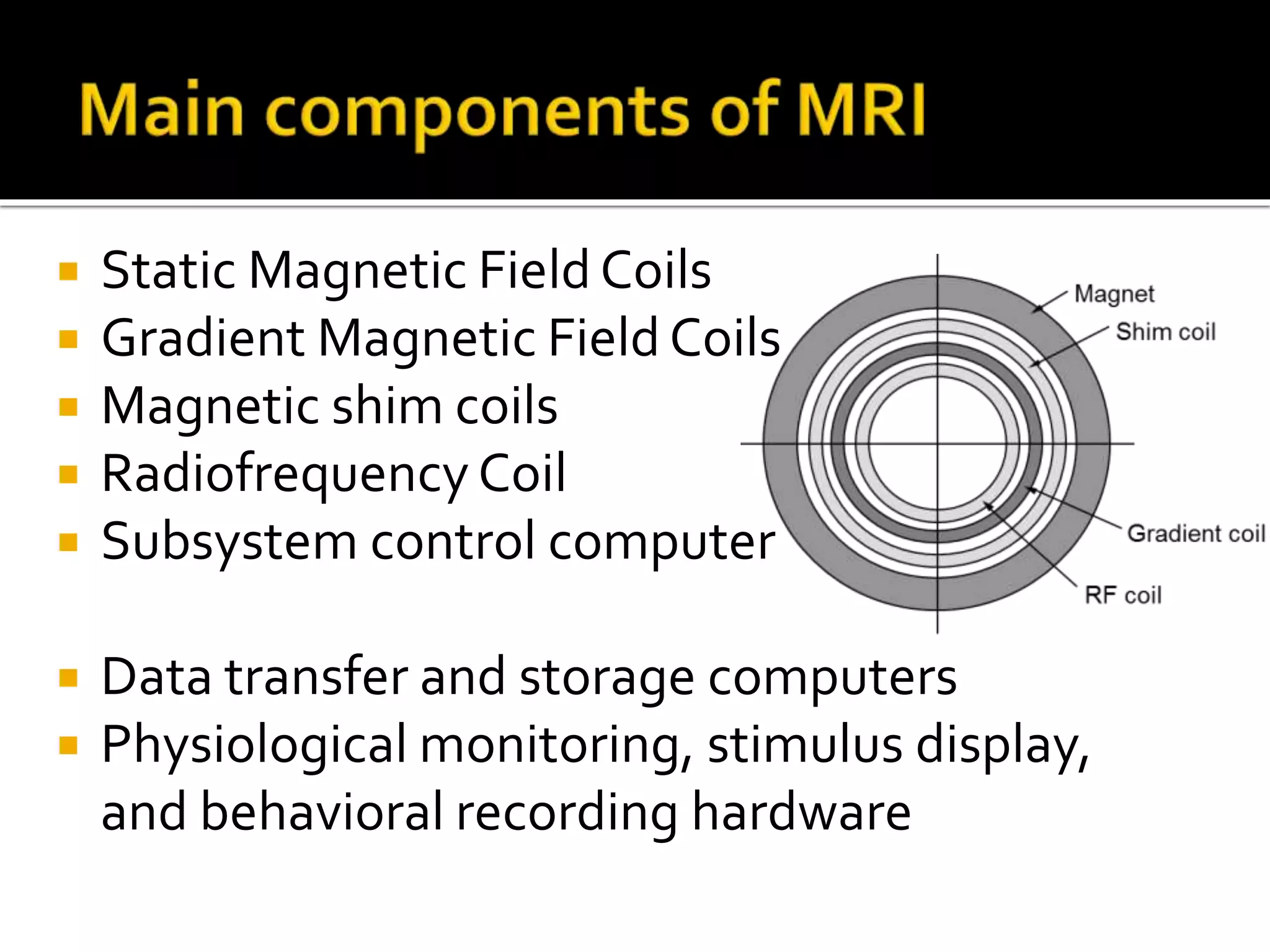
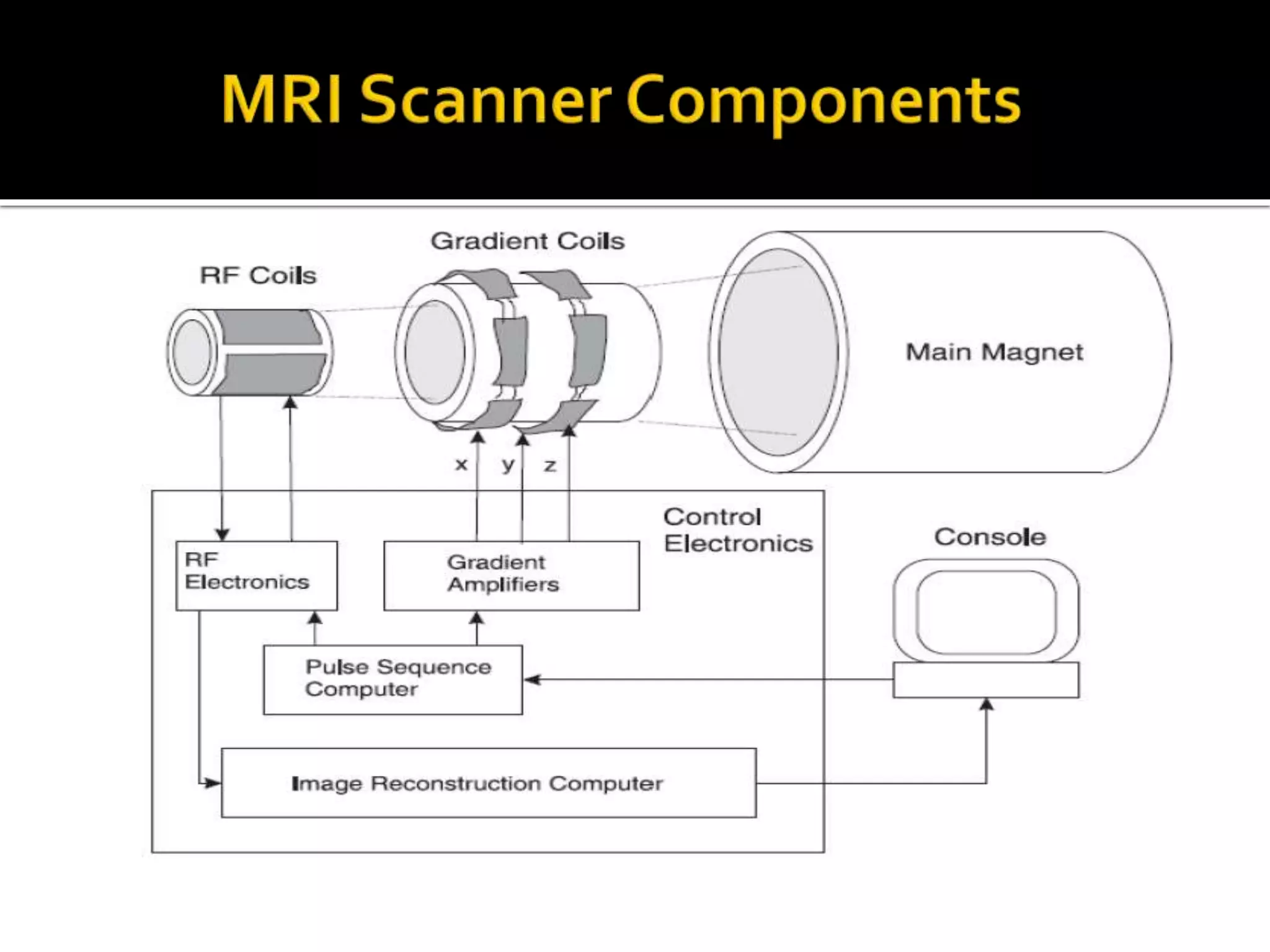
 Static Magnetic Field Coils 
 Gradient Magnetic Field Coils 
 Magnetic shim coils 
 Radiofrequency Coil 
 Subsystem control computer 
 Data transfer and storage computers 
 Physiological monitoring, stimulus display, 
and behavioral recording hardware
 Earths magnetic field is 0.3-0.7G (G: Gauss) 
 1 Tesla is 10000 G 
 Magnets used for imaging mostly between .5 
to 1.5 Tesla 
 PERMANENT AND ELECTROMAGNET 
(SUPERCONDUCTING ) 
 The field should be homogenous. 
Inhomogeniety reduces the signal to noise 
ratio ; i.e affects the image quality.
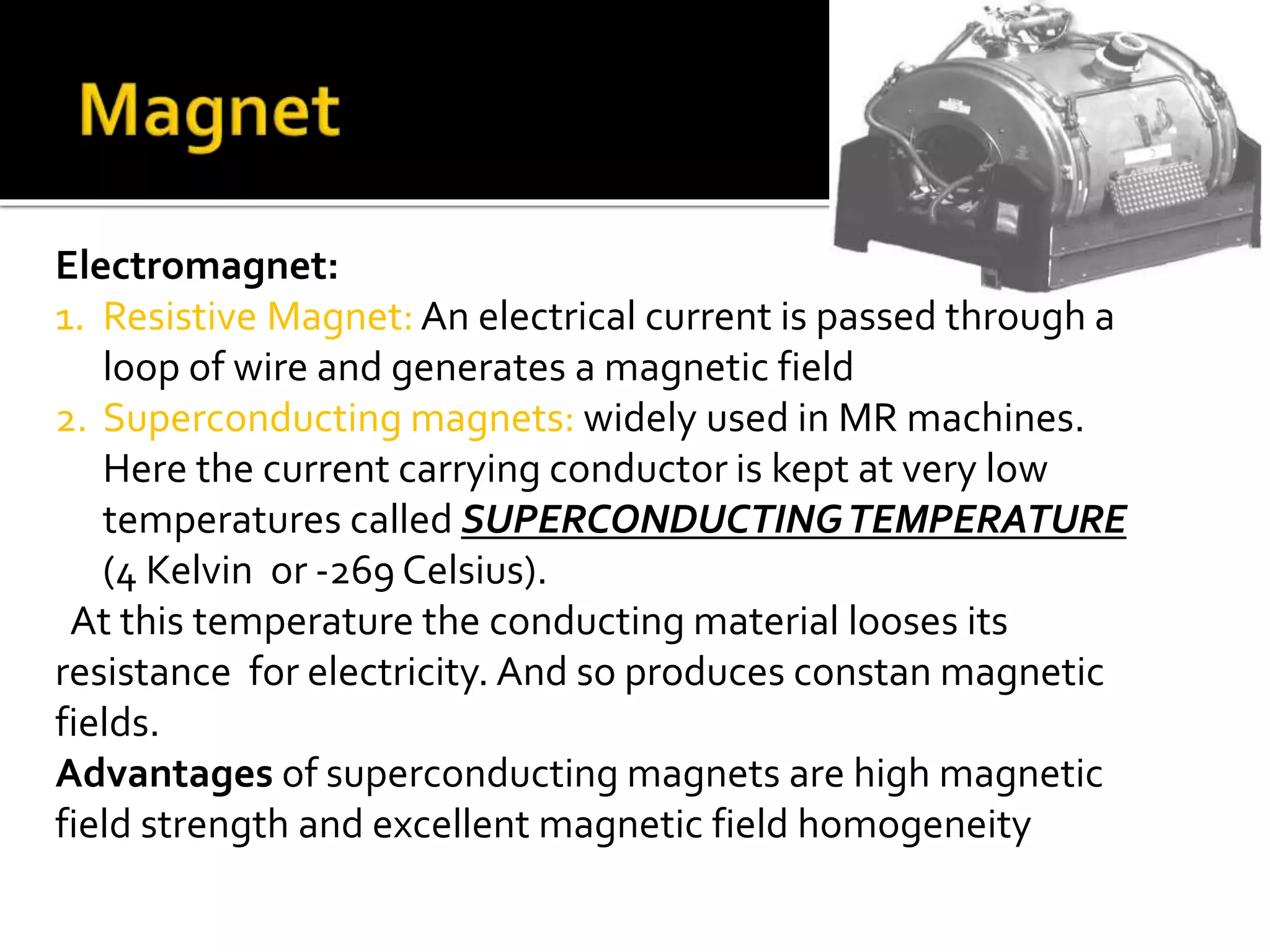
Electromagnet: 
1. Resistive Magnet: An electrical current is passed through a 
loop of wire and generates a magnetic field 
2. Superconducting magnets: widely used in MR machines. 
Here the current carrying conductor is kept at very low 
temperatures called SUPERCONDUCTING TEMPERATURE 
(4 Kelvin or -269 Celsius). 
At this temperature the conducting material looses its 
resistance for electricity. And so produces constan magnetic 
fields. 
Advantages of superconducting magnets are high magnetic 
field strength and excellent magnetic field homogeneity
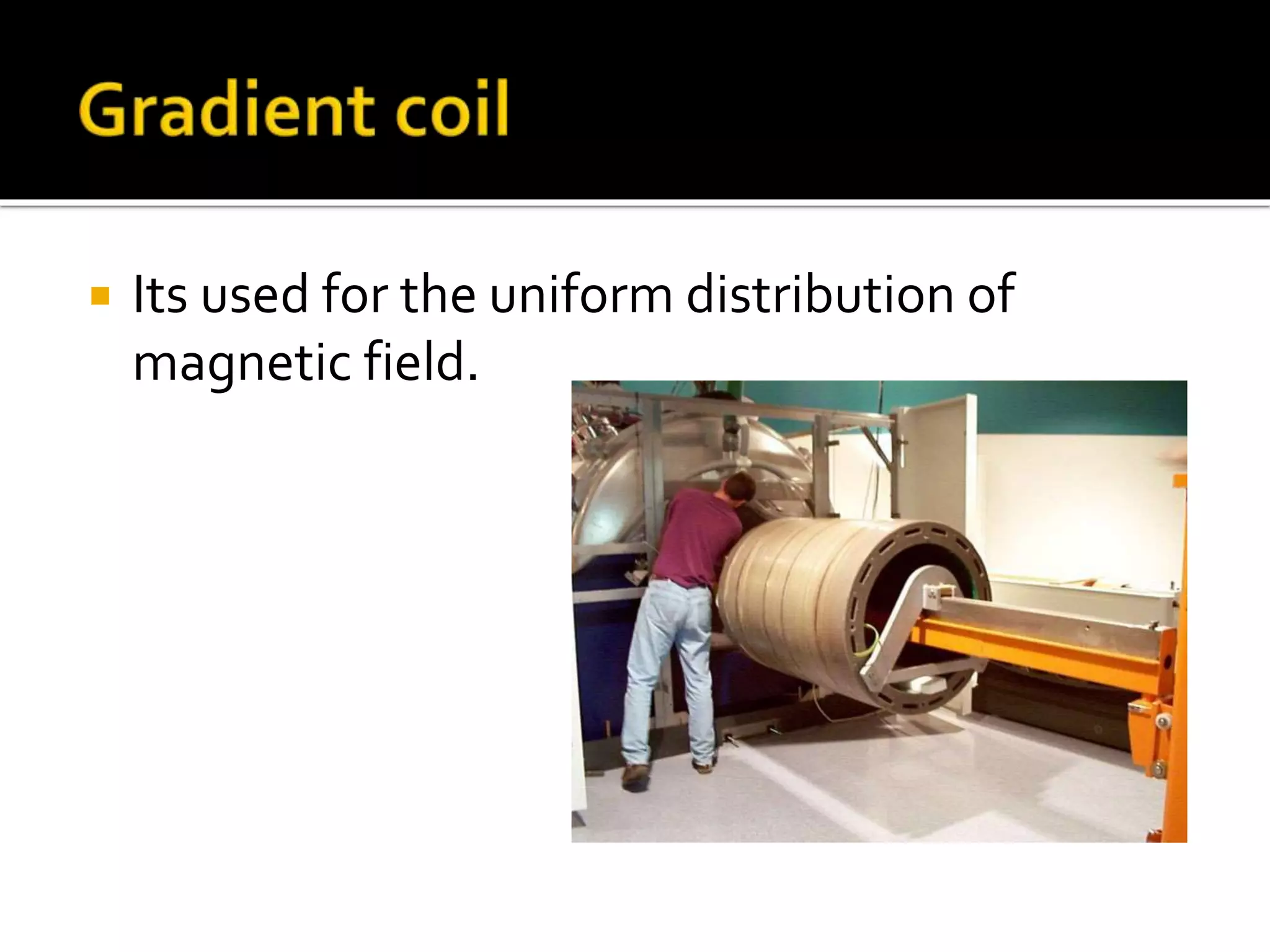
 Its used for the uniform distribution of 
magnetic field.
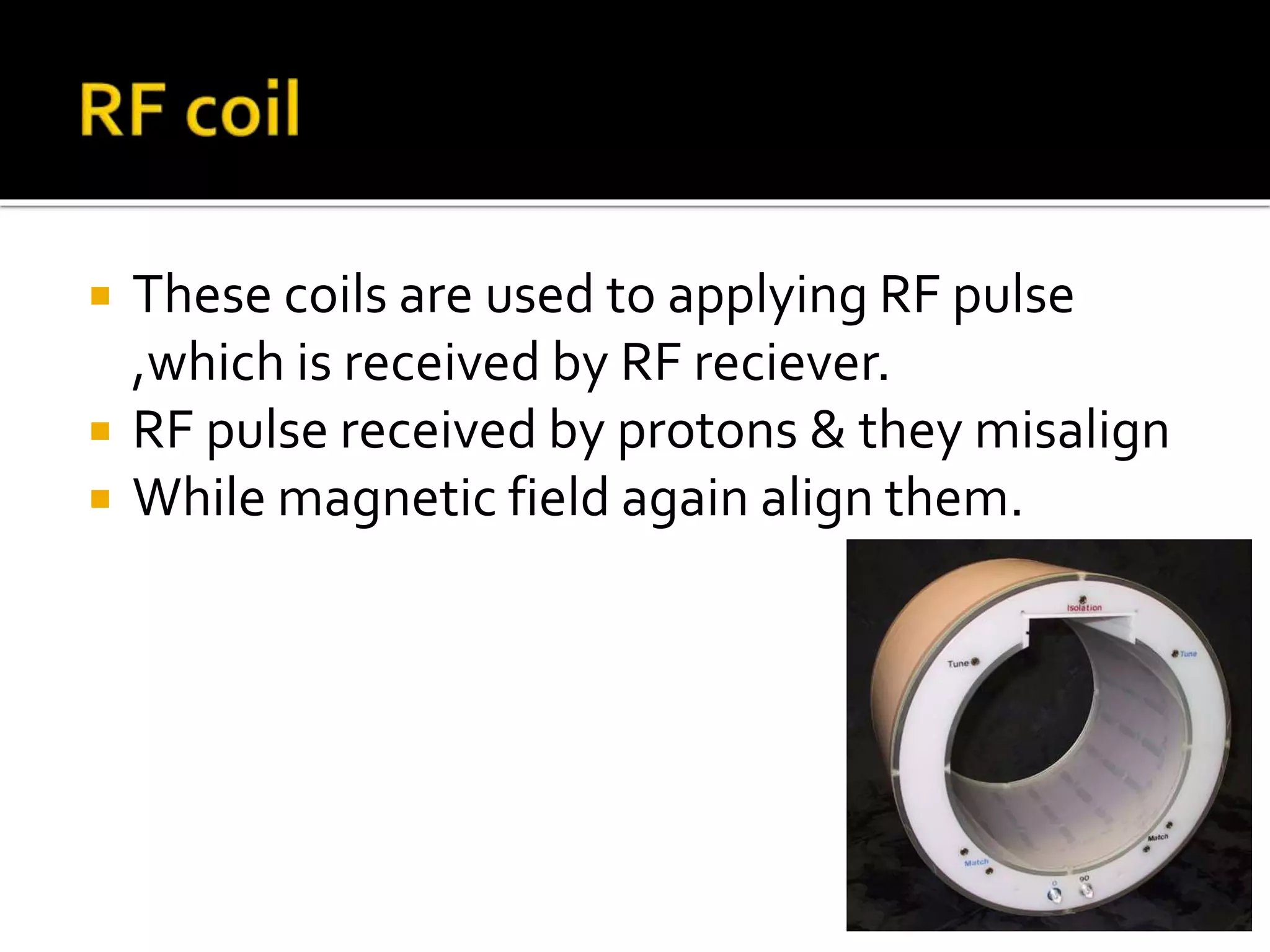
 These coils are used to applying RF pulse 
,which is received by RF reciever. 
 RF pulse received by protons & they misalign 
 While magnetic field again align them.
Shimming: the process by which an in 
homogenous magnetic filed is converted to a 
homogenous magnetic filed by electrical as well 
as mechanical adjustments. 
Shim Coils are such devices used for shimming 
of the magnetic field (i.e the STATIC MAGNETIC 
FIELDS)
THANK YOU…………!!!!

7lab components of mri

  • 1.
    BIOMEDICAL ENGINEERING SYSTEM INTRODUCTION OF THE COMPONENTS OF MRI(MAGNETIC RESONANCE IMAGING) Engr Khaleeque Ahmed 2011-BM-28 Sir syed university of engineering & technology Karachi
  • 2.
     Static MagneticField Coils  Gradient Magnetic Field Coils  Magnetic shim coils  Radiofrequency Coil  Subsystem control computer  Data transfer and storage computers  Physiological monitoring, stimulus display, and behavioral recording hardware
  • 4.
     Earths magneticfield is 0.3-0.7G (G: Gauss)  1 Tesla is 10000 G  Magnets used for imaging mostly between .5 to 1.5 Tesla  PERMANENT AND ELECTROMAGNET (SUPERCONDUCTING )  The field should be homogenous. Inhomogeniety reduces the signal to noise ratio ; i.e affects the image quality.
  • 5.
    Electromagnet: 1. ResistiveMagnet: An electrical current is passed through a loop of wire and generates a magnetic field 2. Superconducting magnets: widely used in MR machines. Here the current carrying conductor is kept at very low temperatures called SUPERCONDUCTING TEMPERATURE (4 Kelvin or -269 Celsius). At this temperature the conducting material looses its resistance for electricity. And so produces constan magnetic fields. Advantages of superconducting magnets are high magnetic field strength and excellent magnetic field homogeneity
  • 6.
     Its usedfor the uniform distribution of magnetic field.
  • 7.
     These coilsare used to applying RF pulse ,which is received by RF reciever.  RF pulse received by protons & they misalign  While magnetic field again align them.
  • 8.
    Shimming: the processby which an in homogenous magnetic filed is converted to a homogenous magnetic filed by electrical as well as mechanical adjustments. Shim Coils are such devices used for shimming of the magnetic field (i.e the STATIC MAGNETIC FIELDS)
  • 9.