Water and Solutions
Water and Solutions
1. Water is the MOST important
compound in living organisms!
2. It accounts for approximately
70% of a cell’s mass.
3. It covers about 70% of the
world’s surface
1. Water is a polar molecule
2. The bonds in a water molecule are
called polar covalent bonds
3. It is this polarity that gives it some of
it’s unique characteristics
What makes water special?
4. Recall that covalent bonds involve
atoms sharing electrons.
5. In the care of a “polar covalent
bond” the electrons are not shared
equally.
6. Electrons are more strongly
attracted to the oxygen than the
hydrogen.
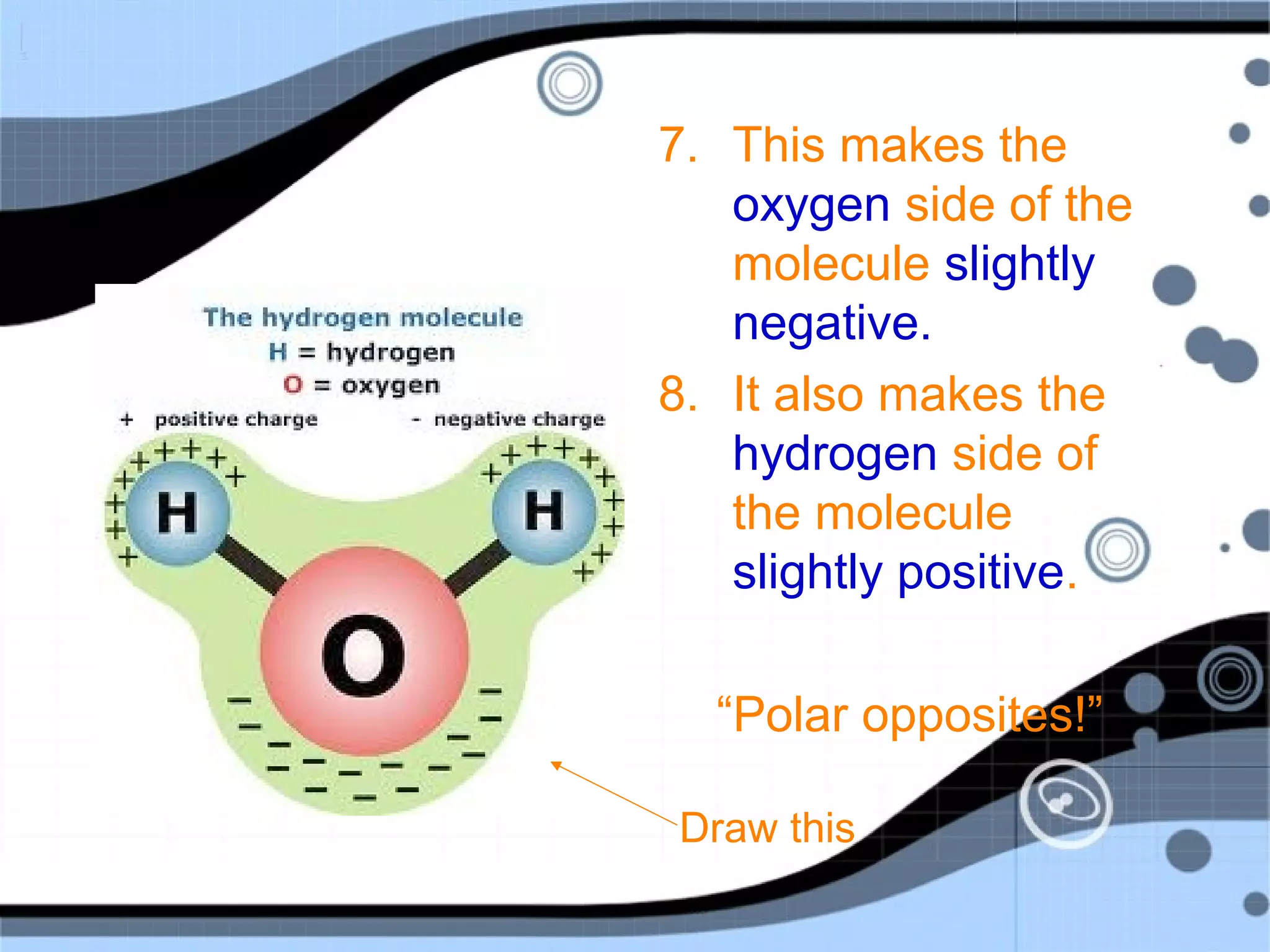
7. This makes the
oxygen side of the
molecule slightly
negative.
8. It also makes the
hydrogen side of
the molecule
slightly positive.
“Polar opposites!”
Draw this
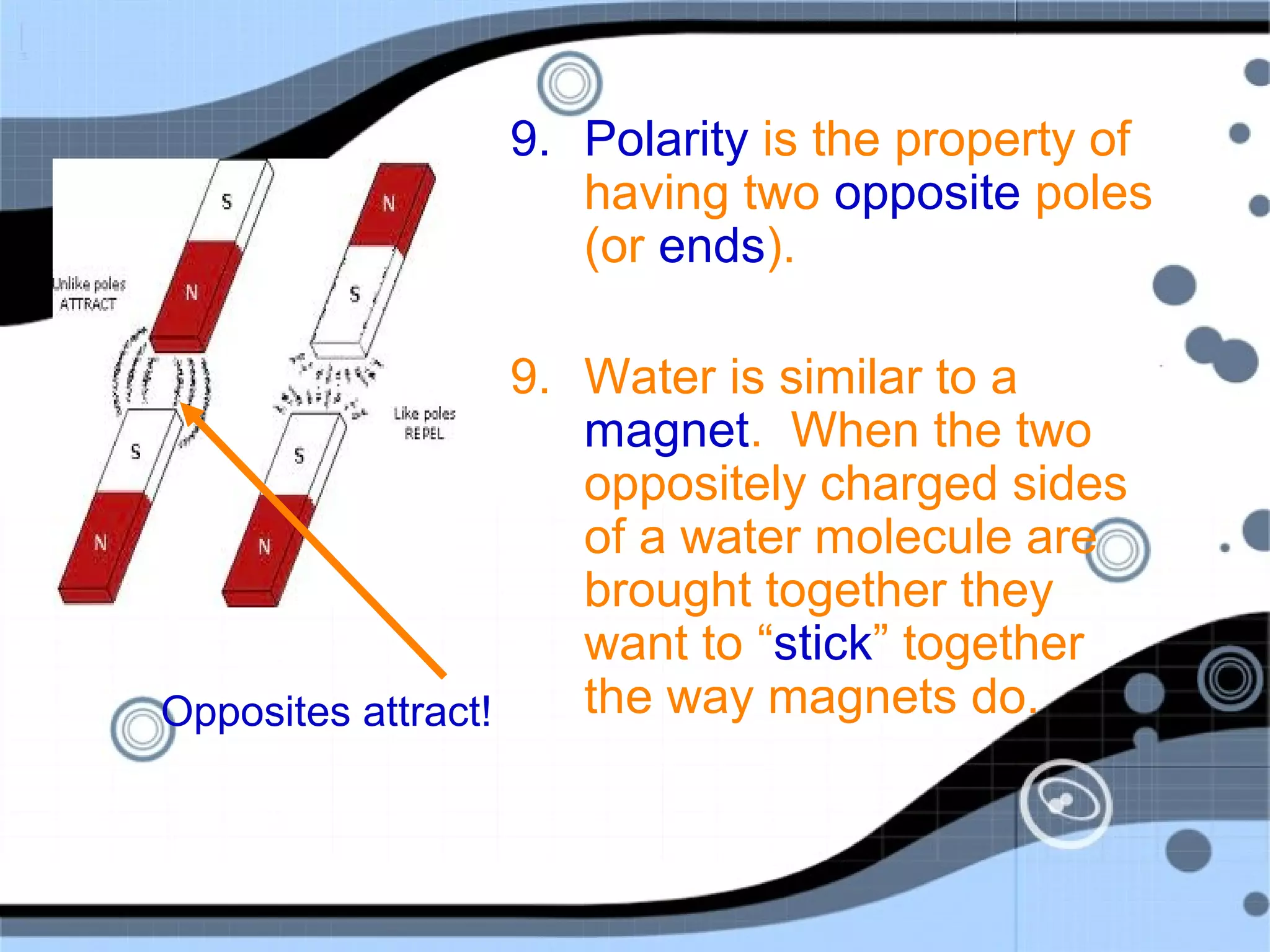
9. Polarity is the property of
having two opposite poles
(or ends).
9. Water is similar to a
magnet. When the two
oppositely charged sides
of a water molecule are
brought together they
want to “stick” together
the way magnets do.Opposites attract!
11. When a water molecule “sticks” to other
water molecules it forms weak hydrogen
bonds molecules around it.
-This stickiness creates surface tension in
water.
12. Hydrogen bonds between water
molecules hold them together
13. Hydrogen bonds are weak
interactions
Water’s Properties
1. Water’s properties can be attributed to
the fact that it is a polar molecule that
forms hydrogen bonds with other
water molecules around it.
2. Some of these special
properties include…
• Water’s ability to dissolve
polar substances
• Water is the “universal
solvent”
• Remember that like
dissolves like.
Therefore, water
dissolves other polar
substances.
• Water cannot, however
dissolve non-polar
substances such as oil.
• Liquid water is most
dense at 4 degrees
C. Ice is less dense
than liquid water.
• Nutrients in water mix
due to changes in
water density during
spring and fall. Also,
ice acts like an
insulator in the winter.
• Water is adhesive
• It forms hydrogen bonds with
molecules on other surfaces
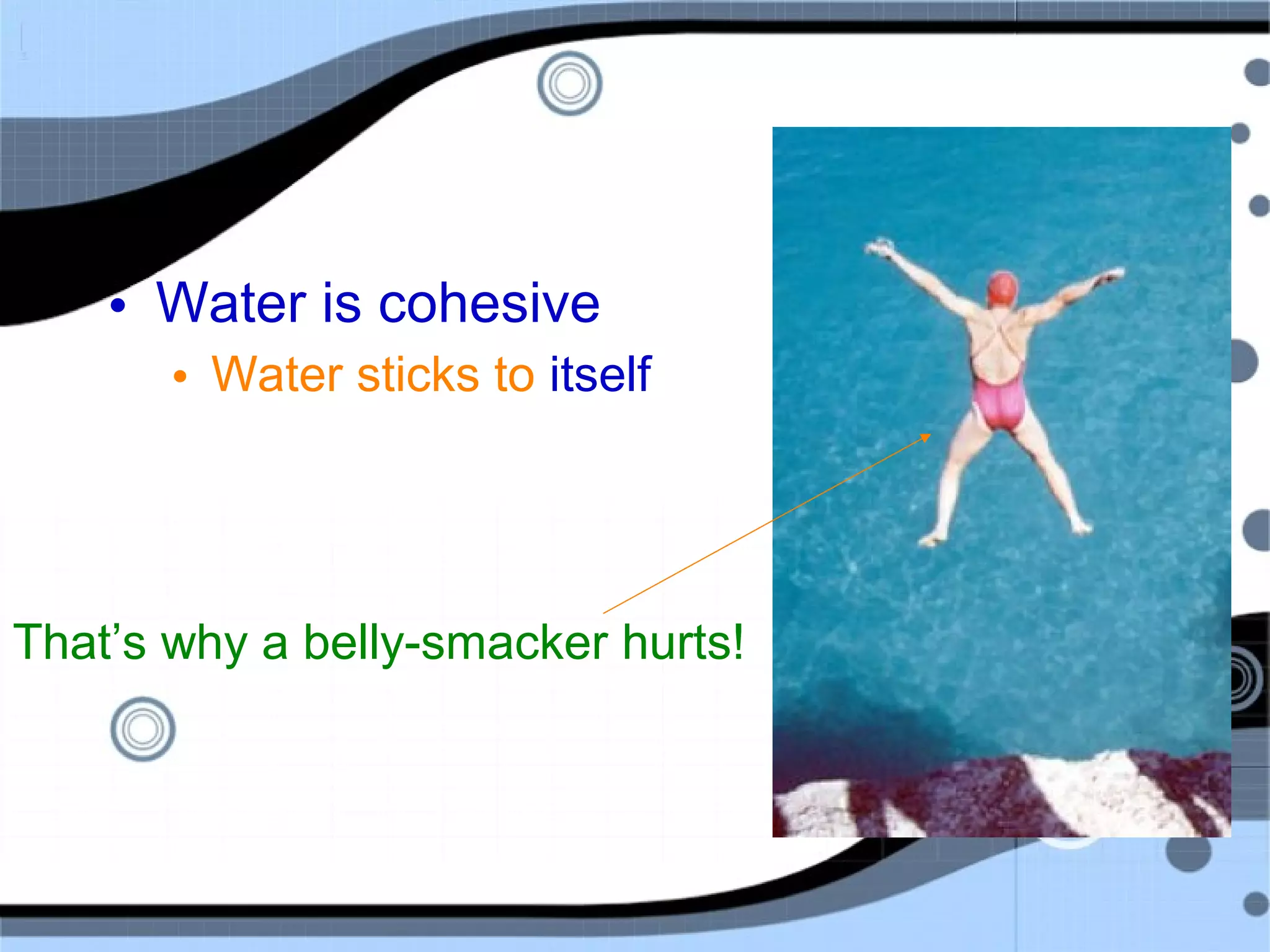
• Water is cohesive
• Water sticks to itself
That’s why a belly-smacker hurts!
Mixtures with Water
1. Mixture = combination of two or more
substances where each substance retains its
own characteristics and properties
2. Homogeneous mixtures = same throughout
(ex. Air)
3. Solution is another name of
homogeneous mixture
a. solvent = dissolver
b. solute = being dissolved
• Ex. Identify the solvent and the solute
in chocolate milk.
4. Heterogeneous mixtures = appears
different throughout
• ex. This cup of grains
6.3 Water and Solutions

6.3 Water and Solutions

  • 1.
  • 2.
    Water and Solutions 1.Water is the MOST important compound in living organisms! 2. It accounts for approximately 70% of a cell’s mass. 3. It covers about 70% of the world’s surface
  • 3.
    1. Water isa polar molecule 2. The bonds in a water molecule are called polar covalent bonds 3. It is this polarity that gives it some of it’s unique characteristics What makes water special?
  • 4.
    4. Recall thatcovalent bonds involve atoms sharing electrons. 5. In the care of a “polar covalent bond” the electrons are not shared equally. 6. Electrons are more strongly attracted to the oxygen than the hydrogen.
  • 5.
    7. This makesthe oxygen side of the molecule slightly negative. 8. It also makes the hydrogen side of the molecule slightly positive. “Polar opposites!” Draw this
  • 6.
    9. Polarity isthe property of having two opposite poles (or ends). 9. Water is similar to a magnet. When the two oppositely charged sides of a water molecule are brought together they want to “stick” together the way magnets do.Opposites attract!
  • 7.
    11. When awater molecule “sticks” to other water molecules it forms weak hydrogen bonds molecules around it. -This stickiness creates surface tension in water.
  • 8.
    12. Hydrogen bondsbetween water molecules hold them together 13. Hydrogen bonds are weak interactions
  • 10.
    Water’s Properties 1. Water’sproperties can be attributed to the fact that it is a polar molecule that forms hydrogen bonds with other water molecules around it.
  • 11.
    2. Some ofthese special properties include… • Water’s ability to dissolve polar substances • Water is the “universal solvent” • Remember that like dissolves like. Therefore, water dissolves other polar substances. • Water cannot, however dissolve non-polar substances such as oil.
  • 12.
    • Liquid wateris most dense at 4 degrees C. Ice is less dense than liquid water. • Nutrients in water mix due to changes in water density during spring and fall. Also, ice acts like an insulator in the winter.
  • 13.
    • Water isadhesive • It forms hydrogen bonds with molecules on other surfaces
  • 14.
    • Water iscohesive • Water sticks to itself That’s why a belly-smacker hurts!
  • 15.
    Mixtures with Water 1.Mixture = combination of two or more substances where each substance retains its own characteristics and properties 2. Homogeneous mixtures = same throughout (ex. Air)
  • 16.
    3. Solution isanother name of homogeneous mixture a. solvent = dissolver b. solute = being dissolved • Ex. Identify the solvent and the solute in chocolate milk.
  • 17.
    4. Heterogeneous mixtures= appears different throughout • ex. This cup of grains