Pharmacy 5rd semester
Pharmaceutical Chemistry
By:Peshawa Ibrahim
Prof: Malkhas
Halogens
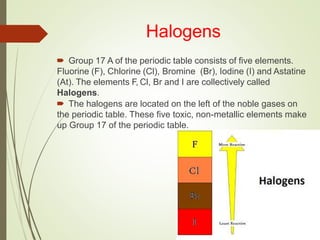
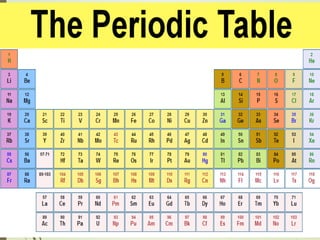
 Group 17 A of the periodic table consists of five elements.
Fluorine (F), Chlorine (Cl), Bromine (Br), Iodine (I) and Astatine
(At). The elements F, Cl, Br and I are collectively called
Halogens.
 The halogens are located on the left of the noble gases on
the periodic table. These five toxic, non-metallic elements make
up Group 17 of the periodic table.
Physical State and Density
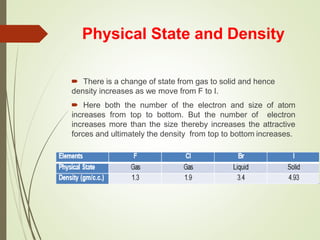
 There is a change of state from gas to solid and hence
density increases as we move from F to I.
 Here both the number of the electron and size of atom
increases from top to bottom. But the number of electron
increases more than the size thereby increases the attractive
forces and ultimately the density from top to bottom increases.
Electronegativity
 Halogens have large values of electronegativity. These values
decrease as we proceed from F to I in the group. Large
electronegativity values of halogen atoms indicate that X atoms
have a strong tendency to form X– ions. (Here, from top to
bottom with the increase of an extra electron shell, the size of
the atom increases and the
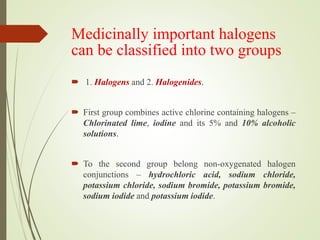
Medicinally important halogens
can be classified into two groups
 1. Halogens and 2. Halogenides.
 First group combines active chlorine containing halogens –
Chlorinated lime, iodine and its 5% and 10% alcoholic
solutions.
 To the second group belong non-oxygenated halogen
conjunctions – hydrochloric acid, sodium chloride,
potassium chloride, sodium bromide, potassium bromide,
sodium iodide and potassium iodide.
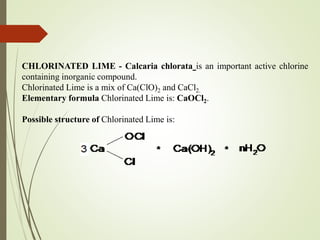
CHLORINATED LIME - Calcaria chlorata is an important active chlorine
containing inorganic compound.
Chlorinated Lime is a mix of Ca(ClО)2 and CaCl2.
Elementary formula Chlorinated Lime is: CaOCl2.
Possible structure of Chlorinated Lime is:
HYPOCHLORITE
 A HYPOCHLORITE is a chemical compound containing the
molecular ion of chlorine and oxygen (hypochlorite ion OCl-)
and a counter-ion such as sodium or calcium. A hypochlorite is
also referred to as an ester or salt of hypochlorous acid. The two
most common hypochlorites are sodium hypochlorite (NaOCl)
and calcium hypochlorite (Ca(OCl)2).
 Hypochlorites are frequently quite unstable in their pure forms
and for this reason are normally handled as aqueous solutions.
Their primary applications are as bleaching
, disinfection and water treatment agents but they are also used in
chemistry for chlorination and oxidation reactions. They have a
broad spectrum of antimicrobial activity, are unaffected by water
hardness, are inexpensive and fast acting, and have a low
incidence of serious toxicity.
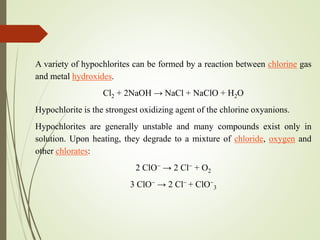
A variety of hypochlorites can be formed by a reaction between chlorine gas
and metal hydroxides.
Cl2 + 2NaOH → NaCl + NaClO + H2O
Hypochlorite is the strongest oxidizing agent of the chlorine oxyanions.
Hypochlorites are generally unstable and many compounds exist only in
solution. Upon heating, they degrade to a mixture of chloride, oxygen and
other chlorates:
2 ClO− → 2 Cl− + O2
3 ClO− → 2 Cl− + ClO−
3
Thank you for listening
Peshawa mangury

Halogens

  • 1.
    Pharmacy 5rd semester PharmaceuticalChemistry By:Peshawa Ibrahim Prof: Malkhas
  • 2.
    Halogens  Group 17A of the periodic table consists of five elements. Fluorine (F), Chlorine (Cl), Bromine (Br), Iodine (I) and Astatine (At). The elements F, Cl, Br and I are collectively called Halogens.  The halogens are located on the left of the noble gases on the periodic table. These five toxic, non-metallic elements make up Group 17 of the periodic table.
  • 5.
    Physical State andDensity  There is a change of state from gas to solid and hence density increases as we move from F to I.  Here both the number of the electron and size of atom increases from top to bottom. But the number of electron increases more than the size thereby increases the attractive forces and ultimately the density from top to bottom increases.
  • 6.
    Electronegativity  Halogens havelarge values of electronegativity. These values decrease as we proceed from F to I in the group. Large electronegativity values of halogen atoms indicate that X atoms have a strong tendency to form X– ions. (Here, from top to bottom with the increase of an extra electron shell, the size of the atom increases and the
  • 7.
    Medicinally important halogens canbe classified into two groups  1. Halogens and 2. Halogenides.  First group combines active chlorine containing halogens – Chlorinated lime, iodine and its 5% and 10% alcoholic solutions.  To the second group belong non-oxygenated halogen conjunctions – hydrochloric acid, sodium chloride, potassium chloride, sodium bromide, potassium bromide, sodium iodide and potassium iodide.
  • 8.
    CHLORINATED LIME -Calcaria chlorata is an important active chlorine containing inorganic compound. Chlorinated Lime is a mix of Ca(ClО)2 and CaCl2. Elementary formula Chlorinated Lime is: CaOCl2. Possible structure of Chlorinated Lime is:
  • 9.
    HYPOCHLORITE  A HYPOCHLORITEis a chemical compound containing the molecular ion of chlorine and oxygen (hypochlorite ion OCl-) and a counter-ion such as sodium or calcium. A hypochlorite is also referred to as an ester or salt of hypochlorous acid. The two most common hypochlorites are sodium hypochlorite (NaOCl) and calcium hypochlorite (Ca(OCl)2).  Hypochlorites are frequently quite unstable in their pure forms and for this reason are normally handled as aqueous solutions. Their primary applications are as bleaching , disinfection and water treatment agents but they are also used in chemistry for chlorination and oxidation reactions. They have a broad spectrum of antimicrobial activity, are unaffected by water hardness, are inexpensive and fast acting, and have a low incidence of serious toxicity.
  • 10.
    A variety ofhypochlorites can be formed by a reaction between chlorine gas and metal hydroxides. Cl2 + 2NaOH → NaCl + NaClO + H2O Hypochlorite is the strongest oxidizing agent of the chlorine oxyanions. Hypochlorites are generally unstable and many compounds exist only in solution. Upon heating, they degrade to a mixture of chloride, oxygen and other chlorates: 2 ClO− → 2 Cl− + O2 3 ClO− → 2 Cl− + ClO− 3
  • 12.
    Thank you forlistening Peshawa mangury