2006-2007Regents Biology
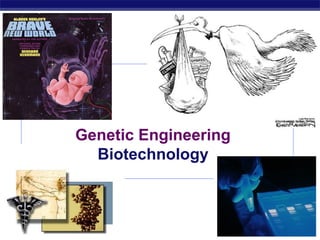
Genetic Engineering
Biotechnology
Regents Biology
We have been manipulating DNA
for generations!
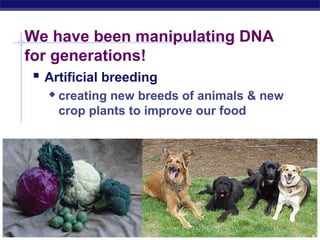
 Artificial breeding
 creating new breeds of animals & new
crop plants to improve our food
Regents Biology
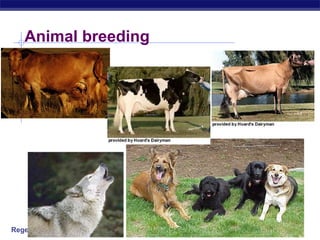
Animal breeding
Regents Biology
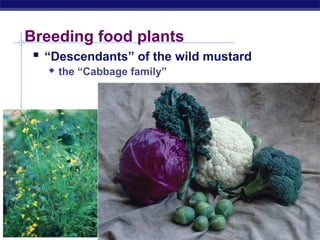
Breeding food plants
 “Descendants” of the wild mustard
 the “Cabbage family”
Regents Biology
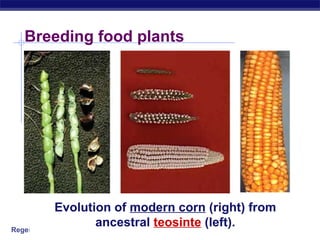
Breeding food plants
Evolution of modern corn (right) from
ancestral teosinte (left).
Regents Biology
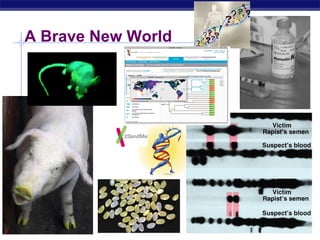
A Brave New World
Regents Biology
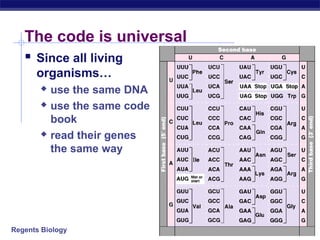
The code is universal
 Since all living
organisms…
 use the same DNA
 use the same code
book
 read their genes
the same way
Regents Biology
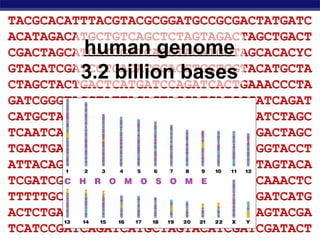
TACGCACATTTACGTACGCGGATGCCGCGACTATGATC
ACATAGACATGCTGTCAGCTCTAGTAGACTAGCTGACT
CGACTAGCATGATCGATCAGCTACATGCTAGCACACYC
GTACATCGATCCTGACATCGACCTGCTCGTACATGCTA
CTAGCTACTGACTCATGATCCAGATCACTGAAACCCTA
GATCGGGTACCTATTACAGTACGATCATCCGATCAGAT
CATGCTAGTACATCGATCGATACTGCTACTGATCTAGC
TCAATCAAACTCTTTTTGCATCATGATACTAGACTAGC
TGACTGATCATGACTCTGATCCCGTAGATCGGGTACCT
ATTACAGTACGATCATCCGATCAGATCATGCTAGTACA
TCGATCGATACTGCTACTGATCTAGCTCAATCAAACTC
TTTTTGCATCATGATACTAGACTAGCTGACTGATCATG
ACTCTGATCCCGTAGATCGGGTACCTATTACAGTACGA
TCATCCGATCAGATCATGCTAGTACATCGATCGATACT
human genome
3.2 billion bases
Regents Biology
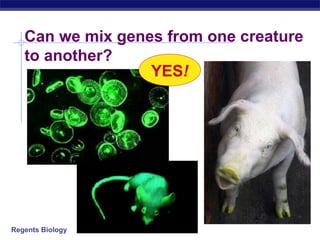
Can we mix genes from one creature
to another?
YES!
Regents Biology
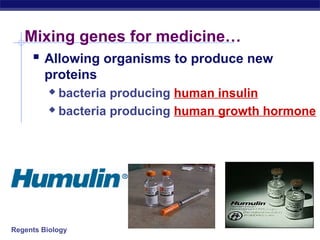
Mixing genes for medicine…
 Allowing organisms to produce new
proteins
 bacteria producing human insulin
 bacteria producing human growth hormone
Regents Biology
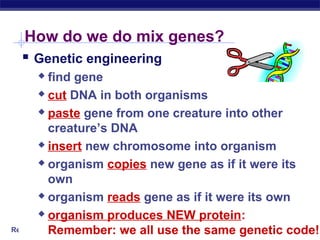
How do we do mix genes?
 Genetic engineering
 find gene
 cut DNA in both organisms
 paste gene from one creature into other
creature’s DNA
 insert new chromosome into organism
 organism copies new gene as if it were its
own
 organism reads gene as if it were its own
 organism produces NEW protein:
Remember: we all use the same genetic code!
Regents Biology
Cutting DNA
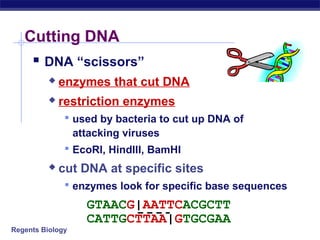
 DNA “scissors”
 enzymes that cut DNA
 restriction enzymes
 used by bacteria to cut up DNA of
attacking viruses
 EcoRI, HindIII, BamHI
 cut DNA at specific sites
 enzymes look for specific base sequences
GTAACGAATTCACGCTT
CATTGCTTAAGTGCGAA
GTAACG|AATTCACGCTT
CATTGCTTAA|GTGCGAA
Regents Biology
Restriction enzymes
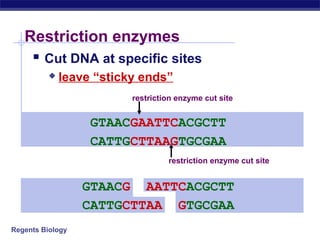
 Cut DNA at specific sites
 leave “sticky ends”
GTAACG AATTCACGCTT
CATTGCTTAA GTGCGAA
GTAACGAATTCACGCTT
CATTGCTTAAGTGCGAA
restriction enzyme cut site
Regents Biology
Sticky ends
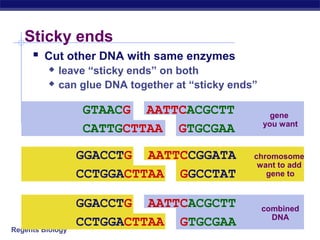
 Cut other DNA with same enzymes
 leave “sticky ends” on both
 can glue DNA together at “sticky ends”
GTAACG AATTCACGCTT
CATTGCTTAA GTGCGAA
gene
you want
GGACCTG AATTCCGGATA
CCTGGACTTAA GGCCTAT
chromosome
want to add
gene to
GGACCTG AATTCACGCTT
CCTGGACTTAA GTGCGAA
combined
DNA
Regents Biology
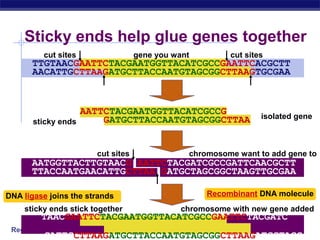
Sticky ends help glue genes together
TTGTAACGAATTCTACGAATGGTTACATCGCCGAATTCACGCTT
AACATTGCTTAAGATGCTTACCAATGTAGCGGCTTAAGTGCGAA
gene you want cut sitescut sites
AATGGTTACTTGTAACG AATTCTACGATCGCCGATTCAACGCTT
TTACCAATGAACATTGCTTAA GATGCTAGCGGCTAAGTTGCGAA
chromosome want to add gene tocut sites
AATTCTACGAATGGTTACATCGCCG
GATGCTTACCAATGTAGCGGCTTAA isolated gene
sticky ends
chromosome with new gene added
TAACGAATTCTACGAATGGTTACATCGCCGAATTCTACGATC
CATTGCTTAAGATGCTTACCAATGTAGCGGCTTAAGATGCTAGC
sticky ends stick together
DNA ligase joins the strands Recombinant DNA molecule
Regents Biology
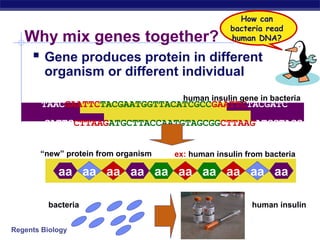
Why mix genes together?
TAACGAATTCTACGAATGGTTACATCGCCGAATTCTACGATC
CATTGCTTAAGATGCTTACCAATGTAGCGGCTTAAGATGCTAGC
 Gene produces protein in different
organism or different individual
aa aaaa aa aa aa aa aa aa aa
“new” protein from organism ex: human insulin from bacteria
human insulin gene in bacteria
bacteria human insulin
How can
bacteria read
human DNA?
Regents Biology
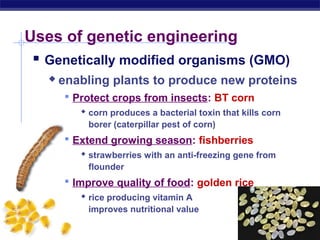
Uses of genetic engineering
 Genetically modified organisms (GMO)
 enabling plants to produce new proteins
 Protect crops from insects: BT corn
 corn produces a bacterial toxin that kills corn
borer (caterpillar pest of corn)
 Extend growing season: fishberries
 strawberries with an anti-freezing gene from
flounder
 Improve quality of food: golden rice
 rice producing vitamin A
improves nutritional value
Regents Biology
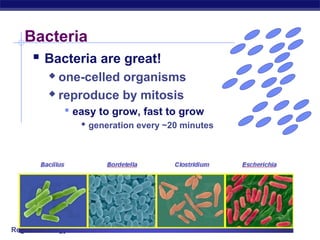
Bacteria
 Bacteria are great!
 one-celled organisms
 reproduce by mitosis
 easy to grow, fast to grow
 generation every ~20 minutes
Regents Biology
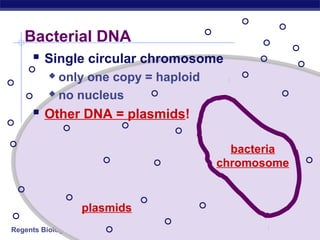
Bacterial DNA
 Single circular chromosome
 only one copy = haploid
 no nucleus
 Other DNA = plasmids!
bacteria
chromosome
plasmids
Regents Biology
There’s more…
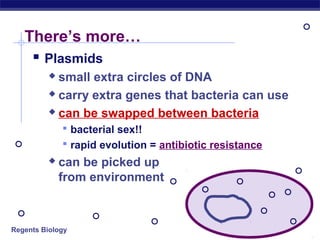
 Plasmids
 small extra circles of DNA
 carry extra genes that bacteria can use
 can be swapped between bacteria
 bacterial sex!!
 rapid evolution = antibiotic resistance
 can be picked up
from environment
Regents Biology
How can plasmids help us?
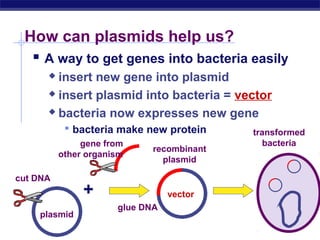
 A way to get genes into bacteria easily
 insert new gene into plasmid
 insert plasmid into bacteria = vector
 bacteria now expresses new gene
 bacteria make new protein
+
transformed
bacteriagene from
other organism
plasmid
cut DNA
recombinant
plasmid
vector
glue DNA
Regents Biology
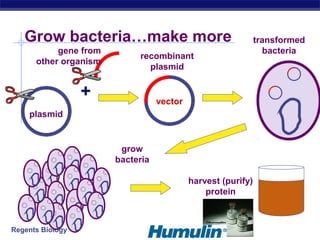
Grow bacteria…make more
grow
bacteria
harvest (purify)
protein
transformed
bacteria
plasmid
gene from
other organism
+
recombinant
plasmid
vector
Regents Biology
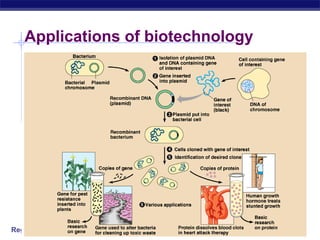
Applications of biotechnology
2006-2007Regents Biology
I’m a very special pig!
Got any Questions?

Biotechnology Notes

Editor's Notes

  • #8 Strong evidence for a single origin in evolutionary theory.
  • #18 For example, a transgenic rice plant has been developed that produces yellow grains containing beta-carotene. Humans use beta-carotene to make vitamin A. Currently, 70% of children under the age of 5 in Southeast Asia are deficient in vitamin A, leading to vision impairment and increased disease rates.
  • #21 Mini-chromosomes