5S PRINCIPLES 
THE SECRET TO 
JAPANESE SUCCESS 
U.KALPANADEVI 
II- MBA 
MICHAEL INSTITUTE OF MANAGEMENT
• Developed by the Japanese 
• Housekeeping System 
• Helps Create a Better Working Environment 
and a Consistently High Quality Process
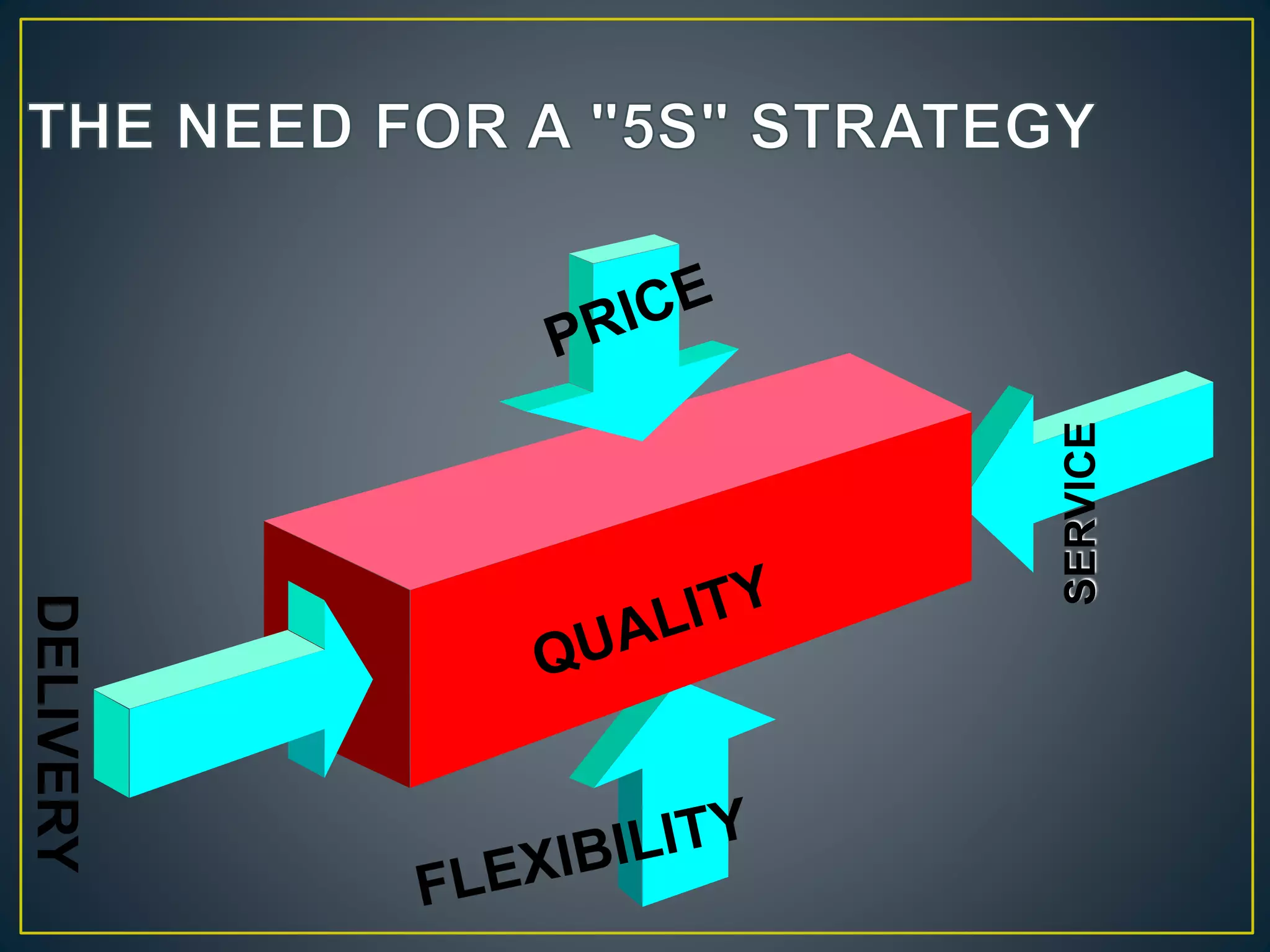
DELIVERY 
SERVICE
 IF WE CANNOT KEEP OUR 
WORKPLACES 
 CLEAN 
 ORDERLY 
 ACCIDENT FREE 
 NOBODY WILL BELIEVE WE CAN 
PRODUCE QUALITY GOODS OR 
ATLEAST SERIOUS ABOUT 
PRODUCING QUALITY.
• SEIRI – Organisation/Sort out 
• SEITON – Orderliness/Systemize 
• SEISO – The Cleaning/Shining 
• SEIKETSU – STANDARDIZE 
• SHITSUKE - Sustain/Discipline
Sort Means That You Remove 
All Items From the Workplace 
That Are Not Needed for Current 
Production Operation.
 A WORK ENVIRONMENT IN WHICH 
 TIME 
 MONEY 
 SPACE 
 ENERGY & 
 EFFECTIVE RESOURCES MANAGMENT 
 PROBLEMS IN WORK FLOW ARE REDUCED, 
COMMUNICATION IS IMPROVED, PRODUCT 
QUALITY IS INCREASED & PRODUCTIVITY IS 
ENHANCED.
WASTE 
ELIMINATION 
LEADS TO 
COST 
OPTIMIZATION & 
MANAGEMENT 
EXCELLENCE
 Set in Order Can Be Defined As 
Arranging Needed Items So 
That They Are Easy to Use and 
Labelling Them So That They 
Are Easy to Find and Put away.
 WASTE OF 
MOTION 
SEARCHING 
HUMAN ENERGY 
EXCESS INVENTORY 
DEFECTIVE PRODUCTS 
UNSAFE CONDITIONS
 DECIDING APPROPRIATE LOCATIONS 
 LOCATE ITEMS IN THE WORKPLACE 
ACCORDING TO THEIR FREQUENCY OF USE 
 PLACE FREQUENTLY USED ITEMS NEAR THE 
WORKPLACE 
 STORE INFREQUENTLY USED ITEMS AWAY 
FROM THE PLACE OF USE. 
 A LET GO ARRANGEMENT FOR TOOLS SO 
THAT THEY GO BACK TO ORIGINAL PLACE OF 
STORAGE
 Shine Means Sweeping 
Floors, Whipping off 
Machinery, and Generally 
Making Sure That Everything 
in the Factory Stays Clean.
This step eliminates Dirt, Dust and other 
foreign matter to make the workplace clean. 
Clean Equipment,Furniture,Notice Boards 
Records Etc. 
Keep the workplace Spotless. 
Sweeping,wiping,polishing,painting Etc.
 Standardize Is The Result 
That Exists When the First 
Three Pillars - Sort, Set in 
Order and Shine Are 
Properly Maintained.
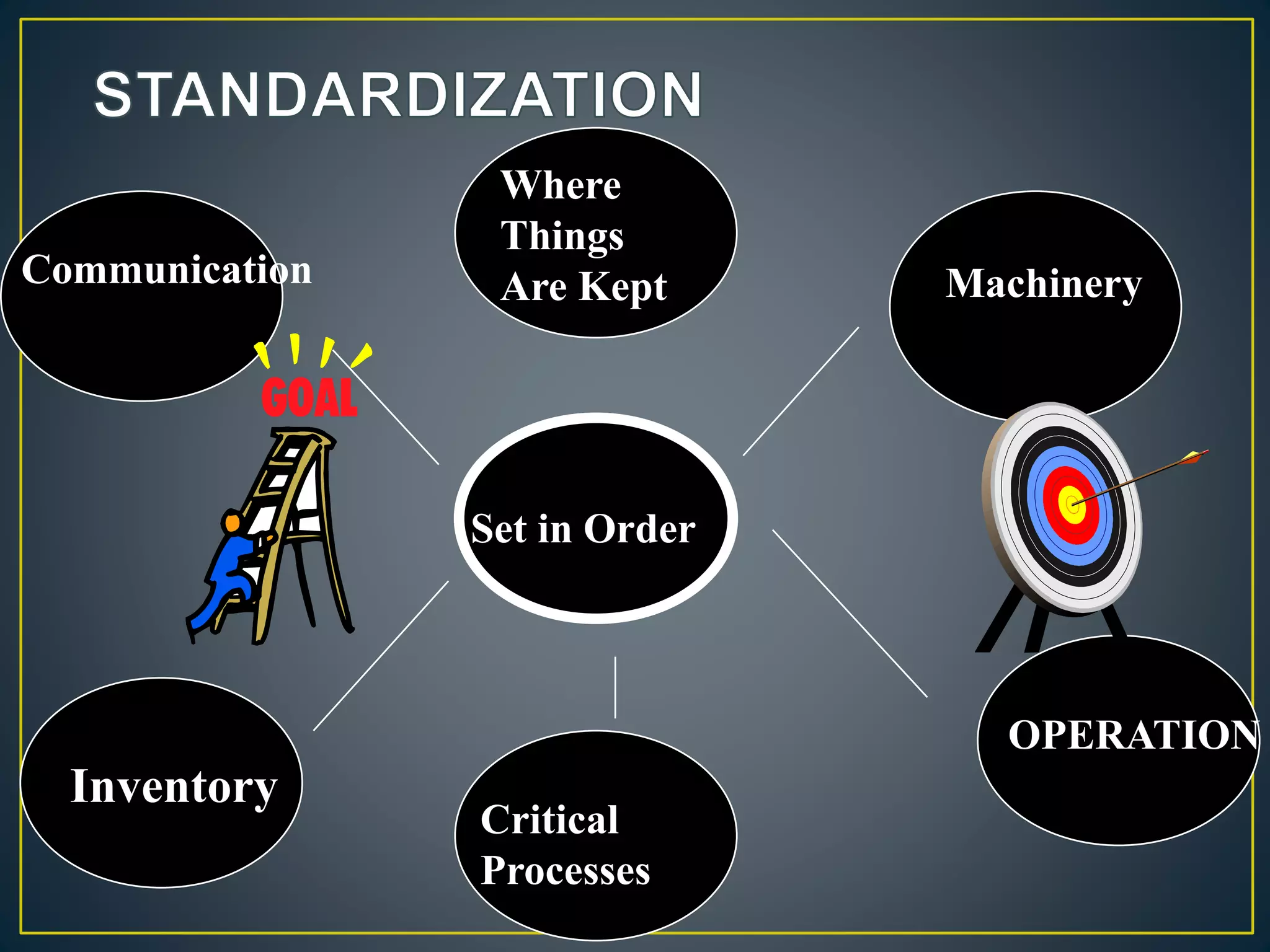
Set in Order 
Machinery 
Where 
Things 
Are Kept 
OPERATION 
Critical 
Processes 
Communication 
Inventory
STANDARDIZATION 
 PROVIDE OBJECTIVES AND INDICATE 
TRAINING GOALS. 
 PROVIDE A BASIS FOR TRAINING 
 CREATE BASIS FOR AUDIT AND 
DIAGNOSIS. 
 PROVIDE A MEANS FOR PREVENTING 
RECURRENCE OF ERRORS AND 
MINIMIZING VARIABILITY.
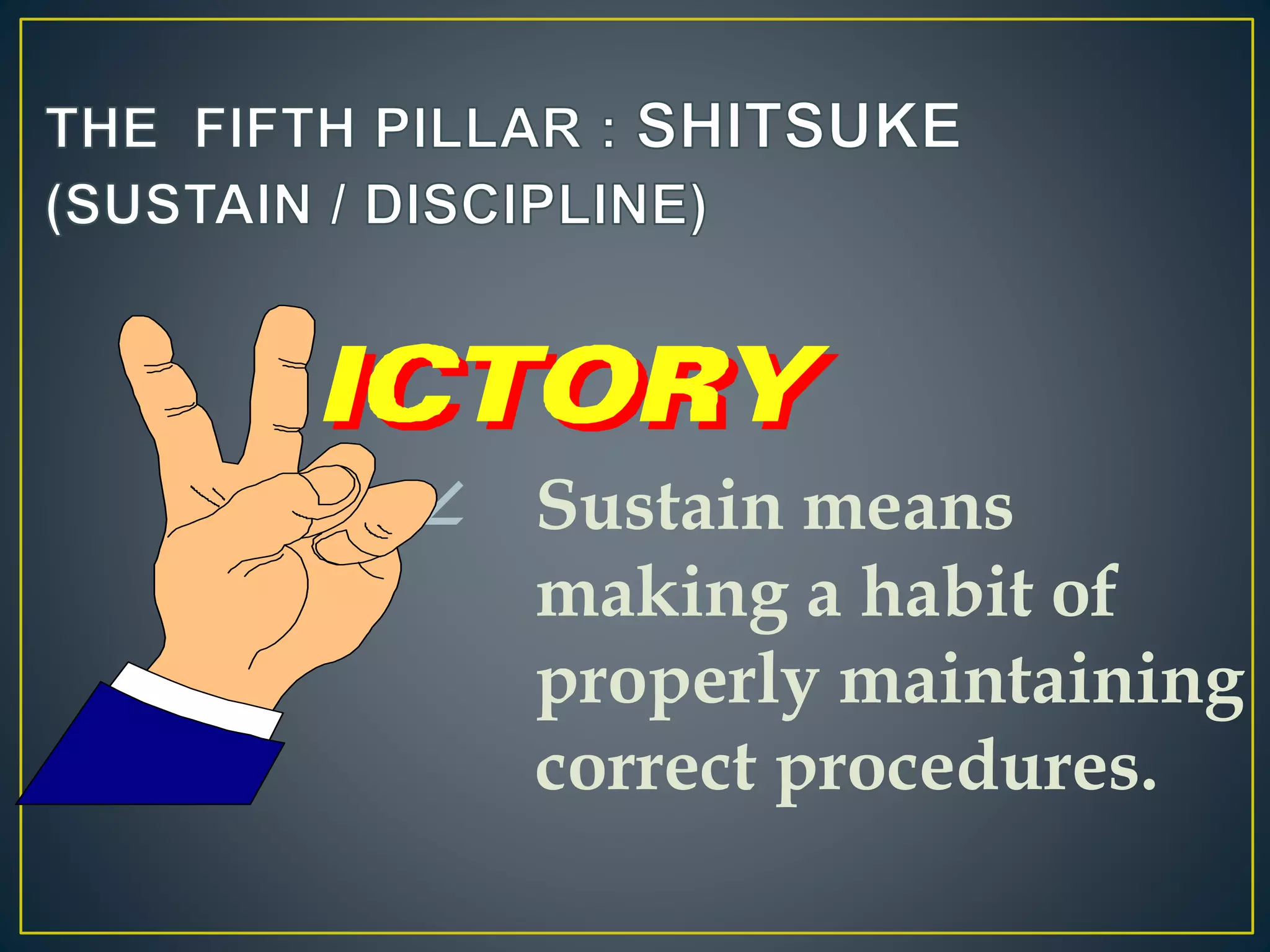
 Sustain means 
making a habit of 
properly maintaining 
correct procedures.
THIS STEP IS TO ENSURE THAT EVERYONE 
STICKS TO THE RULES SCRUPULOUSLY 
AND MAKES IT A HABIT 
CREATE GENERAL AWARENESS ABOUT 
4S. 
TRAINING TO EVERYONE. 
 DEVELOP NORMS AND MONITOR 
SUCCESS.
 High employee Morale. 
 Involvement of People in the Movement.
Let us create our own work place 
with our own hands. Let us 
contribute to a cleaner work place. 
6th. S is now included as 
“SHIKKARI YAROU” -- “let us try 
hard”. 
Every person should show 
initiative and make a special effort.
8 DISCIPLINES 
OF PROBLEM SOLVING
HISTORY 
 was created by U.S Department Of Defence 
(DOD) in 1974. 
 Standard was officially abolished in 1995, but 
the 8D methodology has been propagated by 
ford in the Automotive industry and is well 
known to many companies in the electronics 
industry.
PURPOSE 
 To identify , correct & eliminate recurring 
problems. 
 It is useful in product and process 
improvement. 
 It follows the logic of PDCA cycle.
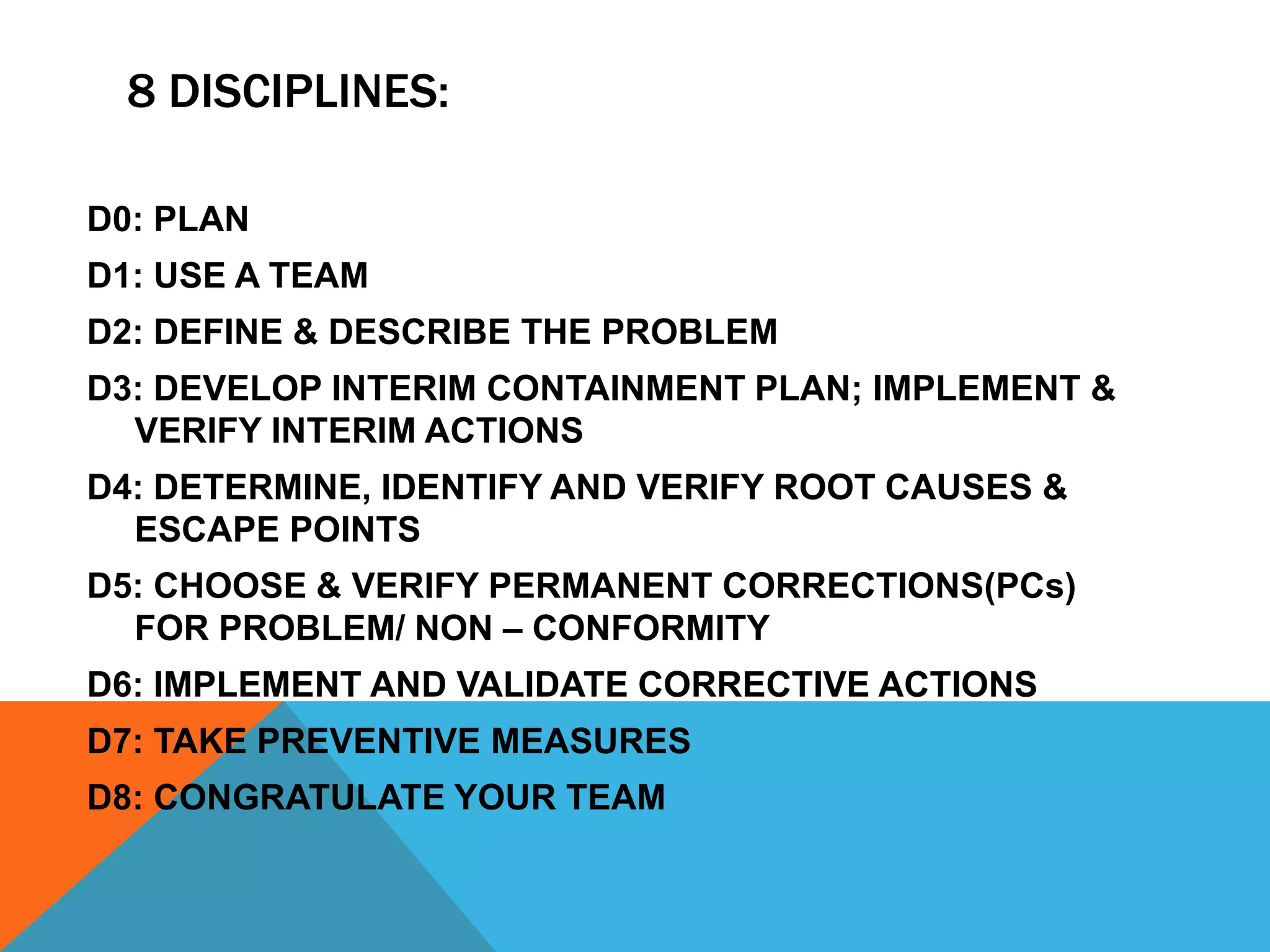
8 DISCIPLINES: 
D0: PLAN 
D1: USE A TEAM 
D2: DEFINE & DESCRIBE THE PROBLEM 
D3: DEVELOP INTERIM CONTAINMENT PLAN; IMPLEMENT & 
VERIFY INTERIM ACTIONS 
D4: DETERMINE, IDENTIFY AND VERIFY ROOT CAUSES & 
ESCAPE POINTS 
D5: CHOOSE & VERIFY PERMANENT CORRECTIONS(PCs) 
FOR PROBLEM/ NON – CONFORMITY 
D6: IMPLEMENT AND VALIDATE CORRECTIVE ACTIONS 
D7: TAKE PREVENTIVE MEASURES 
D8: CONGRATULATE YOUR TEAM
D0: PLAN 
Plan for solving the 
problem & determine the 
pre requisities. 
D1: USE A TEAM 
Establish a team of 
people with product / 
process knowledge.
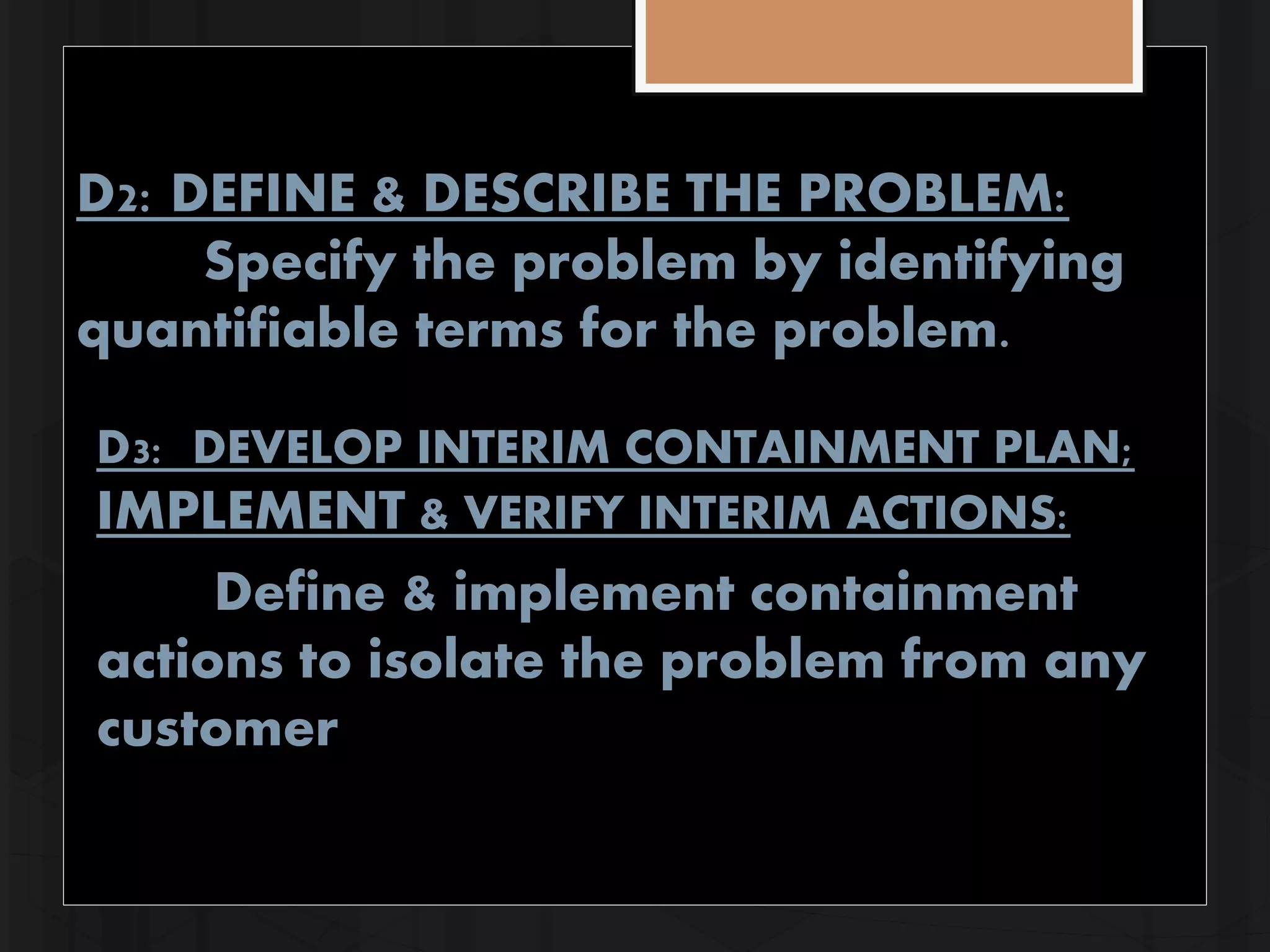
D2: DEFINE & DESCRIBE THE PROBLEM: 
Specify the problem by identifying 
quantifiable terms for the problem. 
D3: DEVELOP INTERIM CONTAINMENT PLAN; 
IMPLEMENT & VERIFY INTERIM ACTIONS: 
Define & implement containment 
actions to isolate the problem from any 
customer
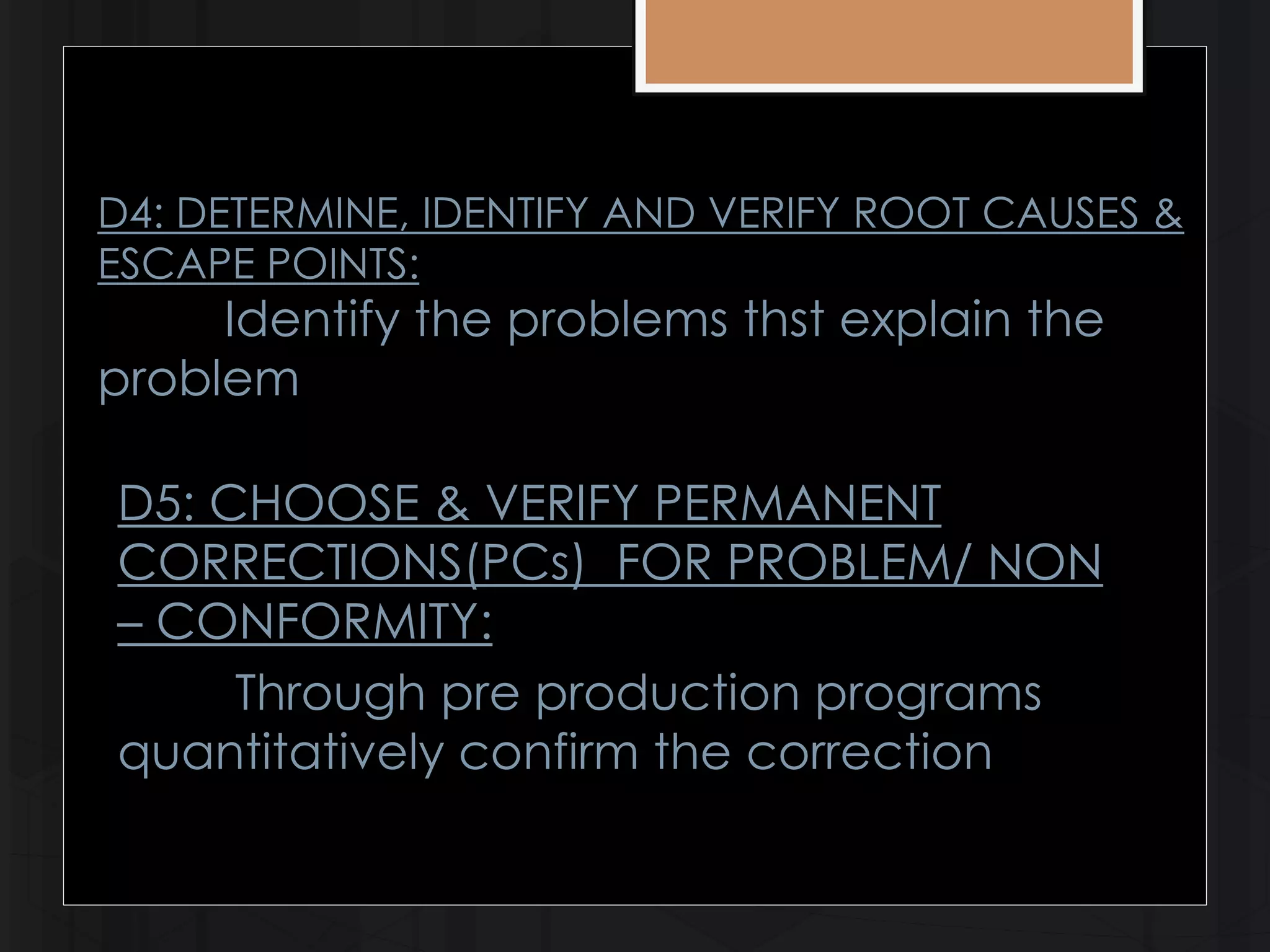
D4: DETERMINE, IDENTIFY AND VERIFY ROOT CAUSES & 
ESCAPE POINTS: 
Identify the problems thst explain the 
problem 
D5: CHOOSE & VERIFY PERMANENT 
CORRECTIONS(PCs) FOR PROBLEM/ NON 
– CONFORMITY: 
Through pre production programs 
quantitatively confirm the correction
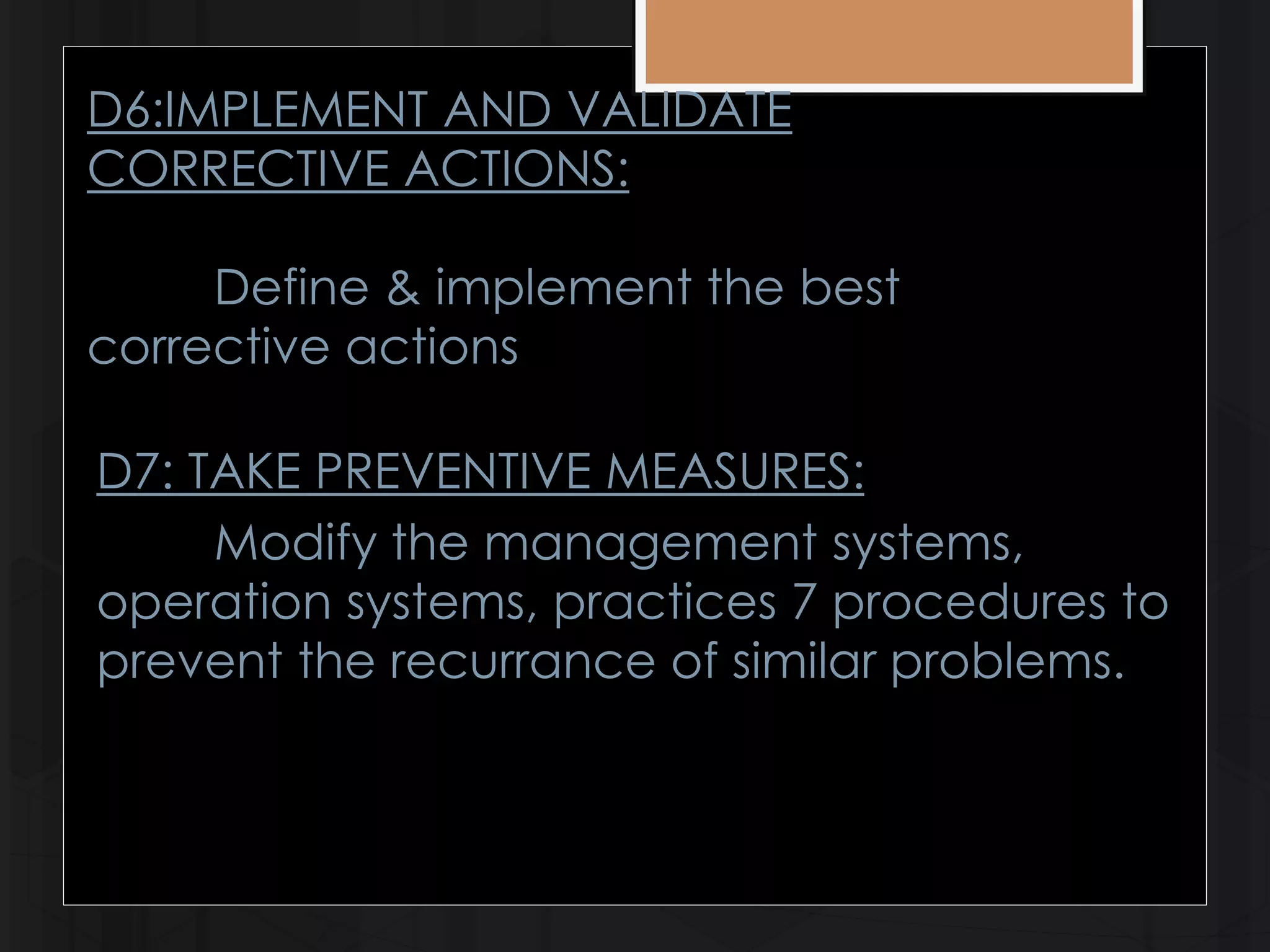
D6:IMPLEMENT AND VALIDATE 
CORRECTIVE ACTIONS: 
Define & implement the best 
corrective actions 
D7: TAKE PREVENTIVE MEASURES: 
Modify the management systems, 
operation systems, practices 7 procedures to 
prevent the recurrance of similar problems.
D8: CONGRATULATE YOUR 
TEAM: Recognise the 
collective efforts of the team . 
The team needs to be formally 
thanked by the organisation.
5's principles & 8'd methods

5's principles & 8'd methods

  • 1.
    5S PRINCIPLES THESECRET TO JAPANESE SUCCESS U.KALPANADEVI II- MBA MICHAEL INSTITUTE OF MANAGEMENT
  • 2.
    • Developed bythe Japanese • Housekeeping System • Helps Create a Better Working Environment and a Consistently High Quality Process
  • 3.
  • 4.
     IF WECANNOT KEEP OUR WORKPLACES  CLEAN  ORDERLY  ACCIDENT FREE  NOBODY WILL BELIEVE WE CAN PRODUCE QUALITY GOODS OR ATLEAST SERIOUS ABOUT PRODUCING QUALITY.
  • 5.
    • SEIRI –Organisation/Sort out • SEITON – Orderliness/Systemize • SEISO – The Cleaning/Shining • SEIKETSU – STANDARDIZE • SHITSUKE - Sustain/Discipline
  • 6.
    Sort Means ThatYou Remove All Items From the Workplace That Are Not Needed for Current Production Operation.
  • 7.
     A WORKENVIRONMENT IN WHICH  TIME  MONEY  SPACE  ENERGY &  EFFECTIVE RESOURCES MANAGMENT  PROBLEMS IN WORK FLOW ARE REDUCED, COMMUNICATION IS IMPROVED, PRODUCT QUALITY IS INCREASED & PRODUCTIVITY IS ENHANCED.
  • 8.
    WASTE ELIMINATION LEADSTO COST OPTIMIZATION & MANAGEMENT EXCELLENCE
  • 9.
     Set inOrder Can Be Defined As Arranging Needed Items So That They Are Easy to Use and Labelling Them So That They Are Easy to Find and Put away.
  • 10.
     WASTE OF MOTION SEARCHING HUMAN ENERGY EXCESS INVENTORY DEFECTIVE PRODUCTS UNSAFE CONDITIONS
  • 11.
     DECIDING APPROPRIATELOCATIONS  LOCATE ITEMS IN THE WORKPLACE ACCORDING TO THEIR FREQUENCY OF USE  PLACE FREQUENTLY USED ITEMS NEAR THE WORKPLACE  STORE INFREQUENTLY USED ITEMS AWAY FROM THE PLACE OF USE.  A LET GO ARRANGEMENT FOR TOOLS SO THAT THEY GO BACK TO ORIGINAL PLACE OF STORAGE
  • 12.
     Shine MeansSweeping Floors, Whipping off Machinery, and Generally Making Sure That Everything in the Factory Stays Clean.
  • 13.
    This step eliminatesDirt, Dust and other foreign matter to make the workplace clean. Clean Equipment,Furniture,Notice Boards Records Etc. Keep the workplace Spotless. Sweeping,wiping,polishing,painting Etc.
  • 14.
     Standardize IsThe Result That Exists When the First Three Pillars - Sort, Set in Order and Shine Are Properly Maintained.
  • 15.
    Set in Order Machinery Where Things Are Kept OPERATION Critical Processes Communication Inventory
  • 16.
    STANDARDIZATION  PROVIDEOBJECTIVES AND INDICATE TRAINING GOALS.  PROVIDE A BASIS FOR TRAINING  CREATE BASIS FOR AUDIT AND DIAGNOSIS.  PROVIDE A MEANS FOR PREVENTING RECURRENCE OF ERRORS AND MINIMIZING VARIABILITY.
  • 17.
     Sustain means making a habit of properly maintaining correct procedures.
  • 18.
    THIS STEP ISTO ENSURE THAT EVERYONE STICKS TO THE RULES SCRUPULOUSLY AND MAKES IT A HABIT CREATE GENERAL AWARENESS ABOUT 4S. TRAINING TO EVERYONE.  DEVELOP NORMS AND MONITOR SUCCESS.
  • 19.
     High employeeMorale.  Involvement of People in the Movement.
  • 20.
    Let us createour own work place with our own hands. Let us contribute to a cleaner work place. 6th. S is now included as “SHIKKARI YAROU” -- “let us try hard”. Every person should show initiative and make a special effort.
  • 21.
    8 DISCIPLINES OFPROBLEM SOLVING
  • 22.
    HISTORY  wascreated by U.S Department Of Defence (DOD) in 1974.  Standard was officially abolished in 1995, but the 8D methodology has been propagated by ford in the Automotive industry and is well known to many companies in the electronics industry.
  • 23.
    PURPOSE  Toidentify , correct & eliminate recurring problems.  It is useful in product and process improvement.  It follows the logic of PDCA cycle.
  • 24.
    8 DISCIPLINES: D0:PLAN D1: USE A TEAM D2: DEFINE & DESCRIBE THE PROBLEM D3: DEVELOP INTERIM CONTAINMENT PLAN; IMPLEMENT & VERIFY INTERIM ACTIONS D4: DETERMINE, IDENTIFY AND VERIFY ROOT CAUSES & ESCAPE POINTS D5: CHOOSE & VERIFY PERMANENT CORRECTIONS(PCs) FOR PROBLEM/ NON – CONFORMITY D6: IMPLEMENT AND VALIDATE CORRECTIVE ACTIONS D7: TAKE PREVENTIVE MEASURES D8: CONGRATULATE YOUR TEAM
  • 25.
    D0: PLAN Planfor solving the problem & determine the pre requisities. D1: USE A TEAM Establish a team of people with product / process knowledge.
  • 26.
    D2: DEFINE &DESCRIBE THE PROBLEM: Specify the problem by identifying quantifiable terms for the problem. D3: DEVELOP INTERIM CONTAINMENT PLAN; IMPLEMENT & VERIFY INTERIM ACTIONS: Define & implement containment actions to isolate the problem from any customer
  • 27.
    D4: DETERMINE, IDENTIFYAND VERIFY ROOT CAUSES & ESCAPE POINTS: Identify the problems thst explain the problem D5: CHOOSE & VERIFY PERMANENT CORRECTIONS(PCs) FOR PROBLEM/ NON – CONFORMITY: Through pre production programs quantitatively confirm the correction
  • 28.
    D6:IMPLEMENT AND VALIDATE CORRECTIVE ACTIONS: Define & implement the best corrective actions D7: TAKE PREVENTIVE MEASURES: Modify the management systems, operation systems, practices 7 procedures to prevent the recurrance of similar problems.
  • 29.
    D8: CONGRATULATE YOUR TEAM: Recognise the collective efforts of the team . The team needs to be formally thanked by the organisation.