INTRODUCTION TO 5S
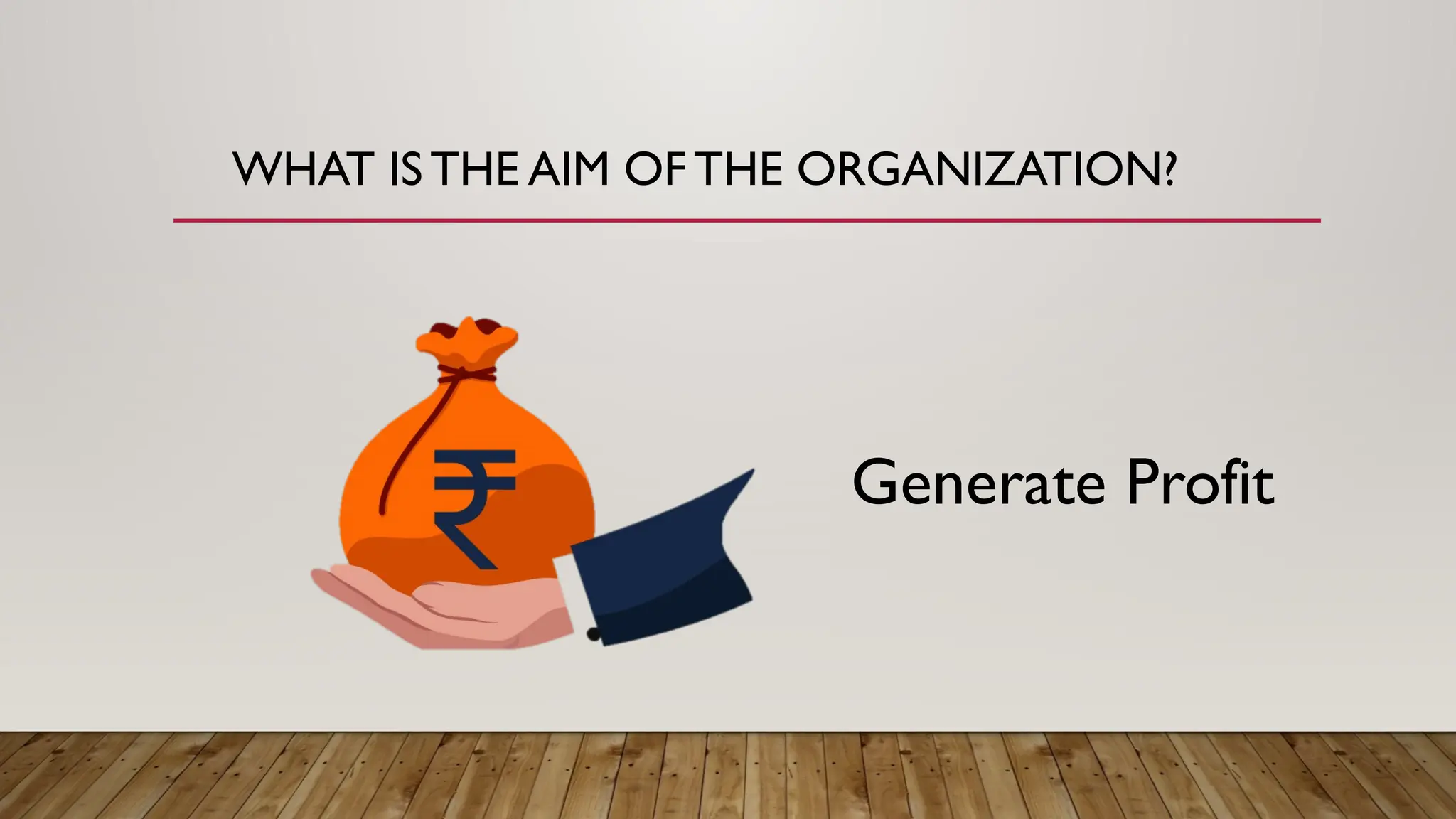
WHAT ISTHE AIM OFTHE ORGANIZATION?
Generate Profit
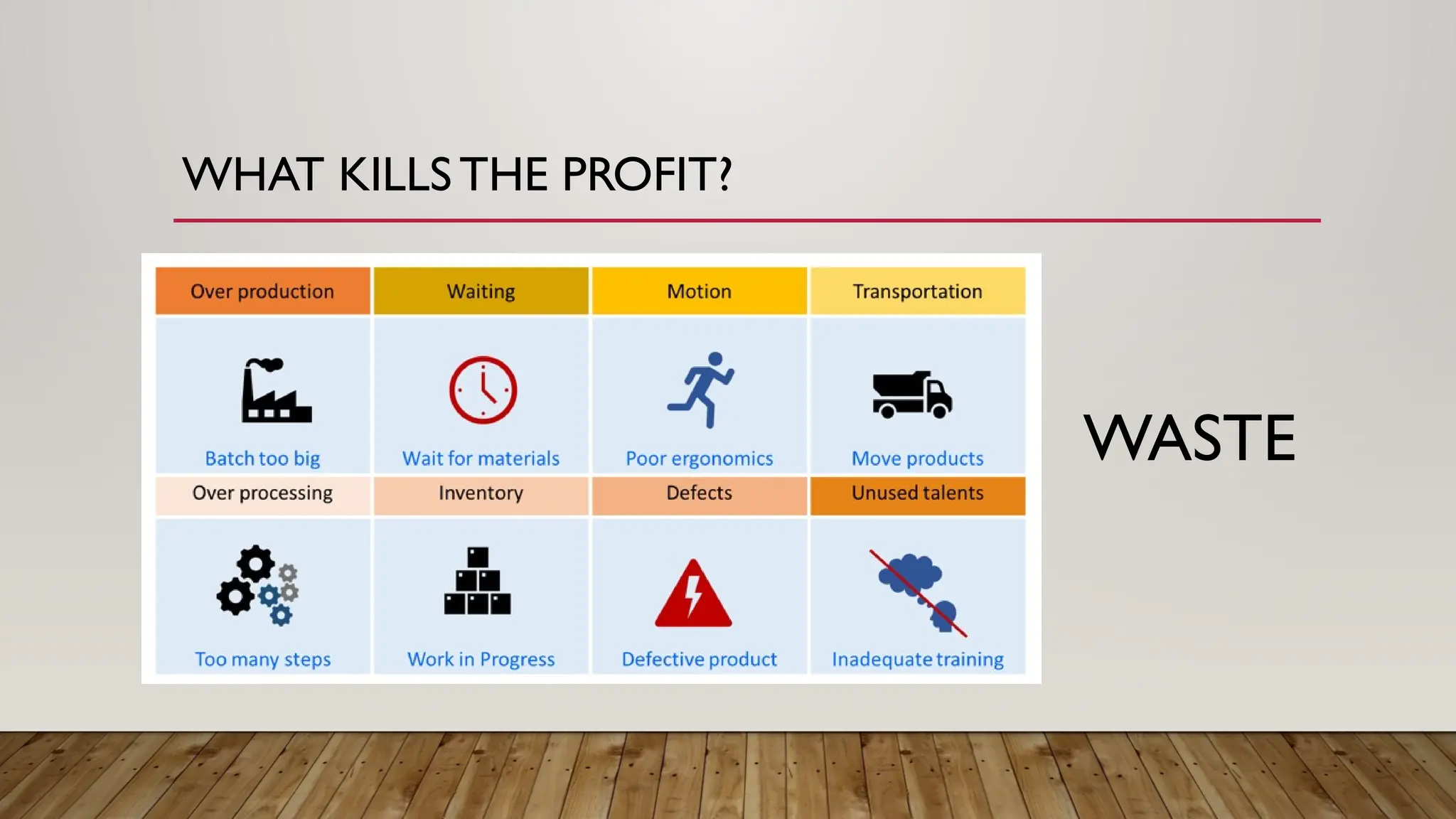
WHAT KILLSTHE PROFIT?
WASTE
5S is a five-step methodology that, when followed,
creates a more organized and productive workspace.
5S serves as a foundation for deploying more advanced
lean production tools and processes.
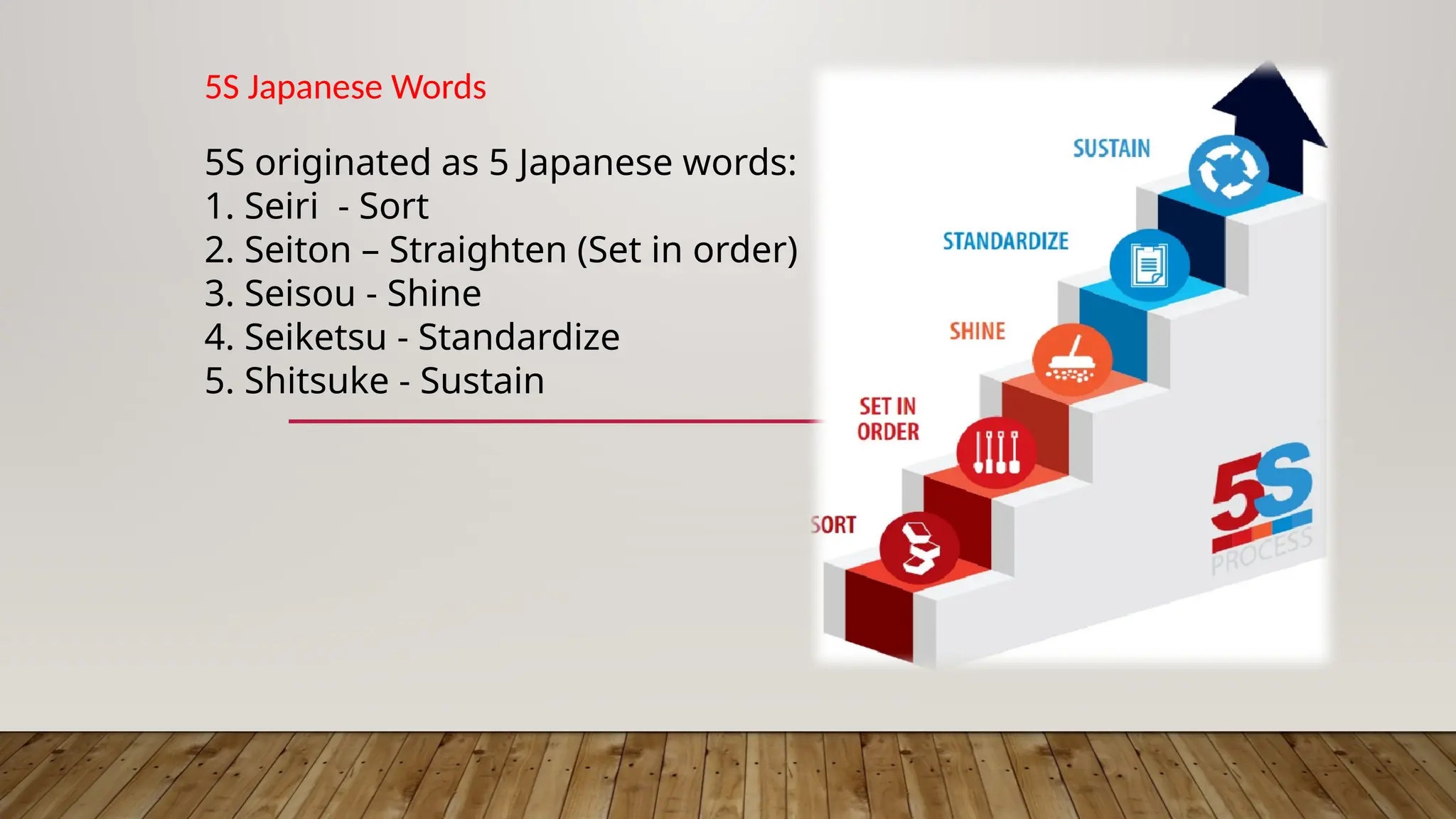
5S Japanese Words
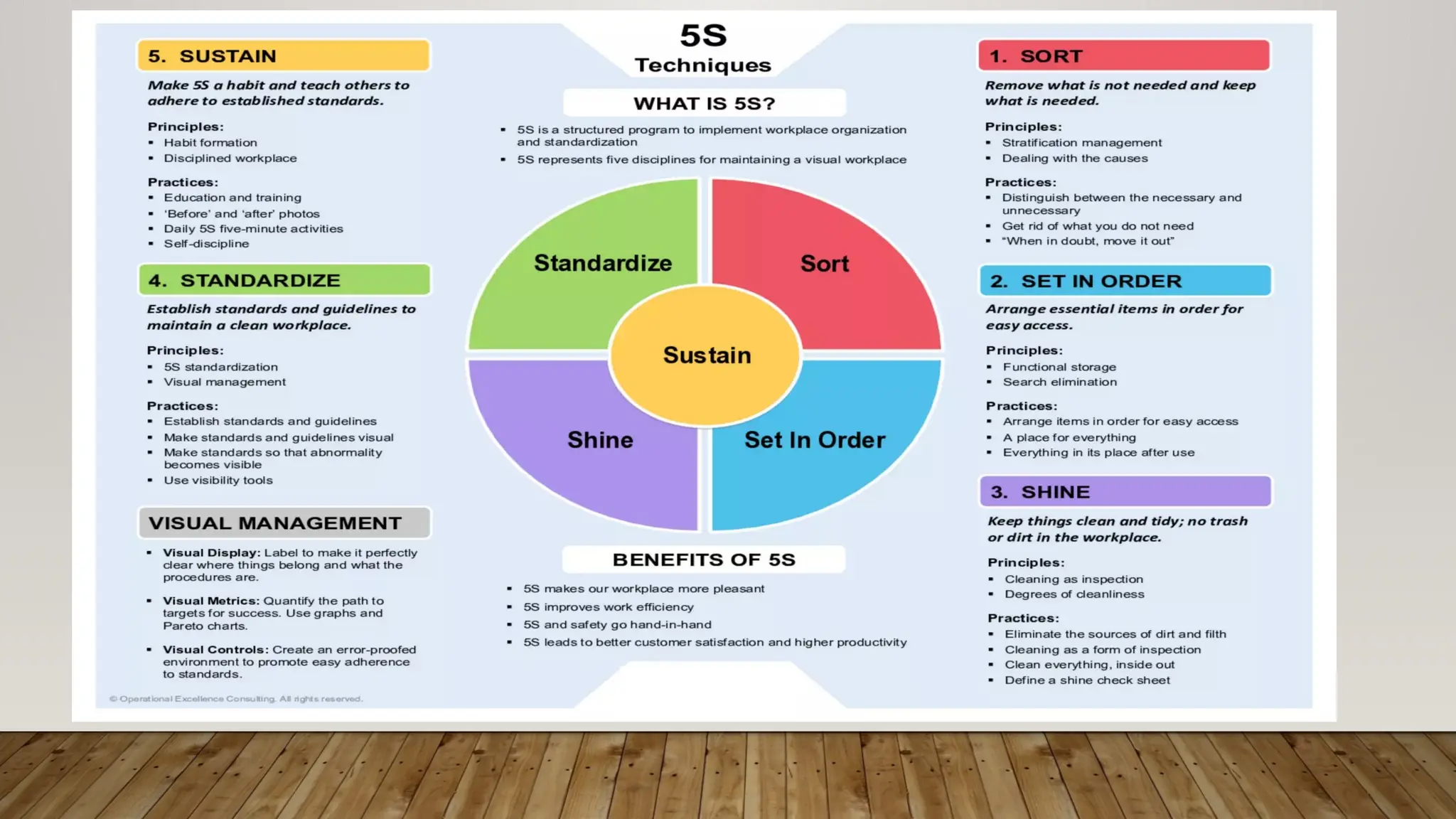
5S originated as 5 Japanese words:
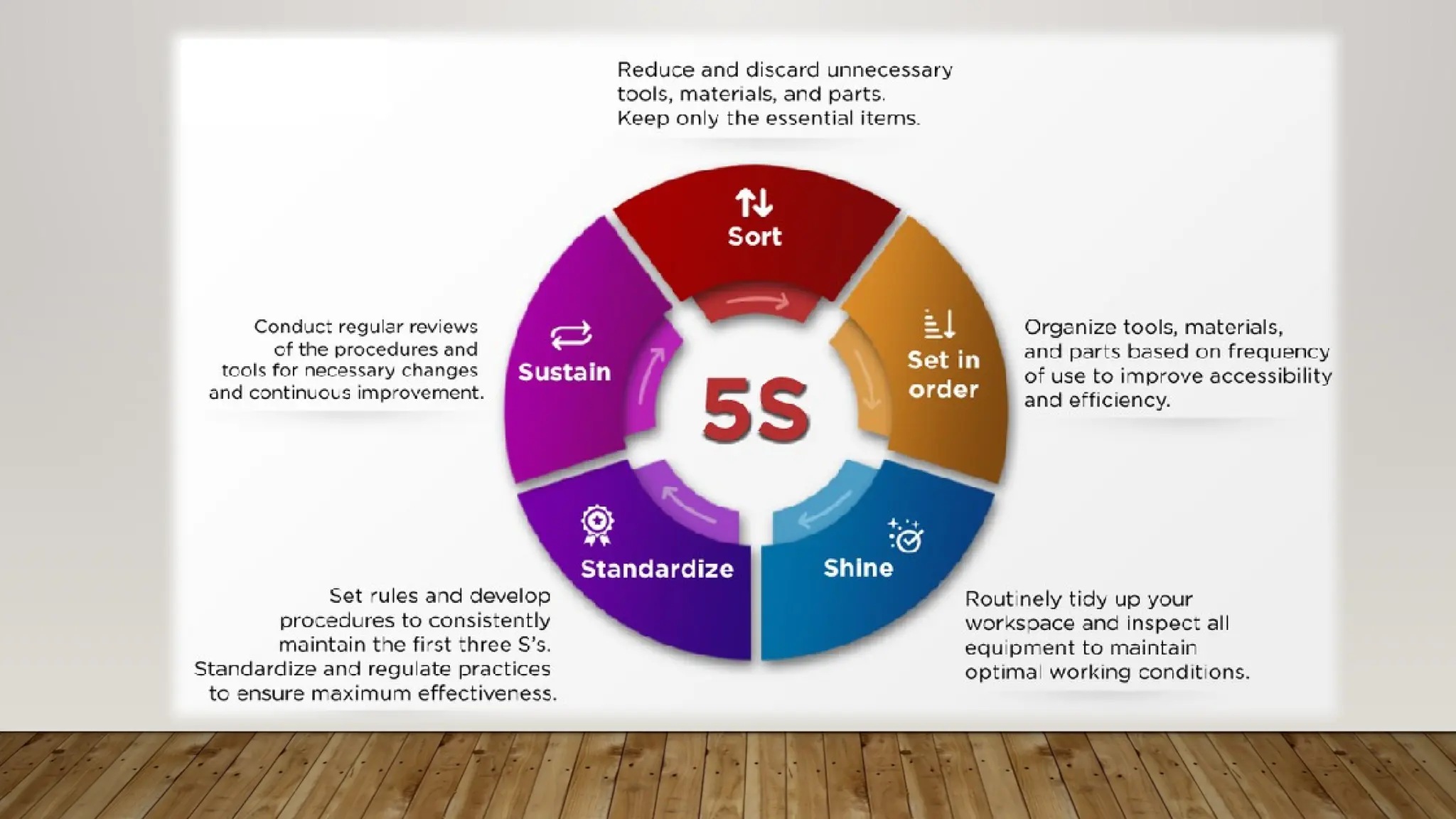
1. Seiri - Sort
2. Seiton – Straighten (Set in order)
3. Seisou - Shine
4. Seiketsu - Standardize
5. Shitsuke - Sustain
5S Meaning in English
1. Sort (Seiri): Eliminate that which is not needed.
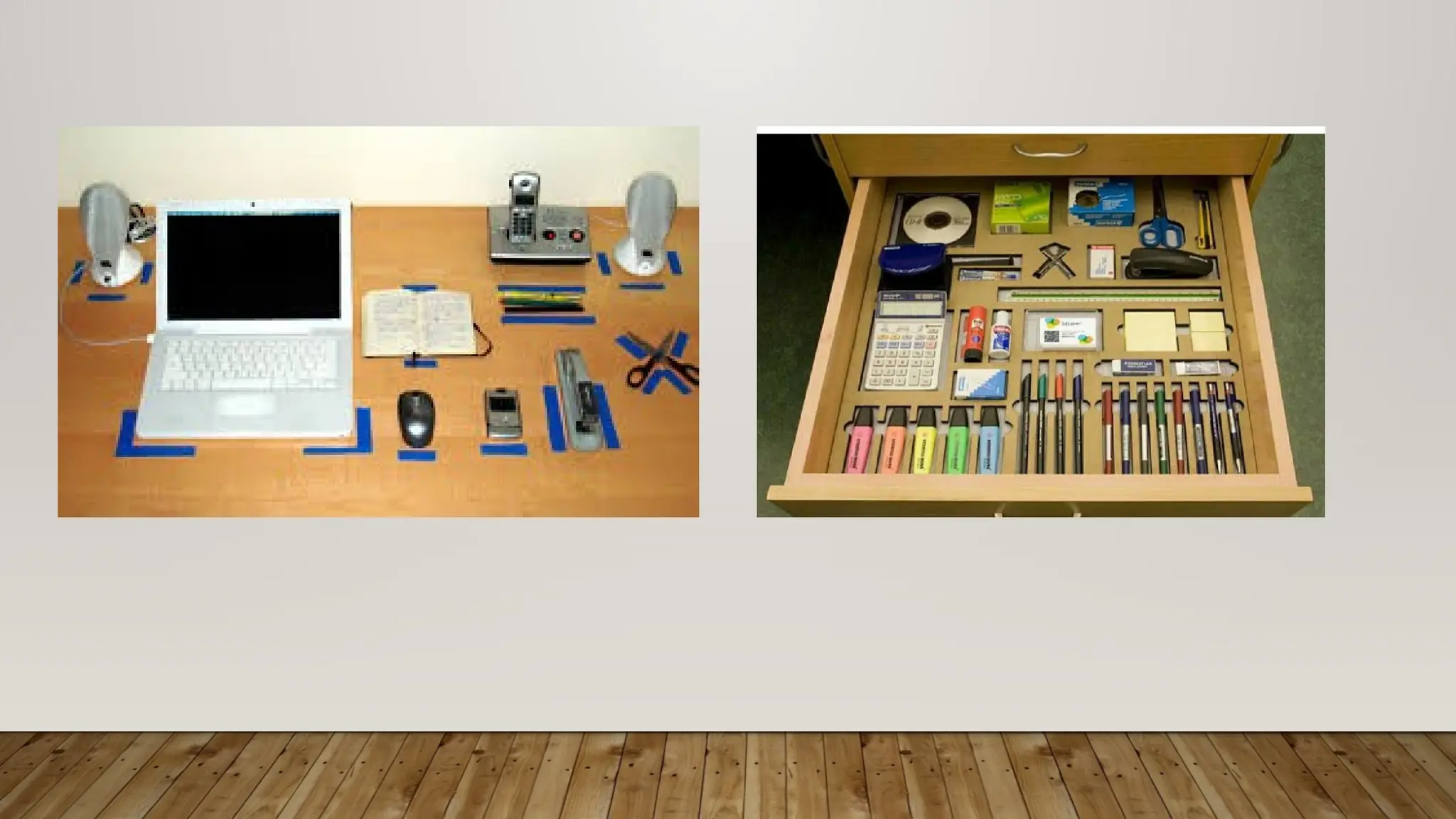
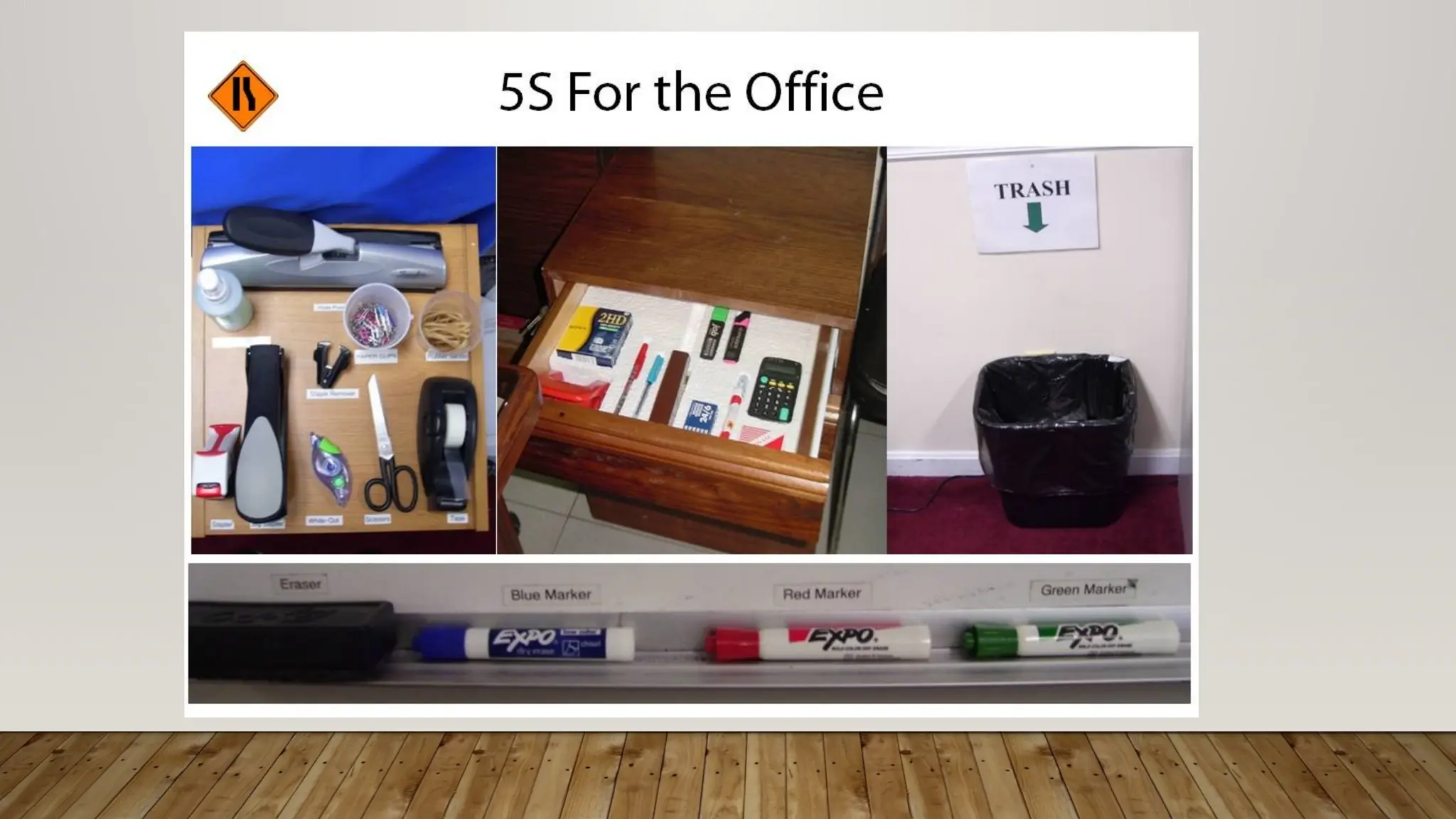
2. Straighten (Seiton): Organize what remains after sorting.
3. Shine (Seisou): Clean and inspect the work area.
4. Standardize (Seiketsu): Write standards for 5S.
5. Sustain (Shitsuke): Consistently apply the 5S standards.
At their core, these 5S activities build the discipline needed for
substantial and continuous improvement by creating (and sustaining)
efficient and effective work areas.
WHY IS 5S IMPORTANT IN MANUFACTURING?
Embedding 5S as part of daily tasks within your company means much more
than improved organization, sustained cleaning routines, and efficient
activity flows.
By using the 5S methodology, operators are encouraged to improve their
overall work environment and reduce muda or waste.
Adherence to 5S standards is considered the foundation of
Total Productive Maintenance (TPM) and an integral part of the
Toyota Production System (TPS).
5S also creates a stable platform from which Kaizen activities can be
launched.
It engages operators in “owning” their workspace and helps to instill a
culture of quality, productivity, and improvement.
WHAT ARE THE 5 BENEFITS OF A 5S SYSTEM?
The key benefits of a 5S system include:
1. Creating space within your facility by removing
unnecessary tools and equipment
2. Reducing waste from unnecessary motion by organizing
the workspace
3. Reducing downtime and improving quality by consistently
maintaining equipment
4. Engaging operators by granting them more responsibility
for their work environment
5. Creating a safer work environment by ensuring it is clean
and well-maintained
SORT (SEIRI)
What Is Sort?
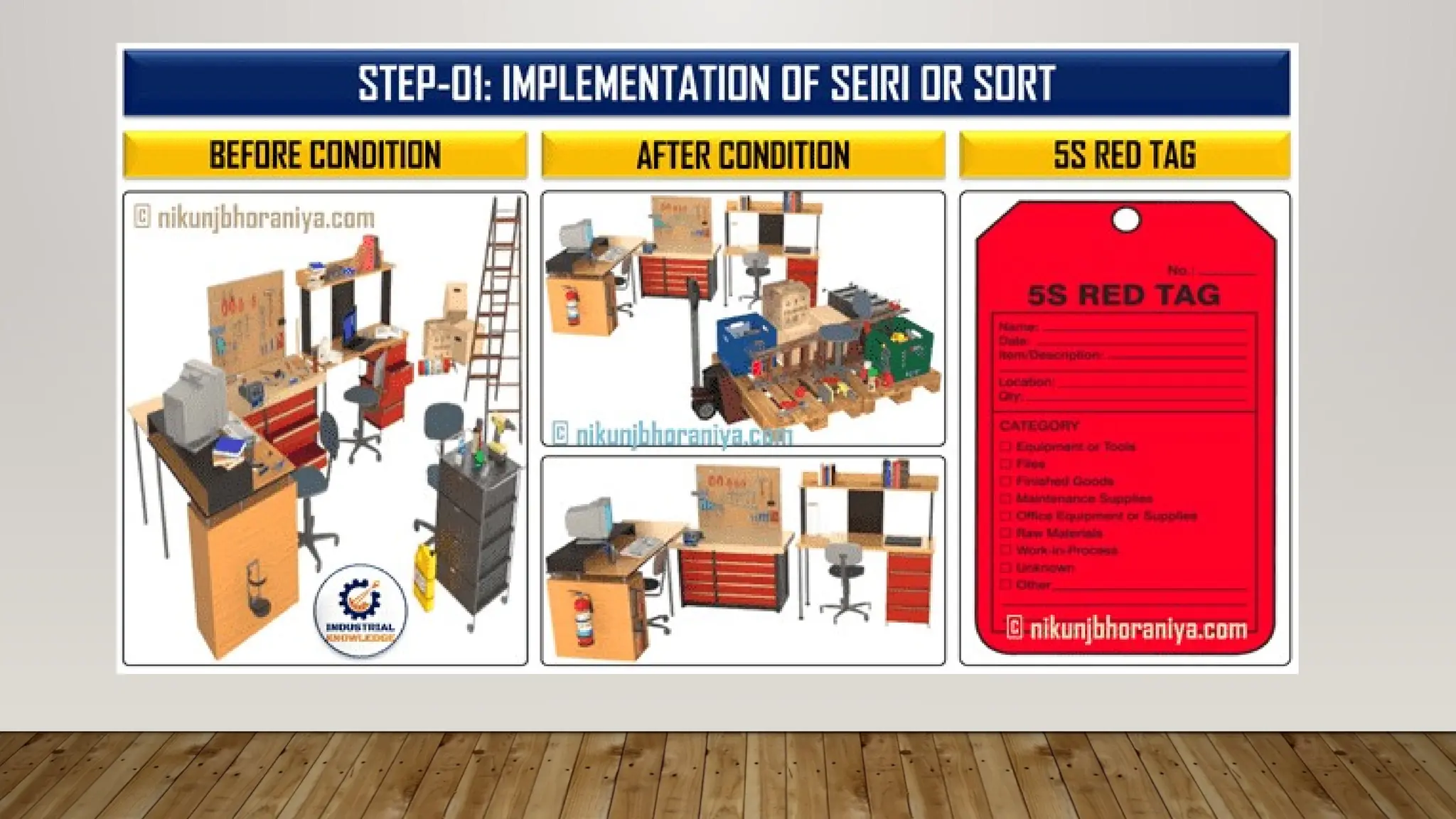
The Sort step separates items in your workspace that you know you need from items that you
do not or may not need. Move the latter to a “red tag” holding area.
Why Do You Need Sort?
Sort enables you to have a more productive workspace by removing unneeded clutter (and
eliminating distractions). It also is a first step towards opening up space that can be used for
other things.
How Do You Implement Sort?
1. Items needed in this work area. These are items you know that you
regularly use in the context of this work area and thus will stay in this work
area.
2. Items needed in another work area. These are typically misplaced
items. If an item is used in another work area, “sort” it into that work area.
3. Items you may need. For items you are unsure about, use the 5S “red
tag” system. Mark such items with red tags.
4. Items you do not need. These are items that you are 100% confident are
not needed. They should be immediately discarded, recycled, or donated,
or sold if in good condition.
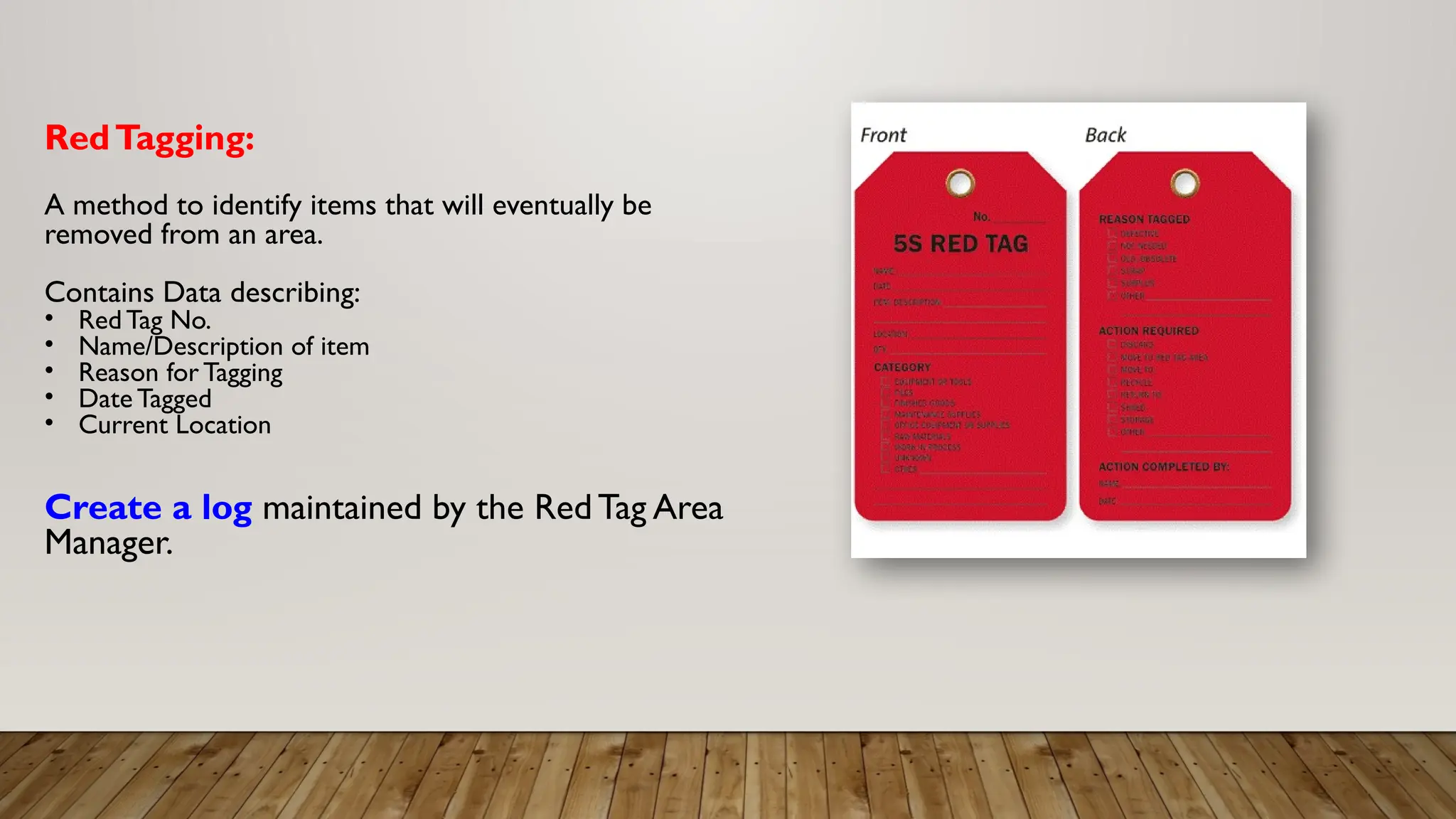
RedTagging:
A method to identify items that will eventually be
removed from an area.
Contains Data describing:
• Red Tag No.
• Name/Description of item
• Reason for Tagging
• Date Tagged
• Current Location
Create a log maintained by the Red Tag Area
Manager.
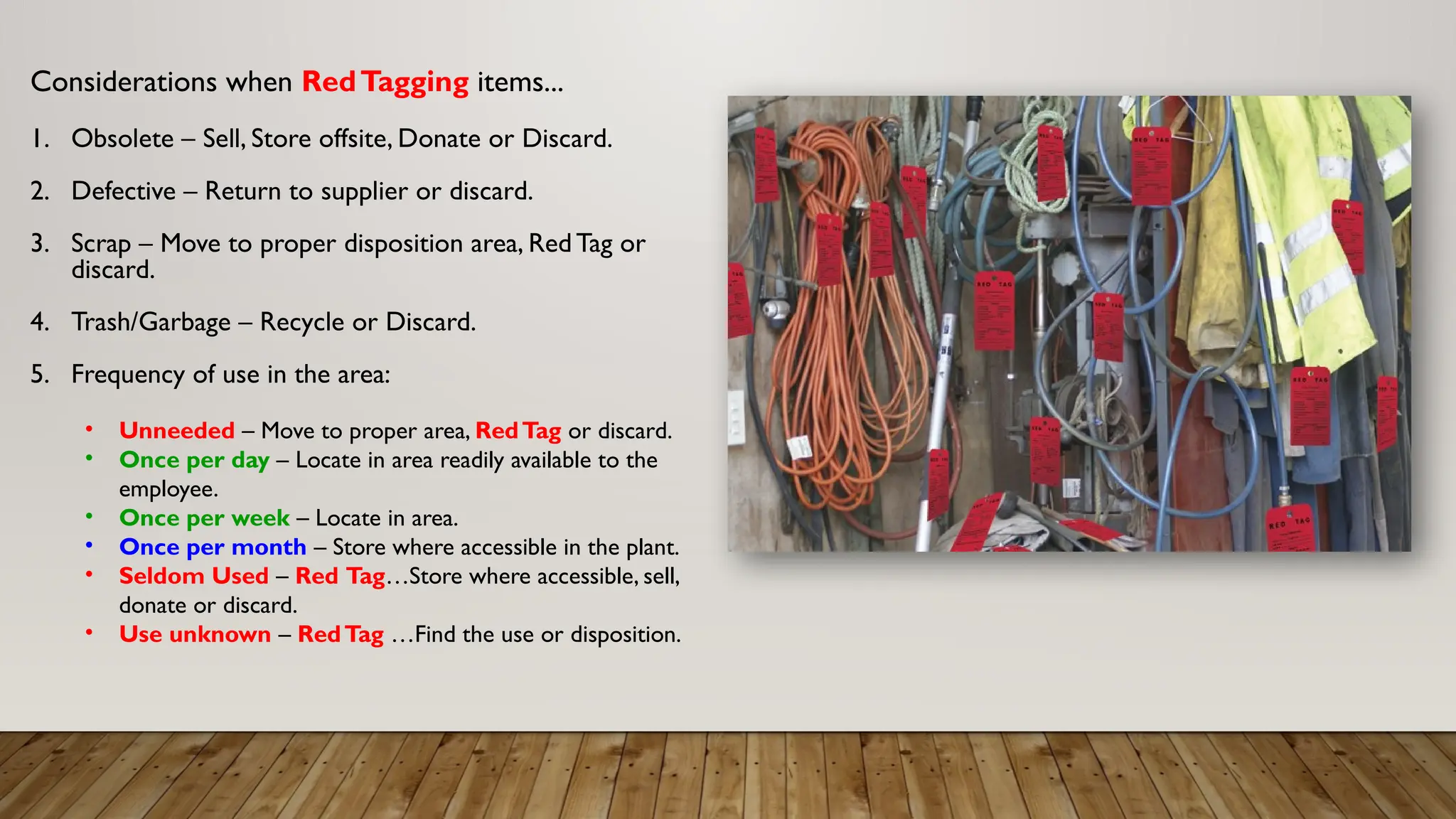
Considerations when RedTagging items...
1. Obsolete – Sell, Store offsite, Donate or Discard.
2. Defective – Return to supplier or discard.
3. Scrap – Move to proper disposition area, Red Tag or
discard.
4. Trash/Garbage – Recycle or Discard.
5. Frequency of use in the area:
• Unneeded – Move to proper area, RedTag or discard.
• Once per day – Locate in area readily available to the
employee.
• Once per week – Locate in area.
• Once per month – Store where accessible in the plant.
• Seldom Used – Red Tag…Store where accessible, sell,
donate or discard.
• Use unknown – RedTag …Find the use or disposition.
STRAIGHTEN (SEITON)
What Is Straighten?
The Straighten step thoroughly organizes the items that remain after sorting,
making frequently used items easily accessible and providing every item a
clear and easy-to-find home.
Why Do You Need to Straighten?
Straighten enables every item to have a specific home where it can be easily
found and to which it can be easily returned. It reduces the waste from excess
motion, as items are placed in more ergonomic locations. It is also the second
step on the path to opening up space that can be used strategically toward the
goal of improving production.
How Do You Implement Straighten?
1. Provide easy access to frequently used items. The key to reducing waste from excess motion
is to place frequently used items within easy reach.
2. Group like items. Group the remaining items into logical categories and brainstorm the best
way to organize and store each of these categories.
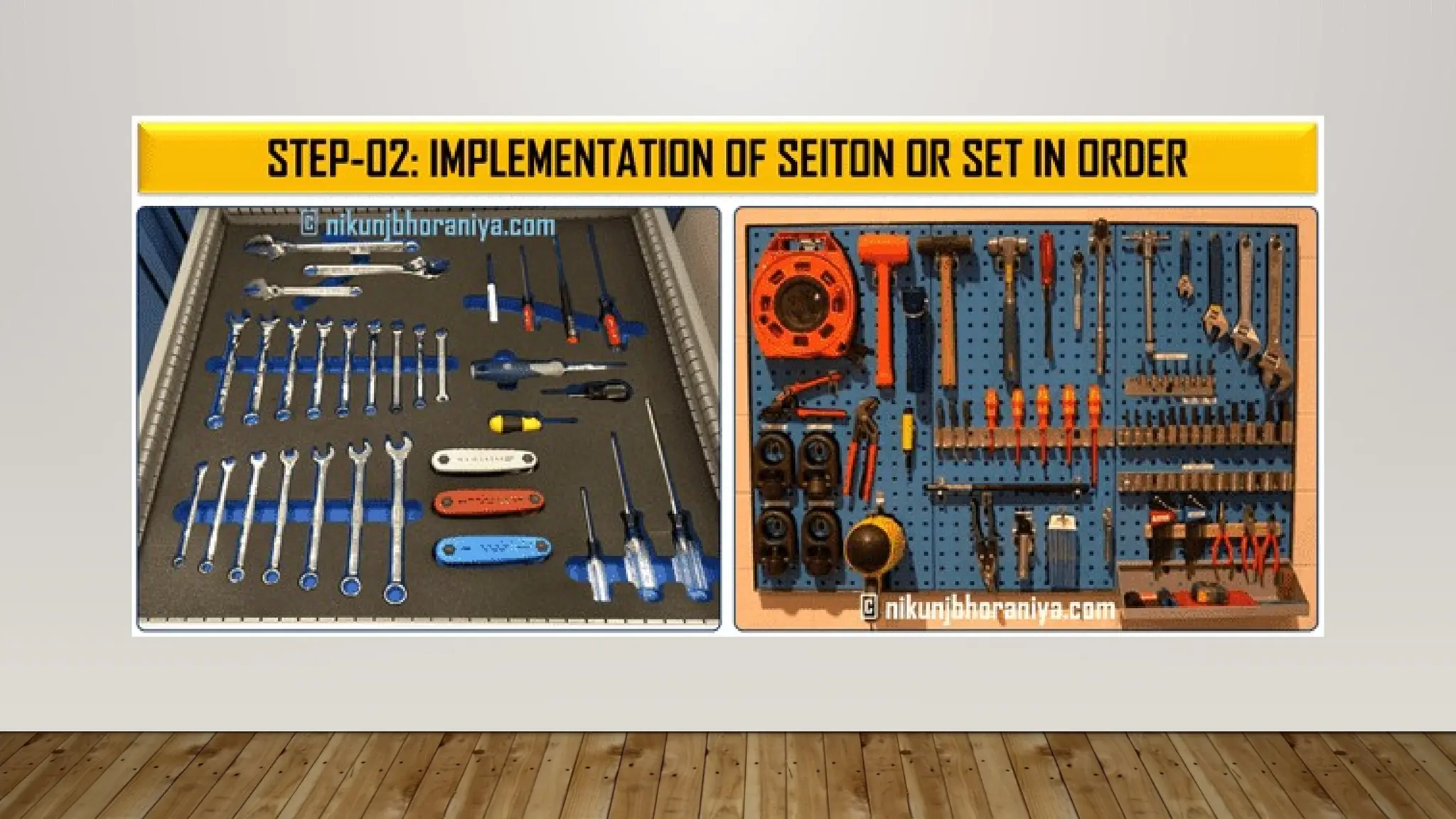
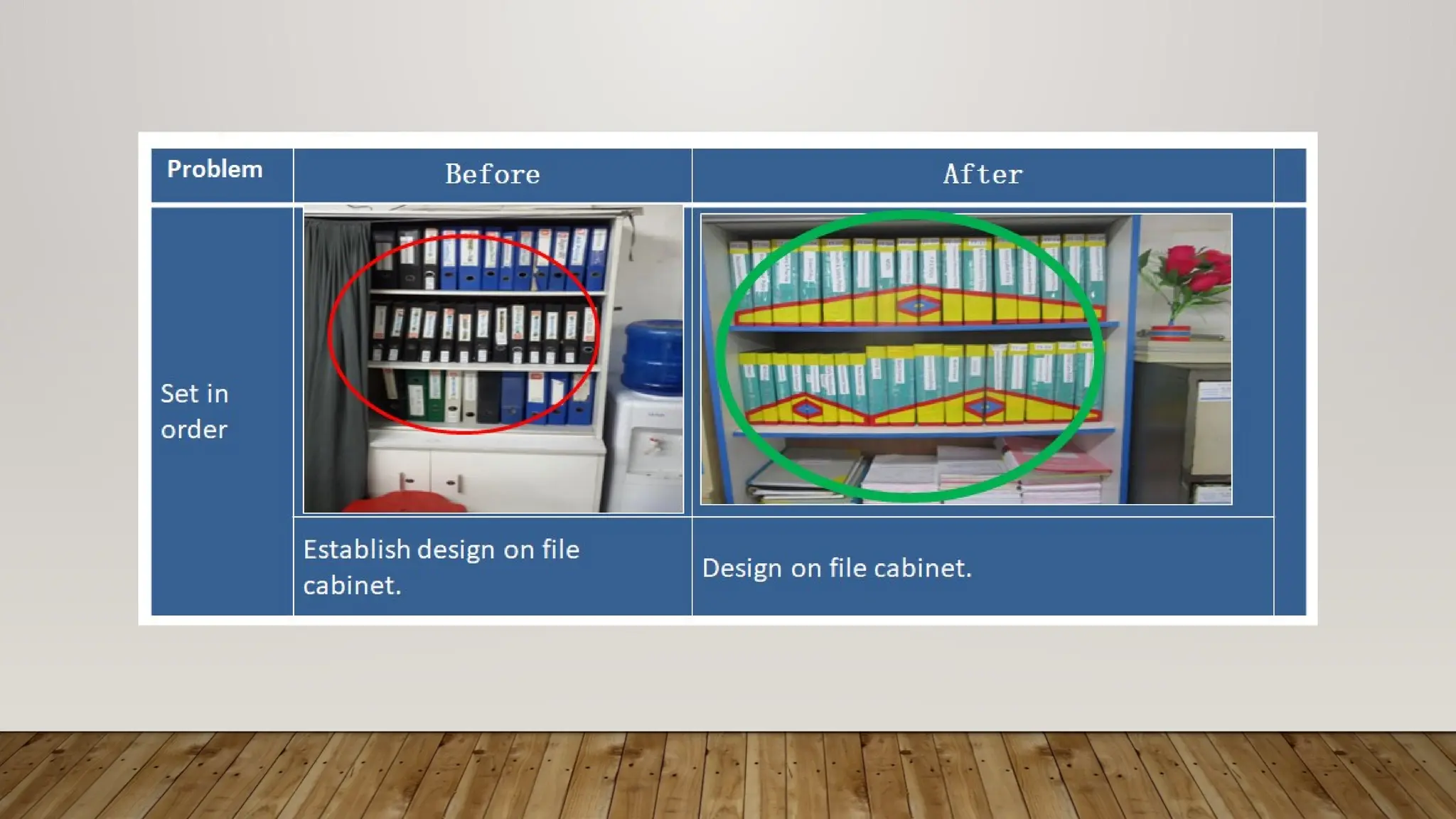
3.Utilize visual designs. For each group, decide on the best way to make it clear when an item is
missing or misplaced. A classic example is creating a shadow board for tools.
4. Use containers. If it is appropriate for the type of item, consider organizing it within a
container.
5. Unleash the labeler. If an item is too big to put into a container, consider giving it a frame and
putting a label on the item in addition to the frame.
6. Be agile. Plan a 5S team meeting with a focus on straightening at the one and two week
points, and brainstorm further improvements as part of your initial implementation.
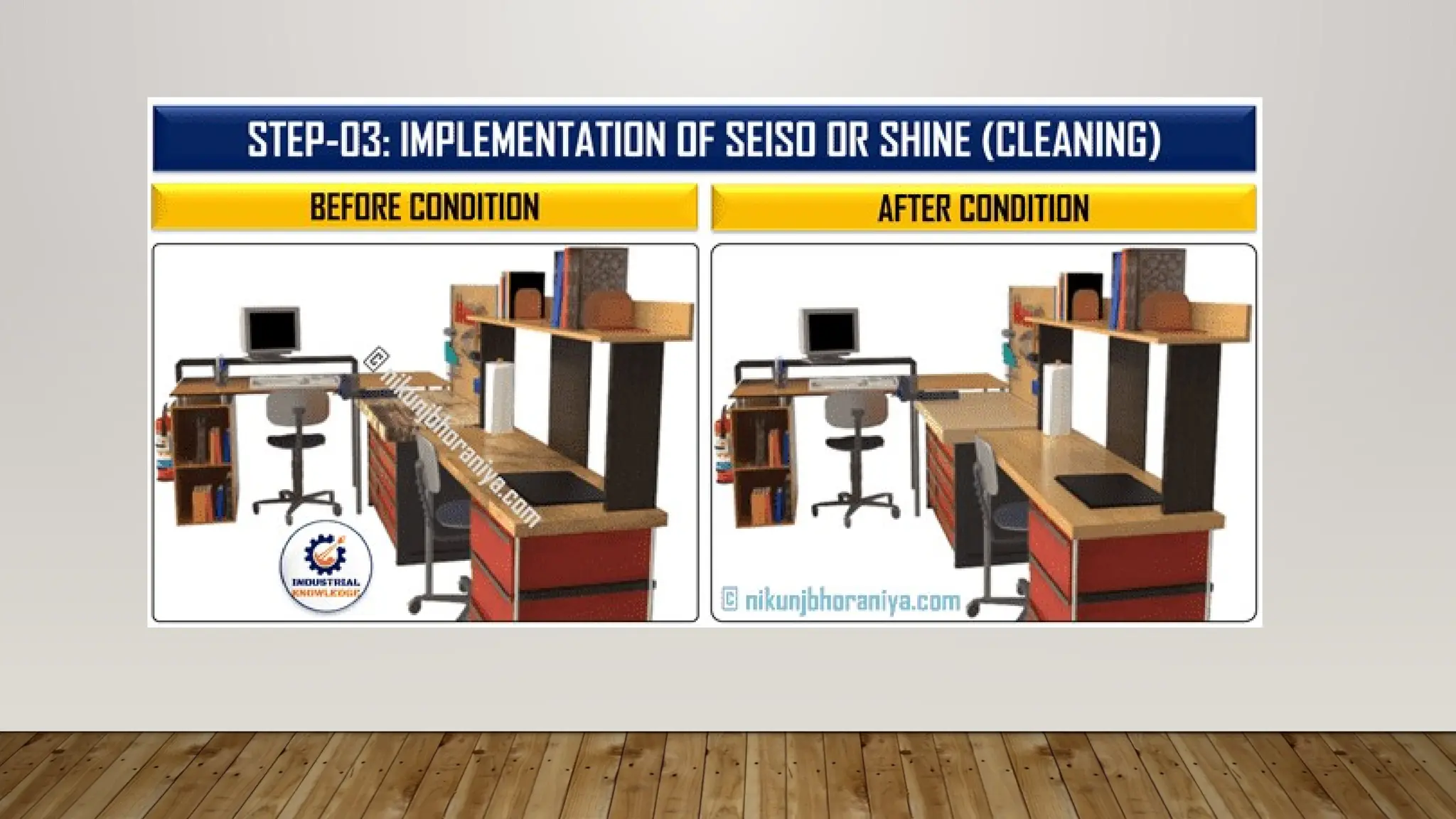
SHINE (SEISOU)
What Is Shine?
The Shine step elevates the work area by ensuring thoroughly cleaned and
inspected tools, equipment, and other items. It also can include routine
maintenance on equipment, which is one of the ways it flows directly into TPM
.
Why Do You Need to Shine?
Shine creates a work environment that engages and empowers operators
by giving them more responsibility and agency over their work area. It also
helps them to identify problems before they interfere with production.
How Do You Implement Shine?
1. Grab the metaphorical spray bottle. Using appropriate cleaners and
cleaning tools, make the work area sparkle. With every sweep, mop, brush,
wipe, wash, and wax, strive to return your workspace to its former glory.
2. Find the source. The guiding principle of this 5S step is “clean to
understand”. If there are any signs of leaks, spills, or unexpected debris,
strive to understand the source. It is likely an early warning of a future
problem.
3. Inspect. After cleaning each item, take a moment to look it over and
examine its condition. Does it need updating, maintenance, or repair?
One of the most important benefits of Shine is catching problems early and
preventing unexpected breakdowns.
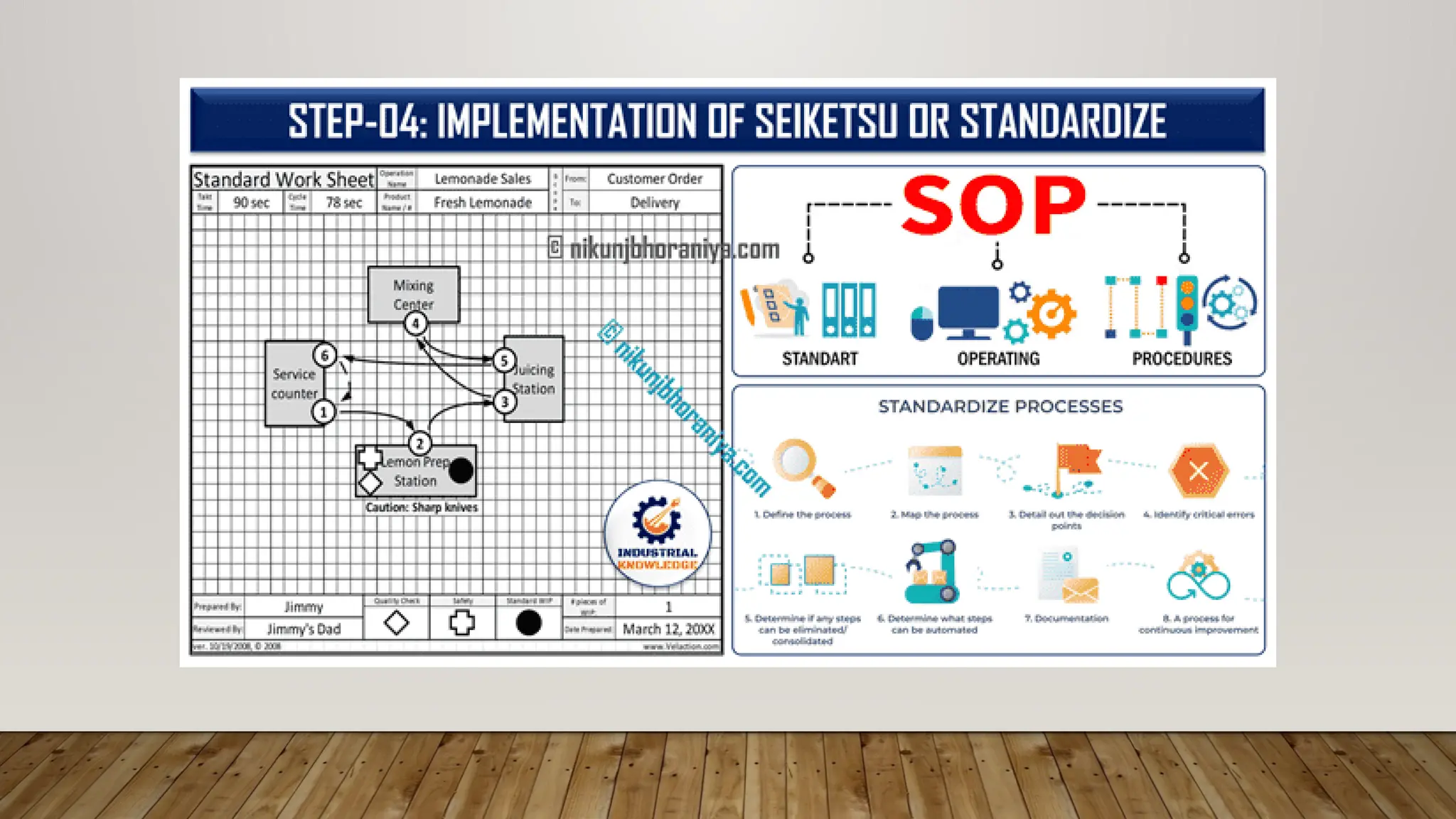
STANDARDIZE (SEIKETSU)
What Is Standardize?
The Standardize step is a bridge between the first three 5S steps (Sort,
Straighten, Shine) and the last step (Sustain). In this step, your goal is to capture
best practices for 5S as standardized work for your team.
Why Do You Need to Standardize?
Standardize makes 5S repeatable. It transforms 5S from a one-off project to
a reproducible set of activities.
How Do You Implement Standardize?
1. Document in pairs. Have one team member walk through each 5S task as
another team member documents it to ensure nothing important is missed.
2. Capture the essence. Capture the essence of each task and no more.
Otherwise, your documentation will be difficult to maintain.
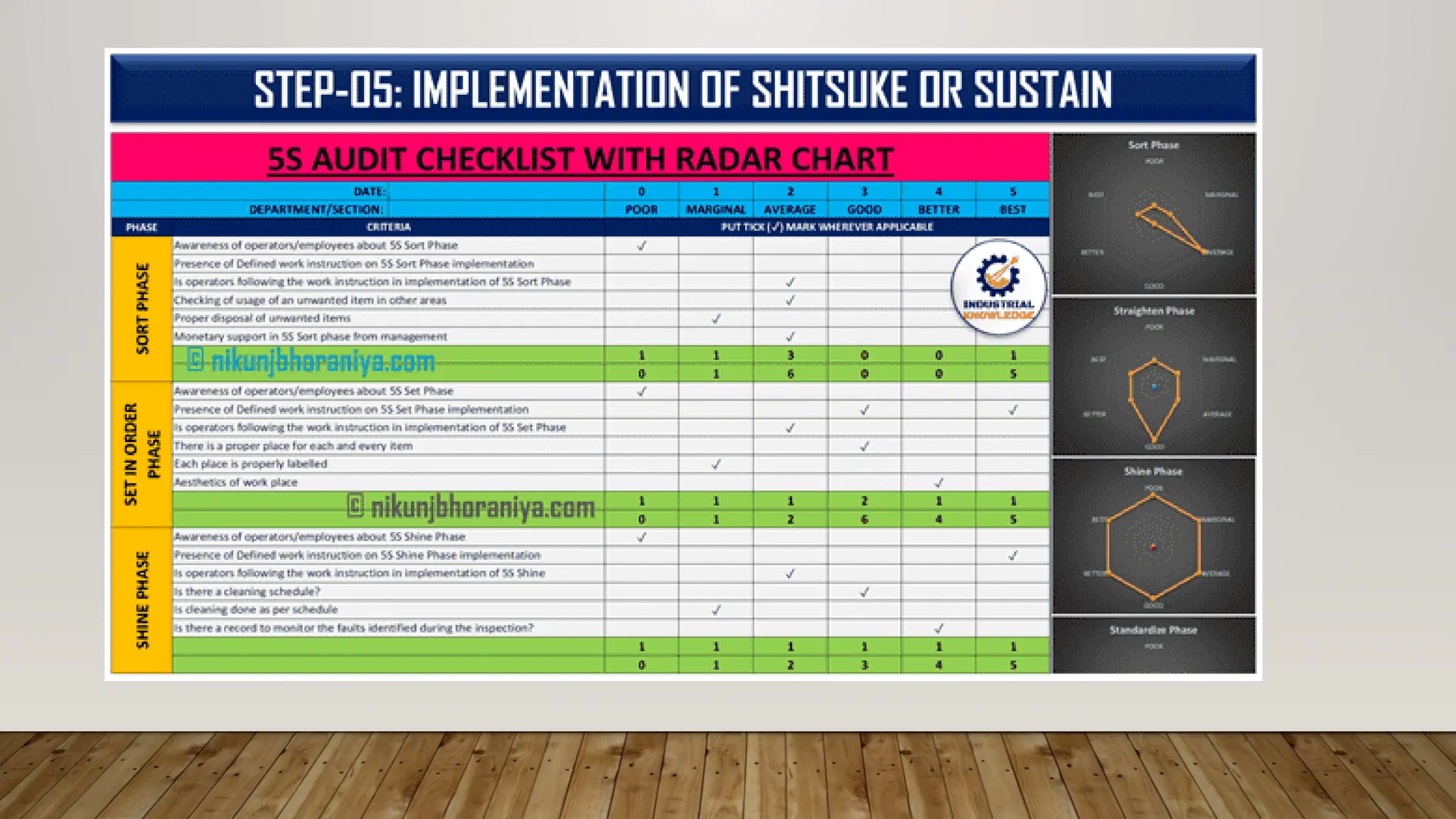
3. Prefer checklists. Checklists feel easy. Short checklists feel even easier. A
great format is providing a name for each task that serves as a quick reminder
and a more detailed description for training.
4. Organize to simplify. Organize your checklists by role, by shift, and by
frequency (daily, weekly, monthly). This will make the 5S process much less
intimidating to your team.
SUSTAIN (SHITSUKE)
What Is Sustain?
The Sustain step ensures that 5S is applied on an ongoing basis. It
transforms your standardized 5S processes into regularly completed tasks.
Why Do You Need to Sustain?
Reiterative 5S processes lock in your gains and ensure further and
continued progress.
How Do You Implement Sustain?
1. Create a schedule. Embed 5S practices as scheduled tasks (by role, shift, and
frequency).
2. Teach through demonstration. Instruct employees on how to conduct 5S tasks
through demonstration and training.
3. Supervise to solo. After initial 5S training for employees, gently supervise
while they continue to form habits.
4. Adapt as necessary. When giving or receiving feedback on tasks, see where
changes can be made to make the tasks easier and more efficient. Standardized
work is intended to be living documentation.
Introduction to 5S methodology from Japan

Introduction to 5S methodology from Japan

  • 1.
  • 2.
    WHAT ISTHE AIMOFTHE ORGANIZATION? Generate Profit
  • 3.
  • 4.
    5S is afive-step methodology that, when followed, creates a more organized and productive workspace. 5S serves as a foundation for deploying more advanced lean production tools and processes.
  • 5.
    5S Japanese Words 5Soriginated as 5 Japanese words: 1. Seiri - Sort 2. Seiton – Straighten (Set in order) 3. Seisou - Shine 4. Seiketsu - Standardize 5. Shitsuke - Sustain
  • 6.
    5S Meaning inEnglish 1. Sort (Seiri): Eliminate that which is not needed. 2. Straighten (Seiton): Organize what remains after sorting. 3. Shine (Seisou): Clean and inspect the work area. 4. Standardize (Seiketsu): Write standards for 5S. 5. Sustain (Shitsuke): Consistently apply the 5S standards. At their core, these 5S activities build the discipline needed for substantial and continuous improvement by creating (and sustaining) efficient and effective work areas.
  • 8.
    WHY IS 5SIMPORTANT IN MANUFACTURING? Embedding 5S as part of daily tasks within your company means much more than improved organization, sustained cleaning routines, and efficient activity flows. By using the 5S methodology, operators are encouraged to improve their overall work environment and reduce muda or waste. Adherence to 5S standards is considered the foundation of Total Productive Maintenance (TPM) and an integral part of the Toyota Production System (TPS). 5S also creates a stable platform from which Kaizen activities can be launched. It engages operators in “owning” their workspace and helps to instill a culture of quality, productivity, and improvement.
  • 9.
    WHAT ARE THE5 BENEFITS OF A 5S SYSTEM? The key benefits of a 5S system include: 1. Creating space within your facility by removing unnecessary tools and equipment 2. Reducing waste from unnecessary motion by organizing the workspace 3. Reducing downtime and improving quality by consistently maintaining equipment 4. Engaging operators by granting them more responsibility for their work environment 5. Creating a safer work environment by ensuring it is clean and well-maintained
  • 10.
    SORT (SEIRI) What IsSort? The Sort step separates items in your workspace that you know you need from items that you do not or may not need. Move the latter to a “red tag” holding area. Why Do You Need Sort? Sort enables you to have a more productive workspace by removing unneeded clutter (and eliminating distractions). It also is a first step towards opening up space that can be used for other things.
  • 11.
    How Do YouImplement Sort? 1. Items needed in this work area. These are items you know that you regularly use in the context of this work area and thus will stay in this work area. 2. Items needed in another work area. These are typically misplaced items. If an item is used in another work area, “sort” it into that work area. 3. Items you may need. For items you are unsure about, use the 5S “red tag” system. Mark such items with red tags. 4. Items you do not need. These are items that you are 100% confident are not needed. They should be immediately discarded, recycled, or donated, or sold if in good condition.
  • 12.
    RedTagging: A method toidentify items that will eventually be removed from an area. Contains Data describing: • Red Tag No. • Name/Description of item • Reason for Tagging • Date Tagged • Current Location Create a log maintained by the Red Tag Area Manager.
  • 13.
    Considerations when RedTaggingitems... 1. Obsolete – Sell, Store offsite, Donate or Discard. 2. Defective – Return to supplier or discard. 3. Scrap – Move to proper disposition area, Red Tag or discard. 4. Trash/Garbage – Recycle or Discard. 5. Frequency of use in the area: • Unneeded – Move to proper area, RedTag or discard. • Once per day – Locate in area readily available to the employee. • Once per week – Locate in area. • Once per month – Store where accessible in the plant. • Seldom Used – Red Tag…Store where accessible, sell, donate or discard. • Use unknown – RedTag …Find the use or disposition.
  • 15.
    STRAIGHTEN (SEITON) What IsStraighten? The Straighten step thoroughly organizes the items that remain after sorting, making frequently used items easily accessible and providing every item a clear and easy-to-find home. Why Do You Need to Straighten? Straighten enables every item to have a specific home where it can be easily found and to which it can be easily returned. It reduces the waste from excess motion, as items are placed in more ergonomic locations. It is also the second step on the path to opening up space that can be used strategically toward the goal of improving production.
  • 16.
    How Do YouImplement Straighten? 1. Provide easy access to frequently used items. The key to reducing waste from excess motion is to place frequently used items within easy reach. 2. Group like items. Group the remaining items into logical categories and brainstorm the best way to organize and store each of these categories. 3.Utilize visual designs. For each group, decide on the best way to make it clear when an item is missing or misplaced. A classic example is creating a shadow board for tools. 4. Use containers. If it is appropriate for the type of item, consider organizing it within a container. 5. Unleash the labeler. If an item is too big to put into a container, consider giving it a frame and putting a label on the item in addition to the frame. 6. Be agile. Plan a 5S team meeting with a focus on straightening at the one and two week points, and brainstorm further improvements as part of your initial implementation.
  • 21.
    SHINE (SEISOU) What IsShine? The Shine step elevates the work area by ensuring thoroughly cleaned and inspected tools, equipment, and other items. It also can include routine maintenance on equipment, which is one of the ways it flows directly into TPM . Why Do You Need to Shine? Shine creates a work environment that engages and empowers operators by giving them more responsibility and agency over their work area. It also helps them to identify problems before they interfere with production.
  • 22.
    How Do YouImplement Shine? 1. Grab the metaphorical spray bottle. Using appropriate cleaners and cleaning tools, make the work area sparkle. With every sweep, mop, brush, wipe, wash, and wax, strive to return your workspace to its former glory. 2. Find the source. The guiding principle of this 5S step is “clean to understand”. If there are any signs of leaks, spills, or unexpected debris, strive to understand the source. It is likely an early warning of a future problem. 3. Inspect. After cleaning each item, take a moment to look it over and examine its condition. Does it need updating, maintenance, or repair? One of the most important benefits of Shine is catching problems early and preventing unexpected breakdowns.
  • 24.
    STANDARDIZE (SEIKETSU) What IsStandardize? The Standardize step is a bridge between the first three 5S steps (Sort, Straighten, Shine) and the last step (Sustain). In this step, your goal is to capture best practices for 5S as standardized work for your team. Why Do You Need to Standardize? Standardize makes 5S repeatable. It transforms 5S from a one-off project to a reproducible set of activities.
  • 26.
    How Do YouImplement Standardize? 1. Document in pairs. Have one team member walk through each 5S task as another team member documents it to ensure nothing important is missed. 2. Capture the essence. Capture the essence of each task and no more. Otherwise, your documentation will be difficult to maintain. 3. Prefer checklists. Checklists feel easy. Short checklists feel even easier. A great format is providing a name for each task that serves as a quick reminder and a more detailed description for training. 4. Organize to simplify. Organize your checklists by role, by shift, and by frequency (daily, weekly, monthly). This will make the 5S process much less intimidating to your team.
  • 28.
    SUSTAIN (SHITSUKE) What IsSustain? The Sustain step ensures that 5S is applied on an ongoing basis. It transforms your standardized 5S processes into regularly completed tasks. Why Do You Need to Sustain? Reiterative 5S processes lock in your gains and ensure further and continued progress.
  • 29.
    How Do YouImplement Sustain? 1. Create a schedule. Embed 5S practices as scheduled tasks (by role, shift, and frequency). 2. Teach through demonstration. Instruct employees on how to conduct 5S tasks through demonstration and training. 3. Supervise to solo. After initial 5S training for employees, gently supervise while they continue to form habits. 4. Adapt as necessary. When giving or receiving feedback on tasks, see where changes can be made to make the tasks easier and more efficient. Standardized work is intended to be living documentation.