
Saurab Sharma, MPT
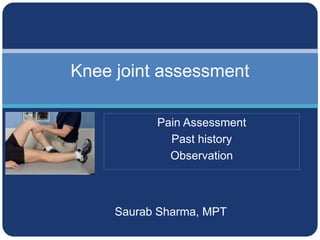
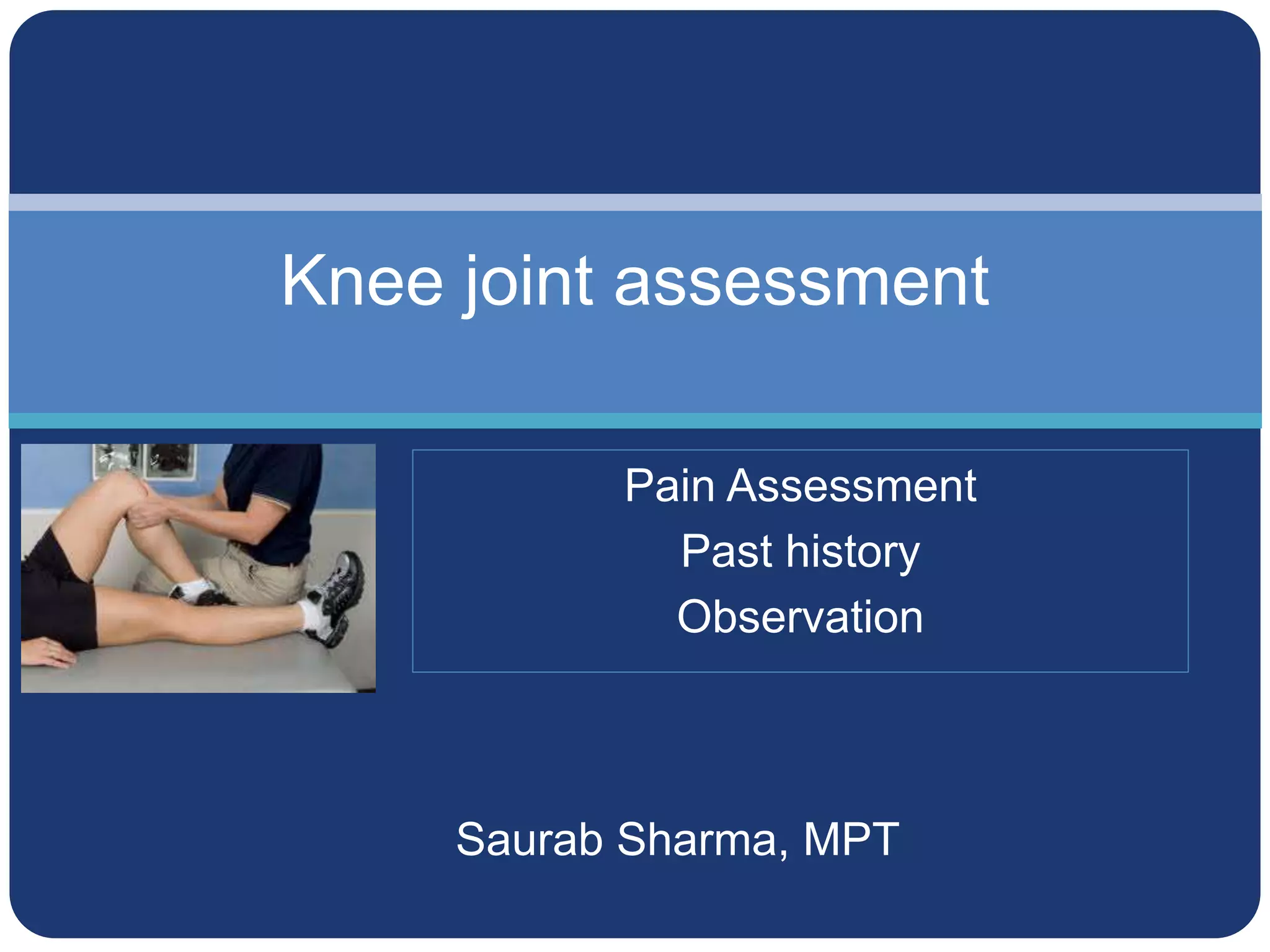
Knee joint assessment
Pain Assessment
Past history
Observation
Objectives of session
At the end of the class, students will be able to:
 Take relevant pain history for knee problems
 Observe a patient with knee problem
2
HOPI: Pain Assessment
 Site of the Pain
 Side of pain
 Type of pain
 Depth
 Constancy
 Relation of pain/ Clearing area
3
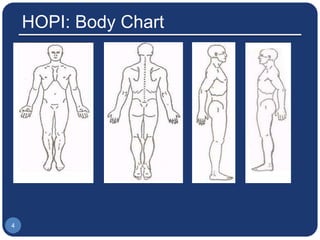
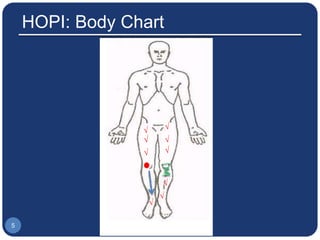
Body Chart
SINs
HOPI: Body Chart
4
HOPI: Body Chart
5
√
√
√
√
√
√
√
√
√
HOPI: Pain Assessment
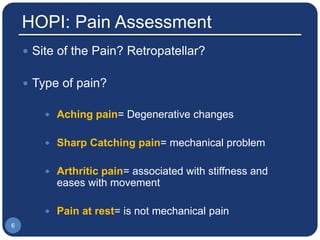
 Site of the Pain? Retropatellar?
 Type of pain?
 Aching pain= Degenerative changes
 Sharp Catching pain= mechanical problem
 Arthritic pain= associated with stiffness and
eases with movement
 Pain at rest= is not mechanical pain
6
HOPI: Pain Assessment
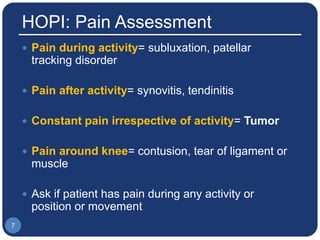
 Pain during activity= subluxation, patellar
tracking disorder
 Pain after activity= synovitis, tendinitis
 Constant pain irrespective of activity= Tumor
 Pain around knee= contusion, tear of ligament or
muscle
 Ask if patient has pain during any activity or
position or movement
7
HOPI: Pain Assessment
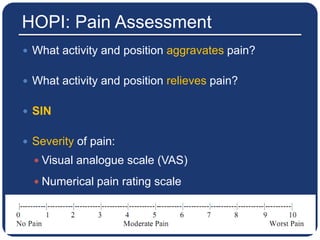
 What activity and position aggravates pain?
 What activity and position relieves pain?
 SIN
 Severity of pain:
 Visual analogue scale (VAS)
 Numerical pain rating scale
8
Past History
 Any previous injury indicates recurrent injuries
around knee.
 Was the pain at the same site?
 Similar nature?
 What was the treatment given during that
time?
9
Summary:
10
Plan for next class
 Observation of knee
 Prerequisites:
 David J Magee’s book
 Stanley Hoppenfield’s book on Physical examination
11

5a knee pain assessment

  • 1.
    Saurab Sharma, MPT Kneejoint assessment Pain Assessment Past history Observation
  • 2.
    Objectives of session Atthe end of the class, students will be able to:  Take relevant pain history for knee problems  Observe a patient with knee problem 2
  • 3.
    HOPI: Pain Assessment Site of the Pain  Side of pain  Type of pain  Depth  Constancy  Relation of pain/ Clearing area 3 Body Chart SINs
  • 4.
  • 5.
  • 6.
    HOPI: Pain Assessment Site of the Pain? Retropatellar?  Type of pain?  Aching pain= Degenerative changes  Sharp Catching pain= mechanical problem  Arthritic pain= associated with stiffness and eases with movement  Pain at rest= is not mechanical pain 6
  • 7.
    HOPI: Pain Assessment Pain during activity= subluxation, patellar tracking disorder  Pain after activity= synovitis, tendinitis  Constant pain irrespective of activity= Tumor  Pain around knee= contusion, tear of ligament or muscle  Ask if patient has pain during any activity or position or movement 7
  • 8.
    HOPI: Pain Assessment What activity and position aggravates pain?  What activity and position relieves pain?  SIN  Severity of pain:  Visual analogue scale (VAS)  Numerical pain rating scale 8
  • 9.
    Past History  Anyprevious injury indicates recurrent injuries around knee.  Was the pain at the same site?  Similar nature?  What was the treatment given during that time? 9
  • 10.
  • 11.
    Plan for nextclass  Observation of knee  Prerequisites:  David J Magee’s book  Stanley Hoppenfield’s book on Physical examination 11