GLYCOLYSIS AND
CITRIC ACID CYCLE
Dr. Neelam H. Zaidi
 It is defined as sequence of reactions of
glucose to lactate & pyruvate with the production
of ATP.
 It is derived from greek word glycose -sweet or
sugar, lysis- dissolution.
 Carried out by nearly all living cells.
 Site: cytosomal fraction of the cell
Glycolysis
 Glycolysis occurs in the absence of oxygen
(anaerobic) or in presence of oxygen (aerobic).
 Lactate is the end product under anaerobic
condition.
 In aerobic condition, pyruvate is formed, which
is then oxidized to CO2 & H2O.
Glycolysis
 The conversion of glucose to pyruvate occurs in
two stages:
 The first five reactions of glycolysis correspond to
an energy-investment phase: form high energy
intermediates at the expense of ATP.
 The following reactions constitute an energy-
generation phase: form ATP.
Glycolysis
 Phosphorylation of glucose
Step1: Phosphorylation
ERENGY INPUT
ERENGY INPUT
ERENGY INPUT
ERENGY INPUT
Hexokinase
is regulated
 Hexokinase
 This enzyme is present in most cells.
 In liver glucokinase is the main hexokinase which prefers
glucose as substrate.
 It requires ATP-Mg2+ complex as substrate. Un-complexed
ATP is a potent competitive inhibitor of this enzyme.
 Hexokinase undergoes large conformational change upon
binding with glucose. It is inhibited allosterically by G6P.
Step1: Phosphorylation
 Conversion of glucose 6-phosphate to fructose 6-
phosphate.
Step2: Isomerization
 Conversion of fructose 6-phosphate to fructose 1,6-
bisphosphate
Step3: Phosphorylation
ERENGY INPUT
PFK-1 is
regulated
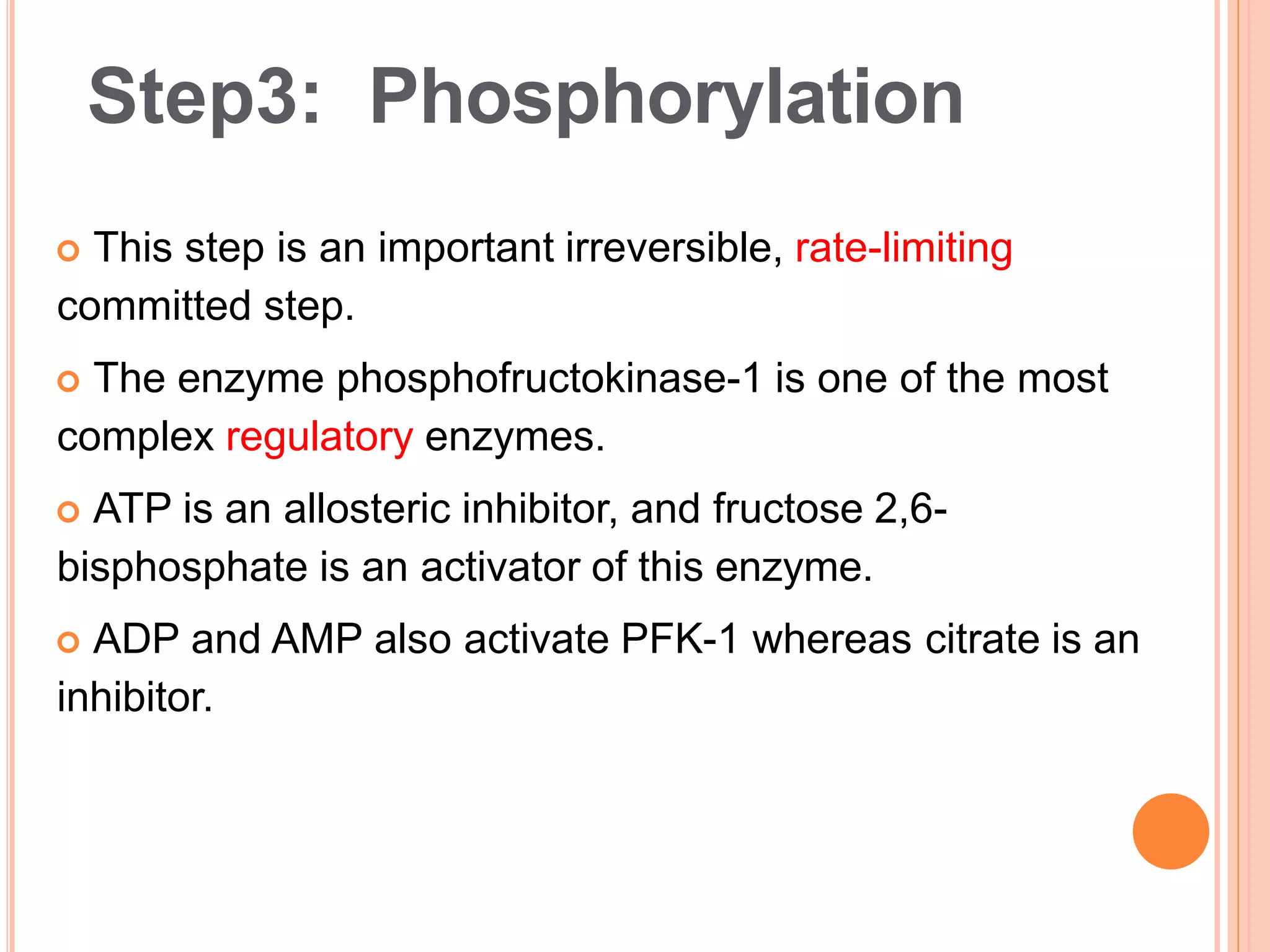
 This step is an important irreversible, rate-limiting
committed step.
 The enzyme phosphofructokinase-1 is one of the most
complex regulatory enzymes.
 ATP is an allosteric inhibitor, and fructose 2,6-
bisphosphate is an activator of this enzyme.
 ADP and AMP also activate PFK-1 whereas citrate is an
inhibitor.
Step3: Phosphorylation
 Fructose 1,6-bisphosphate splits into two triose phosphate
molecules.
 Cleavage of the bond between C3 & C4.
Step4: Cleavage
 Interconversion between two molecules.
Step5: Isomerization
(DHAP)
 Requires NAD+
Step6: Oxidation
((1,3-BPG)
 Mechanism of arsenic poisoning
 It can compete with Pi as a substrate for
glyceraldehyde 3-phosphate dehydrogenase,
forming 3-phosphoglycerate.
 By bypassing the synthesis of and phosphate
transfer from 1,3-BPG, the cell is deprived of
energy.
 Arsenate can also inhibit pyruvate dehydrogenase
complex.
Step6: Oxidation
 Energy output
Step7: Substrate Level
Phosphorylation
 Shift of phosphoryl group
Step8: Isomerization
 This reaction redistributes the energy within the substrate,
forming high-energy enol phosphate in PEP.
Step9: Dehydration
PEP
Fluoride inhibits
enolase.
 Energy output
Step10:
Substrate Level
Phosphorylation
Fructose 1,6-
bisphosphate actives PK
Feedforward
Regulation
Summary
Summary
Irreversible steps are
regulated:
Hexokinase/Glucokinase
Phosphofructokinase I
Pyruvate Kinase
Regulation
 Insulin
 Glucagon
Hormonal Regulation
Reduction of Pyruvate to Lactate
 Lactate is the final product of anaerobic glycolysis.
 In the cells that amount of oxygen is limited such as
RBCs, lens and cornea of eye etc.
 During intense exercise, lactate accumulates in
muscle, causing a drop in the intracellular pH,
potentially resulting in cramps.
 Much of this lactate eventually diffuses into the
bloodstream and can be used by the liver to make
glucose.
Lactate Formation in Muscle
 Elevated concentrations of lactate in the plasma. (a type
of metabolic acidosis)
 Occur when there is a collapse of the circulatory system,
such as in MI, uncontrolled hemorrhage, or in shock.
 The failure to bring adequate oxygen to the tissues results
in impaired oxidative phosphorylation and decreased ATP
synthesis.
 To survive, the cells rely on anaerobic glycolysis for
generating ATP, producing lactic acid as the end product.
Lactic Acidosis
Energetics
 Glycolysis is a major pathway for ATP synthesis
in tissues lacking mitochondria, erythrocytes,
cornea, lens etc.
 Glycolysis is very essential for brain which is
dependent on glucose for energy.
 Glycolysis is a central metabolic pathway with
many of its intermediates providing branch point to
other pathways.
 The intermediates of glycolysis are useful for the
synthesis of amino acids and fat.
Biomedical Importance of Glycolysis
CLINICAL ASPECTS
 Hemolytic Anaemias: inherited aldolase A &
pyruvate kinase deficiencies.
 Skeletal muscle fatigue
 Inherited pyruvate dehydrogenase deficiency-
Lactic acidosis
 Fast growing cancer cells glycolysis proceeds
at faster rate – increased acidic environment –
implication in certain types of cancer.
Pyruvate to Ethanol Conversion
-----interesting
 Alcohol fermentation.
Only in yeast, bacteria
(some). NOT in human
 The Citric acid cycle (Tricarboxylic acid cycle [TCA
cycle] or Krebs cycle) plays several roles in
metabolism.
 Final common pathway for oxidation of fuel
molecules such as carbohydrates, amino acids,
and fatty acids.
 Provides energy: ATP.
 Aerobic pathway, O2 is required.
 Occurs totally in the mitochondria.
Citric Acid Cycle
 Not closed cycle.
 Supplies intermediates for the synthesis of glucose,
amino acids, heme, pyrimidine, fatty acids, ketone
bodies and sterols.
 Generates NADH,FADH2,CO2
Citric Acid Cycle
CITRIC ACID
CYCLE
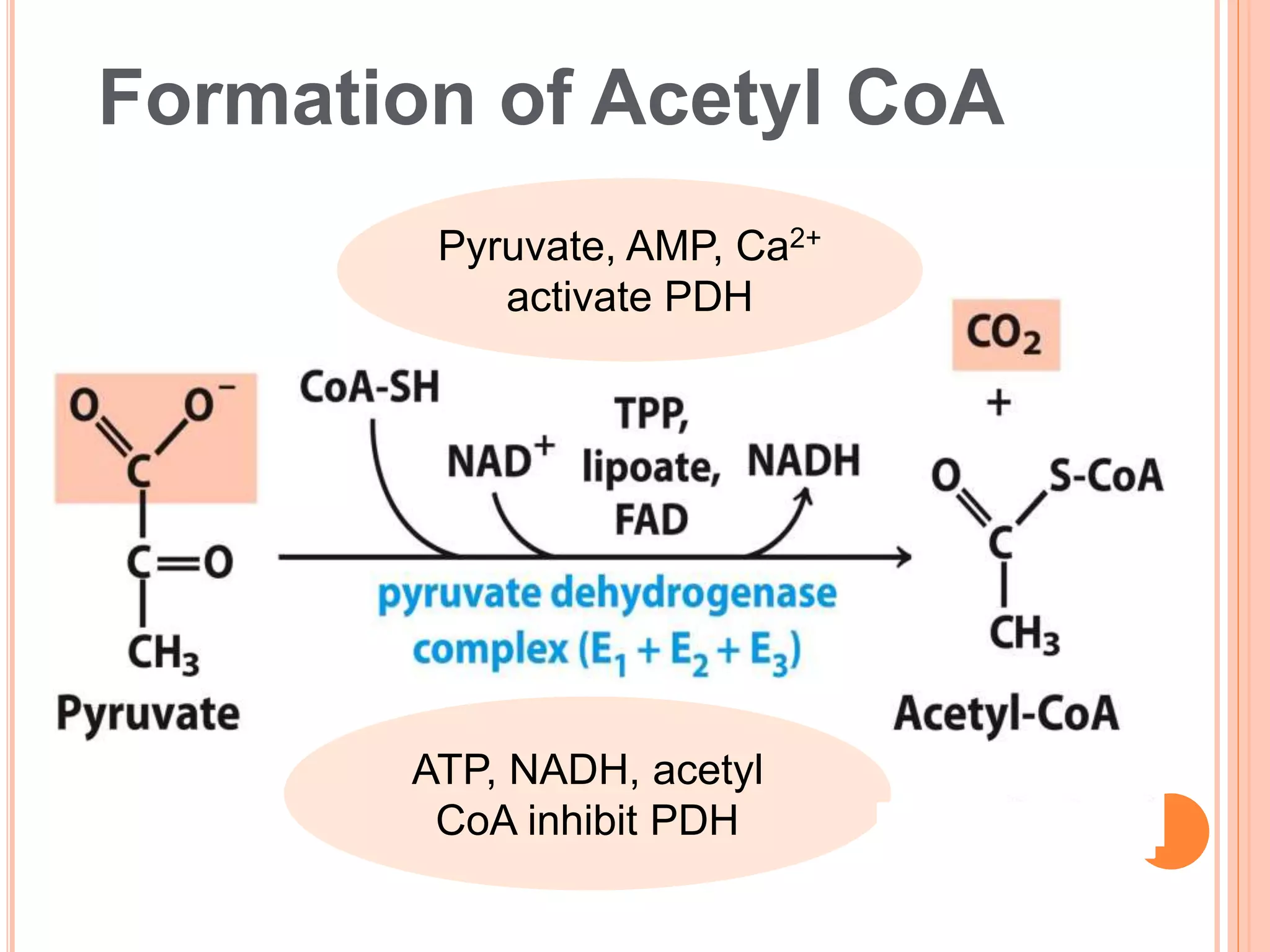
 Oxidative decarboxylation of pyruvate by the
pyruvate dehydrogenase(PDH) complex.
 Connecting link between glycolysis and TCA cycle.
 The PDH requires five coenzymes:
 Thiamine pyrophosphate (TPP)---B1
 CoA---B5
 Flavin adenine dinucleotide (FAD)---B2
 Nicotinamide adenine dinucleotide (NAD+)---B3
 Lipoic acid
Formation of Acetyl CoA
ATP, NADH, acetyl
CoA inhibit PDH
Pyruvate, AMP, Ca2+
activate PDH
 The function of CoA is to accept and carry acetyl groups.
CoA
 Most common biochemical cause of congenital
lactic acidosis.
 Pyruvate is converted to lactate via LDH.
 Brain, which relies on the TCA cycle for energy and
is particularly sensitive to acidosis.
 Symptoms: neurodegeneration; muscle spasticity;
early death.
 Dietary restriction of carbohydrate and
supplementation with thiamine.
Pyruvate Dehydrogenase Deficiency
 Arsenite forms a stable
complex with the thiol (–SH)
groups of lipoic acid, making
IT unavailable.
 Pyruvate dehydrogenase
inhibited.
 Pyruvate and lactate
accumulate.
 Neurologic disturbances
(brain) and death.
Arsenic Poisoning
 Condensation: with C-C bond formation.
 Rate limiting step
 Regulated by substrate availability(OAA) and
product inhibition(citrate).
Step1: Condensation
Tricarboxylic Acid
ATP, NADH,
succinyl CoA
inhibit
ADP
activate
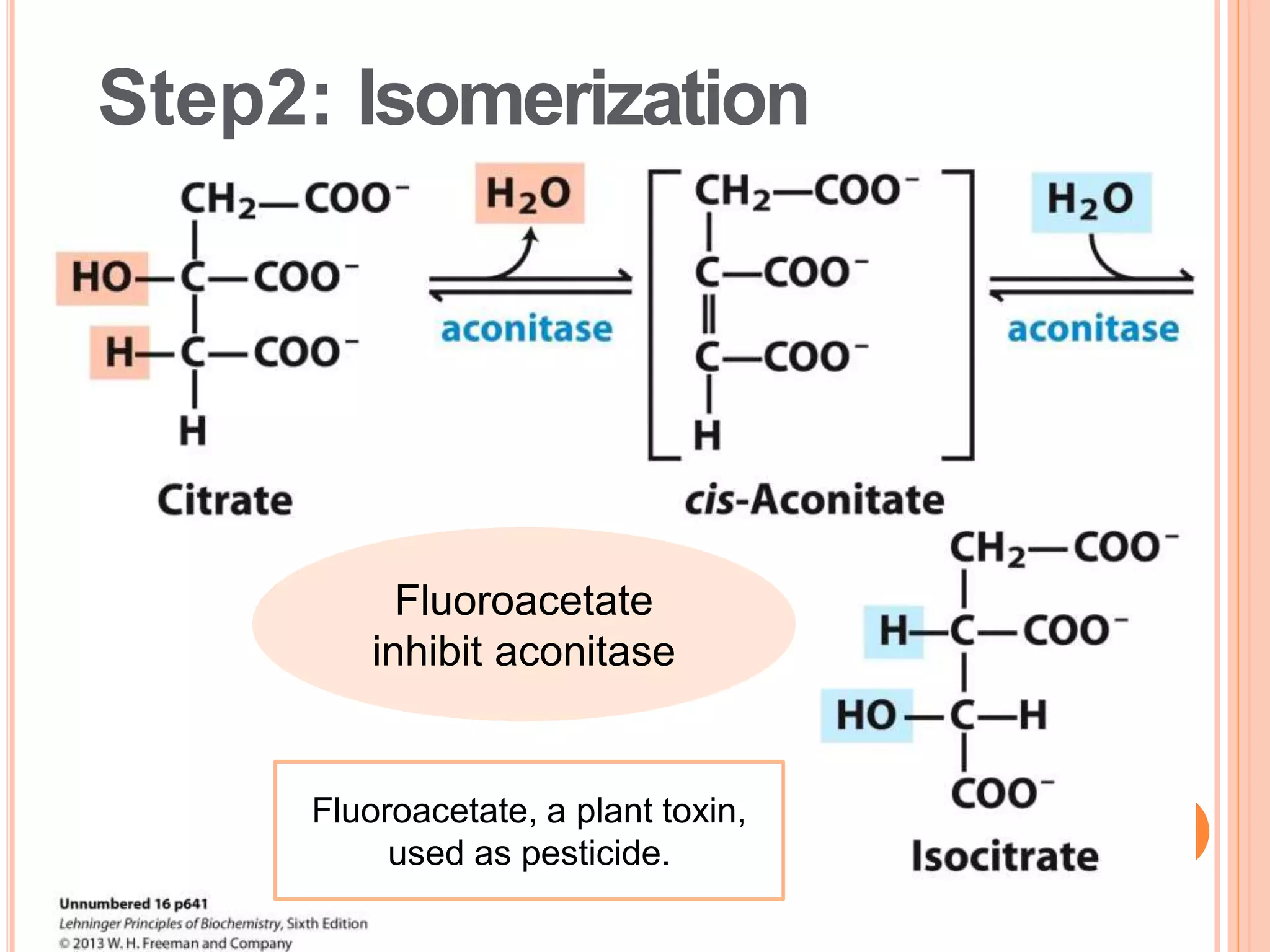
Step2: Isomerization
Fluoroacetate
inhibit aconitase
Fluoroacetate, a plant toxin,
used as pesticide.
 Irreversible, rate limiting step.
 Produces CO2 and NADH.
Fluoroacetate
inhibit aconitase
Step3: Oxidative Decarboxylation
isocitrate dehydrogenase isocitrate dehydrogenase
ADP, Ca2+ activate;
ATP,NADH inhibit it.
aa metabolism
 Requires coenzymes: TPP, FAD,NAD+, CoA,
lipoic acid.
Step4: Oxidative Decarboxylation
succinyl-CoA, NADH inhibit
it; Ca2+ activates it.
(high-energy thioester)
Fatty acids, aa
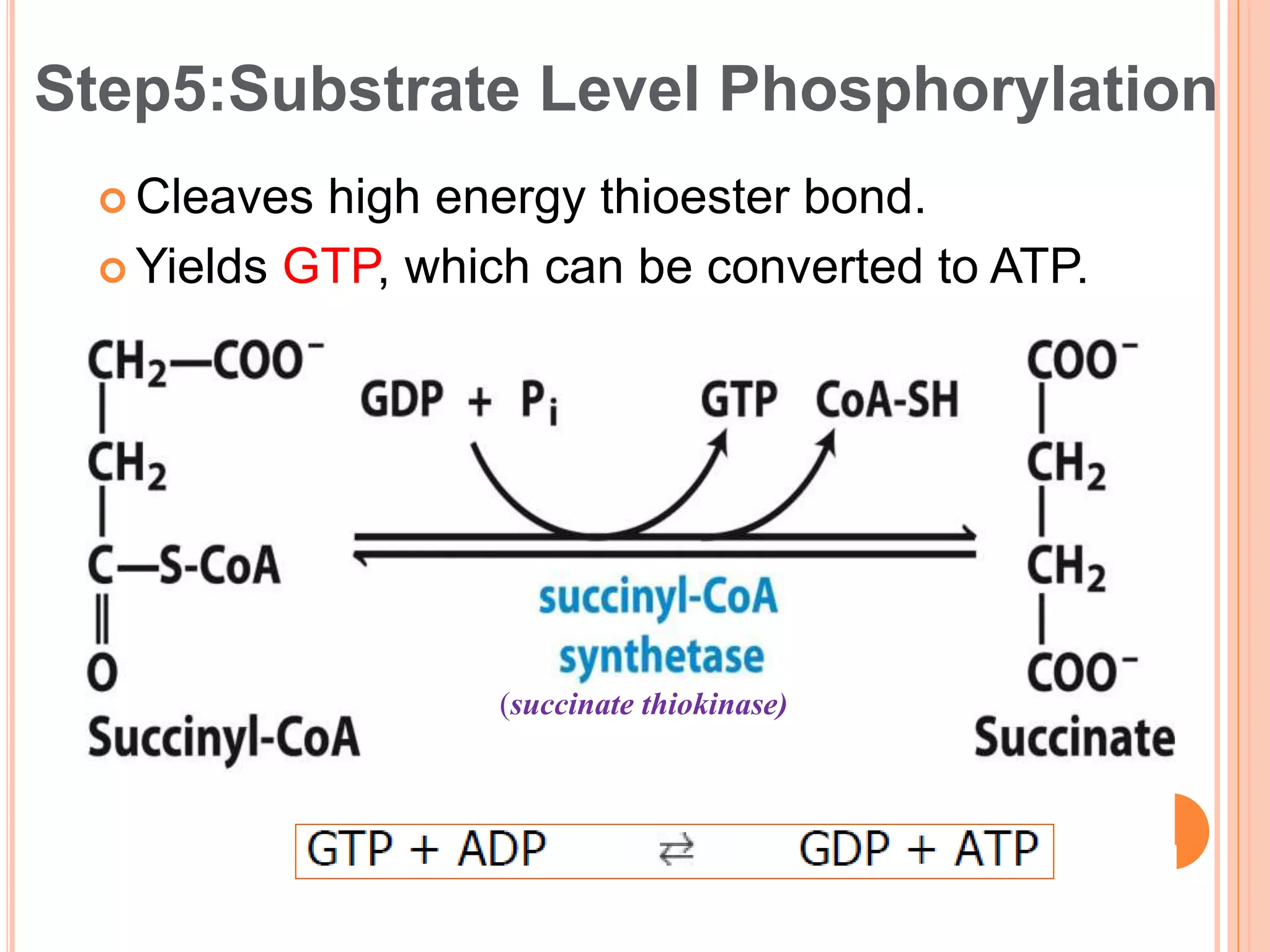
 Cleaves high energy thioester bond.
 Yields GTP, which can be converted to ATP.
Step5:Substrate Level Phosphorylation
(succinate thiokinase)
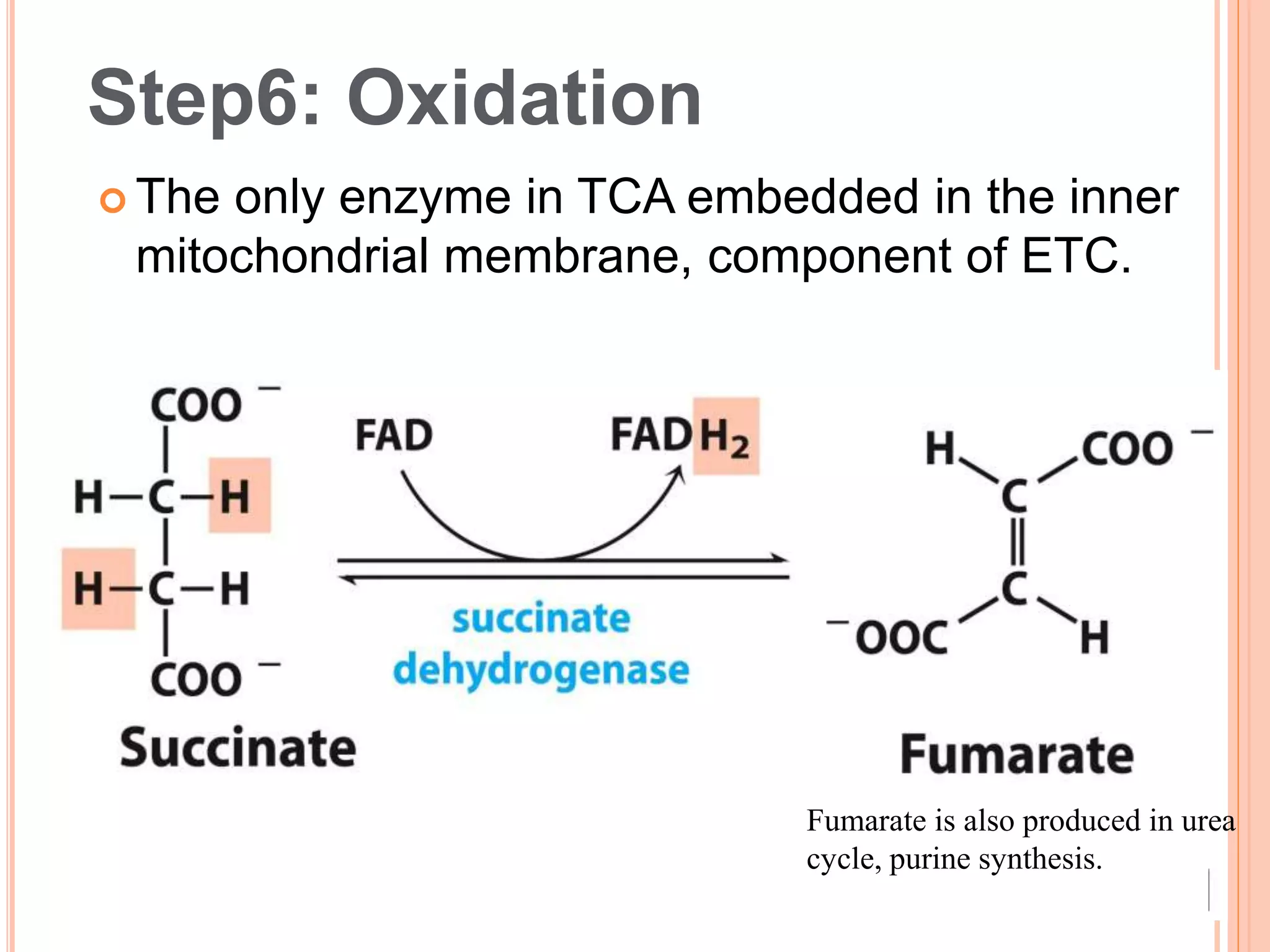
 The only enzyme in TCA embedded in the inner
mitochondrial membrane, component of ETC.
Step6: Oxidation
Fumarate is also produced in urea
cycle, purine synthesis.
Step7: Hydration
 Final step in TCA cycle.
 Regenerates OAA.
Step8: Oxidation
aa
Summary
2C
 Calculation:
 One turn of TCA cycle can generate
 3 NADH
 1 FADH2
 1 GTP
 (2CO2)
 1 glucose can produce 2 pyruvate, then
undergoes 2 turns of TCA cycle.
 So the total energy that can yield is 20 ATP per
molecule of glucose.
Energetics
10ATP
Regulation
 Amphibolic: serves in both catabolism and anabolism.
 All the metabolites in TCA cycle needs to be replenished.
TCA Cycle Is Amphibolic Pathway
 Complete oxidation of acetyl CoA.
 ATP generation.
 Final common oxidative pathway.
 Integration of major metabolic pathways.
 Fat is burned on the wick of carbohydrates.
 Excess carbohydrates are converted as neutral
fat.
 No net synthesis of carbohydrates from fat.
 Carbon skeleton of amino acids finally enter the
TCAcycle.
Significance
BIOMEDICAL IMPORTANCE


Final common pathway for oxidation of
carbohydrates, lipids & proteins.
Supplies intermediates in gluconeogenesis,
transamination, deamination & lipogenesis.

Vitamins play a key role in this cycle
Eg; Riboflavin – FAD
Niacin – NAD
Thiamine –TPP
Pantothenic acid – CoA.
 De Meirleir L: Defects of pyruvate metabolism and the Krebs
cycle. J Child Neurol 2002;(suppl 3):3S26.
 Rama Rao KV, Norenberg MD: Brain energy metabolism
and mitochondrial dysfunction in acute and chronic hepatic
encephalopathy. Neurochem Int 2012;60:697.
 Lalau JD: Lactic acidosis induced by metformin: incidence,
management and prevention. Drug Saf 2010;33:727.
 https://www.slideshare.net/arijabuhaniyeh/chapter-16-the-
citric-acid-cycle-biochemistry.
 Kim J-W, Dang CV: Multifaceted roles of glycolytic enzymes.
Trends Biochem Sci 2005;30:142.
References

4.2 glycolysis & TCA cycle.ppt

  • 1.
    GLYCOLYSIS AND CITRIC ACIDCYCLE Dr. Neelam H. Zaidi
  • 2.
     It isdefined as sequence of reactions of glucose to lactate & pyruvate with the production of ATP.  It is derived from greek word glycose -sweet or sugar, lysis- dissolution.  Carried out by nearly all living cells.  Site: cytosomal fraction of the cell Glycolysis
  • 3.
     Glycolysis occursin the absence of oxygen (anaerobic) or in presence of oxygen (aerobic).  Lactate is the end product under anaerobic condition.  In aerobic condition, pyruvate is formed, which is then oxidized to CO2 & H2O. Glycolysis
  • 4.
     The conversionof glucose to pyruvate occurs in two stages:  The first five reactions of glycolysis correspond to an energy-investment phase: form high energy intermediates at the expense of ATP.  The following reactions constitute an energy- generation phase: form ATP. Glycolysis
  • 5.
     Phosphorylation ofglucose Step1: Phosphorylation ERENGY INPUT ERENGY INPUT ERENGY INPUT ERENGY INPUT Hexokinase is regulated
  • 6.
     Hexokinase  Thisenzyme is present in most cells.  In liver glucokinase is the main hexokinase which prefers glucose as substrate.  It requires ATP-Mg2+ complex as substrate. Un-complexed ATP is a potent competitive inhibitor of this enzyme.  Hexokinase undergoes large conformational change upon binding with glucose. It is inhibited allosterically by G6P. Step1: Phosphorylation
  • 7.
     Conversion ofglucose 6-phosphate to fructose 6- phosphate. Step2: Isomerization
  • 8.
     Conversion offructose 6-phosphate to fructose 1,6- bisphosphate Step3: Phosphorylation ERENGY INPUT PFK-1 is regulated
  • 9.
     This stepis an important irreversible, rate-limiting committed step.  The enzyme phosphofructokinase-1 is one of the most complex regulatory enzymes.  ATP is an allosteric inhibitor, and fructose 2,6- bisphosphate is an activator of this enzyme.  ADP and AMP also activate PFK-1 whereas citrate is an inhibitor. Step3: Phosphorylation
  • 10.
     Fructose 1,6-bisphosphatesplits into two triose phosphate molecules.  Cleavage of the bond between C3 & C4. Step4: Cleavage
  • 11.
     Interconversion betweentwo molecules. Step5: Isomerization (DHAP)
  • 12.
     Requires NAD+ Step6:Oxidation ((1,3-BPG)
  • 13.
     Mechanism ofarsenic poisoning  It can compete with Pi as a substrate for glyceraldehyde 3-phosphate dehydrogenase, forming 3-phosphoglycerate.  By bypassing the synthesis of and phosphate transfer from 1,3-BPG, the cell is deprived of energy.  Arsenate can also inhibit pyruvate dehydrogenase complex. Step6: Oxidation
  • 14.
     Energy output Step7:Substrate Level Phosphorylation
  • 15.
     Shift ofphosphoryl group Step8: Isomerization
  • 16.
     This reactionredistributes the energy within the substrate, forming high-energy enol phosphate in PEP. Step9: Dehydration PEP Fluoride inhibits enolase.
  • 17.
     Energy output Step10: SubstrateLevel Phosphorylation Fructose 1,6- bisphosphate actives PK Feedforward Regulation
  • 18.
  • 19.
  • 20.
  • 21.
  • 22.
    Reduction of Pyruvateto Lactate  Lactate is the final product of anaerobic glycolysis.  In the cells that amount of oxygen is limited such as RBCs, lens and cornea of eye etc.
  • 23.
     During intenseexercise, lactate accumulates in muscle, causing a drop in the intracellular pH, potentially resulting in cramps.  Much of this lactate eventually diffuses into the bloodstream and can be used by the liver to make glucose. Lactate Formation in Muscle
  • 24.
     Elevated concentrationsof lactate in the plasma. (a type of metabolic acidosis)  Occur when there is a collapse of the circulatory system, such as in MI, uncontrolled hemorrhage, or in shock.  The failure to bring adequate oxygen to the tissues results in impaired oxidative phosphorylation and decreased ATP synthesis.  To survive, the cells rely on anaerobic glycolysis for generating ATP, producing lactic acid as the end product. Lactic Acidosis
  • 25.
  • 26.
     Glycolysis isa major pathway for ATP synthesis in tissues lacking mitochondria, erythrocytes, cornea, lens etc.  Glycolysis is very essential for brain which is dependent on glucose for energy.  Glycolysis is a central metabolic pathway with many of its intermediates providing branch point to other pathways.  The intermediates of glycolysis are useful for the synthesis of amino acids and fat. Biomedical Importance of Glycolysis
  • 27.
    CLINICAL ASPECTS  HemolyticAnaemias: inherited aldolase A & pyruvate kinase deficiencies.  Skeletal muscle fatigue  Inherited pyruvate dehydrogenase deficiency- Lactic acidosis  Fast growing cancer cells glycolysis proceeds at faster rate – increased acidic environment – implication in certain types of cancer.
  • 28.
    Pyruvate to EthanolConversion -----interesting  Alcohol fermentation. Only in yeast, bacteria (some). NOT in human
  • 31.
     The Citricacid cycle (Tricarboxylic acid cycle [TCA cycle] or Krebs cycle) plays several roles in metabolism.  Final common pathway for oxidation of fuel molecules such as carbohydrates, amino acids, and fatty acids.  Provides energy: ATP.  Aerobic pathway, O2 is required.  Occurs totally in the mitochondria. Citric Acid Cycle
  • 32.
     Not closedcycle.  Supplies intermediates for the synthesis of glucose, amino acids, heme, pyrimidine, fatty acids, ketone bodies and sterols.  Generates NADH,FADH2,CO2 Citric Acid Cycle
  • 33.
  • 34.
     Oxidative decarboxylationof pyruvate by the pyruvate dehydrogenase(PDH) complex.  Connecting link between glycolysis and TCA cycle.  The PDH requires five coenzymes:  Thiamine pyrophosphate (TPP)---B1  CoA---B5  Flavin adenine dinucleotide (FAD)---B2  Nicotinamide adenine dinucleotide (NAD+)---B3  Lipoic acid Formation of Acetyl CoA
  • 35.
    Formation of AcetylCoA ATP, NADH, acetyl CoA inhibit PDH Pyruvate, AMP, Ca2+ activate PDH
  • 36.
     The functionof CoA is to accept and carry acetyl groups. CoA
  • 37.
     Most commonbiochemical cause of congenital lactic acidosis.  Pyruvate is converted to lactate via LDH.  Brain, which relies on the TCA cycle for energy and is particularly sensitive to acidosis.  Symptoms: neurodegeneration; muscle spasticity; early death.  Dietary restriction of carbohydrate and supplementation with thiamine. Pyruvate Dehydrogenase Deficiency
  • 38.
     Arsenite formsa stable complex with the thiol (–SH) groups of lipoic acid, making IT unavailable.  Pyruvate dehydrogenase inhibited.  Pyruvate and lactate accumulate.  Neurologic disturbances (brain) and death. Arsenic Poisoning
  • 39.
     Condensation: withC-C bond formation.  Rate limiting step  Regulated by substrate availability(OAA) and product inhibition(citrate). Step1: Condensation Tricarboxylic Acid ATP, NADH, succinyl CoA inhibit ADP activate
  • 40.
  • 41.
     Irreversible, ratelimiting step.  Produces CO2 and NADH. Fluoroacetate inhibit aconitase Step3: Oxidative Decarboxylation isocitrate dehydrogenase isocitrate dehydrogenase ADP, Ca2+ activate; ATP,NADH inhibit it. aa metabolism
  • 42.
     Requires coenzymes:TPP, FAD,NAD+, CoA, lipoic acid. Step4: Oxidative Decarboxylation succinyl-CoA, NADH inhibit it; Ca2+ activates it. (high-energy thioester) Fatty acids, aa
  • 43.
     Cleaves highenergy thioester bond.  Yields GTP, which can be converted to ATP. Step5:Substrate Level Phosphorylation (succinate thiokinase)
  • 44.
     The onlyenzyme in TCA embedded in the inner mitochondrial membrane, component of ETC. Step6: Oxidation Fumarate is also produced in urea cycle, purine synthesis.
  • 45.
  • 46.
     Final stepin TCA cycle.  Regenerates OAA. Step8: Oxidation aa
  • 47.
  • 48.
     Calculation:  Oneturn of TCA cycle can generate  3 NADH  1 FADH2  1 GTP  (2CO2)  1 glucose can produce 2 pyruvate, then undergoes 2 turns of TCA cycle.  So the total energy that can yield is 20 ATP per molecule of glucose. Energetics 10ATP
  • 49.
  • 50.
     Amphibolic: servesin both catabolism and anabolism.  All the metabolites in TCA cycle needs to be replenished. TCA Cycle Is Amphibolic Pathway
  • 51.
     Complete oxidationof acetyl CoA.  ATP generation.  Final common oxidative pathway.  Integration of major metabolic pathways.  Fat is burned on the wick of carbohydrates.  Excess carbohydrates are converted as neutral fat.  No net synthesis of carbohydrates from fat.  Carbon skeleton of amino acids finally enter the TCAcycle. Significance
  • 52.
    BIOMEDICAL IMPORTANCE   Final commonpathway for oxidation of carbohydrates, lipids & proteins. Supplies intermediates in gluconeogenesis, transamination, deamination & lipogenesis.  Vitamins play a key role in this cycle Eg; Riboflavin – FAD Niacin – NAD Thiamine –TPP Pantothenic acid – CoA.
  • 54.
     De MeirleirL: Defects of pyruvate metabolism and the Krebs cycle. J Child Neurol 2002;(suppl 3):3S26.  Rama Rao KV, Norenberg MD: Brain energy metabolism and mitochondrial dysfunction in acute and chronic hepatic encephalopathy. Neurochem Int 2012;60:697.  Lalau JD: Lactic acidosis induced by metformin: incidence, management and prevention. Drug Saf 2010;33:727.  https://www.slideshare.net/arijabuhaniyeh/chapter-16-the- citric-acid-cycle-biochemistry.  Kim J-W, Dang CV: Multifaceted roles of glycolytic enzymes. Trends Biochem Sci 2005;30:142. References

Editor's Notes

  • #6 Kinase: An enzyme that catalyzes the phosphorylation of a molecule using ATP. Glucose enters glycolysis by phosphorylation catalyzed by hexokinase. Magnesium ion (Mg2+) is required for this reaction.In liver glucokinase is present. It is ATP dependent irreversible reaction.
  • #7 (the hexokinase IV isozyme)liver and β cell of pancreas to b sensor Hexokinases I–III have broad substrate specificity and are able to phosphorylate several hexoses, high affinity
  • #9 Another ATP dependent phosphorylation occurs in the third reaction.irreversible.Magnesium ion (Mg2+) is required Up to this stage of glycolysis two high energy bonds are utilized.
  • #10 elevated levels of ATP, which act as an “energy-rich” signal indicating an abundance of high-energy compounds
  • #12 DHAP is utilized in triacylglycerol synthesis
  • #13 The high-energy phosphate group at carbon 1 of 1,3-BPG conserves much of the free energy produced by the oxidation of glyceraldehyde 3- phosphate. there is only a limited amount of NAD+ in the cell, the NADH formed by this reaction must be reoxidized to NAD+ for glycolysis to continue.
  • #14 1,3-BPG is converted to 2,3-BPG, which is found in only trace amounts in most cells, is present at high concentration in red blood cells (RBCs) and serves to increase O2 delivery. Become 3-phosphoglycerate, enter glycolysis. pentavalent arsenic (arsenate)
  • #17 Fluoride inhibits enolase, and water fluoridation reduces lactate production by mouth bacteria, decreasing dental caries.
  • #18 Step 3
  • #23 the lens and cornea of the eye, kidney medulla, testes, leukocytes, and RBCs. because these are all poorly vascularized and/or lack mitochondria.
  • #25 myocardial infarction, pulmonary embolism its increased production or decreased utilization.
  • #27 Fructose and galactose also enter glycolysis.
  • #29 CO2 makes bubbles
  • #32 It’s a series reactions in mitochondria that oxidize acetyl residues(acetyl-CoA) librating reducing equivalents, which upon oxidation through ECT generate ATP.
  • #35 Pyruvate, the end product of aerobic glycolysis, must be transported from the cytosol into the mitochondrion. This is accomplished by a specific transporter
  • #36 high-energy signals, Calcium (Ca2+) is a strong activator. This is particularly important in skeletal muscle, where release of Ca2+ during contraction stimulates the PDH complex then energy production.
  • #38 Thiamin B1 Neurons are mostly oxidative and astrocytes use mostly glycolysis.
  • #40 Citrate inhibit PFK-1 NADH, ATP, citrate, succinyl- coa inhibit ADP activate
  • #41 fluoroacetyl-CoA condenses with oxaloacetate to form fluorocitrate, which inhibits Aconitase, causing citrate to accumulate
  • #42 Low/high energy signal
  • #43 Both CO2 carbon atoms are derived from oxaloacetate.
  • #45 COMPLEX2
  • #51 anaplerotic reactions in red