3D TRANSFORMATION:
MATRIX REPRESENTATION
ROTATION
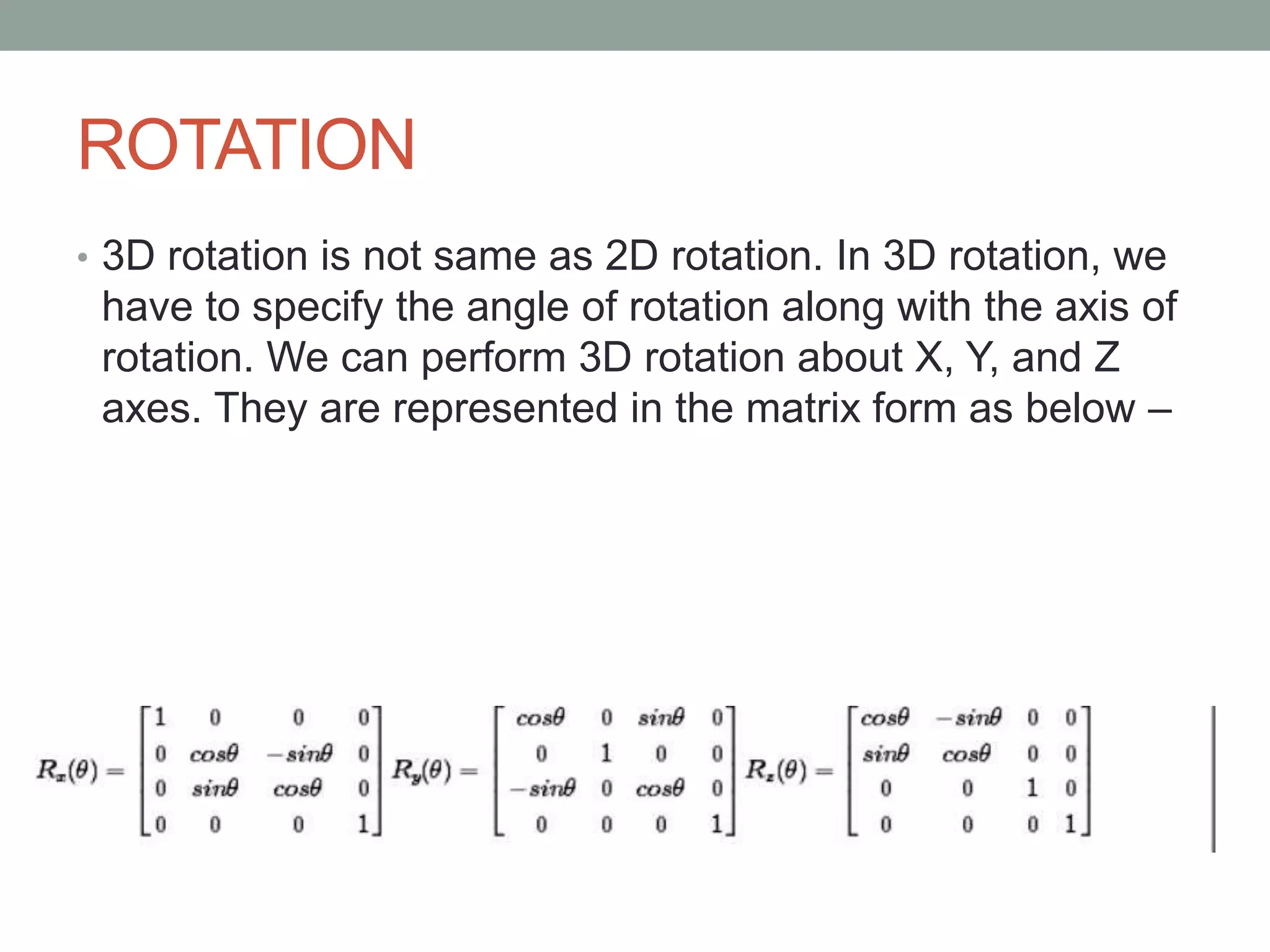
• 3D rotation is not same as 2D rotation. In 3D rotation, we
have to specify the angle of rotation along with the axis of
rotation. We can perform 3D rotation about X, Y, and Z
axes. They are represented in the matrix form as below –
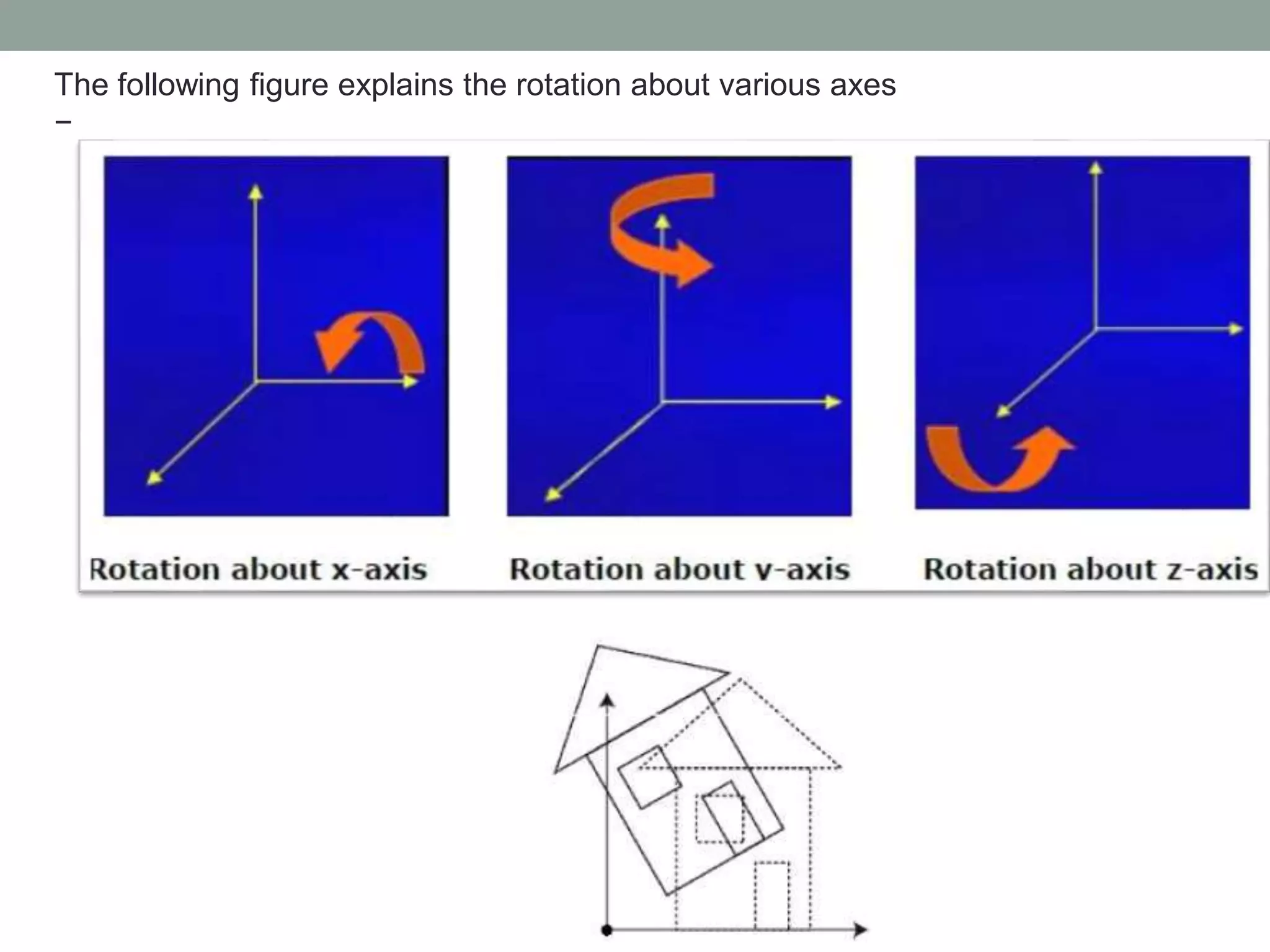
The following figure explains the rotation about various axes
−
SCALING
• Scaling
• You can change the size of an object using scaling
transformation. In the scaling process, you either expand
or compress the dimensions of the object. Scaling can be
achieved by multiplying the original coordinates of the
object with the scaling factor to get the desired result. The
following figure shows the effect of 3D scaling −
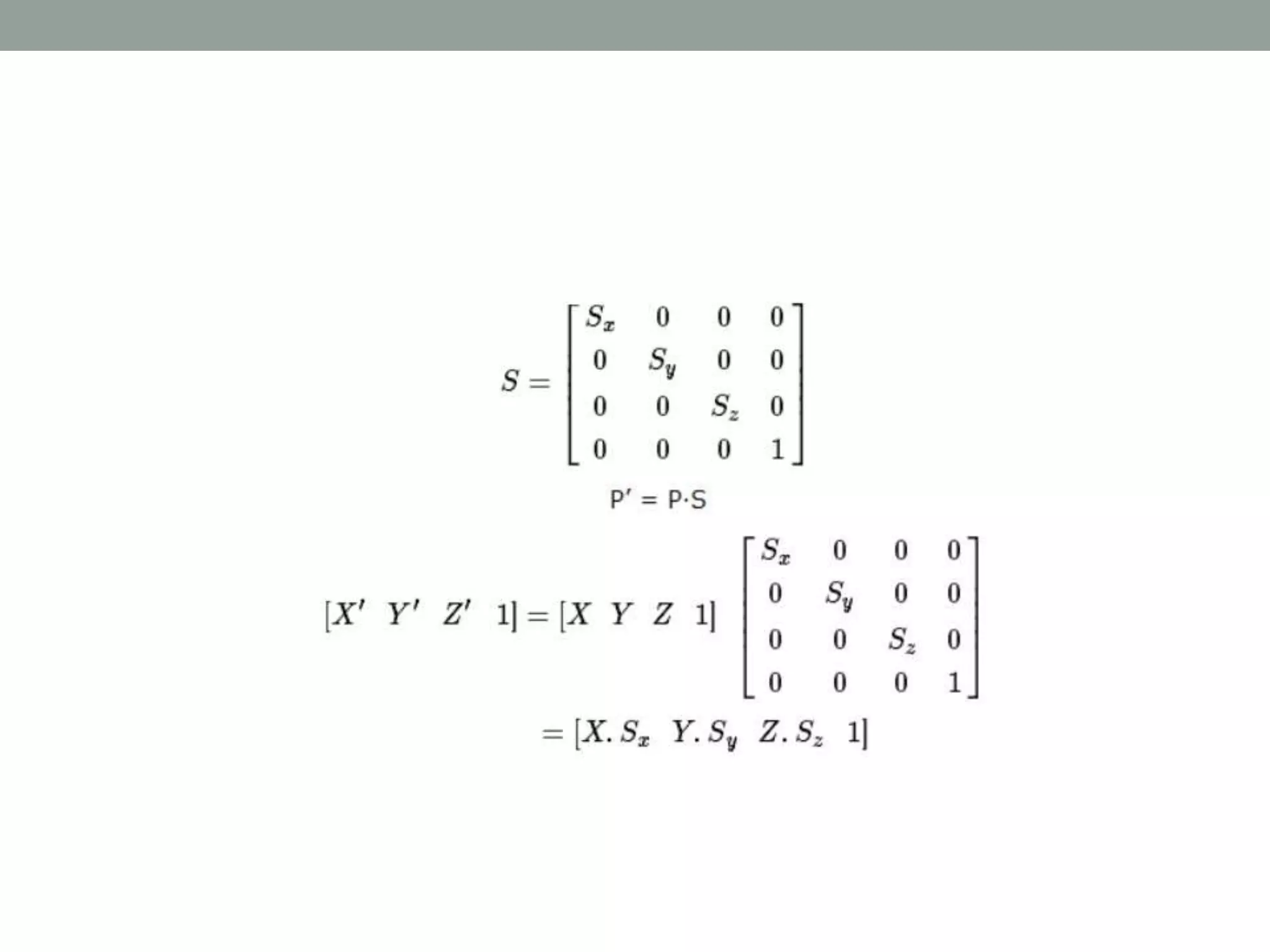
• In 3D scaling operation, three coordinates are used. Let
us assume that the original coordinates are (X, Y, Z),
scaling factors are (SX,SY,Sz)(SX,SY,Sz) respectively,
and the produced coordinates are (X’, Y’, Z’). This can be
mathematically represented as shown below −
SHEAR
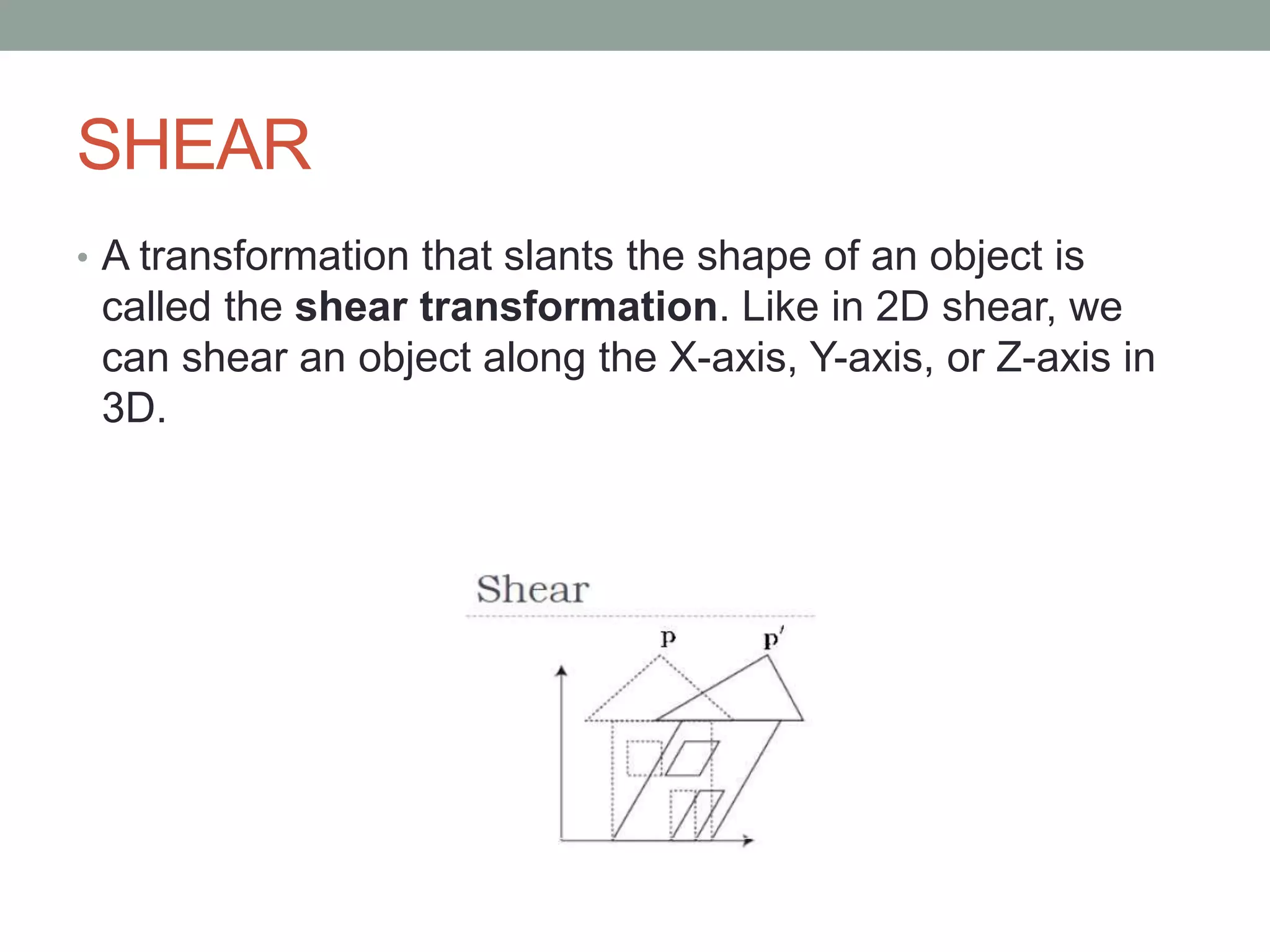
• A transformation that slants the shape of an object is
called the shear transformation. Like in 2D shear, we
can shear an object along the X-axis, Y-axis, or Z-axis in
3D.
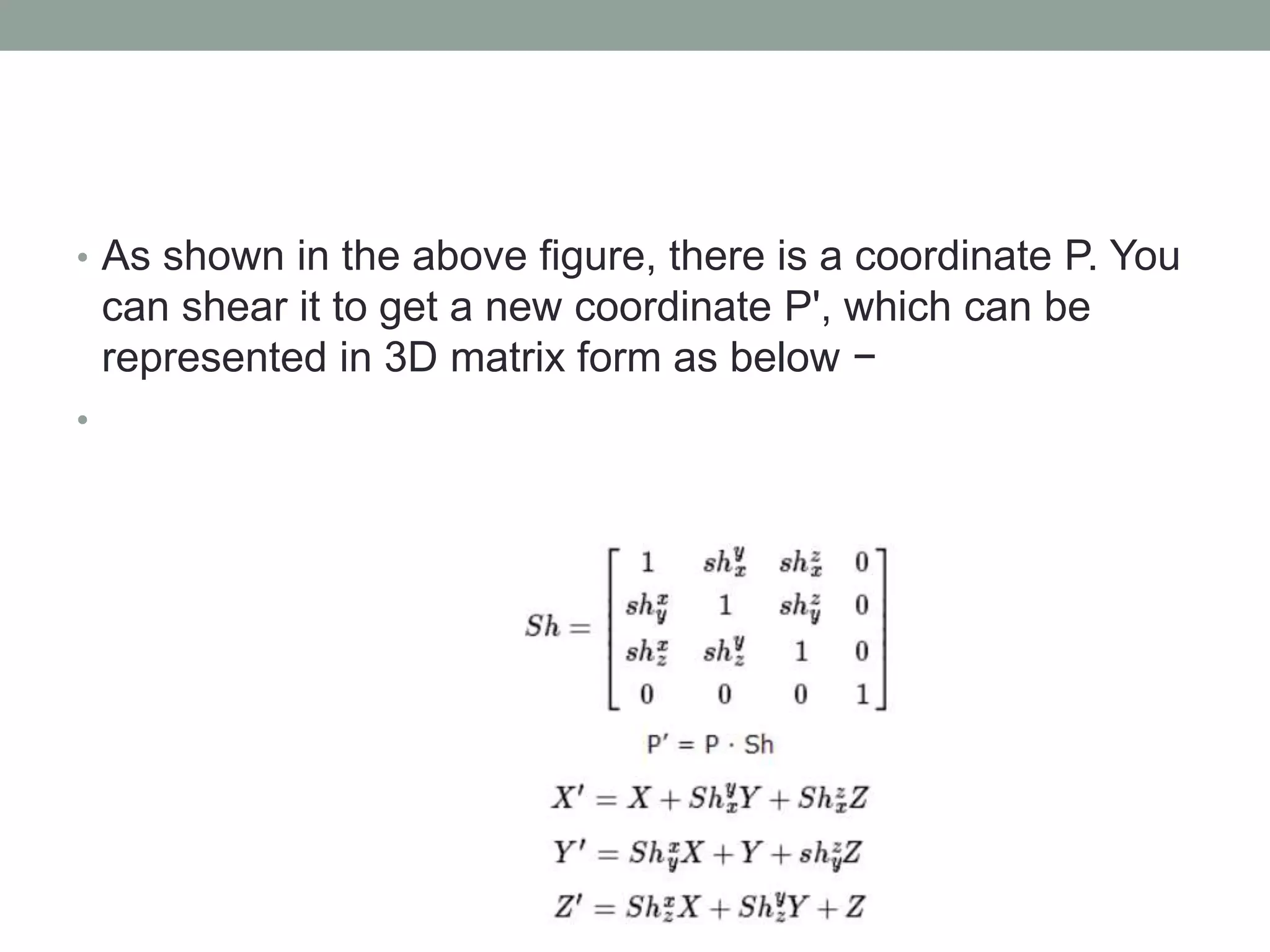
• As shown in the above figure, there is a coordinate P. You
can shear it to get a new coordinate P', which can be
represented in 3D matrix form as below −
•
TRANSFORMATION MATRICES
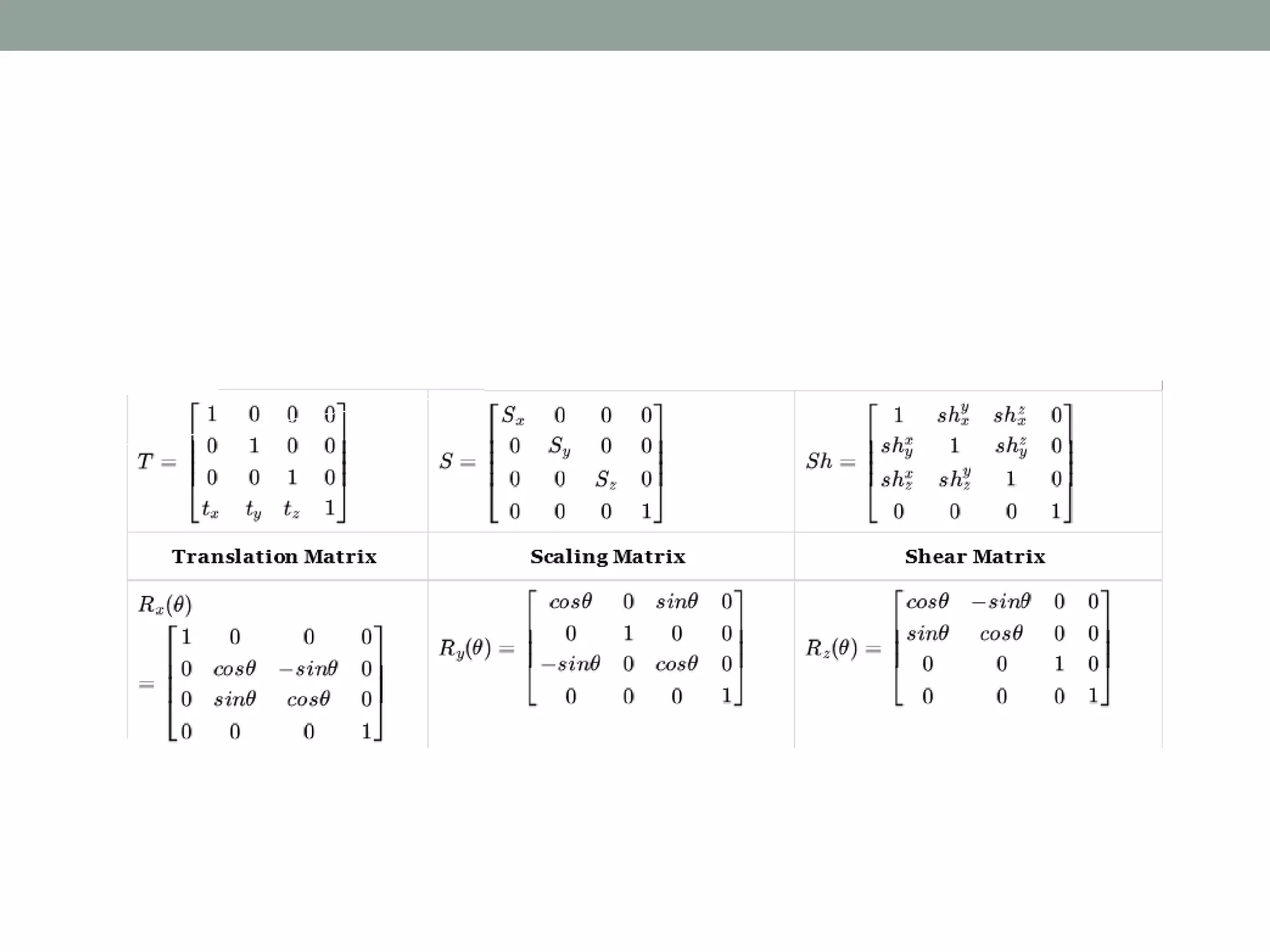
• Transformation matrix is a basic tool for transformation. A
matrix with n x m dimensions is multiplied with the
coordinate of objects. Usually 3 x 3 or 4 x 4 matrices are
used for transformation. For example, consider the
following matrix for various operation.
3D TRANSFORMATION: MATRIX REPRESENTATION

3D TRANSFORMATION: MATRIX REPRESENTATION

  • 1.
  • 2.
    ROTATION • 3D rotationis not same as 2D rotation. In 3D rotation, we have to specify the angle of rotation along with the axis of rotation. We can perform 3D rotation about X, Y, and Z axes. They are represented in the matrix form as below –
  • 3.
    The following figureexplains the rotation about various axes −
  • 4.
    SCALING • Scaling • Youcan change the size of an object using scaling transformation. In the scaling process, you either expand or compress the dimensions of the object. Scaling can be achieved by multiplying the original coordinates of the object with the scaling factor to get the desired result. The following figure shows the effect of 3D scaling −
  • 6.
    • In 3Dscaling operation, three coordinates are used. Let us assume that the original coordinates are (X, Y, Z), scaling factors are (SX,SY,Sz)(SX,SY,Sz) respectively, and the produced coordinates are (X’, Y’, Z’). This can be mathematically represented as shown below −
  • 8.
    SHEAR • A transformationthat slants the shape of an object is called the shear transformation. Like in 2D shear, we can shear an object along the X-axis, Y-axis, or Z-axis in 3D.
  • 9.
    • As shownin the above figure, there is a coordinate P. You can shear it to get a new coordinate P', which can be represented in 3D matrix form as below − •
  • 10.
    TRANSFORMATION MATRICES • Transformationmatrix is a basic tool for transformation. A matrix with n x m dimensions is multiplied with the coordinate of objects. Usually 3 x 3 or 4 x 4 matrices are used for transformation. For example, consider the following matrix for various operation.