BAHIR DAR UNIVERSITY
Ethiopian Institute of Textiles and Fashion
Technology(EITEX)
SEMINAR ON 3D KNITTING
PREPARED BY: SELAMU TEMESGEN
SUBMITTED TO : Dr.S.Kathirrvelu (Professor Textile Tech.
1
Contents
 Introduction
 Classification of 3D knitted fabrics
 Manufacturing method for 3d textiles
 Properties of weft and warp knitted 3D fabrics
 Types of machines used for 3D weft and warp
knitting
 Application of 3D fabrics
 Principles to obtain 3d knitted fabrics
3D-Textiles
1.Introduction
Development of three-dimensional knitted
fabrics dates from the 19thcentury
• The concept of three-dimensional of the textile
materials is not related to the intrinsic value of
dimensions found on the three axes (x, y, z), but to
the relationship between them.
• This relation characterises the importance of the
dimensions in the geometry of the material.
3
4
• A three-dimensional fabric, regardless of the
process used, is “a continuous ensemble, with fully
integrated fibre, characterised by multiaxial spatial
orientation”
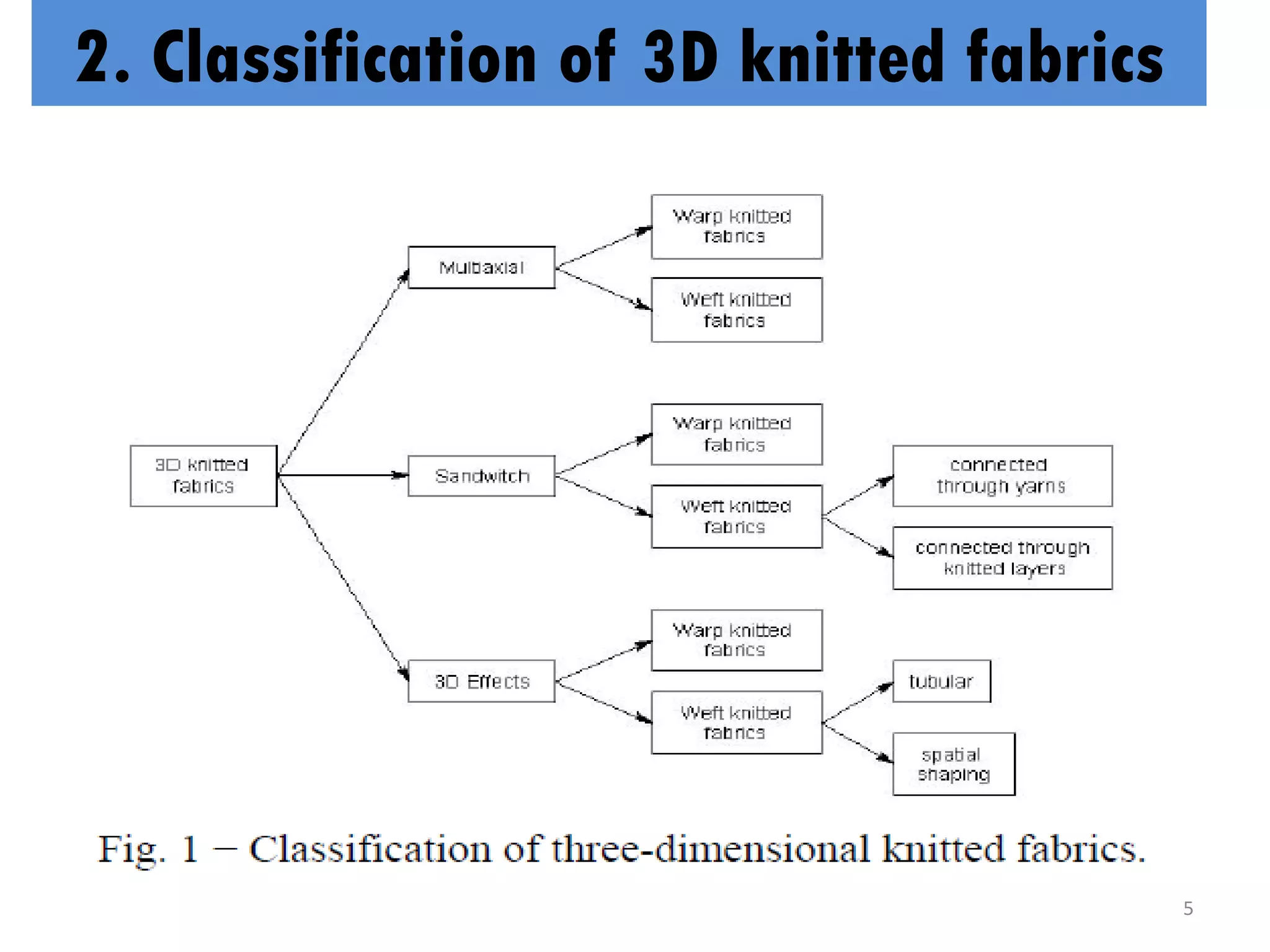
Creating a three-dimensional effect on knits is based
on the following techniques:
• I. Insertion of additional yarns along multiple
directions;
• II. Knitting and linking independent layers in
different ways;
• III. Spatial shaping.
2. Classification of 3D knitted fabrics
5
3.3D Textiles - Manufacturing
Methods
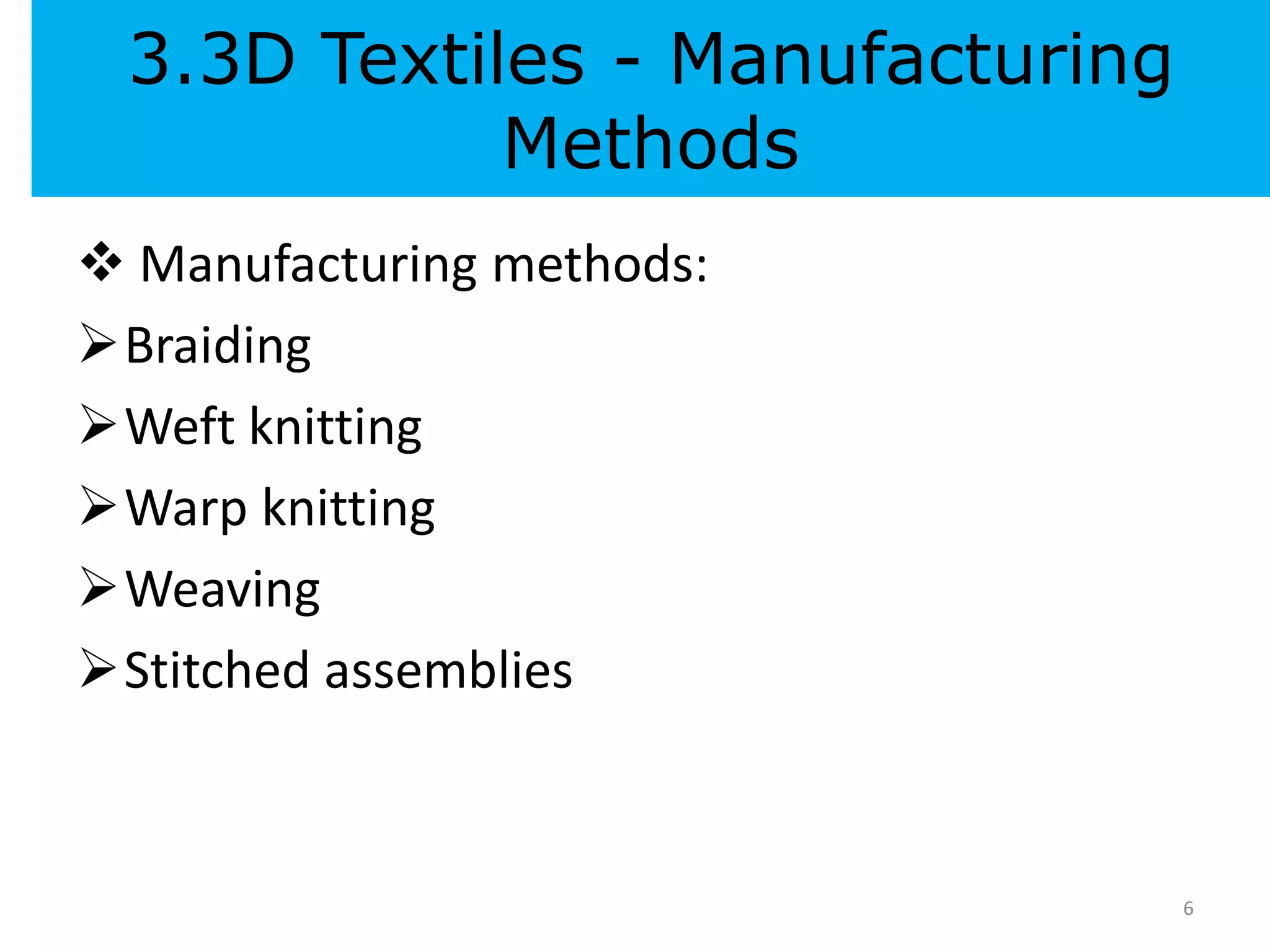
 Manufacturing methods:
Braiding
Weft knitting
Warp knitting
Weaving
Stitched assemblies
6
Manufacturing Methods –Weft
Knitting
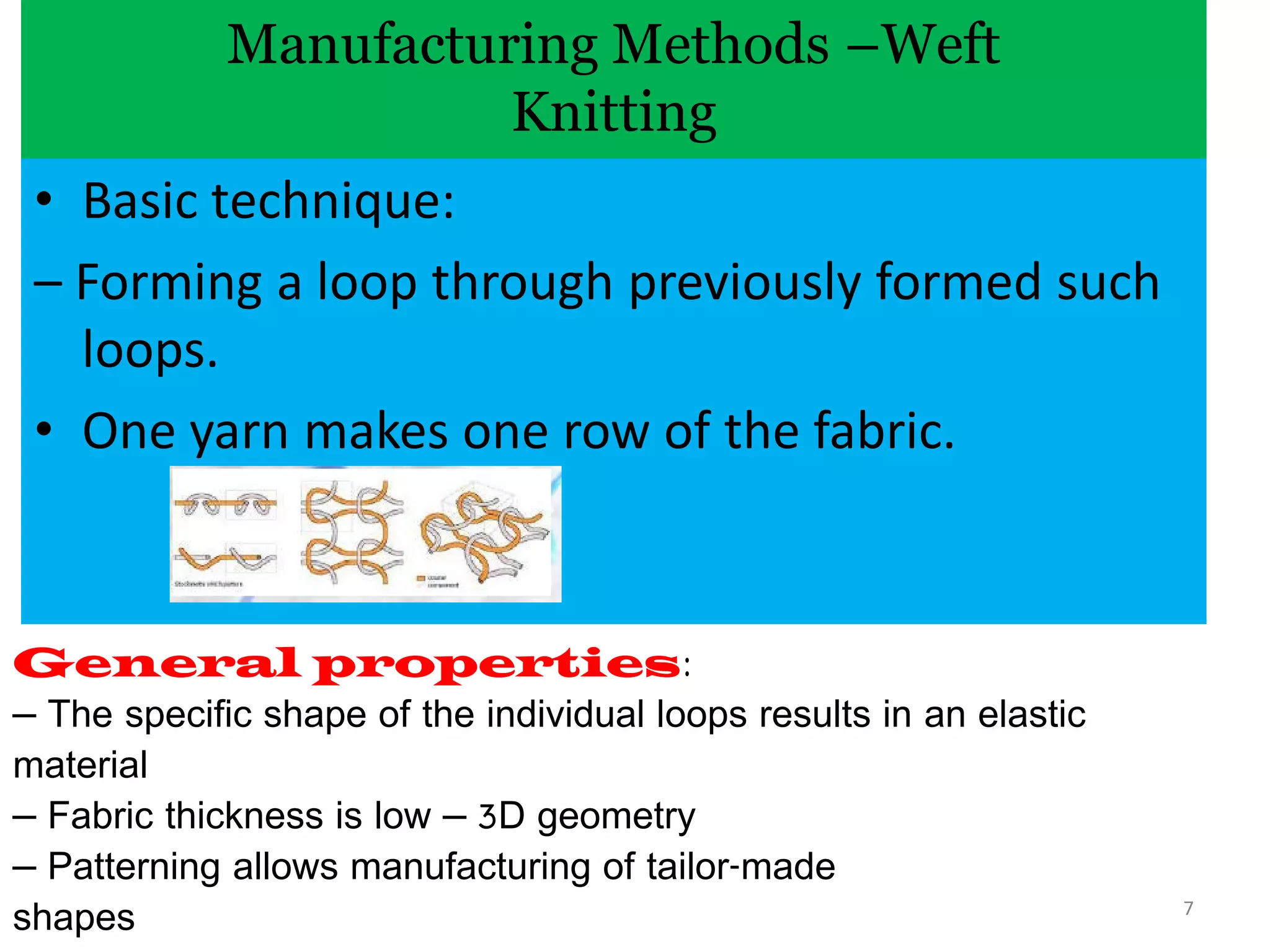
• Basic technique:
– Forming a loop through previously formed such
loops.
• One yarn makes one row of the fabric.
General properties:
– The specific shape of the individual loops results in an elastic
material
– Fabric thickness is low – 3D geometry
– Patterning allows manufacturing of tailor-made
shapes 7
Fabric Formation Elements– Weft
Knitting
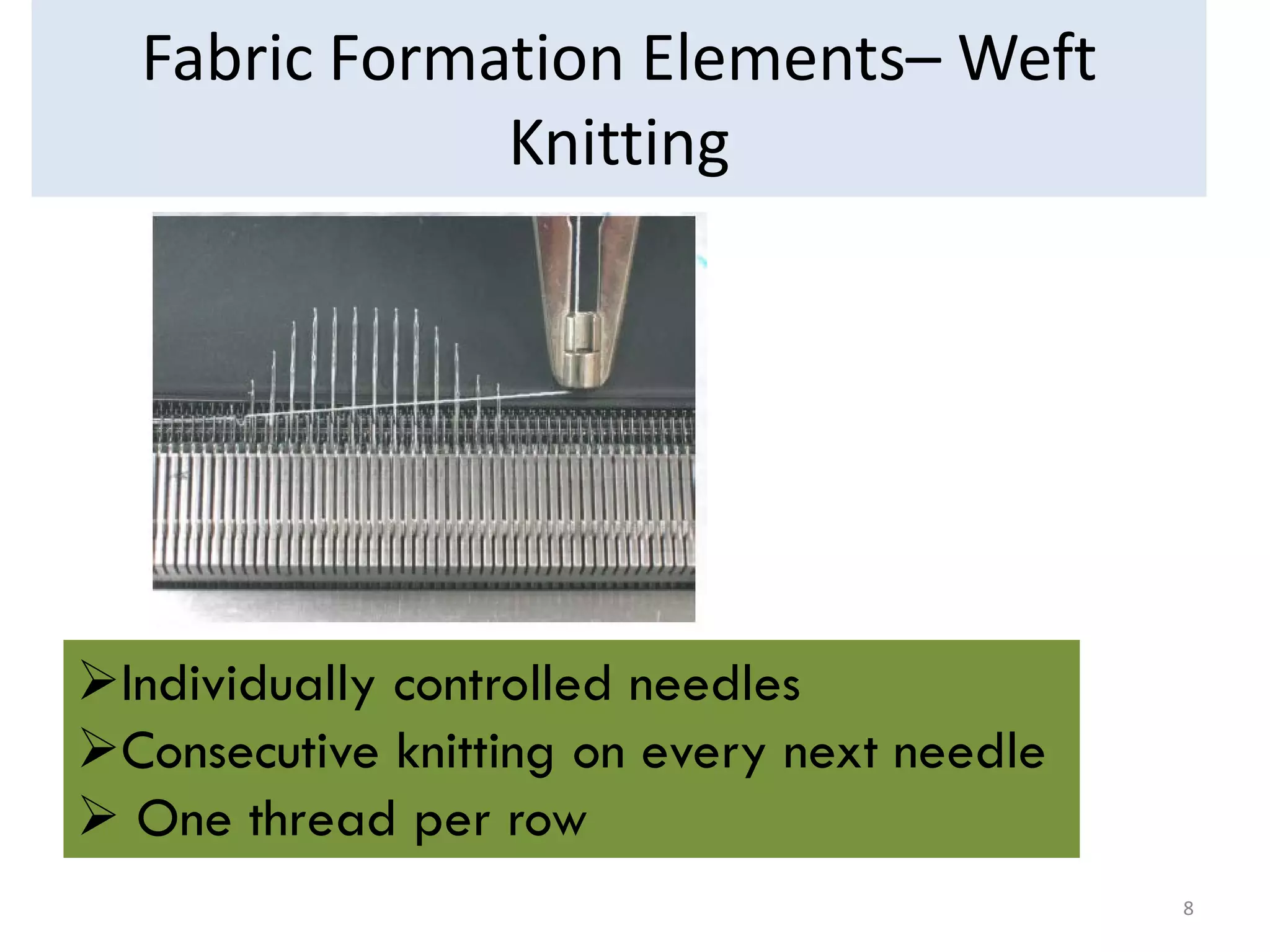
Individually controlled needles
Consecutive knitting on every next needle
 One thread per row
8
4. Machines used –Weft
Knitting
 Two kinds of machines:
• – Flat bed
• Possibility to make tubular products, shells, thickness
reinforced (spacer knits) and some complex structures
as a combination of these
• Patterning of shape and loop architecture
• – Circular
• Tubular and spacer tubular fabrics
9
5.Application Scope –Weft Knitting
 Weft Knitting:
• – Somewhat limited 3D application due
to the relatively low thickness of the
material
Biomedical
Composites (formable matrix)
 Reinforcement (Y-pipe, T-Pipe)
10
Manufacturing Methods –Warp
Knitting
• Basic technique:
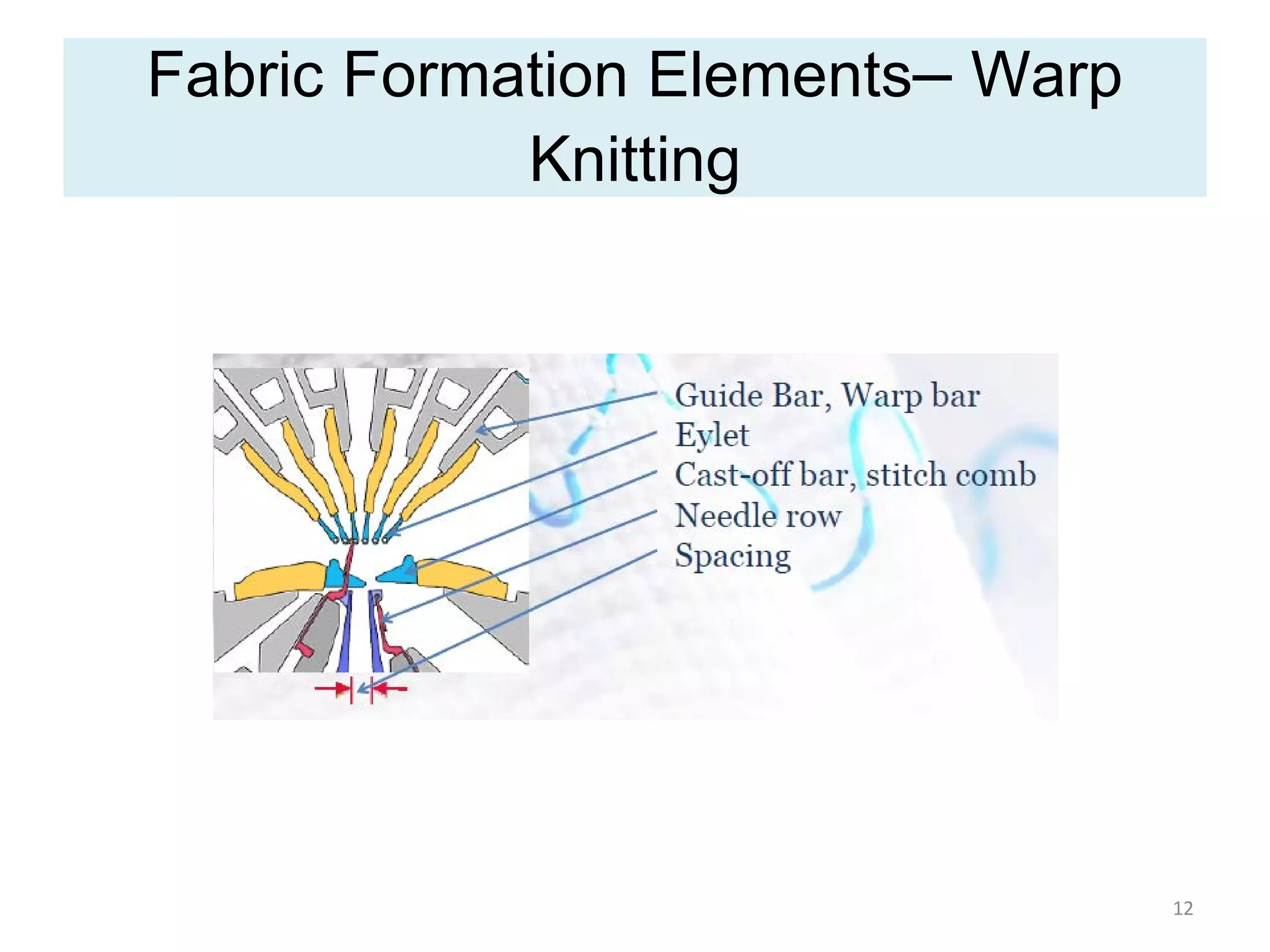
• – Fabric formed by interconnecting loops.
• Machine used-Double needle bar raschel is commonly used
• A set of individual yarns for every needle.
• General properties:
• – Less elastic fabrics
• – Products with considerable thickness – 3D structures
• – Patterning allows repeated structures to be manufactured
11
Fabric Formation Elements– Warp
Knitting
12
Application Scope –Warp
Knitting
• Warp Knitting:
 Composite materials
 Aerospace industry – composite matrix
 Civil engineering – concrete reinforcement, acoustic
insulation
 Military - ballistic protection
Biomedical – vascular stents
13
5.Principles for Obtaining Three-
Dimensional Knitted Fabrics
• To produce three-dimensional fabrics, the knitted material can be
formed by the technique called spatial fashioning technique (also
known as flechage).
Three-dimensional structures can be created also
by knitting stitches and loops combined with the
lateral movement of the needle bed.
By increasing or decreasing the number of working
needles it is possible to create three dimensional
knitted items on intarsia knits.
14
Conti……
The methods of making three-dimensional items on
flat knitting machines are:
1. Incomplete knitted rows technique (spatial
fashioning);
2. The use of patterns with 3D effects – egg. Knitting
tuck stitches patterns combined with racking;
3. Knitting separate fabrics connected in between –
sandwich/spacer fabrics;
4. Integral knitting /wholegarment.
15
Conti………
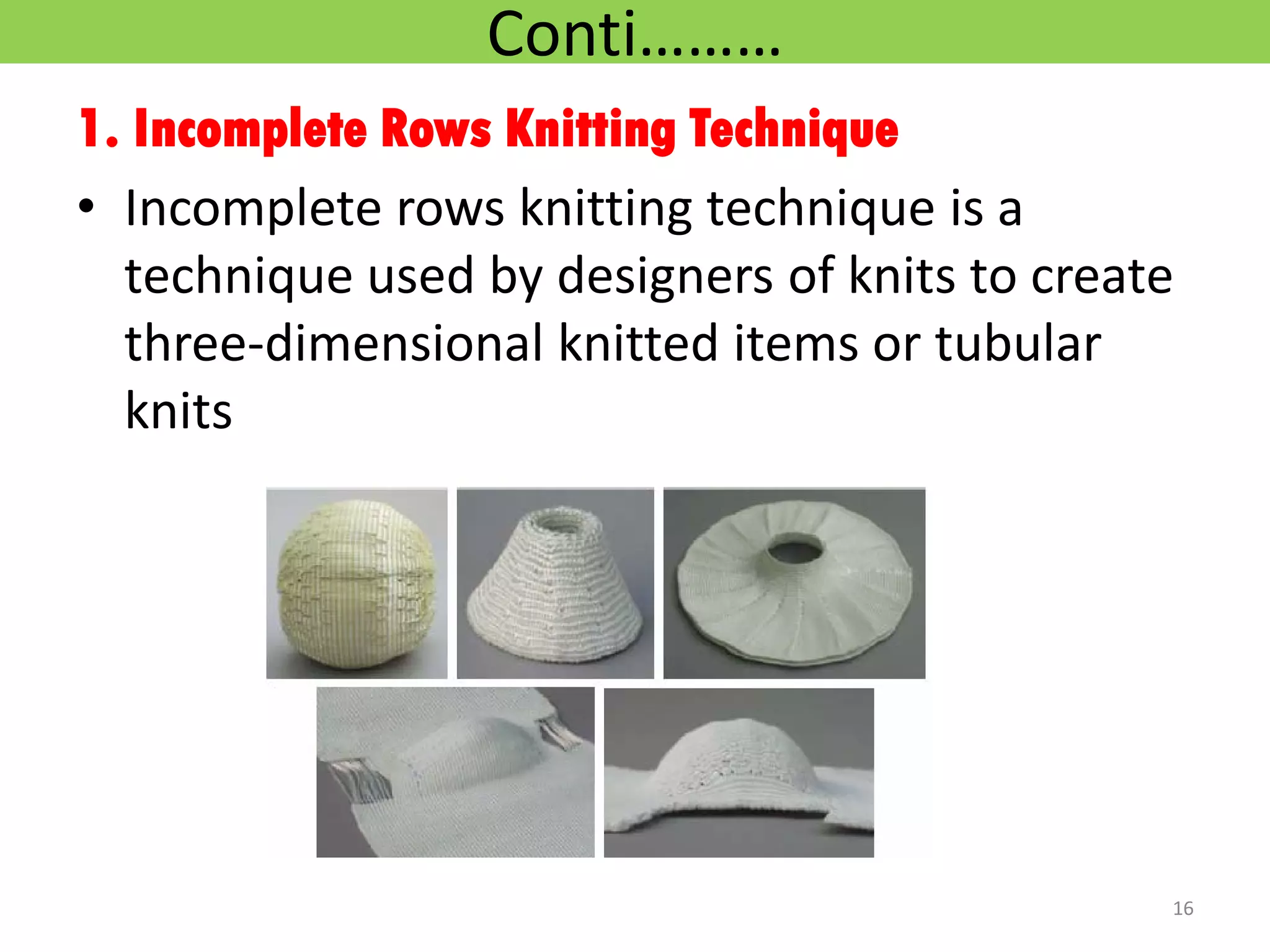
1. Incomplete Rows Knitting Technique
• Incomplete rows knitting technique is a
technique used by designers of knits to create
three-dimensional knitted items or tubular
knits
16
2.Use of Patterned Structures with 3D Effects
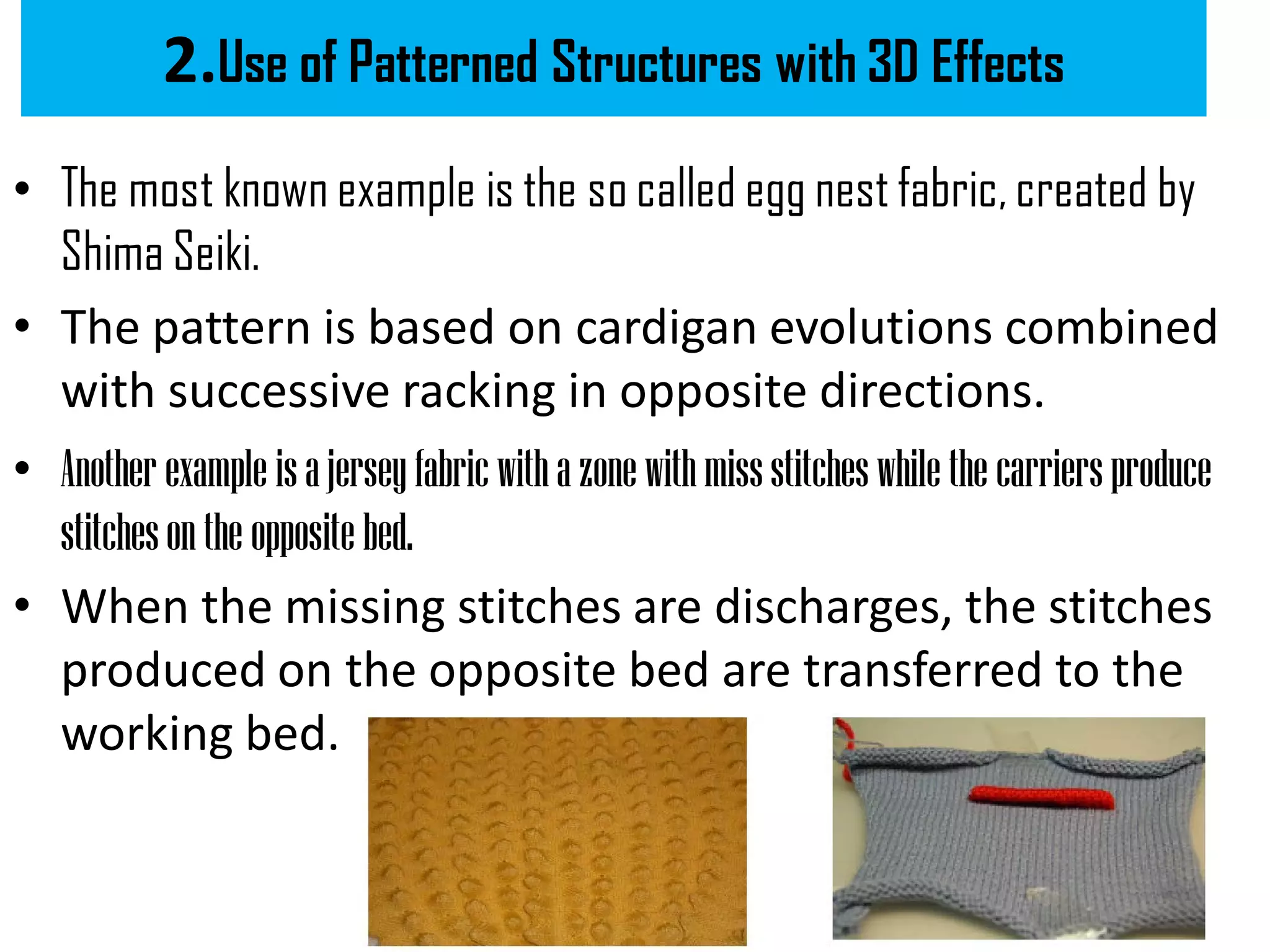
• The most known example is the so called egg nest fabric, created by
Shima Seiki.
• The pattern is based on cardigan evolutions combined
with successive racking in opposite directions.
• Another example isajerseyfabric witha zonewithmissstitcheswhile the carriersproduce
stitcheson the opposite bed.
• When the missing stitches are discharges, the stitches
produced on the opposite bed are transferred to the
working bed.
17
3. Sandwich Fabrics
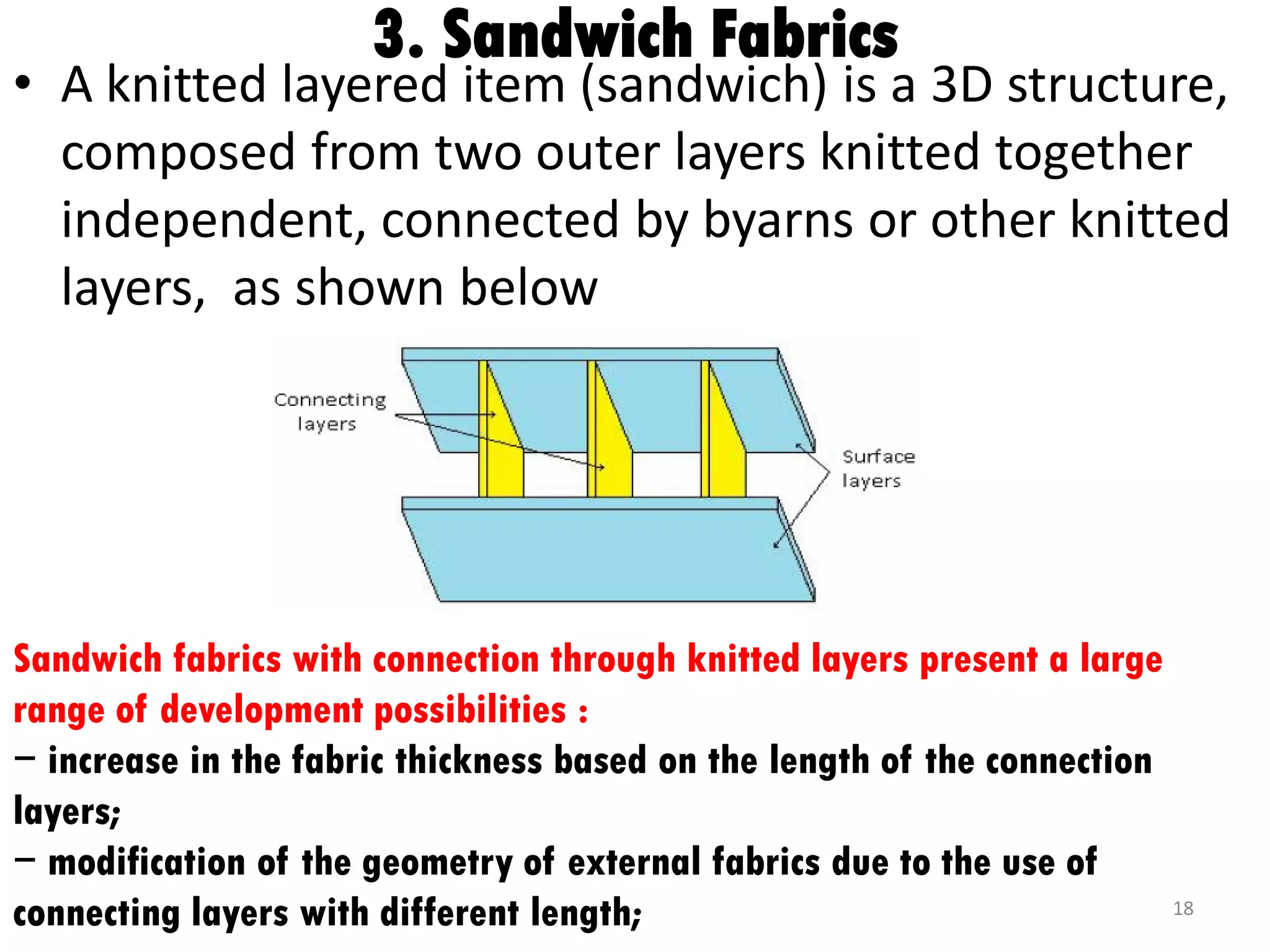
• A knitted layered item (sandwich) is a 3D structure,
composed from two outer layers knitted together
independent, connected by byarns or other knitted
layers, as shown below
18
Sandwich fabrics with connection through knitted layers present a large
range of development possibilities :
− increase in the fabric thickness based on the length of the connection
layers;
− modification of the geometry of external fabrics due to the use of
connecting layers with different length;
4. Integral Knitting Technique
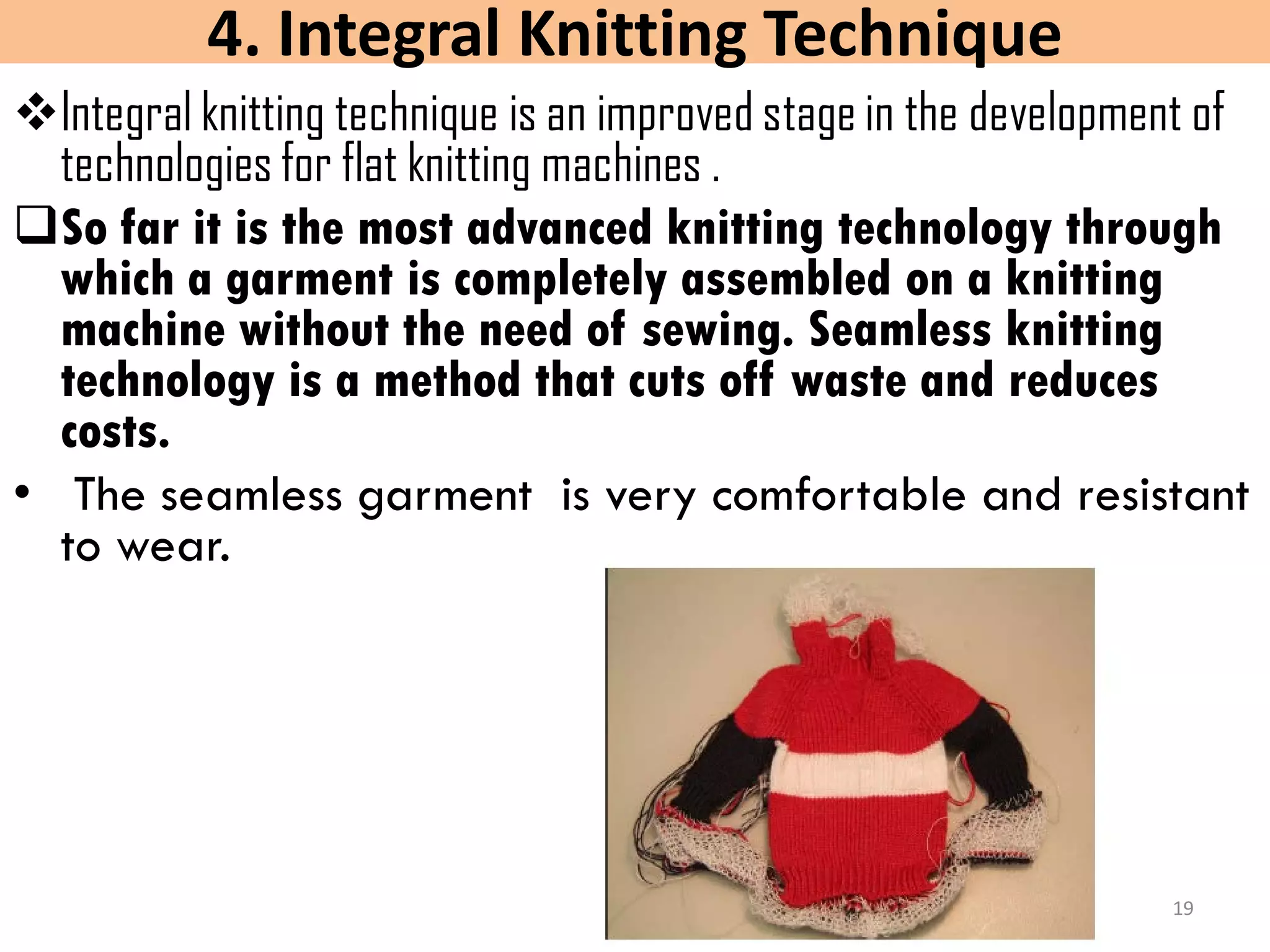
Integral knitting technique is an improved stage in the development of
technologies for flat knitting machines .
So far it is the most advanced knitting technology through
which a garment is completely assembled on a knitting
machine without the need of sewing. Seamless knitting
technology is a method that cuts off waste and reduces
costs.
• The seamless garment is very comfortable and resistant
to wear.
19
THE END
THANKS
20

3 d knitted textiles

  • 1.
    BAHIR DAR UNIVERSITY EthiopianInstitute of Textiles and Fashion Technology(EITEX) SEMINAR ON 3D KNITTING PREPARED BY: SELAMU TEMESGEN SUBMITTED TO : Dr.S.Kathirrvelu (Professor Textile Tech. 1
  • 2.
    Contents  Introduction  Classificationof 3D knitted fabrics  Manufacturing method for 3d textiles  Properties of weft and warp knitted 3D fabrics  Types of machines used for 3D weft and warp knitting  Application of 3D fabrics  Principles to obtain 3d knitted fabrics
  • 3.
    3D-Textiles 1.Introduction Development of three-dimensionalknitted fabrics dates from the 19thcentury • The concept of three-dimensional of the textile materials is not related to the intrinsic value of dimensions found on the three axes (x, y, z), but to the relationship between them. • This relation characterises the importance of the dimensions in the geometry of the material. 3
  • 4.
    4 • A three-dimensionalfabric, regardless of the process used, is “a continuous ensemble, with fully integrated fibre, characterised by multiaxial spatial orientation” Creating a three-dimensional effect on knits is based on the following techniques: • I. Insertion of additional yarns along multiple directions; • II. Knitting and linking independent layers in different ways; • III. Spatial shaping.
  • 5.
    2. Classification of3D knitted fabrics 5
  • 6.
    3.3D Textiles -Manufacturing Methods  Manufacturing methods: Braiding Weft knitting Warp knitting Weaving Stitched assemblies 6
  • 7.
    Manufacturing Methods –Weft Knitting •Basic technique: – Forming a loop through previously formed such loops. • One yarn makes one row of the fabric. General properties: – The specific shape of the individual loops results in an elastic material – Fabric thickness is low – 3D geometry – Patterning allows manufacturing of tailor-made shapes 7
  • 8.
    Fabric Formation Elements–Weft Knitting Individually controlled needles Consecutive knitting on every next needle  One thread per row 8
  • 9.
    4. Machines used–Weft Knitting  Two kinds of machines: • – Flat bed • Possibility to make tubular products, shells, thickness reinforced (spacer knits) and some complex structures as a combination of these • Patterning of shape and loop architecture • – Circular • Tubular and spacer tubular fabrics 9
  • 10.
    5.Application Scope –WeftKnitting  Weft Knitting: • – Somewhat limited 3D application due to the relatively low thickness of the material Biomedical Composites (formable matrix)  Reinforcement (Y-pipe, T-Pipe) 10
  • 11.
    Manufacturing Methods –Warp Knitting •Basic technique: • – Fabric formed by interconnecting loops. • Machine used-Double needle bar raschel is commonly used • A set of individual yarns for every needle. • General properties: • – Less elastic fabrics • – Products with considerable thickness – 3D structures • – Patterning allows repeated structures to be manufactured 11
  • 12.
  • 13.
    Application Scope –Warp Knitting •Warp Knitting:  Composite materials  Aerospace industry – composite matrix  Civil engineering – concrete reinforcement, acoustic insulation  Military - ballistic protection Biomedical – vascular stents 13
  • 14.
    5.Principles for ObtainingThree- Dimensional Knitted Fabrics • To produce three-dimensional fabrics, the knitted material can be formed by the technique called spatial fashioning technique (also known as flechage). Three-dimensional structures can be created also by knitting stitches and loops combined with the lateral movement of the needle bed. By increasing or decreasing the number of working needles it is possible to create three dimensional knitted items on intarsia knits. 14
  • 15.
    Conti…… The methods ofmaking three-dimensional items on flat knitting machines are: 1. Incomplete knitted rows technique (spatial fashioning); 2. The use of patterns with 3D effects – egg. Knitting tuck stitches patterns combined with racking; 3. Knitting separate fabrics connected in between – sandwich/spacer fabrics; 4. Integral knitting /wholegarment. 15
  • 16.
    Conti……… 1. Incomplete RowsKnitting Technique • Incomplete rows knitting technique is a technique used by designers of knits to create three-dimensional knitted items or tubular knits 16
  • 17.
    2.Use of PatternedStructures with 3D Effects • The most known example is the so called egg nest fabric, created by Shima Seiki. • The pattern is based on cardigan evolutions combined with successive racking in opposite directions. • Another example isajerseyfabric witha zonewithmissstitcheswhile the carriersproduce stitcheson the opposite bed. • When the missing stitches are discharges, the stitches produced on the opposite bed are transferred to the working bed. 17
  • 18.
    3. Sandwich Fabrics •A knitted layered item (sandwich) is a 3D structure, composed from two outer layers knitted together independent, connected by byarns or other knitted layers, as shown below 18 Sandwich fabrics with connection through knitted layers present a large range of development possibilities : − increase in the fabric thickness based on the length of the connection layers; − modification of the geometry of external fabrics due to the use of connecting layers with different length;
  • 19.
    4. Integral KnittingTechnique Integral knitting technique is an improved stage in the development of technologies for flat knitting machines . So far it is the most advanced knitting technology through which a garment is completely assembled on a knitting machine without the need of sewing. Seamless knitting technology is a method that cuts off waste and reduces costs. • The seamless garment is very comfortable and resistant to wear. 19
  • 20.