Download as PPS, PPTX
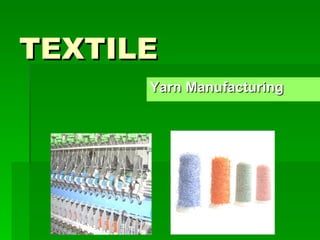






Textile yarn manufacturing involves several key steps. Fibers are first opened and cleaned through blowroom and carding processes. Drawing further arranges fibers into parallel strands called slivers. Roving attenuates slivers and adds twist. Ring frames then spin roving into yarn using drafts and twist. Combing upgrades raw materials by removing short fibers. The processes work to arrange, draft, and twist fibers into consistent yarns for weaving or other uses.


