Introduction: Cells
• Cell – basic unit of life

• Based on the organization of their cellular
  structures, all living cells can be divided
  into two groups: eukaryotic and
  prokaryotic

• eukaryotic cell types - Animals, plants,
  fungi, protozoans, and algae

• prokaryotic cell types - bacteria
Prokaryotic Cells
• much smaller (microns) and more simple than
  eukaryotes

• prokaryotes are molecules surrounded by a
  membrane and cell wall.

• they lack a true nucleus and don’t have membrane
  bound organelles like mitochondria, etc.

• large surface-to-volume ratio : nutrients can easily
  and rapidly reach any part of the cells interior
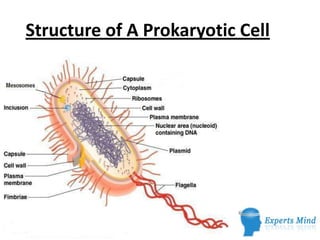
Structure of A Prokaryotic Cell


             Dr Ekta Chourasia
Structure of A Prokaryotic Cell
•   Outer layer – two components:
    1.    Rigid cell wall
    2.    Cytoplasmic (Cell/ Plasma) membrane –
          present beneath cell wall

•   Cytoplasm – cytoplasmic inclusions, ribosomes,
    mesosomes and nucleus

•   Additional structures – plasmid, slime layer, capsule,
    flagella, fimbriae (pili)
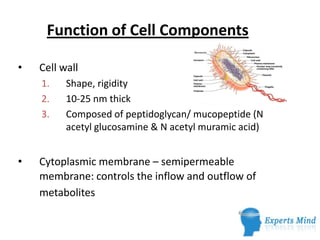
Function of Cell Components

•   Cell wall
    1.    Shape, rigidity
    2.    10-25 nm thick
    3.    Composed of peptidoglycan/ mucopeptide (N
          acetyl glucosamine & N acetyl muramic acid)


•   Cytoplasmic membrane – semipermeable
    membrane: controls the inflow and outflow of
    metabolites
Function of Cell Components
•   Ribosomes – protein synthesis

•   Mesosomes –
    1.   Multilaminated structures formed as
         invaginations of plasma membrane
    2.   Principal sites of respiratory enzymes
    3.   Coordinate nuclear & cytoplasmic division
         during binary fission

•   Intracytoplasmic inclusions – reserve of energy &
    phosphate for cell metabolism
Additional Organelles
1. Plasmid –
  • Extranuclear genetic elements consisting of
      DNA
  • Transmitted to daughter cells during binary
      fission
  • May be transferred from one bacterium to
      another
  • Not essential for life of the cell
  • Confer certain properties e.g. drug
      resistance
Additional Organelles
2.       Slime layer & capsule –
     •     Viscous layer secreted around the cell wall.
     •     Protects bacteria from lytic enzymes
     •     Inhibits phagocytosis


3.       Flagella – organs of locomotion

4.       Fimbriae/ Pili – 10-20µ long, organs of adhesion
The Cell, Structure & Function
               The structure of a Prokaryotic cell ?
            Protects the cell and maintains its shape
Cell Wall   Thick cell wall with little lipid: Gram positive
            Thin cell wall with 2 layers: Gram negative

Capsule     Some bacteria have a slimy layer of Polysaccharides for protection.

70s
            protein synthesis
Ribosomes

Flagellum   motility
Nuclear
            Genetic material : DNA
Material
Plasmid     rings of genetic material for antibiotic Resistance

Mesosome    For Respiration

Introduction to cell

  • 1.
    Introduction: Cells • Cell– basic unit of life • Based on the organization of their cellular structures, all living cells can be divided into two groups: eukaryotic and prokaryotic • eukaryotic cell types - Animals, plants, fungi, protozoans, and algae • prokaryotic cell types - bacteria
  • 2.
    Prokaryotic Cells • muchsmaller (microns) and more simple than eukaryotes • prokaryotes are molecules surrounded by a membrane and cell wall. • they lack a true nucleus and don’t have membrane bound organelles like mitochondria, etc. • large surface-to-volume ratio : nutrients can easily and rapidly reach any part of the cells interior
  • 3.
    Structure of AProkaryotic Cell Dr Ekta Chourasia
  • 4.
    Structure of AProkaryotic Cell • Outer layer – two components: 1. Rigid cell wall 2. Cytoplasmic (Cell/ Plasma) membrane – present beneath cell wall • Cytoplasm – cytoplasmic inclusions, ribosomes, mesosomes and nucleus • Additional structures – plasmid, slime layer, capsule, flagella, fimbriae (pili)
  • 5.
    Function of CellComponents • Cell wall 1. Shape, rigidity 2. 10-25 nm thick 3. Composed of peptidoglycan/ mucopeptide (N acetyl glucosamine & N acetyl muramic acid) • Cytoplasmic membrane – semipermeable membrane: controls the inflow and outflow of metabolites
  • 6.
    Function of CellComponents • Ribosomes – protein synthesis • Mesosomes – 1. Multilaminated structures formed as invaginations of plasma membrane 2. Principal sites of respiratory enzymes 3. Coordinate nuclear & cytoplasmic division during binary fission • Intracytoplasmic inclusions – reserve of energy & phosphate for cell metabolism
  • 7.
    Additional Organelles 1. Plasmid– • Extranuclear genetic elements consisting of DNA • Transmitted to daughter cells during binary fission • May be transferred from one bacterium to another • Not essential for life of the cell • Confer certain properties e.g. drug resistance
  • 8.
    Additional Organelles 2. Slime layer & capsule – • Viscous layer secreted around the cell wall. • Protects bacteria from lytic enzymes • Inhibits phagocytosis 3. Flagella – organs of locomotion 4. Fimbriae/ Pili – 10-20µ long, organs of adhesion
  • 9.
    The Cell, Structure& Function The structure of a Prokaryotic cell ? Protects the cell and maintains its shape Cell Wall Thick cell wall with little lipid: Gram positive Thin cell wall with 2 layers: Gram negative Capsule Some bacteria have a slimy layer of Polysaccharides for protection. 70s protein synthesis Ribosomes Flagellum motility Nuclear Genetic material : DNA Material Plasmid rings of genetic material for antibiotic Resistance Mesosome For Respiration