INDUCTION AND
ORIENTATION


Group members:



Rajath K



MBA



BIMS



MYSORE
CONTENTS
Introduction
 Objectives
 Why Orientation/Induction
 What to Induct
 Types
 People Involved in Induction/Orientation
 How To Induct Successfully
 Problems of Orientation
 How to make Induction effective
 Conclusion

Orientation
“Orientation is a systematic and planned
introduction of employees to their jobs, their
co-workers and the organization.”
Typically Induction(orientation) conveys three
types of information


General information about daily work routine.

A
A

review of the organization’s history

detailed presentation, perhaps in a
brochure of the organization’s policies, work
rules and employee benefits.
OBJECTIVES
 


To help new staff form positive first impressions, that
he/she belongs to the company, feels welcome and
supported;



To assist in understanding the culture and values;



To improve staff efficiency, work standards, revenue and
profits;



To improve staff morale
Why Induction/Orientation


Accommodating employees



Becoming Insider



Overcoming employee anxiety



Overcoming reality shock



Reducing employee turnover
What to Induct/ Orient








A current organization chart of the company
Map of facility
Key terms unique to industry, company and the
job
A copy of company’s policy hand books
List of benefits
Telephone numbers and location of key people
and operations
Sample copies of the company’s publications etc.
Types of orientation programme
 Formal

and Informal Orientation

 Individual
 Serial

and Collective Orientation

and Disjunctive Orientation
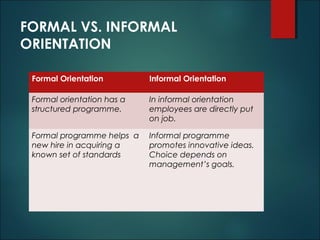
FORMAL VS. INFORMAL
ORIENTATION
Formal Orientation

Informal Orientation

Formal orientation has a
structured programme.

In informal orientation
employees are directly put
on job.

Formal programme helps a
new hire in acquiring a
known set of standards

Informal programme
promotes innovative ideas.
Choice depends on
management’s goals.
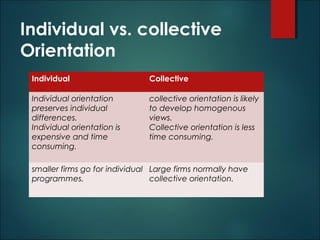
Individual vs. collective
Orientation
Individual

Collective

Individual orientation
preserves individual
differences.
Individual orientation is
expensive and time
consuming.

collective orientation is likely
to develop homogenous
views.
Collective orientation is less
time consuming.

smaller firms go for individual Large firms normally have
programmes.
collective orientation.
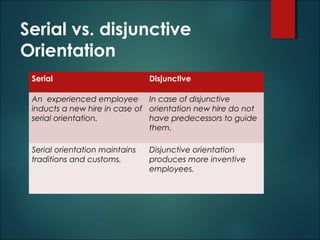
Serial vs. disjunctive
Orientation
Serial

Disjunctive

An experienced employee In case of disjunctive
inducts a new hire in case of orientation new hire do not
serial orientation.
have predecessors to guide
them.
Serial orientation maintains
traditions and customs.

Disjunctive orientation
produces more inventive
employees.
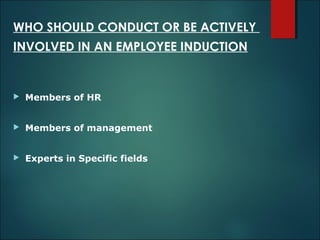
WHO SHOULD CONDUCT OR BE ACTIVELY
INVOLVED IN AN EMPLOYEE INDUCTION
 


Members of HR



Members of management



Experts in Specific fields
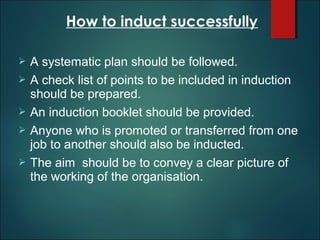
How to induct successfully






A systematic plan should be followed.
A check list of points to be included in induction
should be prepared.
An induction booklet should be provided.
Anyone who is promoted or transferred from one
job to another should also be inducted.
The aim should be to convey a clear picture of
the working of the organisation.
Problems OF ORIENTATION
1. Busy or Untrained supervisor
2. Too much information
3. Overloaded with paperwork
4. Given menial tasks
5. Employee thrown into action soon
6. Wrong perceptions of employees
HOW TO MAKE INDUCTION PROGRAMME EFFECTIVE


Feed forward of the possible problems and solutions



A warm and friendly welcome will reduce the possible
problems



Involvement of Top Management



Determination of Information Need of the new employees



Planning the presentation of information



A phased induction programme would place the new employee
at ease
Conclusion
Therefore, we may say that induction and
orientation play pivotal role in success of an
organisation by acquainting a new
employee to the new environment, rules
and regulations which in turn helps in better
performance.
Induction and orientation in HRM

Induction and orientation in HRM

  • 1.
  • 2.
    CONTENTS Introduction  Objectives  WhyOrientation/Induction  What to Induct  Types  People Involved in Induction/Orientation  How To Induct Successfully  Problems of Orientation  How to make Induction effective  Conclusion 
  • 3.
    Orientation “Orientation is asystematic and planned introduction of employees to their jobs, their co-workers and the organization.” Typically Induction(orientation) conveys three types of information  General information about daily work routine. A A review of the organization’s history detailed presentation, perhaps in a brochure of the organization’s policies, work rules and employee benefits.
  • 4.
    OBJECTIVES    To help newstaff form positive first impressions, that he/she belongs to the company, feels welcome and supported;  To assist in understanding the culture and values;  To improve staff efficiency, work standards, revenue and profits;  To improve staff morale
  • 5.
    Why Induction/Orientation  Accommodating employees  BecomingInsider  Overcoming employee anxiety  Overcoming reality shock  Reducing employee turnover
  • 6.
    What to Induct/Orient        A current organization chart of the company Map of facility Key terms unique to industry, company and the job A copy of company’s policy hand books List of benefits Telephone numbers and location of key people and operations Sample copies of the company’s publications etc.
  • 7.
    Types of orientationprogramme  Formal and Informal Orientation  Individual  Serial and Collective Orientation and Disjunctive Orientation
  • 8.
    FORMAL VS. INFORMAL ORIENTATION FormalOrientation Informal Orientation Formal orientation has a structured programme. In informal orientation employees are directly put on job. Formal programme helps a new hire in acquiring a known set of standards Informal programme promotes innovative ideas. Choice depends on management’s goals.
  • 9.
    Individual vs. collective Orientation Individual Collective Individualorientation preserves individual differences. Individual orientation is expensive and time consuming. collective orientation is likely to develop homogenous views. Collective orientation is less time consuming. smaller firms go for individual Large firms normally have programmes. collective orientation.
  • 10.
    Serial vs. disjunctive Orientation Serial Disjunctive Anexperienced employee In case of disjunctive inducts a new hire in case of orientation new hire do not serial orientation. have predecessors to guide them. Serial orientation maintains traditions and customs. Disjunctive orientation produces more inventive employees.
  • 11.
    WHO SHOULD CONDUCTOR BE ACTIVELY INVOLVED IN AN EMPLOYEE INDUCTION    Members of HR  Members of management  Experts in Specific fields
  • 12.
    How to inductsuccessfully      A systematic plan should be followed. A check list of points to be included in induction should be prepared. An induction booklet should be provided. Anyone who is promoted or transferred from one job to another should also be inducted. The aim should be to convey a clear picture of the working of the organisation.
  • 13.
    Problems OF ORIENTATION 1.Busy or Untrained supervisor 2. Too much information 3. Overloaded with paperwork 4. Given menial tasks 5. Employee thrown into action soon 6. Wrong perceptions of employees
  • 14.
    HOW TO MAKEINDUCTION PROGRAMME EFFECTIVE  Feed forward of the possible problems and solutions  A warm and friendly welcome will reduce the possible problems  Involvement of Top Management  Determination of Information Need of the new employees  Planning the presentation of information  A phased induction programme would place the new employee at ease
  • 15.
    Conclusion Therefore, we maysay that induction and orientation play pivotal role in success of an organisation by acquainting a new employee to the new environment, rules and regulations which in turn helps in better performance.

Editor's Notes