2.5D/3D Chip Stacking Supply
Chain Integration
Kurt Huang, Ph.D.
Director, Corporate Marketing, UMC
ChipEx, 2013
Outline
 2.5D/3D Applications
 Ecosystem Work Flow
 Summary
P. 2
2.5D/3D Applications
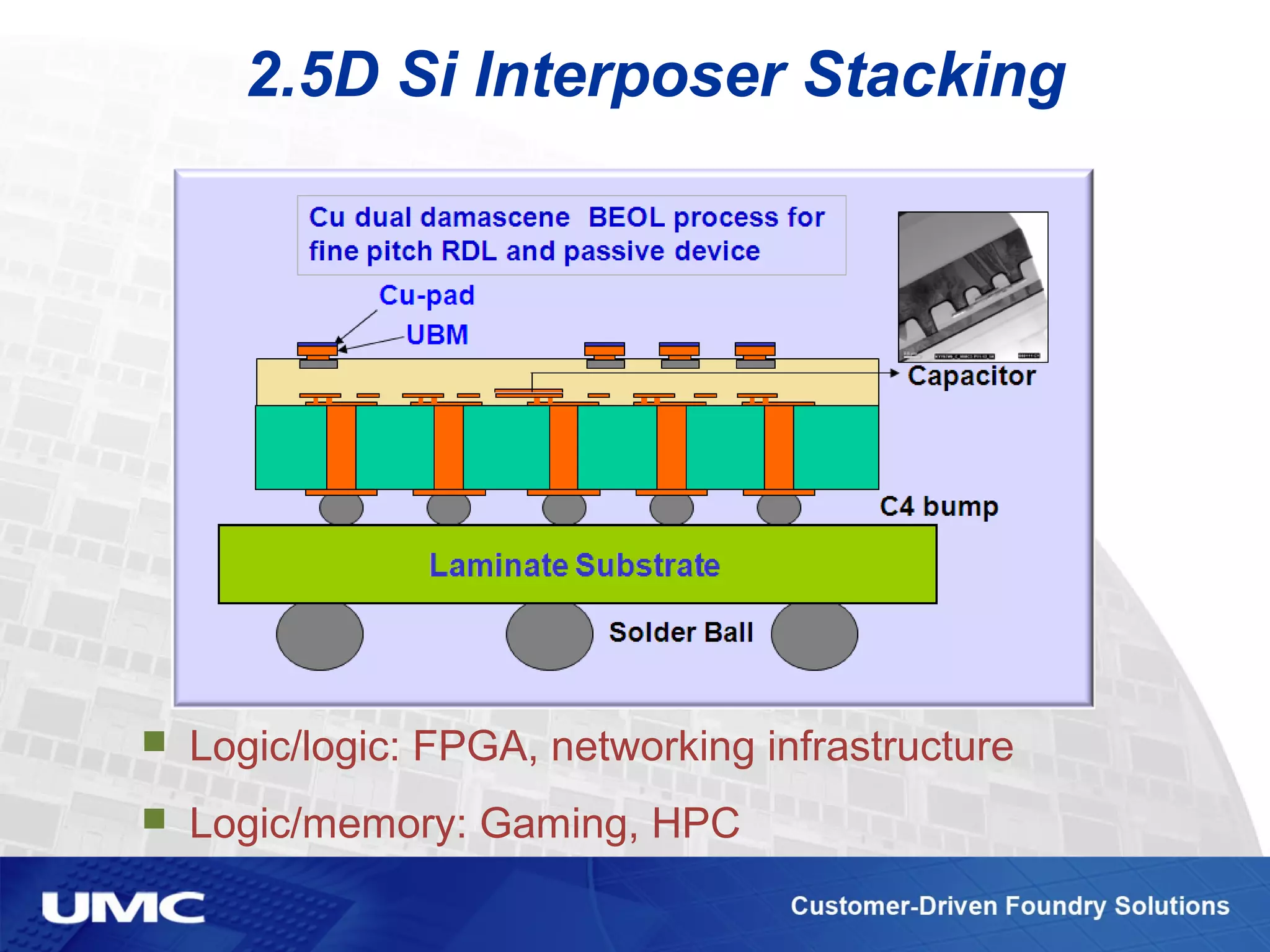
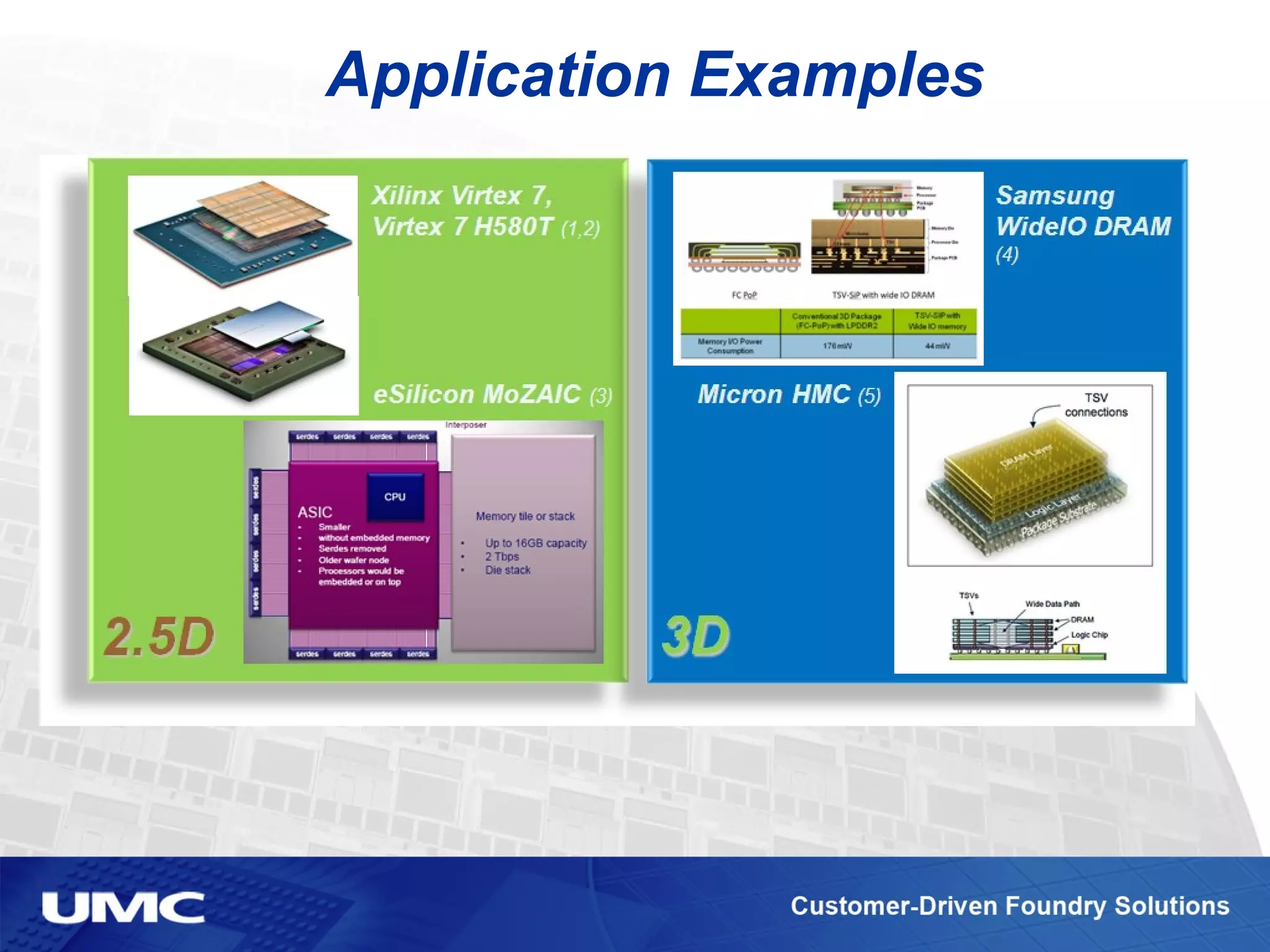
2.5D Si Interposer Stacking
 Logic/logic: FPGA, networking infrastructure
 Logic/memory: Gaming, HPC
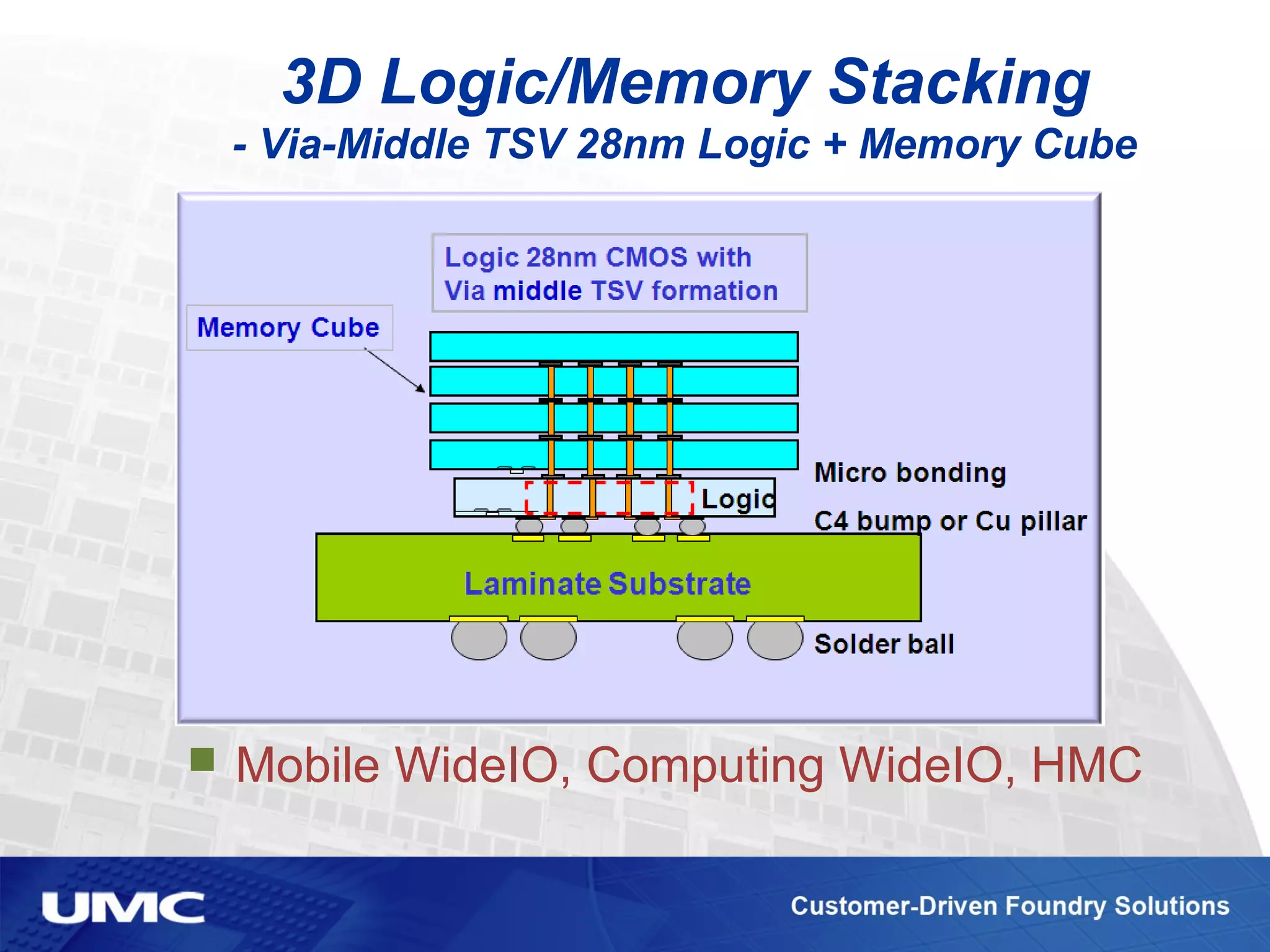
3D Logic/Memory Stacking
- Via-Middle TSV 28nm Logic + Memory Cube
 Mobile WideIO, Computing WideIO, HMC
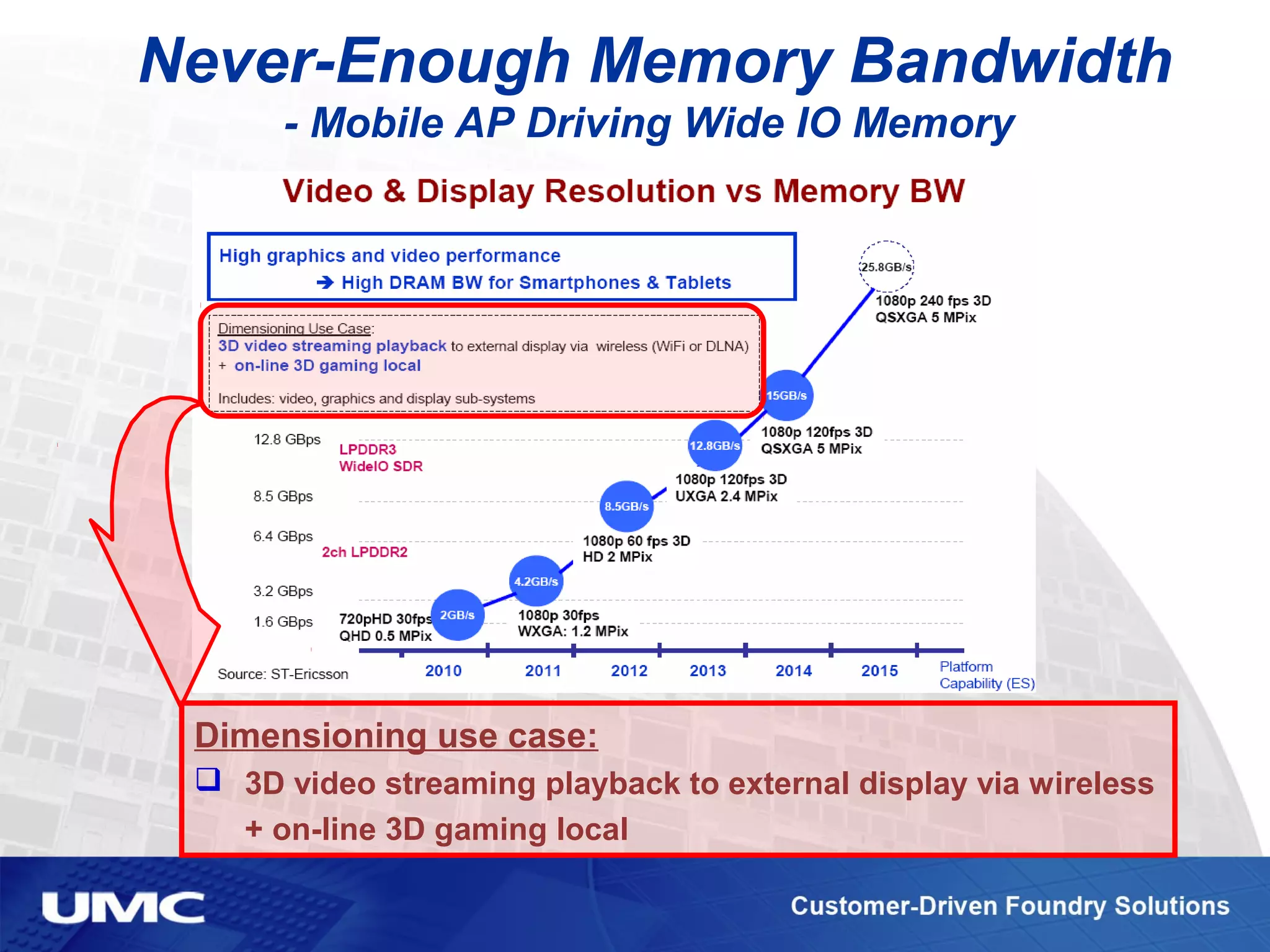
Never-Enough Memory Bandwidth
- Mobile AP Driving Wide IO Memory
Dimensioning use case:
 3D video streaming playback to external display via wireless
+ on-line 3D gaming local
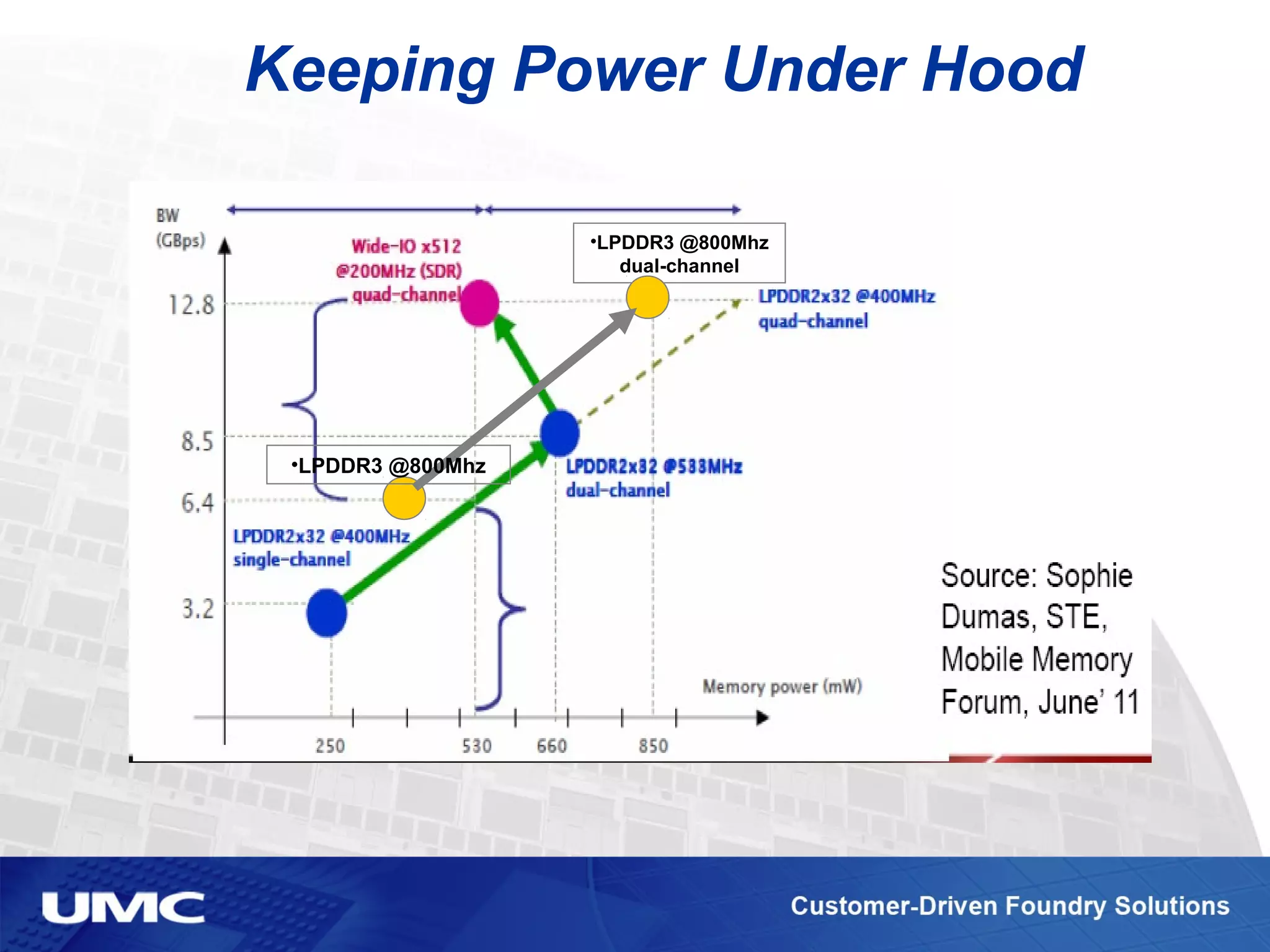
Keeping Power Under Hood
•LPDDR3 @800Mhz
dual-channel
•LPDDR3 @800Mhz
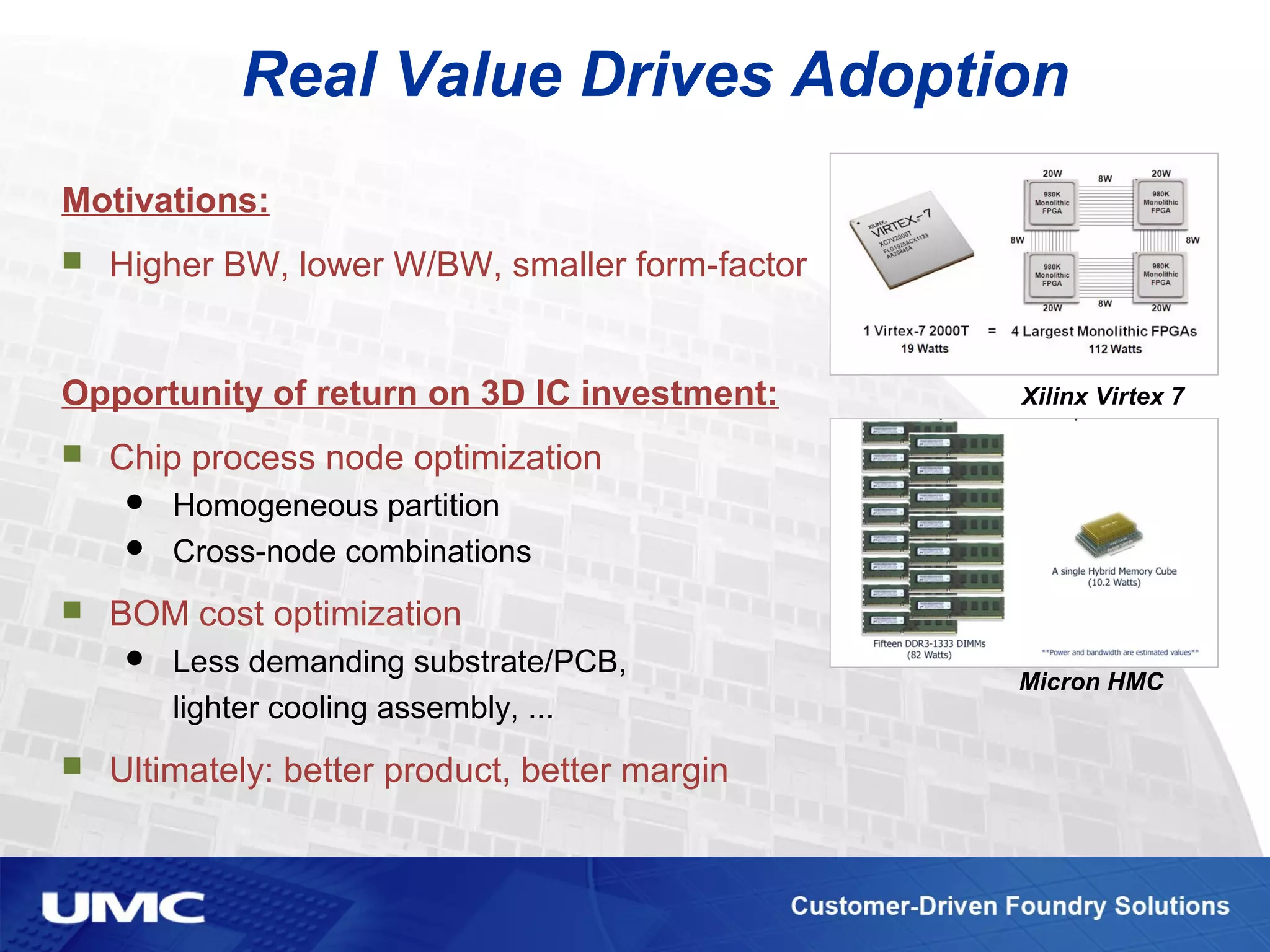
Real Value Drives Adoption
Motivations:
 Higher BW, lower W/BW, smaller form-factor
Opportunity of return on 3D IC investment:
 Chip process node optimization
 Homogeneous partition
 Cross-node combinations
 BOM cost optimization
 Less demanding substrate/PCB,
lighter cooling assembly, ...
 Ultimately: better product, better margin
Xilinx Virtex 7
Micron HMC
Application Examples
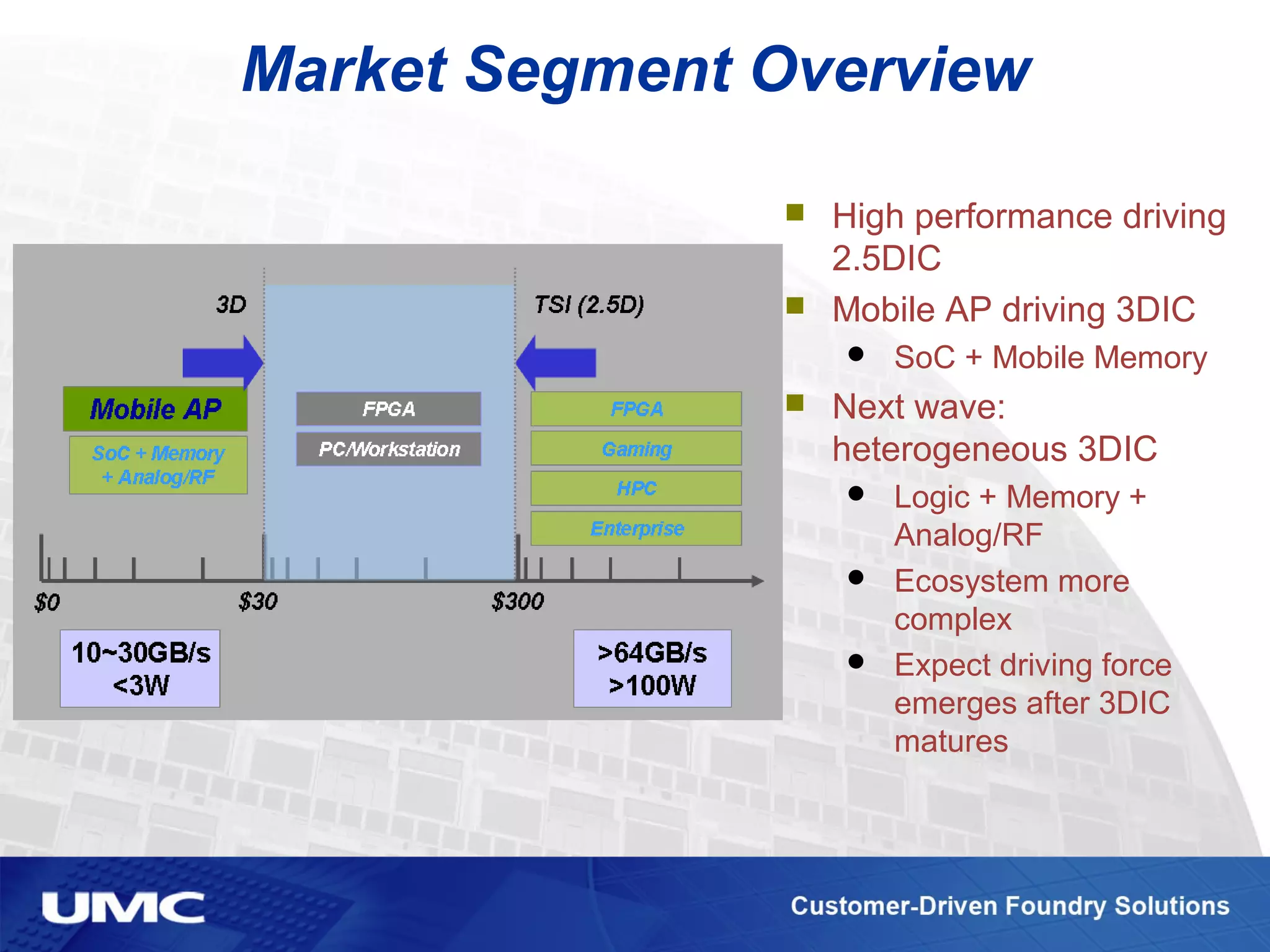
Market Segment Overview
 High performance driving
2.5DIC
 Mobile AP driving 3DIC
 SoC + Mobile Memory
 Next wave:
heterogeneous 3DIC
 Logic + Memory +
Analog/RF
 Ecosystem more
complex
 Expect driving force
emerges after 3DIC
matures
Ecosystem Work Flow
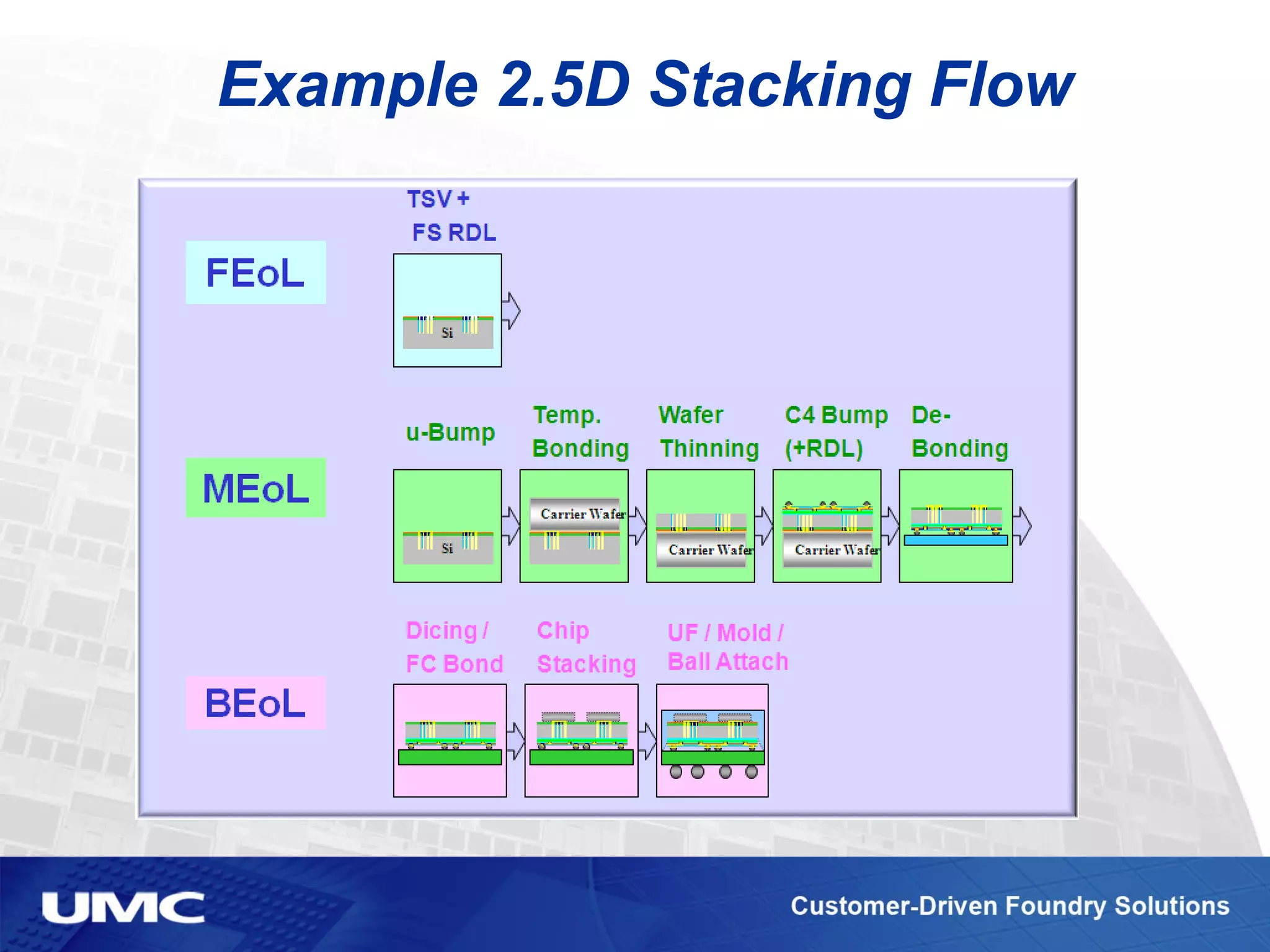
Example 2.5D Stacking Flow
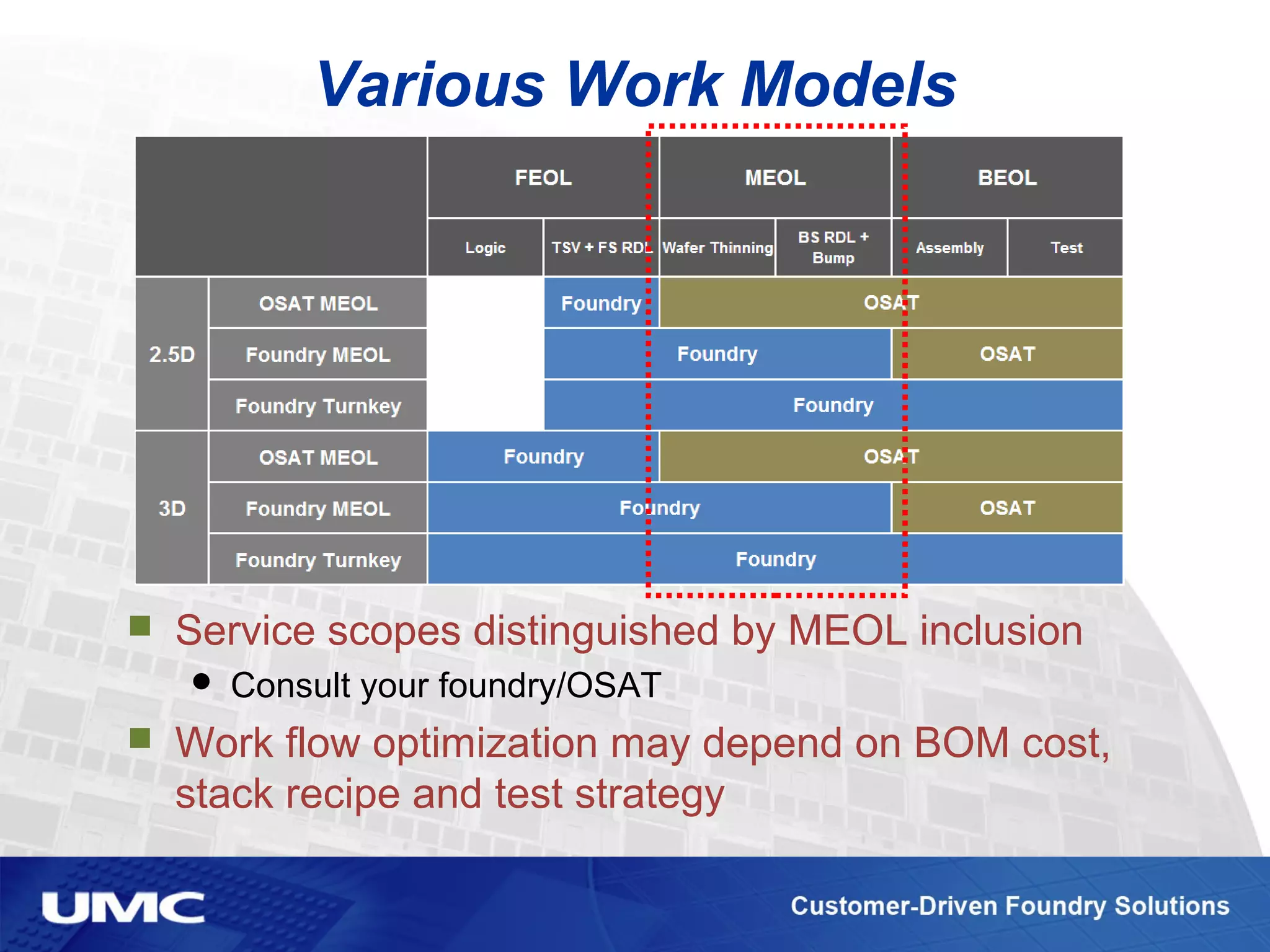
Various Work Models
 Service scopes distinguished by MEOL inclusion
 Consult your foundry/OSAT
 Work flow optimization may depend on BOM cost,
stack recipe and test strategy
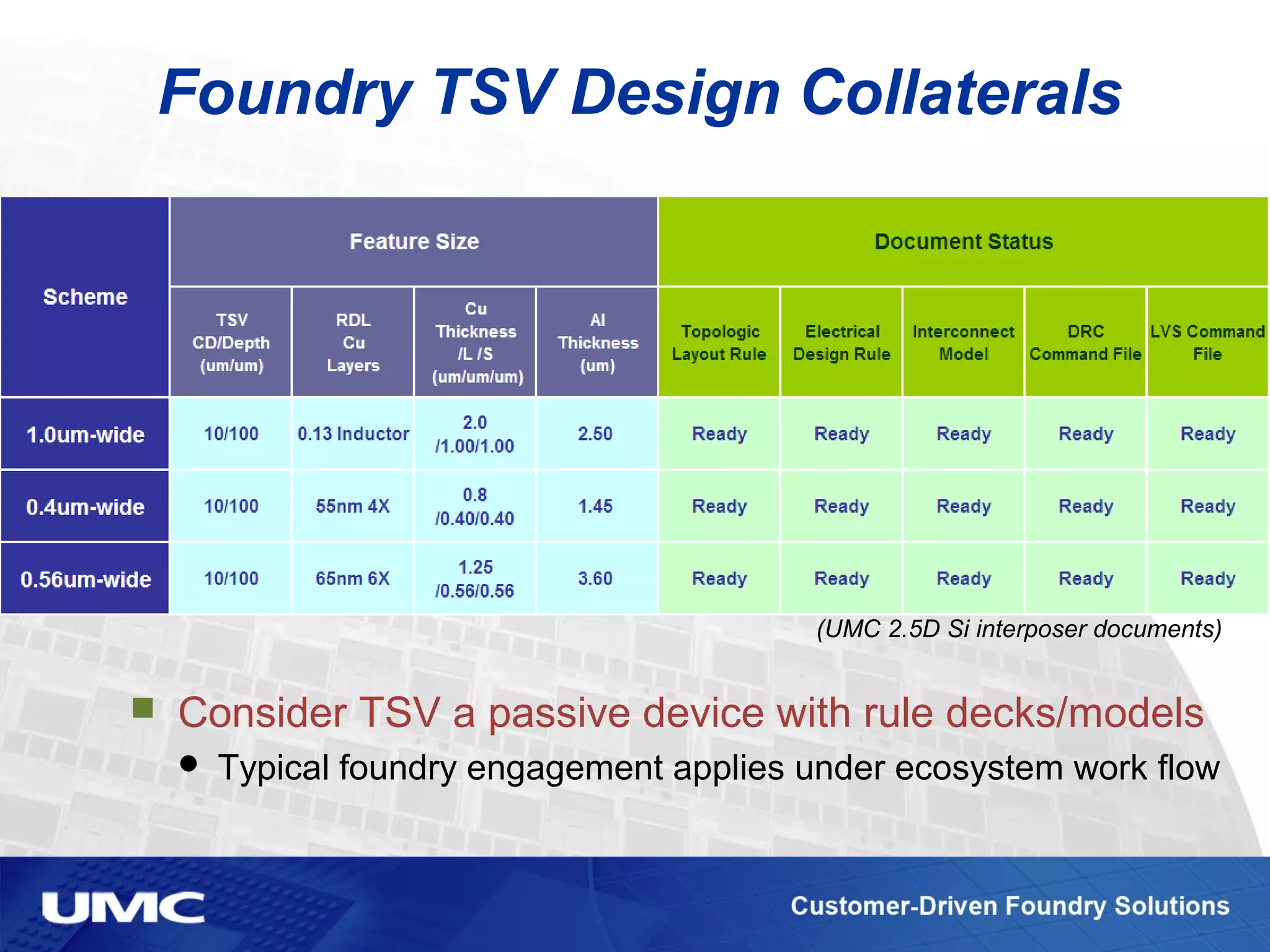
Foundry TSV Design Collaterals
 Consider TSV a passive device with rule decks/models
 Typical foundry engagement applies under ecosystem work flow
(UMC 2.5D Si interposer documents)
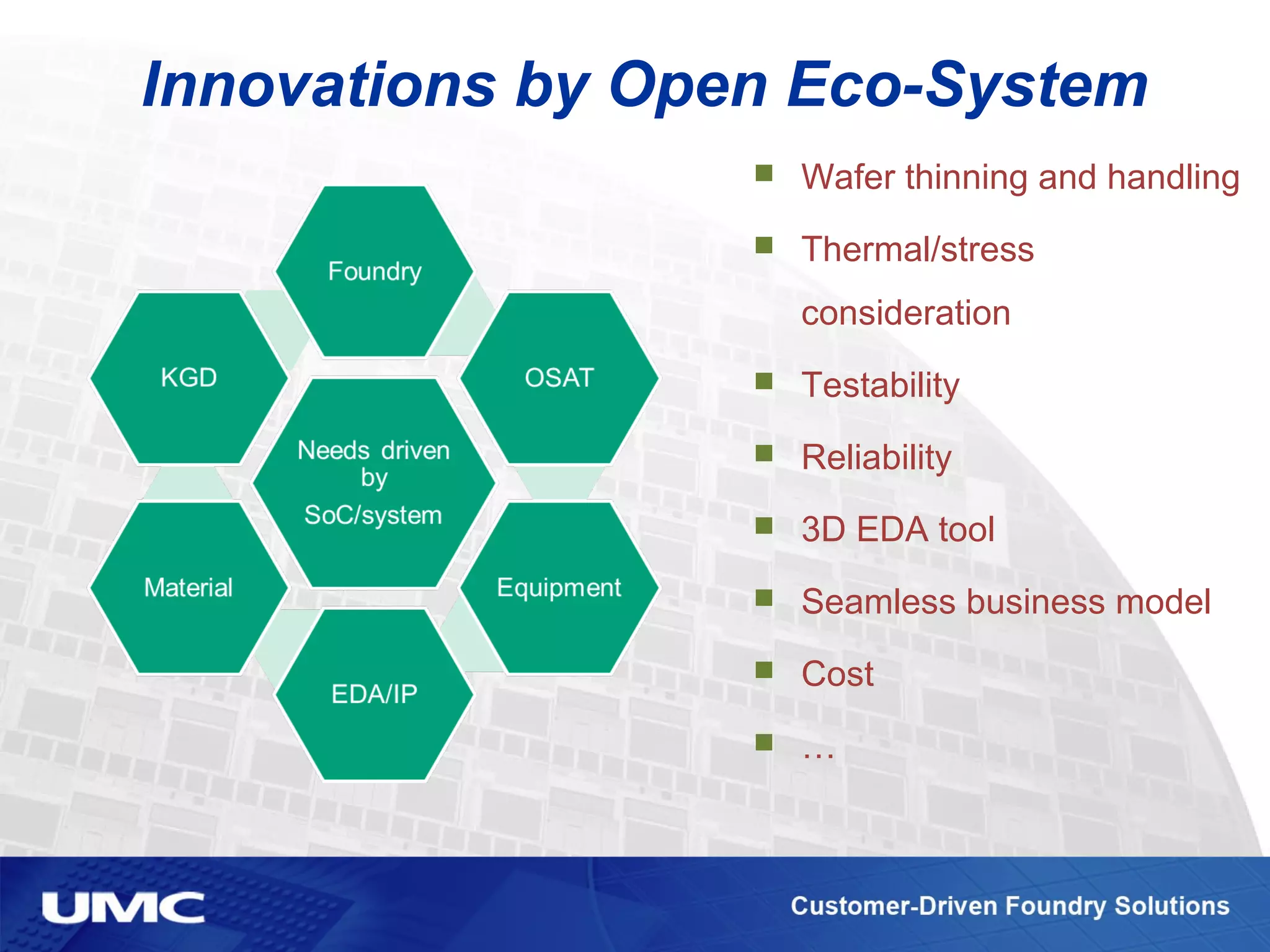
Innovations by Open Eco-System
 Wafer thinning and handling
 Thermal/stress
consideration
 Testability
 Reliability
 3D EDA tool
 Seamless business model
 Cost
 …
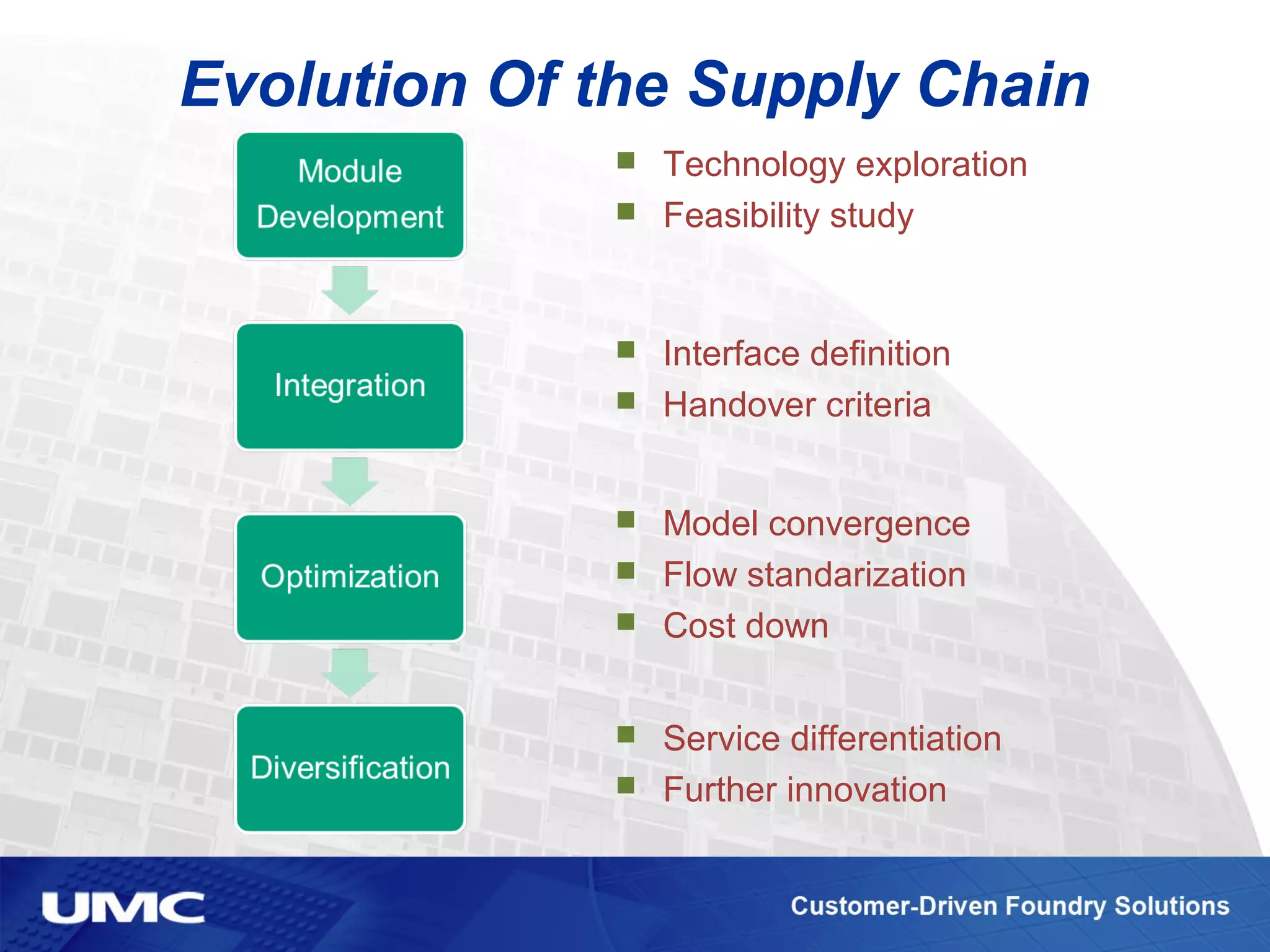
Evolution Of the Supply Chain
 Technology exploration
 Feasibility study
 Interface definition
 Handover criteria
 Model convergence
 Flow standarization
 Cost down
 Service differentiation
 Further innovation
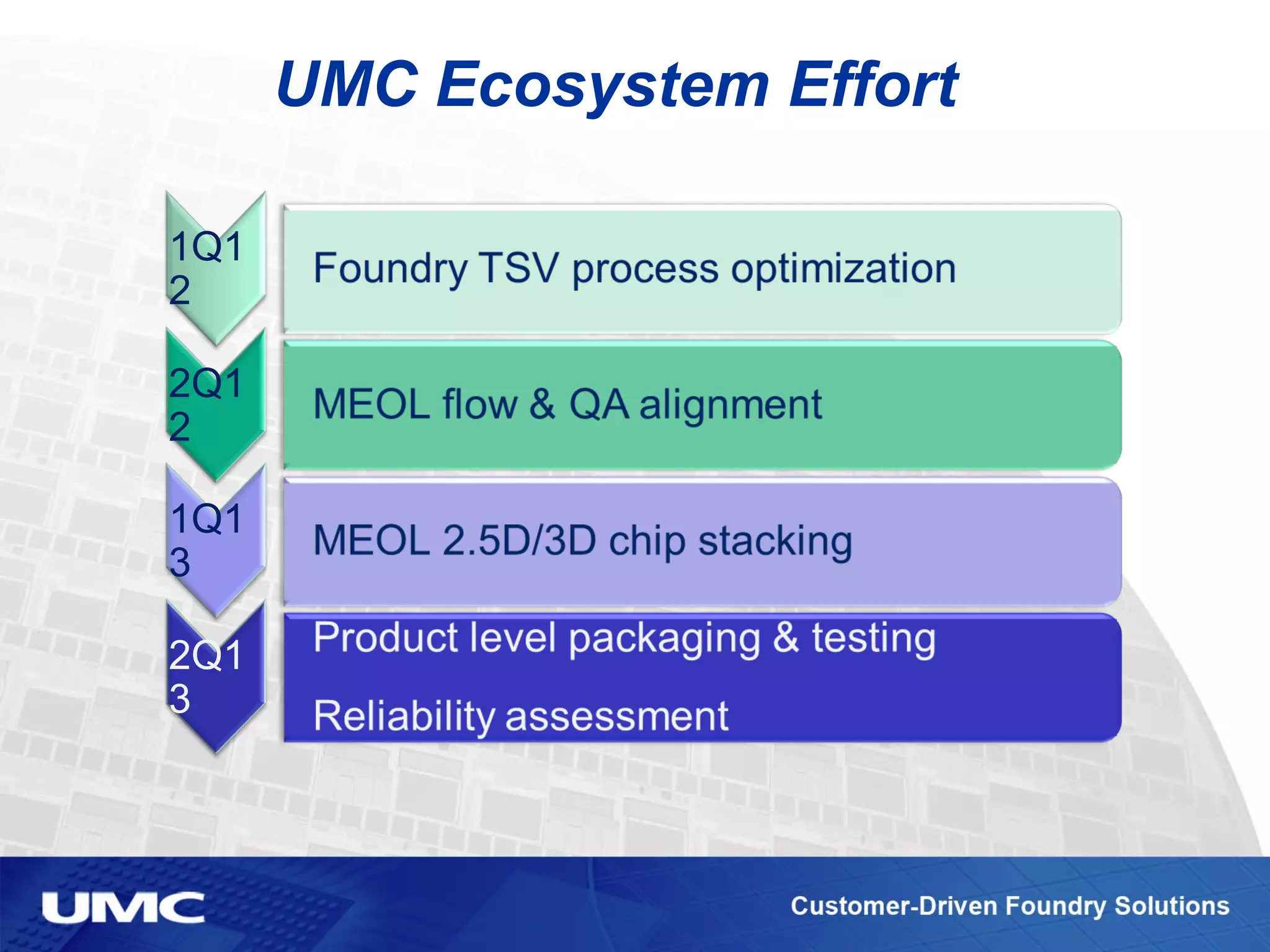
UMC Ecosystem Effort
1Q1
2
2Q1
2
1Q1
3
2Q1
3
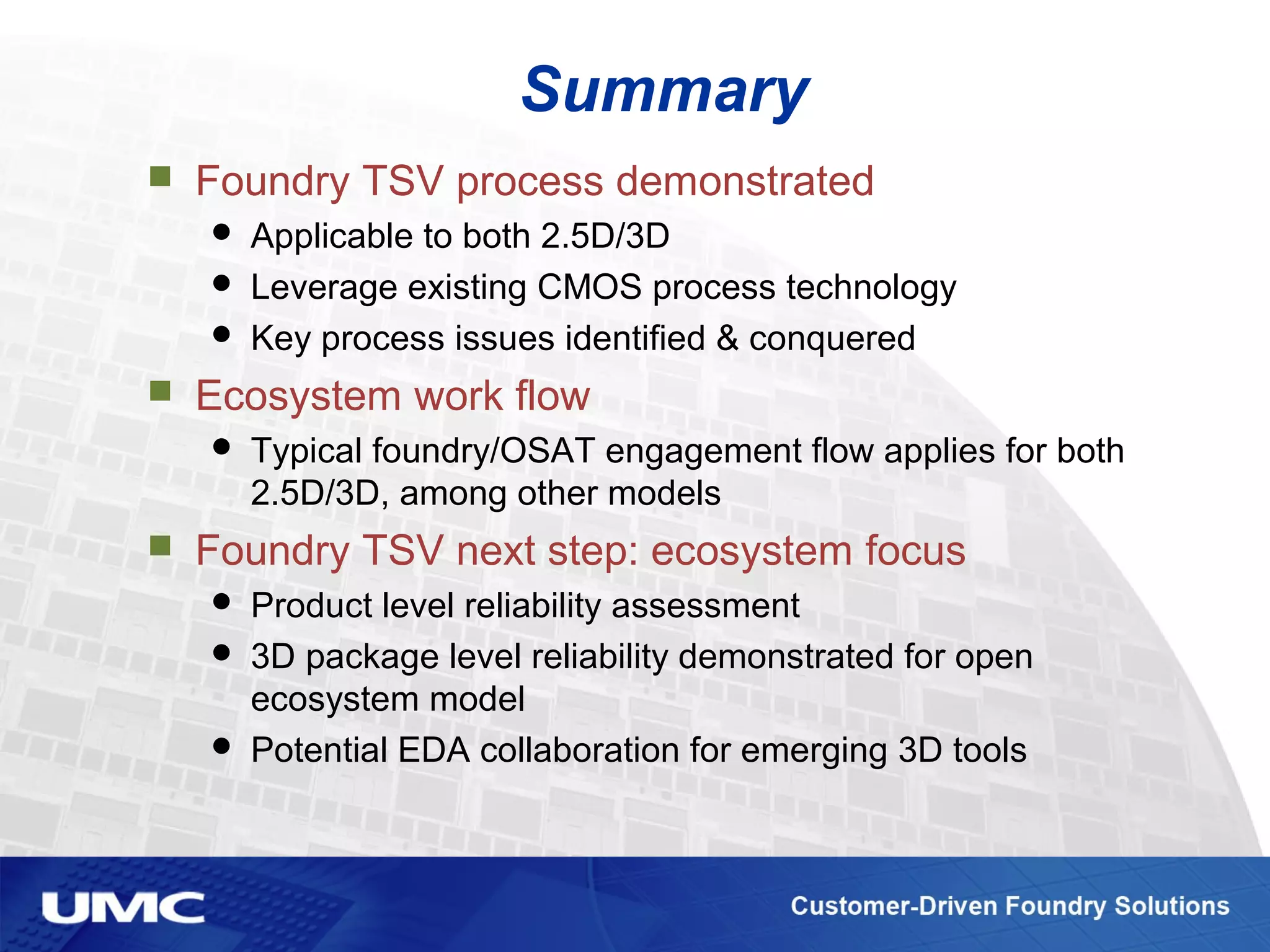
Summary
Summary
 Foundry TSV process demonstrated
 Applicable to both 2.5D/3D
 Leverage existing CMOS process technology
 Key process issues identified & conquered
 Ecosystem work flow
 Typical foundry/OSAT engagement flow applies for both
2.5D/3D, among other models
 Foundry TSV next step: ecosystem focus
 Product level reliability assessment
 3D package level reliability demonstrated for open
ecosystem model
 Potential EDA collaboration for emerging 3D tools
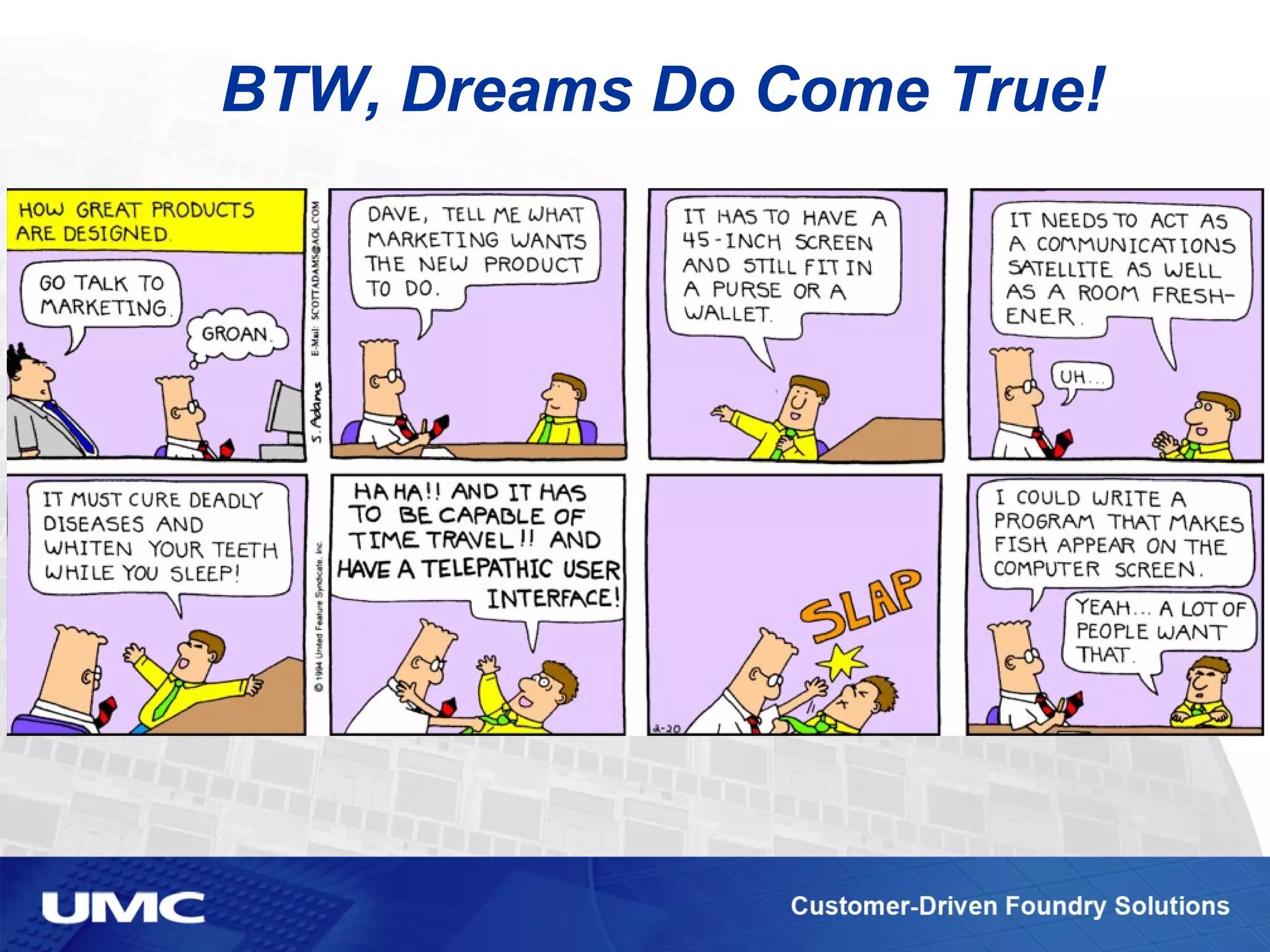
BTW, Dreams Do Come True!
Thank you for your attention!
Contact: kurt_huang@umc.com

TRACK A: 2.5D/3D Chip Stacking Supply Chain Integration/ Kurt Huang, Ph.D.

  • 1.
    2.5D/3D Chip StackingSupply Chain Integration Kurt Huang, Ph.D. Director, Corporate Marketing, UMC ChipEx, 2013
  • 2.
    Outline  2.5D/3D Applications Ecosystem Work Flow  Summary P. 2
  • 3.
  • 4.
    2.5D Si InterposerStacking  Logic/logic: FPGA, networking infrastructure  Logic/memory: Gaming, HPC
  • 5.
    3D Logic/Memory Stacking -Via-Middle TSV 28nm Logic + Memory Cube  Mobile WideIO, Computing WideIO, HMC
  • 6.
    Never-Enough Memory Bandwidth -Mobile AP Driving Wide IO Memory Dimensioning use case:  3D video streaming playback to external display via wireless + on-line 3D gaming local
  • 7.
    Keeping Power UnderHood •LPDDR3 @800Mhz dual-channel •LPDDR3 @800Mhz
  • 8.
    Real Value DrivesAdoption Motivations:  Higher BW, lower W/BW, smaller form-factor Opportunity of return on 3D IC investment:  Chip process node optimization  Homogeneous partition  Cross-node combinations  BOM cost optimization  Less demanding substrate/PCB, lighter cooling assembly, ...  Ultimately: better product, better margin Xilinx Virtex 7 Micron HMC
  • 9.
  • 10.
    Market Segment Overview High performance driving 2.5DIC  Mobile AP driving 3DIC  SoC + Mobile Memory  Next wave: heterogeneous 3DIC  Logic + Memory + Analog/RF  Ecosystem more complex  Expect driving force emerges after 3DIC matures
  • 11.
  • 12.
  • 13.
    Various Work Models Service scopes distinguished by MEOL inclusion  Consult your foundry/OSAT  Work flow optimization may depend on BOM cost, stack recipe and test strategy
  • 14.
    Foundry TSV DesignCollaterals  Consider TSV a passive device with rule decks/models  Typical foundry engagement applies under ecosystem work flow (UMC 2.5D Si interposer documents)
  • 15.
    Innovations by OpenEco-System  Wafer thinning and handling  Thermal/stress consideration  Testability  Reliability  3D EDA tool  Seamless business model  Cost  …
  • 16.
    Evolution Of theSupply Chain  Technology exploration  Feasibility study  Interface definition  Handover criteria  Model convergence  Flow standarization  Cost down  Service differentiation  Further innovation
  • 17.
  • 18.
  • 19.
    Summary  Foundry TSVprocess demonstrated  Applicable to both 2.5D/3D  Leverage existing CMOS process technology  Key process issues identified & conquered  Ecosystem work flow  Typical foundry/OSAT engagement flow applies for both 2.5D/3D, among other models  Foundry TSV next step: ecosystem focus  Product level reliability assessment  3D package level reliability demonstrated for open ecosystem model  Potential EDA collaboration for emerging 3D tools
  • 20.
    BTW, Dreams DoCome True!
  • 21.
    Thank you foryour attention! Contact: kurt_huang@umc.com