Chapter-18
BODY FLUIDS AND
CIRCULATION
Presented by
B.Prabhakar
Principal
JNV. Panchmahal (Guj)
• The food material which is digested in
human alimentary canal will be
transported to each & every part of the
body. How Is this possible?
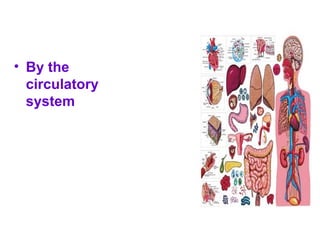
• By the
circulatory
system
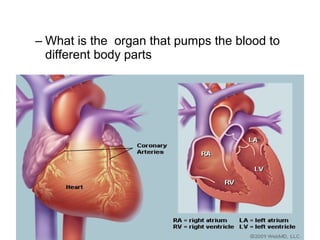
– What is the organ that pumps the blood to
different body parts
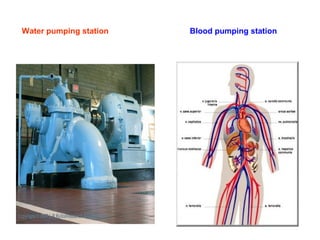
Water pumping station Blood pumping station
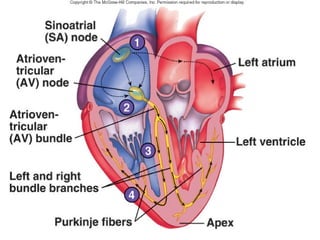
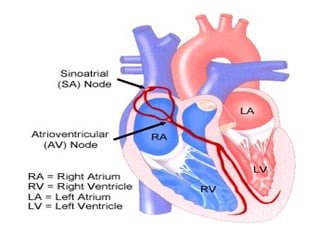
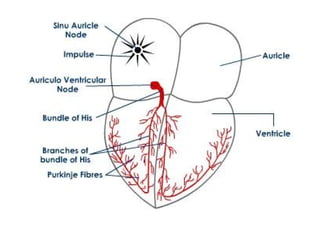
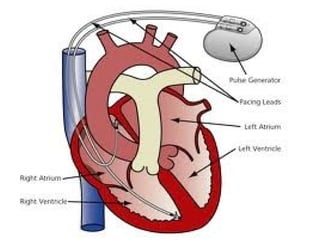
electrical impulse that originates
in the pacemaker region
(sinoatrial node) of the heart and
initiates contractions of cardiac
muscle
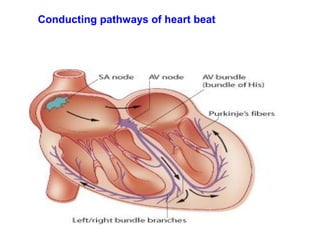
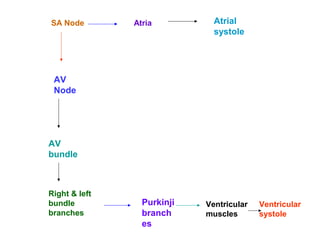
Conducting pathways of heart beat
SA Node Atria Atrial
systole
AV
Node
AV
bundle
Right & left
bundle
branches
Purkinji
branch
es
Ventricular
muscles
Ventricular
systole
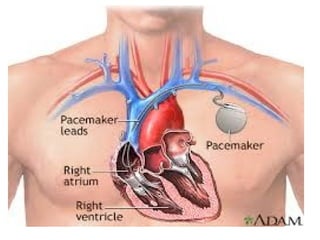
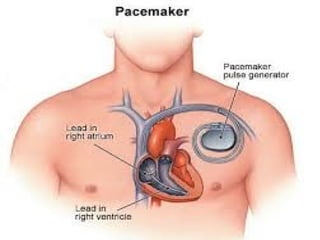
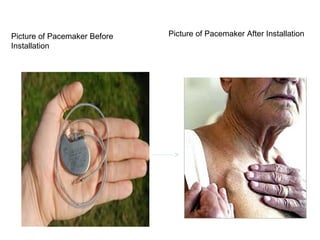
Picture of Pacemaker After InstallationPicture of Pacemaker Before
Installation
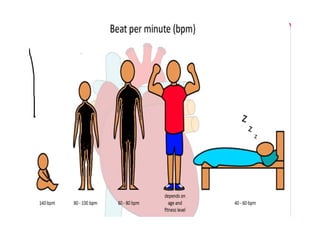
Heart Beat
The heart beats approximately 75 times per
minute in an adult, at rest. However, this can
change with exercise, emotional stress or
disease. The resting heart rate also varies
slightly with age, fitness and genetics.
At rest, the average heart rate (beats per
minute) for infants is 100-120,
for children aged 6-10 it is 80-100
for adults it is 60-80.
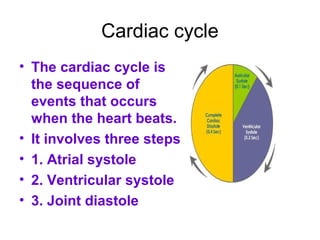
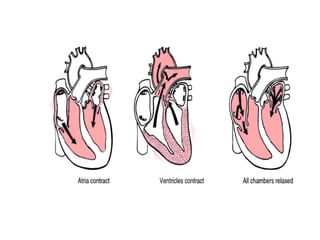
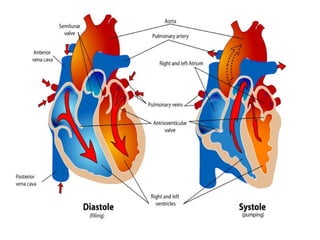
Cardiac cycle
• The cardiac cycle is
the sequence of
events that occurs
when the heart beats.
• It involves three steps
• 1. Atrial systole
• 2. Ventricular systole
• 3. Joint diastole
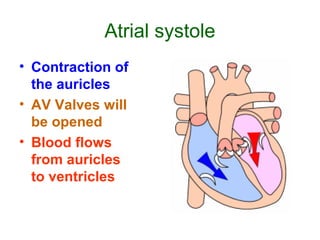
Atrial systole
• Contraction of
the auricles
• AV Valves will
be opened
• Blood flows
from auricles
to ventricles
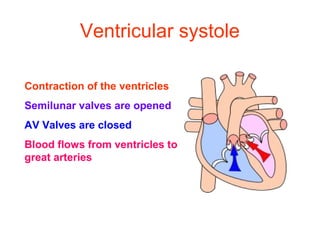
Ventricular systole
Contraction of the ventricles
Semilunar valves are opened
AV Valves are closed
Blood flows from ventricles to
great arteries
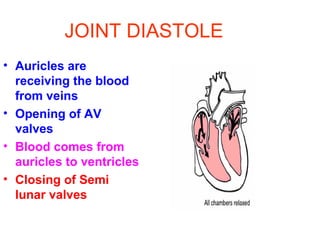
JOINT DIASTOLE
• Auricles are
receiving the blood
from veins
• Opening of AV
valves
• Blood comes from
auricles to ventricles
• Closing of Semi
lunar valves
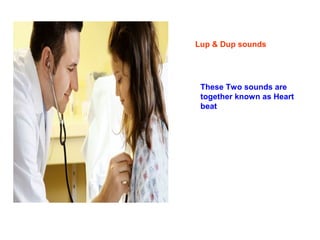
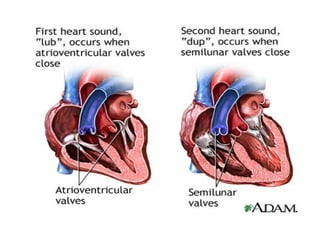
Lup & Dup sounds
These Two sounds are
together known as Heart
beat
• Why there is a delay in the contraction
of the Ventricles

18. Body Fluids and Circulation

  • 1.
    Chapter-18 BODY FLUIDS AND CIRCULATION Presentedby B.Prabhakar Principal JNV. Panchmahal (Guj)
  • 2.
    • The foodmaterial which is digested in human alimentary canal will be transported to each & every part of the body. How Is this possible?
  • 3.
  • 4.
    – What isthe organ that pumps the blood to different body parts
  • 7.
    Water pumping stationBlood pumping station
  • 9.
    electrical impulse thatoriginates in the pacemaker region (sinoatrial node) of the heart and initiates contractions of cardiac muscle
  • 11.
  • 18.
    SA Node AtriaAtrial systole AV Node AV bundle Right & left bundle branches Purkinji branch es Ventricular muscles Ventricular systole
  • 22.
    Picture of PacemakerAfter InstallationPicture of Pacemaker Before Installation
  • 25.
    Heart Beat The heartbeats approximately 75 times per minute in an adult, at rest. However, this can change with exercise, emotional stress or disease. The resting heart rate also varies slightly with age, fitness and genetics. At rest, the average heart rate (beats per minute) for infants is 100-120, for children aged 6-10 it is 80-100 for adults it is 60-80.
  • 26.
    Cardiac cycle • Thecardiac cycle is the sequence of events that occurs when the heart beats. • It involves three steps • 1. Atrial systole • 2. Ventricular systole • 3. Joint diastole
  • 27.
    Atrial systole • Contractionof the auricles • AV Valves will be opened • Blood flows from auricles to ventricles
  • 28.
    Ventricular systole Contraction ofthe ventricles Semilunar valves are opened AV Valves are closed Blood flows from ventricles to great arteries
  • 29.
    JOINT DIASTOLE • Auriclesare receiving the blood from veins • Opening of AV valves • Blood comes from auricles to ventricles • Closing of Semi lunar valves
  • 31.
    Lup & Dupsounds These Two sounds are together known as Heart beat
  • 34.
    • Why thereis a delay in the contraction of the Ventricles