4


12.4 Feudal Powers in Japan
    Japanese civilization is shaped by
  cultural borrowing from China and the
   rise of feudalism and military rulers.
The Growth of Japanese
 Japan’s
             Civilization
            Location
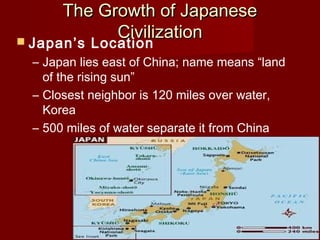
  – Japan lies east of China; name means “land
    of the rising sun”
  – Closest neighbor is 120 miles over water,
    Korea
  – 500 miles of water separate it from China
 The   Geography of Japan
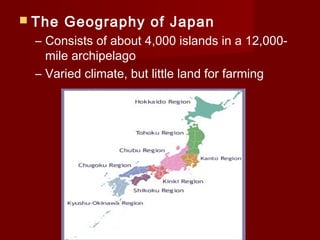
  – Consists of about 4,000 islands in a 12,000-
    mile archipelago
  – Varied climate, but little land for farming
 Early   Japan
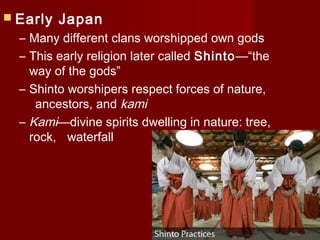
  – Many different clans worshipped own gods
  – This early religion later called Shinto—“the
    way of the gods”
  – Shinto worshipers respect forces of nature,
     ancestors, and kami
  – Kami—divine spirits dwelling in nature: tree,
    rock, waterfall
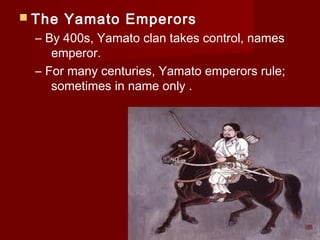
 The   Yamato Emperors
  – By 400s, Yamato clan takes control, names
     emperor.
  – For many centuries, Yamato emperors rule;
     sometimes in name only .
Japanese Culture
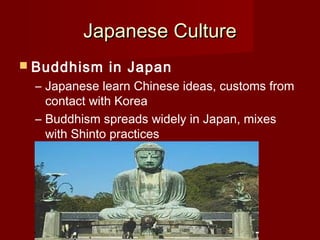
 Buddhism   in Japan
 – Japanese learn Chinese ideas, customs from
   contact with Korea
 – Buddhism spreads widely in Japan, mixes
   with Shinto practices
 Cultural   Borrowing from China
  – Prince Shotoku rules as regent; sponsors
    missions to Tang China
  – Chinese ideas, practices gain wide currency
    in     Japan as result
  – Japanese adopt Chinese writing, art, and
    ways of everyday living
  – Japan does not copy China’s civil-service
    system
Life in the Heian Period
   The Heian Court
    – In late 700s, Japanese move capital from Nara to
         Heian (modern Kyoto)
    – Heian’s upper class creates a highly refined court
         society
    – Rules, rituals, and artistic pursuits structure court life
    – The Tale of Genji by Lady Murasaki Shikibu
      illustrates Heian society
    – This 11th-century masterpiece is considered the
      world’s first novel
Feudalism Erodes Imperial Authority

 Decline   of Central Power
  – During most of Heian period (794–1185) rich
    Fujiwara family rules
  – In mid-1000s, large landowners build private
    armies, become warlords
  – Small landowners trade land to warlords in
    exchange for protection
  – Feudal system of local rule develops;
    Fujiwara family loses power
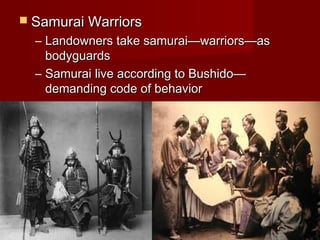
 Samurai Warriors
  – Landowners take samurai—warriors—as
    bodyguards
  – Samurai live according to Bushido—
    demanding code of behavior
 The Kamakura Shogunate
  – In late 1100s, Minamoto family wins in
    struggle for power
  – In 1192, Yoritomo becomes shogun—military
    dictator running Japan
  – Shogun rules from Kamakura, while emperor
    stays in Kyoto
  – Kamakura shoguns use samurai to repel
    Mongol invasions (1274, 1281)

12.4 feudal powers in japan

  • 1.
    4 12.4 Feudal Powersin Japan Japanese civilization is shaped by cultural borrowing from China and the rise of feudalism and military rulers.
  • 2.
    The Growth ofJapanese  Japan’s Civilization Location – Japan lies east of China; name means “land of the rising sun” – Closest neighbor is 120 miles over water, Korea – 500 miles of water separate it from China
  • 3.
     The Geography of Japan – Consists of about 4,000 islands in a 12,000- mile archipelago – Varied climate, but little land for farming
  • 4.
     Early Japan – Many different clans worshipped own gods – This early religion later called Shinto—“the way of the gods” – Shinto worshipers respect forces of nature, ancestors, and kami – Kami—divine spirits dwelling in nature: tree, rock, waterfall
  • 5.
     The Yamato Emperors – By 400s, Yamato clan takes control, names emperor. – For many centuries, Yamato emperors rule; sometimes in name only .
  • 6.
    Japanese Culture  Buddhism in Japan – Japanese learn Chinese ideas, customs from contact with Korea – Buddhism spreads widely in Japan, mixes with Shinto practices
  • 7.
     Cultural Borrowing from China – Prince Shotoku rules as regent; sponsors missions to Tang China – Chinese ideas, practices gain wide currency in Japan as result – Japanese adopt Chinese writing, art, and ways of everyday living – Japan does not copy China’s civil-service system
  • 8.
    Life in theHeian Period  The Heian Court – In late 700s, Japanese move capital from Nara to Heian (modern Kyoto) – Heian’s upper class creates a highly refined court society – Rules, rituals, and artistic pursuits structure court life – The Tale of Genji by Lady Murasaki Shikibu illustrates Heian society – This 11th-century masterpiece is considered the world’s first novel
  • 9.
    Feudalism Erodes ImperialAuthority  Decline of Central Power – During most of Heian period (794–1185) rich Fujiwara family rules – In mid-1000s, large landowners build private armies, become warlords – Small landowners trade land to warlords in exchange for protection – Feudal system of local rule develops; Fujiwara family loses power
  • 10.
     Samurai Warriors – Landowners take samurai—warriors—as bodyguards – Samurai live according to Bushido— demanding code of behavior
  • 11.
     The KamakuraShogunate – In late 1100s, Minamoto family wins in struggle for power – In 1192, Yoritomo becomes shogun—military dictator running Japan – Shogun rules from Kamakura, while emperor stays in Kyoto – Kamakura shoguns use samurai to repel Mongol invasions (1274, 1281)