Ancient Egypt
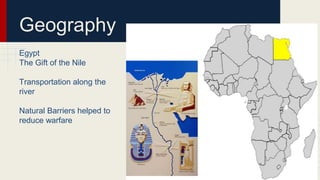
Geography
Egypt
The Gift of the Nile
Transportation along the
river
Natural Barriers helped to
reduce warfare
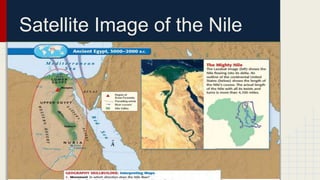
Satellite Image of the Nile
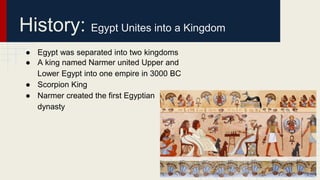
History: Egypt Unites into a Kingdom
● Egypt was separated into two kingdoms
● A king named Narmer united Upper and
Lower Egypt into one empire in 3000 BC
● Scorpion King
● Narmer created the first Egyptian
dynasty
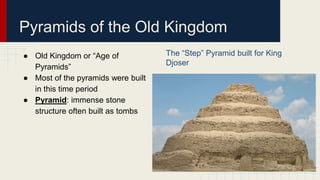
● Old Kingdom or “Age of
Pyramids”
● Most of the pyramids were built
in this time period
● Pyramid: immense stone
structure often built as tombs
The “Step” Pyramid built for King
Djoser
Pyramids of the Old Kingdom
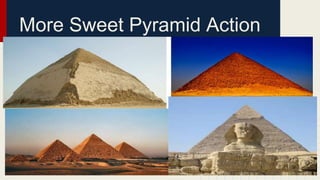
More Sweet Pyramid Action
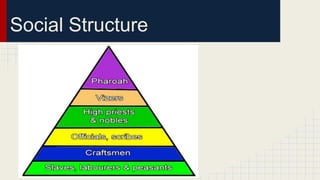
Social Structure
Egyptian Culture
a.Pharaohs: Egyptian pharaohs ruled absolutely
- Center of Egyptian culture, government, and religion
b.Theocracy: when religion and gov’t mix
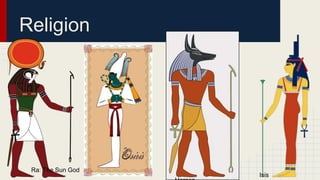
c.Polytheistic:
- Ra (sun god), Osiris (god of the dead), Goddess Isis (represented ideal mother
and wife)
- Believed in afterlife and built burial chambers and tombs
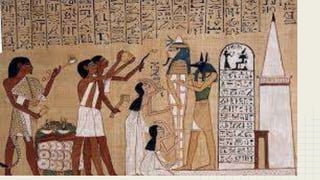
d.Mummification: embalming and drying of corpses to prevent decay
Religion
Ra: The Sun God
Isis
Social Structure
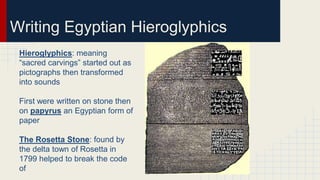
Writing Egyptian Hieroglyphics
Hieroglyphics: meaning
“sacred carvings” started out as
pictographs then transformed
into sounds
First were written on stone then
on papyrus an Egyptian form of
paper
The Rosetta Stone: found by
the delta town of Rosetta in
1799 helped to break the code
of
Mummification
First, they draw out the brains through the
nostrils with an iron hook. . . . Then with a
sharp stone they make an incision in the side,
and take out all the bowels. . . . Then, having
filled the belly with pure myrrh, cassia, and
other perfumes, they sew it up again; and
when they have done this they steep it in
natron [a mineral salt], leaving it under for 70
days. . . . At the end of 70 days, they wash the
corpse, and wrap the whole body in bandages
of waxen cloth.
nHERODOTUS, The History of Herodotus
The Egyptian and
Nubian Empires
Opener
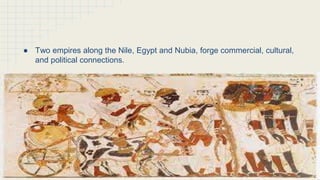
● Two empires along the Nile, Egypt and Nubia, forge commercial, cultural,
and political connections.
Nomadic Invaders Rule Egypt
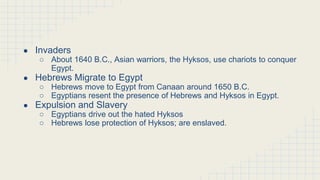
● Invaders
○ About 1640 B.C., Asian warriors, the Hyksos, use chariots to conquer
Egypt.
● Hebrews Migrate to Egypt
○ Hebrews move to Egypt from Canaan around 1650 B.C.
○ Egyptians resent the presence of Hebrews and Hyksos in Egypt.
● Expulsion and Slavery
○ Egyptians drive out the hated Hyksos
○ Hebrews lose protection of Hyksos; are enslaved.
The New Kingdom of Egypt
● Technological Advances
○ About 1570 to 1075 B.C. pharaohs create the New Kingdom, a
powerful empire.
○ Army uses bronze weapons and chariots to conquer other lands.
● Hatshepsut’s Prosperous Rule
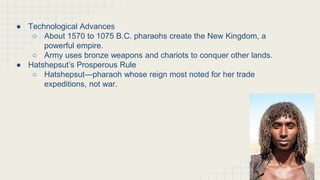
○ Hatshepsut—pharaoh whose reign most noted for her trade
expeditions, not war.
The New Kingdom of Egypt (continued)
● Thutmose the Empire Builder
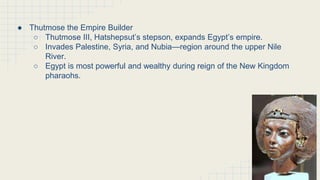
○ Thutmose III, Hatshepsut’s stepson, expands Egypt’s empire.
○ Invades Palestine, Syria, and Nubia—region around the upper Nile
River.
○ Egypt is most powerful and wealthy during reign of the New Kingdom
pharaohs.
The New Kingdom of Egypt (continued)
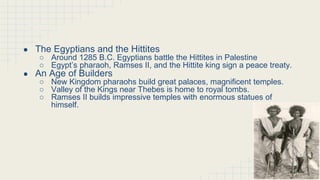
● The Egyptians and the Hittites
○ Around 1285 B.C. Egyptians battle the Hittites in Palestine
○ Egypt’s pharaoh, Ramses II, and the Hittite king sign a peace treaty.
● An Age of Builders
○ New Kingdom pharaohs build great palaces, magnificent temples.
○ Valley of the Kings near Thebes is home to royal tombs.
○ Ramses II builds impressive temples with enormous statues of
himself.
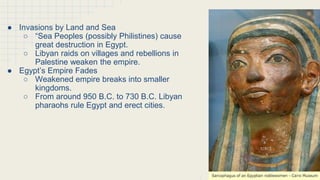
The Empire Declines
● Invasions by Land and Sea
○ “Sea Peoples (possibly Philistines) cause
great destruction in Egypt.
○ Libyan raids on villages and rebellions in
Palestine weaken the empire.
● Egypt’s Empire Fades
○ Weakened empire breaks into smaller
kingdoms.
○ From around 950 B.C. to 730 B.C. Libyan
pharaohs rule Egypt and erect cities.
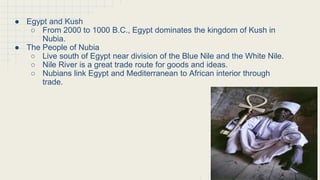
The Kushites Conquer the Nile Region
● Egypt and Kush
○ From 2000 to 1000 B.C., Egypt dominates the kingdom of Kush in
Nubia.
● The People of Nubia
○ Live south of Egypt near division of the Blue Nile and the White Nile.
○ Nile River is a great trade route for goods and ideas.
○ Nubians link Egypt and Mediterranean to African interior through
trade.
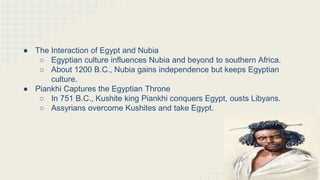
The Kushites Conquer the Nile Region
(continued)
● The Interaction of Egypt and Nubia
○ Egyptian culture influences Nubia and beyond to southern Africa.
○ About 1200 B.C., Nubia gains independence but keeps Egyptian
culture.
● Piankhi Captures the Egyptian Throne
○ In 751 B.C., Kushite king Piankhi conquers Egypt, ousts Libyans.
○ Assyrians overcome Kushites and take Egypt.
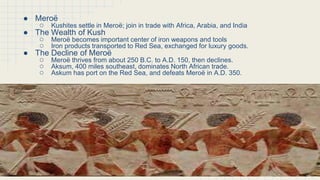
The Golden Age of Meroë
● Meroë
○ Kushites settle in Meroë; join in trade with Africa, Arabia, and India
● The Wealth of Kush
○ Meroë becomes important center of iron weapons and tools
○ Iron products transported to Red Sea, exchanged for luxury goods.
● The Decline of Meroë
○ Meroë thrives from about 250 B.C. to A.D. 150, then declines.
○ Aksum, 400 miles southeast, dominates North African trade.
○ Askum has port on the Red Sea, and defeats Meroë in A.D. 350.
Crash Course with John Green

Egypt

  • 1.
  • 2.
    Geography Egypt The Gift ofthe Nile Transportation along the river Natural Barriers helped to reduce warfare
  • 3.
  • 4.
    History: Egypt Unitesinto a Kingdom ● Egypt was separated into two kingdoms ● A king named Narmer united Upper and Lower Egypt into one empire in 3000 BC ● Scorpion King ● Narmer created the first Egyptian dynasty
  • 5.
    ● Old Kingdomor “Age of Pyramids” ● Most of the pyramids were built in this time period ● Pyramid: immense stone structure often built as tombs The “Step” Pyramid built for King Djoser Pyramids of the Old Kingdom
  • 6.
  • 7.
    Social Structure Egyptian Culture a.Pharaohs:Egyptian pharaohs ruled absolutely - Center of Egyptian culture, government, and religion b.Theocracy: when religion and gov’t mix c.Polytheistic: - Ra (sun god), Osiris (god of the dead), Goddess Isis (represented ideal mother and wife) - Believed in afterlife and built burial chambers and tombs d.Mummification: embalming and drying of corpses to prevent decay
  • 9.
  • 10.
  • 11.
    Writing Egyptian Hieroglyphics Hieroglyphics:meaning “sacred carvings” started out as pictographs then transformed into sounds First were written on stone then on papyrus an Egyptian form of paper The Rosetta Stone: found by the delta town of Rosetta in 1799 helped to break the code of
  • 12.
    Mummification First, they drawout the brains through the nostrils with an iron hook. . . . Then with a sharp stone they make an incision in the side, and take out all the bowels. . . . Then, having filled the belly with pure myrrh, cassia, and other perfumes, they sew it up again; and when they have done this they steep it in natron [a mineral salt], leaving it under for 70 days. . . . At the end of 70 days, they wash the corpse, and wrap the whole body in bandages of waxen cloth. nHERODOTUS, The History of Herodotus
  • 13.
  • 14.
    Opener ● Two empiresalong the Nile, Egypt and Nubia, forge commercial, cultural, and political connections.
  • 15.
    Nomadic Invaders RuleEgypt ● Invaders ○ About 1640 B.C., Asian warriors, the Hyksos, use chariots to conquer Egypt. ● Hebrews Migrate to Egypt ○ Hebrews move to Egypt from Canaan around 1650 B.C. ○ Egyptians resent the presence of Hebrews and Hyksos in Egypt. ● Expulsion and Slavery ○ Egyptians drive out the hated Hyksos ○ Hebrews lose protection of Hyksos; are enslaved.
  • 16.
    The New Kingdomof Egypt ● Technological Advances ○ About 1570 to 1075 B.C. pharaohs create the New Kingdom, a powerful empire. ○ Army uses bronze weapons and chariots to conquer other lands. ● Hatshepsut’s Prosperous Rule ○ Hatshepsut—pharaoh whose reign most noted for her trade expeditions, not war.
  • 17.
    The New Kingdomof Egypt (continued) ● Thutmose the Empire Builder ○ Thutmose III, Hatshepsut’s stepson, expands Egypt’s empire. ○ Invades Palestine, Syria, and Nubia—region around the upper Nile River. ○ Egypt is most powerful and wealthy during reign of the New Kingdom pharaohs.
  • 18.
    The New Kingdomof Egypt (continued) ● The Egyptians and the Hittites ○ Around 1285 B.C. Egyptians battle the Hittites in Palestine ○ Egypt’s pharaoh, Ramses II, and the Hittite king sign a peace treaty. ● An Age of Builders ○ New Kingdom pharaohs build great palaces, magnificent temples. ○ Valley of the Kings near Thebes is home to royal tombs. ○ Ramses II builds impressive temples with enormous statues of himself.
  • 19.
    The Empire Declines ●Invasions by Land and Sea ○ “Sea Peoples (possibly Philistines) cause great destruction in Egypt. ○ Libyan raids on villages and rebellions in Palestine weaken the empire. ● Egypt’s Empire Fades ○ Weakened empire breaks into smaller kingdoms. ○ From around 950 B.C. to 730 B.C. Libyan pharaohs rule Egypt and erect cities.
  • 20.
    The Kushites Conquerthe Nile Region ● Egypt and Kush ○ From 2000 to 1000 B.C., Egypt dominates the kingdom of Kush in Nubia. ● The People of Nubia ○ Live south of Egypt near division of the Blue Nile and the White Nile. ○ Nile River is a great trade route for goods and ideas. ○ Nubians link Egypt and Mediterranean to African interior through trade.
  • 21.
    The Kushites Conquerthe Nile Region (continued) ● The Interaction of Egypt and Nubia ○ Egyptian culture influences Nubia and beyond to southern Africa. ○ About 1200 B.C., Nubia gains independence but keeps Egyptian culture. ● Piankhi Captures the Egyptian Throne ○ In 751 B.C., Kushite king Piankhi conquers Egypt, ousts Libyans. ○ Assyrians overcome Kushites and take Egypt.
  • 22.
    The Golden Ageof Meroë ● Meroë ○ Kushites settle in Meroë; join in trade with Africa, Arabia, and India ● The Wealth of Kush ○ Meroë becomes important center of iron weapons and tools ○ Iron products transported to Red Sea, exchanged for luxury goods. ● The Decline of Meroë ○ Meroë thrives from about 250 B.C. to A.D. 150, then declines. ○ Aksum, 400 miles southeast, dominates North African trade. ○ Askum has port on the Red Sea, and defeats Meroë in A.D. 350.
  • 23.