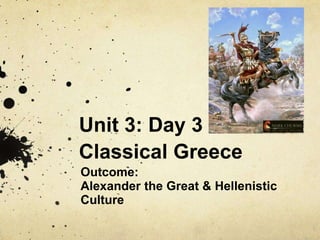
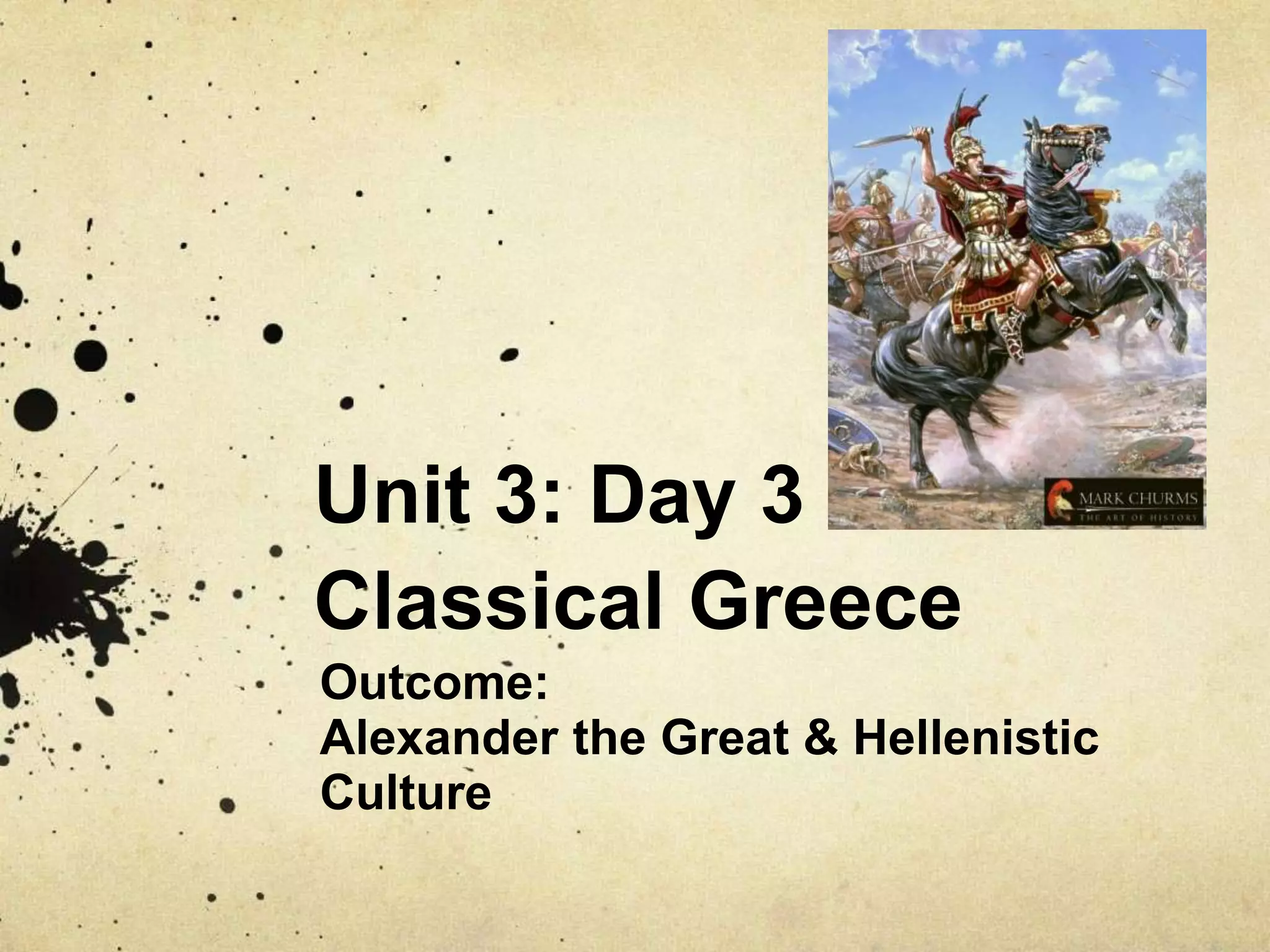
Unit 3: Day 3
Classical Greece
Outcome:
Alexander the Great & Hellenistic
Culture
Alexander the Great
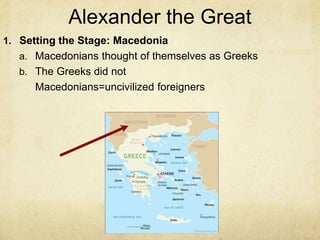
1. Setting the Stage: Macedonia
a. Macedonians thought of themselves as Greeks
b. The Greeks did not
Macedonians=uncivilized foreigners
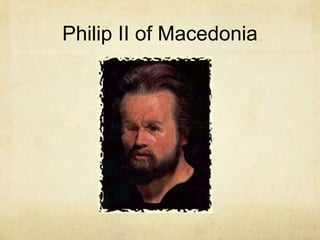
Philip II of Macedonia
Philip II
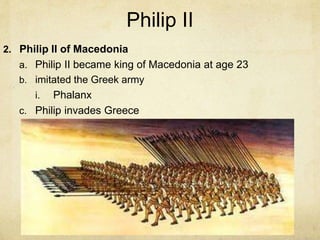
2. Philip II of Macedonia
a. Philip II became king of Macedonia at age 23
b. imitated the Greek army
i. Phalanx
c. Philip invades Greece
Philip II
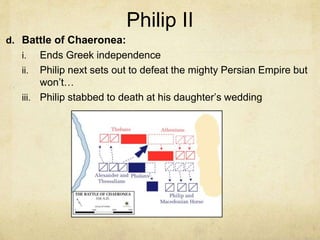
d. Battle of Chaeronea:
i. Ends Greek independence
ii. Philip next sets out to defeat the mighty Persian Empire but
won’t…
iii. Philip stabbed to death at his daughter’s wedding
Alexander the Great
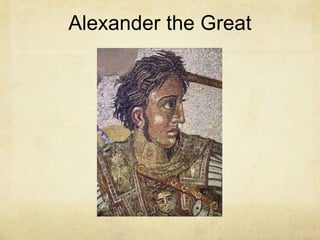
Alexander the Great
3. Alexander the Great
a. Background
i. Takes over at age 20 after the death of his father Philip
II
ii. Taught by Aristotle
iii. Admired the heroic deeds of Achilles during the Trojan
Wars
Alexander the Great
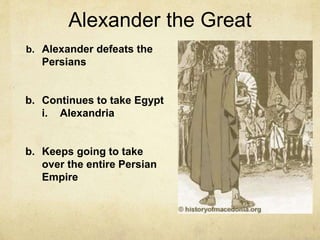
b. Alexander defeats the
Persians
b. Continues to take Egypt
i. Alexandria
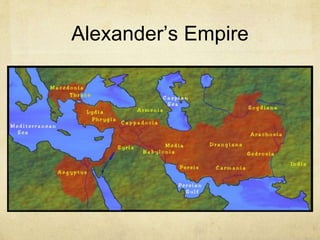
b. Keeps going to take
over the entire Persian
Empire
Alexander’s Empire
Alexander the Great
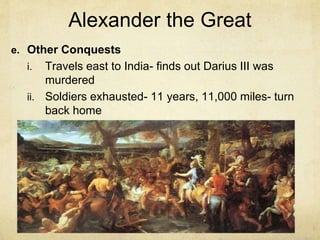
e. Other Conquests
i. Travels east to India- finds out Darius III was
murdered
ii. Soldiers exhausted- 11 years, 11,000 miles- turn
back home
Alexander the Great
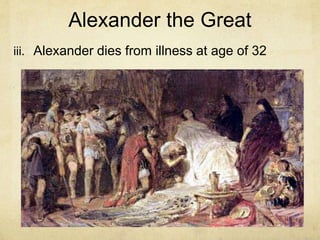
iii. Alexander dies from illness at age of 32
Alexander the Great
Legacy
i. Empire broken into 3 main territories
ii. Would last for centuries
Hellenism
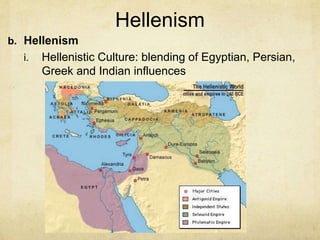
b. Hellenism
i. Hellenistic Culture: blending of Egyptian, Persian,
Greek and Indian influences
Alexander the Great
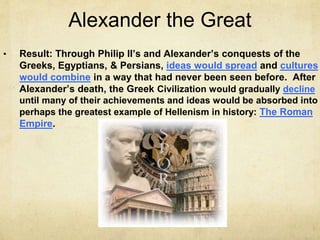
• Result: Through Philip II’s and Alexander’s conquests of the
Greeks, Egyptians, & Persians, ideas would spread and cultures
would combine in a way that had never been seen before. After
Alexander’s death, the Greek Civilization would gradually decline
until many of their achievements and ideas would be absorbed into
perhaps the greatest example of Hellenism in history: The Roman
Empire.

3 alexander the great

  • 1.
    Unit 3: Day3 Classical Greece Outcome: Alexander the Great & Hellenistic Culture
  • 2.
    Alexander the Great 1.Setting the Stage: Macedonia a. Macedonians thought of themselves as Greeks b. The Greeks did not Macedonians=uncivilized foreigners
  • 3.
    Philip II ofMacedonia
  • 4.
    Philip II 2. PhilipII of Macedonia a. Philip II became king of Macedonia at age 23 b. imitated the Greek army i. Phalanx c. Philip invades Greece
  • 5.
    Philip II d. Battleof Chaeronea: i. Ends Greek independence ii. Philip next sets out to defeat the mighty Persian Empire but won’t… iii. Philip stabbed to death at his daughter’s wedding
  • 6.
  • 7.
    Alexander the Great 3.Alexander the Great a. Background i. Takes over at age 20 after the death of his father Philip II ii. Taught by Aristotle iii. Admired the heroic deeds of Achilles during the Trojan Wars
  • 8.
    Alexander the Great b.Alexander defeats the Persians b. Continues to take Egypt i. Alexandria b. Keeps going to take over the entire Persian Empire
  • 9.
  • 10.
    Alexander the Great e.Other Conquests i. Travels east to India- finds out Darius III was murdered ii. Soldiers exhausted- 11 years, 11,000 miles- turn back home
  • 11.
    Alexander the Great iii.Alexander dies from illness at age of 32
  • 12.
    Alexander the Great Legacy i.Empire broken into 3 main territories ii. Would last for centuries
  • 13.
    Hellenism b. Hellenism i. HellenisticCulture: blending of Egyptian, Persian, Greek and Indian influences
  • 15.
    Alexander the Great •Result: Through Philip II’s and Alexander’s conquests of the Greeks, Egyptians, & Persians, ideas would spread and cultures would combine in a way that had never been seen before. After Alexander’s death, the Greek Civilization would gradually decline until many of their achievements and ideas would be absorbed into perhaps the greatest example of Hellenism in history: The Roman Empire.