1 
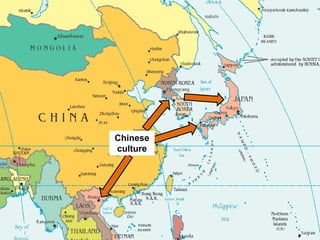
Chinese 
culture
2 
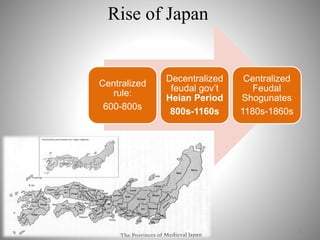
Rise of Japan 
Centralized 
rule: 
600-800s 
Decentralized 
feudal gov’t 
Heian Period 
800s-1160s 
Centralized 
Feudal 
Shogunates 
1180s-1860s
3 
I. “Selective Borrowing” from China 
A. Imitate superior culture 
1. Buddhism 
2. Confucian values 
a. Impact = Position of Japanese women 
declined 
3. Arch. & urban planning 
4. Ag. & manu. techniques spurred Japanese eco 
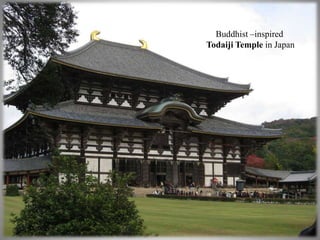
Buddhist –inspired 
Todaiji Temple in Japan 
Rise of Japan
4 
Buddhist –inspired 
Todaiji Temple in Japan
5 
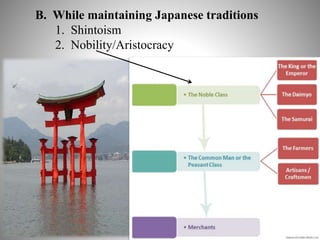
B. While maintaining Japanese traditions 
1. Shintoism 
2. Nobility/Aristocracy
6 
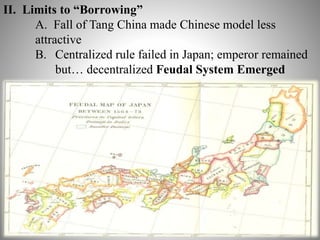
II. Limits to “Borrowing” 
A. Fall of Tang China made Chinese model less 
attractive 
B. Centralized rule failed in Japan; emperor remained 
but… decentralized Feudal System Emerged
7 
Rise of Japan 
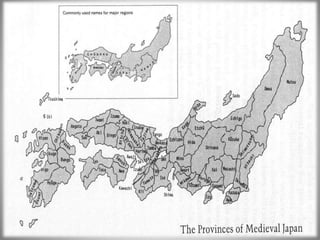
III. Japanese Middle Ages – 600-1450 
A. 600s -900s 
1. Emperor led, centralized rule 
2. Confucian-based governing, adopted from 
Chinese
8 
Rise of Japan 
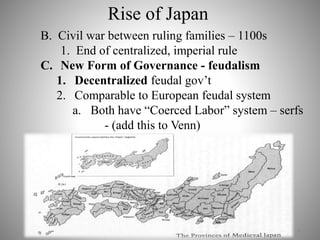
B. Civil war between ruling families – 1100s 
1. End of centralized, imperial rule 
C. New Form of Governance - feudalism 
1. Decentralized feudal gov’t 
2. Comparable to European feudal system 
a. Both have “Coerced Labor” system – serfs 
- (add this to Venn)
9 
Rise of Japan 
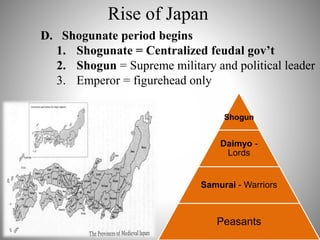
D. Shogunate period begins 
1. Shogunate = Centralized feudal gov’t 
2. Shogun = Supreme military and political leader 
3. Emperor = figurehead only 
Shogun 
Daimyo - 
Lords 
Samurai - Warriors 
Peasants
Comparison Essay Organizer – European & Japanese Feudal Systems 
Analysis: Identify CAUSES for these similarities. 
Prompt: Compare Europe Japan 
the feudal systems 
of Middle Age 
Japan and Europe. 
Chivalry Warrior Codes Bushido 
- Loyalties based on 
negotiated contracts 
- Aristocratic lords controlled 
mass of peasants 
- Highly militaristic; long centuries 
of internal warfare caused by 
feudal loyalties & rivalries 
-Warrior values – impeded dev. of 
stable, central gov’t 
Analysis: Identify CAUSES for these differences. 
Thesis: Write and analytical thesis addressing the above prompt. 
- Relied on group & 
individual loyalties 
- Knights received land 
ownership – would become 
lords 
- Samurai granted land rights; 
not ownership – lord/Samurai 
relationship remained clear 
- No ritualized suicide - Ritualized suicide = Seppuku 
Legacy = emergence of “hari-kiri” 
parliamentary institutions 
where aristocrats join to 
defend defined rights against 
monarch; Emergence of 
lawyers 
Legacy =Less-institutionalized 
group consciousness; 
collective, decision-making 
teams linked to the state 
Today =More awareness of 
“Honor Codes” in business 
relationships 
Today =more emphasis on 
written contracts in business 
-Family alliances 
-Loyalty 
-Ritualized combat 
-Contempt for non-warriors 
-Military/warrior ethic 
persisted = personal ties 
as foundation for 
political activity
11 
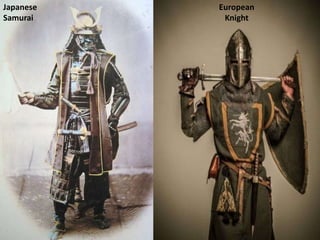
Critical Intro: 
Compare Japanese and European 
Feudalism.
Japanese 
Samurai 
European 
Knight
13

Japanese Middle Ages

  • 1.
  • 2.
    2 Rise ofJapan Centralized rule: 600-800s Decentralized feudal gov’t Heian Period 800s-1160s Centralized Feudal Shogunates 1180s-1860s
  • 3.
    3 I. “SelectiveBorrowing” from China A. Imitate superior culture 1. Buddhism 2. Confucian values a. Impact = Position of Japanese women declined 3. Arch. & urban planning 4. Ag. & manu. techniques spurred Japanese eco Buddhist –inspired Todaiji Temple in Japan Rise of Japan
  • 4.
    4 Buddhist –inspired Todaiji Temple in Japan
  • 5.
    5 B. Whilemaintaining Japanese traditions 1. Shintoism 2. Nobility/Aristocracy
  • 6.
    6 II. Limitsto “Borrowing” A. Fall of Tang China made Chinese model less attractive B. Centralized rule failed in Japan; emperor remained but… decentralized Feudal System Emerged
  • 7.
    7 Rise ofJapan III. Japanese Middle Ages – 600-1450 A. 600s -900s 1. Emperor led, centralized rule 2. Confucian-based governing, adopted from Chinese
  • 8.
    8 Rise ofJapan B. Civil war between ruling families – 1100s 1. End of centralized, imperial rule C. New Form of Governance - feudalism 1. Decentralized feudal gov’t 2. Comparable to European feudal system a. Both have “Coerced Labor” system – serfs - (add this to Venn)
  • 9.
    9 Rise ofJapan D. Shogunate period begins 1. Shogunate = Centralized feudal gov’t 2. Shogun = Supreme military and political leader 3. Emperor = figurehead only Shogun Daimyo - Lords Samurai - Warriors Peasants
  • 10.
    Comparison Essay Organizer– European & Japanese Feudal Systems Analysis: Identify CAUSES for these similarities. Prompt: Compare Europe Japan the feudal systems of Middle Age Japan and Europe. Chivalry Warrior Codes Bushido - Loyalties based on negotiated contracts - Aristocratic lords controlled mass of peasants - Highly militaristic; long centuries of internal warfare caused by feudal loyalties & rivalries -Warrior values – impeded dev. of stable, central gov’t Analysis: Identify CAUSES for these differences. Thesis: Write and analytical thesis addressing the above prompt. - Relied on group & individual loyalties - Knights received land ownership – would become lords - Samurai granted land rights; not ownership – lord/Samurai relationship remained clear - No ritualized suicide - Ritualized suicide = Seppuku Legacy = emergence of “hari-kiri” parliamentary institutions where aristocrats join to defend defined rights against monarch; Emergence of lawyers Legacy =Less-institutionalized group consciousness; collective, decision-making teams linked to the state Today =More awareness of “Honor Codes” in business relationships Today =more emphasis on written contracts in business -Family alliances -Loyalty -Ritualized combat -Contempt for non-warriors -Military/warrior ethic persisted = personal ties as foundation for political activity
  • 11.
    11 Critical Intro: Compare Japanese and European Feudalism.
  • 12.
  • 13.